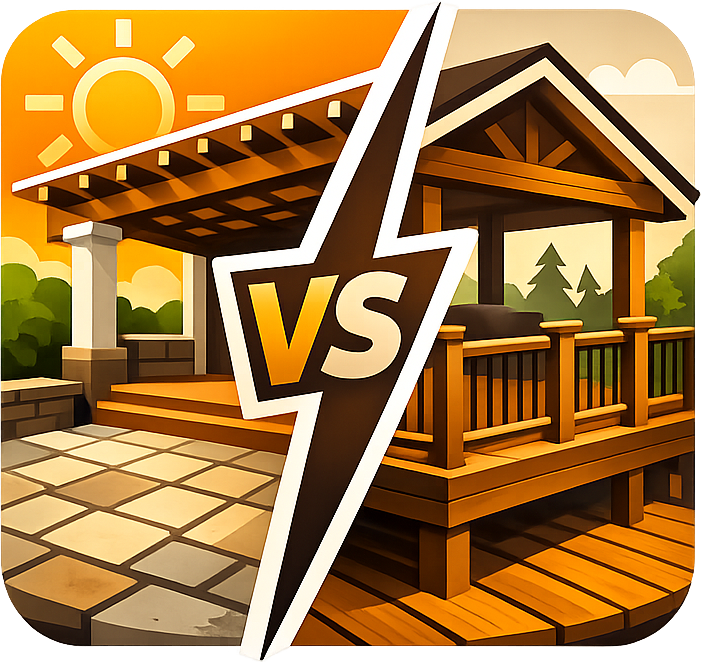
If you want a dedicated outdoor room that stands on its own anywhere in your yard, a gazebo is your answer. If you want to extend your existing patio with shade and rain protection without building a separate structure, a patio cover makes more sense. The two serve overlapping purposes but work very differently in practice, and choosing the wrong one can mean spending more money, getting fewer permits approved, or ending up with a structure that just doesn't fit how you actually use your outdoor space.
Gazebo vs Patio: Cost, Uses, and Which Fits You

Miles Hart
20 May 2026
What each one actually is
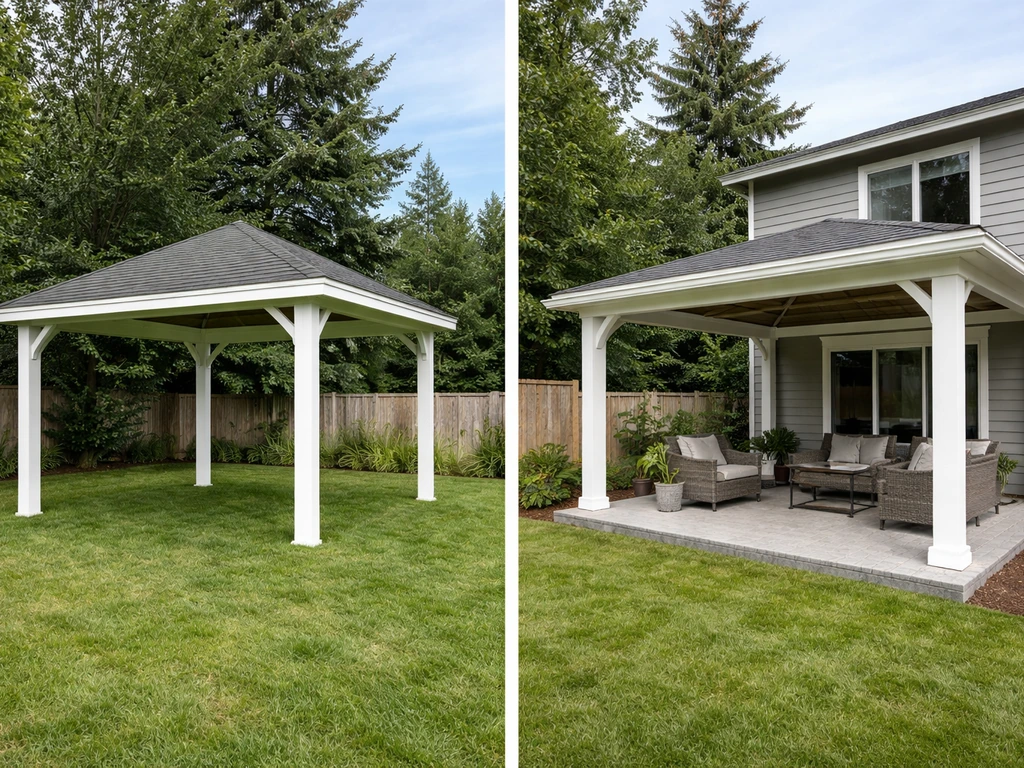
A gazebo is a freestanding roofed structure, typically open on the sides, that sits independently in your yard. It doesn't attach to your house. Most definitions (and most local codes) describe it as a structure open at least 50% to the elements, used for outdoor living rather than storage. You can put one anywhere that has enough clearance from property lines, and it becomes its own outdoor destination.
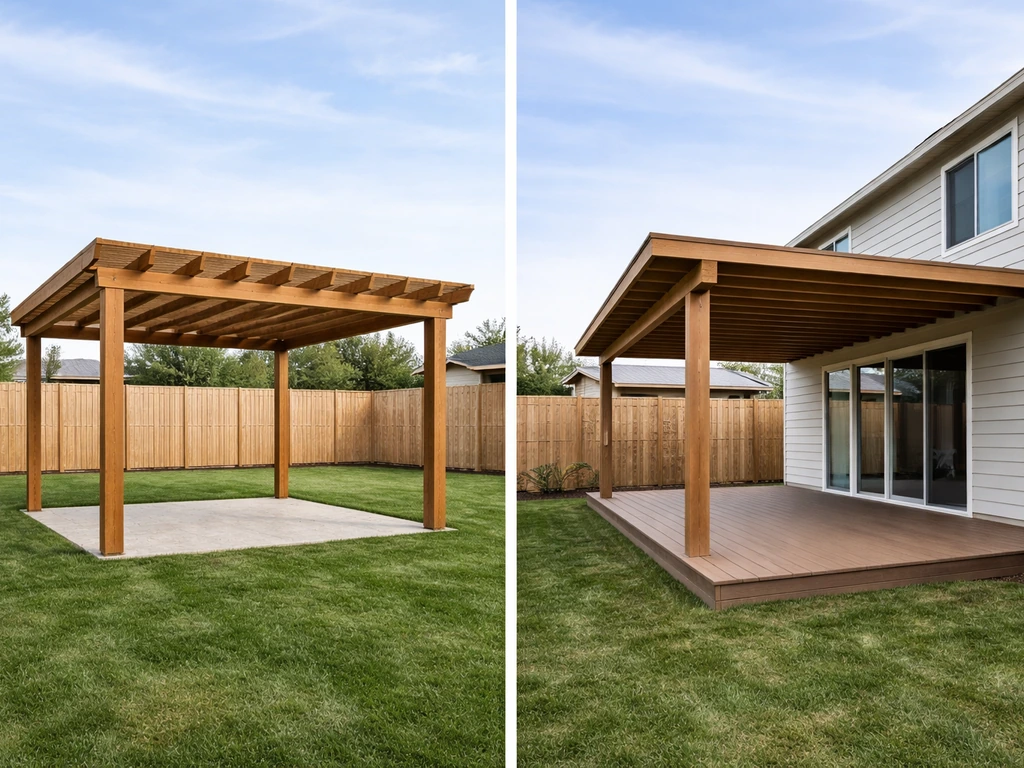
A patio cover is a shade structure built over an existing patio or deck surface. It can be attached directly to your house via a ledger board, or it can be a freestanding cover positioned over the patio area. The defining feature is that it extends or enhances an existing outdoor surface rather than creating a new standalone space. Patio covers range from simple aluminum awning panels to more substantial timber or vinyl roofed systems, and they can be open-style (like a pergola with spaced rafters) or fully roofed for rain protection.
The practical difference: a gazebo is a destination you walk to, while a patio cover is an upgrade you walk under when you step out the back door. That distinction shapes nearly every other decision, from cost to permits to how you use the space.
Which one fits your goals and lifestyle
Think about how you actually picture using the space. If you want a shaded seating area right off the kitchen or living room, accessible without walking across the yard, a patio cover wins. It keeps the flow from inside to outside smooth, which matters a lot for everyday use and entertaining. If you want a separate, defined outdoor room, maybe tucked in a garden corner or positioned for a specific view, a gazebo gives you that intentional, destination feel.
Weather protection is another dividing line. A gazebo with a solid roof gives you complete rain cover, which is hard to beat for reliable outdoor use. A patio cover can match that if you use solid aluminum panels, polycarbonate sheets, or a properly waterproofed roof system. Where patio covers often fall short is when homeowners choose an open pergola-style cover with spaced rafters, which gives shade but not rain protection. If staying dry matters to you, that's a decision point worth settling before you pick a structure type.
Privacy is another factor. Gazebos often feel more enclosed and private because they're surrounded by yard on all sides. You can add curtains or screens to either structure, but a gazebo tucked away from the house naturally feels more removed from neighbors and foot traffic. Patio covers are more exposed, sitting right at the edge of the house where sightlines from the yard (and neighbors) are wider.
- You host dinners often and want to step outside easily: patio cover attached to the house
- You want a quiet retreat away from the main living area: gazebo
- You need full rain protection: either works, but only if the cover is solid and waterproofed
- You have limited yard depth and the patio is your only outdoor space: patio cover
- You want to add a feature to a garden or larger yard: gazebo
- You want to add screens or partial enclosure later: both are possible, but gazebos often accommodate this more cleanly
Costs and what you get for your money
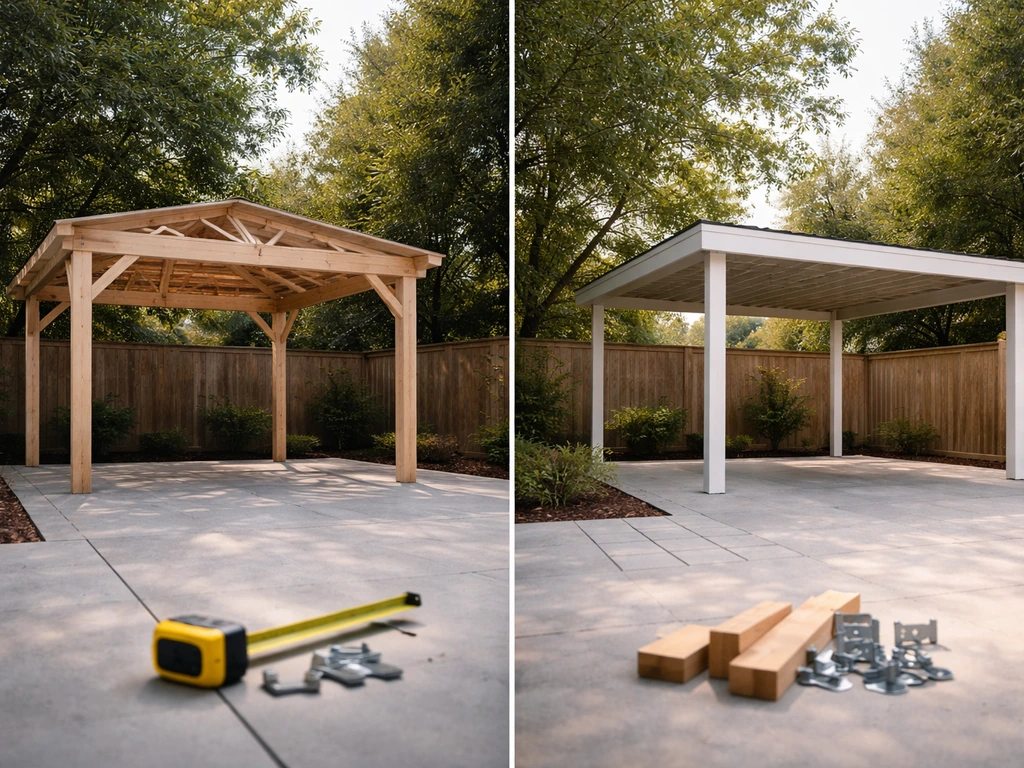
Patio covers are generally cheaper than custom gazebos, though there's overlap depending on materials and complexity. A solid patio cover installation typically runs about $20 to $60 per square foot installed, with aluminum and polycarbonate systems coming in at the lower end (roughly $16 to $68 per square foot depending on the system). A 200-square-foot covered patio might run $4,000 to $12,000 for a straightforward attached cover.
Once you start adding full perimeter work, enclosure panels, or high-end materials, totals can climb into the $40,000 to $125,000 range for full outdoor room buildouts. A regional outdoor living cost guide from B&G Tulsa also illustrates how covered patio and pergola totals can fall into a broad [$40,000 to $125,000 range](https://www. bgtulsa. com/wp-content/uploads/2025/12/2026-outdoor-living-cost-guide-copy.
pdf) depending on scope and enclosure/perimeter work.
Gazebos generally cost more per square foot because they require a complete independent structure with foundation, framing, and roof. Custom built gazebos typically land in the $30 to $100 per square foot range, with average total project costs running roughly $8,600 to $14,400 for a mid-size custom build. Kit gazebos from home improvement stores can come in cheaper, but they're lighter-duty and often not permitted as permanent structures in many municipalities.
| Factor | Patio Cover | Gazebo |
|---|---|---|
| Typical installed cost per sq ft | $20–$60 | $30–$100 |
| Average total project cost | $4,000–$15,000 (basic to mid-range) | $8,600–$14,400 (custom build) |
| Foundation required | Usually no (attaches to house or existing slab) | Yes (footings required for permanent builds) |
| Adds usable outdoor square footage | Enhances existing patio space | Creates new dedicated space |
| Home value / ROI | Adds value, especially attached covered patio | Adds value as a feature, varies by market |
| ROI estimate (industry claim) | Roughly 80–100% return at resale | Roughly 80–100% return at resale |
On home value, both structures can add real appeal to buyers who value outdoor living, and industry estimates often cite an 80 to 100% return on outdoor living improvements at resale. That said, these are general claims rather than audited studies. A well-executed attached covered patio tends to resonate strongly with buyers because it reads as an extension of the living space, while a gazebo adds a feature buyers either love or see as a maintenance item. Location and local market preferences matter here. A gazebo in a region with harsh winters may appeal less than one in the South or Pacific Coast.
Design options and materials: what you can build
Patio cover materials
Aluminum is the most popular patio cover material for practical reasons: it's lightweight, corrosion-resistant, and essentially maintenance-free once installed. Solid aluminum panel systems handle rain well and hold up in wind and snow better than fabric or wood alternatives. Polycarbonate panels are a strong second choice if you want rain protection but don't want to lose natural light, since polycarbonate is UV-treated and lets diffused light through while keeping water out. Steel is used in heavier-duty commercial-style covers and handles wind and snow loads well, but needs an anti-rust coating to last. Wood and vinyl patio covers exist too, mostly in attached pergola-style systems, and wood specifically requires ongoing sealing and staining to avoid rot at connection points.
Gazebo materials
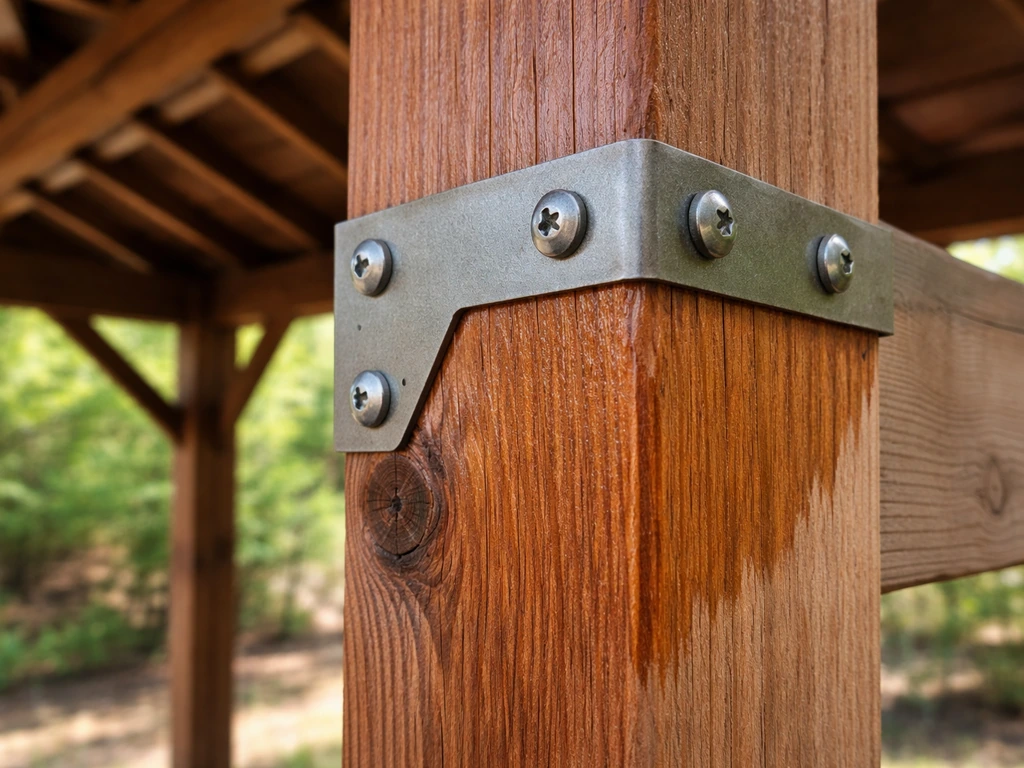
Wood gazebos (cedar, redwood, pressure-treated pine) give you the classic look and are structurally solid, but they require periodic staining or sealing to maintain appearance and prevent rot, especially at post bases and roof framing. Cedar and redwood, with proper maintenance, can last 20 to 30 years. Aluminum-frame gazebos with metal or polycarbonate roofs are lighter, require less maintenance, and handle moisture better. Vinyl-clad gazebos are another low-maintenance option, though they can look less substantial than wood. Roof options on gazebos include metal panels, shingles (asphalt or cedar shake), thatch, or polycarbonate, each with different looks, price points, and maintenance demands.
| Material | Best For | Maintenance Level | Rough Durability |
|---|---|---|---|
| Aluminum (cover or gazebo frame) | Low-maintenance, modern look, rain-prone climates | Very low | 25+ years |
| Cedar / Redwood (gazebo) | Traditional look, custom builds | Medium (seal every 2–3 years) | 20–30 years with care |
| Polycarbonate panels | Rain cover + natural light | Low (clean periodically) | 15–20 years |
| Pressure-treated pine | Budget-friendly wood builds | Medium-high (treat regularly) | 15–20 years with care |
| Vinyl patio cover | Easy maintenance, attached covers | Low | 20+ years |
| Steel (heavy-duty covers) | High wind/snow loads | Low-medium (needs rust coating) | 20–30 years |
Installation: what's realistic as a DIY project
Kit gazebos from big-box retailers are marketed as DIY-friendly, and a light-duty canopy-style gazebo can genuinely be assembled by two people in a weekend. But those units come with real limitations: most are not designed to be anchored as permanent structures, many have wind warnings in the assembly instructions recommending you take them down in strong gusts, and they typically won't pass permit inspections as permanent outdoor structures. If that's acceptable for your situation (a seasonal use structure on an existing patio, for example), a kit gazebo is a legitimate option. If you’re wondering whether a gazebo can go on a patio, the short answer is that it depends on your patio’s structure, local rules, and whether the gazebo needs footings or can be safely anchored can a gazebo go on a patio.
A permanent custom gazebo is a different project. It requires digging footings below the frost line, setting posts in concrete, building a complete roof structure, and likely pulling a permit. That level of work is achievable for experienced DIYers but is genuinely complex. Most homeowners without construction experience should budget for a contractor on permanent gazebo builds.
Attached patio covers sit in the middle. A well-documented vinyl or aluminum patio cover kit with a ledger board attachment system is a manageable DIY project for someone comfortable with basic carpentry, reading instructions carefully, and understanding how to properly flash and waterproof the connection to the house wall. The ledger attachment is the most critical step: an improperly sealed connection leads to water intrusion and rot in the house wall over time. If that makes you nervous, hire a contractor for at least the attachment portion. Freestanding patio covers are somewhat easier since there's no house connection to seal, but still require level footings and proper anchoring.
Permits, site prep, and keeping things maintained
Permits
Assume you need a permit. Some jurisdictions require permits for all gazebos regardless of size, and others tie patio cover permits to attachment to the house, size thresholds, or any electrical work involved. Local rules vary significantly: one township might require a construction permit for every gazebo installed, while a neighboring city only triggers a permit above a certain square footage.
The ICC building code limits patio covers to single-story structures not exceeding 12 feet in height and includes design criteria for wind and seismic loads, which your contractor or building department can walk you through. Call your local building department before buying materials or hiring anyone. It's a five-minute call that can save you from having to tear down an unpermitted structure later.
Site prep and foundation
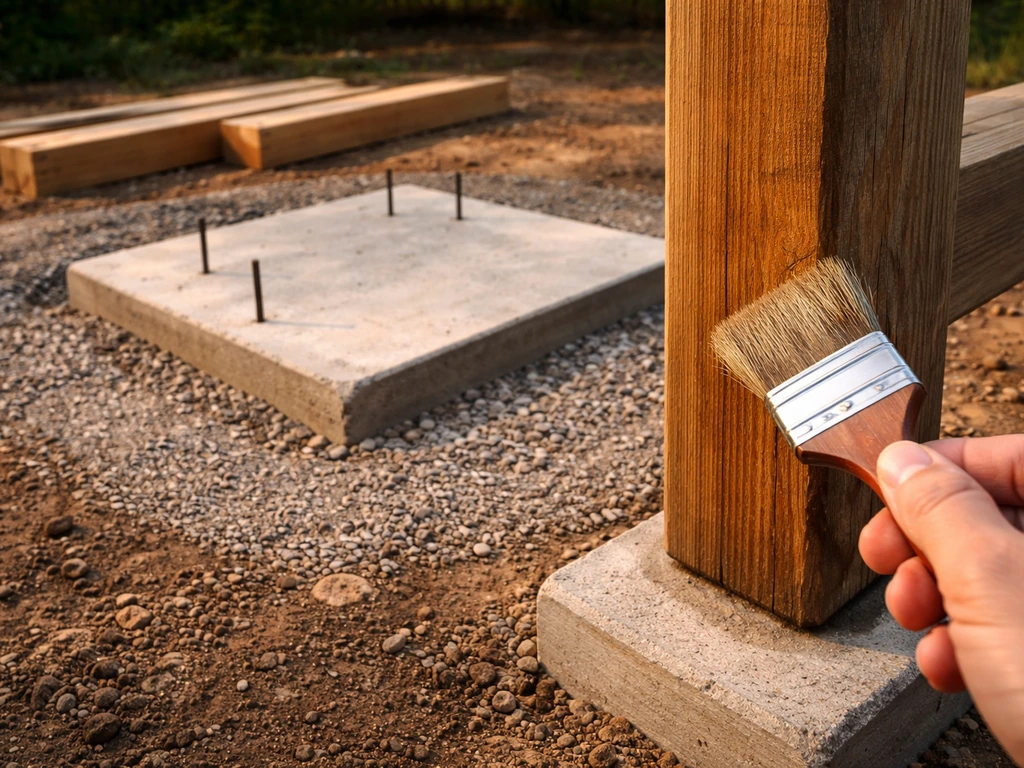
A permanent gazebo needs proper footings. In cold climates, footings must go below the frost line to prevent heaving, which means digging 24 to 48 inches deep in many northern states. Drainage around the base matters too: standing water at post bases accelerates rot in wood and can undermine concrete footings over time. For patio covers, site prep is simpler if you're attaching to an existing slab. If the slab is cracked or uneven, address that first. For freestanding covers, you still need to anchor posts to footings or use approved ground anchors depending on local code.
Ongoing maintenance
Wood structures of either type need the most attention. A wood gazebo should be stained or sealed every two to three years, with annual checks on post bases for soft spots, connections for rust or loosening hardware, and roof flashings for gaps. Aluminum structures (gazebo or patio cover) need little beyond periodic cleaning and a check of fasteners. Polycarbonate panels should be cleaned with mild soap and water to prevent surface hazing.
For attached patio covers, the most important maintenance task is checking the flashing and caulking at the ledger connection annually, since that's where water intrusion problems start. Any roof, whether on a gazebo or a solid patio cover, should be checked after major storms for lifted panels, cracked seals, or debris accumulation in valleys.
Which one makes sense for your situation
Here's a straight breakdown based on the most common homeowner scenarios: If you are also comparing outdoor seating structures, you may be wondering about patio boat vs pontoon boat, but the choice depends on how you plan to use the space and the level of protection you want patio cover.
| Your situation | Best choice | Why |
|---|---|---|
| You want shade/rain cover right off the back door | Attached patio cover | Convenience, lower cost, no separate foundation needed |
| You want a standalone outdoor room for entertaining | Gazebo | Complete structure, defined space, works anywhere in yard |
| Tight budget, need rain cover quickly | Aluminum or polycarbonate patio cover | Fastest install, lowest cost, solid rain protection |
| Large yard, want a garden focal point | Gazebo | Visual anchor, destination feel, works with landscaping |
| Small yard or urban lot with only a patio | Patio cover | Maximizes existing space without claiming more yard |
| You want to add screens or partial walls later | Gazebo (or fully structured patio cover) | Gazebos accommodate screen kits and curtains more naturally |
| You're adding value for resale in 2–3 years | Attached covered patio | Reads as livable square footage extension to most buyers |
| You want low maintenance for 20+ years | Aluminum-framed structure of either type | Least upkeep regardless of gazebo vs cover format |
Your next steps before you commit
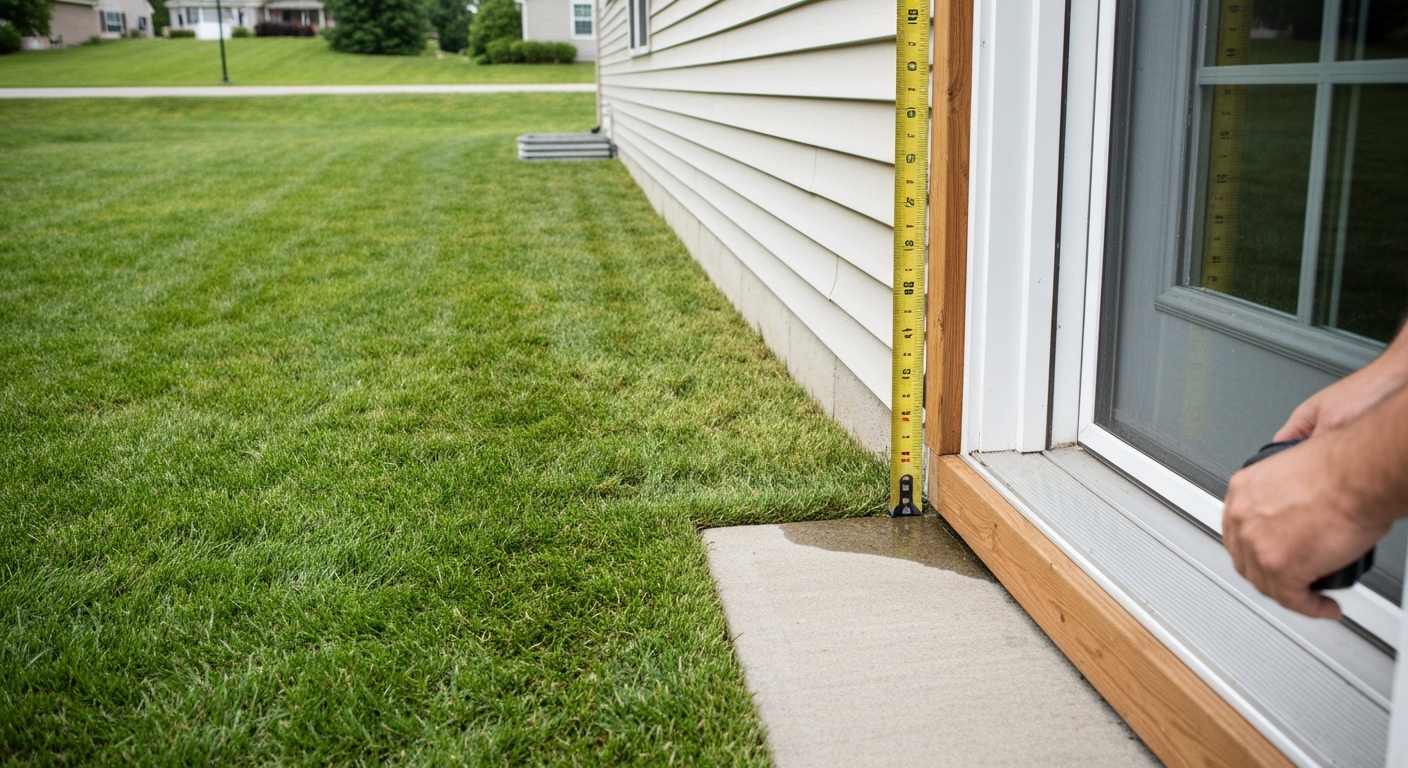
Before calling a contractor or ordering a kit, take 30 minutes to do three things. First, measure your space accurately: the area you want to cover (in square feet), the distance from the house to any fences or property lines, and the height of your eave line if you're considering an attached cover.
Second, call your local building department and ask what permits are required for a patio cover or gazebo at your property, whether there are setback requirements from property lines, and whether an engineer-stamped drawing is needed. Third, decide your rain protection requirement now, not later. If staying dry matters, only consider solid-roof options and ask any contractor specifically how they waterproof the roof-to-post connections and (for attached covers) the ledger flashing.
When getting contractor quotes, ask for itemized breakdowns of material vs. labor, confirmation that the quote includes permit fees, and references for at least two similar completed projects in your climate. The difference between a good installation and a problematic one usually comes down to how carefully the details are handled: foundation depth, ledger flashing, and roof drainage. Get those answers up front and you'll avoid the most common headaches homeowners run into after the build is done. That kind of care also applies to patio umbrellas, so it helps to know whether should patio umbrellas be closed at night to protect them from damage and weather.
FAQ
Do I need a permit for a gazebo or a patio cover?
In most areas, a gazebo and a patio cover can both trigger permits, but they often differ in what approvals are needed. A gazebo usually counts as a separate structure and may require permits even if it is small, while a patio cover permit is more often tied to attachment (ledger board), size limits, and whether any electrical work is added (lights, outlets, fans). Always ask your building department what category your exact dimensions fall into.
Can a gazebo be installed on top of an existing patio slab?
Yes, a gazebo can sometimes be placed over or near an existing patio surface, but it does not mean you can treat the patio slab as the structure’s “foundation.” Many gazebos still require footings below the frost line, approved anchoring, and a layout that avoids overloading weak or cracked areas. The deciding factors are your local frost depth, patio slab condition, and whether the gazebo design can meet wind and uplift requirements.
Which option protects better in heavy rain, gazebo or patio cover?
If you are building a cover primarily for rain protection, prioritize a continuous, solid roof system rather than a partially open pergola-style design. Even with good materials, rain intrusion commonly happens at the roof-to-post joints (gazebos) or at the ledger flashing and caulking (attached covers). Ask contractors for the specific waterproofing method they use at those connections, not just the roof material.
Can a patio cover be as weatherproof as a gazebo?
A gazebo roof may still let some weather in if it is not fully enclosed, because side openings can allow wind-driven rain. A solid patio cover can be just as effective in many climates because it sits closer to the house and often has more controllable roof drainage paths. For either option, consider wind direction, local storms, and whether you want gutters or at least reliable run-off away from walls and post bases.
Which is better for frequent daily use, gazebo or patio cover?
Your choice should change if you want a “walk-up from the house” routine. If you plan to use the space often for everyday meals, you may prefer an attached patio cover because it keeps traffic, furniture placement, and carrying items simpler. A gazebo works better when you want a distinct outdoor room for events or a garden destination, since it often requires a planned path and more furniture staging.
What’s the biggest mistake people make with attached patio covers?
Start by defining the attachment risk. For attached patio covers, the ledger connection is the most failure-prone area because water can migrate into the house wall if flashing and sealing are done incorrectly. If you have an older home, prior siding repairs, or unclear wall framing, it can be safer to use a freestanding cover (no house connection) or hire a contractor specifically for the flashing and waterproofing portion.
If I choose an open-style patio cover, will I regret it in rainy weather?
If staying dry is critical, treat “open” as a trade-off. Pergola-style covers can be great for shade and airflow, but they usually do not stop rain well, especially during sideways winds. If you want partial shade for comfort, you can combine options by using a solid roof zone over seating and leaving other areas more open, but you need a layout that keeps water from dumping over the seating edge.
Will a gazebo or patio cover add more value to my home?
For resale, the attachment style often plays a larger role than the structure name. Many buyers prefer an attached covered patio because it reads as usable living space connected to the home, and it typically requires less “new destination” maintenance planning. A gazebo can be a standout feature, but buyers may view it as more of a maintenance item if it is wood or if the site drainage and access are poor.
How do wind and snow loads change the decision between a gazebo and a patio cover?
In cold climates, both options need correct load handling and foundation details, but frost is especially important for gazebos because independent footings must be installed correctly. Patio covers attached to a slab may be easier to prep if the slab is level and sound, while freestanding covers still need proper anchoring. In any case, confirm wind and snow load assumptions for the roof system and fasteners.
What drainage issues should I plan for before installing?
Gazebos and patio covers both require drainage planning, but the location changes where problems show up. Gazebos can rot faster if water pools at post bases or if concrete footings trap moisture. Attached patio covers can cause hidden house-wall damage if water is not managed at the ledger flashing. In both cases, ask how runoff is directed, whether gutters are recommended, and how the design prevents water from soaking the structure connection points.
Which is more realistic to build yourself, a gazebo kit or a patio cover kit?
For DIY, your best entry point is usually a well-documented patio cover kit with a ledger attachment system only if you are confident in flashing, waterproofing, and measuring wall conditions. Gazebo DIY is more complex because you are building a complete standalone structure that typically needs footings, accurate post setting, and roof framing alignment. If you do proceed with DIY for either, plan extra time for anchoring accuracy and weatherproofing details.
Can I add electricity or lighting to a gazebo or patio cover?
If you plan to add ceiling fans, outlets, heaters, or lights, the “attached” option is often simpler because power runs can be routed from the house more directly. However, electrical adds code constraints and may require a licensed electrician and permit approval. Before you buy materials, ask your contractor whether the design supports your exact fixtures and what permits apply to those additions.
Next Article
Grass Is Higher Than Patio: Causes, Fixes & Deck vs Patio
Grass higher than patio? Causes, slope checks, repair options, lower lawn, raise patio, or build a deck, with costs & DIY