Yes, you can put a gazebo on an existing patio, and plenty of homeowners do it every year. That said, a patio, pergola, or gazebo each serves a different purpose, so it helps to compare them before you commit to one design patio vs pergola vs gazebo. The key is that your patio surface needs to be solid enough to anchor into, the gazebo needs to clear any overhead obstructions, and you have to anchor it properly rather than just setting it down and hoping for the best. Whether you're working with a concrete slab, pavers, or a wood deck, each surface has a specific anchoring approach that works, and a few that really don't.
Can a Gazebo Go on a Patio? Feasibility Checklist

Miles Hart
21 Jun 2026
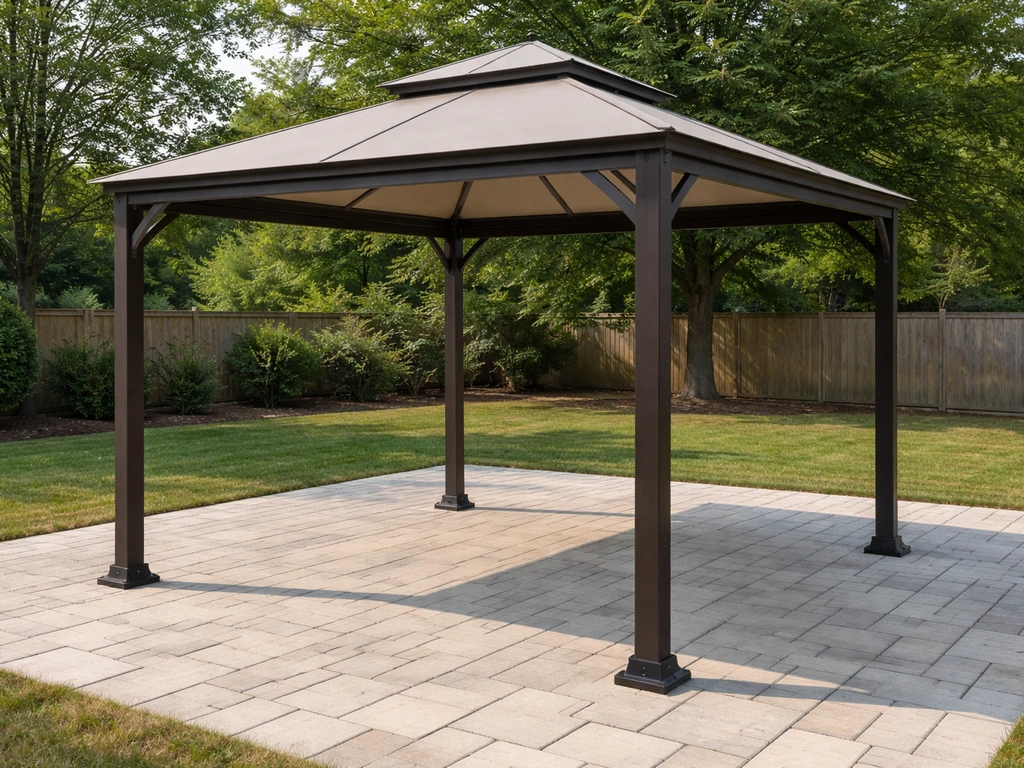
When a patio gazebo is realistic (and when it isn't)
A gazebo works well on a patio when the surface is level, structurally sound, and large enough to accommodate the gazebo footprint plus a safety buffer around the edges. A concrete slab at least 3 to 4 inches thick is the easiest situation: you can drill in sleeve anchors and be done with it. A wood deck works too, as long as you're anchoring into the framing, not just the deck boards. Pavers can work but require extra care during installation since drilling into them risks cracking the surface if you're not careful about placement.
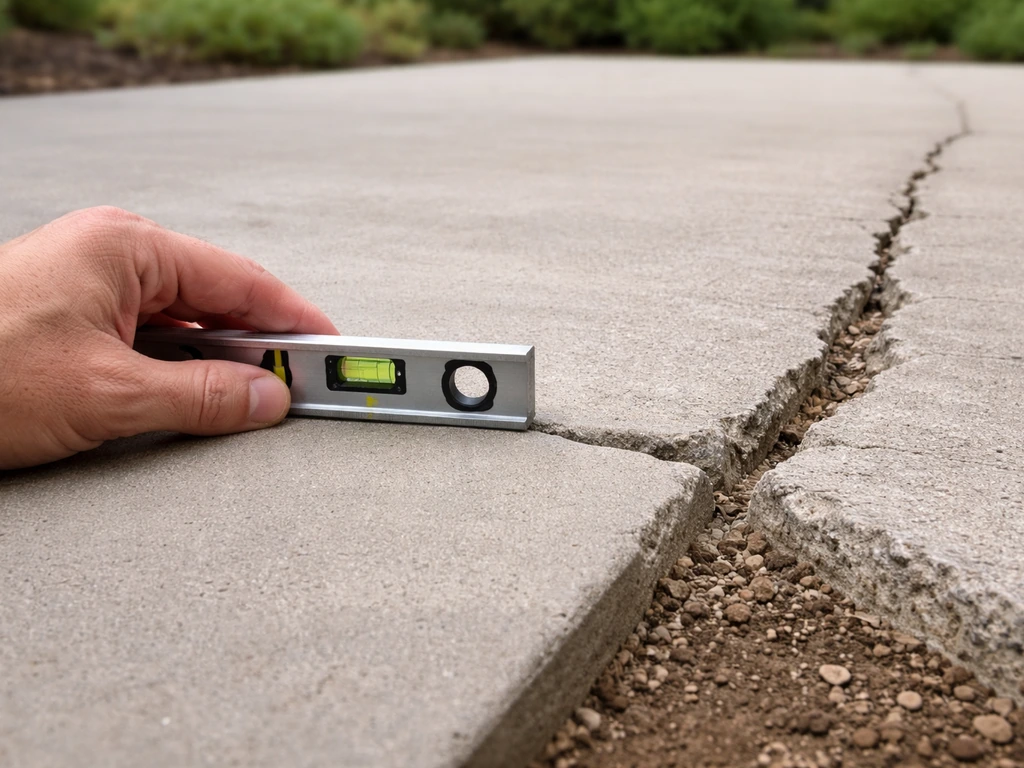
Where it gets unrealistic: a patio that's visibly cracked, heaved, or has soft spots is a problem. A patio that's too small to accommodate the gazebo with clearance on all sides is another dealbreaker. The Yardistry 12' x 14' Grand Gazebo instruction manual includes a permanent installation example for a concrete patio that specifies a minimum 6-inch clearance on all sides. Sloped patios introduce leveling challenges that most prefab gazebos can't accommodate without modification. And any situation where the patio sits over a drainage system or has utility lines underneath the slab that would be at risk from drilling should give you serious pause before you start punching holes.
What your patio surface actually means for installation
Different patio materials behave very differently when it comes to anchoring a gazebo, and manufacturers know this. The Yardistry 12x14 Grand Gazebo manual, for example, includes separate installation diagrams for a concrete patio and a wood deck, because the hardware and method genuinely differ between the two. Here's a breakdown of the most common surfaces:
| Surface Type | Anchoring Method | Key Requirement | Main Risk |
|---|---|---|---|
| Concrete slab | Sleeve anchors drilled into slab | Slab at least 3 inches deep; 3/8" x 3" sleeve anchors typical | Drilling into shallow or cracked concrete |
| Wood deck (framed) | Post-mount hardware bolted through decking into joists/framing | Must reach framing, not just deck boards | Anchoring only to surface boards (no wind resistance) |
| Interlocking pavers | Anchors between pavers or removed/replaced pavers over compacted base | Careful drilling placement to avoid cracking | Cracking pavers; loose base shifting over time |
| Poured patio with stone/tile overlay | Anchor through overlay into slab below | Slab depth needs to be adequate beneath tile | Cracking decorative surface layer |
| Gravel or loose material | Not suitable for direct anchoring | Needs a concrete footing or pad beneath | No structural anchor point available |
The concrete slab scenario is the most straightforward. As long as the concrete is over 3 inches deep, you can use standard 3/8-inch diameter by 3-inch sleeve anchors at each post base after the gazebo is fully assembled. Lowe's installation instructions for the Caesar 12x16 gazebo specifically note this method and warn that wind damage from improper or missing anchoring is not covered under warranty, which tells you how seriously manufacturers take this step.
For wood decks, the critical rule is to anchor into the structural framing (joists and beams), not just the deck boards on top. Deck boards are typically 1 to 1.5 inches thick and provide almost no resistance to wind uplift. Bolting post mounts through the decking and into the framing below is the correct approach. If you can't easily locate the joists or the deck is older and the framing condition is unknown, that's worth investigating before you commit to a gazebo installation.
Pavers are the trickiest surface. Manufacturer instructions often don't address them explicitly, which leaves homeowners guessing. The general approach is to either drill carefully between pavers or remove a paver at each post location, set a small concrete footing, and replace or trim the paver around the base. Drilling directly into pavers is possible but risks cracking the paver if you hit it at the wrong angle or use the wrong bit, so proceed carefully.
Size, clearance, and access checks before you buy
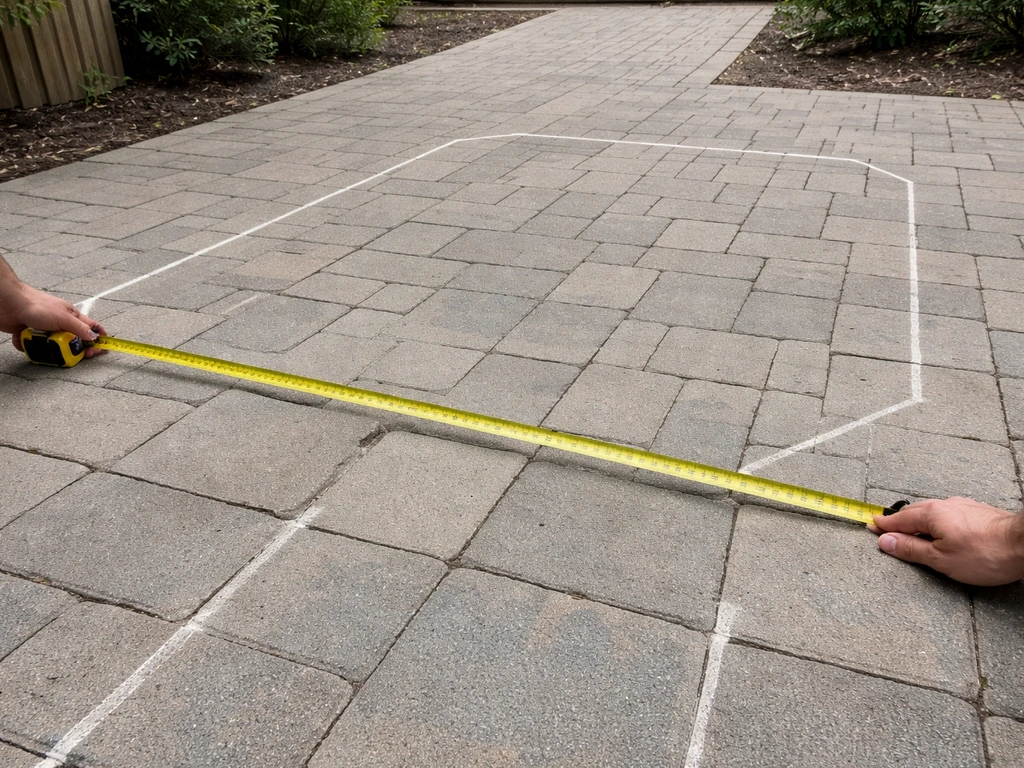
Before you order anything, grab a tape measure and spend 20 minutes on these checks. They'll save you from a costly return or a installation that technically works but creates daily frustrations.
- Measure the patio's usable dimensions and compare to the gazebo footprint. Yardistry's Grand Gazebo manual specifies a minimum 6-inch clearance on all sides of the gazebo structure. That means a 12x14 gazebo needs a patio of at least roughly 13x15 feet, and more clearance is better.
- Check overhead clearance. Measure the height from the patio surface to any overhead obstructions: eaves, roof overhangs, second-floor balconies, power lines. Most freestanding gazebos run 9 to 11 feet at the peak. Confirm you have adequate clearance before the peak, not just the walls.
- Look at door and gate access. A gazebo placed too close to the house or a fence can block or complicate access to back doors, sliding glass doors, and side gates. Walk the perimeter and make sure there's a practical path to every exit point.
- Check the patio's slope. A patio should drain water away from the house, which means it may have a slight slope (typically 1/8 to 1/4 inch per foot). Most prefab gazebo frames are designed to sit level, so measure the actual grade across the footprint area. More than about half an inch of total drop across the gazebo footprint may require shim plates or adjustable post bases.
- Confirm drainage won't be blocked. A solid-roof gazebo will redirect where rainfall lands. Make sure the water won't pool against the house foundation or flood a planted area next to the patio.
Weight, wind load, and whether your patio can handle it
A typical prefab wood or aluminum gazebo in the 10x12 to 12x16 range weighs somewhere between 300 and 700 pounds depending on the material and roof type. For a concrete slab, this is rarely a structural problem. Concrete patios are generally engineered for vehicle loads, so a few hundred pounds of gazebo is not going to crack the slab from weight alone.
Wood decks are a different story: a standard residential deck is typically designed for 40 pounds per square foot of live load, but older decks may have deteriorated framing or connections. If your deck is more than 10 to 15 years old and hasn't been inspected, having a contractor or inspector look at the framing before you anchor a gazebo to it is worth the modest cost.
Wind load is actually the bigger concern than static weight. Gazebos with solid roofs act like a sail in high winds, generating significant uplift and lateral force on the anchors. This is exactly why manufacturers like Lowe's explicitly state that wind damage from improper anchoring voids the warranty. The anchoring isn't about keeping the gazebo from sinking into the ground; it's about keeping it from becoming a projectile in a storm.
In areas prone to high winds or frequent thunderstorms, using the maximum recommended anchor size and count matters, and checking local wind speed design requirements (which vary significantly by region) is worth doing before you decide on an anchoring method. For patio umbrellas, you generally should close them at night to reduce wind damage and keep the fabric protected should patio umbrellas be closed at night.
Freestanding vs anchored: your installation options
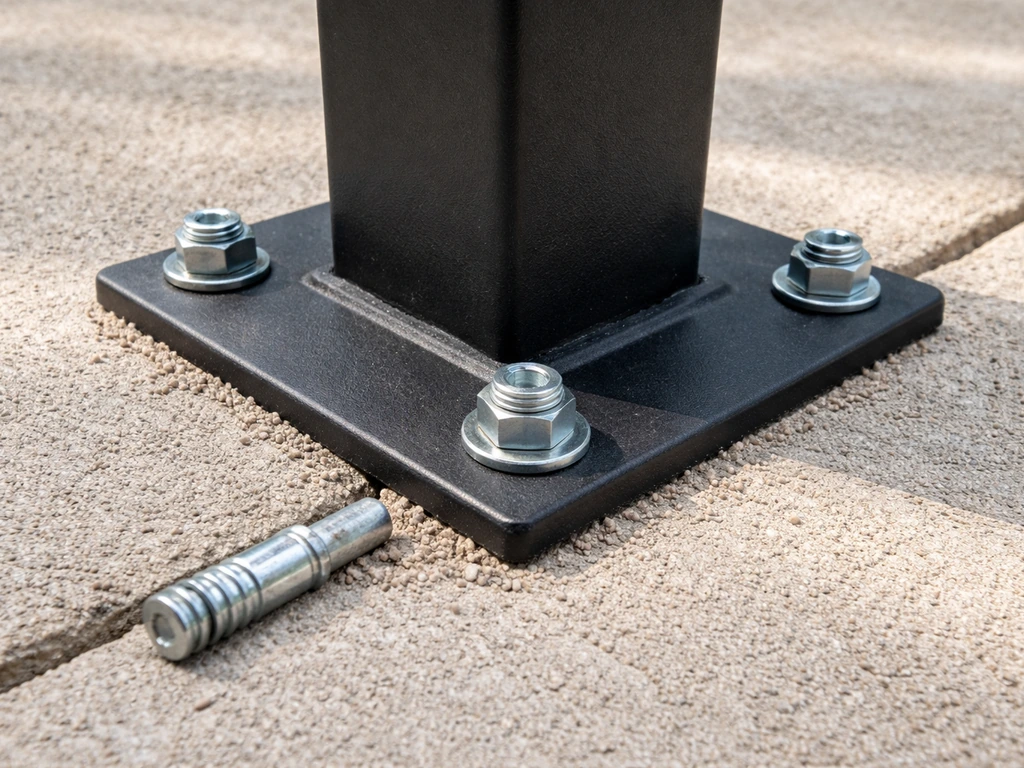
In practice, you have two approaches: set the gazebo freestanding on the patio without anchoring, or permanently anchor it to the surface. If you're comparing patio umbrella vs canopy instead, anchoring and wind-load considerations work similarly, but the hardware and setup differ. Freestanding sounds appealing because it's reversible and doesn't require drilling, but it's genuinely not safe except for very small, lightweight canopy-style structures in calm-weather areas. Any real gazebo with a solid or polycarbonate roof should be anchored.
Anchoring to concrete
The standard method is sleeve anchors: drill a hole into the concrete at each post base using a hammer drill and masonry bit, insert the sleeve anchor, and tighten it down. A 3/8-inch diameter by 3-inch length sleeve anchor is a common spec for this application. Always complete full assembly of the gazebo first so the post positions are confirmed, then drill and anchor. Post-base brackets that bolt into the concrete are another option and allow for minor position adjustments before final tightening.
Anchoring to a wood deck
Use post-mount hardware (post bases with a flat mounting plate) that you bolt through the decking and into the joist or beam below. This typically means using 1/2-inch structural bolts long enough to pass through the decking and at least 1.5 to 2 inches into the framing. Do not use screws into deck boards alone. If you're not sure where the joists are, use a stud finder from below (if there's a crawl space) or probe from above with a small finish nail before drilling. Installing blocking between joists directly below the post locations is a smart upgrade if the existing framing spacing doesn't land conveniently under your post positions.
Anchoring to pavers
The cleanest approach is to remove one paver at each post location, pour a small concrete collar or set a concrete anchor block, let it cure, and then position the gazebo post base over it. Alternatively, some homeowners drill through the paver into the compacted base beneath, but this is risky since pavers can crack under the stress of drilling if they're not well supported underneath. A masonry bit in a hammer drill, used carefully at low speed, reduces the crack risk if you choose to drill into an existing paver rather than remove it.
Permits, HOA rules, and what to check before you build
Whether you need a permit for a patio gazebo depends on your local jurisdiction and usually comes down to a few factors: the size of the structure, whether it has a solid roof, whether it's permanently anchored, and whether it's attached to the house. Many municipalities exempt freestanding accessory structures under a certain square footage (often 100 to 200 square feet) from permit requirements, but a 12x16 gazebo at 192 square feet sits right at or over that threshold in a lot of places. A solid-roof gazebo anchored to a concrete slab is more likely to require a permit than an open pergola-style canopy. The safest move is to call your local building department with the gazebo dimensions and describe the installation before you start.
If you're in an HOA community, check your CC&Rs (the governing documents) before buying anything. Many HOAs regulate the size, style, and placement of outdoor structures, and some require pre-approval even for structures that don't need a municipal permit. Getting verbal approval from a neighbor isn't enough; get it in writing from the HOA board or architectural committee.
- Check your local building department's website or call to ask about permit thresholds for accessory structures
- Ask specifically whether a permanent, solid-roof gazebo requires a permit regardless of size
- Find out if your property has setback requirements (minimum distance from property lines or the house) that affect placement
- Review HOA documents for any rules about outdoor structures, materials, or colors
- If you're in a flood zone or high-wind zone, ask your building department about any additional anchoring or engineering requirements
Cost, home value, and whether to DIY or hire a pro
A prefab gazebo kit for a 10x12 to 12x16 structure typically runs $800 to $4,000 depending on material (aluminum vs. wood), roof type (metal, polycarbonate, or shingles), and brand. Add $50 to $150 in anchoring hardware for a concrete or wood deck installation. Professional installation for a prefab kit generally runs $500 to $1,500 depending on complexity and your region, so a full installed cost of $1,500 to $5,500 for a quality unit is a realistic range.
On home value, a well-built gazebo on an established patio can add appeal and perceived value, but it rarely adds dollar-for-dollar assessed value. Think of it as improving your usable outdoor space and making the home more attractive to buyers who prioritize outdoor living, rather than a guaranteed return on investment. If you are still deciding between a pergola, patio, or alfresco-style setup, align the structure type with your wind exposure and installation surface before committing pergola vs patio vs alfresco. The value impact tends to be stronger in climates with long outdoor seasons.
DIY is genuinely achievable for most prefab gazebo kits on a concrete patio. The assembly instructions are designed for two adults with basic tools, and the anchoring with sleeve anchors into concrete is not technically demanding if you have access to a hammer drill. The steps where DIYers most commonly struggle are: locating joists on wood decks, dealing with unlevel surfaces, and managing paver anchoring.
A similar idea comes up with patio boat vs pontoon boat comparisons, since design and stability differences can matter depending on the surface or conditions unlevel surfaces. If your installation involves a wood deck, especially an older one, getting a contractor to assess the framing and do the post connections is worth it for the peace of mind.
Anything involving a permit typically requires documented compliance with local code, which may mean having a professional installer sign off on the work.
Your practical next steps
If you're ready to move forward today, here's the checklist that covers everything discussed above in a logical order:
- Measure your patio: confirm it's large enough for your target gazebo footprint plus at least 6 inches on each side
- Identify your patio surface: concrete slab, wood deck, or pavers, and check its condition for cracks, soft spots, or structural wear
- Measure overhead clearance and note any obstructions within the planned footprint
- Check the slope across the footprint area and decide if you need adjustable post bases or shims
- Call your local building department and confirm permit requirements for your gazebo's size and roof type
- Review HOA documents if applicable and get written approval before purchasing
- Select your gazebo and download or request the installation manual before buying: check what anchoring hardware is included vs. what you need to source separately
- Plan your anchoring method based on your surface type, buy the appropriate hardware, and complete full assembly before drilling any anchor points
- After installation, re-check that all anchors are tight and verify drainage isn't directing water toward the house foundation
If you're still weighing whether a gazebo is the right structure for your patio or comparing it to a pergola or other covered option, the differences between a gazebo and an open pergola or patio canopy go beyond just looks. A gazebo's fully enclosed roof gives you better rain and UV protection but adds weight and wind resistance that affects both anchoring requirements and permit thresholds. That trade-off is worth thinking through before you commit to a specific structure type.
FAQ
Can I leave a gazebo unanchored on a patio?
Yes, but only if the gazebo is truly freestanding to the point that the manufacturer allows it without anchoring, and even then it is safest in calm weather. For most standard gazebos with solid or polycarbonate roofs, you still need anchoring for wind uplift and lateral force, not just to prevent sinking.
How much extra space should I measure around the gazebo on the patio?
Before you buy, confirm your gazebo footprint plus clearance, then compare it to setbacks from fences, doors, and any overhead lines. A common mistake is forgetting that many kits need a few inches of wiggle room for assembly and that doors on nearby structures can limit where posts can land safely.
What if my patio is slightly sloped, can the gazebo still be installed safely?
If the patio is sloped, you can sometimes level the gazebo by shimming the post bases, but only if the kit’s hardware allows adjustment and the posts remain plumb. If the slope is more than the adjustment range, you may need a different mounting approach (like base extensions or localized leveling work), which changes the install plan and may affect permits.
My patio is concrete, but it looks older, is it still okay to anchor?
Check your patio’s thickness and condition, not just material type. A thin concrete pad, deteriorated surface, or recent resurfacing can reduce anchor performance, even if the patio looks “solid” to the eye. If there are surface repairs, treat them as an unknown and verify with a contractor or by drilling a test location.
What’s the best anchoring approach if my patio is made of pavers?
With pavers, the safest decision aid is to follow a “remove-and-footing” style detail at each post location rather than trying to rely on drilling into a single paver. Also plan to re-level the gazebo after curing, because paver bedding can compress slightly and cause the roof to rack.
What’s the most common wood-deck mistake when installing a gazebo?
On wood decks, locate joists using the deck structure below or from beneath if you have access, then plan post locations to land on, or very close to, framing. If the post positions miss the joists, the usual fix is adding blocking or sistering rather than using deck board-only fasteners.
How do I choose anchoring strength for high-wind areas?
Consider upgrading your anchor plan if your area has frequent storms. A practical step is to use the maximum anchor size and hardware count allowed by the kit instructions, and to ensure the anchors are installed after full assembly so the post bases match the actual frame geometry.
Can I attach the gazebo to the house when it sits on a patio?
Yes, but it affects both safety and code. If the gazebo is near vents, gutters, or roofing edges, roof runoff and clearance can create issues, and attaching anything to the house may trigger additional permit or engineering requirements depending on local rules. Keep the gazebo independent unless the plan explicitly calls for attachment.
Is there a way to install a gazebo on a patio that’s removable later?
If you want reversibility, look for designs that explicitly support temporary placement and use heavy, purpose-built temporary anchoring methods approved by the manufacturer. Otherwise, plan on permanent anchoring, because “removable” gazebo bases still need a real anti-uplift and lateral-resistance method.
Do I always need a permit to put a gazebo on a patio?
Usually, yes, but it depends on your local authority and how the structure is classified. The more it looks like a permanent covered structure (solid roof plus permanent anchoring and substantial size), the more likely it is to require review. A quick call to the building department with exact dimensions and roof type is the fastest way to confirm.
Next Article
Patio Boat vs Pontoon Boat: Which One to Buy?
Compare patio vs pontoon boats: layouts, costs, pros and cons, and buying checklist to choose the right one.