A patio boat and a pontoon boat are often the same thing, "patio boat" is simply a marketing term that boat manufacturers started using in the 1980s and 90s to sell pontoon boats as floating outdoor living spaces. In 2026, if you see a listing for a patio boat, you are almost certainly looking at a pontoon-style vessel with a flat deck, aluminum tubes underneath, and some kind of shade canopy up top. The real comparison worth making is between a basic pontoon setup and a full-featured, heavily outfitted "patio boat" configuration, because the layout, price, ride quality, and ideal use case do differ meaningfully depending on which end of that spectrum you land on.
Patio Boat vs Pontoon Boat: Which One to Buy?

Miles Hart
10 Jun 2026
What "patio boat" and "pontoon boat" actually mean
Under U.S. federal regulation (46 CFR § 175.400), blank" rel="noopener noreferrer">a pontoon vessel is defined as any vessel with two or more watertight hulls that are structurally independent from the deck or cross structure connecting them. That describes every modern pontoon boat you'll find at a dealership: aluminum tubes (two for a standard pontoon, three for a tritoon) running fore to aft, with a flat deck platform sitting on top. The USCG classifies these as pontoons whether they're bare-bones fishing platforms or rolling outdoor lounges with full bars and surround-sound speakers.
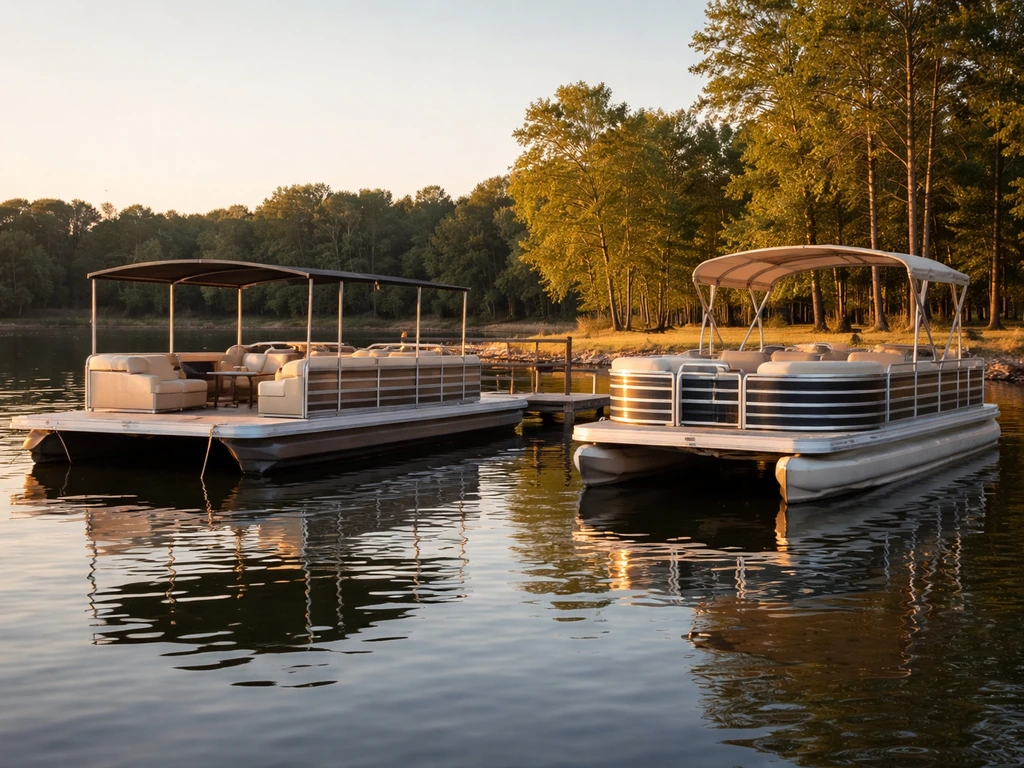
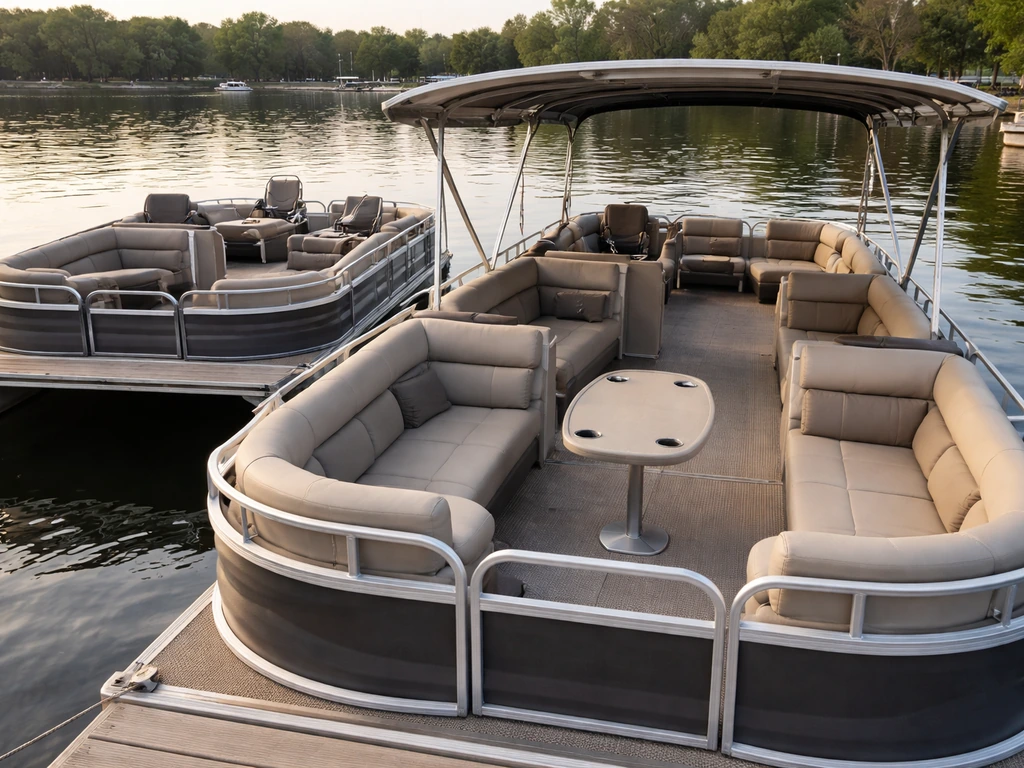
"Patio boat" is not a federal classification at all. It's a product category name, originally popularized by manufacturers like Lowe and Crest, used to describe pontoon boats built and furnished to feel like a backyard patio on the water. Think plush sectional seating, shade canopies that cover most of the deck, built-in coolers, mood lighting, and entertainment systems. A tritoon (three-tube) version adds a third aluminum hull under the center of the deck for better performance and stability. So when someone asks "patio boat vs pontoon boat," the honest answer is: a patio boat is a pontoon boat, but not every pontoon boat is a patio boat.
How the layouts and ride actually differ
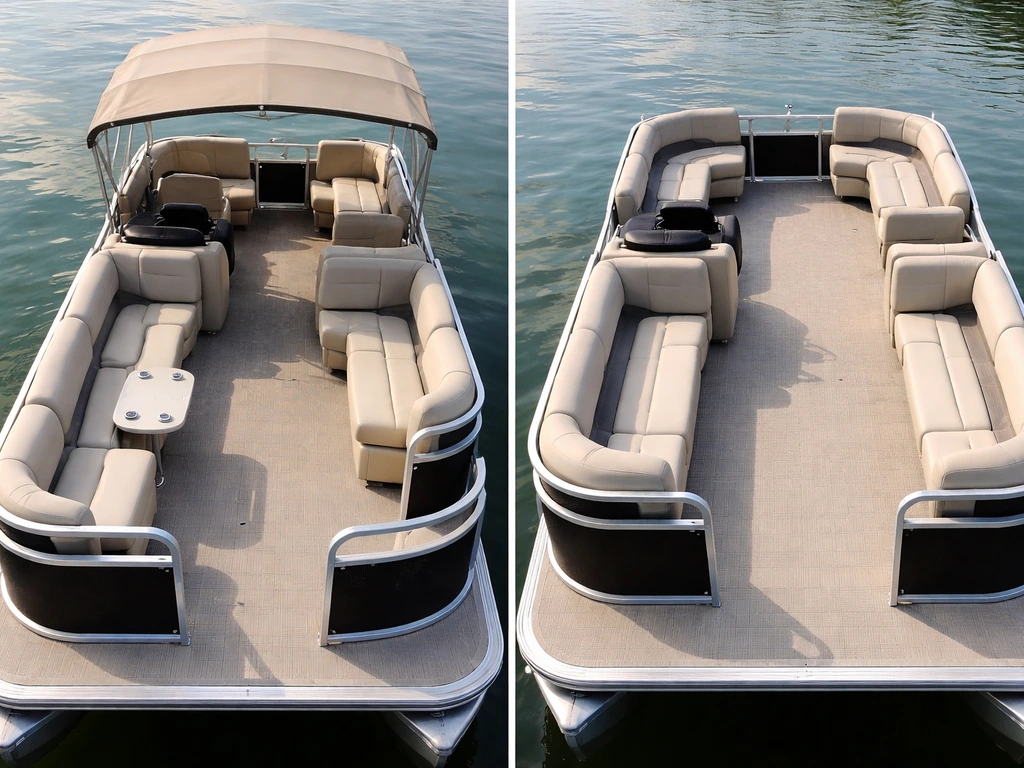
The practical differences show up in deck layout, coverage, seating, and ride comfort. A standard entry-level pontoon boat prioritizes versatility: open deck space, modular seating, and a basic bimini top that covers maybe 40% of the deck. A purpose-built patio boat typically gives you a fixed full-coverage canopy or permanent hardtop, furniture-grade seating arranged in conversation groups (not just rows), and amenities like wet bars, refrigerators, and premium stereo systems. If you are comparing patio umbrella vs pergola styles of shade for your dock or patio space, the same idea applies: canopy coverage and rigidity change comfort and usability. The deck itself is usually carpeted or covered with marine-grade vinyl flooring rather than bare aluminum.
Ride quality depends less on whether it's marketed as a "patio boat" and more on whether it's a two-tube or three-tube (tritoon) setup. Two-tube pontoons ride flat and stable at slow speeds but bounce and rock in chop at higher speeds. Tritoons add a third center tube that keeps the bow from diving and significantly improves handling above 25 mph. Most premium patio boats come as tritoons for exactly this reason, when you're loading the deck with furniture, guests, and gear, you need that extra stability. If a listing says "patio boat" but shows only two tubes underneath, expect a softer, slower ride.
| Feature | Standard Pontoon (Entry-Level) | Patio Boat (Full-Feature) |
|---|---|---|
| Hull configuration | Two tubes (standard) | Two or three tubes (tritoon common) |
| Shade coverage | Partial bimini top (40-60% of deck) | Full canopy or hardtop (80-100% of deck) |
| Seating style | Modular, row-oriented | Sectional, conversation-group layout |
| Amenities | Basic or none | Wet bar, fridge, stereo, lighting |
| Flooring | Aluminum or basic carpet | Marine vinyl or premium carpet |
| Ideal speed range | 10-25 mph | Varies; tritoon versions handle 30+ mph |
| Best use | Fishing, day cruising, versatility | Lounging, hosting, slow-water entertaining |
What you'll actually spend: purchase price, fuel, maintenance, and storage
Purchase price
Entry-level two-tube pontoon boats (18-20 feet, 40-90 HP) run roughly $18,000 to $35,000 new in 2026. Mid-range pontoons with better seating and a 115-150 HP engine land in the $35,000 to $55,000 range. Purpose-built patio boats and premium tritoons start around $55,000 and climb past $100,000 for fully loaded 24-26 foot models with hardtops, high-end audio, and 250+ HP engines. Used market pricing is softer: a 5-7 year old standard pontoon in good shape typically trades for $15,000 to $30,000, while a used patio-style tritoon can still command $45,000 to $70,000 depending on condition and amenities.
Fuel costs
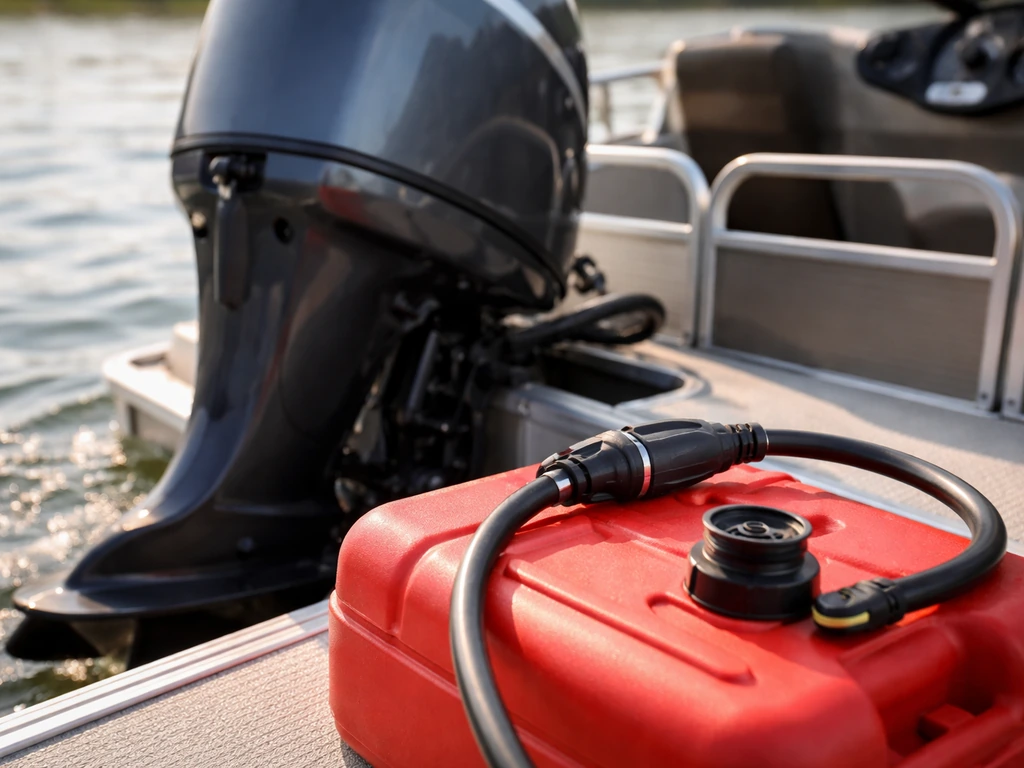
Fuel consumption tracks closely with engine size and how hard you run the boat. A 90 HP four-stroke outboard burning roughly 5-6 gallons per hour at cruising speed on a standard pontoon will cost around $20-25 per hour at 2026 fuel prices. A 250 HP tritoon running at performance speeds burns 18-22 gallons per hour, that's $70-90 per hour. Most patio boat owners run at slower, social speeds (10-15 mph), which cuts consumption considerably, but if you're buying a patio tritoon and planning to use that horsepower, budget accordingly.
Maintenance and storage
Annual maintenance on a pontoon or patio boat typically runs $800 to $2,500 depending on engine size, usage hours, and what you do yourself vs. pay a shop to handle. Figure on annual outboard service ($300-600), tube and deck inspection, carpet or flooring upkeep, and bimini/canopy maintenance. Patio boats with more electronics, hardtops, and built-in appliances have more components to service and repair. Storage is the hidden budget item most buyers underestimate. Dry stack or marina slip storage runs $150 to $600 per month depending on your region and boat length. Trailer storage at home or at a lot runs $50 to $200 per month. Most patio boats are 22-26 feet long and require a trailer with a tow vehicle rated for 4,000 to 7,000+ lbs, which narrows your tow vehicle options considerably.
Which type fits which use case
Your primary use case should drive this decision more than anything else. Here's how each configuration actually performs against the most common buyer goals:
- Hosting and entertaining: A purpose-built patio boat wins here, period. Full shade coverage, conversation seating, built-in cooler and bar space, and ambient lighting all make it genuinely better as a floating outdoor room — similar in spirit to choosing a pergola or covered patio structure for your backyard compared to just a basic open deck space.
- Day cruising and lake exploration: Either type works, but a mid-range tritoon gives you the flexibility to cruise at real speeds without sacrificing comfort. A basic patio boat built around slow-speed socializing may feel underpowered or sluggish if you want to actually cover water.
- Fishing: Standard pontoon boats with open deck space, livewell options, and fishing seats at the bow are purpose-built for this. Most patio boats sacrifice fishing utility for comfort amenities — the sectional couches and shade structures get in the way. If fishing is your primary goal, skip the patio boat category entirely.
- Families with kids and non-boaters: Patio boats with full perimeter fencing, wide stable decks, and high railings are genuinely safer and more comfortable for groups with young kids or guests who aren't experienced boaters. The enclosed feel and furniture-style seating reduces anxiety for nervous passengers.
- Calm inland water (lakes, reservoirs, protected bays): Both types are well-suited here. This is where pontoon and patio boats live best — they're not designed for rough open water or ocean conditions.
- Choppy water or larger lakes with wind: A tritoon configuration handles meaningfully better than a two-tube setup. If your lake gets afternoon chop, this matters.
How to confirm what you're actually buying before you commit
Because "patio boat" is a marketing term and not a regulated category, you need to verify the actual specs yourself when shopping. Dealers and private sellers may use the terms loosely or interchangeably, and a listing photo can look very different from what you find at the dock.
- Count the tubes: Look at the underside of the boat. Two tubes = standard pontoon. Three tubes = tritoon. This affects ride quality, speed capability, and weight capacity more than any other single spec.
- Check the tube diameter: Standard tubes run 23-25 inches in diameter. Performance pontoons and tritoons use 27-inch or larger tubes. Bigger tubes mean more buoyancy, better load capacity, and improved rough-water handling.
- Verify the capacity rating: The capacity plate (federally required) shows maximum persons, weight, and engine horsepower. A patio boat loaded with furniture and guests burns through that capacity fast — confirm the rated capacity matches your actual intended group size.
- Measure the canopy or top coverage: Ask what percentage of the deck is covered and whether the top is a folding bimini or a fixed hardtop. Biminis are cheaper and easier to store under a bridge; hardtops are permanent and more expensive but provide better coverage.
- Confirm engine size and type: Four-stroke outboards (Mercury, Yamaha, Evinrude) are the standard. Ask for service records and confirm the last annual service date.
- Ask about trailer specs and your tow vehicle: Get the loaded trailer weight (boat + engine + fuel + gear) and confirm your tow vehicle is rated for it. A 24-foot patio tritoon loaded up can exceed 5,500 lbs on the trailer.
- Request the hull ID number (HIN) and run a history check: The HIN is on the starboard stern. Use it to check for liens, theft, or prior damage reports through NMVTIS or a boat history service.
- Walk the deck and check all welds and fencing: Look for deck soft spots, cracked welds at the tube-to-cross-member connections, and any play or looseness in the railing system. On a used patio boat, check the condition of upholstery, flooring, and any electronics.
Safety, handling, and docking realities
Pontoon and patio boats are generally considered among the safest recreational boat platforms for inexperienced boaters. The wide, flat deck and low center of gravity make capsizing extremely unlikely under normal conditions. That said, they come with specific handling characteristics you need to understand before you buy.
Pontoons are wide, most run 8 to 10 feet across the beam. That width makes them stable but also means they catch a lot of wind when docking. On a breezy day at an unfamiliar marina, a 24-foot patio boat can be genuinely difficult to control without bow thrusters or a helper on the dock. If your marina slip or home dock has tight clearances, measure the beam of any boat you're considering and compare it to your slip width plus some buffer. A 10-foot wide boat in a 12-foot slip leaves only 12 inches of clearance on each side, manageable but not forgiving.
Stopping distance is another adjustment. Pontoon boats don't stop quickly. Plan on 1.5 to 3 boat lengths of stopping distance depending on speed, so approach docks slowly and give yourself room. Bumper placement matters too: most patio boats need at least four fenders (corner-positioned) to dock safely, and the tube ends stick out and can contact dock pilings in a way a V-hull wouldn't. At low speeds in calm water all of this is manageable, but factor it into your skill level honestly.
Hardtop patio boats also have bridge clearance to consider. A fixed hardtop adds 7-10 feet above the waterline, which can restrict passage under low bridges or into some covered marina buildings. Check your waterway's bridge clearances before buying a boat with a fixed hardtop. As for patio umbrella use, it is generally best to close or lower umbrellas when they are not actively in use, especially at night, to prevent wind damage and keep the deck safer should patio umbrellas be closed at night.
DIY and customization options, and how they change the math
One of the most practical angles in this comparison is that you don't have to buy a factory patio boat to get a patio boat experience. If you meant literally placing a gazebo on your patio, check local building rules and confirm your patio slab can support the gazebo’s weight and wind load patio boat experience. A used entry-level pontoon can be upgraded significantly with DIY work or a modest shop budget, which changes the cost equation considerably.
- Bimini top upgrades: A basic bimini top replacement or extension runs $300 to $800 for materials. Full-coverage aftermarket bimini kits that cover 90%+ of the deck are available for $600 to $1,500, installed. This is the single highest-impact upgrade for turning a standard pontoon into a patio-style experience.
- Flooring replacement: Marine vinyl flooring (EVA foam or snap-together marine decking) can transform the look and feel of a dated pontoon for $400 to $1,200 in materials and a weekend of work. This is a legitimate DIY project for someone comfortable with basic tools.
- Seating reupholstery or replacement: Replacing pontoon seating with furniture-style sectional cushions or aftermarket pontoon furniture packages runs $800 to $3,000 depending on quality. DIY reupholstery on existing frames is possible for $200 to $600 in materials.
- Adding a wet bar or cooler console: Pre-fabricated pontoon console bars and cooler units bolt in without major modification. Budget $400 to $1,500 depending on complexity.
- Lighting upgrades: LED underwater lights ($150-400 installed), deck strip lighting ($100-300), and navigation light upgrades are all straightforward aftermarket additions.
- Hardtop conversion: This is where DIY gets harder. A proper aluminum or fiberglass hardtop requires structural engineering and professional installation. Budget $4,000 to $12,000 for a quality hardtop conversion — at that point, buying a used factory patio boat may make more financial sense.
The customization angle is worth thinking through carefully. If you find a solid used two-tube pontoon for $18,000 and spend $3,000 on a bimini extension, new flooring, and updated seating, you have a very capable patio-style setup for $21,000, considerably less than a factory patio boat at $55,000+. If you are also comparing backyard structures, a gazebo vs patio guide can help you choose the right outdoor setup for shade, weather protection, and comfort. The trade-off is that you won't have the factory-integrated look, the warranty, or the tritoon performance. For most buyers who prioritize calm-water entertaining over speed, the DIY upgrade path on a used pontoon is genuinely worth considering. Just like adding a pergola or shade canopy to an existing patio can transform an outdoor space without starting from scratch, upgrading a basic pontoon can get you most of the patio boat experience at a fraction of the cost.
Which one should you actually buy
Here's the direct answer: if your primary goal is slow-water entertaining, hosting guests, and creating a comfortable outdoor-room-on-water experience, a purpose-built patio boat (or a well-upgraded used pontoon) is the right platform. If you want a versatile boat that can entertain, cruise, and fish reasonably well without breaking $40,000, a mid-range two-tube or tritoon pontoon is a smarter buy. If fishing is your main purpose, neither a patio boat nor a premium furniture-heavy pontoon is your best option, look at a fishing-focused pontoon with open deck space and proper equipment.
| Buyer Profile | Best Choice | Why |
|---|---|---|
| Hosting groups on calm lakes, comfort priority | Patio boat (factory or upgraded pontoon) | Full shade, conversation seating, amenities built in |
| Family day cruising, mixed use | Mid-range tritoon pontoon | Best balance of comfort, speed, and flexibility |
| Budget-conscious buyer wanting patio feel | Used pontoon + DIY upgrades | Significant cost savings with most of the experience |
| Fishing with occasional guests | Open-deck pontoon with fishing package | Open space, livewell, bow fishing seats |
| Rough-water or large lake use | Tritoon (three-tube) with 150+ HP | Third tube critical for handling chop at speed |
| Tight marina slip or low bridges | Shorter pontoon with bimini (not hardtop) | Beam and height clearance concerns with large patio boats |
Your next-step action plan
- Define your primary use case honestly: Is it entertaining, cruising, fishing, or a mix? Weight those in order before you look at a single listing.
- Measure your storage and towing situation first: Check your driveway length, garage clearance, and tow vehicle rating before you fall in love with a 26-foot tritoon you can't store or tow.
- Set a total budget that includes the first year: Add purchase price + registration + insurance ($600-1,500/year for most pontoons) + storage + initial maintenance. Many buyers underestimate total year-one cost by 30-40%.
- Check your waterway's specific conditions: Talk to local marina staff or a boat club about typical wind, chop, and bridge clearances on the water you'll actually use.
- Visit at least two dealers and one private seller: The private seller will show you what a used boat looks like after 5-7 years of real use, which calibrates your expectations on used factory patio boats.
- Request a water test on any used boat: Never buy a used pontoon or patio boat without a test drive. Listen for engine knock, feel for soft deck spots, and watch how the dealer or seller handles the dock approach.
- Get a marine survey on any used boat over $20,000: A certified marine surveyor ($300-600) will find structural issues, deferred maintenance, and tube damage that you'll miss on a visual walk-through.
- Use the HIN to run a history check before signing anything: Boat theft and undisclosed liens are real problems in the used market. This step costs almost nothing and can save you thousands.
FAQ
If I buy a “patio boat,” will it definitely be a tritoon?
Not always. Because “patio boat” is a marketing term, you need to confirm the under-deck layout, typically by looking for the number of pontoon tubes in the photos or in the spec sheet. If the listing only shows two tubes, you are likely buying a two-tube pontoon that can have patio-style furniture and a full canopy, but it will not have the same chop and speed behavior as a tritoon.
What should I measure for clearance if my patio boat has a hardtop or full canopy?
Prioritize the actual canopy or hardtop dimensions relative to your dock and planned entry points. Measure height from the waterline to the highest point when loading and unloading, and compare it to bridge clearances and any covered areas you routinely pass under. Also ask whether the canopy is fixed or removable, because removable tops can matter for storage and trailer travel.
Will a patio-style pontoon be harder to dock in windy marinas?
Look for how the boat is secured in windy conditions. Wide pontoons act like sails at the dock, so ask the seller or marina about typical wind-dock setups, whether the boat uses adequate cleats, and if the dock has tie-off points on both sides and at the bow and stern. If you often park in open water or exposed slips, a wider beam patio boat can be more of a handling challenge than a narrower, trailer-stored pontoon.
How do docking and stopping distances differ from other boat types?
Yes, because many “patio boat” buyers underestimate how long it takes to slow and align. Expect longer stopping distance than a V-hull, especially if you run higher speeds or approach from upwind. A practical step is to practice docking at the same wind and speed patterns you’ll face most often, and plan fender placement early since tube ends can contact pilings.
What engine or prop details should I verify before trusting the horsepower number?
Confirm the engine rating and prop setup for the boat length and tube configuration, not just the advertised horsepower. A patio-style boat is heavier due to furniture, appliances, and sometimes a hardtop, so a lightly under-propped setup can feel sluggish and reduce top speed. Ask for the boat’s typical RPM at cruise and whether it planes easily at your usual load level.
Is carpet or vinyl flooring better for a patio-style pontoon?
Not necessarily. Some patio boats use carpet, but many buyers choose vinyl flooring or marine decking specifically to reduce water retention and cleanup effort after parties. If you’ll entertain often, check whether the flooring is sealed properly around furniture bases and whether there are drain paths that prevent stagnant water under seating.
What are the most common storage or towing mistakes with patio boats?
Start with storage access and your tow capacity if you plan to trailer it. Many patio boats are 22 to 26 feet and can be heavy enough that a tow vehicle upgrade is required, even when the tow rating looks “close.” Also factor in winterization access for the engine and the ability to store a larger canvas or hardtop safely.
Are hardtops and premium patio amenities more maintenance than bimini canopies?
If you want patio comfort but fewer maintenance headaches, confirm what is fixed, what is removable, and how electronics are protected. Hardtops and integrated audio add components that need service, while bimini and canopies usually require periodic fabric care. Ask whether speakers, lights, and outlets are marine-rated and whether the boat has a battery switch and fused wiring to reduce nuisance issues.
How can I prevent shade accessories from becoming a wind or safety problem?
Yes, umbrellas, shades, and canopy setups can become a safety issue if they are not secured and managed. Even though patio umbrellas are a different product than a fixed hardtop, the same principle applies: close or secure loose shade elements at night or when winds rise, and verify the shade provides coverage without blocking visibility of docks and docking lines.
What should I inspect on a used patio-style pontoon before paying a deposit?
A used “patio boat” can be a smart value, but the risk is hidden wear in high-touch areas. Inspect the canopy or hardtop mounts for cracks or corrosion, check flooring for soft spots around furniture legs, and examine seating seams and railings for delamination. Request a service history for the outboard and ask about how often tubes were inspected and repainted or whether any minor tube dents were repaired.
Next Article
Patio vs Pergola vs Gazebo: How to Choose Right
Compare patio vs pergola vs gazebo for shade, privacy, use, costs, upkeep, permits, and value to choose the right one.