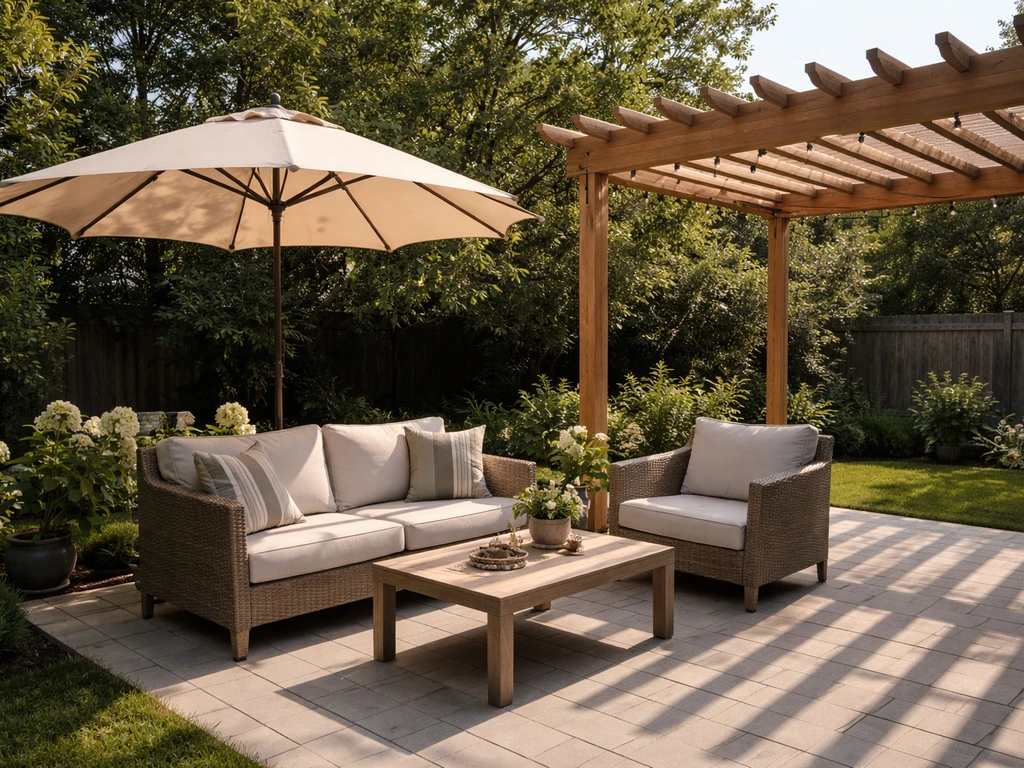
Yes, you should close your patio umbrella at night. The short version of the rule: if you're not sitting under it, close it. Wind, dew, and UV exposure all do real damage to open umbrellas over time, and the risk of a gust sending a 15-pound umbrella across your yard (or into a neighbor's fence) isn't worth the convenience of leaving it up. Almost every major umbrella manufacturer, including Treasure Garden and Abba Patio, explicitly states in their manuals: 'Do not leave open umbrella unattended.' That's the whole answer, but understanding why makes it easier to build a habit that actually protects your investment. If you are deciding between a patio umbrella and a pergola, comparing coverage, wind resistance, and maintenance needs can help you choose the better fit patio umbrella vs pergola.
Should Patio Umbrellas Be Closed at Night? Simple Rules

Why closing at night actually matters
Wind is the biggest threat
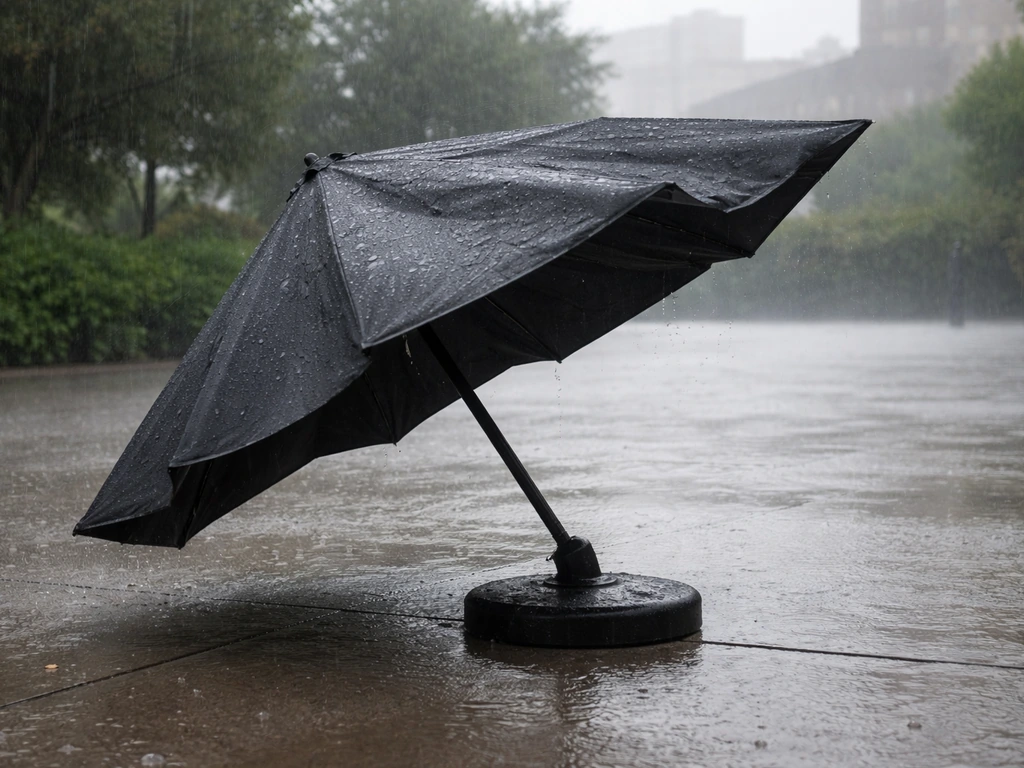
An open umbrella is basically a sail. Even a moderate gust can tip a freestanding umbrella if the base isn't weighted heavily enough, and a strong one can send it airborne. The U.S. National Weather Service defines a High Wind Warning at sustained winds of 40 mph or greater, or gusts reaching 58 mph or more. At those speeds, an unsecured patio umbrella becomes a genuine hazard to people, glass doors, and anything nearby. The CPSC has flagged this exact issue with beach umbrellas, noting that wind gusts can turn them into projectiles. The same physics apply to your backyard. Abba Patio specifically warns in their manuals that the umbrella should be closed immediately in windy conditions (Beaufort Force 6 or higher, which starts around 25 mph) and that damage from wind is not covered under warranty if you ignored that guidance.
Rain and dew degrade the fabric faster than you'd expect
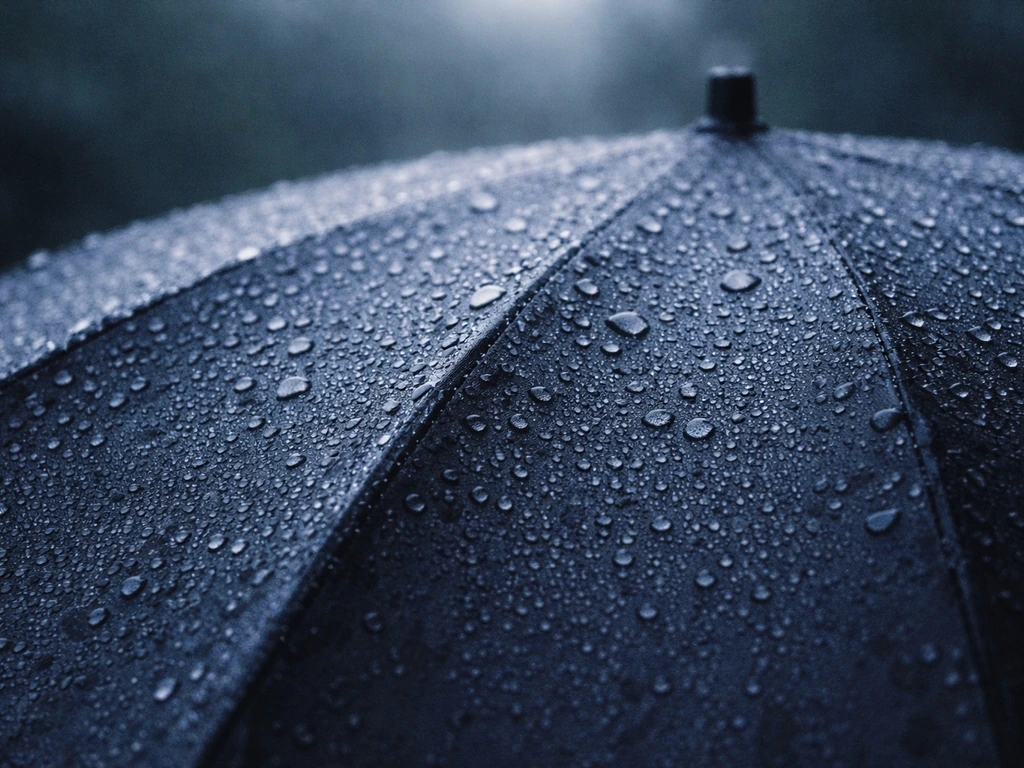
Leaving an umbrella open overnight means the canopy collects dew, especially in humid climates or during shoulder seasons when nighttime temperatures drop. That standing moisture is the direct cause of mildew. Mildew doesn't just look bad; it breaks down the fibers and waterproof coatings in the fabric. Dirt, tree sap, and pollen trapped in wet fabric speed up the process further. Consumer Reports points out that mildew tends to take hold when foreign substances like sap or grime are left sitting on a wet canopy. Once mildew is established, you're looking at a bleach-and-soap treatment at minimum, and sometimes permanent staining or fabric failure.
UV fading happens even when the sun isn't directly on it
This one surprises people. Leaving an umbrella open doesn't protect the canopy from UV; it exposes it. The more cumulative UV hours the fabric sees, the faster the color degrades. Solution-dyed acrylic fabrics (like Sunbrella) are tested for UV resistance using standards like ASTM G154 and rated on lightfastness scales, but even those ratings have limits. ASTM D4303 also describes standard test methods for lightfastness of colorants, which helps approximate how color can change under light exposure over time tested for UV resistance using standards like ASTM G154. The hours add up. Closing the umbrella when you're not using it is one of the simplest ways to extend the life of the canopy, because a closed umbrella wrapped in a cover sees almost no UV at all.
When it's okay to leave it open
There are genuinely low-risk situations where leaving an umbrella open overnight is a reasonable call, though they're narrower than most people assume. The conditions that need to line up:
- Wind is calm and no weather is forecast (under 10 mph, no overnight storm systems expected)
- The umbrella is in a well-sheltered spot, like a covered patio or a courtyard surrounded by walls or fencing that blocks wind
- The base is properly weighted (most manufacturers recommend 50 lbs or more for a 9-foot umbrella in any open-air setting)
- The canopy is small (7 to 8 feet) and lower to the ground, reducing wind-catch and tip-over leverage
- You're in a dry climate with very low humidity and minimal overnight dew
If all of those conditions are true, the risk is low and skipping the close-up routine on one calm night won't ruin your umbrella. But honest advice: this combination of conditions is rare enough that building a habit of closing it every night is easier than trying to judge each situation. If you're also thinking about patio structures like a gazebo, check whether your patio setup supports it safely and legally before you install anything can a gazebo go on a patio. The nights you misjudge are the ones where the umbrella ends up in the garden at 3 a.m.
A simple nighttime routine that takes about 60 seconds
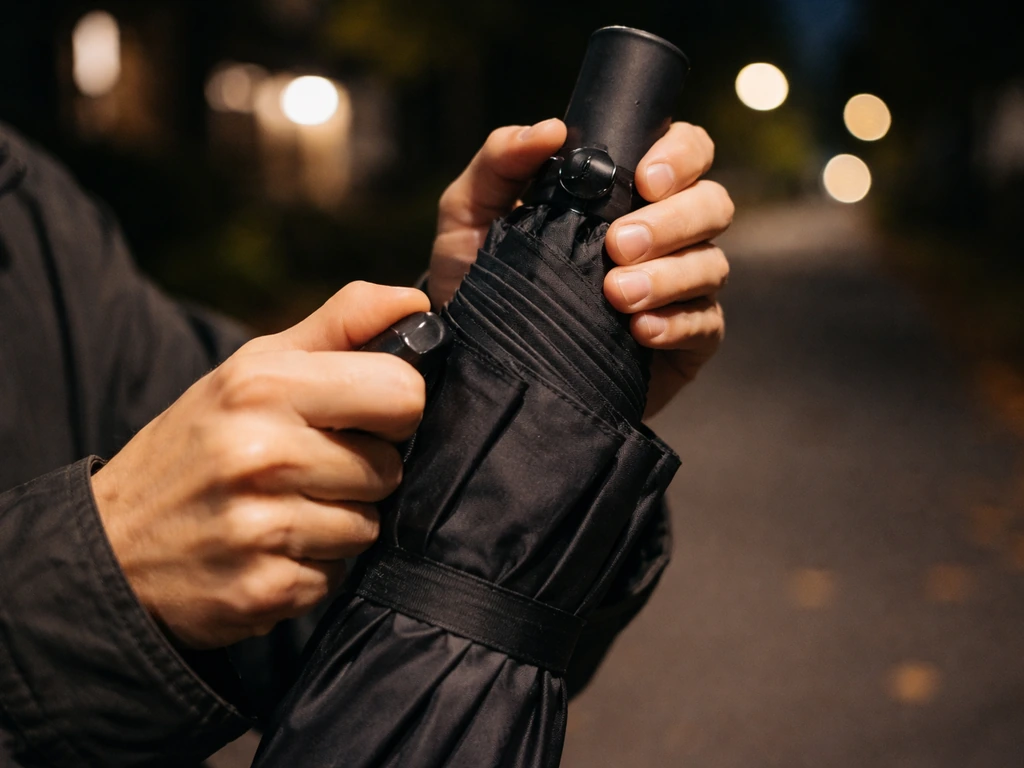
This is the routine recommended by virtually every umbrella manufacturer, and once it becomes habit, it's genuinely quick. Treasure Garden’s assembly and operation guide also directs owners to blank" rel="noopener noreferrer">close and cover the umbrella with the provided protective cover when not in use. Here's the sequence:
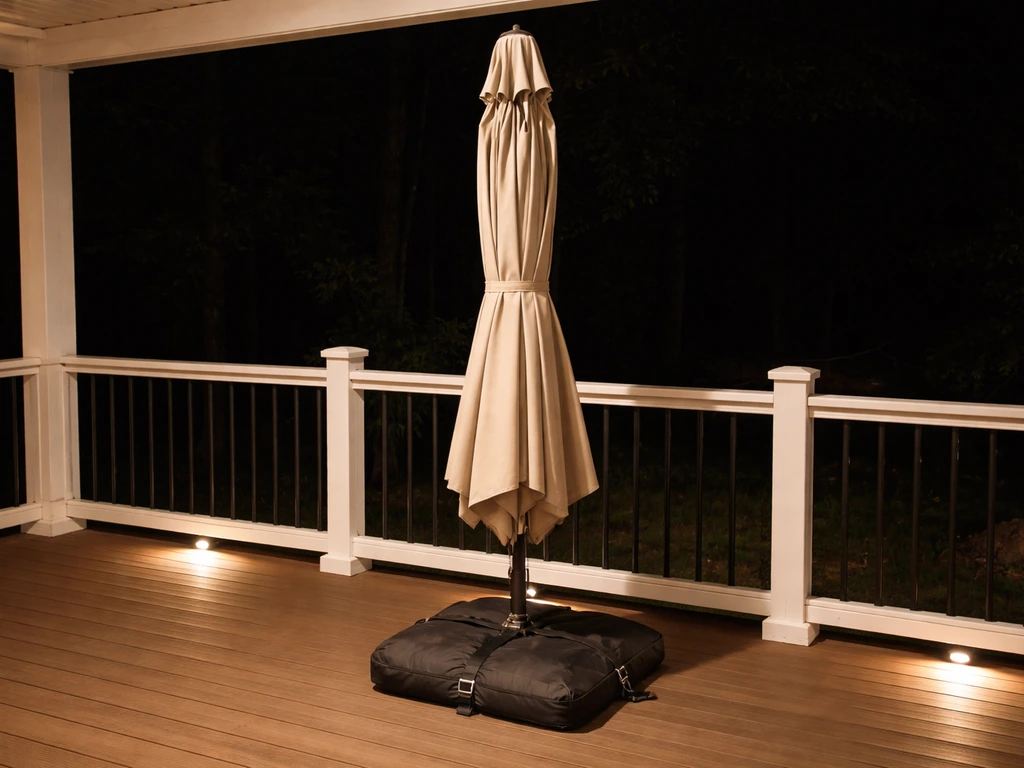
- Close the canopy: Use the crank, push-button, or manual collar to fully close the umbrella. Make sure it's completely furled, not just tilted down.
- Fasten the strap: Most umbrellas include a hook-and-loop strap or tie around the closed canopy. Cinch it snug so the canopy can't catch wind and partially unfurl.
- Slide on the protective cover: A good cover (breathable and water-resistant, like Treasure Garden's PFC910 accessory cover) keeps dew and UV off the fabric while still allowing air circulation to prevent moisture buildup inside the cover.
- Secure the cover: The tie or drawstring at the bottom of the cover should be tightened so the cover itself doesn't blow away in a gust.
- Check the base: Confirm the base knobs are tightened and the umbrella pole is seated fully. A covered, closed umbrella still needs a stable base.
If you're expecting serious overnight weather, high winds, or heavy rain, there's an additional step: bring the umbrella inside or lay it flat in a sheltered area. The Home Depot's own umbrella manuals put it directly: 'Always close and secure the umbrella when not in use or during any strong wind event, especially gusting wind and rain.' Storing it horizontally on the ground under a deck or in a garage during a storm is better than trusting the base and strap to hold in a 50 mph gust.
What to do when the umbrella is already wet
If you came home to an umbrella that's been open in the rain, or you wake up to a canopy soaked with dew, the instinct to just close it and cover it is wrong. Trapping moisture inside a closed, covered umbrella is exactly how mildew gets established. The right move is to let it dry first.
- Leave the umbrella open and let it air dry fully in the sun. On a warm, breezy day this usually takes 1 to 3 hours.
- If there's dirt, sap, or debris on the wet canopy, rinse it off with a hose while it's still open. Use mild soap if needed, then rinse thoroughly.
- Once the fabric is completely dry (not just 'feels dry on the surface'), close and cover it normally.
- If you spot mildew already forming (dark spots, musty smell), treat it before storing: Treasure Garden recommends a solution of bleach and mild soap per gallon of water, applied to the affected area, then rinse and dry completely before closing.
East Coast Umbrella and Greencorner both state this principle clearly: allow the canopy to dry completely before storage to prevent mildew. 'Completely' means fully, not mostly. A damp umbrella stored in a cover overnight will smell like mildew within a few days in humid weather. Store it in a clean, dry, well-ventilated spot if you're putting it away for more than a day or two.
Does umbrella type change what you should do at night?
The core close-at-night advice applies to all umbrella types, but the specifics of how you do it and where the risks are higher differ by style and material. This also applies when you're comparing patio vs pergola vs gazebo choices, since each structure has different exposure and weather-protection tradeoffs umbrella types.
| Type | Key difference | Nighttime consideration |
|---|---|---|
| Standard center-pole (crank or push-button) | Simple pole-in-base design; crank or tilt mechanism | Easy to close quickly; base weight is the main variable. Crank mechanisms are straightforward but can jam if grit builds up in the tube over time. |
| Cantilever (offset/side-pole) | Pole is off to the side; heavier canopy and longer arm create more wind leverage | Higher tip-over risk in wind because the offset design creates more torque on the base. Needs a heavier base (often 100+ lbs) and should be closed and rotated to a stored position if the base has that feature. Leave it in the 'closed and lowered' position overnight, not just furled. |
| Freestanding in a weighted base | Base is the only anchor; no deck mount or permanent footing | Most vulnerable to tipping. If your base is under 50 lbs for a 9-foot canopy, it's undersized. Close every night without exception. |
| Deck-mounted or post-mounted | Pole is secured through a mounting bracket in the deck or a rail mount | More stable in wind than a base alone, but the canopy still acts as a sail. Close the canopy at night; the mounting reduces tip-over risk but not fabric wear from UV and dew. |
| Solution-dyed acrylic canopy (e.g., Sunbrella) | High UV resistance, tested to ASTM G154 standards | Fades slower than polyester or olefin, but UV hours still accumulate. Closing extends canopy life significantly regardless of fabric type. |
| Polyester canopy | Lower cost, lower UV and moisture resistance | More vulnerable to fading and mildew. Closing and covering nightly is especially important. |
Cantilever umbrellas deserve extra attention here. If you are also considering boat seating options, compare patio boat vs pontoon boat designs so you can choose the right layout for how you’ll use it cantilever umbrellas. Because the pole is offset, a gust that hits the open canopy creates a twisting force on the base that a center-pole umbrella doesn't generate. Multiple manufacturers note this in their cantilever-specific manuals, and it's why you'll often see cantilever umbrellas with locking rotation features that let you swing the canopy over a table or over a seating area. If your cantilever has a locking position for storage, use it every night alongside closing the canopy. A cantilever left open in a 30 mph gust with an undersized base is a serious liability.
Climate and seasonal situations worth flagging
Your local climate changes the risk level and what you should prioritize. If you are choosing outdoor shade, understanding the differences between a pergola, a patio, and an alfresco setup can help you pick the right option for your space pergola vs patio vs alfresco. Coastal and high-humidity climates (think Gulf Coast, Pacific Northwest, or Florida) have aggressive overnight dew and faster mildew growth, so the dry-before-storing rule is non-negotiable. Coastal areas also add salt spray to the mix, which accelerates fabric and hardware degradation. If you're in a high-wind region like the Great Plains or exposed hilltops, a lightweight umbrella in a sand-filled base isn't adequate, full stop. In cold climates, bring the umbrella in for winter storage once the outdoor season ends; repeated freeze-thaw cycles damage fabric coatings and crack pole finishes. Even if you use the umbrella into fall, a good practice is to do a full clean-and-dry before the final storage of the season so you're not trapping damp fabric in a garage for six months.
When you're tired of the daily close-up routine
If closing a patio umbrella every night feels like a chore you'll eventually skip, that's a signal worth paying attention to. Some homeowners find that a retractable awning, a pergola with a shade sail, or a more permanent covered structure eliminates the daily ritual entirely. If you're weighing gazebo vs patio options for covered outdoor living, the same wind and weather risks should guide where you place any shade structure. A retractable awning can be extended and retracted in seconds with a wall-mounted crank or remote, and when it's retracted it's fully protected from UV, wind, and moisture. A pergola with attached shade panels or a hard-top roof removes the umbrella management question altogether for a defined seating area. Those options involve higher upfront cost, but for people who use their patio every day and find umbrella management annoying, the tradeoff is reasonable. A patio umbrella is the right solution for flexibility and lower cost; a permanent structure is the right solution for low-maintenance daily use. Both are valid, and knowing which camp you're in before you buy makes the decision easier.
FAQ
Is it okay to leave a patio umbrella open if it’s a calm night with no rain or wind forecast?
Even in calm conditions, dew is common at night, especially in humid areas, and dew plus trapped dirt and pollen increases mildew risk. If you truly decide not to close it, at minimum make sure the canopy stays fully dry and you can check it early in the morning, but the safer habit is still close when you’re not using it.
What’s the safest way to close a patio umbrella during breezy conditions?
Close it promptly, but avoid yanking or dropping the canopy while wind is hitting it. Guide the fabric by hand as you close, keep your body clear of pinch points around the ribs and hinges, and secure the closed umbrella before you walk away from it.
Do I need to close the umbrella if the cover is on it already?
Yes, close the umbrella first. A closed umbrella under a cover still protects much better from UV, but if the canopy was left open and then covered while wet, the trapped moisture accelerates mildew. Treat “dry first, then cover and store” as the rule.
My umbrella is wet with dew in the morning, should I close it and put it away right away?
No, let it dry completely before long storage. Close it for the night only when you can dry it later. If you store a damp umbrella, it often develops a musty smell and mildew within days, particularly in humid climates.
How can I tell whether my umbrella fabric is dry enough before storing?
Dry enough means no damp feel anywhere on the canopy, and no cool, wet spots near seams and edges. If the umbrella still feels slightly cool or smells earthy, continue drying in open air with airflow, then store when it is fully dry.
Does closing the umbrella at night help in winter, or should I leave it out longer in cold weather?
For most climates, you should bring it inside for winter storage once the outdoor season is done. Freeze-thaw cycles damage coatings and can crack pole finishes, and trapped moisture can worsen wear. Do a full clean and complete dry before you store it for months.
What’s different about cantilever umbrellas when deciding whether to leave them open overnight?
Cantilever models create extra twisting forces when wind hits the offset canopy, so leaving them open is riskier, especially if the base is not heavy enough. If your model has a locking storage position, use it every night along with closing the canopy.
Can leaving the umbrella open damage the base or stand, not just the fabric?
Yes. Repeated wind loading can loosen hardware, shift the base, and wear straps or tilt mechanisms, especially on freestanding or lightweight setups. Closing reduces both projectile risk and fatigue on the frame and mounting points.
Is it ever acceptable to leave a patio umbrella open overnight if it’s tied down?
Tying down can reduce movement, but it does not eliminate the hazard if a gust hits a sail-like canopy. Manufacturer guidance still emphasizes closing and securing when not in use or during strong wind events, so tied-down is not a reliable substitute for closing.
How heavy should my umbrella base be for safer overnight storage habits?
Use the manufacturer’s specified base weight and any required anchoring method for your specific umbrella size and wind rating. An undersized base increases the chance of tipping even on short timeframes, and it makes the “just leave it up” idea much riskier.
What should I do if I wake up and the umbrella blew open or partially open?
Close it immediately, inspect the canopy for tears and bent ribs, and check the pole, joints, and tilt or locking mechanism for looseness. If it looks out of alignment, don’t force it, because a bent frame can fail under the next wind event.
If I switch to a pergola, retractable awning, or gazebo, do the night-safety rules change?
They change the daily management, not the weather logic. Permanent or retractable structures can greatly reduce umbrella-like sail behavior, but strong wind and heavy rain still require using any recommended locking positions and ensuring drainage, hardware, and coverings are rated for your local conditions.
Patio Umbrella vs Pergola: Which Shade Option Fits You?
Patio umbrella vs pergola guide: costs, weather coverage, DIY vs permitting, maintenance, and pick the best shade for yo