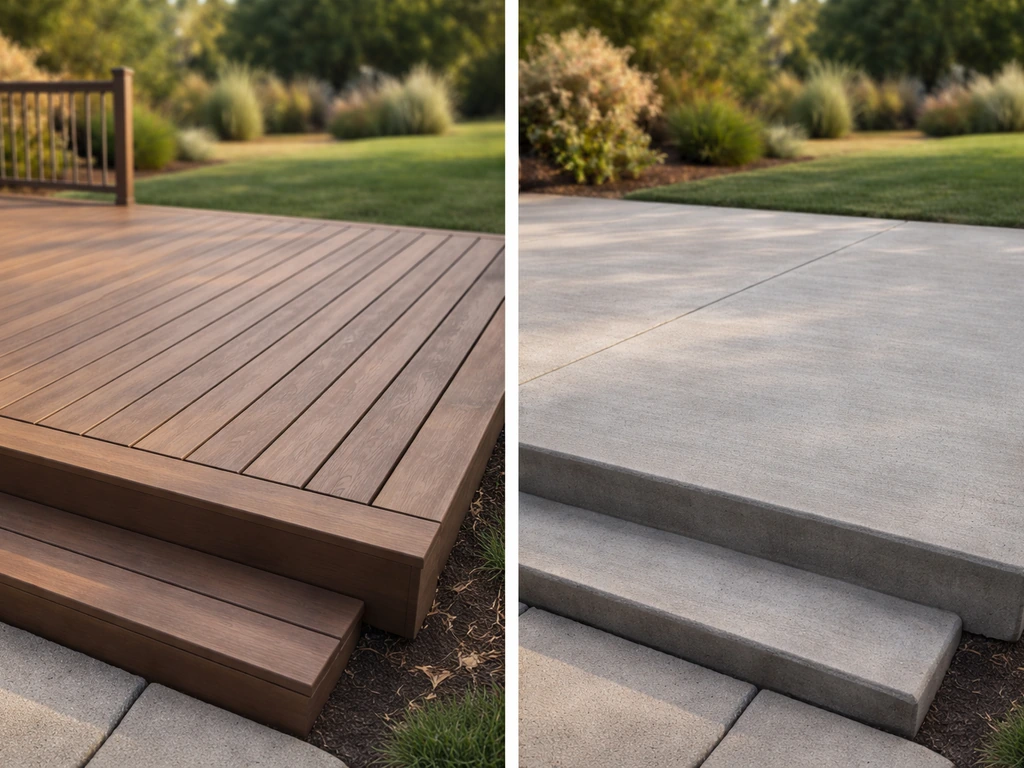
Neither a patio nor a deck is universally better. The right choice depends on your yard's slope, your budget, how much maintenance you're willing to do, and what you actually want to do out there. That said, here's the honest short version: if your yard is flat and you want the lowest upfront cost with the least long-term fuss, a concrete or paver patio usually wins. If your yard slopes, you want a raised outdoor living area, or you're focused on resale appeal in a deck-loving market, a deck often makes more sense. The sections below walk through every dimension that matters so you can make the call for your specific situation.
Patio or Deck Which Is Better for Your Home

Miles Hart
2 Jun 2026
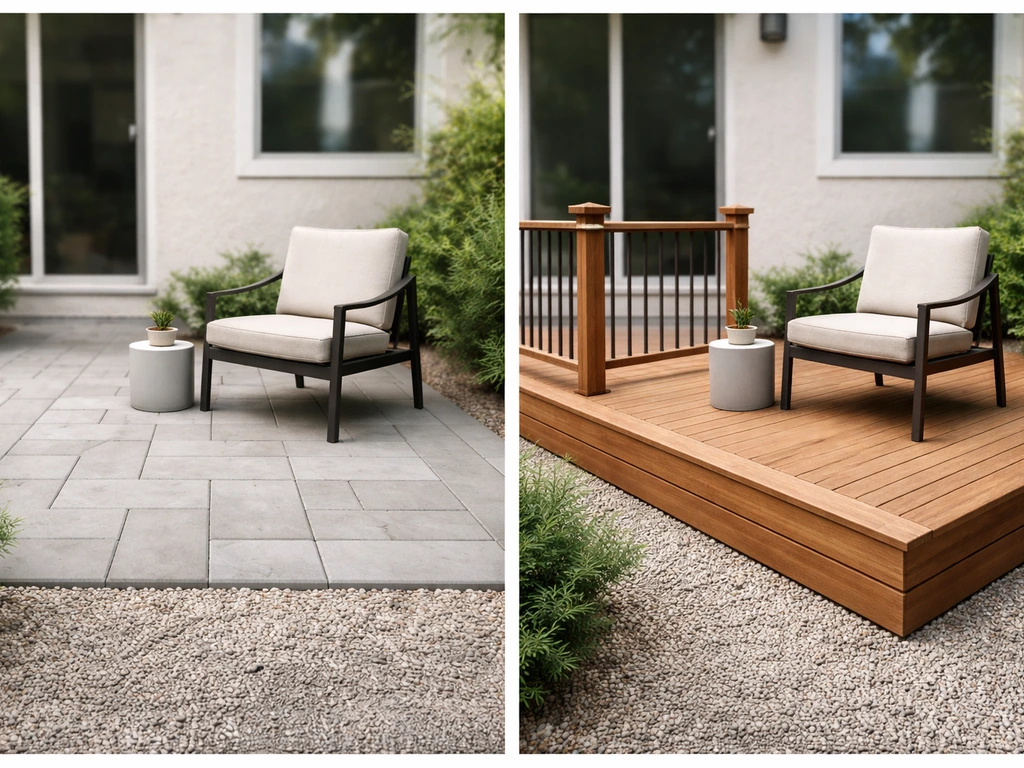
The bottom line before you go further
Patios are simpler to build, generally cheaper to install, and require less structural engineering. If you're wondering is it easier to build a deck or patio, note that patios are simpler to build, generally cheaper to install, and require less structural engineering. Decks give you more flexibility on uneven terrain, tend to add a stronger visual presence to the home, and are often preferred by buyers in certain regions. Both can last 25+ years when built correctly. The biggest mistake homeowners make is choosing based on aesthetics alone without thinking through cost, site conditions, and how they'll actually use the space. Here's how to think through each factor properly.
Key differences: materials, maintenance, and longevity
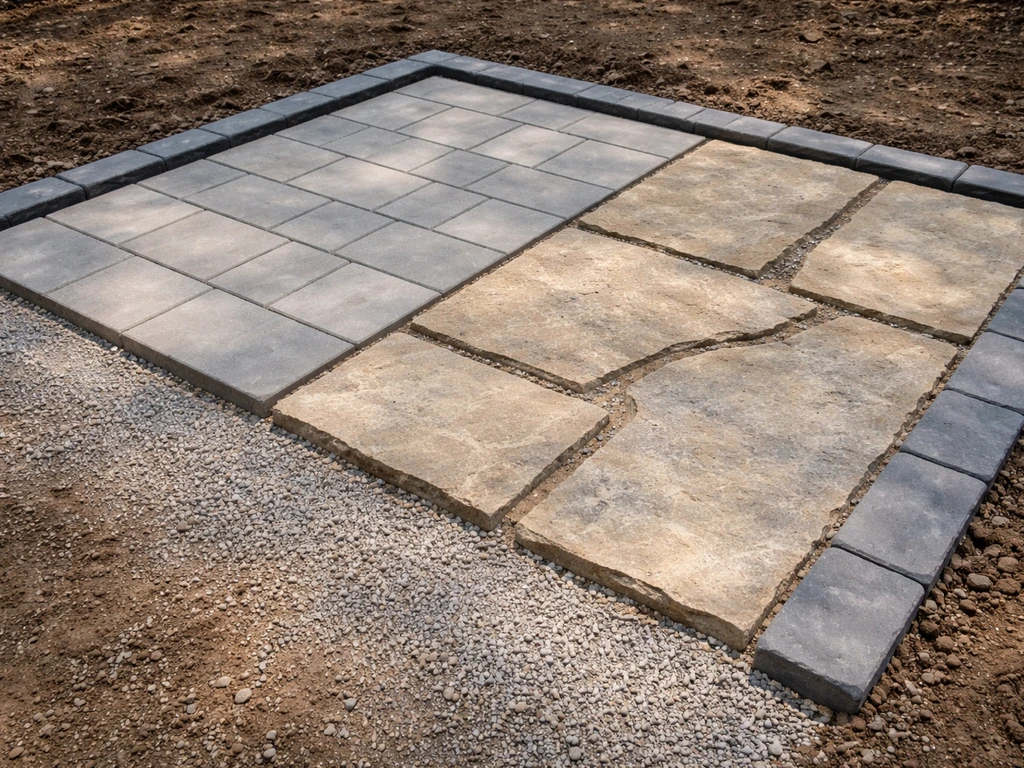
Patios sit on the ground. They're built from hard materials like poured concrete, concrete pavers, flagstone, or brick, all laid on a compacted gravel base at or near grade level. Decks are elevated platforms built from a structural wood or composite frame, typically attached to the house via a ledger board and supported by footings that go into the ground below the frost line. That structural difference is what drives most of the cost, code, and maintenance differences between the two.
How long each one actually lasts
Poured concrete patios commonly last 25 to 50 years when built with proper drainage slope (about 1/8 inch per foot away from the house) and sealed every couple of years to limit water absorption. The main failure mode is cracking, especially in freeze-thaw climates where water gets into hairline cracks, freezes, and expands. Paver patios have a similar 25 to 50 year lifespan, but they depend heavily on joint sand maintenance.
Paver patio longevity is often described as lasting about 25 to 50 years when properly installed, with joint sand maintenance called out as a major factor. When joint sand erodes, pavers shift, weeds establish, and the whole surface destabilizes. Flagstone needs periodic resealing, often annually, to resist staining and weathering.
Pressure-treated wood decks typically last 10 to 20 years with regular maintenance. You need to clean the surface and apply a stain, paint, or sealer roughly every two years to hold off UV and moisture damage. The ledger connection (where the deck attaches to your house) is the highest-risk point: poor flashing there causes hidden rot that can compromise the whole structure before you notice it. Composite decking changes the equation significantly. Capped composite products like Trex are commonly rated for 25 to 30 years and require only occasional soap-and-water cleaning. The trade-off is higher upfront cost, and in shaded or damp spots, surface mold and mildew can still be an issue even if the boards themselves don't rot.
| Feature | Patio (concrete/pavers) | Deck (PT wood) | Deck (composite) |
|---|---|---|---|
| Typical lifespan | 25–50 years | 10–20 years | 25–30 years |
| Main maintenance task | Seal/repair cracks, refill joints | Clean + stain/seal every 2 years | Soap-and-water cleaning |
| Biggest failure mode | Cracking, freeze-thaw heave | Rot, fastener corrosion, ledger failure | Surface mold/mildew in damp spots |
| Structural complexity | Low (no framing) | High (footings, framing, ledger) | High (footings, framing, ledger) |
| Works on sloped yards | Not easily | Yes | Yes |
Cost comparison: installation, permits, and long-term upkeep
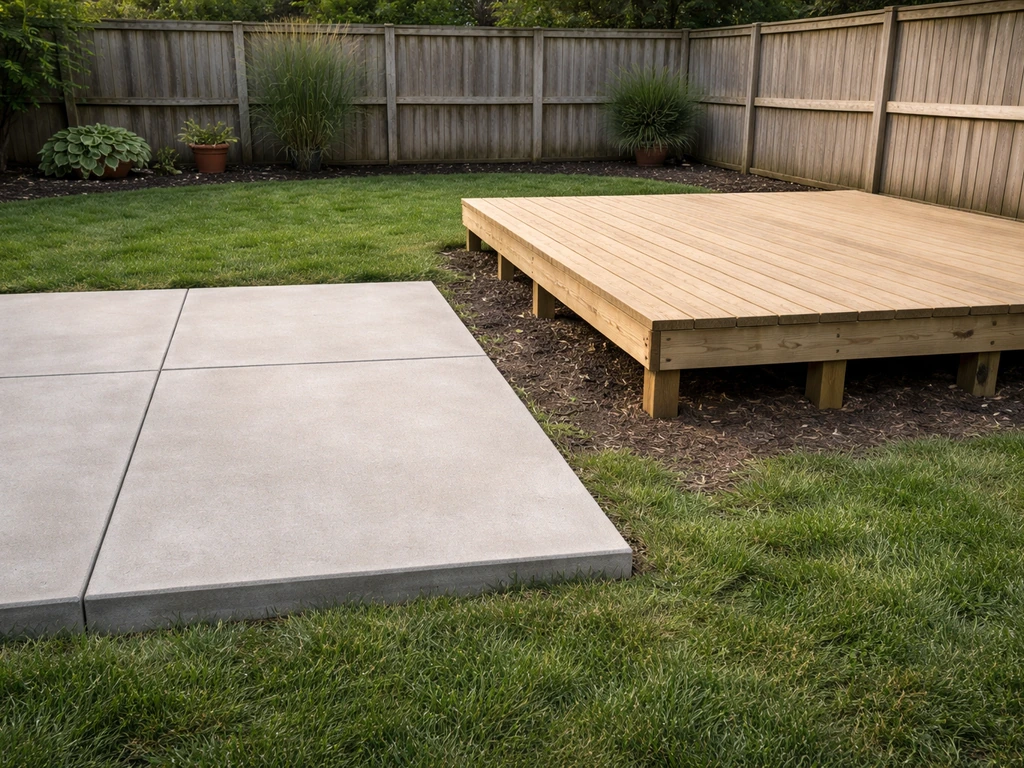
Patios almost always cost less to install than decks of the same size. Poured concrete typically runs $6 to $18 per square foot installed, and pavers come in at roughly $12 to $30 per square foot depending on material and complexity. On the higher end, flagstone or custom natural stone work can push beyond that range. Decks run $15 to $50 or more per square foot installed, with pressure-treated being the cheaper option and composite systems landing in the $25 to $50+ range. A 300-square-foot concrete patio might cost $4,000 to $7,000 installed. A comparable composite deck could easily run $12,000 to $18,000 or more once you factor in footings, framing, and railings.
Permits are almost always required for decks and often skipped (incorrectly) for patios. Decks need footing inspections, structural plan reviews, and in many jurisdictions, a final inspection before use. Costs vary widely by location but figure $200 to $1,000+ for deck permits in most areas. Ground-level patios often don't require permits, but check your local rules before assuming. Some municipalities require permits for any impervious surface above a certain square footage because of stormwater rules.
Long-term cost is where patios start to pull ahead more clearly. A paver patio needs occasional joint sand top-offs and may need a section releveled every 10 to 15 years. A concrete patio may need crack filling and periodic sealing. A PT wood deck needs stain or sealer every two years (labor plus materials each time), and eventually boards, fasteners, or even framing members will need replacement. Composite reduces that recurring maintenance cost but doesn't eliminate it entirely.
Performance factors: weather, comfort, slip resistance, and usability
Concrete and dark stone patios absorb and radiate heat, which makes them uncomfortable to walk on barefoot in full sun in the middle of summer. Lighter-colored pavers or natural stone stay cooler. Composite decking also heats up in direct sun, and some dark-colored composite boards can get hot enough to be uncomfortable. PT wood stays somewhat cooler than composite but not dramatically so. If you're in a hot climate and the space gets full afternoon sun, shade structure planning matters more than which surface you choose.
Slip resistance is a real concern on patios, especially when wet. Smooth concrete and polished stone become slippery in the rain. Brushed or broom-finished concrete, textured pavers, and tumbled flagstone all have better wet traction. Composite decking is generally designed with grip in mind, and most products have a textured surface that holds up reasonably well when wet. Wood decks, when wet or mossy, can get slippery quickly. The fix is usually a good cleaning and a non-slip additive in the finish, but it requires staying on top of it.
Drainage is one area where decks have a natural advantage. Rain drains through or off the deck surface by design. Patios need to be sloped correctly to shed water, and if the grade wasn't set right during installation or has shifted, you can end up with pooling near the foundation. In wet climates, a poorly graded patio is more problematic than a poorly built deck from a standing-water standpoint. If you're in a climate with heavy freeze-thaw cycles, drainage under and around a patio becomes even more critical since water-saturated subgrade is what causes heaving and cracking.
What about covered structures?
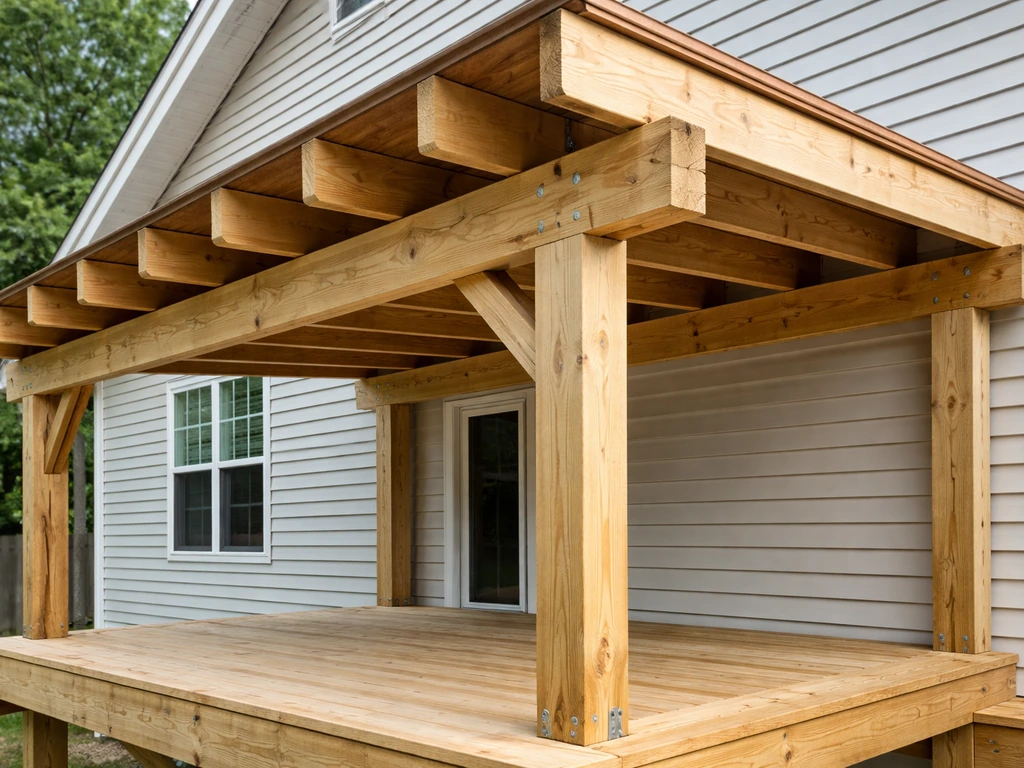
Both patios and decks can be covered with pergolas, patio roofs, or full enclosures, but the framing attachment approach differs. Deck-mounted pergola posts typically attach to the existing deck framing, which must be engineered to handle the additional load. Patio covers often attach to the house or stand independently on their own footings. If a covered outdoor living space is part of your plan, factor that into your structural decisions early rather than trying to add it later.
Home value and resale considerations
Decks tend to show a stronger return on investment at resale than patios, though neither one fully pays for itself. Industry estimates typically put wood deck ROI at around 65 to 75 percent of the installation cost recovered at resale, while patios recover roughly 50 to 65 percent.
Some guides also summarize resale math this way, with wood decks recouping roughly 65, 75% of cost versus patios around 50, 65% wood deck ROI at around 65 to 75 percent of the installation cost recovered at resale. Some deck-vs-patio comparisons report deck ROI as high as 70 percent versus patio ROI around 50 percent. These numbers vary a lot by region.
In markets where outdoor entertaining space is highly valued, like the mid-Atlantic, Pacific Northwest, or anywhere with a strong outdoor culture, a well-built deck can genuinely move buyers. In hot southern markets where a shaded patio with a ceiling fan is the norm, a deck may matter less.
Condition matters more than type at resale. A well-maintained paver patio with good landscaping will look better to a buyer than a weathered, graying wood deck with loose boards. Whatever you build, keep it maintained. A deck with deferred maintenance is a negotiating point against you at sale time. A freshly sealed patio with clean joints and good drainage is a genuine selling point.
DIY vs contractor: what you can realistically build and when
A ground-level paver patio is one of the more realistic DIY projects for a reasonably handy homeowner. For most homeowners, a ground-level paver patio is often the easiest option because the materials are straightforward and the base prep is within reach for DIY easiest type of patio. The basic process (excavate, compact gravel base, set sand bed, lay pavers, add edge restraints, fill joints) is learnable and doesn't require specialized tools beyond a plate compactor rental. A 200-square-foot paver patio DIY can save you $2,000 to $5,000 over hiring a contractor. Poured concrete patios are harder to DIY because working concrete correctly is time-sensitive and unforgiving. Unless you've done flatwork before, poured concrete is better left to a pro.
Decks are DIY-possible but more technically demanding than most patios. You need to understand footing depth requirements (footings must extend below the local frost line per the IRC), ledger attachment and flashing details, and guardrail height requirements (a minimum of 36 inches above the deck surface per IRC standards for elevated decks). Getting those details wrong creates safety risk and will fail inspection. If you're building a ground-level floating deck that doesn't attach to the house, the complexity drops considerably and DIY becomes much more realistic. Attached elevated decks are almost always worth hiring a pro unless you have prior framing experience.
Which reader profile fits which choice?
- Budget-focused: Go with a poured concrete or DIY paver patio. Lowest installed cost, longest proven lifespan at that price point.
- Low-maintenance priority: Paver patio (minimal upkeep beyond joint sand) or composite deck (soap-and-water cleaning). Avoid PT wood if you don't want to stain every two years.
- Family and entertaining: Either works well. Decks give more flexibility for furniture layout and multi-level design. Patios handle heavy foot traffic and furniture weight without concern.
- Small or tightly constrained yard: Patio is almost always easier to fit and shape to an odd space. Decks need room for footings and often have setback requirements.
- Sloped or uneven yard: Deck is often the only practical option without major grading work. Filling and grading a slope to accommodate a patio can cost as much as building a deck anyway.
- Covered outdoor space as a priority: Both work. Plan the cover structure before you finalize your surface choice so the framing is designed correctly from the start.
- DIY-minded: Start with a floating paver patio or a simple floating deck. Avoid poured concrete or attached elevated decks as first projects.
How to assess your situation and take next steps
Before you call a contractor or price out materials, walk your yard and answer four questions. First, is your yard roughly flat or does it slope? If it slopes more than a foot or two across the footprint you want to use, a deck or significant regrading is going to be necessary. If you are still deciding, understanding the deck or patio difference for your yard and budget can keep you from paying for the wrong setup.
Second, what's your realistic all-in budget including permits, furniture, and a contingency for surprises? If you're working with under $8,000 to $10,000, a patio is almost certainly the better fit for most size projects. Third, how much time are you willing to spend on upkeep each year? If the honest answer is close to zero, steer toward pavers or composite.
Fourth, do you plan to sell in the next five to seven years? If yes, understand what buyers in your specific market prefer before committing.
Once you've answered those questions, check with your local building department before you finalize a plan. Ask specifically whether your project requires a permit, what setbacks apply from property lines and the house, and whether there are any impervious surface limits on your lot. That conversation takes 15 minutes and can save you from a costly tear-out later. Then get at least two to three contractor quotes, and ask each one to specify what's included in the footing and drainage work, not just the surface material. That's where budget surprises almost always hide.
If you're still weighing whether the two are even meaningfully different for your use case, it helps to understand the structural and definitional distinctions between them before committing to either. If you’re still stuck on should i build a patio or deck, use your yard’s slope, budget, and the maintenance you’re willing to handle as your deciding factors.
If you're trying to decide between them, knowing the difference between a patio and a deck can help you match the right option to your yard, budget, and maintenance goals. The cost question also deserves its own deep look, since the gap between patio and deck pricing shifts a lot based on material choices and site conditions.
Before you decide, it helps to understand how patios and decks differ in layout, materials, and requirements, because they are not the same thing is patio and deck the same.
FAQ
Which option is usually better for accessibility (wheelchair, mobility, or aging in place)?
If your main goal is a surface that will stay level and accessible for wheelchairs, strollers, or people with mobility issues, a ground-level paver or concrete patio usually beats a deck. Decks are often easier to design with a single step-free transition only if they are very low or you build in a ramp, which can add cost and change the layout. Before choosing, measure the height difference between the door threshold and the proposed surface and plan for any required ramp slope or step height.
For a paver patio, what should I ask about so it does not shift or weed over time?
Many people underestimate how much re-leveling and joint upkeep can affect long-term upkeep for pavers, especially in freeze-thaw climates. To reduce the risk of weeds and shifting, ask your builder how they will handle edge restraints and whether they use a stable base system (the right compacted subbase plus drainage considerations). If joint sand is likely to wash out, design for periodic sand top-offs or choose a paver system intended to lock in more effectively.
What should I expect for maintenance frequency if I want to do the least work year to year?
If you want fewer maintenance cycles, composite decking is the closest match to a “set it and forget it” approach, but you still may need periodic cleaning and occasional stain or mold treatment depending on shade and moisture. For patios, concrete sealing timing matters, and pavers need joint sand management. A practical decision aid is to list your tolerance for annual tasks, if any, and pick the option whose maintenance is most similar to what you are already willing to do.
How do I prevent water problems if I pick a patio in a wet or freeze-thaw climate?
In areas with heavy rain or frequent freeze-thaw, patio drainage quality is often the deciding factor, more than the surface material. Ask whether the design includes proper slope away from the house, subbase drainage, and measures to prevent pooling near foundation walls. A deck can still have water issues (for example, water getting behind the ledger), but the surface drainage path is typically more straightforward by design.
What deck construction details most affect whether it lasts 20+ years?
The ledger and flashing details drive deck durability, but code and inspection focus is a big reason deck costs can rise. Ask your contractor to explain how the ledger is flashed, how it will be sealed, and how they will inspect the connection before the finish boards go on. If they cannot clearly describe the water management strategy, treat that as a red flag because ledger failures can be hidden until rot is advanced.
Can I add a patio roof or pergola later, or do I need to plan it from the start?
If you expect to add a pergola or roof later, decide early because attachment points differ. Deck-mounted supports generally require framing that is engineered for the additional loads, while some patio covers rely on independent posts and footings. If you wait until after the surface is built, you may need reinforcement or even rework, so factor the cover design into the earliest plan.
Do patios and decks always follow the same permit rules in my area?
In many places, decking can require inspections and permits more consistently than ground-level patios, and that impacts schedules and cost. Ask your building department specifically what category your project falls under (deck height, impervious area, retaining walls, stairs, and whether rails or stairs change the classification). A key caveat is that even if permits are skipped for patios initially, stormwater or impervious surface limits can still trigger review.
What should I do before selling to maximize how the patio or deck is perceived?
For resale, “better” depends on buyer preferences in your local market, but there is a universal factor: condition and finish consistency. A sealed patio with intact paver lines and clean drainage reads well, and a deck with loose boards, failing rail connections, or missing maintenance looks worse regardless of material type. Consider budgeting for surface leveling and finishing before listing, because deferred repairs tend to reduce offers.
When my yard slopes, how do I decide between terracing a patio versus building a deck?
If your yard slopes significantly across the footprint, a deck can look more “complete” because the platform can follow the grade without rebuilding the entire ground plane. A patio on a slope may require extensive regrading or terracing to keep it usable and prevent water pooling. The decision aid is to compare two numbers: the cost to regrade the yard to the patio layout versus the cost to raise the deck height and possibly add stairs.
I’m considering DIY, what’s the most common reason deck projects become more expensive than planned?
If you want to DIY, the biggest differentiator is whether you can achieve accurate base prep and drainage. Paver patios typically allow correction during layout and base leveling, and rented equipment like a plate compactor supports DIY success. Decks require precise footing depth, ledger flashing, and guardrail requirements, so even if you can frame, inspection and waterproofing details are where DIY projects often fail.
Next Article
Is a Deck or Patio Cheaper? Costs by Size and Surface
Deck vs patio costs by size, including site prep and composite decking, with ranges, hidden fees, ROI, and cost checklis