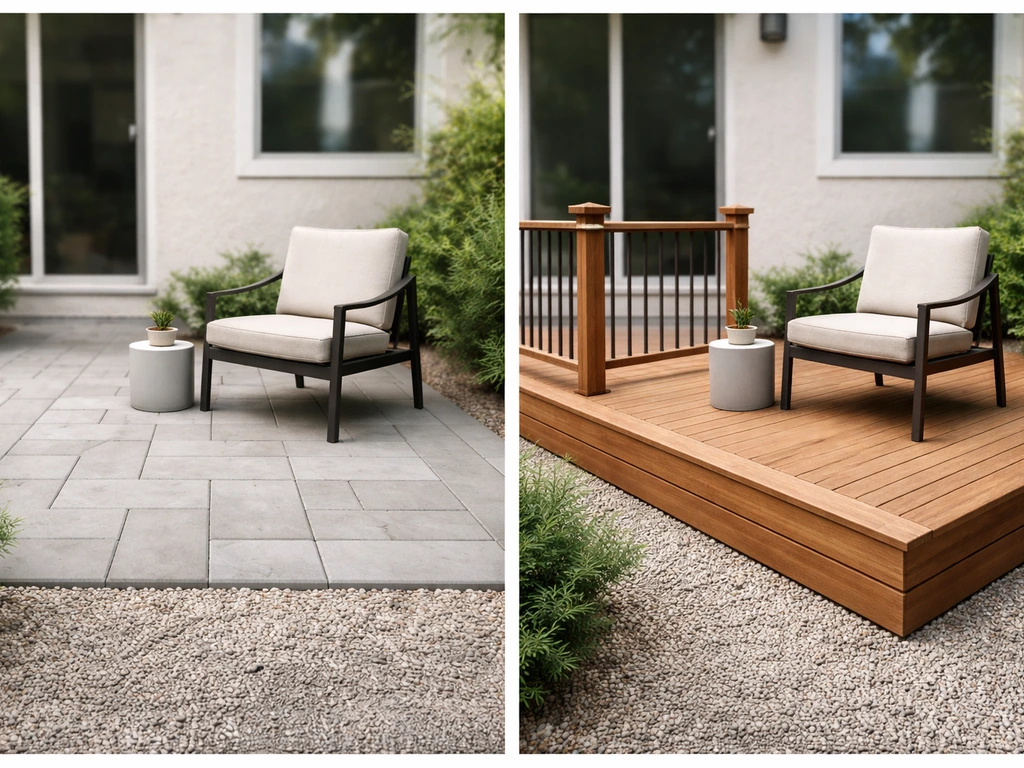
No, a deck is not a patio. A deck is a raised, framed platform, usually built from wood or composite boards, that sits above ground level and is typically attached to your house. A patio is a ground-level outdoor surface, usually made from concrete, pavers, brick, stone, or flagstone, that sits directly on or just above the soil. The two structures look similar from a lawn chair, but they are built completely differently, cost differently, and get treated differently by your building department.
Is a Deck a Patio? Deck vs Patio Differences Checklist

Miles Hart
14 Jun 2026
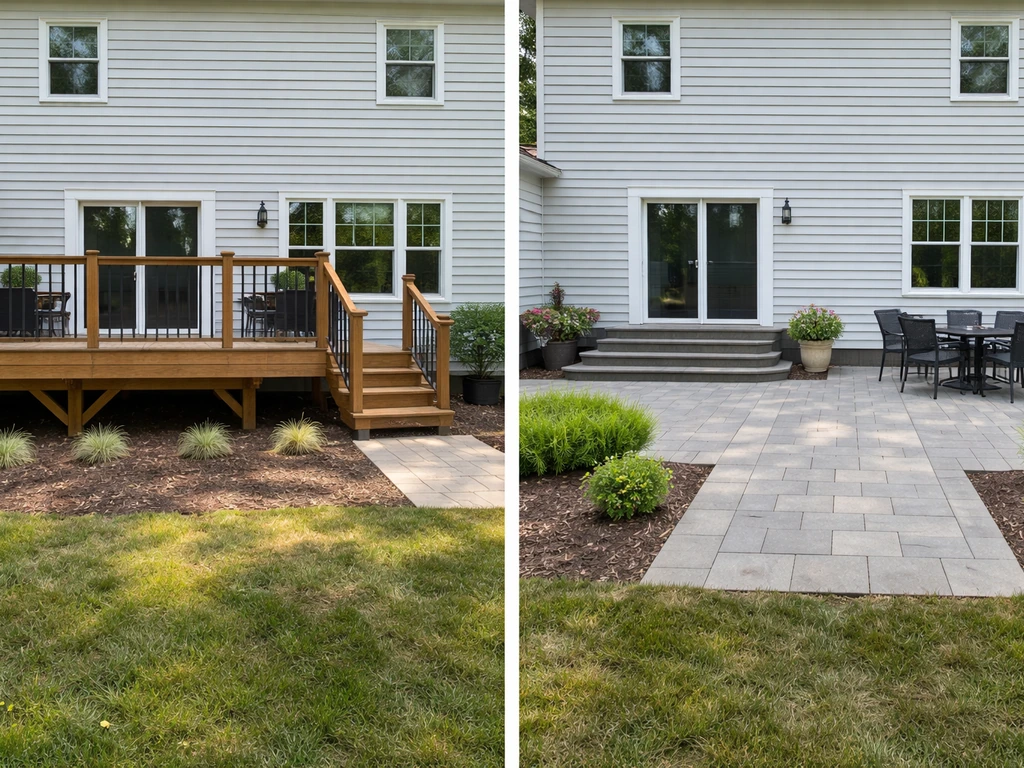
Deck vs patio: plain-English definitions
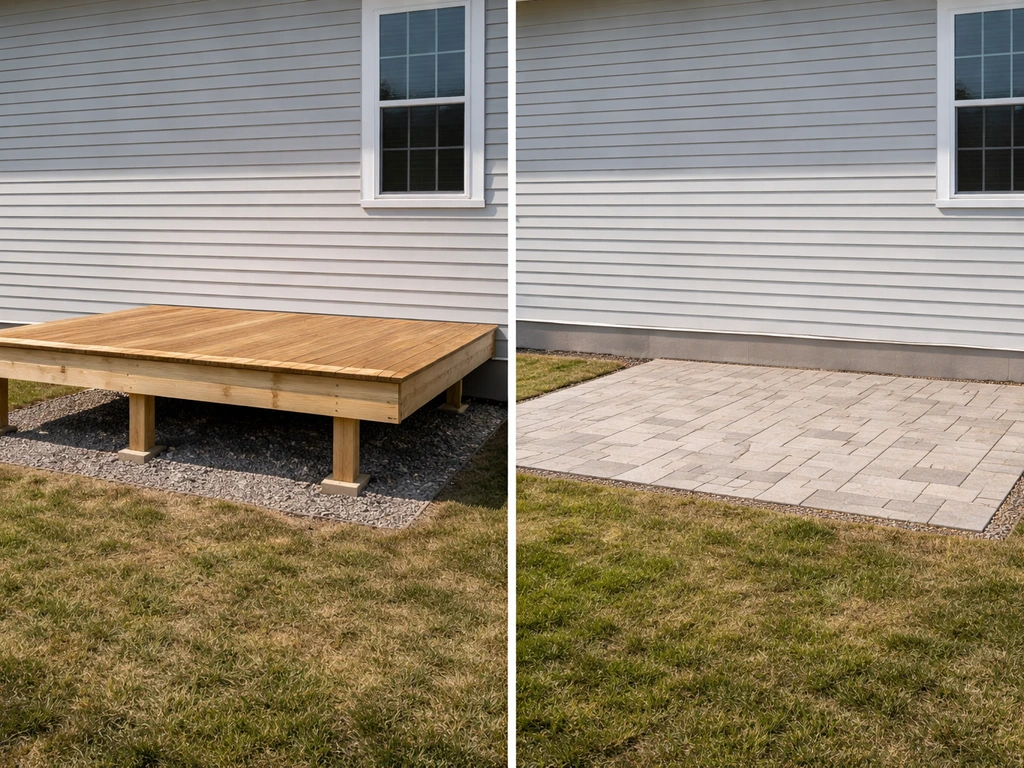
A patio, at its core, is exactly what the Cambridge Dictionary says: a solid-floor outdoor area next to a house where people can sit, relax, or eat. That floor is hardscape, meaning it is a solid surface laid directly on grade. Whether you pour concrete, set flagstone, lay brick, or snap down pavers, you are building a patio. No framing, no joists, no posts. The material rests on the ground (or a thin sand or gravel bed), and that is the end of the structure.
A deck is a raised, horizontal framed platform. It has a structural skeleton underneath: ledger boards, beams, joists, and posts. The ledger board bolts directly to your house and carries one edge of the deck's weight. The outer edge sits on posts and beams sunk into the ground with footings. Decking boards then fasten on top of those joists. If you can crawl under it or see daylight between the boards and the soil, you are almost certainly looking at a deck.
Those structural differences are not just cosmetic. They drive permitting requirements, maintenance schedules, moisture management, and how much the project costs to build and own over time.
How to spot the difference: height, materials, and placement
The quickest way to classify any outdoor platform is to look at three things: how high off the ground it sits, what it is made of, and how it connects (or does not connect) to the house.
Height off the ground
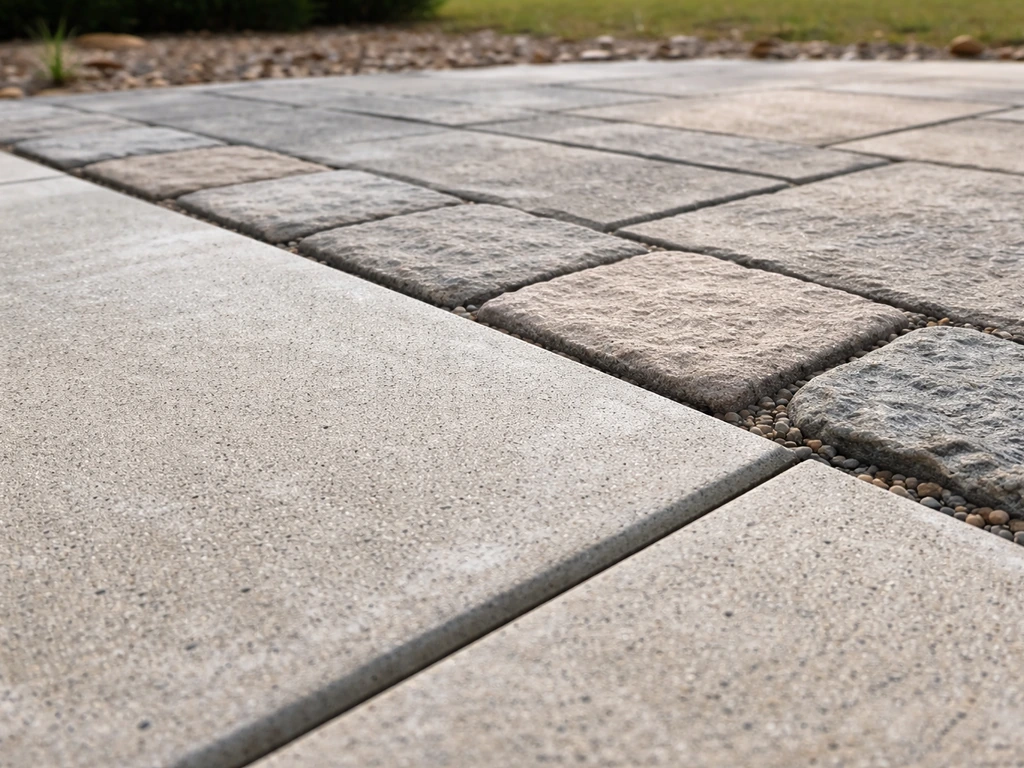
Patios sit at or very close to grade. A proper concrete or paver patio should actually slope slightly away from your house, around 1/8 inch per foot according to Quikrete, or at least a 2 percent grade within 10 feet of the foundation per building science guidance. That is just a few inches of gentle pitch, not elevation. A deck, by contrast, can be a few inches off the ground all the way up to two stories high. Building codes are specific here: the International Residential Code requires guardrails at least 36 inches tall on any deck surface that is more than 30 inches above the ground. That 30-inch threshold is not arbitrary. It is the point where a fall becomes a serious injury risk, and it is also a common trigger for permit requirements in jurisdictions across the country.
Materials
Patios use hardscape materials: poured concrete, concrete pavers, natural stone, brick, flagstone, or gravel. These materials have no structural framing beneath them. Decks use wood (pressure-treated lumber is the most common) or composite decking products. Composite boards like Trex or TimberTech are a wood-plastic blend that sits on top of the same type of structural frame a wood deck uses. You can tell composite from wood by feel and color uniformity, but both are deck materials. No amount of composite decking laid on the ground makes it a patio.
Attachment and framing
Look at the connection to the house. A deck attached to the house will have a ledger board bolted through the rim joist or band board of your home's framing. You will see a band of lumber flush against the house at the level of the deck floor, and it will typically have flashing above it to keep water from sneaking behind it. A freestanding deck has no ledger but still has a framed system of beams, posts, and joists. A patio has none of that. It simply meets the house foundation or siding at grade.
Common "looks like a patio" scenarios and how to classify them
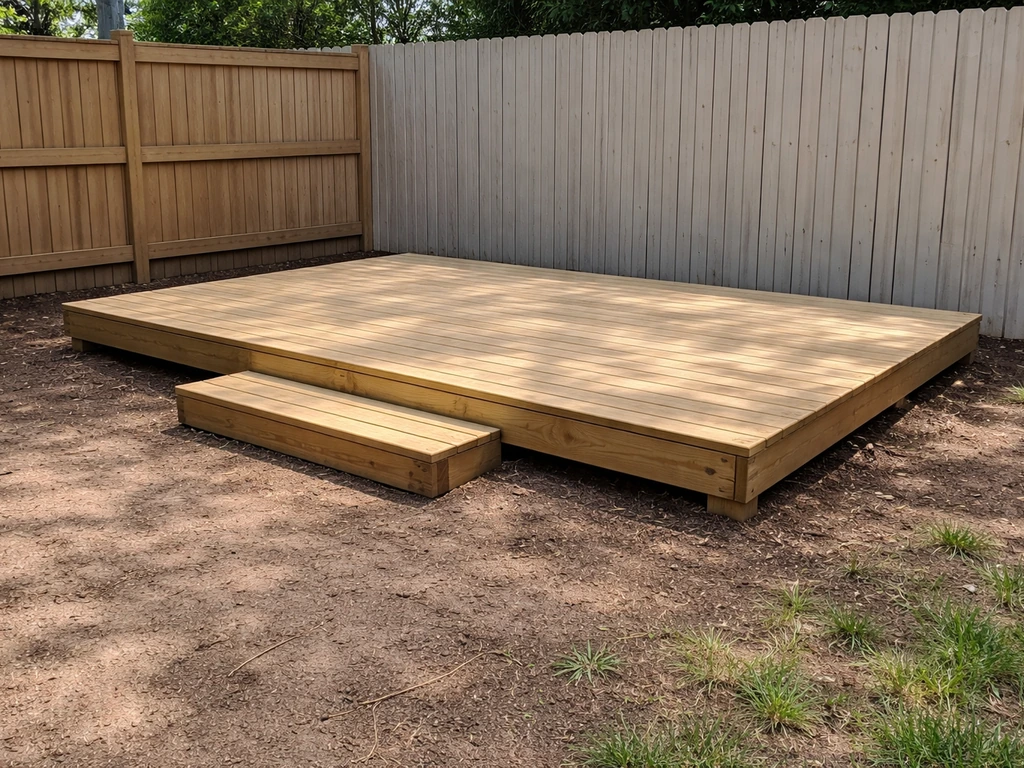
This is where most of the confusion actually lives. A handful of real-world situations make people genuinely unsure which category their space falls into.
- Ground-level deck: Some decks are built just a few inches off the soil, especially on flat lots. They still have joists, beams, and decking boards, so they are still decks. The material and framing define it, not the height alone.
- Covered or screened deck: Adding a roof, pergola, or screen enclosure to a deck does not turn it into a patio. A covered deck is still a deck, just with overhead protection. Building departments treat it the same way, and the structural permit requirements follow the deck.
- Patio deck or deck patio: These marketing terms usually describe composite or wood deck tiles laid directly on a concrete slab. If the slab is there and you are just adding surface material, the base is still a patio. Some jurisdictions may treat the combination differently for permitting, so it is worth checking locally.
- Low porch level with interior floor: DecksDirect notes that porch flooring can be level with the ground like a patio or raised like a deck. If your "porch" is a framed floor at the same level as your home's interior floor and has structural footings, it is functioning like a deck even if the family calls it a porch.
- Concrete slab with raised wood framing on top: If someone laid wood decking boards over a concrete slab on sleepers (thin wood strips between the slab and the boards), the base is still a patio. The wood on top is a surface treatment, not a true deck structure.
The cleanest rule: if there are structural joists and posts holding a platform off the ground, it is a deck. If the surface material is resting on the earth (or on a sand/gravel bed or concrete slab at grade), it is a patio.
Cost and maintenance comparison for decks vs patios
Budget is often the deciding factor, and the numbers are genuinely different. If you are wondering, “is it easier to build a deck or patio,” the answer depends mostly on how much framing and structural work you are willing to take on. Here is how they typically shake out for installed projects in 2026.
| Feature | Wood Deck | Composite Deck | Concrete Patio | Paver Patio |
|---|---|---|---|---|
| Installed cost (per sq ft) | $25–$50 | $50–$100+ | $8–$20 | $15–$40 |
| Typical lifespan | 15–25 years with maintenance | 25–50 years | 30–50 years | 25–50 years |
| Annual maintenance | Clean, stain, and seal every 2–3 years | Clean; no staining needed | Occasional cleaning; seal cracks | Replenish joint sand; reseal every 3–5 years |
| Moisture concern | Rot, warping, and mold risk | Lower moisture risk than wood | Slope management; crack repair | Joint sand washout; weed control |
| DIY-friendly? | Moderate (framing knowledge needed) | Moderate (same framing as wood) | Yes for small slabs | Yes for pavers on flat ground |
Wood decks cost more upfront than a basic concrete patio, and they cost more to own over time. You need to clean and then stain or seal a pressure-treated wood deck every two to three years to keep it from deteriorating. Composite decking skips the staining, which is a real quality-of-life improvement, but the upfront cost is significantly higher. Trex's Transcend line, for example, carries a 50-year residential warranty, while their Enhance line sits at 25 years, reflecting real differences in the product's shell protection and durability. TimberTech puts composite lifespan at around 25 to 30 years on average.
Patios win on initial cost almost every time. A basic poured concrete patio runs $8 to $20 per square foot installed. Even a premium paver patio with a professional install will usually come in below the cost of a composite deck of the same size. A patio is often the cheaper option when you compare the same size and installation scope. Patio maintenance is lighter, but it is not zero. Paver joints need sand replenished periodically, and resealing every three to five years keeps weeds and shifting under control. Concrete needs occasional crack monitoring and surface sealing. Neither task is as involved as deck staining.
Home value and usability: covers, drainage, and privacy
Decks tend to get more attention from home buyers and real estate agents, particularly in markets where outdoor living is a selling point. That said, neither a deck nor a patio is a guaranteed return on investment. Bob Vila notes that ROI varies by local market and construction quality, so a beautifully built paver patio in a neighborhood that prefers low-maintenance yards can outperform a mediocre pressure-treated deck.
From a pure usability standpoint, decks have some real advantages if your yard slopes or if you want to be at the same level as your home's interior floor. They can create usable outdoor space above an otherwise unusable slope. They are also naturally elevated, which gives some privacy and a better view. The downside is that the space under a deck often becomes a drainage, pest, and storage problem if you do not plan for it.
Patios handle drainage differently. Because a patio is at grade, the slope of the surface itself directs water. The minimum 2 percent slope away from the foundation is critical. If a patio is not graded correctly, water pools against your house foundation, which is a serious long-term problem. Patios are also easier to cover with a pergola, shade sail, or roof addition without adding significant structural complexity. A covered patio (a roof over a concrete or paver surface) is one of the most straightforward ways to add comfortable outdoor living space.
Privacy is similar for both, since neither structure is inherently more private than the other. You add privacy to a deck with lattice, planters, or a pergola. You add it to a patio with fencing, walls, or hedges. The structure itself does not determine your privacy level.
DIY vs contractor reality check, plus permits and code basics
Patios are more forgiving for DIYers. A paver patio on a relatively flat lot is one of the most approachable outdoor projects a motivated homeowner can tackle. For most homeowners asking what is the easiest type of patio to put in, a basic paver patio on a relatively flat lot is often the simplest option. You excavate, add a gravel base, set a sand layer, and lay pavers. A concrete patio requires more skill, especially getting the pour and slope right, but a small one is still within reach for a capable DIYer. Neither requires the structural knowledge that deck framing demands.
Deck building is genuinely more complex. You need to understand ledger attachment and flashing (critical for keeping water from rotting your house's rim joist), footing depth in your frost zone, beam sizing for your span, and joist spacing for your decking material. Mistakes in any of those areas can create structural failures or serious moisture damage. That is why many homeowners hire a contractor for deck framing even if they plan to do the decking boards themselves.
On permits: most jurisdictions require them for both decks and patios added to a home. Cities like Naperville, IL explicitly list decks, patios, and open porches as requiring building permits. Oakland, CA requires permits for deck projects with specific exemptions. Portland, OR ties permit requirements to deck height measured from grade to the walking surface. A common threshold across many codes is 30 inches: once a deck surface is more than 30 inches above grade, guardrails are required and permit scrutiny increases. Some jurisdictions exempt small patio covers (under 200 square feet in Portland, for example) from permit requirements, but that exemption typically comes with conditions around attachment and support. The bottom line: before you build or significantly modify either a deck or a patio, call your local building department or check their website. Doing unpermitted work creates real problems when you sell.
One thing worth knowing: how your structure is classified affects your permit path. A patio-level wood platform might be treated as a deck for permitting even if it feels low. Classification drives code requirements, so getting it right with your building department before you build saves headaches later.
Quick decision checklist: which one do you actually need?
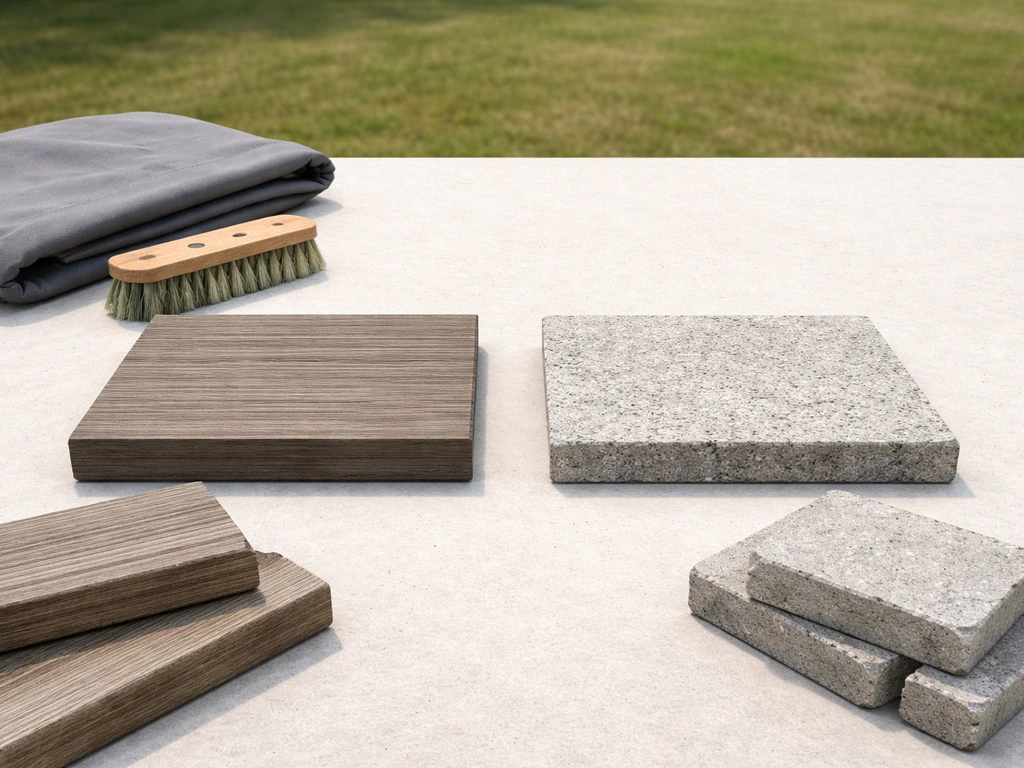
Run through these questions honestly and the right choice usually becomes obvious.
- Is your yard flat or sloped? Flat yards work well for either. Sloped yards often make a patio impractical and a deck the better option for creating a usable level surface.
- What is your budget? If you need to stay under $20 per square foot installed, a poured concrete patio is your most realistic option. Decks and paver patios cost more.
- How much ongoing maintenance can you commit to? If the answer is "not much," a concrete or paver patio is lower effort than a wood deck. A composite deck is a middle ground: higher upfront, lower annual work.
- Do you need to be at your home's floor level? If your back door opens to a raised interior floor, a deck matches that height naturally. A patio sits at grade and usually means stepping down to get outside.
- How important is DIY? If you want to build it yourself and do not have framing experience, start with a paver patio. Deck framing has a steeper learning curve and less margin for error.
- Does your yard get heavy rain or have drainage issues? A patio needs careful grading. A deck allows water to pass through or around it more freely, which can actually be an advantage on a wet site.
- Are you planning to sell in the next few years? In most markets, a well-built deck adds more perceived value than a basic patio, but a high-quality paver patio in a low-maintenance market can compete. Know your neighborhood.
- Have you checked local permit requirements? Call your building department before you commit. What you can build without a permit, and what gets inspected, varies significantly by location.
If you are still on the fence after that list, the deck-vs-patio question often comes down to one practical factor: what does your lot demand? If you want a quick rule of thumb, a flat, well-drained yard and a tighter budget usually favor a patio, while height and visibility needs often favor a deck deck-vs-patio question. A flat lot with good drainage and a modest budget almost always points to a patio. A sloped lot, a high interior floor level, or a desire for more visual impact usually points to a deck. If your lot is sloped or you want more visual impact, you will often end up choosing a deck, so review the difference between a patio and a deck before you finalize materials and permitting. Both are legitimate outdoor living solutions, and both can be done well or poorly. If you are trying to decide what you have or what to build, the key point is that a patio and a deck are not the same type of outdoor space. The structure itself matters less than getting the details of construction, drainage, and maintenance right for whichever one you choose. If you want to avoid common mistakes, review the deck or patio difference by checking height, materials, and how each one handles drainage.
FAQ
If a wood platform sits on the ground with no visible joists, is it still a deck?
Often yes. If the surface is supported by framing members (even if they are buried or partially covered by landscaping), it is treated as a deck structurally. To confirm, look for posts, beams, or treated lumber under the surface, or check with the building department if the original permit drawings exist.
What if my patio has a small raised edge or a raised seating area, is it still considered a patio?
A patio can have raised borders and still be a patio as long as the overall floor is essentially on grade and does not rely on a post-and-beam platform that lifts the walking surface. The deciding factor is whether the main walking surface is held off the ground by joists and posts.
Are stairs, landings, or ramps attached to it enough to change whether it is a deck or patio?
Usually they do not change the base classification. A deck stair system can be built onto a patio as an access feature, and a patio can have steps to reach a door. The key is what supports the primary platform or floor you sit on, not the presence of stairs.
How do I classify a partially elevated concrete or paver area on blocks or piers?
If the paver or concrete surface is sitting on structural supports (piers, posts, beams) rather than on compacted base and grade, it can be classified more like a deck or a framed platform for permitting purposes. Check whether the surface is truly bearing on a prepared ground base, or spanning between supports.
Does composite decking make it a patio if it is installed at grade?
No. Composite is still a deck material because it is designed to fasten to joists. If the structure uses joists and a framed substructure, it is a deck even if the top surface feels close to the ground.
What measurements matter for the 30-inch guardrail trigger?
Guardrail requirements are typically based on the walking surface height above grade at the deck's exterior edge, not the height of the joists or posts. If your terrain slopes, the relevant “grade” can vary around the perimeter, so measure at the lowest point within the code’s distance rules (your local code may define this differently).
What should I check to prevent water damage if my patio slopes the wrong way?
Verify drainage away from the foundation, and also confirm there are no low spots near the house where water can linger. For pavers, check joint sand levels and ensure the base was properly compacted, because settling can create ponding even if the original plan included slope.
Can I add a roof over a patio without turning it into a deck structurally?
In many cases, yes. Patios are easier to cover because the roof can be supported with posts anchored to a concrete base or through footings at grade. The risk is when the cover is attached to or supported by deck framing, which can change the structural and permitting scope.
Is it safe to DIY classify my project, or should I rely on permits to determine it?
Classification affects permits, so when there is doubt, it is worth confirming with your building department. Provide photos showing the underside, connection to the house, and how it rests relative to grade, because inspectors use these details to decide whether it is a deck, patio, porch, or landing.
What is a common mistake when people confuse decks and patios?
Relying on appearance alone, especially when part of a deck is close to grade. Buried framing, skirt boards, or landscaping mulch can hide the joists and posts, leading homeowners to treat it as a patio when it actually requires deck-grade permitting and maintenance.
Next Article
Patio or Deck Which Is Better for Your Home
Patio vs deck comparison by cost, maintenance, durability, usability, and value to choose best option for your home.