A patio is a ground-level hardscaped surface, usually concrete, pavers, or stone, that sits directly on or just above the ground next to your home. A deck is an elevated platform, typically framed in wood or composite, that is structurally attached to or near your house and sits above grade on footings and posts. That's the core difference: one sits on the ground, the other is built up off it. Everything else, including cost, maintenance, permits, and best-use scenarios, flows from that single structural distinction.
Difference Between a Patio and a Deck: Complete Guide

Miles Hart
1 May 2026
What each one actually is
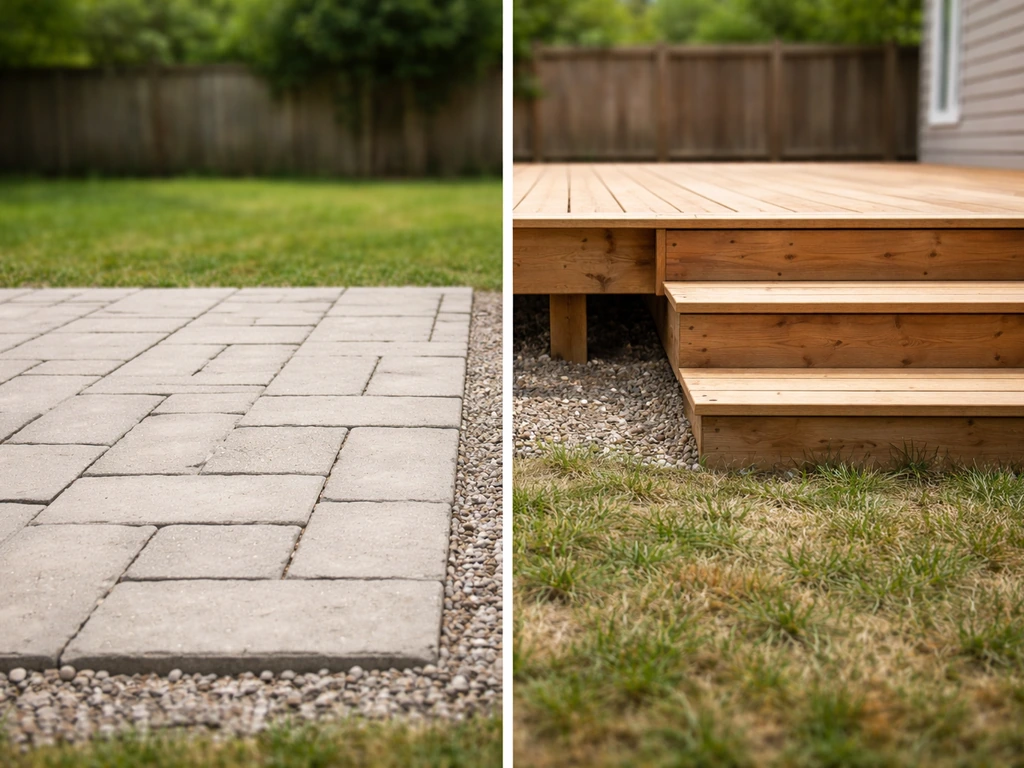
A patio is essentially a paved outdoor floor laid at or near ground level. According to building and zoning definitions, it's an impervious or semi-permeable surface intended for pedestrian use that adjoins a home. Because it rests on the ground, it doesn't require structural framing, footings (in most cases), or guard rails. You're essentially creating an outdoor room on the existing earth.
A deck is a structural platform. Think of it as an outdoor floor that spans open space, supported from below by posts set into the ground and connected to the house at the ledger board. Because it's elevated, it has to handle live loads (people, furniture, grills) the same way an indoor floor does. That's why it needs framing, footings, and, once the walking surface hits 30 inches above grade, a guard rail at least 36 inches tall with opening gaps small enough that a 4-inch sphere can't pass through.
| Feature | Patio | Deck |
|---|---|---|
| Position | Ground level or near-grade | Elevated above grade |
| Primary materials | Concrete, pavers, brick, natural stone | Pressure-treated lumber, cedar, composite, PVC |
| Structural framing | None (or minimal edging) | Joists, beams, posts, ledger board |
| Footings required | Rarely | Yes, frost-depth footings typically required |
| Guard rail required | No | Yes, if surface is 30+ inches above grade |
| Drainage approach | Slope to drain, gravel base | Open air below; water passes through gaps |
| Typical permit required | Often no (varies by jurisdiction) | Usually yes for attached/elevated decks |
| Avg installed cost (2026) | $10–$50 per sq ft | $20–$60 per sq ft |
Materials, how they're built, and what holds them up
How a patio goes together
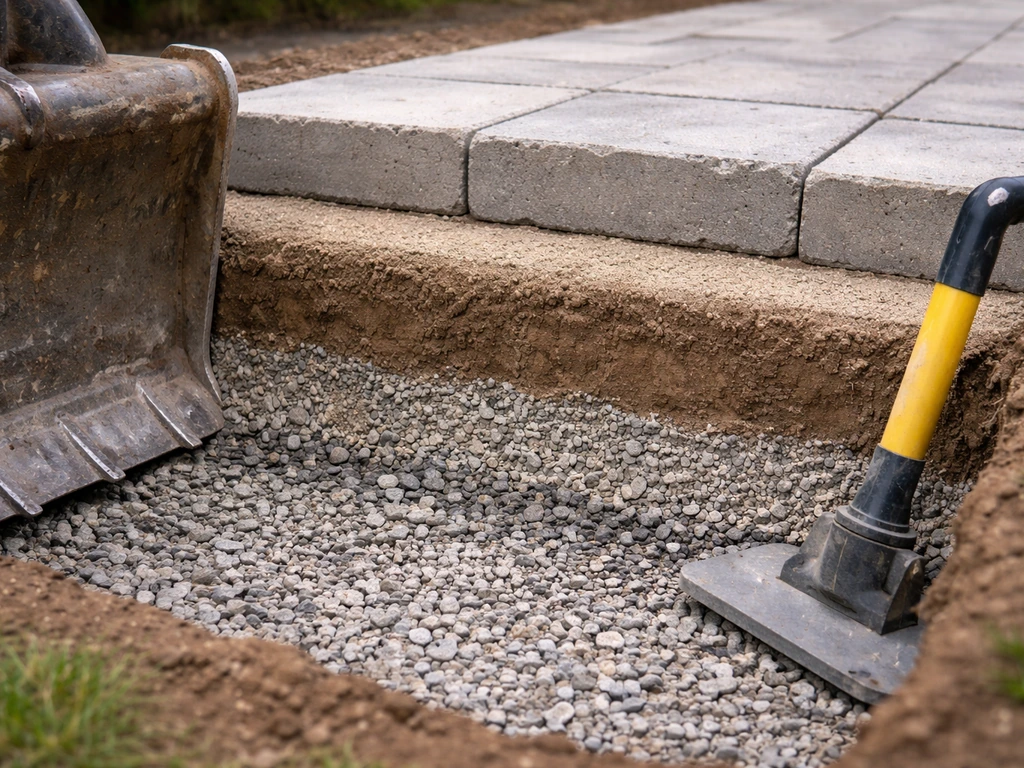
Patio construction starts below the surface. You excavate 6 to 8 inches of soil, compact a gravel base layer, and then set your surface material on top. Concrete slabs are poured in forms, stamped concrete gets its texture pressed in before it cures, and paver patios involve setting individual units in a layer of sand over that compacted gravel base. Natural stone follows the same general process but with irregular pieces fit together like a puzzle.
The most common patio failures aren't about the surface material itself. They're about skipping that base work. If you don't excavate enough, compact the sub-base properly, or slope the surface away from the house (a minimum 1/8 inch per foot is a standard rule), you'll end up with pooling water, shifting pavers, and frost heave cracks within a few years. A well-built patio is mostly about what you can't see after it's done.
How a deck is framed and supported
Deck construction is closer to framing a room in your house than it is to laying a patio. You start with footings, concrete cylinders poured below the frost line (depth varies by region, but 36 to 48 inches is common in colder climates) so frost heave doesn't lift the whole structure. Posts sit on those footings, beams span between the posts, and then joists run perpendicular to the beams to create the structural floor. Your decking boards are the last layer, sitting on top of all that framing.
The most critical connection point is the ledger, the board that attaches your deck to the house rim joist. If this connection is flashed incorrectly or water gets behind it, you get rot that can eventually compromise the entire attachment. This is one of the most common deck defects inspectors find, and it's also the one most likely to cause a structural failure. Proper metal flashing and maintaining a gap between the ledger and the house sheathing is non-negotiable.
What you'll spend and how much upkeep each one needs
Upfront costs
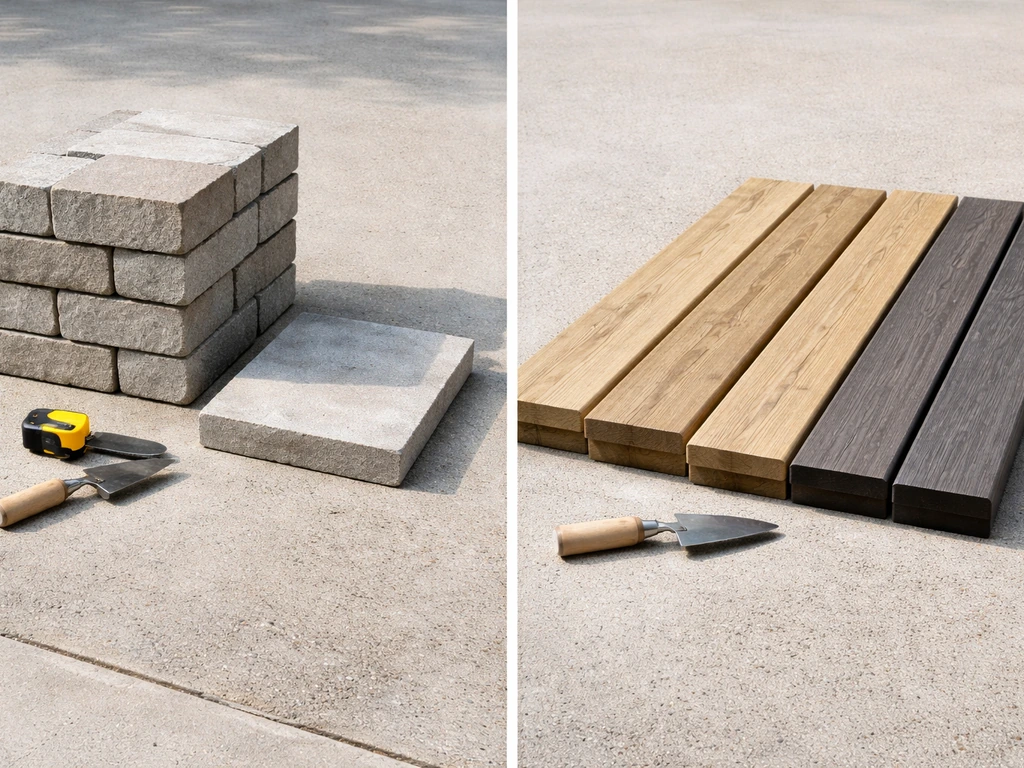
Patios are generally less expensive than decks at the installed price level, but the range is wide. A basic concrete slab patio might run $6 to $10 per square foot installed. Stamped concrete lands around $8 to $18 per square foot. Paver patios, which most homeowners gravitate toward for aesthetics, typically run $10 to $50 per square foot depending on the paver material (concrete pavers on the low end, natural travertine or bluestone on the high end) and complexity of the pattern or edging.
Decks cost more across the board. Pressure-treated wood is the most affordable deck material, typically coming in around $20 to $35 per square foot installed in 2026 depending on region and complexity. Composite and capped PVC decking pushes that number up, with full installed costs commonly hitting $40 to $60 per square foot. Those numbers reflect materials plus labor plus footings, framing, and railings, all of which are required no matter what surface material you pick.
Ongoing maintenance costs and effort
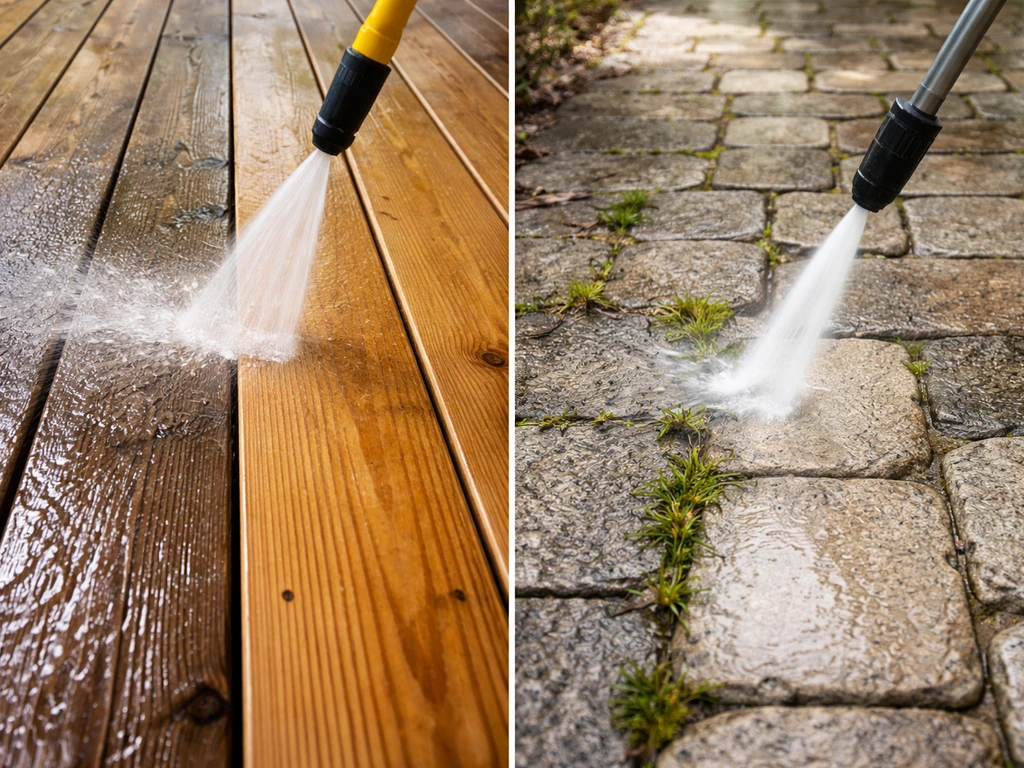
Pressure-treated and natural wood decks need the most attention. Cleaning, staining, or sealing every one to three years is realistic if you want the wood to hold up. Skip it and you'll be dealing with gray, checked, splintering boards within five years in a wet climate. Cedar and redwood are more naturally resistant but still benefit from periodic sealing.
Composite decking is lower maintenance but not no-maintenance. TimberTech recommends annual inspection and cleaning, and Trex's guidance calls for semi-annual cleaning for older product generations. The bigger concern with composite is the substructure: the boards themselves might last 25 to 30 years, but if the pressure-treated framing under them rots, you're rebuilding the whole deck anyway.
Concrete patios are extremely low-maintenance until they crack, at which point repairs range from simple crack filler to full slab replacement depending on severity. Paver patios need periodic joint sand replenishment and occasional releveling of settled sections. Using polymeric jointing sand (which hardens when wet and activated) significantly cuts down on weed growth and joint washout versus plain sand. Budget for a rejoint every five to seven years in most climates.
| Concrete Patio | Paver Patio | Wood Deck (PT) | Composite Deck | |
|---|---|---|---|---|
| Avg installed cost/sq ft | $6–$18 | $10–$50 | $20–$35 | $35–$60 |
| Lifespan (well-built) | 30–50 years | 25–40 years | 15–25 years | 25–30 years |
| Annual maintenance | Very low | Low–moderate | Moderate–high | Low |
| Main maintenance task | Seal cracks, clean | Rejoint sand, relevel | Clean, stain/seal | Clean, inspect substructure |
| Repair complexity | Can be difficult (full slab) | Easy (swap individual pavers) | Moderate (board replacement) | Moderate (board/frame) |
Which one fits your yard and how you want to use the space
Ground-level patios are a natural fit when your home already exits close to grade, you want the outdoor space to flow seamlessly into the yard, and you're prioritizing a low-profile, landscaping-integrated look. Patios also handle irregular shapes and curves more easily than decks, which is useful for wrapping around existing trees, garden beds, or pool areas. If your home has a walk-out basement or a back door that's only a step or two above the yard, a patio is almost always the simpler, more affordable choice.
Decks make more sense when your home sits above grade, especially when the back door opens 3 to 10 feet above the ground level. In that scenario, filling in dirt to create a grade-level patio would be a major grading project, and a deck just makes engineering sense. Decks also give you a better vantage point if you have a view worth capturing, whether that's a backyard, a hillside, or a pool below. The railing requirement at 30 inches above grade actually becomes an asset for privacy and safety in those cases.
Design style matters too. Composite and wood decks lean toward a more traditional residential look and integrate naturally with lap-siding or craftsman-style homes. Pavers and natural stone patios complement Mediterranean, contemporary, or cottage aesthetics more naturally. Either can be dressed up or kept simple, but think about what connects visually to your home's exterior before you commit to materials.
- Home exits near ground level: patio is almost always the better-value choice
- Home sits significantly above the yard: deck is the practical answer
- Want a curved or irregular shape: patio (especially pavers) handles this more easily
- Want to capture a view or elevation: deck gives you the vantage point
- Budget is tight: a concrete or basic paver patio beats a framed deck on cost
- Want low long-term maintenance: a concrete slab or composite deck are both strong options (for different reasons)
Permits, code rules, and what each one does for your home's value
Permit requirements vary significantly by jurisdiction, so always check with your local building department before you start. That said, the general pattern is consistent: most attached, elevated decks require a building permit, while ground-level patios often don't (though there are exceptions, particularly near environmentally sensitive areas, on steep slopes, or when significant grading is involved). Seattle's building department, for example, specifically identifies when paving triggers a grading or building permit based on site conditions and proximity to critical areas.
For decks, the permit process typically involves submitting construction drawings that show footing depth, ledger connection details, joist sizing, and guard rail specifications. The IRC consolidates most of this in Section R507. The practical trigger points most homeowners run into: footings need to go below the local frost line, the ledger connection to the house needs to follow specific fastener schedules, and guard rails (at least 36 inches tall with no openings larger than 4 inches) kick in once the deck surface is 30 or more inches above grade.
On home value, a well-built deck has a strong track record. Remodeling Magazine's 2025 Cost vs. Value Report, cited by Realtor. com, puts wood deck ROI at around 95%, which is one of the better returns you can get from an outdoor improvement.
Patios don't get tracked with the same precision in that report, but they consistently show up as a buyer-expected feature in most markets, particularly at mid-range and above price points. It helps to remember that the terms are not interchangeable, since patios are ground-level hardscapes while decks are elevated structural platforms is patio and deck the same.
Both add value; the deck just has more data behind it, largely because it's a more significant structural investment that gets reflected more clearly in appraisals.
What's actually DIY-able here
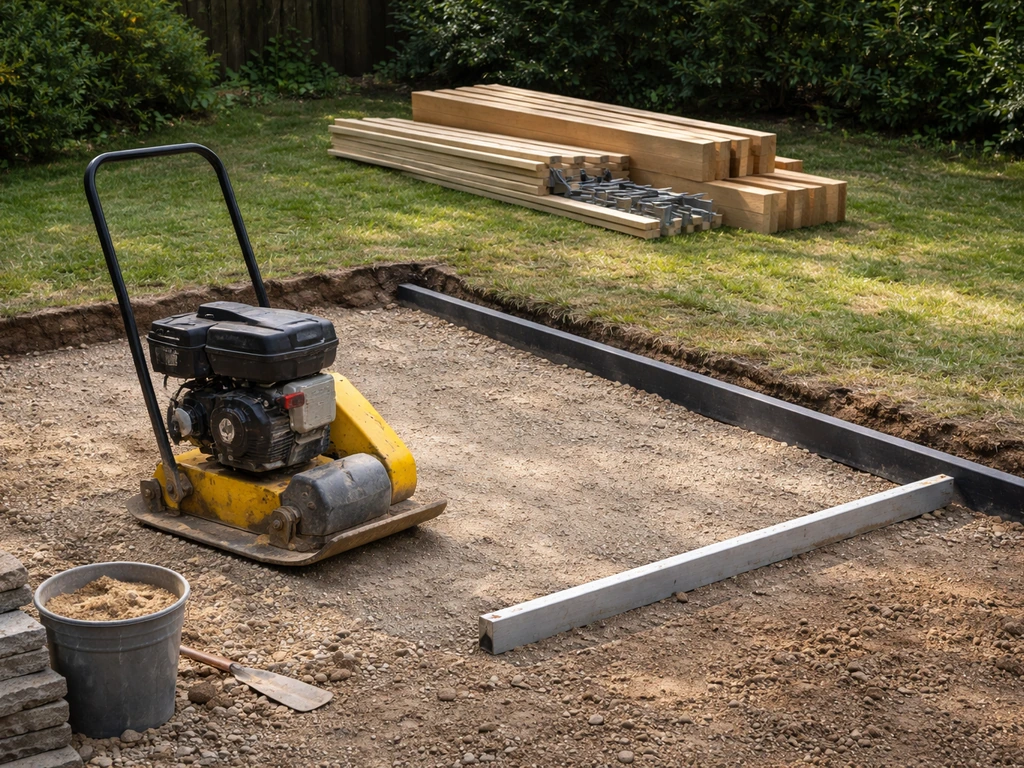
Paver patio installation is one of the most approachable mid-level DIY projects for a homeowner with a long weekend and a willingness to rent a plate compactor. The work is labor-intensive but not technically complex: excavate, compact, set the gravel base, lay sand, place pavers, and seal the joints. A 200-square-foot paver patio is genuinely doable for someone who has done basic landscaping work. The main risk is skipping steps on the base preparation, which is also the hardest part to fix later.
Concrete patios are harder to DIY well. Pouring and finishing a slab before it cures takes experience and often a crew. Unless you're doing a very small area (under 100 square feet) or a simple pour for a shed pad, hiring a concrete contractor is usually worth it. Stamped concrete especially requires technique that's difficult to fake on a first attempt.
Deck building is DIY-possible for someone with solid framing experience, but it's not a beginner project. The ledger connection, footing installation, and structural framing need to be right, because mistakes here are safety issues, not just aesthetic ones. If you haven't framed walls or floors before, the learning curve is steep. Many homeowners who are comfortable with tools hire out the structural portion (footings, framing, ledger) and do the finish decking boards and railing themselves, which is a reasonable middle ground.
When hiring a contractor, ask specifically about permit-pulling (some contractors work without permits to save time, which puts the liability on you), footing depth for your local frost line, and ledger flashing details. For patio work, ask how deep they're excavating and what base material and compaction method they're using. Those questions will tell you quickly whether you're dealing with someone who does the job right.
So which one should you build?
If your home exits near ground level and you want a cost-effective, durable outdoor space with minimal maintenance, a paver patio is hard to beat. If you are deciding between the two, the next step is to compare how patios versus decks differ in cost, maintenance, permits, and DIY difficulty cost-effective, durable outdoor space.
If your home sits above grade, you want to capture a view, or you want a more traditional backyard deck aesthetic, the structural investment of a deck makes sense and has the ROI data to back it up. Choosing between a patio and a deck often comes down to this same question of elevation and how you plan to use the outdoor space If your home sits above grade. Both are legitimate, long-lasting choices when built correctly.
The decision really comes down to your home's specific geometry, your budget, how you plan to use the space, and how much ongoing maintenance you're willing to take on. If you’re still deciding, compare how the yard height, budget, and upkeep expectations line up for your situation. Those factors, not trends or opinions, should drive the call.
FAQ
Can a patio be built “like a deck” so it’s higher off the ground?
Yes, but only in limited ways. A patio can be built to be more functional (wider, sloped for drainage, with planters or benches), but it does not become a deck unless it is elevated and supported by structural framing on footings and posts. If you need a raised sitting platform above grade, that is typically a deck design, especially when safety rails come into play.
If my patio is only slightly elevated, will it still be treated as a patio for permits?
Not automatically. Many jurisdictions treat patios and decks differently because decks are structural. Even if a patio is raised slightly, the moment it requires structural support over open space, it may be reviewed like a deck. Your local building department will clarify triggers based on height, support method, and site conditions.
What are the most common building mistakes that cause long-term problems for both patios and decks?
Watch for waterproofing and drainage details. A common mistake is building a patio that slopes toward the house or toward footings, which increases moisture exposure near foundation walls. For decks, another frequent issue is improper ledger flashing or letting water run behind the ledger, which can cause hidden rot even when the deck boards look fine.
How do I plan for doorway height and transitions when choosing a patio vs a deck?
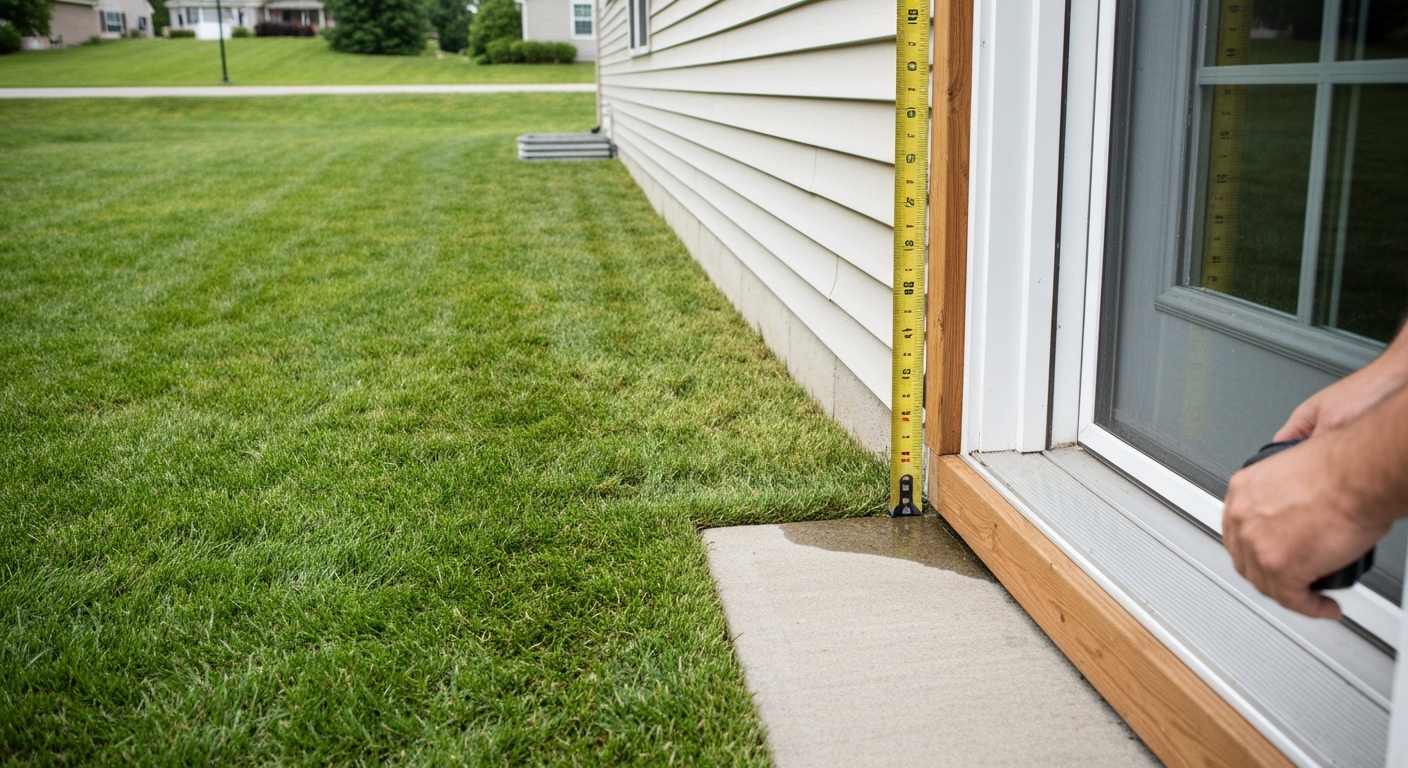
If you want the deck to feel “level” with the door, start by measuring the door sill height, not just the deck boards thickness. A deck surface may end up higher than expected once you account for joist depth, framing tolerances, and any required gaps at the house connection. Plan for transitions (steps, landing height, and ramp feasibility) so you do not end up with awkward or code-sensitive step heights.
Which option is more vulnerable to water damage, and where does the damage show up first?
Yes, and it often changes the comparison. Paver patios may trap and hold water if the base is not properly compacted or if surface runoff is poorly managed, which then leads to settlement or heaving. Decks can also have water issues, but the fix is usually under-structure related (flashing, ventilation, and keeping the framing dry) rather than changing the top surface.
Which one is easier to make ADA-friendly or accessibility-friendly?
A deck is usually better for accessibility and views when you are above grade, but patios can be easier to make ramp-friendly if the surrounding yard elevation is already close to the door. If you are considering adding an accessible path, check slope requirements and how the walking surface transitions from the main floor to the exterior area before committing.
If I want the lowest total maintenance over 10 years, what should I compare?
Think in terms of long-term system costs. Wood decks require recurring stain or sealing, and composite decks still require periodic cleaning plus attention to the pressure-treated substructure. Patios have lower day-to-day upkeep, but repairs can arrive in different forms (crack repairs for slabs, joint sand replenishment and releveling for pavers).
Can I add a pergola or cover to a patio or deck without redesigning everything?
Yes, but they are built differently. You can create an outdoor “room” with either, for example, a patio with pergola posts on separate footings, or a deck with a cantilevered cover attached to the framing. The key is that any cover should be engineered for wind loads and attachment points, and for decks you must avoid compromising structural members with improper drilling or attachment.
Are patio repairs like crack filler or paver resets as straightforward as they look?
Be careful with “simple” repairs. For pavers, spot repairs can be difficult if the base has settled or washed out, because lifting and resetting may not restore the original plane. For concrete patios, crack filler might be fine for hairline issues, but movement cracks or base failure often requires lifting or replacing affected sections.
Do patio surfaces ever need guard rails like decks do?
Most patios are not required to have railings because they are typically at or near grade, but safety rules change with height, especially if there is a drop-off or if the surface functions like a walkway above grade. If your patio is close to a stair-like situation or has surrounding grade changes, ask your inspector whether a guard requirement applies.
Where is DIY realistically safe and cost-effective for these projects?
Usually, the best savings come from DIY on small, finish-level tasks, not on structural work. For decks, the ledger connection, footings, and framing are safety-critical. For patios, DIY is most feasible for paver patios where base prep, compaction, and slope are done correctly, but stamped concrete and larger slab pours are commonly better left to experienced crews.
Which one has better resale impact in my specific neighborhood?
Not always, and that affects your resale strategy. Decks often show more explicitly in appraisals because they are major structural improvements with documented replacement-type considerations. Patios can still add buyer appeal, but asking your local realtor about how similar homes are valued in your neighborhood can help you estimate impact more accurately than national rules of thumb.
Next Article
Grass Is Higher Than Patio: Causes, Fixes & Deck vs Patio
Grass higher than patio? Causes, slope checks, repair options, lower lawn, raise patio, or build a deck, with costs & DIY