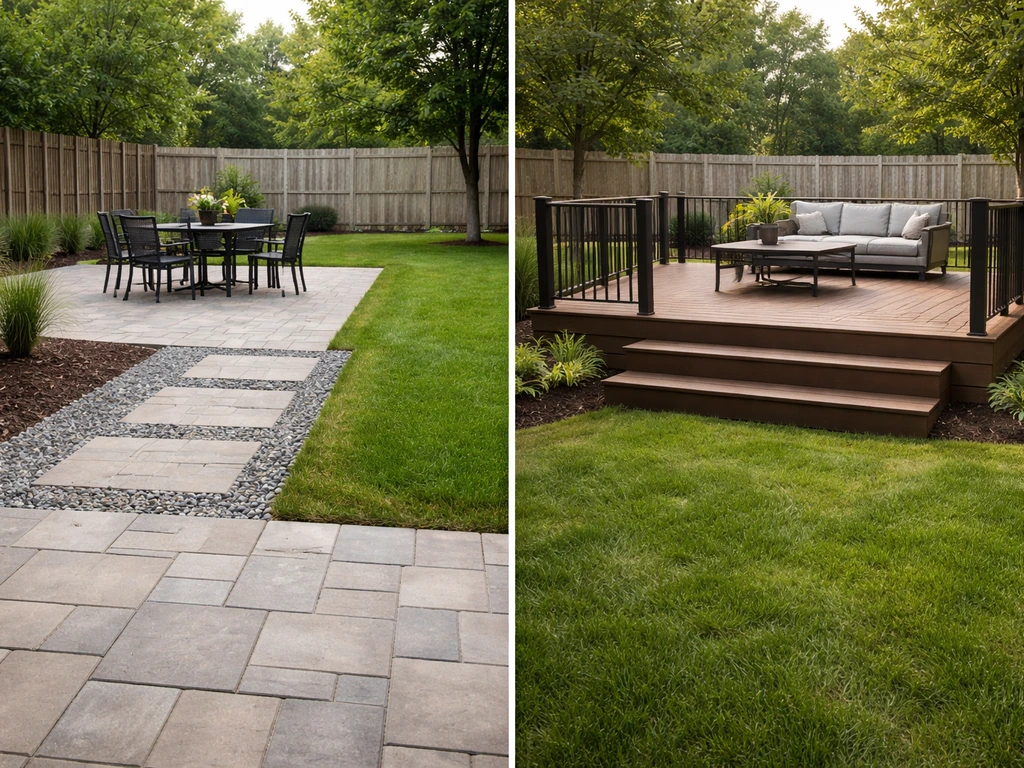
A deck is a raised platform built on posts and footings, usually made of wood or composite, and it sits above grade. A patio is a ground-level (or near-grade) surface made of concrete, pavers, or stone. That single difference in height drives almost everything else: how much it costs, whether you need permits, what maintenance looks like, and which one works best for your specific yard. In most cases, the “patio or deck which is better” choice comes down to your site, budget, and how much maintenance you want to handle. If your backyard slopes, a deck often makes more sense. If it's flat and you want something low-maintenance and budget-friendly, a patio usually wins.
Deck or Patio Difference: Costs, Maintenance, Value Guide

Miles Hart
30 Jun 2026
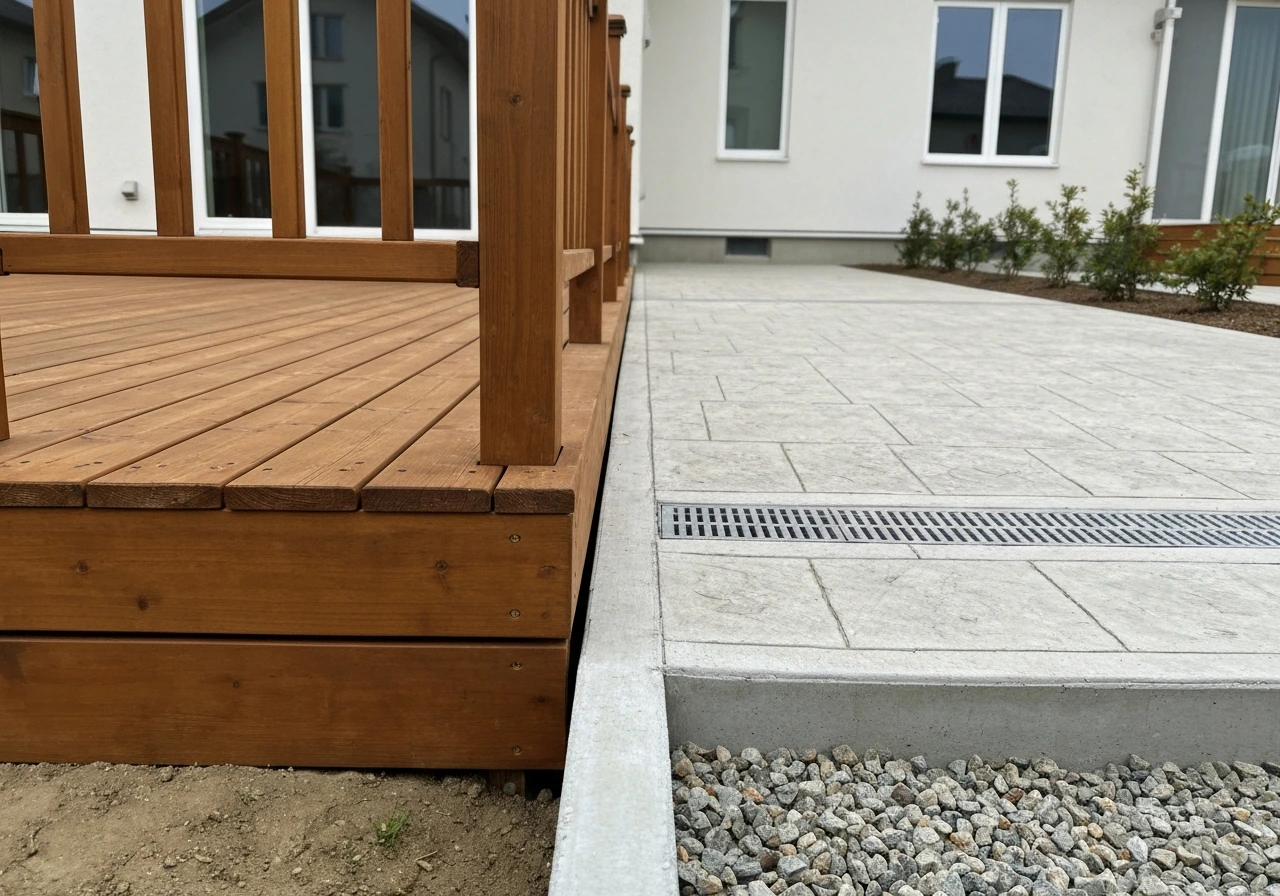
What a deck actually is (and what a patio is)
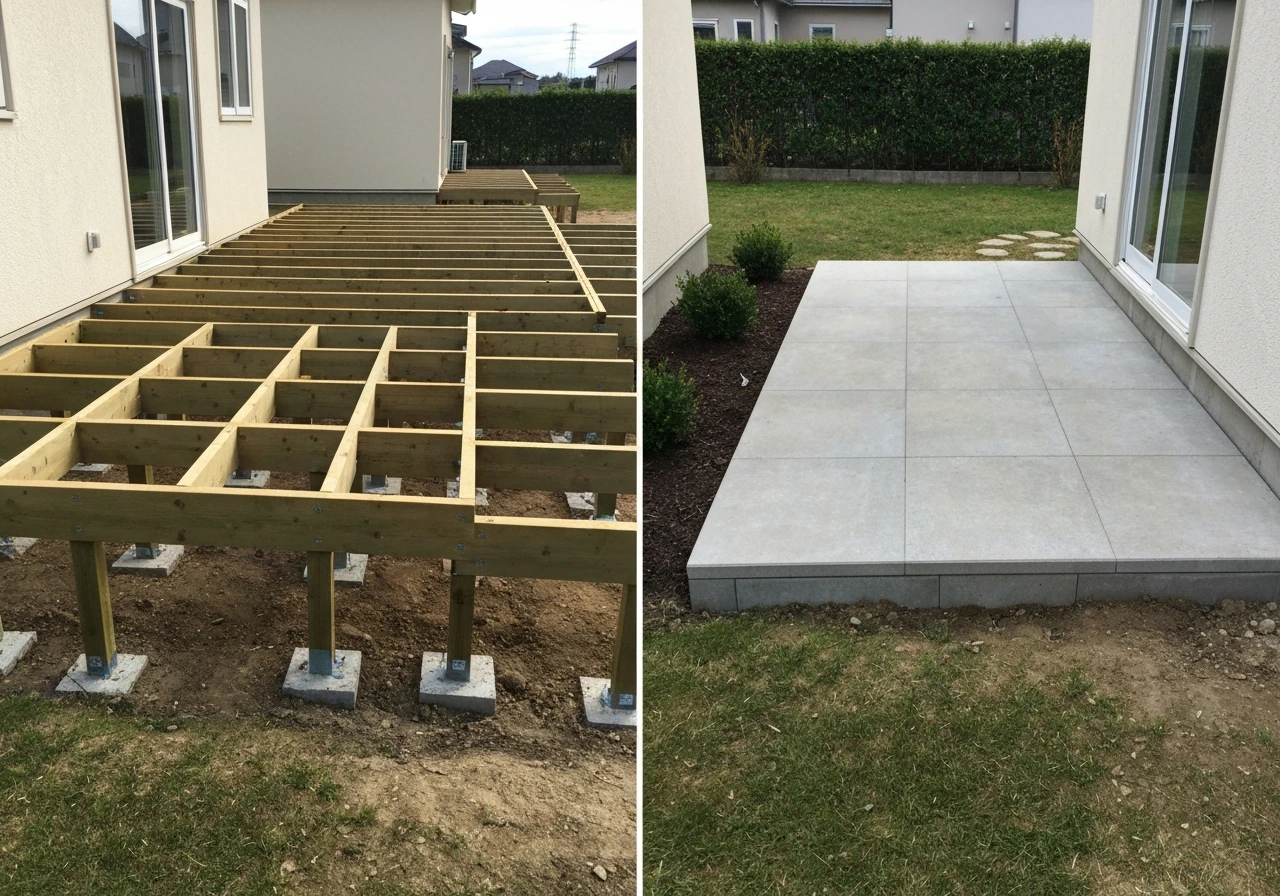
A deck is a freestanding or house-attached structure with a frame of joists, beams, and posts anchored to concrete footings. The decking boards sit on top of that frame and the whole thing is elevated, sometimes just a few inches, sometimes 10 or 12 feet in the air on a hillside. Most decks attach to the house via a ledger board that's lagged and bolted to the rim joist, and that connection must be flashed to keep water from sneaking behind the siding. The elevation creates the need for railings, stairs, and footings that extend below the frost line.
A patio is just a defined outdoor surface placed on or very close to the ground. It has no frame, no posts, and no footings in the structural sense. You're essentially preparing a stable base (usually compacted gravel) and laying the surface material on top of it. Because it's at grade, drainage happens across the surface and into the surrounding soil. There's no requirement for guardrails, no frost-depth footing calculations, and the whole thing can be done in a weekend with basic tools if the area is small and flat. That’s a useful way to remember the difference, because the deck frame sits on posts and footings, while a patio is essentially a surface at or near grade.
The differences that actually change your decision
Structure and height
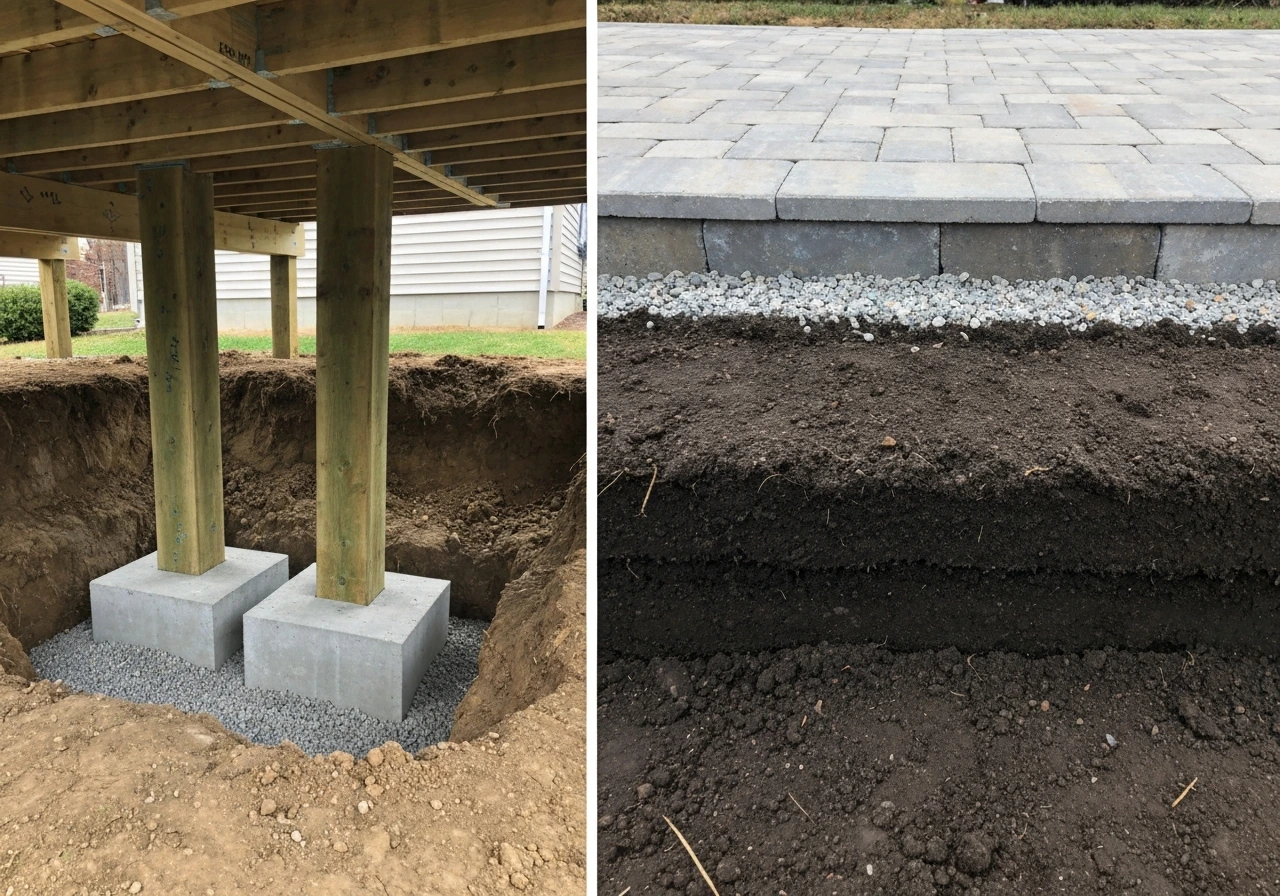
Height is the single biggest structural dividing line. A deck sits on posts set into blank" rel="noopener noreferrer">concrete footings that must reach below the local frost depth (which might be 12 inches in Georgia or 48 inches in Minnesota). A patio just sits on a compacted gravel base, typically 4 to 6 inches deep. That difference in foundation work is a major cost and labor driver. It's also what triggers code requirements: under the 2024 IRC (R312.1), any open-sided walking surface more than 30 inches above the grade below requires a guard at least 36 inches tall. Most patios never trigger that requirement because they're at grade.
Base preparation and drainage
For a patio, the base is everything. A poorly compacted or improperly graded base leads to sinking, heaving, and pooling water, especially in freeze-thaw climates. You need at least 4 inches of compacted crushed stone under pavers, more in cold regions. If you are still weighing options, see the difference between a patio and a deck before you lock in materials.
The surface must slope away from the house at about 1/8 to 1/4 inch per foot. Concrete patios need control joints to manage cracking. Get the base wrong and you'll be releveling pavers or watching a concrete slab crack within a few years. For a deck, drainage happens through the gaps between boards, which is great for shedding rain but means anything under the deck stays shaded and damp.
That space under the deck can become a moisture trap, so grading the ground underneath away from the house still matters.
Sun exposure, heat, and comfort
Concrete and dark stone patios absorb and radiate heat. On a 90-degree afternoon, a south-facing concrete patio can feel like standing on a griddle, while composite or wood decking stays somewhat cooler. Light-colored pavers or natural stone help offset this. Decks also tend to get better airflow underneath, which helps with comfort in humid climates. In very hot regions, both benefit from shade structures, but a patio is often easier to shade with a pergola, umbrella, or shade sail because you're working at grade level.
Materials and what they cost
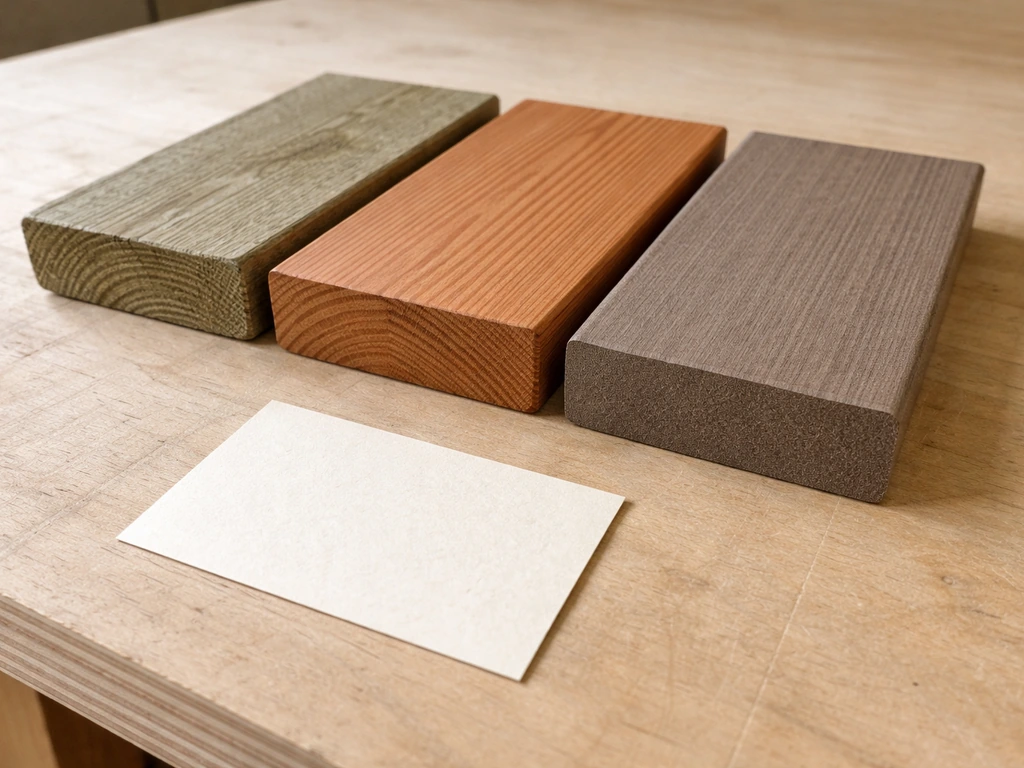
Decks are typically built with pressure-treated lumber (the most affordable option), cedar or redwood (natural look, better rot resistance), or composite decking (higher upfront cost, much lower maintenance). Patios use concrete slabs, concrete pavers, natural stone like bluestone or flagstone, or brick. Here's a general cost comparison based on current 2025-2026 market conditions for a mid-size 300-400 square foot project:
| Material | Type | Approx. Installed Cost (per sq ft) | Notes |
|---|---|---|---|
| Pressure-treated wood deck | Deck | $15–$25 | Lowest deck cost; needs staining every 2–3 years |
| Composite decking | Deck | $30–$55 | Higher upfront; minimal maintenance; 25+ yr lifespan |
| Cedar/redwood deck | Deck | $20–$35 | Natural look; moderate maintenance |
| Concrete patio (plain) | Patio | $6–$12 | Durable; can crack; lowest patio cost |
| Stamped concrete patio | Patio | $12–$22 | Decorative; same crack risk as plain |
| Concrete pavers | Patio | $12–$20 | Repairable; slight weed concern in joints |
| Natural stone (flagstone, bluestone) | Patio | $20–$40 | Premium look; durable; higher labor cost |
Labor makes up 40-60% of most installed costs. A complex deck with multiple levels, stairs, and railings will cost significantly more than a simple ground-level platform. A patio on a slope that requires grading, retaining walls, or significant excavation will climb fast too. Always get quotes for your specific site, not just square-footage estimates from the internet.
Maintenance season by season
Wood decks are the most maintenance-intensive outdoor surface you can choose. Pressure-treated wood needs cleaning and a fresh coat of stain or sealant every 2 to 3 years, or it grays, cracks, and splinters. Cedar and redwood are similar. You'll also want to inspect fasteners, check for soft spots (rot), and look at the ledger connection annually. Composite decking cuts most of that out: an annual cleaning with soap and water is usually all it needs, though some composites can develop mold in shaded, humid spots.
Concrete patios are low maintenance but not zero maintenance. You may want to reseal every 3 to 5 years to protect against staining and freeze-thaw damage. Cracks happen, especially in climates with hard winters, and crack repair is straightforward but ongoing. Paver patios need occasional joint sand replenishment (polymeric sand every few years) and weed control in the joints. Individual pavers can sink or shift and need to be reset, but this is actually easier than fixing concrete because you just pull up the paver, re-level the base, and reset it. Natural stone is similar to pavers in maintenance but can be more prone to staining depending on the stone type.
Can you build it yourself?
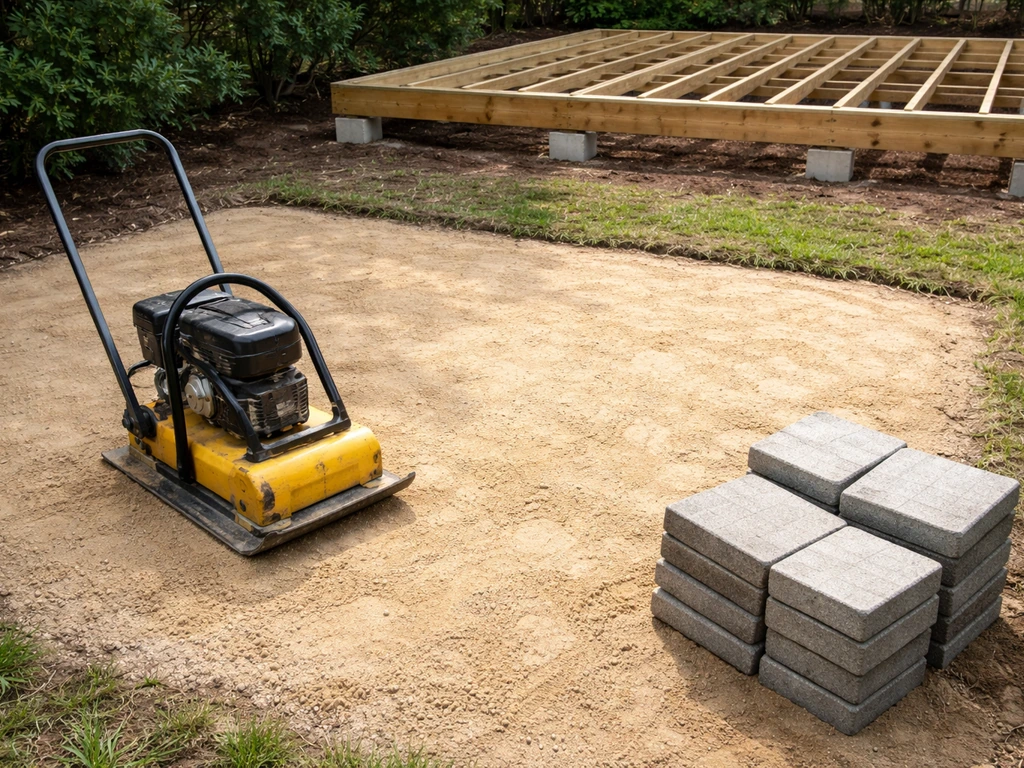
A paver patio on a flat yard is genuinely one of the most DIY-friendly outdoor projects. If you can rent a plate compactor, do some digging, and handle 50-pound paver bags, you can build a solid patio in a weekend or two. The process: excavate 6 to 8 inches, add and compact crushed gravel base, add a thin sand setting layer, lay pavers, compact, and fill joints with polymeric sand. No framing, no concrete mixing at scale, no structural calculations. The main risks are a bad base (leading to settling) and poor slope (leading to water pooling near the house).
A deck is harder. That difference is part of why many homeowners find it easier to build a patio than a deck, especially if the site is at grade A deck is harder. . A simple, low ground-level deck attached to a house requires understanding ledger connections, proper flashing, joist sizing, post and footing placement, and local code compliance.
If the deck is more than 30 inches above grade at any point, you're required to add guards and railings. Footings have to reach frost depth, which means you might be digging 3 to 4 feet down in northern climates.
Most confident DIYers can handle a basic attached deck with good planning and a solid permit review, but elevated multi-level decks, decks on sloped lots, or decks with complex stair systems are really contractor territory unless you have real carpentry and framing experience.
Whether you're building a patio or deck, hiring a pro usually makes sense when the lot is sloped, drainage is complex, or the structure triggers permit and inspection requirements you're not comfortable navigating. Getting accurate bids requires knowing your square footage, your preferred material, and your site conditions (slope, soil type, existing drainage).
Permits, codes, and what your site forces
Most jurisdictions require a building permit for attached decks and for any deck above a certain height (often 30 inches, sometimes lower). Detached, at-grade patio slabs and paver patios typically don't need permits, though you should always check with your local building department before starting. Some HOAs have their own rules on top of local codes.
Under the 2024 IRC (R312. 1), guards are required on any open-sided walking surface that is more than 30 inches above grade at any point within 36 inches horizontally of the edge. The minimum guard height is 36 inches. This isn't optional and it's one of the most commonly violated deck code requirements.
If your inspector flags missing or noncompliant guards on a deck you're selling, it becomes a negotiation issue. Beyond guards, deck footings must extend to frost depth (per IRC R507. IRC R507. 3 also requires deck footings to be sized to carry imposed loads from the deck structure down to the ground [deck footings must extend to frost depth](https://codes.
iccsafe. org/s/IRC2024P2/chapter-5-floors/IRC2024P2-Pt03-Ch05-SecR507. 3). 3), the ledger must be bolted and lagged to the house (not just nailed), and the ledger-to-house connection must be properly flashed to prevent water intrusion.
Your site also constrains you. A steeply sloped backyard almost always points toward a deck because a patio at grade would require massive fill or grading work. A flat yard with good drainage can go either way. If your house has a walkout basement and the grade drops fast, a deck cantilevered over the slope is often the most practical solution.
Conversely, if you're trying to add outdoor living to the side of a flat suburban lot, a patio is simpler, cheaper, and faster. If you are wondering whether a patio and deck are the same, the easiest rule is that patios are simpler for flat lots while decks are often the better fit when the grade or structure makes building at elevation necessary is patio and deck the same.
Resale value and curb appeal
Both decks and patios add usable outdoor living space, which buyers value. According to Remodeling Magazine's Cost vs. Value reports, a wood deck addition typically recoups around 50-65% of its cost at resale, and composite decks are in a similar range. Patios have slightly less trackable data because they vary so widely in material and finish quality. However, a well-done paver or natural stone patio in a market where buyers want low-maintenance outdoor living can be just as compelling as a deck.
What actually drives resale appeal is condition and fit with the home. A rotting, splintering wood deck hurts value more than no deck at all. A stained, cracked concrete slab patio reads as a project. Both surfaces improve value when they're well-maintained, appropriately sized for the home, and suited to the climate. In wet or humid regions, composite decks and sealed concrete or pavers tend to hold up better and look better longer. In dry climates, more material options stay looking good with minimal effort.
Curb appeal is mostly about the front of the house, but side-yard and backyard visibility from neighboring properties or street angles can matter. A well-designed deck with clean railings reads as intentional and finished. A quality paver patio with defined edges and some landscaping has a polished, professional look that photographs well for listings.
Pick the right one for your yard: a quick checklist
Run through these questions before you commit to either option. Your answers will point you in the right direction almost every time. If you want the easiest patio option to install, a paver patio on a flat yard is usually the simplest choice.
- Is your yard flat or sloped? Flat = patio is viable. Significant slope = deck is usually easier and less expensive than grading for a patio.
- What's your budget? Under $5,000 for a mid-size project usually means a DIY paver patio or a basic ground-level deck with pressure-treated lumber. $10,000+ opens up more material and contractor options.
- How much maintenance are you willing to do? If the answer is 'as little as possible,' lean toward a paver patio or composite deck and away from pressure-treated or cedar wood.
- Do you need to cover the height difference from an elevated back door? If your door is 2+ feet above grade, you need either a deck or a serious grading project. A deck is almost always the right call here.
- Are you in a freeze-thaw climate? Both patios and decks work, but concrete slabs crack more in harsh winters. Pavers, composite decking, and properly set footings handle freeze-thaw better.
- Are you planning to add a roof or covered structure? Covered decks and pergola structures over patios both work, but a roofed deck often requires more significant permits and structural work.
- Are you selling in the next 2-3 years? Prioritize condition and material quality over size. A smaller, well-built composite deck or clean paver patio does more for resale than a large, deteriorating structure.
- Can you DIY it? Flat lot, paver patio, basic tools = yes, likely. Elevated deck, sloped lot, code-required railings = hire a pro or at minimum pull a permit and get an inspection.
Your next steps
Once you've answered those questions, the path forward is pretty clear. If you're leaning toward a patio, measure the area, check your local permit requirements (most paver patios on flat lots don't need one, but confirm), and get quotes from two or three landscape contractors along with material costs if you're going DIY. If you're leaning toward a deck, call your local building department first to understand permit requirements and setbacks before you design anything.
Then get at least three contractor bids that include footing, framing, decking material, and railing as separate line items so you can compare them accurately. Knowing whether a deck or patio is cheaper for your specific situation depends heavily on your site, so the comparison matters most at the quote stage, not in general averages.
Knowing whether a deck or patio is cheaper for your specific situation depends heavily on your site, so the comparison matters most at the quote stage, not in general averages.
FAQ
If my deck is only a few inches above grade, do I still need a guardrail under deck code rules?
It depends on height at the edges. If any part of an open-sided walking surface is more than 30 inches above grade at that location, guards are typically required within 36 inches horizontally of the edge, even if most of the deck seems low. Measure the height where people actually step out, not just the average height.
Can I build a patio that acts like a deck by adding steps or an elevated platform of pavers?
You can, but once the surface becomes elevated and functions like a walking platform, code and design expectations start to look more like a deck. A common mistake is treating a raised paver landing like a low-grade patio base, then overlooking guard requirements and structural stability. If you are more than roughly 30 inches above grade at any point, plan for deck-style requirements or get clarification from your local building department.
What’s the biggest base mistake that causes patio pavers to shift or sink?
Most failures come from insufficient excavation depth or poor compaction of the crushed stone. Even if the thickness seems right on paper, skipping compaction passes or using the wrong stone size leads to uneven settling. A quick rule of thumb is to compact in layers, verify your final grade slope before laying pavers, and avoid “topping off” with sand as a substitute for base rock.
How do I choose the right slope for a patio if I have gutters or a drainage swale?
Use the standard away-from-house fall (about 1/8 to 1/4 inch per foot), but also consider where roof runoff and downspouts go. If gutters discharge toward your patio, you may need a tighter drainage plan such as a routed downspout extension, a small French drain, or grading that steers water away from the slab edge. The goal is preventing water from standing near foundation lines, not just achieving a surface slope.
Do deck and patio “maintenance schedules” really differ that much in humid climates?
Yes, and not just because of moisture. Decks can trap dampness underneath, which increases the chance of mold on undersides and accelerates board fastener issues, especially if airflow is limited. Patios also grow algae or weeds, but the cleaning approach is usually simpler, and sealing concrete or using stabilizing joint sand can help reduce staining and freeze-thaw damage.
Which is better for freezing winters, a concrete patio or composite deck?
They can both work, but the failure modes differ. Concrete can crack from freeze-thaw, and it often benefits from resealing and proper jointing, while pavers rely on a well-built base to handle movement. Composite decks reduce rot and splintering risk, but you still need correct drainage and flashing at the house connection so water does not infiltrate framing.
If I want to minimize ongoing work, should I avoid wood decks entirely?
Not necessarily, but expect regular upkeep if you choose wood. Pressure-treated options usually require cleaning and re-staining or sealing every few years, and you should plan for periodic fastener inspections and surface checks. If you want low maintenance with fewer “recoat” cycles, composite generally offers the most predictable maintenance profile, assuming good ventilation and routine wash-down.
Do I have to remove vegetation and topsoil before either project?
Yes, in both cases you should remove organic material (topsoil and roots) down to stable subgrade before building. A common patio mistake is leaving thin organic layers under gravel, which later decomposes and creates voids. For decks, unstable or changing ground can also shift post locations, so verify soil firmness and excavation depth during layout.
How should I compare bids between a patio and a deck without getting misleading square-foot numbers?
Ask for line items, not just a total price. For decks, request separate costs for footings, ledger flashing/connection details, framing, decking boards, stairs, and railings. For patios, request base excavation and compacted gravel depth, sand setting layer, surface material, joint sand, and any edging, drainage adjustments, or retaining walls. This avoids the common trap where a “per square foot” patio price assumes a flat site and includes no grading work.
Will an HOA or local rules treat decks and patios differently?
Often yes. HOAs may restrict deck visibility, railing styles, material color, or where structures can be placed relative to lot lines, and they sometimes require approval even when the city would not. Patios can also be regulated for paver color, height, and drainage, especially if they affect landscaping plans. Check both local permit rules and HOA design standards early, before you buy materials.
Is a patio easier to DIY than a deck, and what’s the main risk if I attempt it?
A flat paver patio is usually more DIY-friendly because it is a base-and-surface system rather than a structural frame. The main risk is getting base prep wrong (depth, compaction, and slope), which leads to settlement or pooling water. If your yard is sloped or you need retaining walls or complex drainage, DIY difficulty increases quickly, and it may be better to hire a contractor or at least bring in help for grading.
Next Article
Should I Build a Patio or Deck? Costs, Pros, and Choice Guide
Deck vs patio decision guide: costs, pros, site factors, maintenance, and next steps to choose confidently.