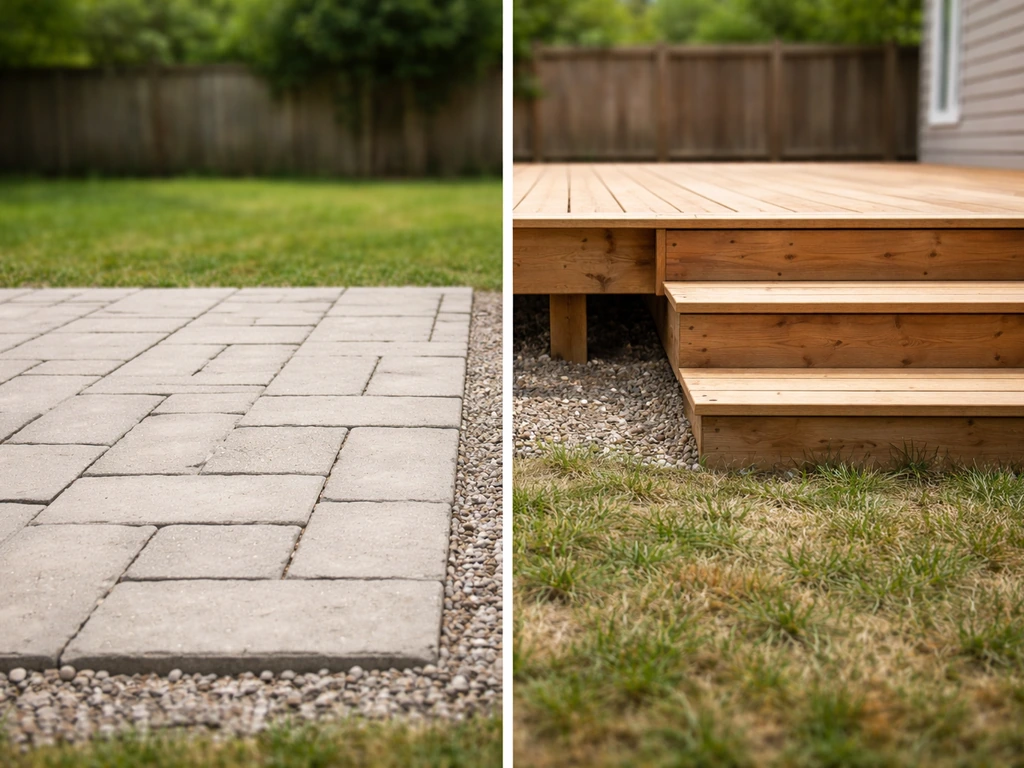
Patios are almost always cheaper than decks upfront. A basic poured concrete patio can run as little as $5 per square foot installed, while a pressure-treated wood deck typically starts around $15 per square foot once labor and framing are included. That gap widens further if you go with composite decking or if your yard has any slope that requires elevated framing, footings, stairs, and railings.
Is a Deck or Patio Cheaper? Costs by Size and Surface

Miles Hart
14 May 2026
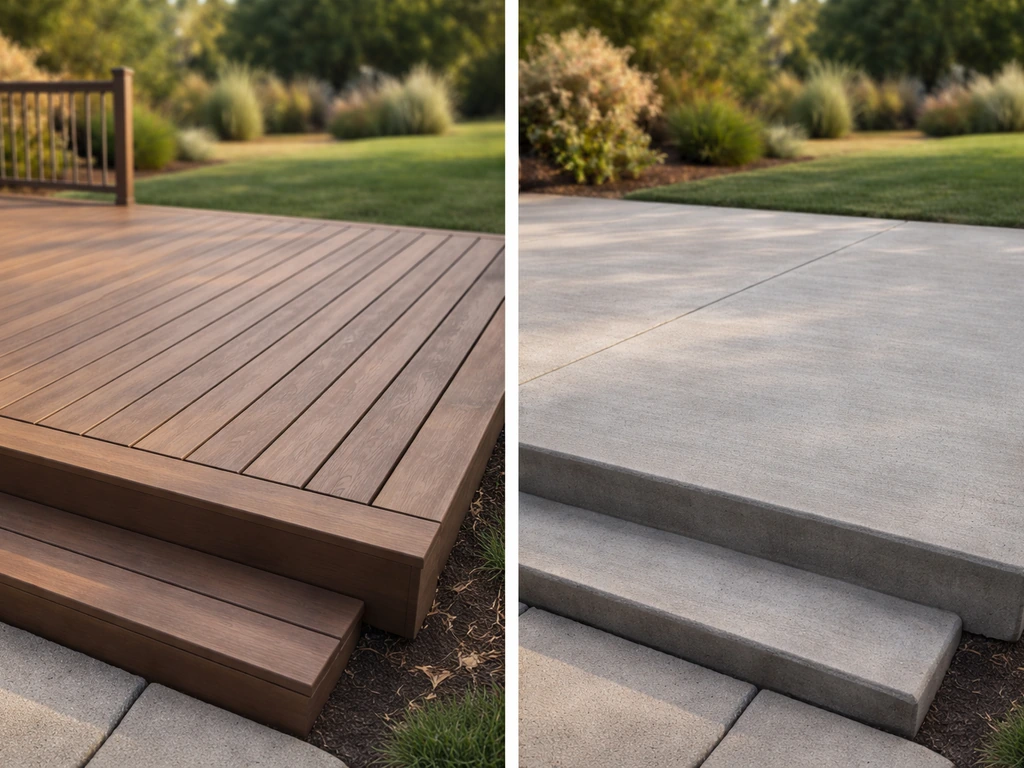
For most flat-yard situations, a simple patio will cost 30–60% less than a comparable deck. But the answer shifts depending on your yard, your material choices, and how long you plan to stay in the house. If you're also wondering which is quicker to construct, the answer often depends on site prep and whether the work needs deeper footings or complex drainage and base work is it easier to build a deck or patio.
What actually drives the cost difference
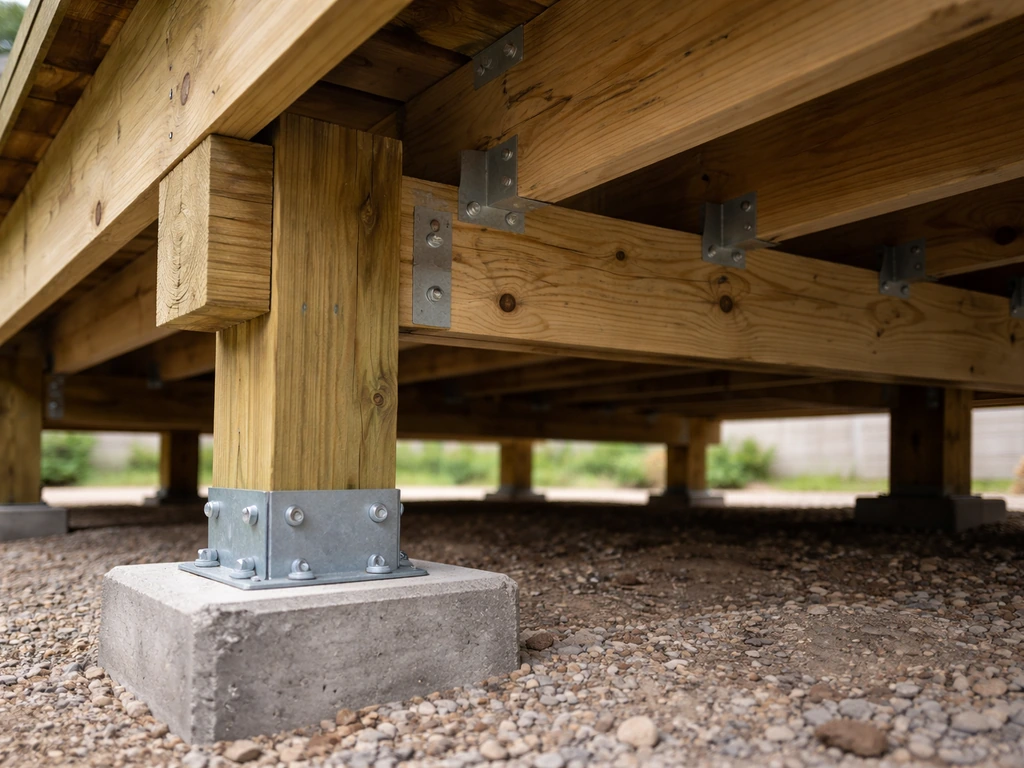
The core reason decks cost more is structure. A patio sits on the ground and relies on a compacted gravel base or a concrete slab. A deck is a raised platform, which means it needs footings, posts, beams, joists, and fasteners before a single board goes down. That structural skeleton adds significant labor and materials before you even get to the surface you walk on.
Patios also benefit from simpler site prep in most cases. For a ground-level patio on relatively flat ground, you're looking at excavation, a gravel base, and then your surface material. A deck on the same flat lot still needs footings dug below the frost line (a code requirement in freezing climates to prevent seasonal movement), which adds both labor and concrete. On a sloped lot, that gap gets even bigger because the deck framing gets taller, the footings get deeper, and you need stairs and guardrails to meet code.
Labor is the other big driver. Deck framing is skilled carpentry work, and it takes more hours than pouring a patio slab or laying pavers. That labor cost compounds quickly on larger or more complex projects.
Cost ranges by material type
Here's a practical breakdown of what you can expect to pay per square foot installed for the most common options. These are real-world installed ranges, not just material costs.
| Surface Type | Installed Cost (per sq ft) | Notes |
|---|---|---|
| Basic poured concrete patio | $5–$10 | Lowest entry point; plain gray finish |
| Stamped/decorative concrete patio | $15–$30 | Pattern and color complexity raises cost |
| Concrete paver patio | $8–$25 | Wide range depending on paver style and base prep |
| Pressure-treated wood deck | $15–$25 | Installed; substructure included |
| Composite deck (mid-grade) | $25–$45+ | Boards alone cost ~40% more than wood; labor similar |
| Natural hardwood deck (e.g., cedar, redwood) | $20–$35+ | Higher material cost; often DIY-favored |
To put that in dollar terms for a typical 200-square-foot project: a basic concrete patio might cost $1,000–$2,000 in materials and labor, while a pressure-treated wood deck on the same footprint could run $3,000–$5,000. A composite deck on 200 square feet lands closer to $5,000–$9,000 before add-ons. HomeAdvisor data shows a 144-square-foot composite deck averaging $2,200–$4,600 fully installed, and full-size deck projects commonly landing in the $4,000–$16,000 range overall.
How your yard changes the math
Flat yard: patio wins on price
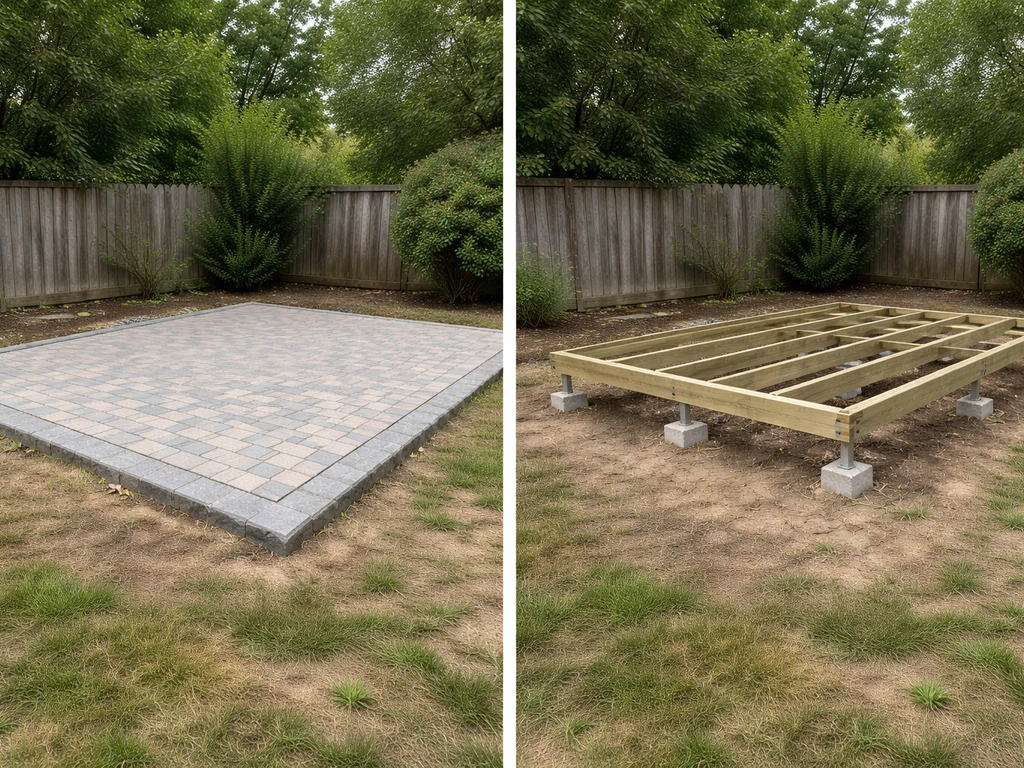
On a flat, well-drained lot, a patio is almost always cheaper. There's minimal excavation, no need for tall framing, and no stairs or railings required by code. A ground-level wood or composite deck is structurally simpler than an elevated one, but it still needs footings and framing that a patio slab doesn't. If budget is the primary concern and your yard is flat, a patio is the straightforward cheaper call.
Sloped yard: it gets complicated
On a sloped lot, a deck can actually become more cost-competitive with a patio, though both get more expensive. A patio on a slope requires significant excavation, retaining walls or grading, and drainage management. A deck on a slope needs taller posts and more footings, but it can span the slope naturally without moving dirt. The real cost killer on sloped deck projects is stairs and railings: stairs run $75–$200 per step installed, and guardrails (required at 30 inches above grade under IRC code) add scope. A deck dropping 8 feet on a slope might need 6–10 steps, adding $450–$2,000 just for the stair run.
Drainage and base prep
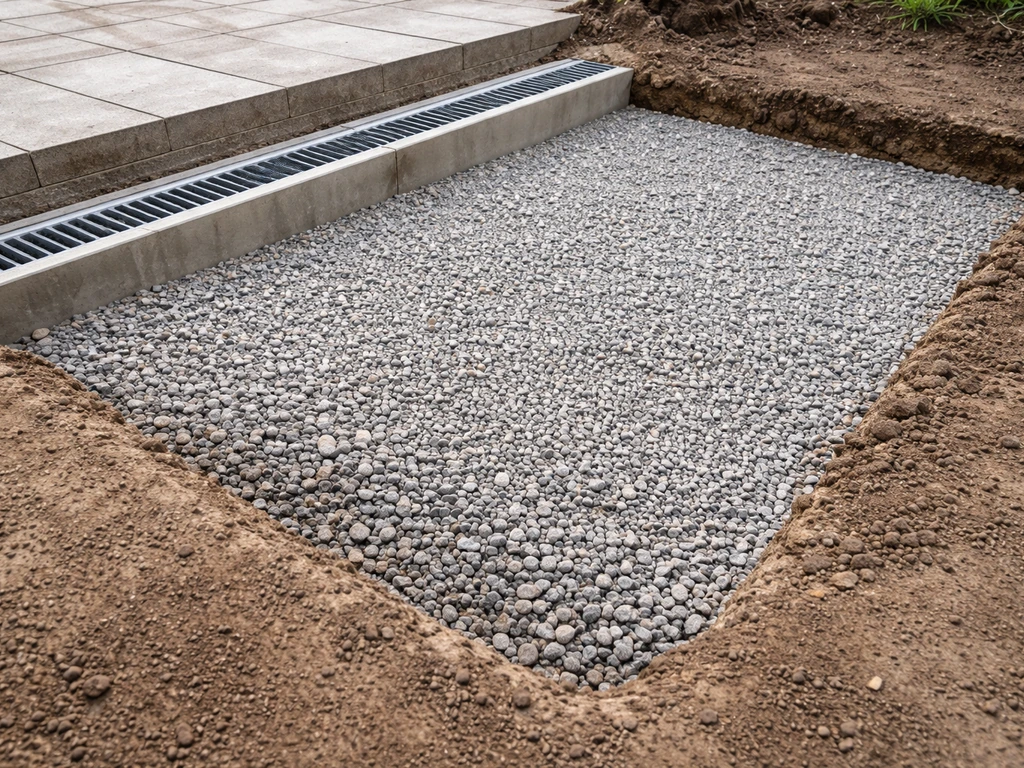
Poor drainage is a hidden cost multiplier for patios. If water pools in the area you want to pave, you may need to add drain channels, regrading, or a more robust gravel base before any surface material goes down. Decks naturally allow water to pass through (or drain around footings), so drainage rarely adds much to a deck project. If your backyard has a drainage problem, factor in that extra patio prep cost before assuming a patio is cheaper.
Existing concrete you can reuse
If you already have a concrete slab, you might be able to build on top of it, either as-is for a patio refresh (pavers or overlay systems) or as a base for a ground-level deck frame. Reusing existing concrete cuts excavation and disposal costs significantly. Removing an old slab, on the other hand, typically adds $500–$2,000+ depending on size and access, which can tip the economics of a new patio project noticeably.
Long-term costs: maintenance, repairs, and lifespan
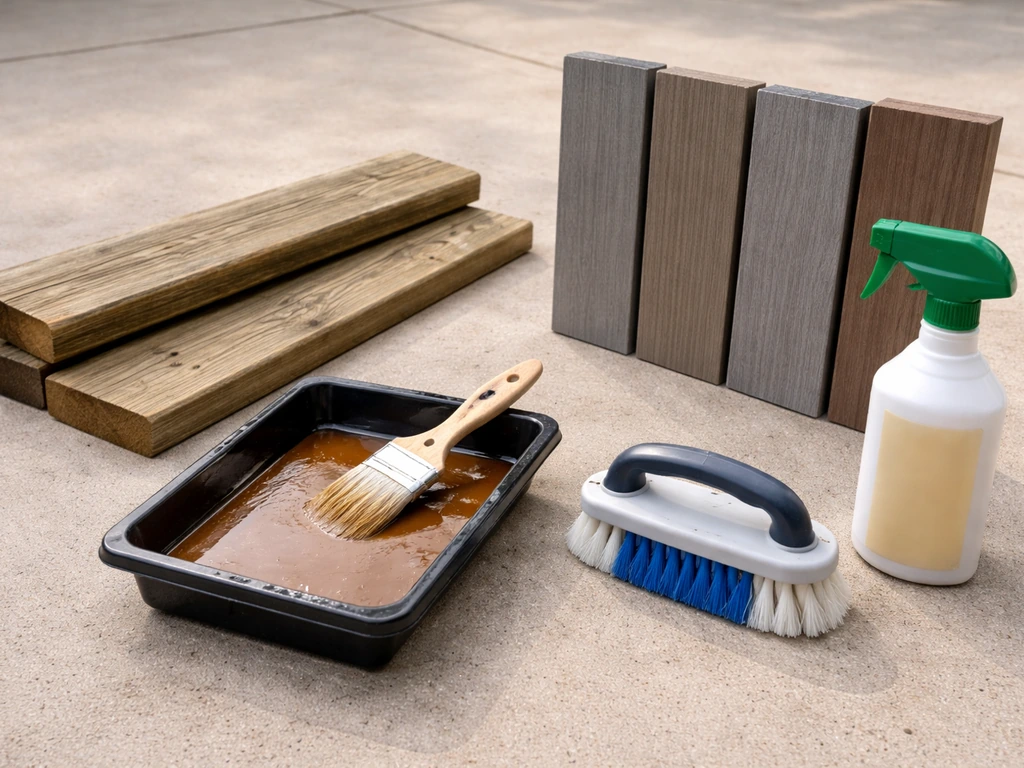
Upfront cost is only part of the picture. What you spend over 10–20 years can easily flip the initial comparison.
Wood decks: regular work, real cost
A pressure-treated wood deck needs to be cleaned, stained, and sealed every 1–3 years to stay protected. Skip that cycle and you're looking at accelerated graying, splintering, and board warping. The materials and labor for periodic staining aren't huge individually, but over 15 years they add up. Budget for at least a few hundred dollars every couple of years for a mid-size deck.
Composite decking: higher upfront, lower ongoing
Composite boards cost roughly 40% more than wood on average, but they largely eliminate the stain-and-seal routine. Quality composite products (like those with 25-year fade and stain warranties from brands such as TimberTech) hold up with just occasional cleaning. That savings in labor and materials over time is a real offset to the higher initial price. If you're planning to stay in the house 10+ years, composite's lower maintenance cost narrows the lifetime gap considerably.
Concrete patios: durable but not invincible
Poured concrete is low-maintenance but not zero-maintenance. Freeze-thaw cycles cause cracking and surface spalling over time, particularly if the slab wasn't sealed properly or cured under poor conditions. Sealing every few years helps significantly. Repairs to cracked concrete are relatively inexpensive, but large cracks or heaving sections can become costly if structural issues develop. Stamped concrete is especially vulnerable because surface damage is more visible and harder to repair invisibly.
Paver patios: longer lifespan, occasional re-leveling
Well-laid paver patios can last 25–50 years, but they do shift. Expect to replace polymeric sand in the joints every 3–5 years (roughly $0.50–$1.00 per square foot), do weed treatments annually ($50–$150/year), and occasionally re-level a section that has settled ($200–$500 per area as needed). Re-sealing every 4–5 years is also recommended to maintain color and protect the surface. None of these are budget-busters individually, but the total over 10 years on a 400-square-foot patio can run $1,500–$3,000.
Hidden costs that often decide the real total
These are the line items that routinely catch homeowners off guard. Any one of them can shift which option is actually cheaper for your project.
- Permits: Decks almost always require a building permit, typically $100–$300 for the permit itself. Patios sometimes require permits too, especially if they're large or attached to the house. Add-ons like outdoor kitchens or electrical can trigger additional trade permits.
- Footings: Deck footings must extend below the frost line, which varies by region. Deeper footings mean more digging and more concrete. In northern climates with frost depths of 36–48 inches, footing costs are meaningfully higher than in the South.
- Stairs and railings: Code requires guardrails on decks 30+ inches above grade (typically 36 inches high with specific baluster spacing). Stairs run $75–$200 per step installed. These aren't optional on elevated decks and can add $1,000–$3,000+ to a project.
- Excavation and grading: Patios on sloped or uneven ground need grading or excavation before the base goes in. That work isn't always included in base material quotes.
- Demo and removal: If you're replacing an existing deck or breaking up an old slab, expect $500–$2,000+ in demo and disposal costs depending on size and access.
- Drainage additions: French drains, channel drains, or regrading to direct water away from a patio slab are sometimes necessary and rarely included in a basic patio quote.
- Access limitations: If a crew can't get equipment into your backyard easily, expect manual labor premiums. Tight side-yard access or fencing that needs to be removed and re-installed adds cost to both project types.
Which is cheaper for your situation: a quick decision guide
There's no single answer that works for everyone, but the pattern is consistent. If you want the easiest type of patio to put in, start with a flat, simple design like a poured concrete slab or basic paver layout. If you need help choosing between them, check the detailed difference between a patio and a deck for cost, setup, and maintenance.
A patio is almost always the cheaper choice if your yard is flat, your budget is tight, and you want a large usable surface area for the money. If you're wondering whether a patio and deck are the same thing, they are not, and the yard and elevation needs often determine which is more cost-effective a patio is almost always the cheaper choice.
If you're still deciding, see how deck and patio costs compare for your yard type before you pick materials should i build a patio or deck. A deck makes more economic sense when your yard slopes significantly, when you're buying 10+ years of low-maintenance use with composite boards, or when you need the elevation for access from a raised door threshold.
If you want the quick cost takeaway behind this deck or patio difference, review how yard slope and structure drive most of the pricing.
| Your Situation | Likely Cheaper Option | Why |
|---|---|---|
| Flat yard, tight budget | Patio (concrete or pavers) | No structural framing or footing depth requirements |
| Sloped yard, need to match door height | Deck | Avoids costly excavation/retaining; spans slope naturally |
| Want decorative surface, large area | Stamped concrete or pavers | Can match or beat deck aesthetics at lower total cost |
| Low-maintenance priority, 10+ year stay | Composite deck | Higher upfront, but maintenance savings close the gap |
| Rental property or resale flip | Basic patio | Lower cost, acceptable ROI, faster install |
| Existing concrete slab in good shape | Patio overlay or paver-over-slab | Reuse existing base to minimize cost |
| Need elevated access from interior floor | Deck | Patio would require steps down; deck levels to door |
If you're weighing more than just cost, questions like ease of construction, how each option suits your lifestyle, and what makes more sense for your specific yard are covered in depth in related comparisons on patio vs deck tradeoffs and which is better for your home overall.
Home value and ROI: does cheaper mean better investment?
Not necessarily. The 2024 Remodeling Cost vs. Value report (tracked by Remodeling Magazine and cited widely including by Realtor. com) shows that wood deck additions typically recoup around 50–70% of their cost at resale, and composite deck additions recoup similarly.
Realtor. com discusses this remodel-to-value recouped ROI idea using Cost vs. Value report trends for wood and composite decks across different years [wood deck additions typically recoup around 50–70% of their cost at resale](https://www. realtor.
com/living/is-it-worth-it/is-it-worth-it-adding-a-deck/). The hosted 2024 Cost vs. Value data tracks deck addition recoup percentages, reflecting Remodeling Magazine's compiled report [deck additions recoup around 50–70% of their cost at resale](https://www. redoakremodeling.
com/2024-cost-vs-value. pdf). Patios aren't always broken out the same way in resale data, but NAR's Remodeling Impact Report on outdoor features consistently shows that outdoor living improvements, whether decks or patios, generate strong buyer appeal.
The practical takeaway is that neither option is a guaranteed dollar-for-dollar return. A $20,000 composite deck won't add $20,000 to your sale price in most markets. But a well-done outdoor space of either type improves buyer appeal, can speed a sale, and adds perceived value, especially in markets where outdoor living is a priority. The ROI gap between a quality patio and a quality deck is smaller than the upfront cost gap, which is worth factoring into your decision if resale is part of the plan.
One honest caveat: a cheap, poorly built patio or a deteriorating deck can hurt resale rather than help it. Quality of execution matters more than material choice when it comes to buyer perception. A clean, well-maintained paver patio often reads better to buyers than a weathered wood deck that needs refinishing.
Your next steps to get a real number
The ranges in this article are solid starting points, but your actual cost depends on your specific yard, your market's labor rates, and the contractor you hire. Here's how to move from estimated ranges to a real quote.
- Measure the area you want to cover. Even a rough square footage number lets contractors give you a more accurate quote and helps you use cost-per-square-foot ranges meaningfully.
- Note your yard's slope and drainage. Walk the area after a rain. Any standing water or obvious slope should be mentioned upfront to every contractor you contact.
- Check your local permit requirements. A quick call to your city or county building department confirms whether your project needs a permit and roughly what it costs. Don't assume a patio is permit-free.
- Get at least three quotes broken down by line item. Ask for separate line items for demo, site prep, materials, labor, footings, and any stairs or railings. Bundled quotes make it impossible to compare accurately.
- Ask each contractor what's not included. Excavation, drainage, and debris removal are frequently excluded from base quotes. Knowing this upfront prevents surprise invoices.
- Run a 10-year maintenance estimate. Add estimated maintenance costs (sealing, staining, joint sand, repairs) to the install price for a realistic lifetime comparison between your options.
- Decide on your material tier before shopping. Knowing whether you want basic concrete, pavers, pressure-treated wood, or composite before you get quotes prevents post-quote scope creep and price inflation.
FAQ
When I ask for quotes, what line items should I make sure are included to compare patio vs deck costs correctly?
Start with the site work scope first. If the contractor includes excavation, disposal, base prep (gravel or compacted layers), and permits in the estimate, the patio and deck comparison is much fairer. If they quote deck framing “only” without footings depth, drainage details, stairs, and railings, the deck price will usually jump after the design is finalized.
Under what conditions can a deck be cheaper than a patio, even if decks cost more in general?
Decks become cheaper only when they let you avoid expensive patio slope solutions. For example, if your yard needs significant regrading, retaining walls, or drainage channels for a patio, a deck that spans the slope can reduce that scope. Still, check stair and rail quantities, because they can erase the savings quickly on steep grades.
Can I reuse parts of an existing patio or slab to lower the cost of a deck or patio?
Yes. If you already have footers or a slab in a usable condition, reuse can change the math. Reusing existing concrete often lowers patio refresh and ground-level deck framing costs, but you should confirm slab flatness, thickness, and whether it is structurally sound before building a deck frame on top.
Are composite decks really lower maintenance, or are there extra costs homeowners often miss?
Composite decks can still have hidden maintenance costs, mainly periodic cleaning and occasional board replacement if damage occurs. Also confirm whether your estimate includes required fasteners, proper spacing, and ventilation details, because poor installation can lead to early problems that increase long-term costs.
What recurring maintenance costs tend to surprise people most for patios and for decks?
For patios, the biggest recurring cost is usually joint maintenance on pavers (replenishing polymeric sand) and drainage correction if water concentrates. For concrete, freeze-thaw cracking and sealing intervals can add to the budget. Ask for the contractor’s plan for base thickness, compaction, and drainage slope, because that’s where many future repair expenses are decided.
How do climate and frost depth affect the cost difference between a deck and a patio?
If you’re in a freezing climate, deck footings generally must be below the frost line, and that depth can increase costs significantly on uneven ground. Patios do not typically use frost-depth footings when built correctly on a compacted, drained base, but if frost heave affects the subgrade, you may still see movement in pavers or surface cracking in concrete.
What’s the best way to estimate lifetime cost, not just the initial deck or patio price?
Build a simple 10-to-15-year budget that includes repairs and routine work. For example, include deck staining and sealing for wood every few years, composite periodic cleaning, patio paver joint replacement every several years, and sealing for concrete or pavers where recommended. Then add a line item for “one correction,” such as re-leveling one settled patio section or replacing a few damaged boards.
How can I avoid getting surprised by change-orders or future repair costs when choosing between deck and patio materials?
Do a “replacement cost” check. If you go with wood, price in board-level replacement and refinishing, especially in shaded or high-moisture areas. If you go with pavers, plan for joint sand and weed control rather than assuming the surface is maintenance-free. For decks, confirm whether your estimate includes stairs and railings for code compliance, since those items often become the biggest change-orders.
How do elevation changes, door thresholds, and step counts change the deck-vs-patio cost comparison?
Yes, and it matters for budget. If you only need access from a raised door and you can keep the deck low, the stairs and railing scope can shrink. Conversely, if your desired patio layout requires awkward transitions, steps, or retaining walls, it can stop being “ground-level” and start costing more like a more complex build.
Is it accurate to compare costs by total square feet, or should I account for setbacks, stairs, and circulation area?
A common mistake is comparing surface area only, instead of usable area after setbacks. Decks often require rails and stair landings that take up footprint, and patios may need edging and a proper drainage slope. Measure the space required for code-compliant edges and circulation, then compare installed square footage, not just the space you want to occupy.
If my yard has drainage issues, how does that change the cost expectations for a patio vs a deck?
Ask who is responsible for water management, for patios specifically. You may need regrading, trench drains, or improved base layers to keep water from pooling, which can become a major cost driver. A deck can route water differently around the structure, but you still want gutters, splash zones, and a plan for how runoff will flow.
How should I think about resale value if my goal is mostly long-term enjoyment, not a guaranteed return?
Resale impact is not guaranteed, but the safest approach is to prioritize condition and usability. Buyers react more to a clean, stable surface than to the material label. If your area is more deck-friendly, a well-built composite deck can fit the buyer expectation, while in other markets a patio may read more natural and lower maintenance. Still, avoid skipping permits and code requirements, because that can hurt resale regardless of material.
Next Article
Difference Between a Patio and a Deck: Complete Guide
Clear patio vs deck comparison: materials, construction, drainage, costs, maintenance, permits, and which to choose.