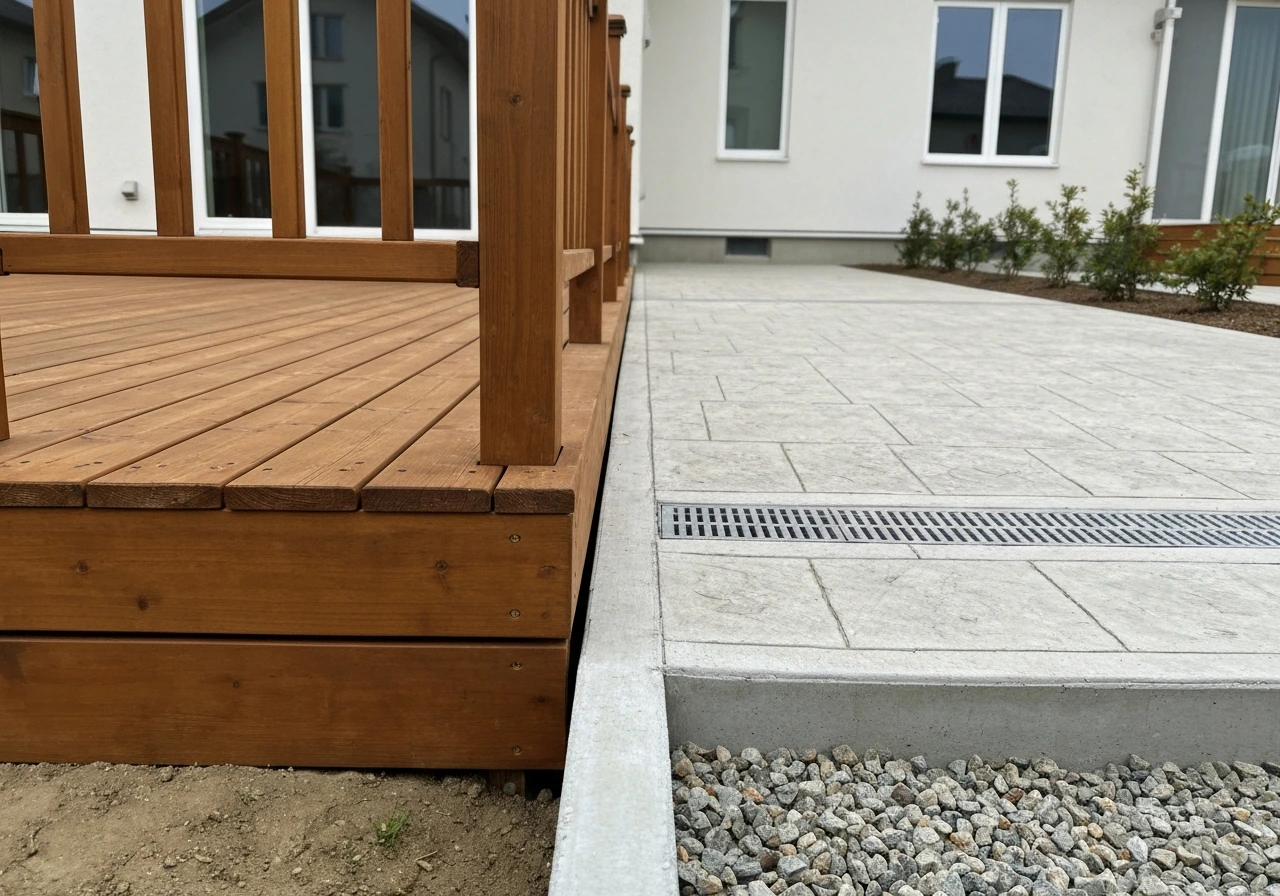
For most flat or gently sloped yards, a paver patio is easier to build than a deck. It has fewer code hurdles, no structural framing, and no ledger attachment to the house. A basic patio is essentially excavation, base prep, and laying pavers, work that a motivated DIYer can complete in a long weekend. A deck requires footings, framing, ledger connection, decking, and often one or more permit inspections. That said, 'easier' flips fast depending on your yard's slope, your soil, and whether you're hiring out or doing it yourself.
Is It Easier to Build a Deck or Patio? Side-by-Side Guide

Miles Hart
3 Jul 2026
Quick verdict: which is easier in most yards
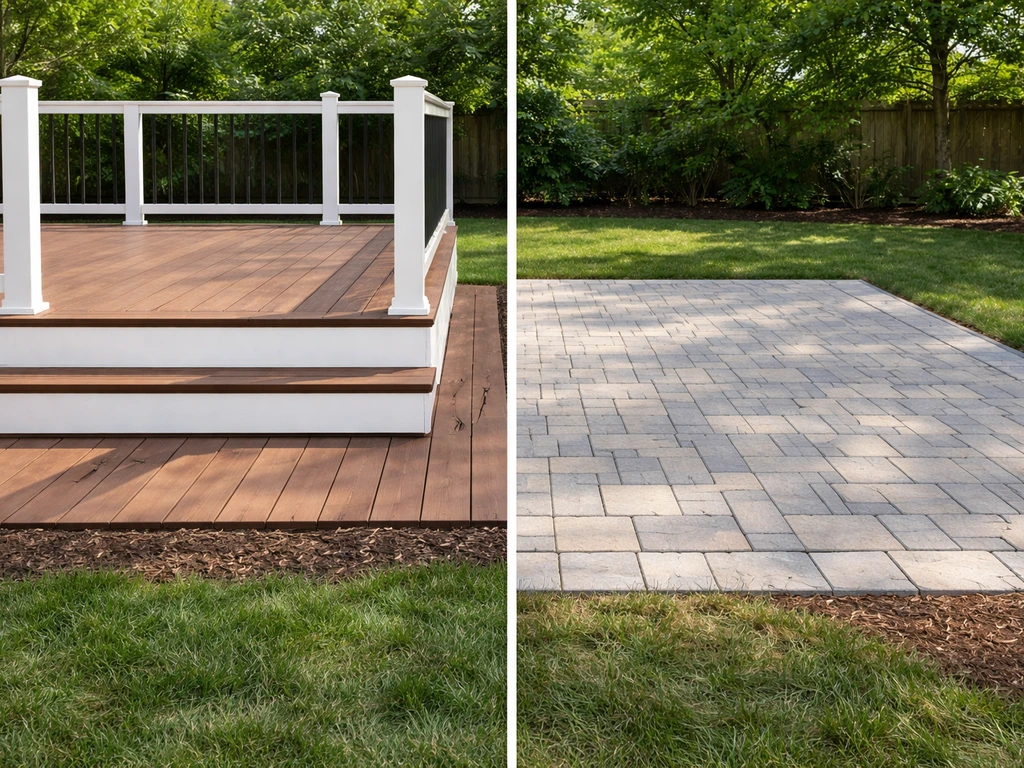
On flat ground with decent soil, a paver patio wins the ease contest by a wide margin. The skill ceiling is lower, the tools are more accessible, and the consequences of a small mistake (a slightly uneven paver) are far less serious than a deck framing error. A concrete patio is also relatively straightforward on flat ground, though it introduces the challenge of pouring and finishing wet concrete, which has a narrow time window and very little forgiveness.
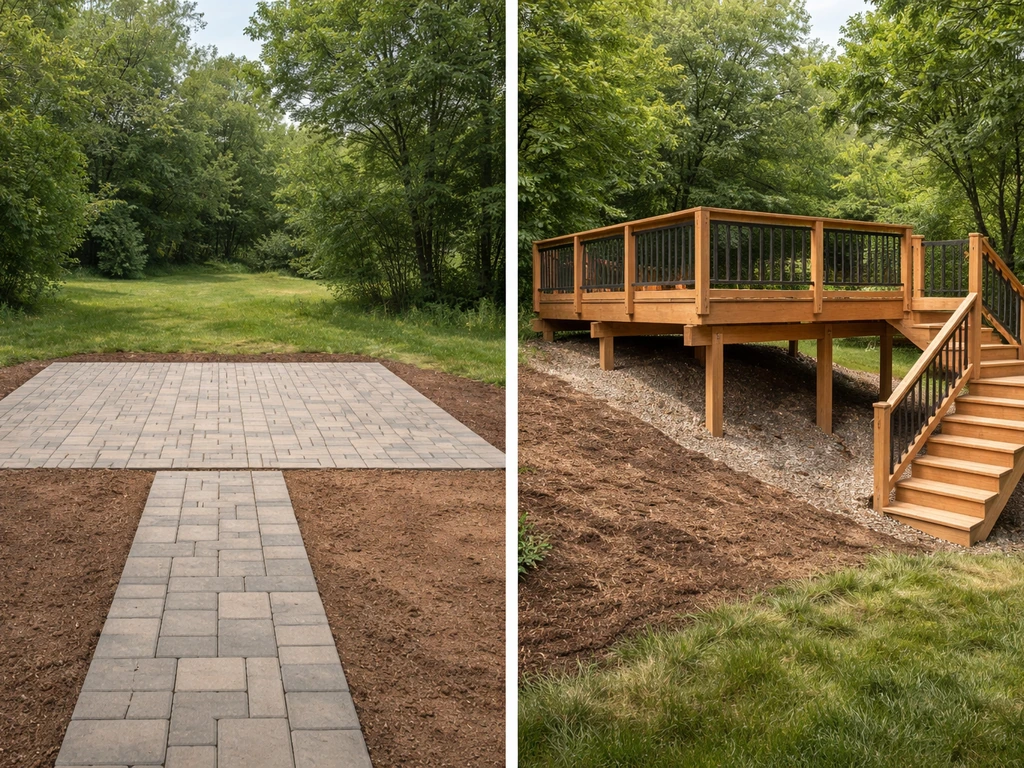
Decks earn their place when your yard has a significant slope. If you need a usable outdoor surface four or five feet above grade, building a deck is actually easier than trying to fill and regrade that much earth for a patio. The ground condition and elevation change is really what tips the scales. On a steep lot, a deck is not just easier, it may be the only practical option without major grading work.
What 'easier' really depends on: your site and goals
Before comparing the two builds step by step, it helps to figure out what 'easier' actually means for your situation. There are four variables that matter most: your ground slope, your soil type, whether you're DIYing or hiring a contractor, and how much you care about permits and inspections. Each one can completely change which project makes more sense. In most guides, a deck is a raised, structural platform, while a patio is usually ground-level, so they are not the same thing patio and deck the same.
- Slope: Ground that drops more than 12–18 inches over the patio footprint makes base prep expensive and drainage tricky. A deck handles slope naturally.
- Soil type: Clay or expansive soil makes paver patios more prone to settling and heaving. Sandy or well-draining soil is much friendlier to both projects.
- DIY vs. contractor: Patio base work is physically demanding but doesn't require a specialized skill set. Deck framing, ledger attachment, and joist layout demand more carpentry knowledge.
- Permit complexity: Most jurisdictions require permits for decks over a certain size or height (guards typically kick in above 30 inches). Patio permits are often simpler or not required at all for ground-level work.
- Timeline: If you need it done in a weekend, a small paver patio is realistic. A permitted deck usually takes 6 to 16 weeks from start to final inspection, even with a contractor.
- Attachment to the house: A ledger-attached deck adds flashing, waterproofing, and structural requirements that a freestanding patio never has.
Deck build factors: structure, footings, ledger, tools, and time
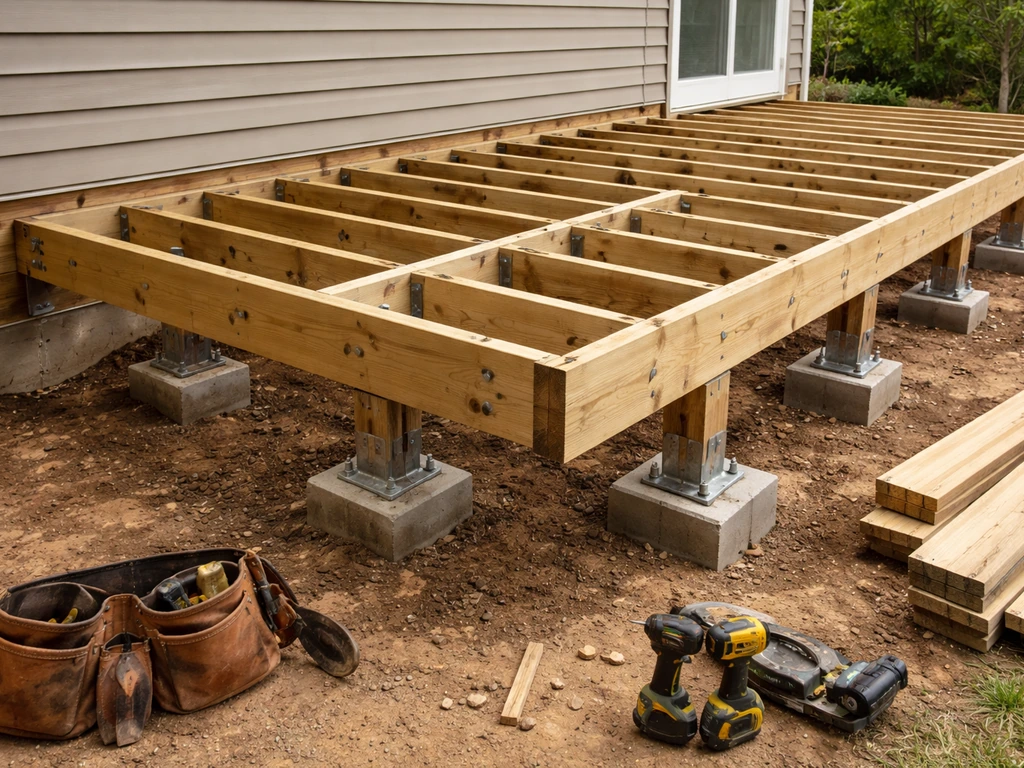
A deck is a raised structural platform, and that word 'structural' is what drives most of the complexity. You're building something that has to hold people safely off the ground, which means footings, a beam, joists, decking, and (if the deck surface is more than 30 inches above grade) a guardrail system. Each of those components has code requirements under the IRC, and they all have to work together.
Footings
Deck footings have to be sized to carry the imposed loads down to stable soil, per IRC R507.3. That typically means digging below your frost line (which can be 12 inches in the South or 48-plus inches in Minnesota) and pouring concrete piers. Concrete needs a minimum of 24 to 48 hours to cure before you can load it with framing. If you hit rocky soil, tree roots, or a high water table, footing work gets much harder fast.
The ledger connection
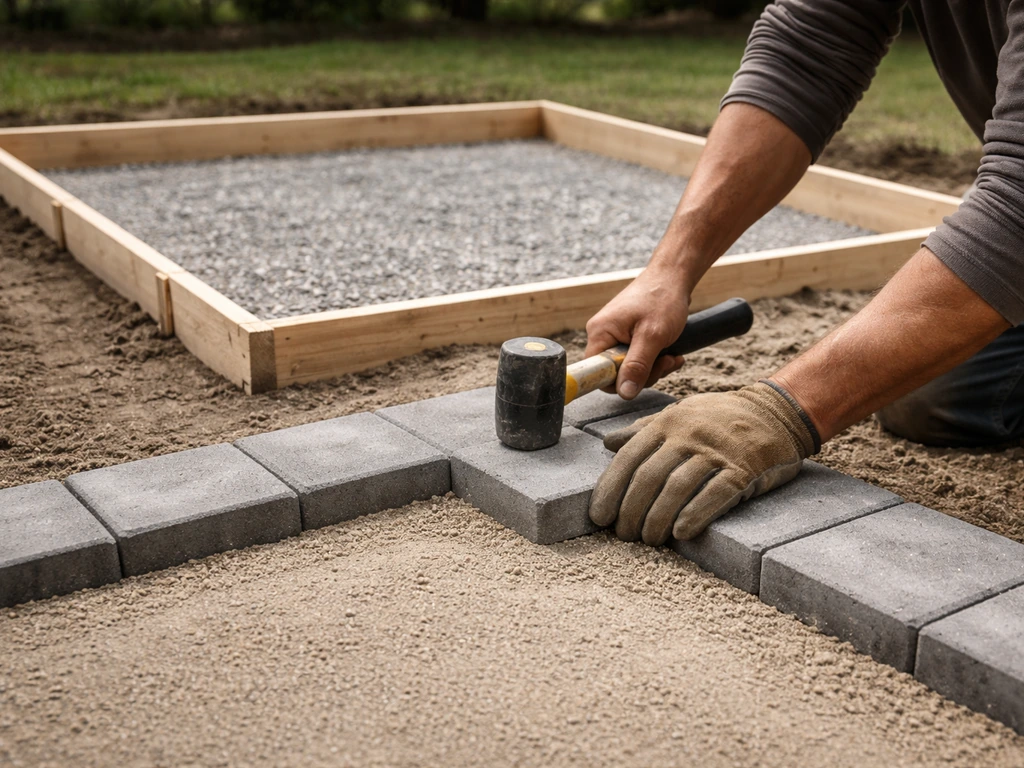
If your deck attaches to the house, the ledger board is the single most critical and most failure-prone part of the whole project. Improper ledger sizing, fastening, or flashing is a primary cause of deck failures. IRC 2024 Section R507.9.1.5 requires the water-resistive barrier to lap over the vertical leg of the ledger flashing by at least 2 inches. Miss this detail and you get rot, which is unfortunately very common in existing homes. The lag screw spacing requirements in the IRC also trip up a lot of DIYers because the tables reference tributary load width, not just deck size, it's genuinely confusing even for experienced builders.
Framing, decking, and composite-specific requirements
Once footings and the ledger are done, you're framing with beams and joists. Standard composite decking like Trex requires joists no more than 16 inches on center for standard installations, dropping to 12 inches on center if you're laying boards diagonally. TimberTech's hidden clip system (CONCEALoc) requires a consistent 3/16-inch gap between boards and only the fasteners specified in their installation guide. These aren't complicated rules, but they're easy to get wrong if you're improvising as you go.
Timeline and inspections
A professional crew can physically build a standard 10x12 deck in one to three days of active construction. But from permit application to final inspection, expect six to sixteen weeks total. Inspections often happen at multiple stages (footings before pouring, framing before decking, final), and each one requires scheduling. DIY builders typically spread the work over two to four weekends, plus waiting time between inspections.
Patio build factors: base prep, drainage, pavers vs. slab, and permits
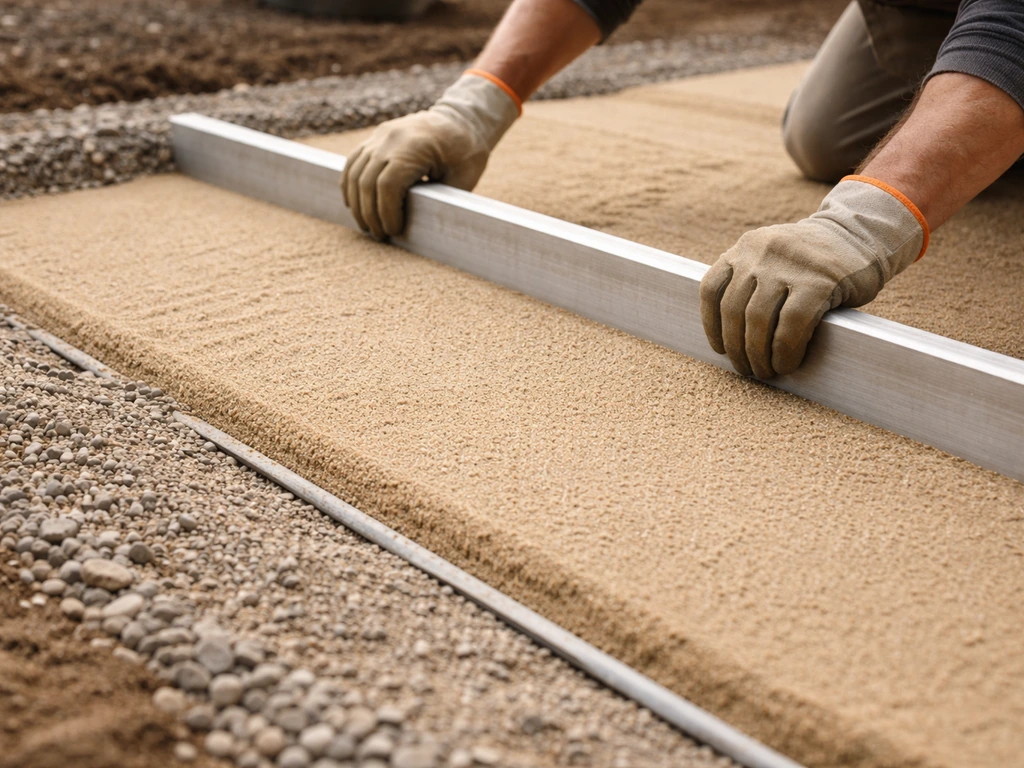
A ground-level patio doesn't have structural framing or ledger connections, but it has its own set of demands that people underestimate. If you're still deciding between a patio versus a deck, remember that deck builds include structural framing and ledger connections, while patios focus more on base prep, drainage, and permits should i build a patio or deck. The majority of a patio project is what you don't see: the excavation, compacted aggregate base, and drainage slope. According to paving industry standards, you're typically digging 8 to 12 inches below finished grade for a paver patio, that's a lot of dirt to move.
Base preparation
CMHA (Concrete Masonry and Hardscapes Association) technical guidance calls for bedding sand screeded to a nominal 1-inch thickness, laid over a compacted aggregate base. CMHA’s guidance also emphasizes installation environment constraints, such as avoiding frozen sand or base and avoiding conditions where joint sand would not readily flow into the joints avoiding frozen sand/base. That base gets installed in compacted lifts, not dumped all at once. Proper compaction is what prevents the most common patio failure: uneven settling. Pavers should finish about 1/8 to 1/4 inch above edge restraints to allow for minor settlement after installation, a small detail that matters a lot after the first freeze-thaw cycle.
Drainage slope
Both paver patios and concrete slabs need to slope away from the house. The standard recommendation is 1/8 to 1/4 inch of drop per foot of run (roughly 1 to 2 percent slope). For a 10-foot-deep patio, that's only 1.25 to 2.5 inches total drop, easy to set up on flat ground, but tricky when your yard already slopes toward the house or the ground is uneven. Getting this wrong leads to water pooling against your foundation, which is a much bigger problem than an unlevel paver.
Pavers vs. poured concrete
Pavers are more forgiving for DIY because mistakes are fixable. You can pull up a paver that's wrong and relay it. Poured concrete is the opposite, once it sets, you have very little recourse. A standard residential concrete patio is typically a 4-inch slab over a 4-inch compacted gravel base, with excavation totaling around 8 inches. The pour itself has to happen fast, finished before the concrete stiffens, and sloped correctly from the start. Most DIYers find pavers easier; concrete typically benefits from at least some professional involvement.
Permits for patios
Ground-level patios often fly under the permit radar, especially if they're not attached to the house. That said, many jurisdictions do require permits for concrete pours, and some require them for patios over a certain square footage. Check with your local building department before you start. The permit process for patios is generally faster and simpler than for decks, and often not required at all for basic paver work.
Side-by-side comparison: cost, DIY difficulty, and common problems
| Factor | Paver Patio | Concrete Patio | Wood/Composite Deck |
|---|---|---|---|
| Typical DIY difficulty | Moderate (physical, but learnable) | High (time-sensitive pour) | High (framing + code knowledge) |
| Base/foundation work | Excavate 8–12", compact base in lifts, 1" bedding sand | Excavate ~8", compact 4" gravel base | Dig footings to frost line, pour concrete piers |
| Permit likelihood | Often not required for ground-level | Sometimes required | Almost always required |
| Active build time (DIY) | 3–5 days for ~200 sq ft | 1–2 days (pour day is fast) | 2–4 weekends |
| Total project timeline | 1–3 weeks | 1–3 weeks + cure time | 6–16 weeks with permits/inspections |
| Most common failure | Settling, heaving, edge creep | Cracking, drainage slope errors | Ledger rot, footing movement |
| Fixability of mistakes | High (relay individual pavers) | Low (concrete is permanent) | Medium (boards replaceable, structure is not) |
| Slope handling | Works best on flat ground | Works best on flat ground | Handles slope well, required on steep lots |
| Attachment to house | Not attached (freestanding) | Sometimes attached | Usually attached via ledger board |
How to choose: decision checklist and next steps
The comparison between a deck and a patio is closely related to broader questions like which is cheaper and which adds more value to your home, topics worth exploring separately once you've landed on the right structure type. Cost is also the key question behind whether a deck or patio is cheaper for your layout, footprint, and site conditions which is cheaper. But for right now, here's how to make the call based on what you actually have to work with.
Use this checklist to decide
- Measure the slope of your yard across the intended project area. If the grade drops more than 12–18 inches, a deck is likely easier and more practical.
- Check your soil: clay-heavy or expansive soil increases patio settling risk. Sandy, well-draining soil works fine for both.
- Decide honestly whether you're DIYing or hiring. Patio base work is labor-intensive but low-skill. Deck framing and ledger work require carpentry experience or a contractor.
- Call your local building department and ask: does a ground-level patio at your square footage require a permit? Does a deck at your intended height and size require one? Get the answers before you price anything.
- Set your timeline. If you need this done within a month, a paver patio is realistic. A permitted deck almost always takes longer.
- Think about how the space connects to your house. If you need a door-height transition directly off a sliding door or back entry, a deck often works better structurally. A patio can still work, but grading to meet a door threshold is trickier on some lots.
Questions to ask a contractor
- What's the frost depth in this area, and how does that affect footing depth for a deck?
- Do you see any drainage issues on this site that would affect a patio base or patio slope?
- Will a ledger attachment on this house require opening up the rim joist area, and is there existing flashing?
- Is there any reason this lot would require grading work before either project could start?
- What permits do you pull, and how long does the approval typically take in this jurisdiction?
What to measure before you do anything
- The elevation change across your planned project footprint (a simple line level and string works fine)
- The distance from your back door threshold to grade — this determines whether a deck or a grade transition makes more sense
- The square footage you actually want, so you can check local permit thresholds accurately
- The distance from any property lines, since setback rules affect placement of both decks and patios
In most typical suburban backyards with flat or gently rolling ground, a paver patio is the easier, faster, and more forgiving first outdoor project. If you're still weighing patio or deck which is better, your yard’s slope and your need for height will usually decide it quickly paver patio. It's also more fixable if something goes wrong.
A deck is the right call when your yard has slope, when you need elevation to match a door threshold, or when you want a structure that can later be covered or enclosed. Once you know which type fits your site, the rest of the decision comes down to budget and materials, which is a whole separate (and equally important) comparison to work through.
FAQ
Is it easier to build a patio without a permit?
Yes, but only for specific cases. If your patio is ground-level, not attached to the house, and you do not exceed your local thresholds for coverage or drainage work, permits may be minimal or not required. A concrete slab is more likely to trigger permitting even when it is “simple,” so confirm whether your city requires a permit for concrete pours, square footage, or any work that changes site runoff.
If my patio ends up slightly uneven, is it always easy to fix?
For pavers, unevenness is usually fixable after installation, but you still should not plan to “set it later.” The key is compaction and bedding: if the aggregate base is not compacted in lifts, lifting and re-laying pavers can become repetitive because settlement continues. A practical check is to verify the base and drainage slope before you place any bedding sand or pavers.
When does a deck become easier than doing major grading for a patio?
Often, yes. A deck is usually easier than large-scale regrading when you need usable outdoor space several feet above grade, because you avoid importing, moving, and compacting large volumes of soil to create a patio-ready slope. If the slope requirement is less than about the height where patios would demand major excavation and reshaping, a patio can still be easier and faster.
What if my yard slopes toward the house, which option is easier then?
Not if you plan for water management incorrectly. Decks still need safe drainage, but patios depend on directing water away from the house using a consistent slope. If your yard slopes toward the foundation, you may need additional grading or a drainage plan for the patio to be “easier,” because correcting pooling later is usually more work than getting the slope right up front.
Is it easier to build a deck or patio when I hire a contractor?
Decks can be easier when you hire out because the schedule risk is usually lower, but costs can climb quickly depending on footings and ledger conditions. Patio labor is more predictable for many DIYers, especially with pavers, because the work is modular and errors are reversible. If hiring, ask contractors how they handle excavation depth, compaction verification, and inspection scheduling, since those details swing the “easier” factor.
Is a concrete patio always easier than a deck for a beginner?
Concrete patios are often harder for DIY even when the final look is simple. The narrow pour and finishing time window, the need for correct slope from the start, and the difficulty of fixing cold joints make pavers more forgiving for many homeowners. If you do choose concrete, plan for weather timing, labor count, and finishing tools in advance, not just material delivery.
If my deck is not very high, does it become as easy as a patio?
It depends on the height relative to grade and local code. If you build a deck surface above a certain threshold, you may need guardrails and more safety-related code work. Ground-level decks or low platforms can be simpler, but once you cross typical guardrail triggers, the “deck is harder” reality returns quickly.
What is the most common mistake that makes deck building harder than expected?
Yes, especially at the ledger and water-resistive barrier. The ledger connection is failure-prone when flashing details are incorrect, which can lead to hidden rot. If you buy an existing deck plan or adapt a design, do not change flashing overlap, water barrier laps, or fastening patterns based on what “seems close.” Bring your exact plan to the permit reviewer or a qualified builder before starting.
Are pavers truly the easy DIY option even if I’m worried about drainage?
Paver patios usually handle small DIY errors better, but the slope requirement still matters. Most patio problems come from drainage and base prep, not from swapping out one tile. Measure slope across the entire footprint, and plan for 1/8 to 1/4 inch per foot drop away from the house, then build the base to that target.
Which one is faster in real time once inspections and curing are included?
Deck projects often take longer overall because of inspection staging, footing cure time, and scheduling. Patio paver projects may be faster on the calendar if permits are not required or if inspections are fewer, but concrete pours still require timing for setting and curing. A realistic comparison is to count active build days plus inspection wait time plus material curing windows.
If I want to expand later, is it easier to extend a patio or a deck?
Typically, pavers are easier to expand because you can incrementally add sections and relay affected areas without breaking up a slab. Concrete expansions can be more involved because joint placement, base consistency, and forming become more critical. If you expect future changes, choose a layout that keeps drainage consistent when you extend.
What’s the quickest way to decide between them for my specific yard?
The best “make the call” test is to identify whether you need a deck to reach an elevation match (like a door threshold) or whether you can build a patio with minimal excavation and correct runoff. If your site demands major regrading to achieve a workable patio slope or drainage line, a deck is often the easier path because it limits earthwork and preserves the existing grade relationship.
Next Article
Deck or Patio Difference: Costs, Maintenance, Value Guide
Deck vs patio difference: costs, maintenance, drainage, permits, value and a checklist to choose the right option.