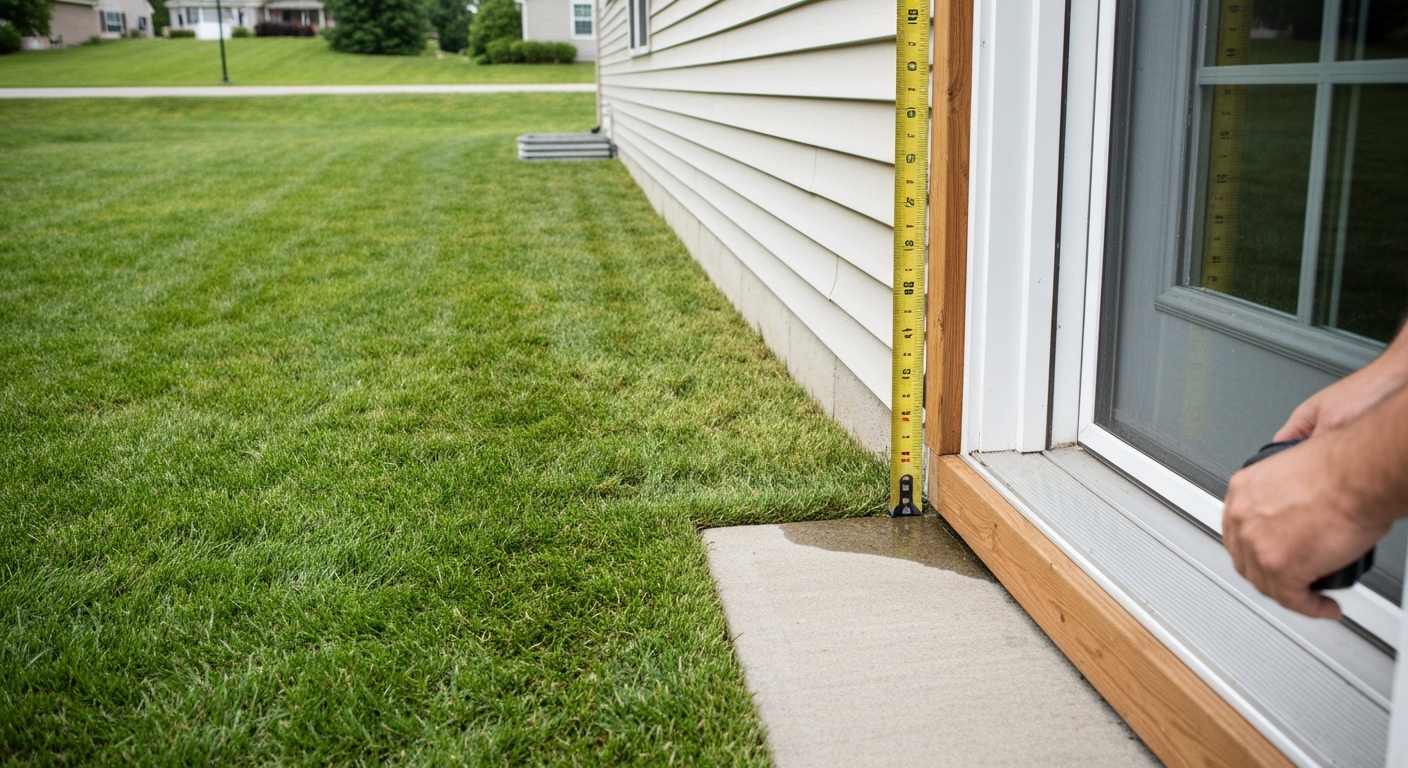
Put your grill at least 10 feet from your house, on a flat non-combustible surface, with the opening facing away from the home and any overhangs. Mass.gov also warns that grills cannot be used on a porch, balcony, or deck with a roof, overhang or wall (other than the exterior of the building). That single rule covers the majority of safety concerns. Everything else, wind direction, fuel access, counter space, traffic flow, is about making the setup actually pleasant to cook in. Here's how to nail both.
Where to Put a Grill on a Patio: Safe Placement Guide

Miles Hart
27 May 2026
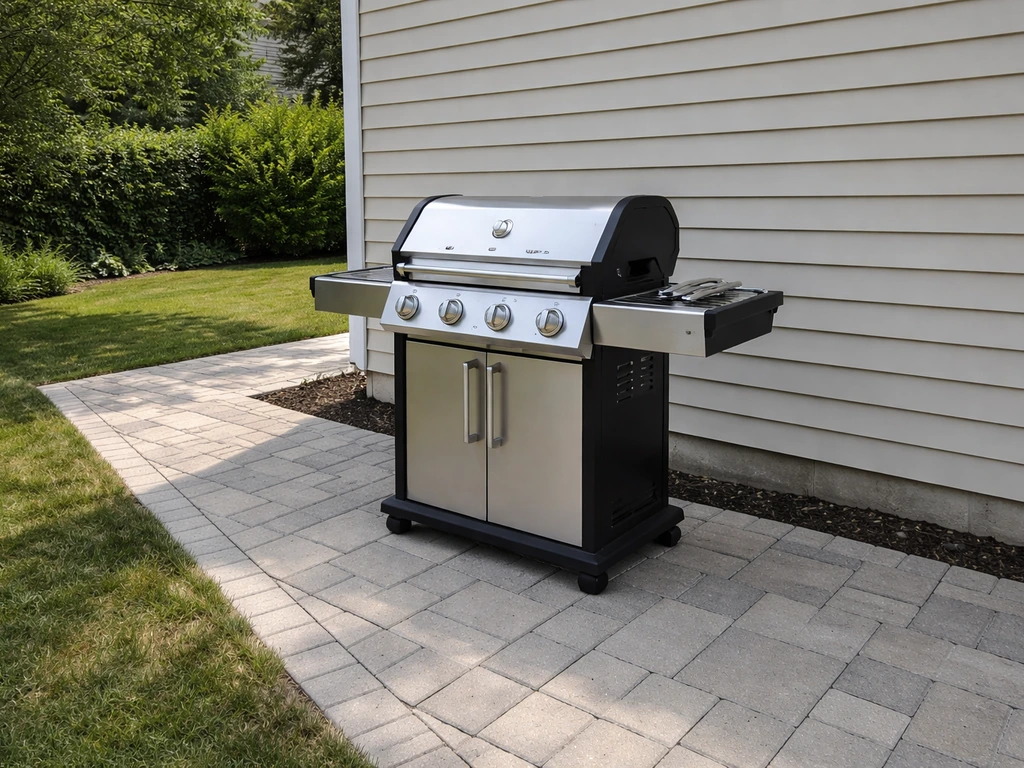
Safety clearances and fire risk basics
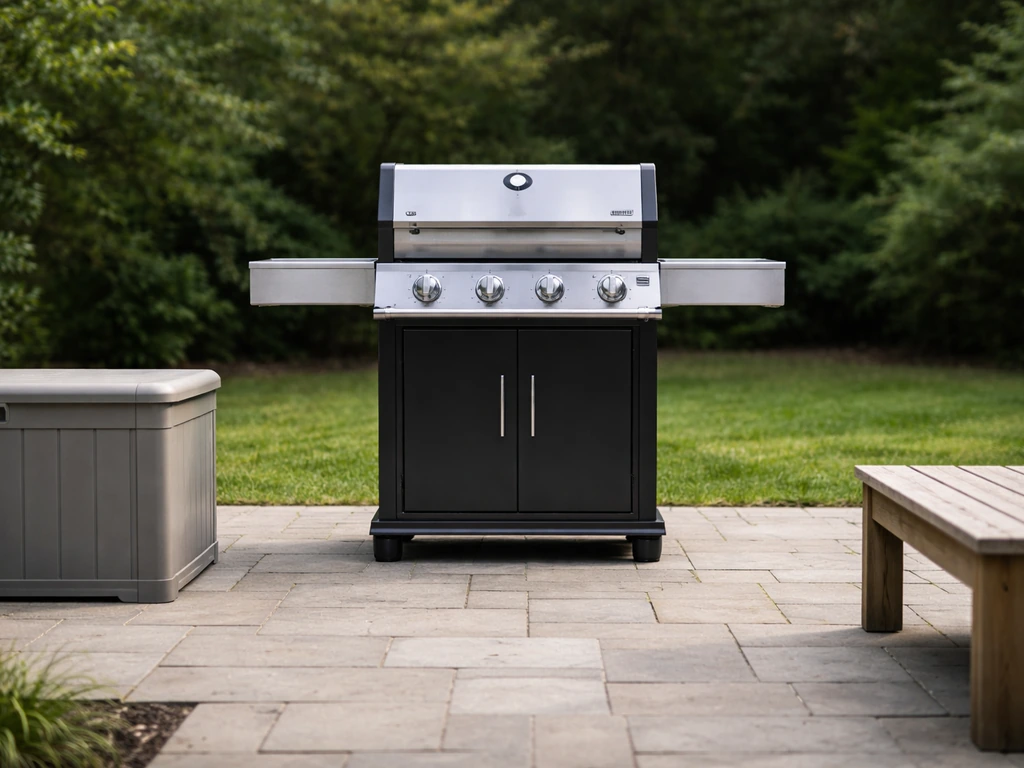
The 10-foot rule is the standard you'll see from nearly every fire authority and safety organization. The NFPA, the City of Madison Fire Department, Poudre Fire Authority, Oregon's State Fire Marshal, and first-aid brands like First Alert all land on the same number: keep the grill at least 10 feet from the house and from any other combustible structure. Some jurisdictions push that out to 15 feet. Fairfax County, Virginia, for example, applies a 15-foot minimum for charcoal and open-flame devices under its adopted Fire Prevention Code. If you're in a stricter jurisdiction, your local fire code wins.
Weber's own installation guides, covering both natural gas and LP models, specify at least 24 inches (2 feet) of clearance from combustible materials on the back and sides of the grill. That 24-inch minimum is the absolute floor for the grill unit itself, but it doesn't replace the 10-foot rule for your home. Think of it this way: the grill needs 2 feet of breathing room from anything immediately next to it, and it needs to be 10 feet from the house overall.
Charcoal grills and open-flame devices get stricter treatment in most fire codes than gas grills do, partly because of ember travel. If you use charcoal, treat the 10-foot rule as non-negotiable, and make sure any debris landing zone (including a wooden deck surface) is considered combustible. Poudre Fire Authority also notes that open-flame cooking devices may not be used on combustible decks or balconies, or within 10 feet of combustible construction treat the 10-foot rule as non-negotiable.
Distance from your home, doors, windows, rails, and overhangs
The 10-foot measurement runs from the grill's cooking surface (not the edge of the cart) to the nearest combustible surface of the home. That includes wood siding, vinyl siding, a wooden deck railing, a pergola beam, or a porch post. Non-combustible brick or concrete does not count the same way, but windows and door frames often do.
Doors and windows are a separate concern beyond fire. Smoke and carbon monoxide will funnel through any opening within range. If you're wondering about Florida specifically, local rules and outdoor smoking ordinances can vary, so check your city or county requirements before you light up smoke on a restaurant patio in Florida. Keep at least 10 feet between the grill and any door or operable window, and consider which way they swing or slide. A sliding door you open constantly to run food in and out becomes a smoke vacuum if the grill is right next to it.
Overhangs are where a lot of homeowners get into trouble. A covered patio, a pergola with a solid roof, or even a low-hanging tree branch dramatically changes the math. Chubb recommends at least 10 feet of vertical clearance between the grill and any combustible overhead structure. Massachusetts law and Seattle Fire Department guidance both state plainly that grills cannot be used on a porch, balcony, or deck that has a roof or overhang.
An NFPA study covering 2017 to 2021 found that more than one quarter of grill structure fires started on an exterior balcony or open porch. If your patio has a full roof or a low pergola, the grill goes outside that covered zone, not underneath it.
Railings on a patio or deck present a two-part problem: they're often combustible (wood or composite), and they block airflow. Keep the grill at least 2 feet from any railing as a starting minimum, and further if the rail is wood or anything that can catch a spark.
Wind, smoke, and ventilation
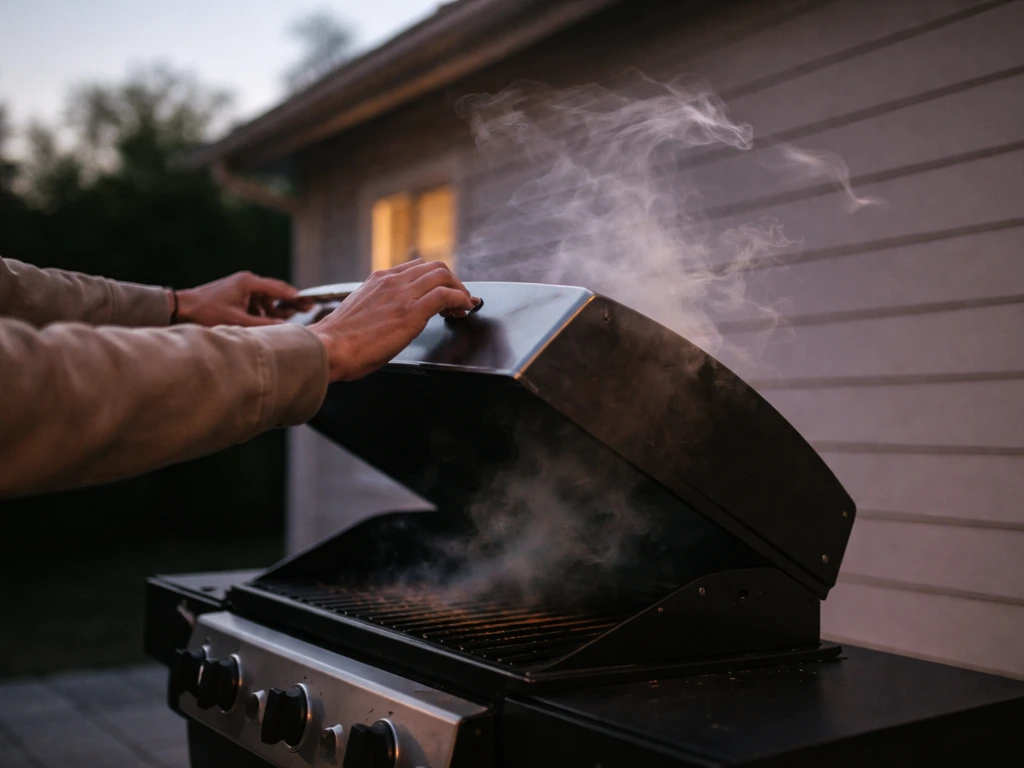
Before you lock in a spot, spend a few evenings on your patio and just notice where the wind comes from. Most properties have a consistent prevailing wind direction. You want smoke blowing away from the house, not toward it, and definitely not into an open door or your neighbor's yard if you're close to the property line.
Positioning the grill so the lid opens facing away from the house accomplishes two things: it puts the smoke plume heading outward, and it means you're not leaning toward the house every time you check the food. On an open concrete or paver patio, this is usually easy to arrange. On a smaller patio or one that's bordered by a fence or wall on multiple sides, ventilation gets trickier.
Corner placements feel convenient for traffic, but they can trap smoke if two walls channel wind back toward you. If you're cooking in a corner, leave extra clearance from both walls and test smoke behavior before you commit to a permanent setup like a built-in grill island. For any built-in or outdoor kitchen setup, proper ventilation in the grill enclosure itself is a design requirement, not an afterthought.
Fuel and utility access
Propane setup
A standard propane cylinder (the 20-pound tank most portable grills use) should stay at least 10 feet from any ignition source, including your home's exterior outlets, AC units, lights, and the grill's own burners when the tank is being stored separately. Keep spare tanks even further away, never store a backup tank next to the active grill. Tanks must stay upright and in a ventilated area. Under a closed cabinet with no airflow is not acceptable, which is why outdoor kitchen islands with propane storage need ventilated doors and proper cutouts.
Natural gas setup
A natural gas grill needs a hard-piped connection that meets your local Fuel Gas Code. This is not a DIY project in most jurisdictions. The upside is that once the line is run, placement becomes permanent and you eliminate tank logistics entirely. The downside is that the gas line dictates exactly where the grill can go, so you need to finalize your placement decision before the plumber arrives. Think carefully about whether that location will still feel right in five years, especially if you plan to add countertop space or a pergola later.
Electric and other utility access
If your setup includes a rotisserie, an outdoor refrigerator, or a lighting circuit, you'll need an exterior outlet nearby. GFCI-protected exterior outlets should be positioned so cords don't cross foot traffic areas. Plan the outlet location alongside the grill location, not as an afterthought.
Traffic flow, prep space, and convenience layout
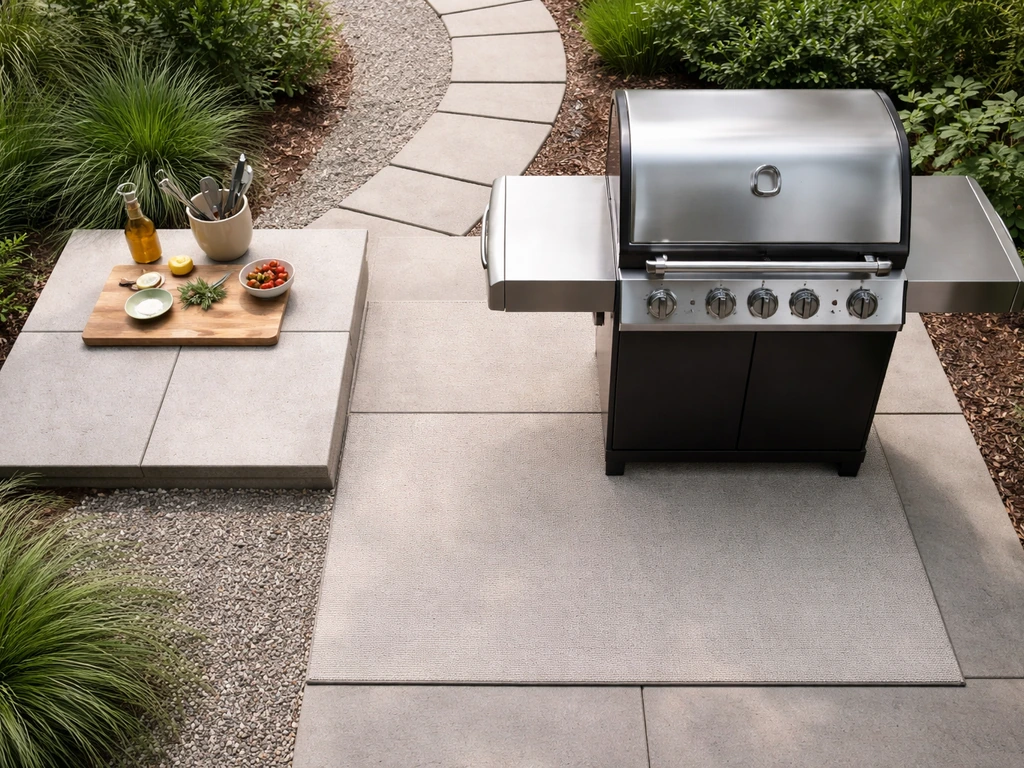
The best grill placement is one you'll actually use comfortably. A few layout principles make a real difference here. First, plan for at least 12 to 18 inches of landing space on each side of the grill for plates, tools, and food waiting to go on or come off. Homes & Gardens' outdoor kitchen guidance recommends a minimum of 24 inches of dedicated prep space nearby. Second, make sure there's at least 36 inches of clear circulation space in front of the grill, meaning the zone the cook occupies while grilling should never become a choke point for guests moving around the patio.
If you're designing a full outdoor cooking zone, the classic three-zone approach works well: prep (counter space, cutting boards), cooking (grill and any side burner), and serving (a counter or cart near the seating area). BBQGuys and outdoor kitchen designers consistently recommend keeping the grill, sink, and refrigerator within 4 to 9 feet of each other so you're not hiking across the patio for every task.
Sightlines matter too if you're entertaining. Being able to see your guests and have a quick conversation while you cook makes the space feel more social. Corner placements can isolate the cook from the crowd. A position along one edge of the patio, where you can face outward toward the seating area, usually works better than backing yourself into a corner.
Placement for different patio sizes and styles
| Patio type | Best grill placement | Key constraint |
|---|---|---|
| Large open patio (400+ sq ft) | Along the far edge, 10+ ft from house, facing inward toward seating | Wind direction; avoid placing directly downwind of seating area |
| Small patio (under 200 sq ft) | On the patio perimeter, pushed to one side; may need to grill in the adjacent yard if clearances aren't met | 10-ft rule may push the grill off the patio entirely |
| Covered patio / pergola with open sides | Outside the roofline or at the very edge if vertical clearance exceeds 10 ft | Check local code; many jurisdictions prohibit grilling under any roof |
| Fully roofed covered porch | Do not grill under the roof; place grill in adjacent open area | Fire code and carbon monoxide risk |
| Patio near a fence or property line | Angle grill so lid opens away from fence; maintain 2-ft minimum from wood fence | Wood fences are combustible; check HOA rules |
| Patio with a grill island or built-in | Integrated into island per manufacturer specs; natural gas line location drives placement | Permanent; plan utilities before finalizing |
If you have a screened-in patio or are wondering whether grilling on an apartment patio is even allowed, those situations have their own specific rules that go beyond placement, covering what's actually permitted by code or lease. A covered porch is a fundamentally different situation from an open concrete patio, and the answers diverge pretty quickly.
How to measure, mark, and lock in your grill spot
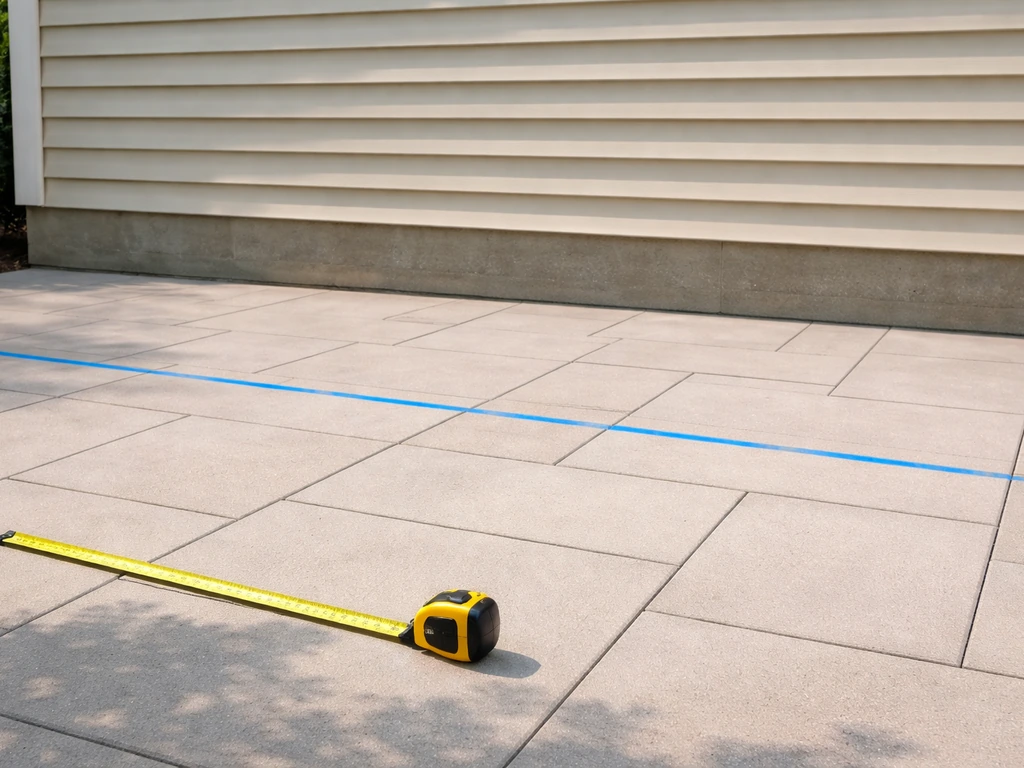
Don't just eyeball it. Here's a simple process to find and confirm the right spot before you buy anything or run any gas lines.
- Stand at the wall of your house and measure 10 feet outward. Mark that line with chalk or painter's tape across your patio surface. No part of the grill should be closer to the house than this line.
- From that line, identify any overhangs, pergola beams, or roof edges above. If anything combustible hangs within 10 feet overhead, shift the grill location further out.
- Mark where the grill will sit (use the actual footprint dimensions from the manual or product page) and check that combustible objects like railings, fences, and planters are at least 24 inches from the sides and back of that footprint.
- Check doors and windows. Walk to each one and estimate the distance to your marked spot. If any door or operable window is closer than 10 feet, adjust.
- Stand at your marked grill position and face the direction the lid will open. Note the prevailing wind. Is smoke blowing toward the house or toward guests? Rotate or shift as needed.
- Walk the path from your kitchen door to the grill spot carrying an imaginary platter. Is it a straight, clear path? Does anyone have to squeeze past the grill? Aim for that 36-inch clearance zone in front of the grill position.
- Set a folding table or cardboard box in the marked spot for a day or two and live with it. Notice whether smoke from a neighbor's grill or your own test fire drifts the way you expected.
Once you're satisfied with the spot, mark it permanently with chalk paint or a paver outline. If you're adding a gas line, this is the point to call your plumber with the exact coordinates. If you're building a grill island, finalize material choices (concrete block and tile are non-combustible; wood framing is not) and make sure your island design includes proper ventilation around the grill cavity.
Quick placement rules to keep posted
- 10 feet minimum from the house (some jurisdictions require 15 feet)
- 10 feet vertical clearance from any combustible overhead structure
- 24 inches minimum from the back and sides of the grill to nearby combustibles
- No grilling under a roof, solid pergola, or covered porch (per most fire codes)
- Propane tank stored at least 10 feet from ignition sources; spare tanks stored separately
- Flat, level, non-combustible surface only (concrete, pavers, stone)
- 36 inches of clear space in front of the grill for the cook to work safely
- 12 to 18 inches of counter or landing space on each side of the grill
- Lid should open away from the house and away from the primary seating area
Getting the placement right the first time saves you from having to move a heavy grill cart, re-run a gas line, or worse, deal with a fire department visit. Spend thirty minutes with a tape measure and some chalk before you commit, and you'll have a setup that's both safe and genuinely enjoyable to cook on. So, if your grill is meant to sit outdoors as part of your patio setup, it can be considered patio furniture in everyday terms. If you’re in Florida, the best patio setup also needs smart heat and airflow planning to keep cooking comfortable safe and genuinely enjoyable.
FAQ
Can I put my grill under a pergola or patio cover for shade?
Yes, but only if it is an open, non-combustible area. A grill generally cannot be placed under a roof overhang, pergola with solid overhead material, or any covered balcony area, because heat and smoke get trapped and the overhead structure can be ignited by radiant heat or ember travel. If you want shelter, use a standalone, non-combustible canopy that keeps the grill outside the covered zone.
Where exactly do I measure the 10-foot distance from on my patio?
Treat the measurement as “to the nearest combustible” from the grill’s cooking surface, not from the cart wheels. Include things like wood/composite rail tops, fence posts, pergola beams, deck railings, and porch steps. If a surface is non-combustible (brick, concrete), it typically can be counted differently, but keep a bigger buffer if there is any doubt about materials or coverings.
If I have a brick wall behind the grill, do I still need 10 feet from the house?
Do not assume that a fire-safe wall or chimney blocks the 10-foot requirement. Even with a non-combustible barrier, you still need the proper separation from the house and other structures, and you must keep required side and back clearances so hot air can dissipate. Also, confirm the barrier is rated for exterior heat exposure and does not contain wood framing behind it.
What should I watch for if my grill needs an extension cord or an outdoor outlet?
If your grill is electric start, warming rack accessories, or side burners, plan for the same separation plus safe cord routing. Keep power cords and extension leads away from foot traffic and away from hot surfaces, and use outdoor-rated, GFCI-protected outlets. Avoid running cords under rugs, through doorways where they can be pinched, or near locations where someone might trip while carrying plates.
How close can I store a spare propane tank near the grill?
Use a “two-zone” approach: (1) storage safety for the propane tank, including keeping it far from ignition sources and in an upright, ventilated area, and (2) cooking safety for the active grill. Even if the grill is positioned correctly, spare cylinders should never be stored next to it under a closed cabinet, inside the house, or in an enclosed spot with poor airflow.
What if my patio is always windy, can I still place the grill where it “usually works”?
Yes, but only with extra caution. In windy areas, even proper placement can allow smoke to drift back toward doors, operable windows, or neighbors. If gusts are common, test smoke direction at multiple times of day, avoid tight corners with walls on two sides, and consider relocating the grill to an edge position where prevailing wind carries smoke away.
Are corner placements safe, and will they cause smoke problems?
If your patio has a corner, avoid putting the grill exactly where two walls form a channel. Wind can bounce between surfaces and push smoke toward the cook or seating area, and ember travel can be harder to predict. If a corner is the only option, increase clearance from both walls, run a few “smoke tests,” and do not create a situation where the grill opening faces into the corner.
Do built-in grill islands need special ventilation beyond the usual clearance rules?
If you have a grill enclosure or built-in island, don’t rely only on surrounding clearance. You need ventilation in the enclosure itself so hot air can escape and heat does not build up around combustible components. That means properly sized air openings and avoiding enclosed spaces where the grill cavity can overheat, especially around vented gas or electrical components.
Can I place the grill on a wooden deck if I use a heat pad?
If the grill is on a deck, the main risk is that the “landing zone” and any debris catch area can be combustible. Even when the grill base sits on non-combustible pads, ember fallout can still land on deck boards. Use a non-combustible hearth or install the grill in a way that keeps hot debris from dropping onto wood or composite surfaces.
If I’m installing a natural gas grill, how should that affect where I put it?
Yes, but make the final decision before installation. Natural gas location is constrained by the hard-piped line route and local Fuel Gas Code requirements, which usually means a permitted contractor. Because you cannot easily change the grill location later without rerouting the line, finalize the “future layout” (prep space, doors, and any planned pergola or countertop) first.
Next Article
Grass Is Higher Than Patio: Causes, Fixes & Deck vs Patio
Grass higher than patio? Causes, slope checks, repair options, lower lawn, raise patio, or build a deck, with costs & DIY