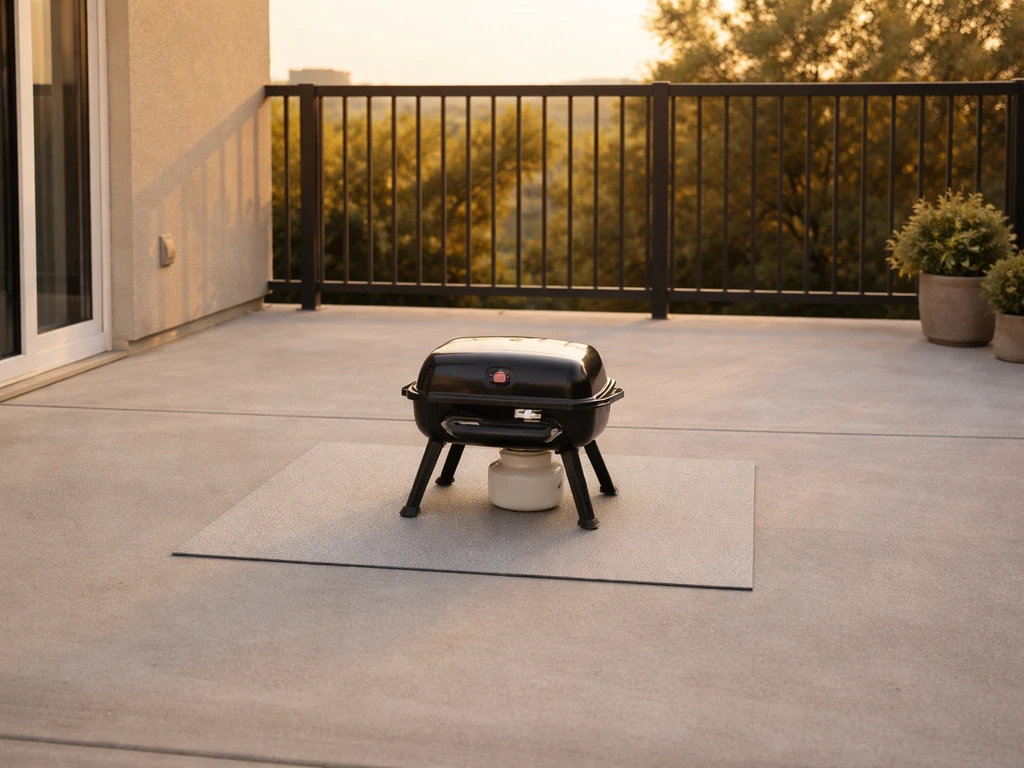
Yes, you can grill on a patio, but whether it's safe and legal depends heavily on whether that patio has a roof, overhang, or walls. An open-air patio with no cover overhead is generally fine for gas, charcoal, or electric grills as long as you keep the grill away from combustible surfaces. A covered patio is a different story: the overhead structure traps heat and smoke, creates a real fire risk, and in many places is outright prohibited by local fire codes. The good news is that with the right setup, clearances, and grill choice, a lot of homeowners can still grill on or near their covered patio safely and legally.
Can You Grill on a Patio Safely Under a Cover

Miles Hart
6 Jun 2026
Rules and Safety for Grilling on a Covered Patio
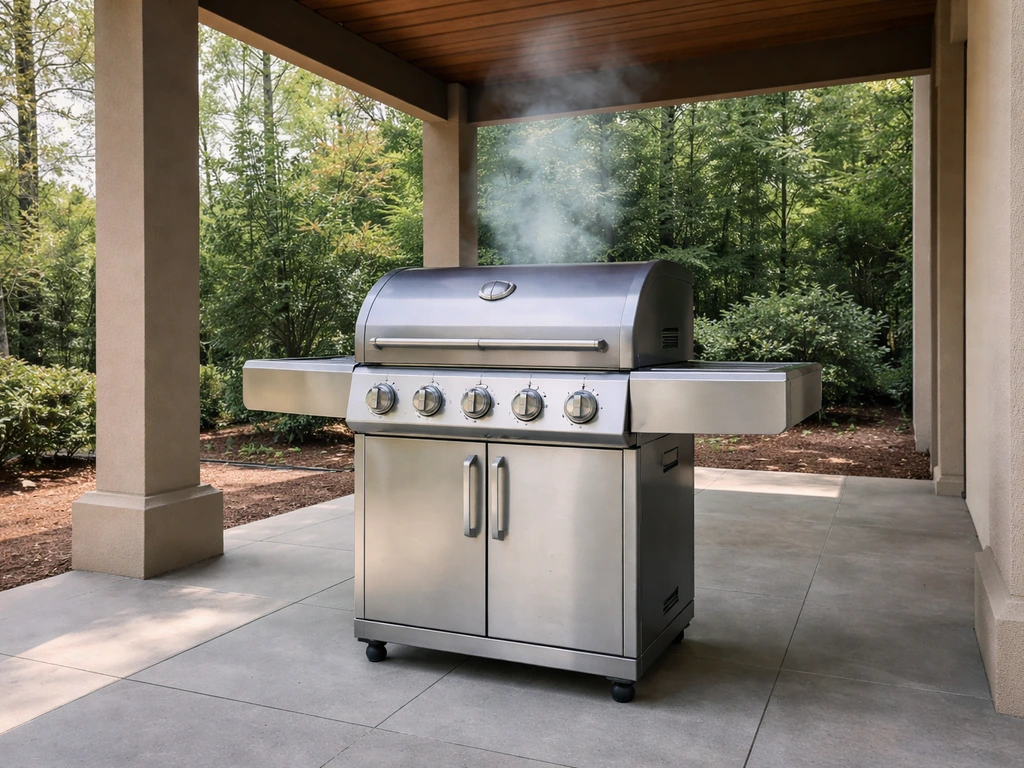
Before you fire anything up under a covered patio, check two things: your local fire code and your homeowner's insurance policy. Many municipalities follow NFPA 1, which blank" rel="noopener noreferrer">requires a minimum clearance of 24 inches (610 mm) from any building structure for outdoor cooking equipment. Some states go further. Massachusetts, for example, explicitly prohibits using grills on any porch, balcony, or deck that has a roof, overhang, or wall other than the exterior building wall. That's a hard no, not a guideline.
HOA rules are another layer to check. Even if your local fire code is silent on the matter, your HOA may restrict open-flame grilling within a certain distance of any structure. Apartment and condo patios often fall under even stricter rules, which is worth a separate look if that's your situation.
On the safety side, the core risks under a covered patio are heat buildup, smoke accumulation, and flare-up sparks reaching a combustible ceiling or wall. Wood-framed patio covers, vinyl lattice, and fabric shade sails are all real ignition risks. Even a concrete or metal roof becomes a problem if grease splatters up onto it or if carbon monoxide from a charcoal grill has nowhere to escape.
Can You Grill Under a Patio? Clearance, Ventilation, and Setup
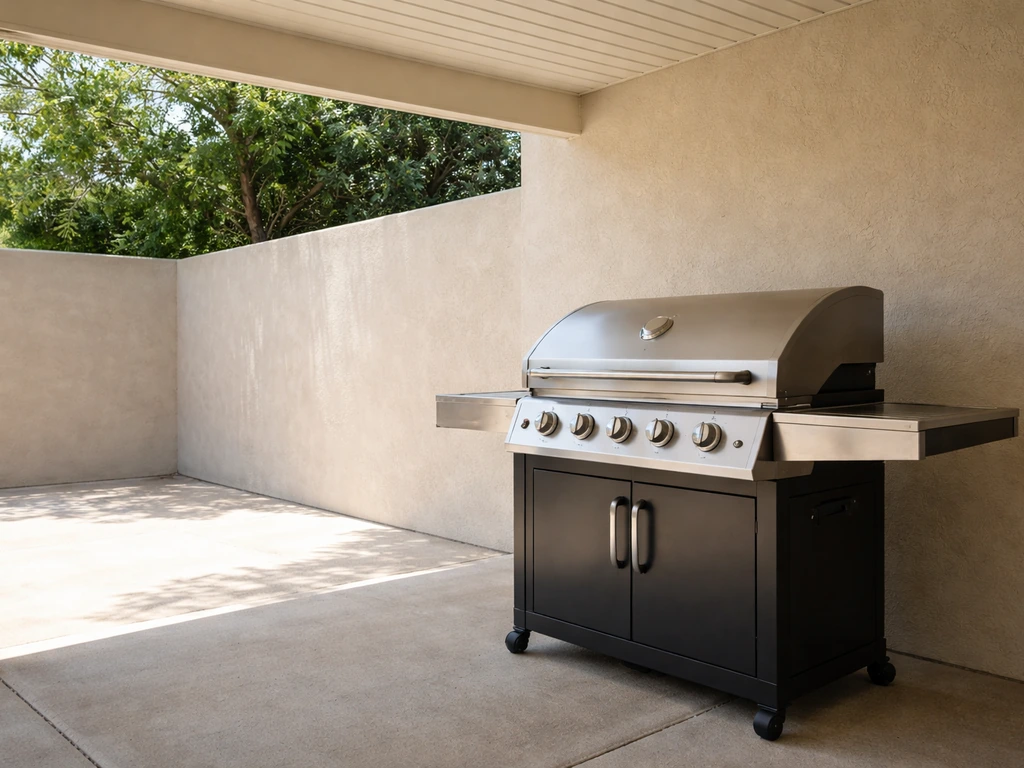
Grilling under a patio roof is possible in some setups, but the math has to work out on three factors: vertical clearance, horizontal clearance from walls, and airflow. Miss any one of these and you're either violating code or creating a real hazard.
Vertical and Horizontal Clearance
The NFPA standard calls for at least 24 inches of clearance from the building itself, but that's a floor, not a ceiling. Most grill manufacturers recommend a minimum of 36 to 60 inches of overhead clearance above the cooking surface. A standard patio cover sits roughly 8 to 9 feet off the ground, and a grill cooking surface is typically 36 to 42 inches high, so that leaves you about 5 feet of overhead clearance in the best case. That may be enough for a low-heat electric grill but not for a charcoal grill that throws tall flames during a flare-up.
Ventilation Requirements
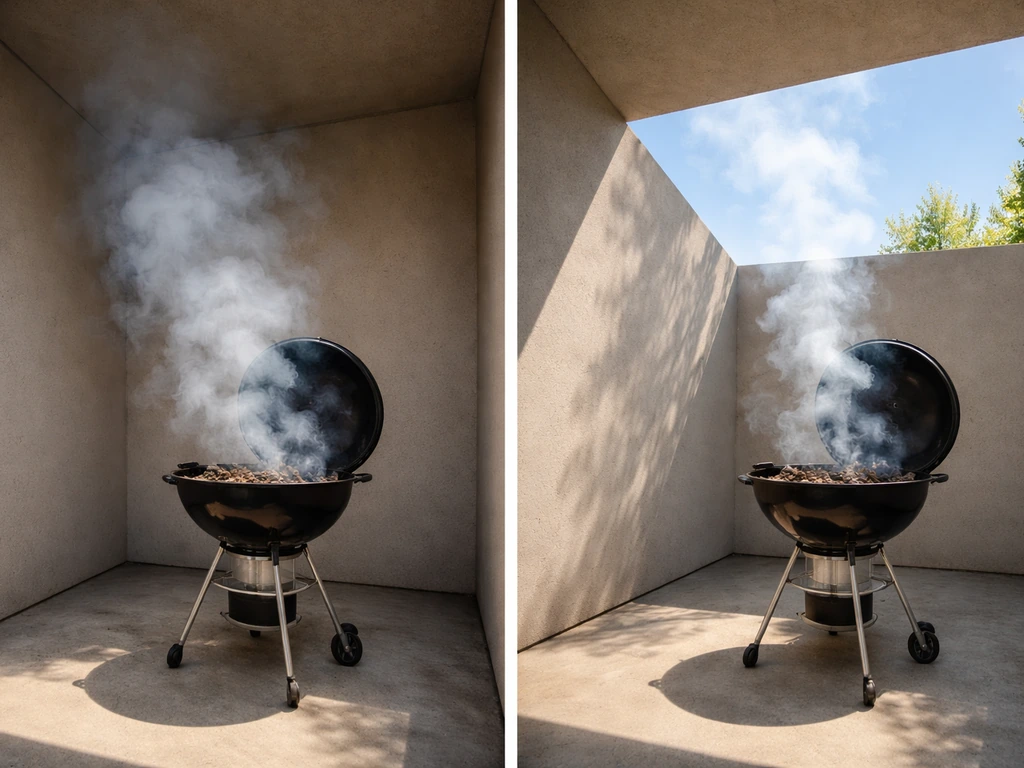
A fully enclosed patio with walls on three or four sides is the most dangerous setup. Carbon monoxide from charcoal and gas grills can accumulate rapidly in enclosed spaces, and smoke has nowhere to vent. Open-sided covered patios (a roof with no walls, or walls on only one side) are significantly better. If you're going to grill under any kind of cover, the space needs to be open on at least two sides and ideally have airflow moving through it. A ceiling fan running on its exhaust cycle can help push smoke out, but it does not make an enclosed space safe for charcoal grilling.
Choosing the Right Grill Type for Patio Use
Not all grills carry the same risk on a covered patio. The type of grill you use is one of the biggest factors in how manageable or dangerous the setup becomes.
| Grill Type | Fire/CO Risk | Smoke Output | Suitable for Covered Patio? | Best Use Case |
|---|---|---|---|---|
| Charcoal | Highest (open flame + CO) | Heavy | No (most codes prohibit) | Open-air only, away from structure |
| Gas (propane or natural gas) | Moderate (open flame, less CO) | Light to moderate | Sometimes, with strict clearances | Open-sided covered patio with good airflow |
| Electric | Low (no open flame) | Minimal (smoke from food only) | Yes, most suitable | Covered or enclosed patios where open flame is prohibited |
Charcoal grills are the most problematic under any overhead structure. They produce carbon monoxide continuously during the burn, throw sparks and embers, and generate significant heat that rises directly toward the cover. If you love charcoal flavor and have a covered patio, the practical answer is to move the charcoal grill out from under the roof entirely.
Gas grills are a middle ground. Propane and natural gas produce less carbon monoxide than charcoal, and the flame is more controllable, but a grease fire can still send a significant flame upward. For an open-sided covered patio with good overhead clearance and no combustible ceiling material, a gas grill can work safely if positioned correctly.
Electric grills are the safest option for covered patios by a wide margin. There's no open flame, no carbon monoxide, and the only smoke comes from the food itself. If your covered patio has walls or limited airflow, an electric grill is the right call. The trade-off is flavor and sear quality, which is a real limitation if you're cooking steaks, but modern electric grills have closed that gap more than most people expect.
Smoke, Fire Risk, and Where to Put the Grill
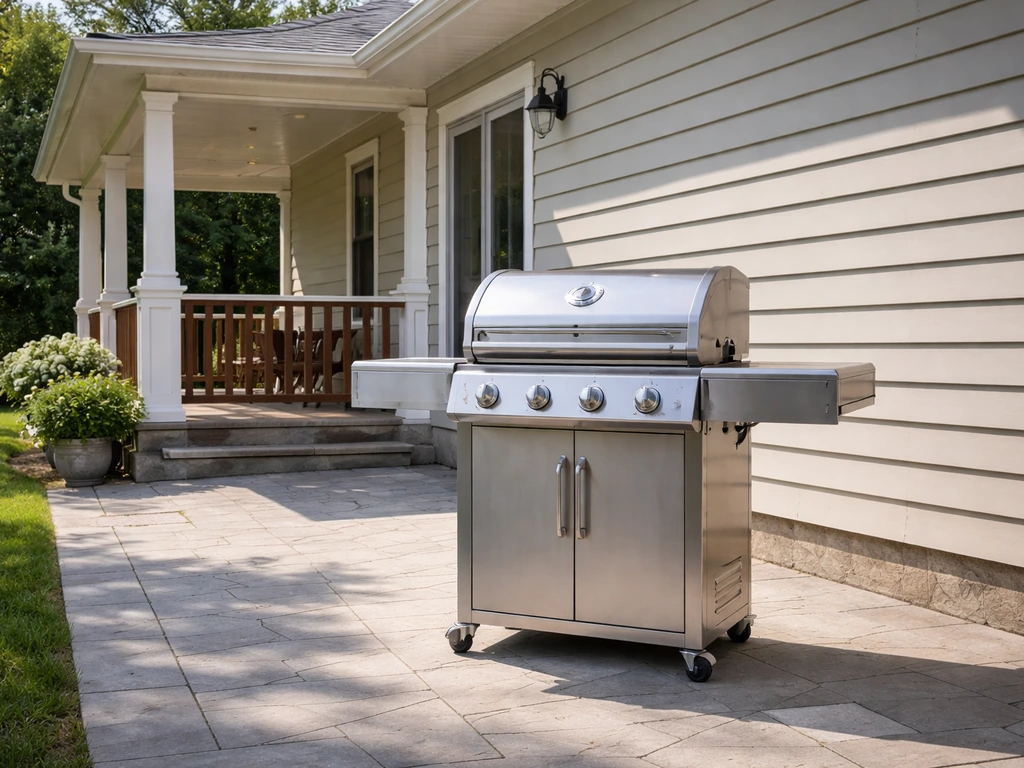
Even on an open patio without a cover, grill placement relative to the house and any structures matters a lot. The standard minimum is 10 feet from the house exterior, siding, eaves, and deck railings. If you are asking about smoking on a restaurant patio in Florida, rules can be different from what applies to home grilling and often depend on local ordinances and smoke-clearance requirements can you smoke on a restaurant patio in florida. That 24-inch NFPA clearance from a building is really a bare minimum for code compliance, not a recommendation for comfort or safety margin. Ten feet is the number most fire safety organizations quote for practical outdoor grilling.
On a covered patio specifically, position the grill toward the open edge or corner of the patio structure, not backed against a wall or tucked under the deepest part of the roof. You want smoke and heat to travel away from the structure, not into it. Never position a grill directly below a ceiling fan, light fixture, or any hanging overhead element.
Keep combustibles away from the grill on all sides: patio furniture cushions, potted plants, decorative strings of lights, and wood or composite decking are all ignition risks. If your patio deck surface is made of wood or composite material, a grill mat underneath is not optional, it's a basic safety step. Grease drips and falling embers land on the surface below the grill far more often than people expect.
Smoke direction matters for neighbors and for your own comfort, but it also matters for fire risk. If prevailing wind pushes smoke back toward the house or under the patio cover, that's a signal to reposition the grill. Pay attention to where smoke actually travels the first few times you grill in a new setup.
DIY Steps to Make Patio Grilling Safer
If your setup passes the clearance and ventilation checks, there are several practical steps you can take yourself to reduce fire risk and protect the patio surface. None of these are complicated or expensive, and most can be done in an afternoon.
- Lay down a grill mat or fire-resistant pad under the grill. Look for mats rated for temperatures above 500°F. These protect wood, composite, and concrete surfaces from grease stains, heat, and embers.
- Install a heat deflector or grill shield on any side of the grill that faces a wall, railing, or post. These are sold as accessories for most standard grills and can significantly reduce radiant heat toward combustible structures.
- Keep a fire extinguisher rated for Class B (grease/flammable liquid) fires within arm's reach. Mount it on a post or railing, not stored in a cabinet across the patio.
- Check the grill's grease trap and drip pan before every use. A full drip pan is one of the most common causes of patio grill fires.
- If your covered patio has a wood or composite ceiling and you're going to use a gas grill, consider applying a fire-retardant coating to the overhead structure in the area closest to the grill.
- Trim back any plants, vines, or overhanging branches within 10 feet of the grill area. These are easy to overlook and easy to ignite.
- Never leave the grill unattended, especially during startup or high-heat cooking. Flare-ups happen fast, and a covered patio gives a fire less room to safely dissipate.
If you're considering a more permanent outdoor kitchen setup under a covered patio, the bar for safety infrastructure goes up considerably. Built-in grills in outdoor kitchens require non-combustible cabinet materials, dedicated ventilation, and in many cases a permit. That's a bigger project, but it's also a setup designed from the start to handle the heat and smoke safely.
What to Do If Grilling Under the Patio Isn't Practical
Sometimes the honest answer is that the covered patio just isn't the right place for the grill. That doesn't mean you can't grill at home, it just means rethinking the location or the setup.
- Move the grill to open ground: Position it on an open concrete pad, gravel area, or open lawn at least 10 feet from the house and any structures. This is the safest and simplest option for charcoal and gas grills.
- Use the patio edge: If your covered patio has an open side, position the grill at the very edge where it's technically under the patio roof line only partially, with most of the grill exposed to open air above. This improves ventilation significantly.
- Switch to an electric grill for under-cover use: If you want to cook on the patio proper, an electric grill or even a large electric griddle gives you a covered-patio-safe option without giving up the outdoor cooking experience entirely.
- Install a pergola instead of a solid-roof cover: A pergola with an open lattice or slatted top allows smoke and heat to escape much more easily than a solid roof. If you're planning a patio cover upgrade, a pergola design is more grill-friendly than an insulated solid roof.
- Add a vented outdoor kitchen hood: If a built-in grill under a covered patio is the long-term goal, a commercial-grade outdoor range hood vented to the exterior can manage smoke and heat effectively. This is a significant cost (typically $500 to $2,000 or more for the hood plus installation) but turns an otherwise unsafe setup into a workable one.
It's also worth noting that screened-in patios present their own specific set of challenges for grilling, as the screening material itself is a fire hazard and ventilation is limited. If your covered patio is also screened, that's an even stronger case for moving the grill outside the enclosure entirely.
Your Checklist for Deciding Today
Run through these questions before you set up the grill on your patio. If you get a 'no' on any of the first four, stop and adjust your plan before grilling.
- Check local fire code: Does your city or state permit grilling under a covered patio? Look up your municipality's fire code or call the local fire marshal's non-emergency line.
- Check HOA rules: If you have an HOA, review the CC&Rs for grilling restrictions near structures.
- Measure overhead clearance: Is there at least 36 to 60 inches (per your grill manufacturer's spec) between the cooking surface and the patio ceiling or roof?
- Assess ventilation: Is the patio open on at least two sides with natural airflow? If not, charcoal and gas grills are off the table.
- Choose the right grill type: Use the table above to match grill type to your patio setup. When in doubt, go electric for a covered patio.
- Position the grill correctly: Place it at the open edge of the patio, at least 10 feet from walls or siding, and never directly below any ceiling-mounted fixture.
- Set up protective surfaces: Put down a fire-resistant grill mat, confirm the grease trap is clean, and place a fire extinguisher within reach.
- Tell someone: Make sure anyone in the house knows you're grilling and can respond quickly if something goes wrong.
- Stay with the grill: Don't step away during cooking, especially in the first few sessions in a new location.
Grilling on a patio is genuinely manageable for most homeowners once you've worked through these factors. If you also want to cool a patio in hot Florida weather, focus on shade, airflow, and heat-safe placement so your outdoor space stays comfortable Grilling on a patio. The setups that cause problems are almost always ones where someone skipped the clearance check, used a charcoal grill in a poorly ventilated space, or placed the grill too close to a wall or combustible ceiling. Get those basics right and you'll be cooking safely all season.
FAQ
Can you grill on a covered patio if you keep the grill at least 24 inches from the house?
Often, yes, but 24 inches is a minimum clearance from the building, not a guarantee of safety under a roof. You also need adequate overhead clearance for the grill type, plus airflow so heat and smoke do not build up under the cover. If you cannot maintain the manufacturer’s recommended overhead clearance, choose an electric grill or move the grill out from under the roof.
Is it legal to grill on a roofed patio if my city does not mention it in their fire code?
Not necessarily. Even if your local code is silent, rules can still exist through state regulations, permit requirements, HOA bylaws, or “nuisance” and smoke ordinances. Also confirm landlord or HOA policies in writing, because enforcement often comes from those private rules even when the fire code does not explicitly prohibit it.
Can I use a charcoal grill under a patio cover if I have good clearance and an exhaust fan?
With charcoal, the risk is carbon monoxide buildup and flare-ups that send embers upward. Fans can help with comfort, but they do not reliably make an overhead-covered space safe for charcoal, especially if the patio is partially enclosed. If the patio has walls on multiple sides or limited cross-ventilation, the safer move is to grill outside the covered area.
How do I decide between gas and electric on a covered patio?
Use electric when you have limited ventilation or a more enclosed roof structure, because there is no open flame and no carbon monoxide. Choose gas only when the patio is open-sided with reliable airflow and you can keep the grill positioned away from combustibles and hanging fixtures. If you see smoke moving back toward walls or into the cover area during your first few cooks, switch to electric or change locations.
Do flare-ups mean my grill placement is unsafe, or can I just adjust the settings?
Flare-ups are a placement and fat-management signal, not something to ignore. If flames lick upward toward the roof, or grease drips land on the ceiling, soffit, or any overhead element, reposition the grill toward the open edge and remove combustibles nearby. Also trim excess fat, use appropriate drip trays, and avoid grilling during high winds that push embers toward the cover.
What combustibles get overlooked on patios with overhead structures?
Look above and around the grill, not just beside it. Common misses include hanging light strings, decorative ceiling elements, fabric shade sails, wood or composite deck surfaces that can catch grease or embers, and planters with dry soil or leaves positioned where sparks can land. Keep a clear buffer that matches the grill manufacturer’s spec and do a quick “spark path” check before lighting.
Can I grill under a patio roof if it is screened in?
Generally, treat screened-in patios as higher risk because screening material can catch embers and the space can trap heat and smoke. Even if you can keep clearance to the house, limited airflow can increase smoke accumulation and make flare-ups more dangerous. If grilling under the cover is your only option, electric is usually safer, and you still need strong cross-ventilation.
Is smoking a grill different from grilling on a covered patio?
Yes. Smoking typically involves longer cooking times and lower, steadier heat output, but it can still produce smoke buildup that affects fire risk, neighbor comfort, and appliance performance under a roof. If your goal is “smoke flavor,” consider moving the smoker or planning for more ventilation and check local smoke-clearance rules separately from standard grilling rules.
What’s the safest way to position the grill under a patio cover?
Place it so smoke and heat travel toward the open edge or corner, not toward interior walls or under the deepest part of the roof. Avoid tucking the grill against any wall, and never put it directly below a ceiling fan, light fixture, or any hanging overhead item. Do a short test burn and watch where the first smoke plume goes.
Do I need a grill mat under all circumstances on a patio?
If your patio surface is wood or composite, a grill mat is strongly recommended as a protection against grease drips and ember fallout. For concrete, tile, or stone, it is less critical for fire resistance, but mats can still help with grease management and cleanup. Regardless of mat type, keep the area around the grill free of debris and flammables.
If I want a built-in outdoor kitchen under a covered patio, what changes from a regular grill?
Built-in setups typically require non-combustible materials, proper clearances, and dedicated ventilation or exhaust considerations. They may also require permits and inspections because the enclosure can trap heat and because surrounding cabinets and surfaces can ignite. If you are considering this, plan the design around manufacturer specifications and local permitting requirements before installation.
Next Article
Can You Grill on an Apartment Patio? Rules and Safety
Learn when you can grill on an apartment patio, which grill types are allowed, and safety rules to avoid violations.