You can grill near or adjacent to a screened-in patio in certain situations, but grilling inside a fully enclosed screened porch is generally not safe and is likely against fire code in most jurisdictions. The main culprits are carbon monoxide buildup, fire risk from heat and embers near screen mesh and combustible framing, and inadequate ventilation. If you want to grill and your screened patio is your only outdoor space, your safest play is either moving the grill to an adjacent open area or understanding exactly how close you can get to that structure without creating a hazard.
Can You Grill in a Screened-In Patio Safely? Guide

Miles Hart
27 Jun 2026
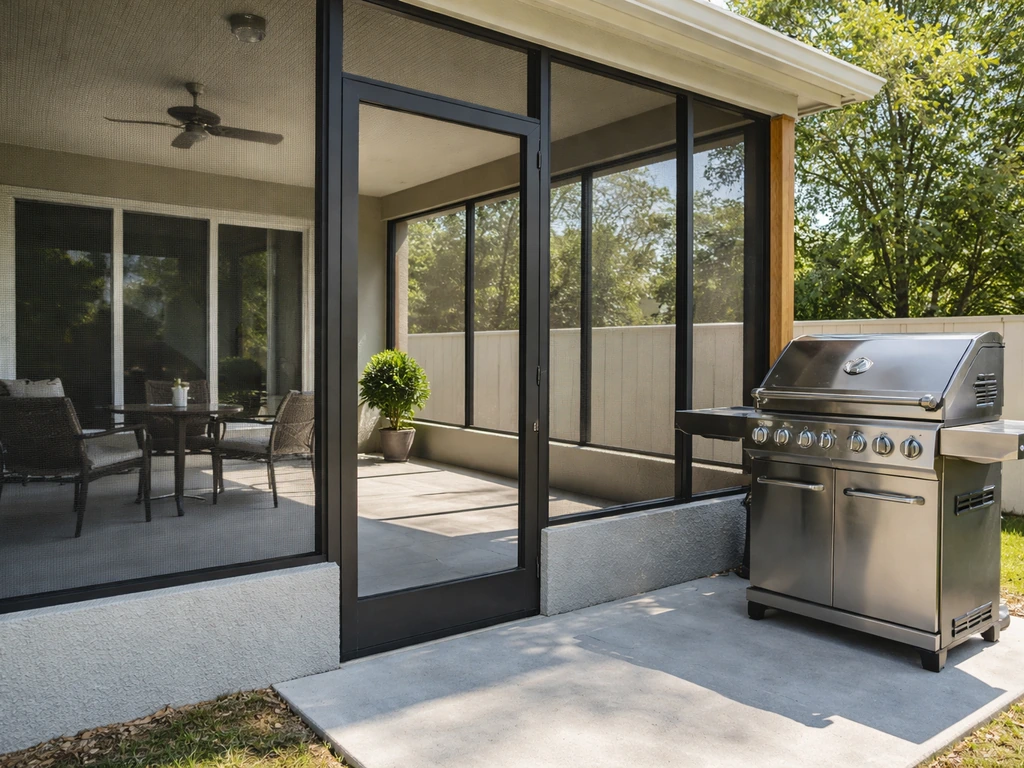
Grilling options on a screened-in patio: the short version
Screened-in patios feel outdoor-ish, but they behave more like semi-enclosed rooms when it comes to airflow, heat, and gas accumulation. The screens block wind, slow exhaust, and concentrate smoke in a way that an open patio never does. On top of that, most screened enclosures have a solid or semi-solid roof overhead and combustible wood or vinyl framing around the perimeter, both of which create real ignition risk. Fire codes in most states and cities reflect this.
Raleigh, for example, follows a rule that charcoal burners and similar devices cannot be operated within 10 feet of combustible construction. New York City's code keeps portable outdoor barbecues at least 10 feet from combustible surfaces including roofs and decks. Some jurisdictions push that distance to 15 feet. None of those clearances are achievable inside a typical screened enclosure.
That said, not all setups are the same. A screened patio attached to a house is different from a freestanding screen room in the backyard. A screen wall with open eaves is different from a fully enclosed structure with a solid ceiling. Before you write off grilling near your screened space entirely, it's worth understanding which grill types create the most risk and what the actual code requirements say.
Gas vs. charcoal: what's safe and what to avoid
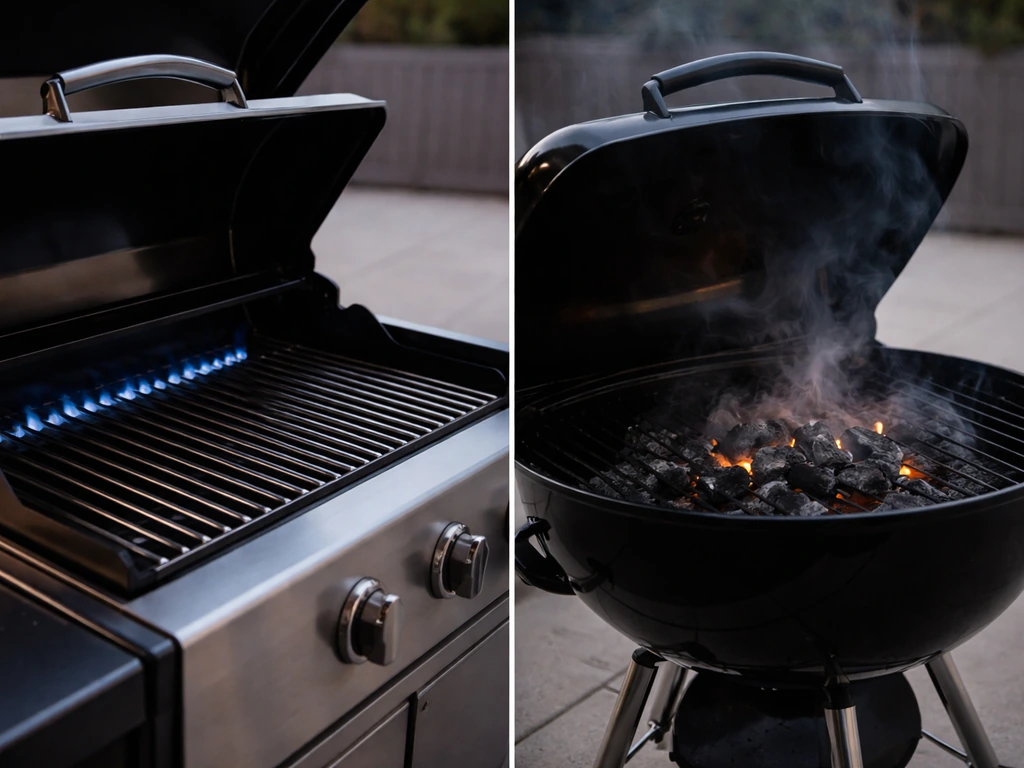
Charcoal is the more dangerous option in any enclosed or semi-enclosed space, and there's no real debate about this. The CPSC is direct: never use charcoal to cook or provide heat inside enclosed areas, including homes, garages, tents, or campers, because carbon monoxide can kill you.
Charcoal produces CO continuously throughout the burn, even after the visible flames die down, and screens do not provide anything close to the ventilation needed to dissipate it. There's also the ember problem. Charcoal grills, especially when you're lighting them or adjusting airflow vents, can throw sparks. Under a wood or vinyl-framed screen roof, that's a serious ignition risk.
Reddit threads on this topic are full of homeowners who've gotten away with it, but the math on what happens when a spark catches a combustible rafter is not in your favor.
Gas grills (propane or natural gas) are safer in relative terms but are still not appropriate for use inside a screened enclosure. They produce less CO than charcoal under normal operation, but a gas leak in a semi-enclosed space creates an explosion and fire risk that's arguably worse. Weber's own guidance says never grill inside a garage or under an overhang, regardless of weather, which covers most screened patio configurations. A gas grill also produces significant heat radiated upward, which can damage screen mesh, warp framing, and ignite overhead combustibles if the ceiling clearance is insufficient.
| Grill Type | CO Risk | Fire/Spark Risk | Safe for Screened Enclosure? | Best Option |
|---|---|---|---|---|
| Charcoal | Very high (continuous CO output) | High (embers, sparks) | No | Never use inside screened space |
| Propane/Gas | Moderate (normal operation) | Moderate (leak/flare-up risk) | No | Move to open area with 10+ ft clearance |
| Pellet grill | Moderate (produces CO + sparks) | Moderate (embers possible) | No | Open area only |
| Electric grill | Very low (no combustion) | Low (no open flame) | Possibly, with ventilation | Best option if grilling near screened space |
| Induction/indoor griddle | None | None | Yes (inside) | Best for inside screened patio |
What fire code and clearance rules actually say
Fire codes vary by jurisdiction, but the underlying logic is consistent across most of them. The International Fire Code, which many states adopt, requires portable outdoor barbecues to be kept at least 10 feet from combustible materials, combustible surfaces, and building openings. Several states and municipalities tighten that. Minnesota and some university safety guidelines push it to 15 feet from any structure. UofR EHS fire safety guidance for barbecue grills similarly states grills should be kept at least 15 feet from any structure or combustible materials and followed while in use. Massachusetts goes further: grills can only be used on open, ground-level porches or patios, ruling out any enclosed or elevated situation entirely.
The practical effect of these rules on a screened-in patio is significant. As a general rule, a grill is not considered patio furniture for safe use inside a screened enclosure. Most screened enclosures are attached to a house or have combustible framing within a few feet of where a grill would sit. Even a freestanding screen room typically has a combustible roof structure overhead. Achieving a 10-foot clearance from all combustible surfaces while staying inside the enclosure is essentially impossible in a standard residential screened patio. Manufacturer guidance reinforces this. Weber specifies a minimum of 2 feet from combustible materials as an absolute floor, but also explicitly warns against any overhang or enclosed situation, regardless of that distance.
One more thing worth knowing: some jurisdictions distinguish between single-family homes and multi-unit dwellings, with stricter rules for apartments or condos. If you're asking can you grill on apartment patio, make sure you follow the stricter clearance and multi-unit rules for your building. If your screened patio is part of a condo or townhome, the rules are almost certainly tighter than for a standalone house. Check your HOA documents and your local fire prevention code, not just a general internet search, before assuming you're in the clear.
Ventilation and smoke in screened spaces
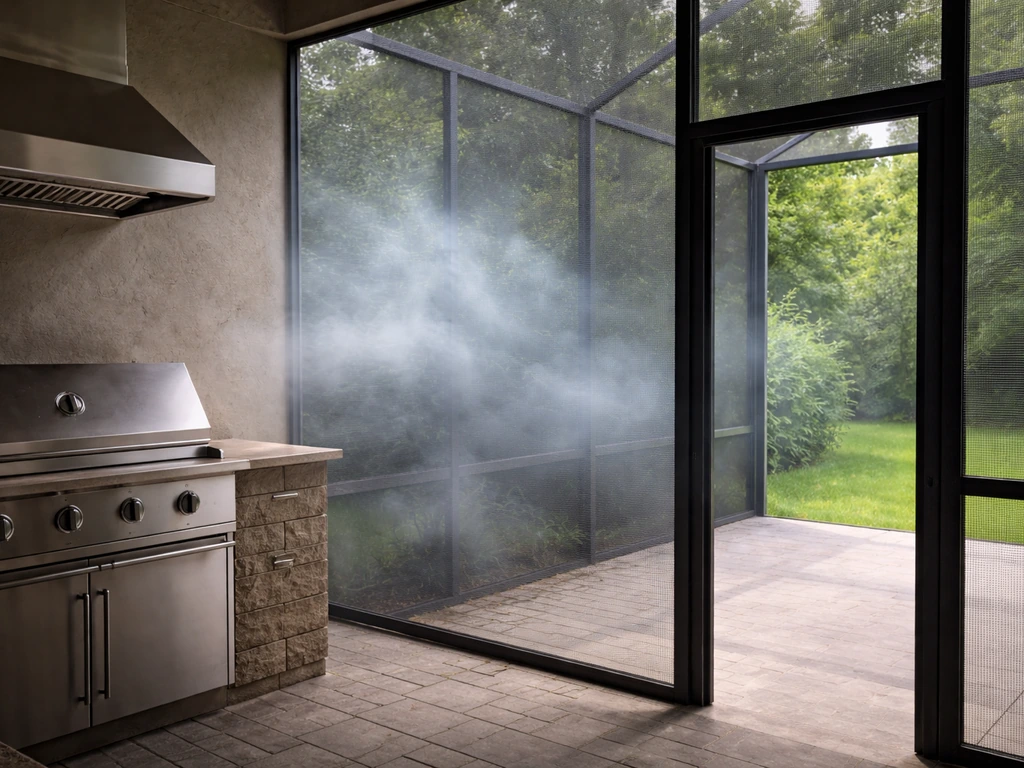
Even if you somehow cleared all the fire-code hurdles, ventilation is a serious ongoing problem in screened enclosures. Screen mesh slows airflow dramatically compared to an open patio. When a grill is running, smoke needs somewhere to go. In an open backyard, wind and natural convection carry it away. Inside a screened space, especially one with a solid or low roof, smoke pools, drops back down, and creates a miserable (and potentially hazardous) cooking environment. The Garden Scene describes this well: a grill tucked under a low roof or in a partially blocked corner causes smoke to spread laterally and drop back into the breathing zone rather than rising and dispersing.
An exhaust hood over a built-in outdoor grill can help manage this when grilling is under a covered structure. The ICC's Building Safety Journal notes that hoods can reduce smoke entering adjacent spaces and prevent alarm triggers. But a portable hood retrofit on a consumer grill under a screened patio roof is a different situation from a properly designed outdoor kitchen with a rated exhaust system. If you're seriously considering a permanent outdoor cooking setup under a covered screened structure, that's a project that warrants a conversation with a contractor and potentially a permit, not something to improvise with a portable grill.
How to set up your grill safely near (not inside) a screened patio
If you want to grill and you have a screened patio, the practical answer for most homeowners is to position the grill just outside the screened enclosure rather than inside it. If you are wondering where to put a grill on your patio, aim for an open, code-compliant spot outside the screened area and keep clearances from combustibles where to put grill on patio. Here's how to do that safely.
- Measure your clearances first. Put the grill at least 10 feet from the screened enclosure's combustible framing, your home's exterior walls, and any overhead structure. If your local code says 15 feet, use that number. Don't eyeball it.
- Place the grill on a non-combustible surface. A concrete pad, paver patio, or a purpose-made grill mat under the unit reduces the risk from drips and flare-ups. Avoid grilling directly on wood decking unless the grill is elevated and you're using a heat-resistant deck mat.
- Keep the grill out of corners and away from walls. Even outside the screened structure, tucking a grill into a corner near the house or fence traps smoke and concentrates heat. Position it where air can move around all four sides.
- Manage wind direction before you light up. If prevailing wind is blowing toward the screened enclosure or the house, reposition or wait. Smoke driven into a screened patio creates exactly the pooling problem described above.
- Never store combustibles near or under the grill while it's running. Weber specifically warns that the area under many gas grills gets hot enough to ignite paper towels, grill covers, wood chunks, and similar materials. Clear a 3-foot radius of anything that can burn.
- Keep a fire extinguisher rated for grease fires within arm's reach. A Class K or ABC extinguisher handles both grease fires and general combustion. CPSC recommends baking soda as a backup for small grease flare-ups if you turn off the gas first.
- Never leave the grill unattended while in use. This sounds obvious, but it's the single most effective way to catch a problem before it becomes a fire.
Alternatives when grilling inside just isn't a fit
If your screened patio is the only outdoor space you have and moving the grill outside the enclosure isn't practical, you have a few alternatives worth considering. If you want to keep a patio comfortable in hot Florida weather, focus on shade, airflow, and cooling options that work with your space cool a patio in Florida.
Electric grills just outside the screen door
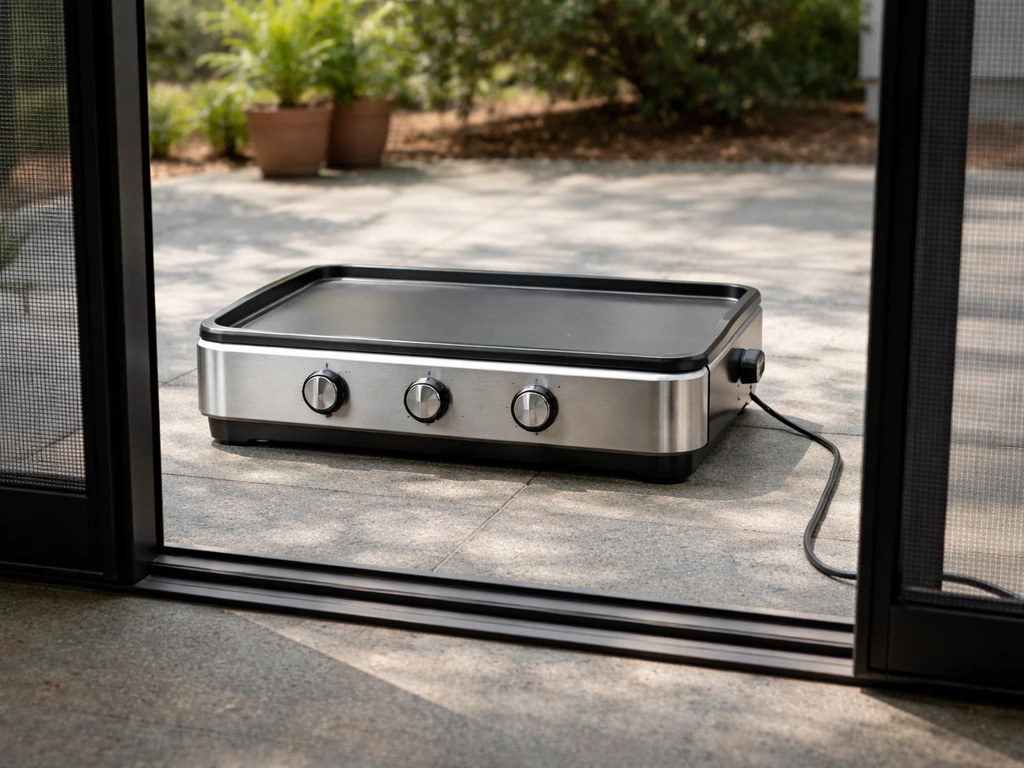
An electric grill positioned just outside the screened enclosure (or on an adjacent open patio section) eliminates the CO and ember risks of charcoal and gas. You lose some of the char-smoke flavor, but you get legitimate grill marks and high-heat searing. You can step in and out of the screened area to prep and serve without dealing with smoke pooling indoors.
Induction and electric griddles inside the screened space
An induction burner or electric griddle inside the screened patio produces no combustion, no CO, and no open flame. You can get a very good sear on proteins and cook most grill staples this way. The trade-off is that you need a weatherproof outdoor outlet (GFCI-protected) and you won't get smoky flavor. But if what you're really after is a convenient outdoor cooking experience without dragging everything inside, this is a legitimate option.
Open patio or deck setup away from the enclosure
If your property has any open patio or deck area beyond the screened enclosure, that's your best grilling zone. Positioning the grill there and running a portable prep table between the grill and the screened porch lets you keep food and tools close without any of the enclosed-space risks. Thinking through where to place a grill on your overall patio layout is worth doing deliberately, because the right spot changes depending on wind patterns, how close you are to the house, and what surface you're grilling on.
Smoke-reducing grill options
If you're committed to charcoal flavor but want less smoke near your screened space, kamado-style grills and ceramic cookers produce less open smoke than traditional kettle grills because combustion is more controlled. They still produce CO and embers, so they don't change the code situation, but they reduce the visible smoke problem if you're positioning the grill at the outer edge of allowable clearance.
Maintenance and risk checks before and after every cook
Whatever grill type you use and wherever you position it near your screened patio, a short pre- and post-cook routine significantly reduces the risk of a fire or equipment failure. These aren't suggestions: they're the things that actually prevent incidents.
Before you grill
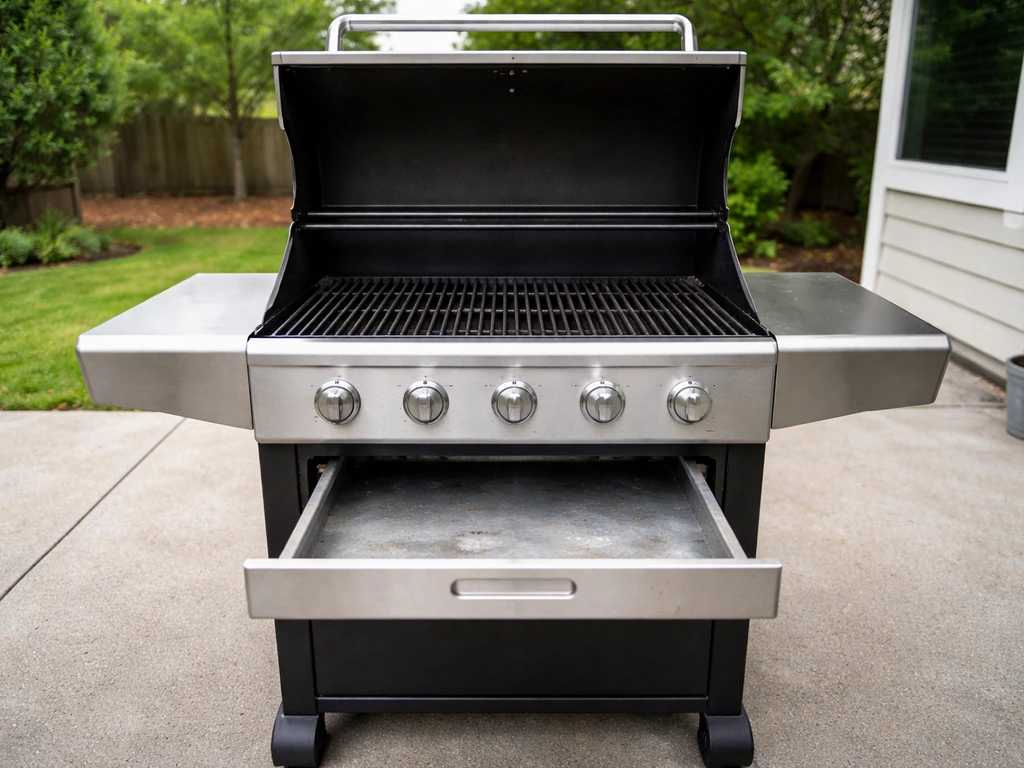
- Check the grease tray and empty it if there's any buildup. Weber links a full grease tray directly to flare-up risk, and a flare-up near a screened structure is the exact scenario you're trying to avoid.
- For gas grills, do a leak check on hose and regulator connections using a soapy water solution. Bubbles mean a leak. Don't light the grill until the leak is repaired.
- Clear the burner ports of rust, debris, or spider webs, which can cause uneven flames or backfire.
- Confirm your clearance distances haven't changed since the last time you grilled. A new planter, furniture arrangement, or wood pile near the grill can reduce your clearance below safe levels.
- Check wind direction and adjust grill position if needed to keep smoke moving away from the screened enclosure.
After you grill
- Let the grill cool completely before moving it or storing it near any combustible surface, including inside or under the screened patio.
- Empty and wipe the grease tray after each session. Consumer Reports and Weber both recommend this specifically to prevent grease accumulation fires.
- For gas grills, close the tank valve and disconnect the regulator if the grill will sit unused for more than a day or two.
- Inspect the screen mesh and framing near where you grilled for any discoloration, warping, or heat damage. Catching a compromised screen panel early is much cheaper than dealing with a fire.
- At the start of each grilling season, do a full inspection: check hoses for cracking, test the igniter, clean burner tubes, and verify your fire extinguisher is charged.
If you're not sure whether your specific setup and local codes allow any form of grilling near your screened enclosure, your local fire marshal's office can give you a definitive answer for your jurisdiction at no cost. Before you plan a cook, check whether local Florida rules allow smoking at a restaurant patio and follow any distance or enclosure limits they set can you smoke on a restaurant patio in florida. That's a five-minute phone call that can save you a significant problem. For anything involving permanent built-in outdoor cooking under a covered structure, bring in a licensed contractor who knows your local building code, because that project crosses into permit territory in most municipalities.
FAQ
Can you grill through a screen, like with the grill sitting on the patio but under the screened roof area?
No, the screening and roof still count as an enclosure in practice, because heat and embers can be directed upward into combustible framing and smoke can pool. Even if the flame is “outside the screen,” the overhead structure and reduced airflow can create the same CO and ignition risks.
Is there a safe minimum distance from the screen mesh and screened roof if I use a gas grill?
There isn’t a universal “safe” distance for screened patios, because code clearance is typically measured from combustible building materials and openings, not from the screen itself. Screen mesh can also deform or scorch with sustained heat, and overhead clearances are often the limiting factor.
What if my screened patio has open sides or no solid ceiling, only screen walls?
Open sides and no solid ceiling improve ventilation, but you still need to treat it like a semi-enclosed space when there is a roof overhead and combustible framing near the cooking location. The riskiest cases are when the grill is under any overhang attached to the building or near wood, vinyl, or rafters.
Does using a grill mat or fireproof pad make grilling in a screened-in patio acceptable?
Heat and embers can bypass floor protection, since many incidents start from items above the grill (rafters, soffits, overhead trim) or from ignition sources that are not on the floor. A mat helps with sparks on the ground but does not solve CO buildup or overhead fire risk.
Can I grill on a balcony that is enclosed by screens or a screen enclosure?
Often no, because balconies and enclosed screen areas frequently fall under the same “portable barbecue must be kept away from combustibles and openings” logic used for patios. In apartments or condos, building rules may also add stricter limits, so check the lease, HOA, and local fire code.
Is charcoal ever allowed if I crack the door or run a fan?
In general, ventilation tools do not make charcoal safe in a semi-enclosed screened area, since CO is produced continuously and screen enclosures limit natural dispersion. Fans may help with smoke feel, but they do not reliably reduce CO to a safe level.
Can I use a smoker, pellet grill, or smoker box inside a screened patio?
These are typically treated like grills or heat-producing combustion devices, so they carry the same CO and ignition concerns as charcoal and some gas setups. Pellets and offset smokers can also generate embers and high heat that can threaten overhead combustibles.
What’s the safest alternative if I want the grill experience but I only have a screened patio?
Place the grill just outside the screened enclosure in the nearest open, code-compliant area, or switch to an electric grill or induction griddle for cooking under conditions where combustion is not involved. If you choose electric, use an outdoor-rated, weatherproof setup with GFCI protection where required.
How can I tell if my screened patio has combustible framing nearby, without guessing?
Look for wood rafters, plywood, trim boards, soffits, or vinyl components within the area above and around where the grill will sit. If you cannot confidently identify materials, assume combustibles are present because most residential screened structures use wood or vinyl near the perimeter.
Are there special rules for townhouse or condo screened patios versus single-family homes?
Yes, multi-unit properties often have stricter fire rules and may also restrict any open-flame cooking devices. Even if distance rules seem manageable on paper, building policies can override them, so confirm with the HOA/condo association and local fire marshal.
If I’m unsure, who should I call, and what details should I provide?
Call your local fire marshal or fire prevention office and be ready to describe grill type (charcoal, propane, electric), where the grill would sit relative to roof/overhang, how enclosed the space is, and the approximate distances to doors, windows, and overhead materials. A quick site-based determination is usually faster than trying to interpret clearance rules yourself.
Next Article
How to Cool a Patio in Florida: Shade, Fans, Mist, Costs
Step-by-step guide to cool a Florida patio with shade, fans, misting limits, costs, and safe humidity-aware tips.