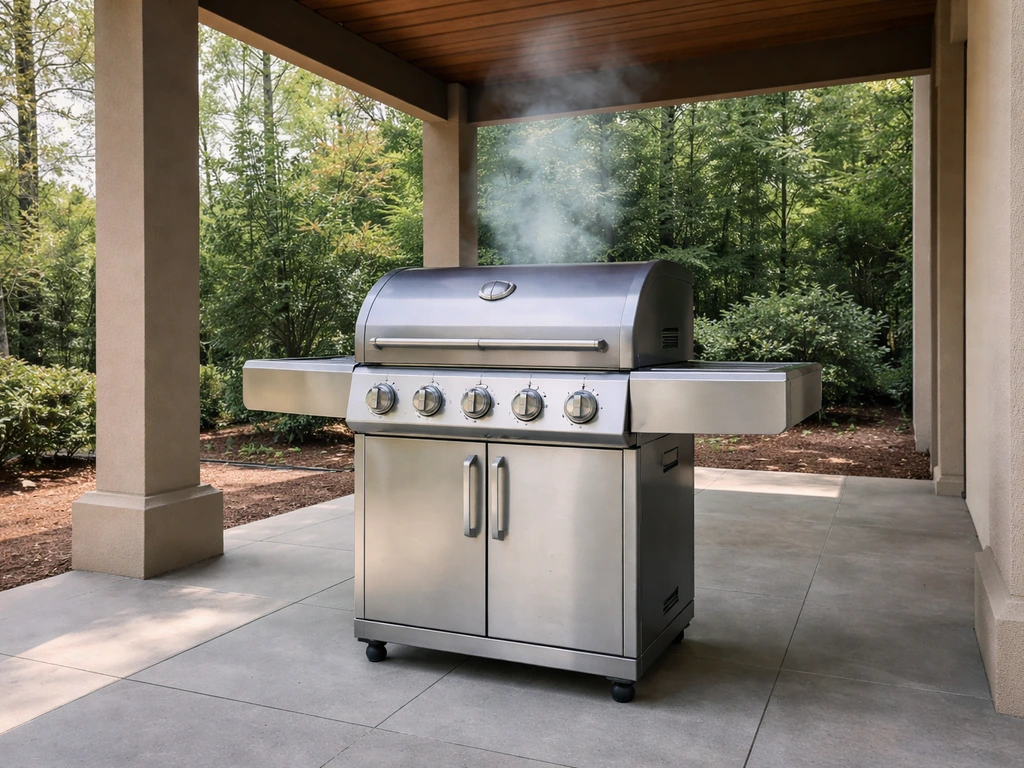
Yes, you can generally smoke on a restaurant patio in Florida, but only if that patio is genuinely open-air and not classified as an "enclosed indoor workplace" under Florida law. The state's Clean Indoor Air Act bans smoking and vaping in enclosed indoor workplaces, and an outdoor patio that is mostly open to the air typically falls outside that definition. That said, the specifics of the patio's structure, the city it's in, and the restaurant's own policies all matter, so you can't assume every patio is fair game. If you want to grill on a patio, treat it the same way: check whether the space is truly open-air and follow the restaurant or city rules that apply to outdoor smoking and grilling can you grill on a patio.
Can You Smoke on a Restaurant Patio in Florida?

Miles Hart
17 Jun 2026

Florida restaurant patio smoking: the legal basics
Florida's statewide framework is built around Chapter 386, Part II of the Florida Statutes, which became effective July 1, 2003. The core rule is straightforward: smoking and vaping are prohibited in "enclosed indoor workplaces." A restaurant dining room, bar, or any space that is predominantly bounded on all sides and above by physical barriers fits that definition. The Florida Department of Health oversees enforcement, and the Florida Department of Business and Professional Regulation (DBPR) handles actual enforcement activity at restaurants and bars.
The outdoor question hinges entirely on that "enclosed indoor workplace" definition. Florida Statute 386.203 defines the term to include spaces bounded by physical barriers, and those barriers can include screened or partially covered openings, open or closed windows, and covered openings. So a patio that feels "outside" to you might still technically meet the definition of enclosed if it's walled in on enough sides and covered above. This is the nuance that trips people up most often.
State vs. local rules: who actually controls this
Florida is a preemption state when it comes to smoking regulations. That means the state law generally overrides city and county ordinances on this topic, and local governments cannot create their own stricter rules for privately owned restaurants. A Florida Attorney General opinion confirms this: municipalities can't layer on patio-specific smoking bans at restaurants beyond what state law already requires.
There is one exception worth knowing. Under Florida Statute 386.209, local governments are allowed to further restrict smoking in public parks and public beaches that they own. Cities like Miami Beach, Winter Haven, and North Port have used that authority to ban smoking in their parks. But that applies to city-owned outdoor spaces, not privately owned restaurant patios. So if you're sitting at a table on a patio that a restaurant owns, city ordinances almost certainly don't add restrictions beyond state law.
The one area where localities do have more flexibility is vapor-generating devices. Florida Statute 386.209 explicitly allows local governments to restrict vaping more strictly than the state does, so e-cigarettes and vapes can be subject to stricter local rules even on outdoor patios in some cities. If you're a vaper rather than a smoker, it's worth a quick check of local ordinances.
What counts as a "restaurant patio" under smoke-free rules
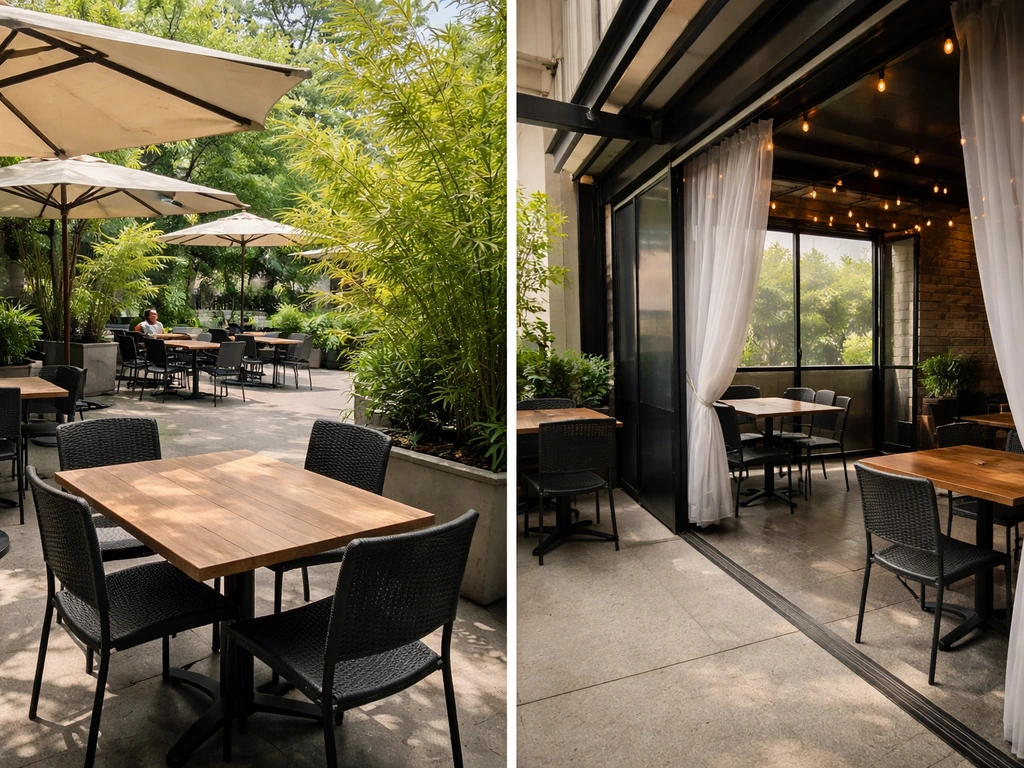
This is where it gets practical. Not every space with outdoor furniture is treated the same under Florida law. If you're wondering whether that kind of setup counts as patio furniture for these rules, the definition can come down to what fixtures are on the patio, like grills outdoor furniture. The key question is whether the patio qualifies as an "enclosed indoor workplace." A few common patio configurations and how they typically fall:
| Patio Type | Likely Classification | Smoking Typically Allowed? |
|---|---|---|
| Fully open-air, no roof, no walls | Not enclosed indoor workplace | Yes, generally |
| Covered roof, open sides (pergola-style) | Usually not enclosed | Yes, generally |
| Screened enclosure on all sides with roof | May qualify as enclosed | Likely no |
| Walls on 3+ sides, solid roof, open front | Borderline, depends on openness | Unclear, ask staff |
| Fully enclosed room with windows that open | Enclosed indoor workplace | No |
Florida's statute definition includes screened openings and covered openings as barriers that can count toward the "enclosed" threshold. So a screened-in patio, like the kind common on Florida homes and restaurants, sits in a gray zone. If a restaurant has a fully screened enclosure with a solid roof, there's a real argument that it meets the definition of an enclosed indoor workplace, which would make smoking illegal there regardless of how the restaurant labels it. A patio that is only covered above with a pergola-style roof and open on the sides is a much cleaner case for legal smoking.
Where you can and can't smoke: designated areas, barriers, and distance
Florida's law historically allowed designated smoking areas in restaurants, with numeric limits tied to seating percentages and specific design requirements. Those older provisions created a framework for how designated smoking sections needed to be physically separated. While the current law has moved away from the detailed in-restaurant smoking section concept, the underlying idea still applies in practice: the more physically separated a smoking area is from non-smoking guests, the less likely it creates an enforcement or liability issue for the restaurant.
For open-air patios, there's no hard statewide rule about how many feet you need to stand from an entrance or non-smoking section, unlike the federal rules you see near building entrances for government facilities. That said, many restaurants and property managers set their own distance requirements, typically 20 to 25 feet from doors and windows, as a practical measure to avoid smoke drifting indoors. If you see a sign with a distance posted, that's the restaurant's policy, not necessarily a state requirement, but you're still expected to follow it.
One thing to keep in mind: Florida's Clean Air Act does not regulate secondhand smoke or vapor from marijuana. Only tobacco and nicotine products fall under Chapter 386. Marijuana-related complaints go to the Office of Medical Marijuana Use, which is a separate regulatory channel entirely.
Enforcement, penalties, and how restaurants actually handle it
Enforcement of the Florida Clean Indoor Air Act runs through the DBPR for restaurant settings, with oversight from the Department of Health. Florida Statute 386.208 and the associated administrative rules in Chapter 61A-7 set out a structured civil penalty framework. Florida’s administrative rules in Chapter 61A-7 provide a structured civil penalty framework for enforcing Chapter 386. First violations and subsequent violations carry different penalty amounts, and the penalties apply to both individuals who smoke in prohibited areas and to the business owner who fails to enforce the rules.
In practice, most enforcement at restaurants is complaint-driven. If a diner or employee files a complaint, the DOH has a formal "File Complaint" pathway through Tobacco Free Florida. The DBPR can then investigate and issue fines. Restaurants that want to stay compliant usually self-enforce: staff will ask smokers to move, post no-smoking signage inside, and designate a specific outdoor area where smoking is permitted. You're more likely to be politely redirected by a server than to see a health inspector show up mid-meal.
The reality is that enforcement on open-air patios is rare unless there's a clear violation, like someone smoking inside a screened enclosure or right next to an entrance. Restaurant owners have strong financial incentives to keep their DBPR license clean, so when staff ask you to move, it's worth taking seriously. If you are trying to grill on an apartment patio, focus on how the space is classified and check any building or local rules before you start grill on apartment patio.
How to check before you go and what to ask when you arrive

The fastest way to know whether smoking is allowed on a specific restaurant's patio is to call ahead and ask directly. Tell them whether you want to smoke cigarettes or a cigar (the rules for "custom smoking rooms" and cigar exemptions have specific statutory carve-outs, and some restaurants near cigar lounges operate under those provisions). When you arrive, look for posted signage on or near the patio entrance. Florida law requires businesses to post no-smoking signs in prohibited areas, so the absence of a sign outside is often a meaningful indicator, though not a guarantee.
- Before you go: call and ask whether the patio is smoking-friendly and whether the patio is open-sided or enclosed.
- On arrival: look for no-smoking signage on patio doors, gates, or table tents.
- Ask your server directly: they will know the policy and can point you to any designated smoking area.
- Check the city: if you're in a municipality known for stricter outdoor rules (like Miami Beach), ask specifically about vaping policies, since local governments can restrict vapes more aggressively than state law.
- If you get conflicting answers: default to not smoking until you have a clear "yes" from a manager, not just a server.
If you believe a restaurant is allowing or prohibiting smoking incorrectly, you can file a complaint directly through the Florida Department of Health's Tobacco Free Florida complaint system. This routes to state and local enforcement channels.
Outdoor smoking alternatives and how compliant patio setups actually work
For homeowners and restaurant operators thinking about how to set up a patio that accommodates smokers without running into compliance issues, the open-air design is the cleanest path. If you are planning to spend more time outdoors, you can also look at options for how to cool a patio in Florida without making the space feel enclosed. A pergola-style structure with a roof but open sides generally avoids the "enclosed indoor workplace" classification. Adding lattice, shade sails, or partial privacy screens is usually fine, but solid walls on three or more sides start to push a space toward the enclosed threshold under Florida's definition.
If you're planning a screened-in patio at home or for a commercial space, keep in mind that the same definitional logic applies. A fully screened enclosure may limit where smoking is technically permitted under Florida law, even if it's attached to your house. This is worth factoring into your outdoor space planning, especially if you or your guests smoke regularly. Designing one open corner or keeping a portion genuinely open-sided can keep the space legally unambiguous.
Vaping is an option some smokers use as a workaround, but as noted above, local governments have the authority to restrict vapor-generating devices more strictly than the state does. In cities with active outdoor vaping ordinances, swapping a cigarette for an e-cigarette on a restaurant patio may not actually be more permissible. Check the local rules for the specific city before assuming vaping is freely allowed where cigarettes are restricted.
For anyone designing an outdoor living space, Florida's climate and patio culture make these decisions feel more pressing than in other states. The same patio design considerations that affect smoking rules also come up in other contexts, like where to position a grill relative to a covered structure or how to keep a covered patio comfortable in Florida heat. That same idea of keeping outdoor appliances in the open applies when you decide where to put a grill on your patio. A genuinely open-sided patio solves multiple problems at once: it keeps you on the right side of Florida's smoke-free rules, improves airflow, and avoids the ventilation and clearance issues that come with more enclosed outdoor cooking and living spaces.
FAQ
Can I smoke a cigar on a restaurant patio in Florida?
Yes, but only if you are in a truly open-air portion of the patio, not inside or inside-the-perimeter of an enclosed enclosure. If the patio has solid walls or a roof plus enough barriers that it functions like an indoor workplace, the no-smoking rule applies even if you are technically outside your seat.
Is vaping allowed on a Florida restaurant patio if cigarettes are not?
If you are vaping nicotine, local rules may still restrict it more than state law in some cities. Practical tip: ask the server or check for “no vaping” signage on the patio, because a restaurant may follow stricter house policy even where state law would allow it.
What if the patio feels open, but the server tells me to move?
Often, yes, because staff can redirect patrons based on smoke drift risk and the restaurant’s own compliance plan, even when the city does not add extra rules for privately owned patios. If you see a server point you away from the door or a designated section, treat it as an instruction to avoid a potential “enclosed” or entrance-adjacent issue.
Do city ordinances ever matter for smoking on privately owned restaurant patios?
Not automatically. Florida’s preemption prevents cities from adding stricter restaurant smoking bans in general, but the state still depends on how the specific space is constructed (screens, covers, and how many sides are bounded). A patio can be “private” yet still be treated as an enclosed indoor workplace under the statute definition.
Does the same rule apply to smoking marijuana on a restaurant patio?
Marijuana smoke is treated differently than tobacco under Florida’s tobacco/nicotine framework. If a restaurant is posted as smoke-free for tobacco, you should still expect restrictions on marijuana consumption on the premises, and complaints will go through the medical marijuana regulatory channel rather than the tobacco complaint pathway.
How do I judge whether a covered patio (pergola, awning, or roof) is still open-air enough?
Be careful with “covered but open-sided” setups. A pergola-style roof generally supports the argument that the patio is open-air, but adding solid screening or walls on multiple sides can push it toward “enclosed indoor workplace” status. When in doubt, choose the most open corner or ask whether the patio is considered enclosed by their policy.
Is there a required distance from entrances or other tables on an outdoor restaurant patio?
Yes. Even if smoking is allowed somewhere outdoors, restaurants usually have designated boundaries to prevent drift into doors, windows, and enclosed areas. If there is no distance marked by the restaurant, you should still avoid smoking right by entrances, especially within screened or partially enclosed sections.
Can I grill or use a smoker on a restaurant patio?
If you grill on the patio and the space is enclosed by the same barrier logic, the smoking rules could still apply depending on the setup. Separate issue: grilling can be subject to additional fire-safety and property rules, so confirm with the restaurant first, especially if the patio is semi-private or part of a multi-tenant building.
If a restaurant tells me I cannot smoke, what is the best way to ask for clarification?
Generally, yes. The cleanest approach is to ask first and rely on posted signage and staff instructions. If you want to contest a prohibition, ask the restaurant to specify whether it is an “enclosed” area under their understanding of the law, rather than arguing only that other outdoor spots look similar.
How do complaints work if a restaurant’s patio smoking situation seems wrong?
If you see someone smoking where you believe it is prohibited, use the complaint process rather than confrontation. The complaint system typically routes through state and local enforcement, and restaurants tend to take it seriously because DBPR licensing impacts can be significant for repeated or unaddressed violations.
Next Article
Can You Grill on a Patio Safely Under a Cover
Learn if you can grill on a patio under a cover, safe clearances, grill types, placement, and smoke and fire tips.