The most effective way to cool a Florida patio is to layer three things: block the direct sun first, then move the air, then add moisture-based cooling only if you have enough airflow to make it work. In Florida's humid climate, shade is by far your biggest lever. Fans help a lot. Misters can help, but their effectiveness depends heavily on your specific conditions. And if you want to actually extend your usable hours outside through the summer, a covered or screened structure will do more than any portable solution.
How to Cool a Patio in Florida: Shade, Fans, Mist, Costs

Miles Hart
26 Jun 2026
Why Florida patio heat hits differently
Florida heat is not just about air temperature. On a 92-degree afternoon in July, your patio might feel closer to 105 or 110 degrees because of three compounding factors: humidity, radiant heat from surfaces, and limited airflow. The National Weather Service's Heat Index accounts for exactly this: when relative humidity is high, your sweat evaporates more slowly, which is your body's primary cooling mechanism. When that system gets throttled, you feel the full weight of the heat instead of sweating it away.
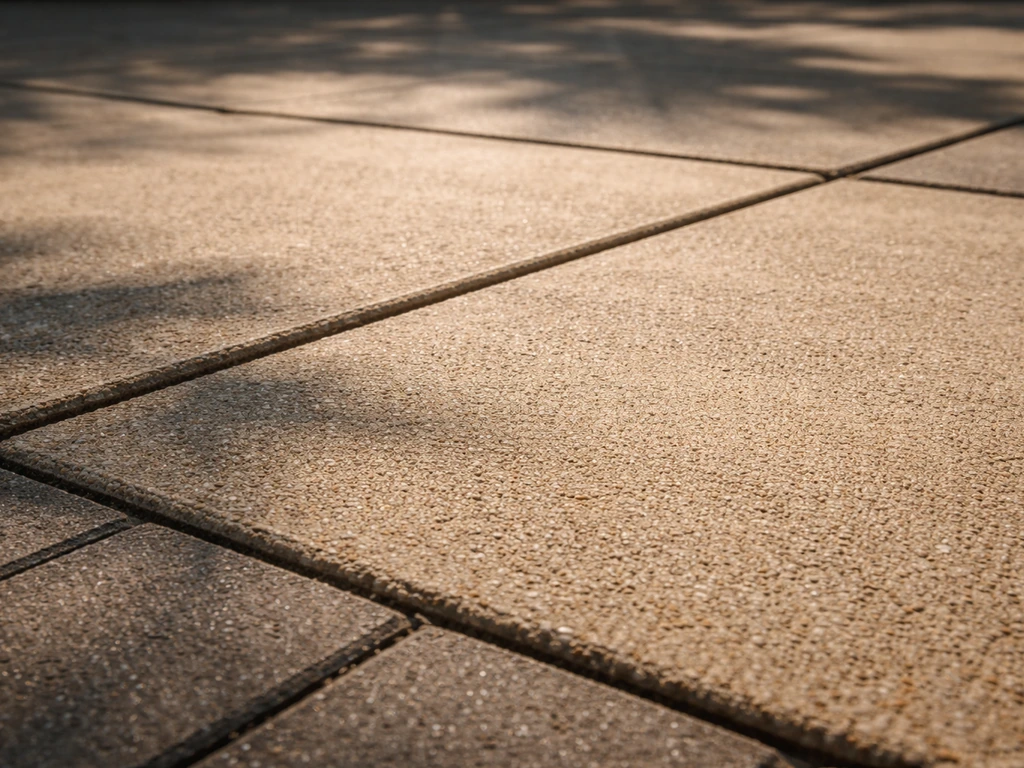
Then there's radiant heat. Your concrete slab, pavers, or deck surface absorbs sunlight all day and re-radiates that stored heat back at you, even in the shade. OSHA's Wet-Bulb Globe Temperature metric accounts for this separately from air temperature for good reason: a hot surface under your feet and around your legs adds real heat load to your body that a thermometer in the shade won't show you. This is why stepping onto a Florida patio at 4 PM can feel brutal even when the thermometer hasn't moved much since noon. Add in the fact that many Florida patios sit in dead-air pockets surrounded by fencing, walls, or dense landscaping, and you've got a heat-trap that needs a deliberate strategy to fix.
Things you can do right now, today
Before you invest in anything structural, there are real improvements you can make with what's already on the market, often in a single afternoon. Think of these as your baseline fixes.
Block the sun before it hits the surface
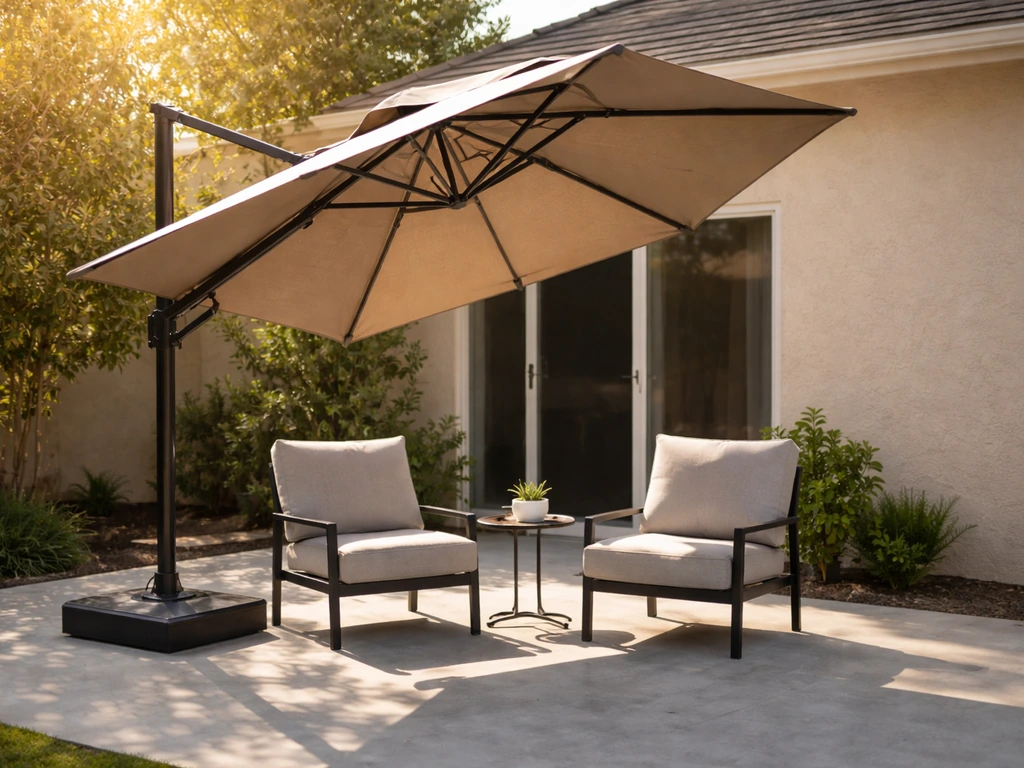
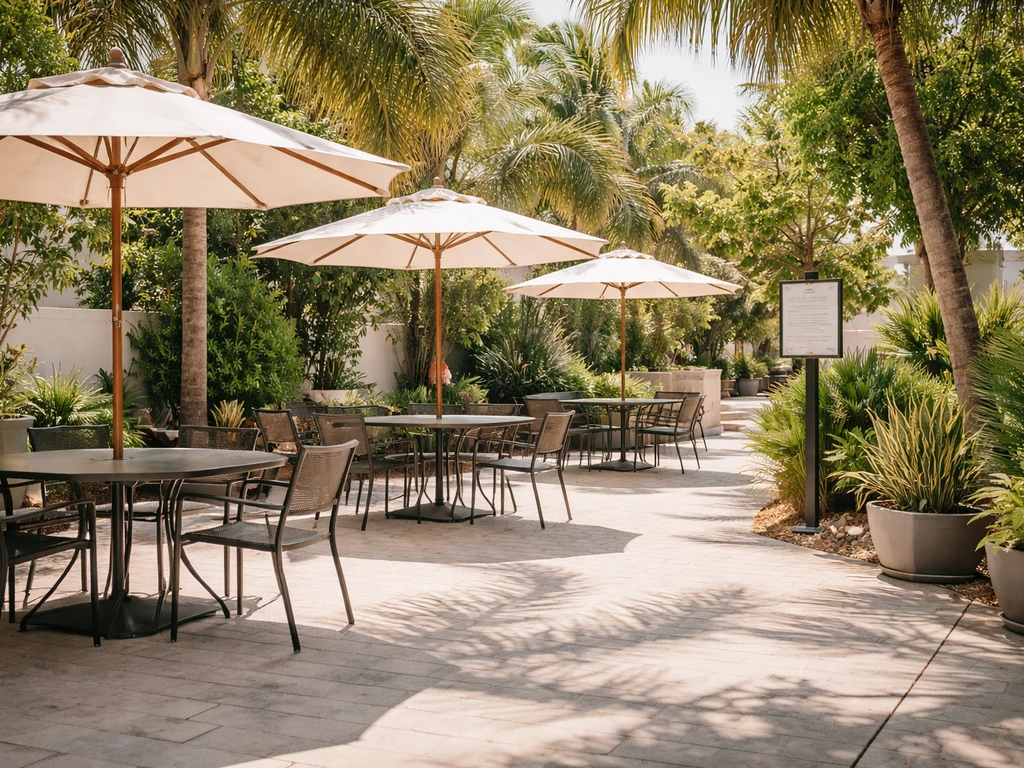
Shade is the single highest-impact move you can make, and you don't need a contractor for it. A large cantilever umbrella (at least 9 to 11 feet) positioned to block the afternoon sun path, typically from the west and southwest, can drop the surface temperature of a patio dramatically in the area it covers. Shade sails are another fast option: you can stake or anchor them yourself, they're inexpensive (often $30 to $150 depending on size and material), and they cover a wider footprint than an umbrella. Outdoor curtains hung from a pergola or overhead beam can block low-angle western sun that umbrellas miss. The principle here, backed by DOE shading research, is that a fixed or adjustable overhead cover blocks high-angle summer sun (which Florida gets nearly directly overhead) most effectively.
Get the air moving
An outdoor ceiling fan under an existing covered patio or pergola is one of the best comfort investments per dollar you can make. The DOE frames this well: fans don't lower air temperature, they improve perceived comfort by accelerating evaporation off your skin. In Florida's humid air, that mechanism is partially blunted, but airflow still helps significantly, especially combined with shade. For covered patios, mount the fan at 8 to 9 feet height for best airflow to seating areas. Make sure you buy the right fan for your exposure: a damp-rated fan is appropriate for covered areas where rain doesn't hit the fan directly; a wet-rated fan is required if the fan is exposed to direct rain or spray. Using a damp-rated fan in a fully exposed position is a safety and durability mistake.
For open patios without overhead coverage, a freestanding pedestal fan or a wall-mounted oscillating fan gives you directional airflow. Position it so it draws cooler air from a shaded or north-facing side of the space rather than pushing hot air around. The DOE notes that using shaded areas as air intake is more effective than circulating already-heated air.
Add a misting system or portable mister
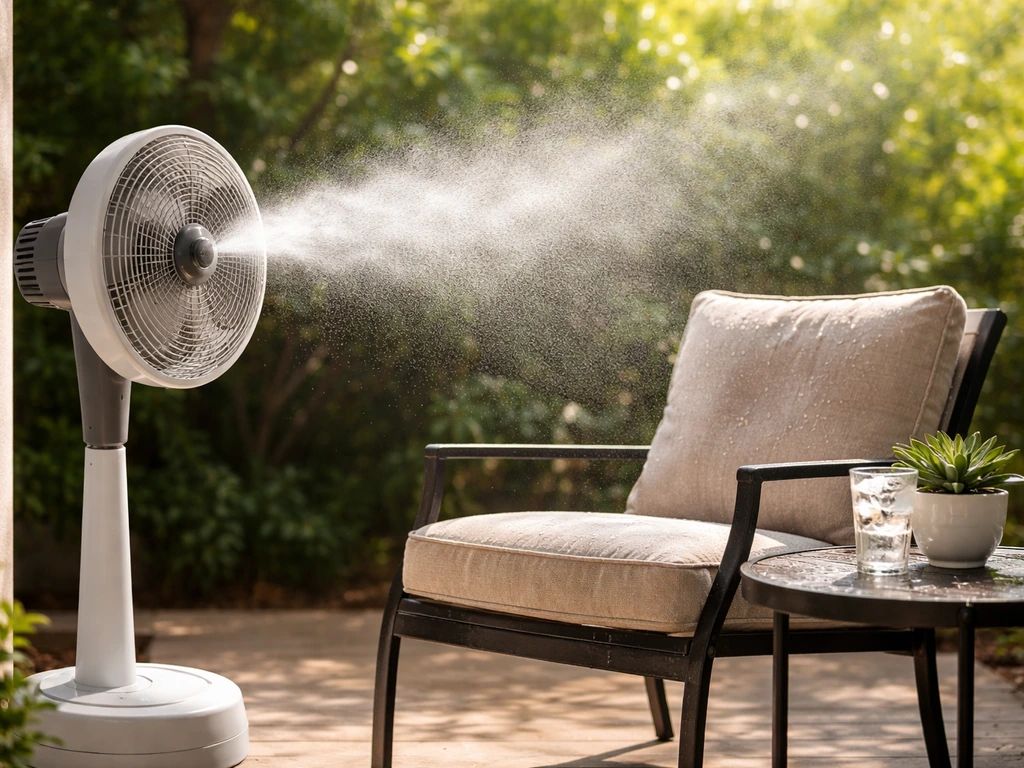
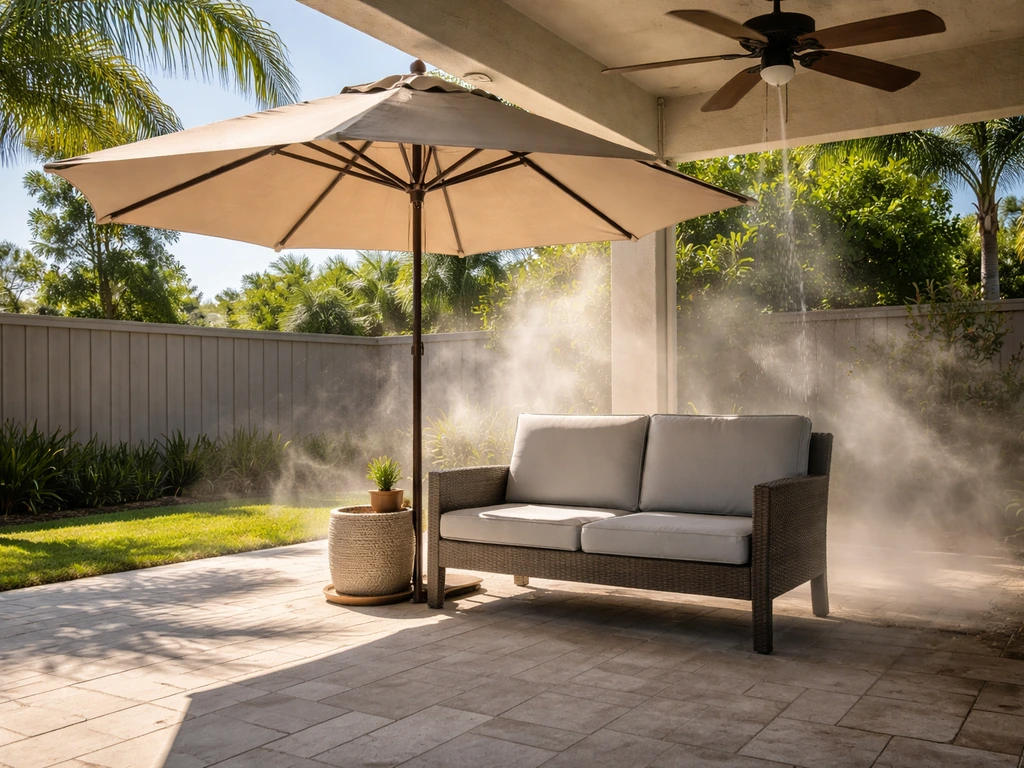
A portable misting fan is a quick win for personal cooling and works well in partially shaded spots with some airflow. High-pressure misting systems attached to a pergola or overhead structure can cool an area by 10 to 20 degrees in drier conditions. In Florida, results are more modest because the air is already holding a lot of moisture. That said, misters combined with fans still help by cooling the immediate air around you, even if the evaporation is incomplete. Keep misting nozzles aimed at the seating area and away from food prep zones, and avoid directing mist toward outlets or electrical equipment. If you are thinking about grilling on an apartment patio, focus first on shade and airflow, then manage moisture so cooking area heat does not make the space feel unbearable can you grill on apartment patio.
Longer-term upgrades worth the investment
If you're serious about using your patio through a Florida summer, portable fixes have real limits. Structural upgrades give you sustained comfort and add home value in ways that an umbrella never will.
Retractable awnings
A retractable awning is the most flexible entry-level structural shade option. You get full sun when you want it and shade on demand. In Florida, installed costs average around $6,400 (based on a 172-project dataset from a Florida awning installer), though the range typically runs from about $1,500 for a basic manual model to $5,000 or more for a motorized unit with wind sensors. The downside in Florida specifically is wind and hurricane exposure: retractable awnings need to be retracted before storms and can be damaged if left out. They also don't help with radiant heat from the floor or provide insulation against Florida's summer rain, which tends to be intense.
Pergolas and shade structures
A pergola gives you a framework for fans, lights, curtains, and climbing plants, all of which contribute to cooling. On their own, open-lattice pergolas block maybe 20 to 30 percent of direct sun, which is better than nothing but not transformative. The bigger upgrade is a louvered pergola (adjustable slats you rotate to block sun or allow airflow) or a solid-roof patio cover. Solid patio covers dramatically reduce radiant heat by eliminating direct sun and insulating the space below. Adding a radiant barrier material to the underside of a solid roof significantly reduces heat transfer downward, which is especially relevant in Florida where roof surface temperatures spike in summer sun.
Screen enclosures and porch conversions
Florida screen enclosures (often called lanais) are a genuinely different comfort category. If you mean cooking with a grill, you can usually grill in a screened-in patio as long as your setup keeps heat, smoke, and clearance rules in mind screen enclosures (often called lanais). They block insects, filter some sun through the screen mesh, and create a defined air pocket that can be managed with fans much more effectively than open space. Aluminum-frame screen enclosures are common here and can last 20 to 30 years with routine re-screening. Costs range widely: a basic screen enclosure conversion runs $3,000 to $15,000 for modest spaces, while a fully framed screened porch or larger structure can reach $50,000 depending on scope and finishes. The comfort payoff is real: you can sit outside in the evening without battling mosquitoes, which is a major quality-of-life improvement in Florida.
Sunrooms and insulated enclosures
If you want air conditioning in the space, you're looking at a fully enclosed sunroom or patio room addition. These cost $50 to $175 per square foot installed, meaning even a modest 200-square-foot room runs $10,000 to $35,000 or more. This is a home addition at that point, not a patio upgrade, and it changes how the space functions entirely. It's the right choice if you need year-round usability and want the space conditioned, but it's a significant investment with a corresponding permitting and construction timeline.
The honest truth about misters in Florida humidity
Evaporative cooling is most effective when the outdoor air is warm and dry. ASHRAE's guidance on evaporative cooling is explicit: cooling savings are reduced or unlikely during peak design conditions in humid climates. Florida's summer relative humidity regularly sits above 70 to 80 percent in the afternoon, which is exactly when you want cooling most. At that humidity level, evaporative coolers (the box-style units you might use in Arizona) are largely ineffective and will just make the air feel more muggy. The EPA notes that evaporative coolers increase relative humidity indoors while using water to provide cooling, which helps explain why they can be far less effective in humid conditions At that humidity level, evaporative coolers (the box-style units you might use in Arizona) are largely ineffective and will just make the air feel more muggy..
High-pressure misting systems work somewhat better because the droplets are extremely fine and evaporate faster, but you'll still get less temperature drop than the manufacturer's marketing suggests in peak Florida summer humidity. The practical takeaway: use misters for comfort on moderately humid days or evenings, pair them with fans for airflow, and don't expect them to replace shade. If you're cooling a screened enclosure, be aware that misters will raise the humidity inside the screen room, which can worsen comfort and encourage mold and mildew on furniture and surfaces.
Choosing between an open patio, pergola, or enclosure
This is where most homeowners get stuck because the options overlap. Here's a direct comparison of the main structure types and how they perform for cooling, cost, DIY accessibility, and long-term value.
| Structure Type | Cooling Performance | Typical Cost Range | DIY Feasibility | Durability in Florida |
|---|---|---|---|---|
| Open patio with shade sail/umbrella | Low to moderate (shade only, no airflow management) | $50–$500 | High (weekend project) | Low to moderate (storm vulnerability) |
| Pergola (open lattice) | Moderate (partial shade, fan-ready) | $2,000–$12,000 installed | Moderate (kit options available) | Moderate (depends on material: wood vs aluminum vs vinyl) |
| Solid-roof patio cover | Good (blocks sun and radiant heat) | $5,000–$25,000 installed | Low to moderate (requires permits in most FL counties) | Good (aluminum and concrete block best) |
| Screen enclosure / lanai | Good (insect control, fan efficiency improved) | $3,000–$50,000 depending on scope | Low (requires framing and screen installation) | Very good (aluminum frame lasts 20–30+ years) |
| Insulated sunroom / patio room | Excellent (AC-ready, fully enclosed) | $10,000–$35,000+ (200 sq ft example) | Very low (licensed contractor required) | Excellent (built to building code) |
If your goal is maximum usable hours in summer with a mid-range budget, a solid-roof patio cover with a wet-rated ceiling fan is probably the best value combination. It handles radiant heat, keeps rain off, supports a fan, and doesn't require the full permitting and construction effort of an enclosed room. Screen enclosures are the right move if bugs are a major problem and you want to spend evenings outside. If budget is tight today, a quality shade sail plus a pedestal fan gets you meaningful improvement for under $300.
Safety and durability: what Florida specifically demands
Electrical safety for outdoor fans and misters
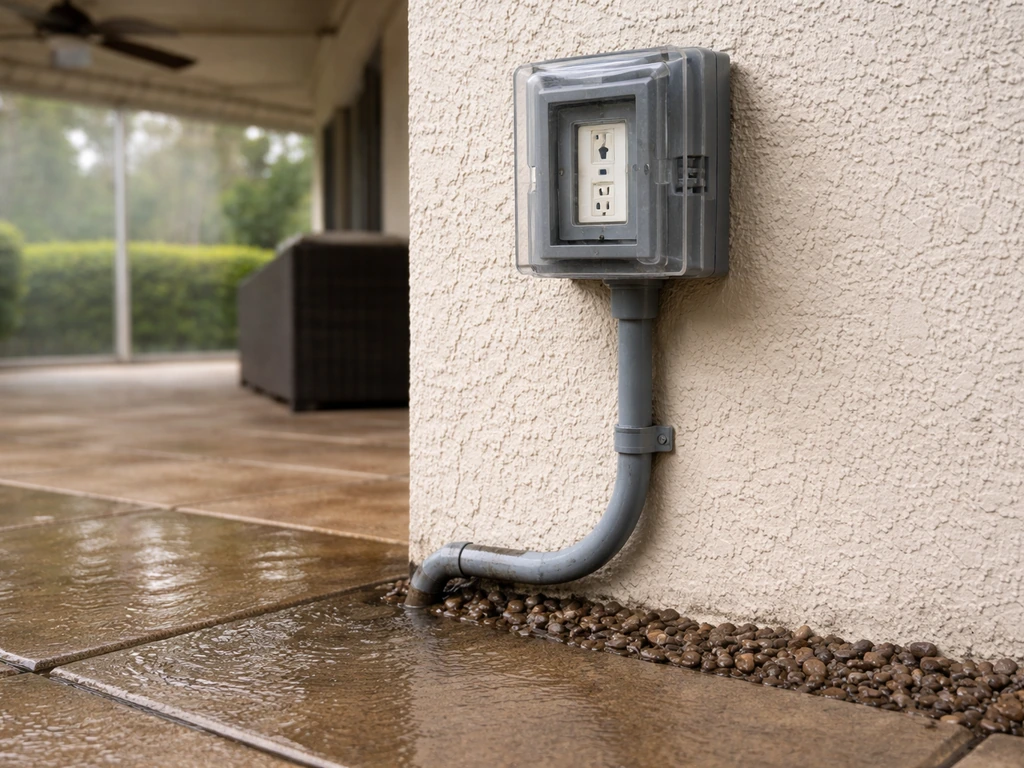
blank" rel="noopener noreferrer">Any outdoor outlet serving fans, misters, or lighting on a Florida patio needs GFCI protection. The 2023 Florida Building Code and NEC 2020 (Section 210.8) both require GFCI protection for outdoor receptacles on residential properties. If your patio outlets are older and don't have GFCI protection, get them updated before plugging in a fan or misting system. Water and electricity outdoors in a state with Florida's rainfall and humidity is a genuine hazard, not a technicality. Have a licensed electrician handle any new outdoor outlet installation: permits are typically required and the cost is modest compared to the risk of an incorrectly wired outdoor circuit.
Mold, mildew, and moisture management
Florida's combination of heat, humidity, and rain creates ideal conditions for mold and mildew on patio furniture, cushions, ceiling fans, and screens. If you add a misting system, you're adding more moisture to an already challenging environment. Use mold-resistant outdoor fabrics for cushions and curtains, clean fan blades regularly (they collect mold spores quickly in humid air), and make sure any covered patio or screen enclosure has adequate drainage so water doesn't pool and sit. If you are wondering can you grill on a patio, the safest approach is to check clearances to overhead covers, walls, and screens and use heat-safe placement for your grill. For screen enclosures, check where the bottom edge of the screen meets the floor: standing water there deteriorates the frame and screen faster.
Drainage
Florida summer rainstorms are intense and frequent. A covered patio or pergola that doesn't channel water away properly will become a flooding and mold problem quickly. Make sure gutters or a roof pitch direct water away from the foundation and patio surface. For solid-roof covers, a minimum 1/4 inch per foot slope is the standard for adequate drainage. If you're adding a screen enclosure, confirm that the concrete or paver slab underneath has a slope toward a drain or open edge: pooling water inside a screen enclosure is a fast track to algae, mold, and mosquito breeding.
Pest control implications
Any water source you add outdoors in Florida, including misting systems with small reservoirs or drainage channels that hold standing water, becomes a mosquito breeding opportunity. If you are wondering whether you can smoke on a restaurant patio in Florida, the rules often depend on whether the patio is enclosed or screened and on local city regulations misting systems with small reservoirs. Keep misting system reservoirs dry when not in use and check that water drains completely from lines. If you're considering a mosquito misting system (a separate category from cooling misters), the EPA requires that nozzles be directed away from eating and cooking areas and away from water bodies: these products are regulated as pesticide delivery systems, not just water sprayers. Screen enclosures are genuinely the most effective pest control strategy for extended patio use in Florida because they create a physical barrier rather than relying on chemical solutions.
What to measure before you spend any money
Before you buy anything or call any contractor, spend 30 minutes observing your patio at its worst time: typically between 1 and 5 PM on a clear day. Note which direction the sun hits from (usually west and southwest in the afternoon), whether there's any natural airflow or if the space feels dead, what the surface is (concrete, pavers, wood deck), how high any existing roof or cover is, and whether bugs are a primary comfort issue. These observations will tell you whether you're solving a shade problem, an airflow problem, or a heat-trap problem, and that determines which solution category gives you the most return. Once you know where the sun and heat-trap are worst, you can choose the best spot for your grill so it stays cooler and more comfortable to use shade.
- Sun exposure: which direction and what time of day is worst? (This tells you where to place shade.)
- Airflow: does any breeze reach the space, or is it enclosed by walls, fencing, or dense plantings?
- Surface material: a dark concrete slab holds more radiant heat than light pavers or wood.
- Ceiling height: fans are far less effective at 12 feet than at 8 to 9 feet above seating level.
- Existing roof or cover: do you have anything overhead, or is this fully exposed?
- Budget range: under $500 (portable fixes), $1,000–$10,000 (structural shade), or $10,000+ (enclosure/room).
- Primary use hours: do you want to use it midday, evenings, or both? Midday demands more aggressive shading; evenings are more manageable with fans and screens.
Realistic cost ranges and what you actually get
Here's an honest summary of what different budget levels get you in Florida, from quick fixes to full structural upgrades.
| Budget Range | What to Do | Expected Comfort Improvement |
|---|---|---|
| Under $300 | Shade sail or large umbrella + pedestal fan | Meaningful in shade zone; limited on hottest days |
| $300–$1,000 | Quality outdoor ceiling fan + shade sail + portable mister | Good for evenings and moderate days; still tough at peak midday heat |
| $1,500–$6,500 | Retractable motorized awning or basic pergola kit | Good shade coverage; fan-ready; some radiant heat reduction |
| $5,000–$25,000 | Solid-roof patio cover with fan and lighting rough-in | Strong comfort improvement; handles rain; significantly reduces radiant heat |
| $3,000–$50,000 | Screen enclosure (lanai) | Excellent for evenings; eliminates insects; fan efficiency improves in enclosed space |
| $10,000–$35,000+ | Insulated sunroom or patio room addition | Full year-round comfort with AC; full home-addition process required |
From a home value perspective, enclosed structures and screened rooms tend to add more appraised value in Florida than portable shade solutions, because they're permanent and functional year-round. A screen enclosure or solid-roof patio cover is the type of upgrade that shows up as usable square footage in a listing, which an umbrella does not. That said, the best investment is the one that matches how you actually use the space: a beautifully built sunroom that sits unused because it doesn't connect to the rest of your living flow is a worse ROI than a $4,000 shade cover and fan setup that gets used every evening. Many people ask whether a grill is considered patio furniture, but in most cases it’s treated as an outdoor appliance rather than built-in patio furnishings is a grill considered patio furniture.
Start with the cheapest fix that addresses your primary problem, measure whether it's enough, and move up the investment scale only if you're still losing usable hours. Florida patio cooling is a layered problem, and most homeowners find that solving two of the three factors (shade, airflow, moisture) gets them 80 percent of the way there without a major renovation.
FAQ
How do I tell if my umbrella or shade sail will cool enough on a Florida patio?
Measure the shade area at your target time (usually 1 to 5 PM). A 9 to 11 foot umbrella or sail that covers the seating you sit in can be effective even if it does not cover the entire patio. If the hottest floor area is outside the cover, your body can still feel the radiant heat even with airflow.
Are damp-rated ceiling fans safe for a covered but open-to-rain patio in Florida?
Start by checking the fan rating and mounting location. Use damp-rated fans only if the fan stays under cover and is not exposed to driving rain, wet-rated fans if rain or spray can hit the motor. Also keep fan blades at least a few feet above head height so airflow reaches people, not just the underside of the roof.
Where should I place pedestal or oscillating fans to cool my patio the most?
Fans should be aimed to move air across your seating area, not just circulate the space. Position a pedestal or oscillating fan so it pulls air from the cooler side of your patio (often shaded or north-facing), then directs it across you. If you point fans into a dead-air corner, you can end up with warmer recirculated air and less comfort.
What’s the best way to use a mister system on a humid Florida evening?
If you use misters, treat them as a personal comfort layer, not a whole-patio cooling system. Aim nozzles at where people sit, keep mist away from electrical connections and food prep, and run misters briefly then let fans do the drying. On very humid days, you may notice less temperature drop but still some relief from wetting airflow.
Can I run misters inside a Florida screen enclosure without causing mold issues?
Avoid combining high misting with poor ventilation, because humidity can build and create mold risk in screened areas. A practical rule is to run mist in short bursts only when people are present, and rely on fans for most of the comfort between bursts. If your patio has cushions or soft seating, give surfaces time to dry before nightfall.
Will misting help if I grill on a Florida patio?
Yes, but you should expect to reduce smoke and heat comfort with shade, airflow, and clearances rather than relying on misting. If your grill creates intense radiant heat, the most effective first step is to keep the grill area shaded while maintaining ventilation and safe distances from screens, curtains, and any overhead cover.
Why does my patio still feel hot even when the air temperature is the same as indoors?
Thermostats and weather apps measure air temperature, but radiant heat comes from your surfaces. Use a simple test: compare how it feels standing at the edge of the cover versus under shade in the late afternoon, and note where you feel heat from the floor. If it still feels brutal under shade, your issue is likely floor heat trapping, not only sun exposure.
How can I fix a patio that feels like a dead-air pocket?
Even if you have shade, a fenced or walled layout can block airflow and trap hot air. Look for narrow openings and check whether the space feels stagnant at its worst time. If it feels dead-air, the right upgrade is usually adding directional airflow (fans plus an inlet direction), or changing cover type to let hot air escape.
What drainage details matter most for solid-roof covers and screen enclosures in Florida?
Plan for water management before you add anything that changes roof flow. Confirm gutters and downspouts discharge away from the patio slab, and verify that the cover or enclosure has slope and drainage paths. If water pools under screens or under a pergola, expect faster deterioration of frames and a higher mosquito and mold risk.
Do I need to upgrade patio outlets to run fans or misters safely in Florida?
Outdoor receptacles must be GFCI-protected for safety, and older patios may not have it. If outlets are unprotected, have an electrician upgrade the circuit before using fans, misters, or outdoor lighting. Also check extension cord ratings for outdoor wet conditions, because humidity and rain exposure can turn a safe setup into a hazard.
How are mosquito misting systems different from cooling misters for a Florida patio?
Mosquito control devices are different from cooling misters. If you are considering mosquito misting systems, follow pesticide delivery rules and avoid aiming droplets at eating or cooking areas. For extended use and fewer chemicals, screen enclosures typically provide the most consistent barrier protection.
Is a retractable awning a good long-term solution in Florida, or will it fall short?
A retractable awning can work well for comfort, but it needs wind discipline. In Florida you must retract before storms, and you should check the awning’s wind rating for your specific location. Also remember it will not insulate the floor, so if radiant heat from the slab dominates your discomfort, a solid-roof cover may outperform an awning.
Next Article
Can You Smoke on a Restaurant Patio in Florida?
Florida patio smoking rules for restaurants, including state law vs local ordinances, enforcement, and what to ask the v