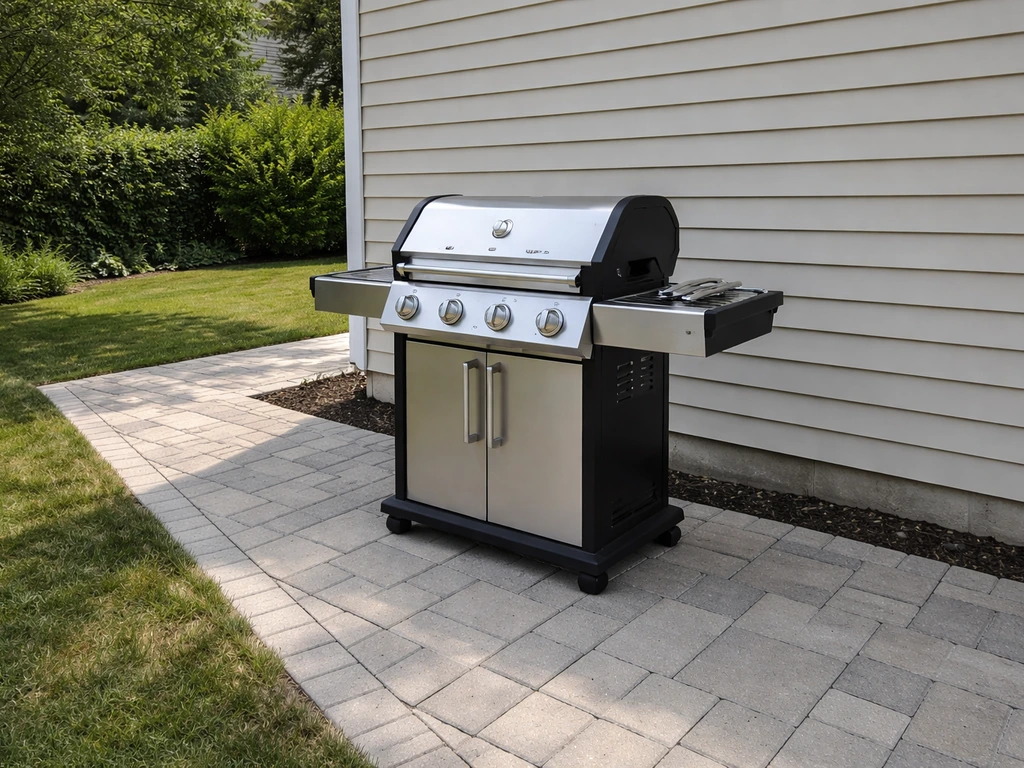
Whether you can grill on your apartment patio depends on three things stacked on top of each other: your lease, your building's HOA or management rules, and your local fire code. In most U.S. cities, charcoal grills and propane grills are either banned outright or heavily restricted on apartment balconies and patios, especially in multifamily buildings. Electric grills are the one type that most buildings tolerate, because they produce no open flame and minimal smoke. If you want a fast answer: check your lease first, then call your building manager, then look up your city's fire code. That sequence takes about 20 minutes and will tell you exactly where you stand.
Can You Grill on an Apartment Patio? Rules and Safety

Miles Hart
3 Jun 2026
When apartment patios do (and don't) allow grilling
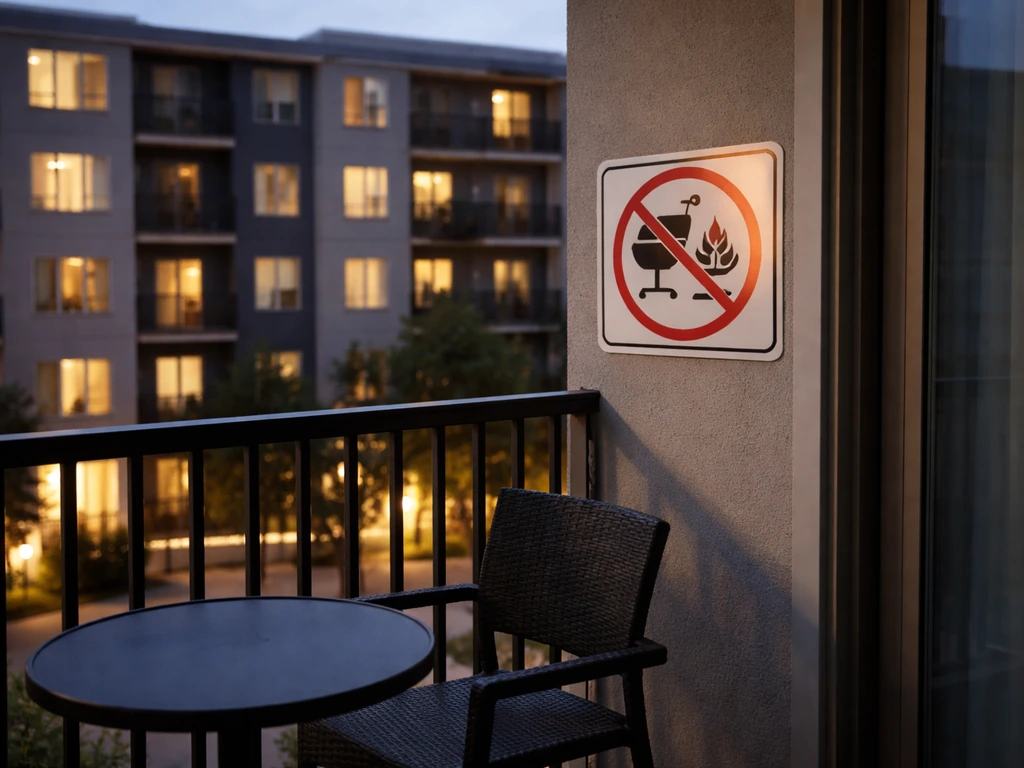
Most apartment buildings in the U.S. restrict or ban open-flame grilling on patios and balconies, and that's not arbitrary. The International Fire Code (IFC), Section 308.1.4, is the baseline that most cities build their local rules on. It prohibits charcoal burners and other open-flame cooking devices on combustible balconies or within 10 feet of combustible construction. That 10-foot rule alone disqualifies a huge number of apartment patios, which are typically small, surrounded by wood or vinyl siding, and directly below or adjacent to neighbors.
Some cities go further than the IFC baseline. Baltimore, Dodge City, and Great Falls, Montana all have explicit municipal rules that ban charcoal and open-flame devices on multifamily balconies entirely, citing fire prevention and ember ignition risk. Others follow the IFC directly. A small number of cities are more permissive if your patio meets specific conditions: ground-level only, noncombustible flooring, no overhead coverage, and a verified 10-foot clearance. But those scenarios are the exception, not the rule, especially for apartment renters.
The type of patio or outdoor space you have matters a lot here. An uncovered ground-level concrete patio behaves very differently from an upper-floor balcony or an enclosed screened porch. Covered patios introduce smoke and heat buildup issues. Screened enclosures are almost always off-limits for any grilling. Balconies above the first floor are a particular problem because fire departments cite both the ember drift risk and the difficulty of suppressing a fire that spreads upward. If your patio is at grade, uncovered, and has real separation from the building, you're in a better position than most apartment dwellers. If you are trying to cool a patio in Florida, focus on shade, airflow, and heat management strategies that work even when grilling is restricted.
Check the rules that actually govern your patio
There are four layers of rules that can affect your grilling, and you need to check all of them. They don't all say the same thing, and the strictest one wins.
- Your lease: This is the fastest place to start. Many leases include a specific clause prohibiting open-flame grilling, or restricting grilling to certain grill types. Read the sections labeled 'patio use,' 'fire hazards,' or 'outdoor cooking.' If it says nothing, that's not automatic permission — it just means you move to the next layer.
- Building management or HOA rules: Even if your lease is silent, your building likely has a separate set of community rules or a resident handbook. Ask your property manager directly: 'What types of grills are permitted on patios?' Get the answer in writing if you can. HOA-governed condos often have rules that are stricter than the lease itself.
- Local fire code: Look up your city or county fire prevention code online. Search for your city name plus 'open flame cooking balcony' or 'IFC 308.' Many municipalities publish their adopted fire code on their official websites. If you can't find it, call your local fire marshal's office — they'll tell you quickly.
- State and building-specific codes: Some states have additional residential fire codes layered on top of the IFC. Buildings with sprinkler systems may have separate rules. Older buildings with wood-frame construction are often subject to stricter local enforcement.
The key thing to understand is that these rules exist independently of each other. Your lease might allow a gas grill, but your city's fire code could prohibit it. Or your city code might permit electric grills, but your HOA bans all outdoor cooking. You need to satisfy all four layers simultaneously, not just one. Many people ask whether a grill counts as patio furniture, but in practice it is treated as an outdoor cooking device under your lease and local fire code.
Safety checklist before you fire up anything
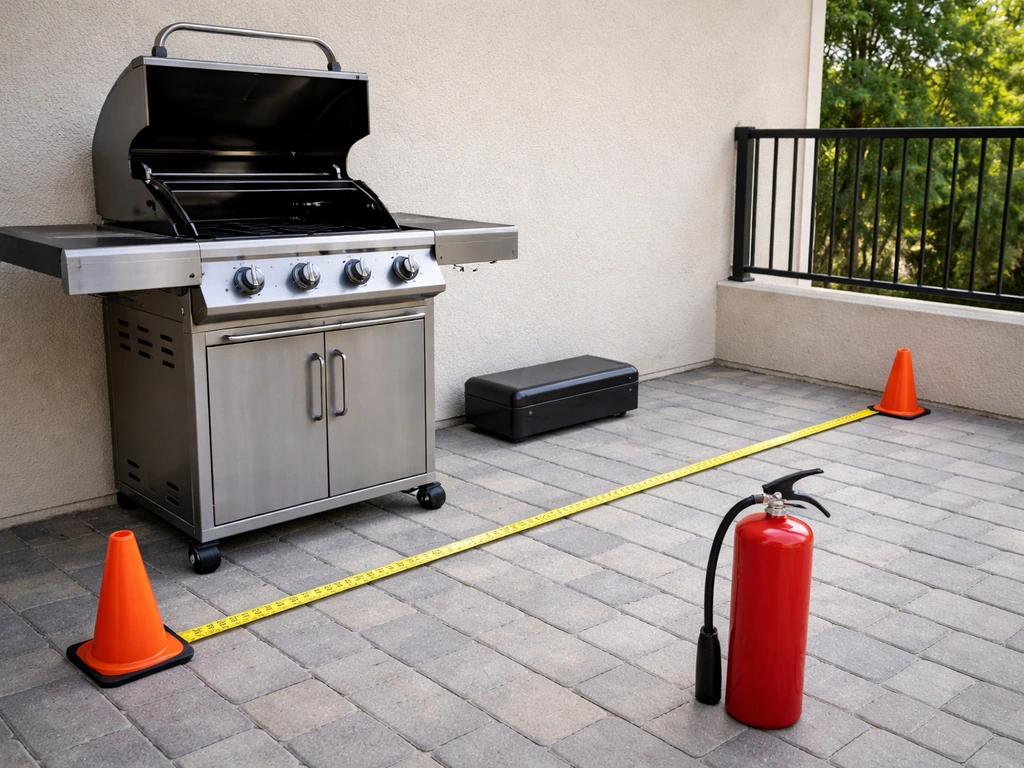
If you've confirmed that grilling is allowed on your patio, these safety requirements aren't optional. Many of them mirror what's required by fire code, and skipping them is how renters end up with damaged security deposits, fines, or worse.
- Clearance from walls and railings: Maintain at least 10 feet from any combustible surface, including wood railings, vinyl siding, and wood fencing. Even if your city doesn't cite the IFC 10-foot rule directly, it's a solid safety baseline. If your patio is smaller than 10 feet in any direction, a gas or charcoal grill genuinely shouldn't be there.
- Keep away from doors and windows: Position the grill so smoke and heat don't flow toward open doors, windows, or HVAC intake vents. Smoke entering the building can trigger fire alarms, upset neighbors, and create real carbon monoxide risk.
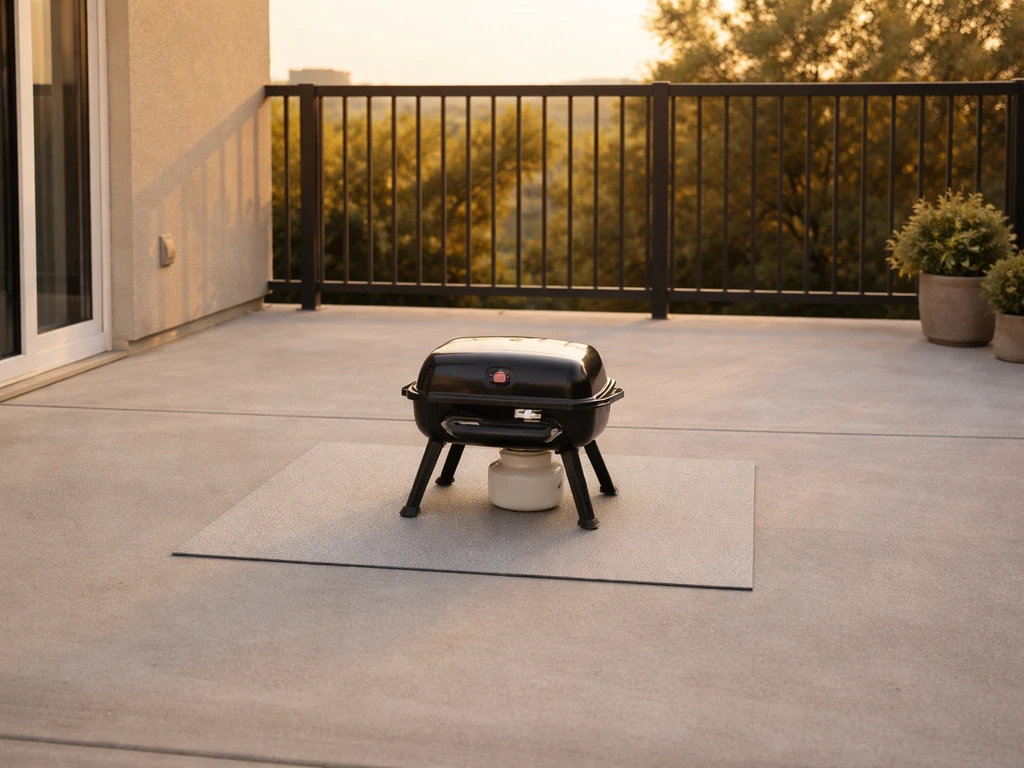
- Noncombustible surface under the grill: If your patio has composite decking, wood, or any material that isn't concrete or stone, place a noncombustible grill mat or heat shield underneath. Even electric grills can drip hot grease.
- No grilling under overhangs or covered areas: Overhead coverage traps heat and smoke, and a low ceiling above a grill is a fire risk. This applies to roof overhangs, patio covers, pergolas, and screened enclosures.
- Wind awareness: Check wind direction before starting. On a balcony especially, gusts can push flames toward railings, walls, or neighboring units.
- Fire readiness: Keep a Class K fire extinguisher or a bucket of water within reach every time you grill. A lid that can smother the grill is also useful.
- Propane tank storage: Never store propane tanks indoors or in an enclosed space. Store them upright, away from heat sources, and in a well-ventilated area. Most fire codes limit the size of propane tanks permitted on balconies (commonly 1 lb canisters only).
- Smoke detector and sprinkler proximity: If your patio is near an outdoor smoke detector or sprinkler head, keep the grill positioned to minimize direct smoke exposure. Triggering a building sprinkler system is a costly and serious problem.
Which grill type works best on an apartment patio
Not all grills are created equal when it comes to apartment compatibility. Here's how the three main types stack up against each other in a typical apartment patio scenario.
| Grill Type | Typically Allowed? | Best For | Main Drawbacks |
|---|---|---|---|
| Electric | Most often yes | Small patios, upper-floor balconies, covered patios | No charcoal or wood-smoke flavor; requires outlet access |
| Propane (small) | Sometimes, with restrictions | Ground-level patios with clearance | Flame hazard; tank storage rules; often banned in multifamily buildings |
| Charcoal | Rarely allowed | Open outdoor spaces with large clearance | Banned under IFC 308.1.4 in most multifamily settings; ember risk |
| Natural Gas (fixed) | Building-specific | Units with gas line hookup on patio | Requires landlord approval and permanent installation |
Electric grills are the practical choice for most apartment patios because they sidestep almost every fire code restriction. They produce no open flame, no embers, and minimal smoke. Models like countertop electric grills or compact electric griddles can be used on a small patio table, plugged into a standard outdoor outlet. The trade-off is flavor: you won't get charcoal smokiness, and the sear isn't identical to high-heat gas. But if you want to grill on an apartment patio without legal or safety headaches, electric is the path of least resistance.
Small propane grills using 1-pound canisters (the kind you'd use camping) are sometimes permitted where full propane tanks are not. They're worth asking about specifically, because some building rules distinguish between large propane tanks and small disposable canisters. That said, any open flame on an upper-floor balcony is a hard no in most jurisdictions, regardless of fuel source.
Charcoal is the most restricted option by a wide margin. The IFC 308.1.4 baseline is commonly cited for apartment rules limiting charcoal burners and other open-flame cooking devices on combustible balconies or within 10 feet of combustible construction Charcoal is the most restricted option by a wide margin.. The IFC 308.1.4 framework specifically names charcoal burners, and local fire departments enforce it because of the real risk: hot embers can travel on the wind, and a charcoal fire is harder to control than a gas one. If you're on an upper floor, charcoal is almost certainly not going to be permitted.
Common restrictions that catch people off guard
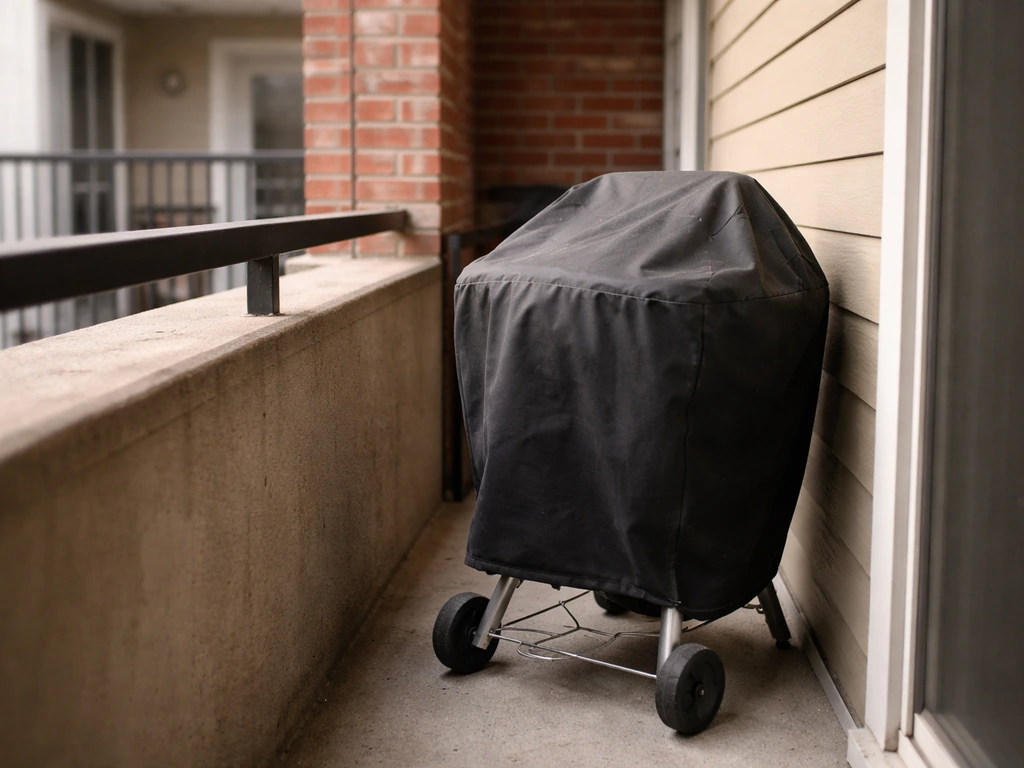
Even renters who've read their lease sometimes get surprised by restrictions they didn't anticipate. Here are the most common ones worth knowing before you buy a grill.
- Shared balconies: If your patio or balcony is shared with an adjacent unit, grilling on it may be prohibited regardless of grill type, because smoke and heat directly affect your neighbor.
- Enclosed or screened patios: Any grilling in an enclosed space is a carbon monoxide hazard and is almost universally prohibited. Screened-in patios fall into this category.
- Combustible flooring: Wood decks, composite decking, and some vinyl materials are combustible. If your patio surface isn't concrete or masonry, grilling rules are typically stricter.
- Upper-floor balconies: The higher the floor, the more restricted grilling tends to be. Ember drift, limited access for fire suppression, and faster fire spread in multistory buildings all make upper-floor grilling a tougher case.
- Overhangs and roof lines: Grilling directly under any roof structure, even a small overhang, creates heat and smoke accumulation risk. Many fire codes explicitly call this out.
- Smoke and odor complaints: Even if grilling is technically permitted, repeated smoke complaints from neighbors can result in management banning grilling for your unit specifically.
- Building sprinkler systems: Some outdoor sprinkler heads are heat-triggered. Placing a grill too close to one can accidentally activate it, causing water damage and a building incident.
The patio's physical setup matters as much as the rules. A covered patio versus an uncovered one, a first-floor patio versus a balcony, and concrete versus wood decking each change the risk profile and often the applicable rules. If your outdoor space is more like a screened enclosure or an enclosed porch, grilling is almost certainly off the table regardless of what your lease says, because the structural and ventilation conditions don't support it safely.
If grilling isn't allowed: what to do instead
If your building doesn't allow grilling on your individual patio, you're not out of options. Here's what actually works.
- Use the communal grill area: Many apartment complexes have a designated outdoor grilling area, often with a charcoal or gas grill available for residents. It's worth asking your building manager if one exists, even if it's not prominently advertised.
- Find a nearby public grilling area: Most city parks include designated grill pads or barbecue areas. A park grill within a short drive or walk is a legitimate and free option for weekend grilling.
- Switch to an indoor electric grill or griddle: Some countertop electric grills and smokeless indoor grills (like those with infrared heating elements) are designed for indoor use. Check your lease for indoor cooking appliance restrictions too, but many buildings permit these in kitchen use.
- Use a contact grill or smokeless grill: Indoor models marketed as 'smokeless' (like those with water trays under the grate) produce significantly less smoke than traditional grills and are typically fine for indoor use in an apartment, though they won't replicate outdoor grilling flavor.
- Talk to your building manager about options: If you're committed to outdoor grilling, it's worth having a direct conversation with management. Some buildings will allow a small electric grill on a patio that isn't explicitly covered by existing rules, especially if you can show you've addressed safety concerns.
- Consider an outdoor enclosure redesign for homeowners: If you own a condo or have control over your patio space, modifying the space to have noncombustible flooring, no overhead coverage, and proper clearances can sometimes bring it into compliance. This is more relevant for condo owners than renters.
One thing worth knowing: if you do find a workaround, document it. Get written confirmation from your building manager if they give you verbal permission to use a specific grill. If a fire code inspector visits your building and finds a grill on a balcony, 'my landlord said it was okay' won't carry weight without something in writing. A quick email exchange you can refer back to is worth the 60 seconds it takes.
The bottom line is that apartment patio grilling is genuinely possible in many situations, but you have to earn it by working through the rules, not around them. Electric grills on ground-level, uncovered patios with proper clearance are the most defensible setup in nearly every jurisdiction. If you're working with a covered patio, a balcony above the first floor, or any kind of enclosed outdoor space, the odds tilt toward restriction, and the safer move is to use a communal or public grilling space rather than risk a lease violation or a fire. Restaurant patios in Florida have similar restrictions, so it helps to check local rules and the venue's policy before smoking use a communal or public grilling space.
FAQ
Can I grill on my apartment patio if my lease doesn’t mention grilling at all?
If the lease is silent, assume the building rules and local fire code still apply. Before buying a grill, ask your manager for the written outdoor cooking policy, because silence in the lease often means the default is “not allowed” under building-wide rules.
If electric grilling is allowed, is it safe to use any electric grill outdoors?
Not all electric grills are meant for wet or outdoor conditions. Use only units rated for outdoor use (weather-resistant rating) and keep the power cord connections elevated and protected from rain. If you do not have an exterior outlet or a proper outdoor-rated extension cord, do not improvise.
Does the 10-foot clearance rule mean I need space from my neighbors’ unit too, or just from my patio structure?
Fire clearance rules typically focus on combustibles and the cooking device’s open heat or embers, which can include nearby building materials and sometimes adjacent structures. Because patios are close in multifamily buildings, you should measure to all relevant combustibles around your seating area, railings, overhangs, and nearby walls, not only to your own door or railing.
Are grill mats or trays enough to let me use charcoal on a patio that’s otherwise restricted?
No. If charcoal or other open-flame devices are banned, accessories like heat shields, ember trays, or drip pans usually do not change the underlying prohibition. Also, many ember restrictions are about airborne embers and ember migration, not just surface sparks.
Can I use a smoker or a grill pan on a hot plate instead of a grill?
Even if you avoid calling it a “grill,” many jurisdictions treat it as an outdoor cooking appliance based on fuel source and whether it produces open flame or significant smoke/heat. A hot plate may be less regulated than open-flame cooking, but you still need to follow the building policy on outdoor cooking appliances.
What should I do if my building manager says grilling is okay, but I get conflicting answers from the HOA or leasing office?
Get the controlling rule in writing and identify which entity sets enforcement for your address. If the HOA and management disagree, the stricter policy usually wins in practice. Ask for the exact policy name, the applicable document section, and whether exceptions require prior approval.
If I want to use a small propane canister grill, can I bring it onto the balcony if it’s only 1-pound?
In many jurisdictions, the issue is open flame on a balcony or upper-floor surface, not the canister size. Even when small canisters are treated more leniently, balconies and elevated locations are still often prohibited for open-flame devices.
Can I leave a grill unattended for a few minutes while I grab food?
Typically no. Even when electric grills are permitted, safety rules generally require you to stay in control of the appliance. Turn it off or unplug it before stepping away, and keep children and pets away from the cooking area.
Is smoking allowed as long as I’m using an electric grill or a grill with a lid?
Often no. Some buildings allow grilling but restrict smoking, heavy smoke, or any operation that produces persistent odor or visible emissions. If you want to “smoke” food, ask whether the policy distinguishes normal cooking from smoking and whether there are quiet-hours or ventilation limits.
What’s the easiest “next step” checklist to figure out whether I can grill on my specific patio?
Check these in order: (1) your lease language about outdoor cooking devices, (2) the building’s written patio or balcony rules, (3) your city or county fire code restrictions for open-flame appliances on balconies, and (4) your patio’s layout, including any overhangs, screened enclosures, and distance to combustibles. If anything is unclear, ask for a specific approval for the exact grill type and fuel you plan to use.
If grilling is not allowed on my patio, do communal or public grills count as a loophole?
They are usually allowed because the property provides them with safer placements and rules. Still, follow the site’s instructions for occupancy limits, cleaning, and how long you may use them, and do not move food prep or fuel storage onto your private patio area.
Next Article
Where to Put a Grill on a Patio: Safe Placement Guide
Learn where to place a gas or charcoal grill on a patio with safety clearances, wind and access tips, and quick measurin