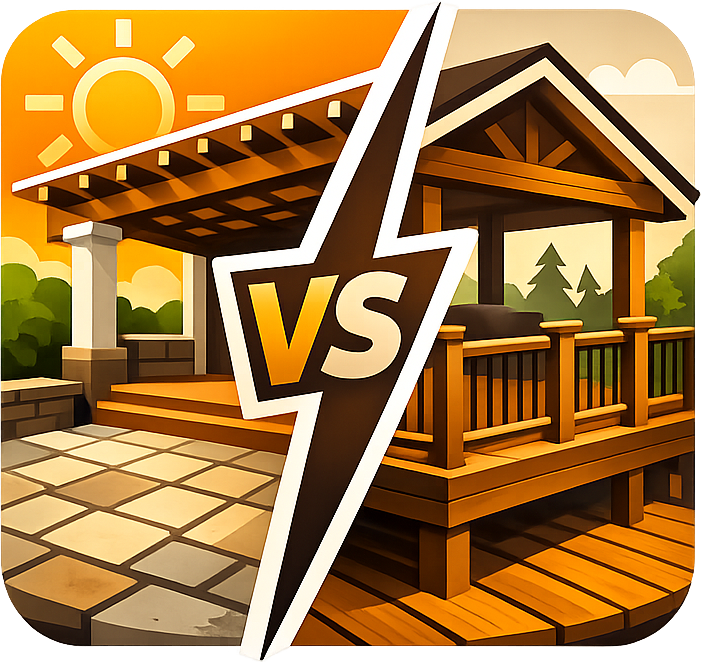
A patio is an open outdoor surface. If you're also weighing alternatives like decks and terraces, it helps to understand how each one differs in openness, materials, and year-round usability patio vs deck vs terrace. A covered patio adds a roof but stays open on the sides. An enclosed patio (also called a patio room or patio enclosure) wraps walls or screens around that roof.
Sunroom vs Patio: Costs, Differences, and Which Fits You

Miles Hart
23 May 2026
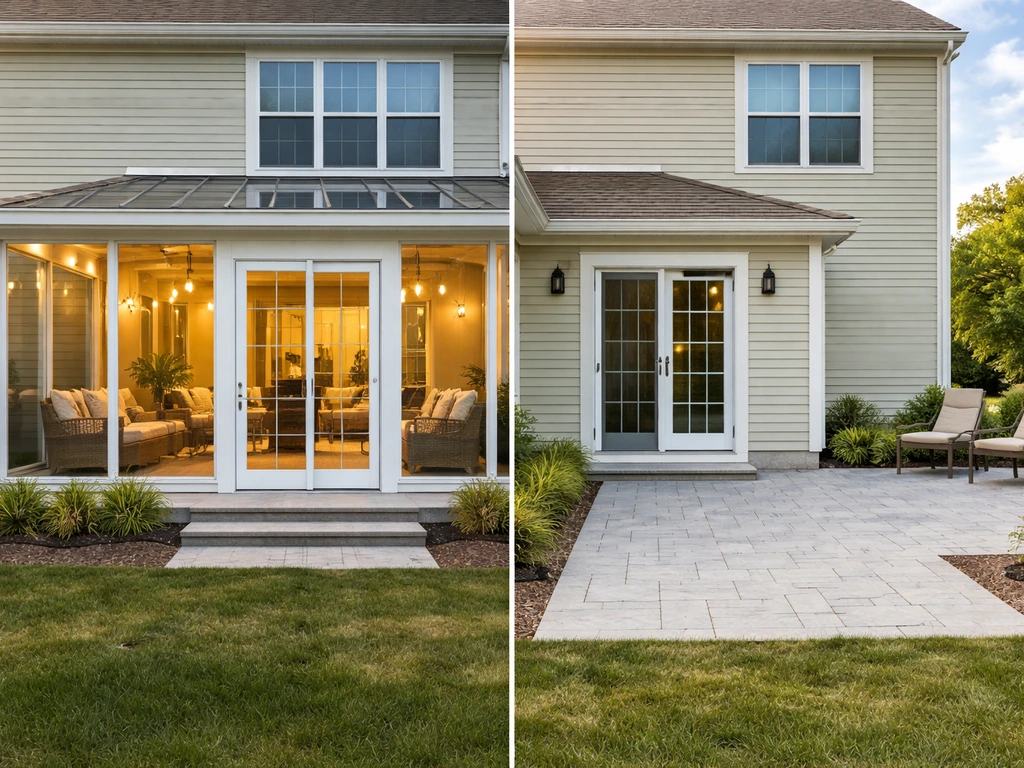
A sunroom goes further: it's a fully glazed, weather-tight room addition, often insulated and tied into your home's heating and cooling. The gap between a basic patio and a true four-season sunroom is enormous in cost, comfort, and complexity, and most homeowner frustration comes from not realizing how big that gap is before they start.
What each option actually means
These terms get used loosely, so it helps to pin them down before comparing costs or permits.
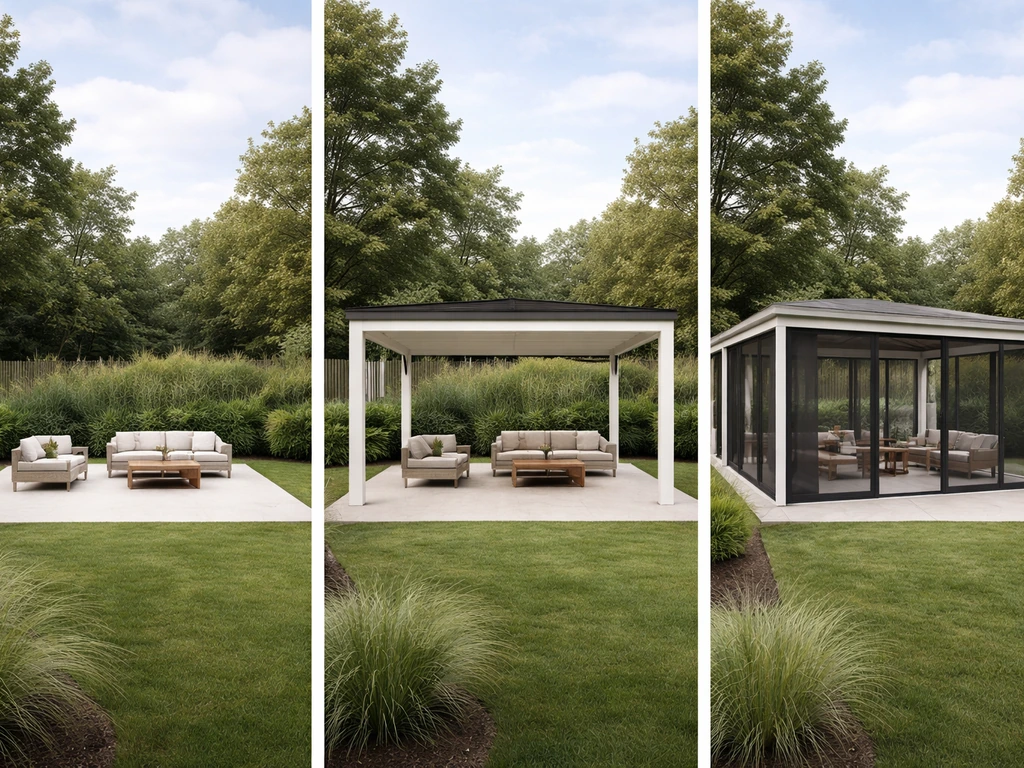
- Open patio: a ground-level surface (concrete, pavers, stone) with no roof and no walls. Fully exposed to weather.
- Covered patio: a roof structure over that surface, open on the sides. California's building code defines a patio cover as a one-story roofed structure no more than 12 feet above grade, used for outdoor living. It keeps rain and direct sun off, but wind, bugs, and cold air still come in freely.
- Enclosed patio / patio room / patio enclosure: a covered patio where the sides have been closed in with screens, glass panels, or framed walls. The degree of enclosure varies hugely. Some are basically screened porches; others use glass panels and aluminum framing. Most are not insulated or conditioned, which is the detail homeowners most often overlook.
- Sunroom: a fully enclosed room addition with substantial glazing, built as a more integrated part of the house. A three-season sunroom is weather-tight but not insulated or heated for winter. A four-season sunroom (sometimes called an all-season room or patio room by manufacturers, confusingly) is insulated, has thermally broken framing, double- or triple-pane glass, and its own heating and cooling, usually a ductless mini-split.
The term 'patio room' sits in murky territory. Some manufacturers use it to mean a basic patio enclosure. Others use it to mean a fully appointed four-season sunroom built over an existing patio. When you're shopping or reading permit guidance, always ask whether the structure is insulated and whether it has dedicated HVAC before assuming it gives you year-round comfort.
How they actually feel to use day to day
This is where the rubber meets the road. The structural definitions above matter, but what you really want to know is whether you'll actually use the space in July and January.
| Feature | Open Patio | Covered Patio | Enclosed Patio / Patio Room | Four-Season Sunroom |
|---|---|---|---|---|
| Weather protection | None | Rain/sun overhead only | Protected from most rain, wind, some cold | Fully weather-tight |
| Bug control | None | None | Good (screens) to excellent (glass) | Excellent |
| Temperature comfort | Outdoor temp only | Slightly cooler in sun, same at night | Better than open but gets hot/cold at extremes | Controlled with HVAC |
| Natural light | Full | Partial (depends on roof) | Good to excellent (glass panels) | Excellent |
| Privacy | Low | Low to moderate | Moderate to high | High |
| Ventilation | Excellent (full air flow) | Good | Moderate (openable panels vary) | Managed (windows + mini-split) |
| Year-round use | Warm seasons only | Warm seasons only | 3-season in most climates | All 4 seasons |
The most common complaint I hear about patio enclosures is that homeowners expected year-round comfort and got a space that's unbearably hot in August and too cold to sit in from November through March. Without insulation and a dedicated heating and cooling source, an enclosed patio is still a seasonal space. That's fine if you know it going in, but it's a frustrating and expensive surprise if you don't.
What each option costs
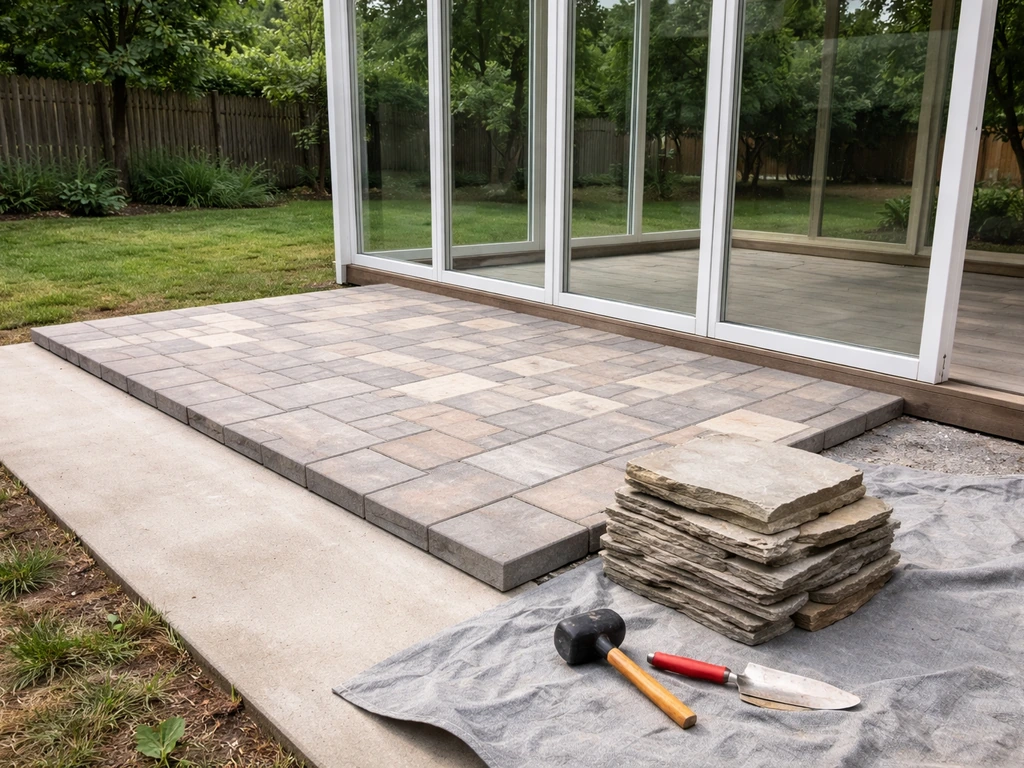
Costs vary a lot by region, size, and materials, but here are realistic ranges based on current 2025-2026 data. These are installed costs, not DIY.
| Option | Typical Cost Range | Notes |
|---|---|---|
| Open patio (new or resurface) | $10–$30 per sq ft installed | Concrete, pavers, flagstone; no roof included |
| Covered patio (roof/pergola only) | $20–$60 per sq ft installed | Up to $120/sq ft for solid wood; larger projects $40,000–$125,000 |
| Patio enclosure / enclosed patio | $10,000–$40,000 typical; $100–$350/sq ft for glass wall systems | Wide range based on screen vs glass, framing quality, size |
| Three-season sunroom | $100–$150 per sq ft; roughly $22,000–$45,000 for a typical room | Not insulated/conditioned for winter |
| Four-season sunroom | $150–$300 per sq ft; roughly $35,000–$75,000+ | Insulated framing, double/triple glazing, dedicated HVAC |
The delta between a basic patio enclosure and a true four-season sunroom can easily be $20,000 to $40,000 for the same footprint once you factor in insulated framing systems, thermally broken aluminum or vinyl, quality glazing, and a ductless mini-split installation. Prefabricated sunroom kits can bring the cost down to around $100 per square foot, but you still pay for the foundation work, electrical, and installation labor on top of the kit price.
Where costs escalate quickly
- Foundation work: if the existing patio slab isn't adequate to support a full room addition, you're looking at additional concrete work before the structure goes up.
- Electrical: lighting, outlets, and a dedicated circuit for a mini-split add to the permit scope and labor cost.
- Glazing upgrades: going from basic tempered glass to argon-filled double-pane or triple-pane units can add $5,000–$15,000 to a mid-sized project.
- Roof integration: tying the sunroom roof cleanly into the existing house roofline (flashing, drainage, matching shingles or membrane) is a common area where labor hours add up.
- HVAC: a ductless mini-split for a sunroom typically runs $2,000–$5,000 installed depending on BTU capacity and whether a new electrical circuit is needed.
Permits, building rules, and how long it takes
Here's the part most homeowners underestimate. The permit picture depends heavily on what you're building and where, but the general pattern is consistent: the more enclosed and the more conditioned the space, the more regulatory scrutiny it gets.
A basic covered patio (open-sided roof) often only requires a permit if it's attached to the dwelling or exceeds certain size thresholds. But even where a permit isn't technically required, local codes still apply. Once you start enclosing walls, adding glass panels, or tying into structural elements of the house, you're almost always in permit territory. Pikes Peak Regional Building Department defines “sunrooms and patio enclosures” and provides classification details, including patio enclosure height limits such as not exceeding 12 feet. A true sunroom addition is treated as a home addition by virtually every jurisdiction, which means full plan review, inspections, and often energy code compliance.
Energy codes add another layer for conditioned spaces. Wisconsin's energy conservation code, for example, requires a minimum R-24 ceiling insulation for thermally isolated sunrooms, plus specific requirements for walls and windows separating the sunroom from conditioned living space. And here's a catch many homeowners don't know: if you run conditioned air (from your existing HVAC system) into what was permitted as a three-season enclosure, many building departments will reclassify the space and require it to meet full residential energy standards.
What permit submittals typically include
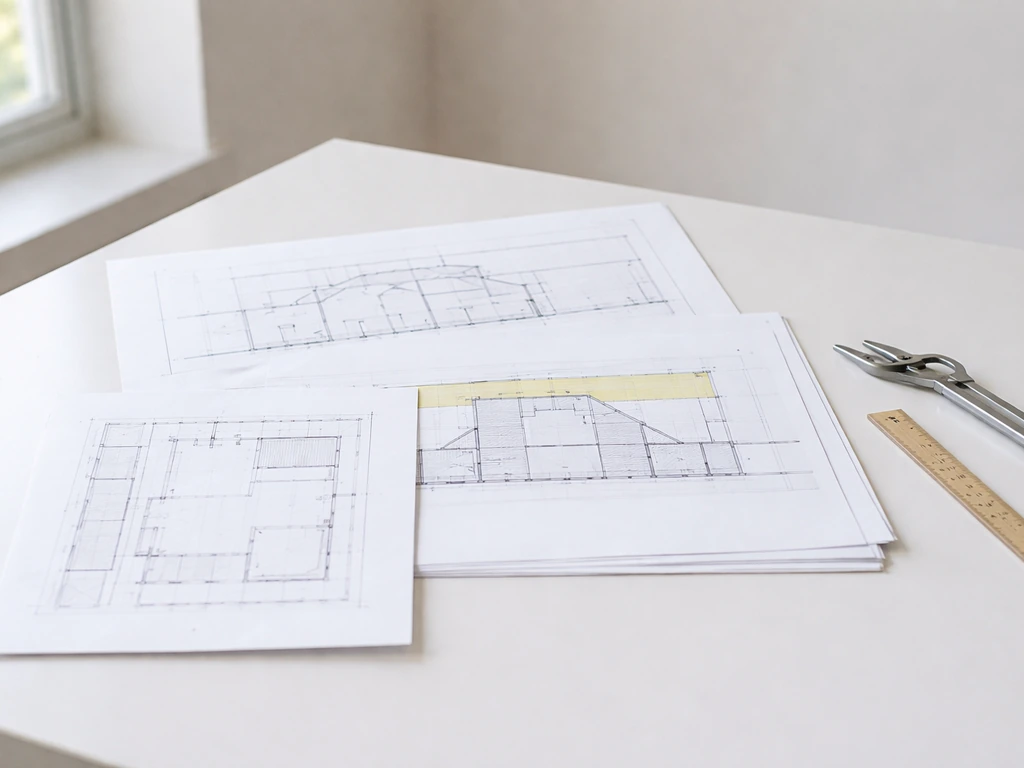
- Site plan showing location, setbacks, and dimensions
- Floor plan and elevations with height clearly shown (most jurisdictions cap patio covers at 12 feet)
- Detail showing how the structure attaches to the dwelling (structural attachment is a key review point)
- Window and door schedules if enclosing walls
- Electrical plan if adding circuits
- Engineering or structural calculations for larger or complex additions
Realistic timeline from decision to done
A basic screened patio enclosure by a contractor can be done in a few weeks once permits are in hand. A four-season sunroom addition is a different animal. Most reputable installers quote 8 to 14 weeks from permit approval to final inspection, and that's after the design and permitting phase, which can add another 4 to 8 weeks depending on your local building department's backlog. One practical tip from installers: order your windows during the design phase, before permit approval, so you're not sitting on a framed structure waiting for custom glazing units to arrive.
Insulation and HVAC: the year-round vs seasonal tradeoff
This is the single biggest decision point between an enclosed patio and a sunroom. An enclosed patio with screen or glass walls but no insulation is a three-season space in almost any climate that gets real winters or blazing summers. You'll use it in spring and fall and maybe on mild summer evenings, but it won't be comfortable when it's 95 degrees or 25 degrees outside.
A four-season sunroom changes that equation. The key ingredients are: thermally broken framing (aluminum or vinyl frames with an insulating barrier inside), insulated glass units (IGUs) with at least double paning and ideally argon fill, insulated walls and ceiling, an insulated or conditioned floor system, and a dedicated heating and cooling source. The near-universal recommendation from sunroom installers is a ductless mini-split system. It heats and cools independently without tying into your home's existing ductwork, it's efficient for a space that may not always be in use, and it gives you zone control.
One thing to get right early: floor and foundation insulation. If your sunroom sits on an uninsulated slab or over an unconditioned crawlspace, heat loss through the floor drives up your heating demand significantly in cold climates and the mini-split has to work much harder. Getting the floor thermal boundary right at the build stage is much easier (and cheaper) than trying to retrofit it later.
Maintenance, durability, and the problems to watch for
Every option in this comparison has a maintenance story. Open patios need periodic cleaning, sealing (if pavers or natural stone), and occasional re-leveling. Covered patios add gutter and roof maintenance. Enclosed patios and sunrooms have their own specific failure modes that are worth knowing about before you commit.
Condensation
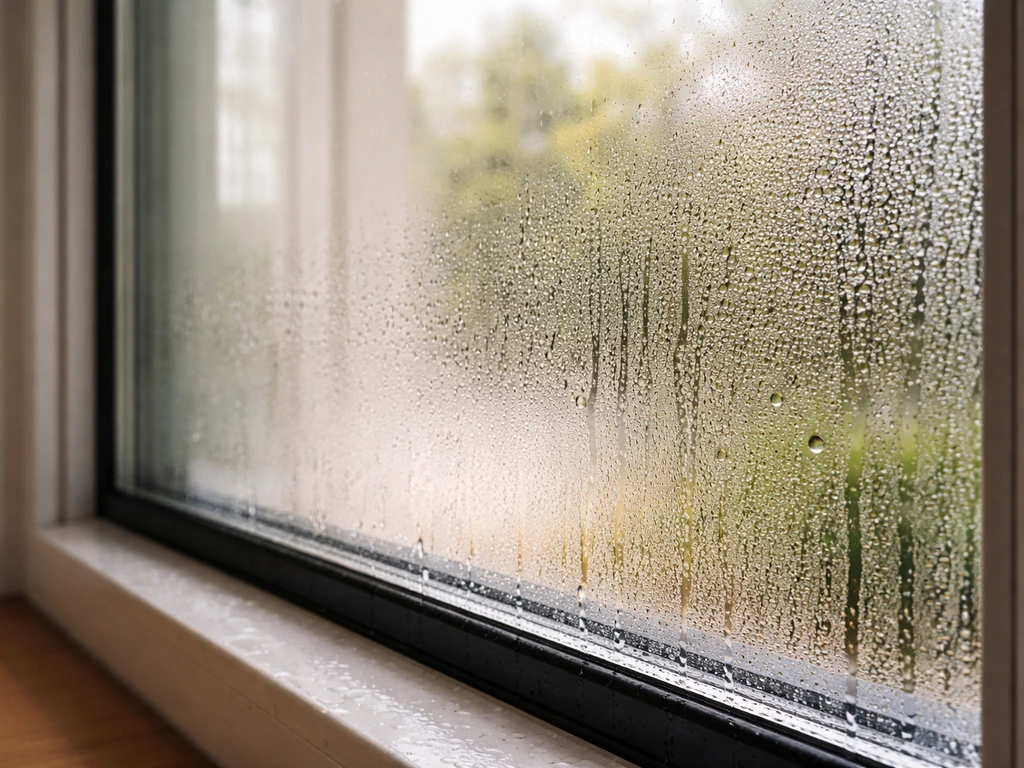
This is the most common complaint in glass-enclosed spaces. Condensation forms when warm, humid interior air contacts cold glass surfaces. In a poorly ventilated sunroom, you can get water running down walls and pooling on frames, which leads to mold, wood rot, and frame corrosion over time. The fix is not complicated but it requires deliberate management: adequate ventilation (openable windows or vents), a dehumidifier or the dehumidification mode on your mini-split, and controlled humidity levels in the space. If you're buying or building, make sure the design includes operable vents or windows, not just fixed glass panels.
Insulated glass unit (IGU) seal failure
Double- and triple-pane glass units have a gas fill between panes that's held in by a perimeter seal. When that seal fails (and they do, especially in glazing that gets heavy direct sun exposure), you get foggy or cloudy glass that can't be cleaned because the condensation is between the panes. IGU seal failure doesn't compromise the structural integrity of the glass, but it kills your view and reduces the thermal performance of the window. Sun-facing glass panels are at the highest risk. Quality matters here: better IGU edge seals and frames that manage thermal expansion well last significantly longer.
Leaks at seams and roof flashing
Sunroom and patio enclosure leaks most commonly show up at the seams between glass panels and at the junction where the sunroom roof meets the existing house wall. This is a flashing and sealing issue. It's not always the glass itself that leaks; it's the caulked or gasket-sealed joints between panels, or the transition flashing at the roof-to-wall connection. Annual inspection of these seams (and recaulking when you see cracking or shrinkage) is the simplest maintenance step you can do to avoid a much bigger repair later.
Frame and screening deterioration
Screen enclosures are the low-maintenance end of this spectrum. Aluminum frames with fiberglass or aluminum screening hold up well, but screens do need replacement every 7 to 15 years depending on UV exposure. Vinyl-framed enclosures are relatively low maintenance but can yellow in harsh sun. Wood-framed structures need periodic painting or staining to prevent rot, especially at base plates and sill areas where moisture collects.
Home value impact: what buyers actually pay for
The honest answer here is that not all sunrooms or enclosures add equal value. A well-built, properly permitted four-season sunroom that matches the home's style and finishes can return a meaningful portion of its cost at resale, and it broadens your buyer pool because it genuinely adds usable living space. A low-quality patio enclosure bolted onto the back of a house, or a sunroom that doesn't match the home architecturally, can actually raise red flags for buyers rather than add value.
There's also a market context issue. In climates where outdoor living is a strong selling point (Florida, Arizona, coastal California), a well-finished enclosed patio or screened room can be a real asset. In northern markets, a four-season sunroom that extends the living season is more compelling. NAR's remodeling impact data reinforces that ROI varies by project quality and regional market, so the assumption that any addition automatically adds dollar-for-dollar value is not reliable.
- Adds the most value: fully permitted, well-insulated four-season sunroom that reads as additional living space on the appraisal
- Adds moderate value: well-built screened enclosure or three-season room in a warm climate where outdoor living is a feature
- Adds uncertain or potentially negative value: unpermitted enclosures, structures with visible deferred maintenance, or additions that clash with the home's architecture or take away functional yard space
- Key buyer concern: any enclosure that looks like it was an afterthought or a DIY project will get scrutinized in an inspection and may require disclosure or remediation at sale
Which option suits you: a direct comparison
| If you... | Best fit |
|---|---|
| Want outdoor space on a tight budget and live in a mild climate | Open or covered patio |
| Want bug and rain protection but mostly use the space in warm months | Screened enclosed patio or three-season patio enclosure |
| Want to use the space 9–10 months out of the year in a moderate climate | Three-season sunroom or high-quality glass patio enclosure |
| Want true year-round comfort and are willing to invest | Four-season sunroom with insulation and ductless mini-split |
| Have a limited budget but want some enclosure now, with potential to upgrade later | Screened patio enclosure as a Phase 1, leaving structure ready for future glass/insulation upgrade |
| Are primarily concerned about home value and resale | Permitted four-season sunroom with quality finishes, or a screened room in a warm climate |
Climate matters more than most homeowners account for. If you're in coastal Southern California, a screened enclosure is genuinely a four-season space because the outdoor temperature rarely dips below comfortable. In Minnesota or the mountain west, that same structure is unusable from October through April without real insulation and heat. Be honest about your climate, not your optimistic version of it.
Your decision checklist and next steps
Before you call a contractor or request a quote, work through these questions. They'll save you time and prevent the most common mismatch between what you picture and what you actually build. A back porch is different from a patio or sunroom because it typically stays open to the elements and is used more seasonally unless it has an added roof or enclosure.
- Measure your existing patio or the footprint you're working with. Most quotes are per square foot, and knowing your approximate size (say, 12x16 or 16x20) lets you do real math on the budget ranges above.
- Decide: open air, covered, enclosed, or conditioned? Be specific about what 'comfortable' means to you. If you want to use the space in January, that answer is a four-season build. If spring and fall is fine, a screened enclosure or three-season room may be enough.
- Check your local permit office or building department website before doing anything else. Search for 'patio cover permit' or 'sunroom addition permit' plus your city or county name. Most jurisdictions post their handouts and fee schedules online.
- Find out your zoning setbacks. Sunrooms and enclosed additions are subject to side and rear setback requirements. Some properties have very little room before hitting the setback line, which limits your buildable footprint.
- Get at least three quotes from licensed contractors. Make sure each quote specifies: insulation type and R-values, glazing type (single/double/triple pane, gas fill), framing system, HVAC approach, and whether permit filing is included in the price.
- Ask each contractor specifically whether the structure they're quoting will require a permit and what that process looks like in your jurisdiction. If a contractor says 'no permit needed' for a fully enclosed glass addition, that's a red flag.
- If you're considering a four-season build, ask about window lead times and whether the contractor recommends ordering glazing before permit approval to avoid a gap between framing and glazing installation.
- Think about how the addition will look from outside. Architectural compatibility affects buyer perception and resale value. A sunroom that looks like it belongs on the house is worth more (and is more enjoyable to live with) than one that looks like it was tacked on.
- Budget a contingency of 10–15% above your quote for foundation surprises, electrical upgrades, or permit revision requests that come up during the review process.
If you're still early in thinking through outdoor structures more broadly, the distinctions between a back porch, a deck, and a patio are worth understanding alongside the sunroom question, since they all affect how you approach permits, construction, and the overall outdoor living flow of your property. A front porch is closer to the home’s entry and social space, while a patio is designed as an outdoor living area in the yard, which can make the tradeoffs feel very different front porch vs patio. If you are deciding between a back porch and a patio, comparing coverage, enclosure level, and year-round usability will help you pick the right fit back porch, a deck, and a patio. The right answer for your home usually becomes clearer once you've mapped out exactly what you have, what you want, and what your climate and budget realistically allow.
FAQ
Is a screened-in patio the same as a sunroom?
No. A screened enclosure typically blocks insects but leaves the space exposed to outside temperatures, so it is usually a three-season option unless it includes insulation, an air barrier, and heat or cooling. If you want true year-round use, ask specifically whether it has thermally broken framing, insulated glass, and a conditioned floor or dedicated HVAC.
Can I convert an enclosed patio into a four-season sunroom later?
Sometimes, but it can be expensive. Retrofitting often requires upgrading the glazing to insulated units, adding insulation to walls and ceiling, correcting the floor thermal boundary, and possibly reworking electrical and HVAC. If the frame, roof structure, or foundation is not designed for a conditioned envelope from the start, permitting and rebuild scope can expand beyond what you expect.
What HVAC system should I expect for a sunroom?
Most four-season sunrooms use a ductless mini-split because it provides independent zoning and avoids tying into existing ducts. If your contractor proposes extending ductwork, confirm that the ducts are properly insulated, properly sized for the sunroom load, and approved by local code, because poor duct design can erase efficiency gains.
Do I need to worry about humidity even if it has vents or openable windows?
Yes. Venting helps, but peak humidity days can still cause condensation on cold glass, especially at night or during shoulder seasons. A simple decision aid is to ask for a humidity plan, such as a dehumidifier or mini-split dehumidification mode, and confirm where drains or water management will go.
How can I tell if a patio enclosure is truly “insulated” enough?
Don’t rely on marketing terms like “insulated enclosure.” Ask what is insulated, and how, for example ceiling and wall insulation type and R-values, whether framing is thermally broken, and whether windows are insulated glass units. Also ask whether the floor is part of the thermal envelope or if there is an unconditioned crawlspace or uninsulated slab beneath.
What’s the biggest mistake people make with floor and foundation for a sunroom?
They assume the existing slab or crawlspace is good enough. Heat loss through an uninsulated slab or air gaps over a crawlspace can make the mini-split run constantly, especially in cold climates. Ask whether the design includes floor insulation and an air-tight thermal boundary at the perimeter before the final build stage.
Do IGU window seals usually fail, and what does failure look like?
Seal failure can happen over time, and signs often show as fogging or cloudiness between the glass panes. The key practical detail is that you typically cannot clear it with cleaning because the issue is inside the sealed unit, so replacement is often the only remedy. Sun-facing exposure increases risk, so quality of the unit and installation matters.
Where do leaks most commonly occur in sunrooms and enclosed patios?
Most leaks show up at transition points, roof-to-wall junctions, and the seams between glass panels, not just through the center of the glass. Ask how flashing and sealing will be handled at those junctions, and whether the design includes an annual seam inspection or maintenance guidance.
How much maintenance should I plan for, especially with glass enclosures?
Plan for more than simple cleaning. Common maintenance tasks include checking caulk or gaskets at panel seams, monitoring humidity control performance, inspecting the roof-to-house connection, and expecting periodic screen replacement if the enclosure uses screens. Also ask whether the installer recommends a maintenance schedule tied to seasonal humidity and temperature swings.
Will a sunroom or enclosed patio always increase resale value?
Not always. Value depends on quality, permits, insulation and HVAC completeness, and regional buyer expectations. A “pretty but seasonal” enclosure or poorly integrated addition can raise questions for buyers, so the practical move is to confirm that it is permitted and built to function like the listing claims, such as being conditioned or clearly marketed as three-season.
What should I ask my contractor before requesting a quote?
Ask for a scope checklist tied to performance, such as insulated glass unit specs, thermally broken frame details, wall and ceiling insulation approach, how the floor and foundation thermal boundary are treated, the dehumidification strategy, and the planned HVAC type. Then ask for an insulation and comfort target, not just a finish plan.
How long should I expect the project timeline to take?
Expect extra time for design and permitting, then a longer installation for a true sunroom compared with a screened enclosure. A useful planning step is to ask the installer how far ahead they recommend ordering windows and glazing during design, since waiting on custom units can delay lock-in and inspections.
Next Article
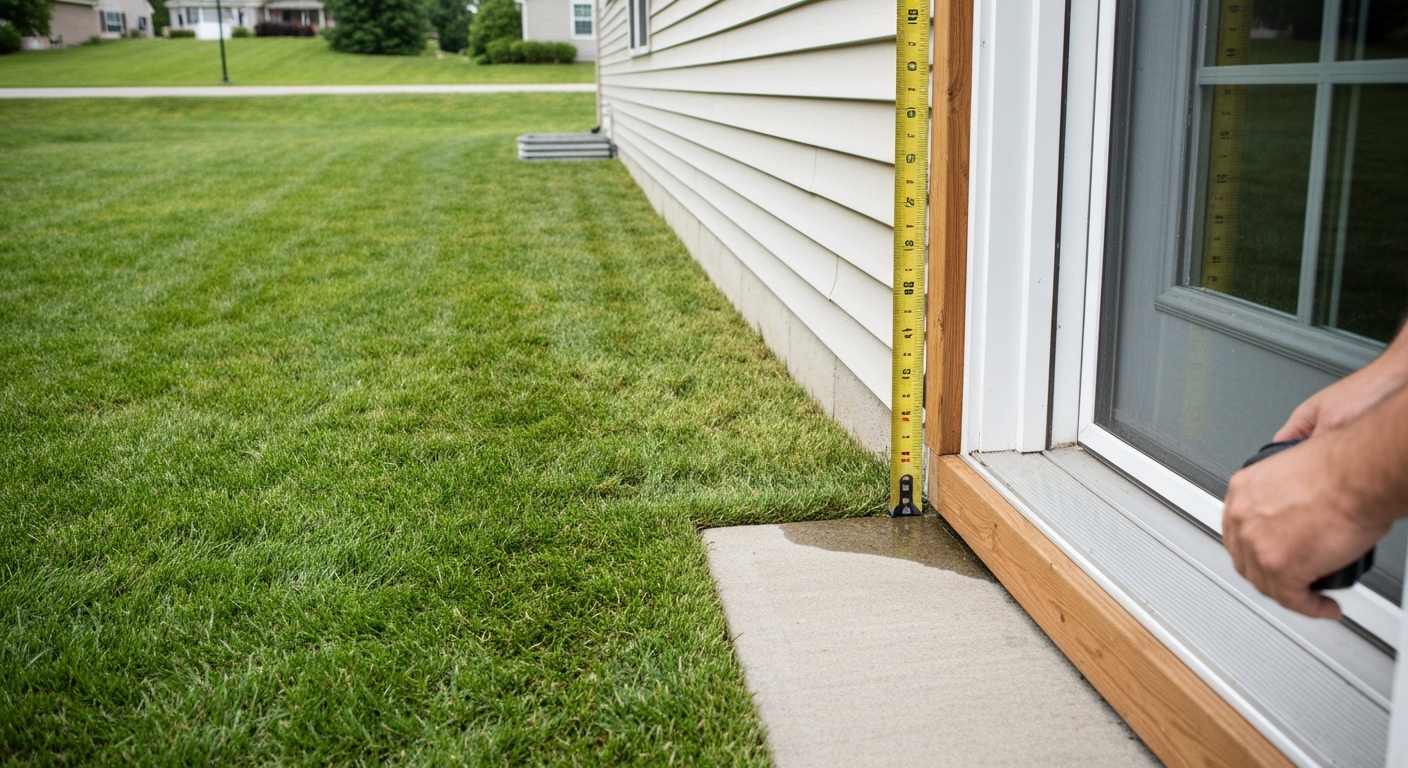
Grass Is Higher Than Patio: Causes, Fixes & Deck vs Patio
Grass higher than patio? Causes, slope checks, repair options, lower lawn, raise patio, or build a deck, with costs & DIY