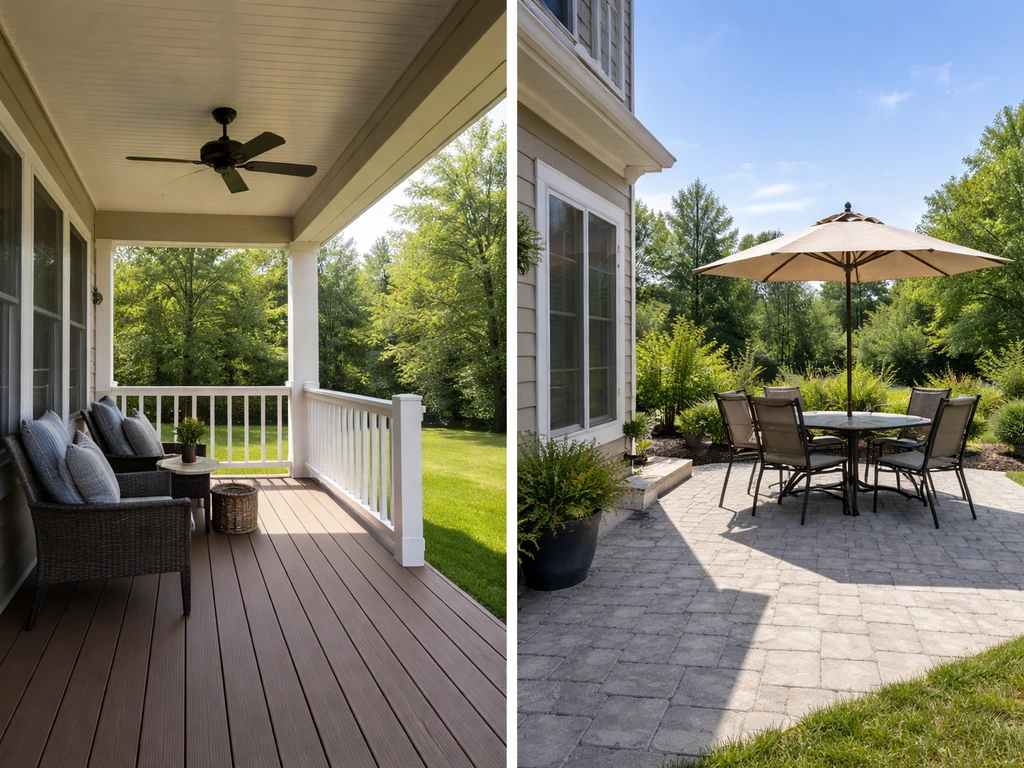
A front porch is a covered, roofed structure attached to the front of your house at the entrance. A front patio is a ground-level paved surface near the front of your home, usually open to the sky. Both can become great outdoor living spaces, but they serve different purposes, cost different amounts to build, and carry different permit requirements. If you want weather coverage and a traditional welcoming entrance, a porch makes more sense. If you want a flexible, lower-cost outdoor surface that's easier to DIY, a front patio is the better bet.
Front Porch vs Patio: Costs, Uses, and What to Build

Miles Hart
5 Jun 2026
What each one actually is
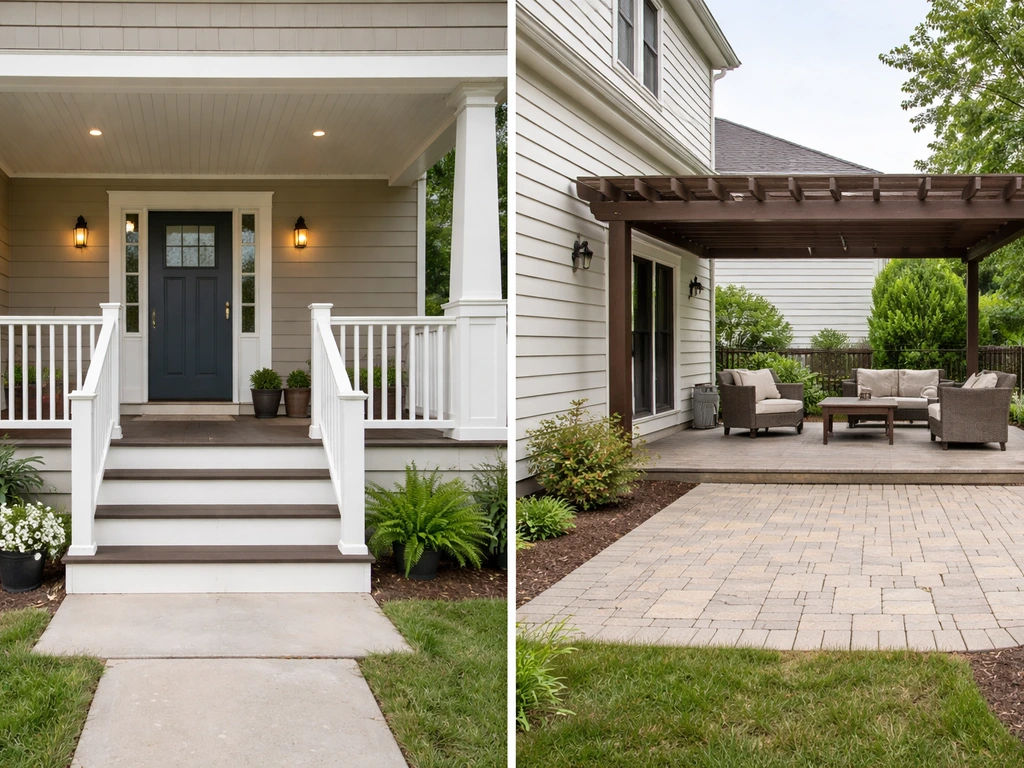
A porch, by most definitions (including how Philadelphia's zoning code puts it), is a covered but unenclosed projection from the main wall of a building. It's structurally attached to the house, has a roof overhead, and typically includes steps, columns, and sometimes a railing. It's a transitional space between outside and inside, and it's been a core part of residential architecture for centuries.
A patio, on the other hand, is just a paved or hardscaped surface adjacent to the home. It's usually at grade level, not elevated, and has no built-in roof. Pavers, concrete, flagstone, and brick are the most common surfaces. Because it's not attached to the structure in any load-bearing way, it's treated very differently by building departments.
The real-world confusion usually comes down to this: a porch is defined by its roof and its connection to the home's entry. A patio is defined by its surface. You can add a pergola or awning to a patio, but it doesn't become a porch just because it has shade overhead. If you're comparing other structure types, the distinctions between decks, porches, patios, and terraces go even deeper, and the differences between a back porch and a front porch also matter when you're planning layout and traffic flow.
Where each one works best on your property
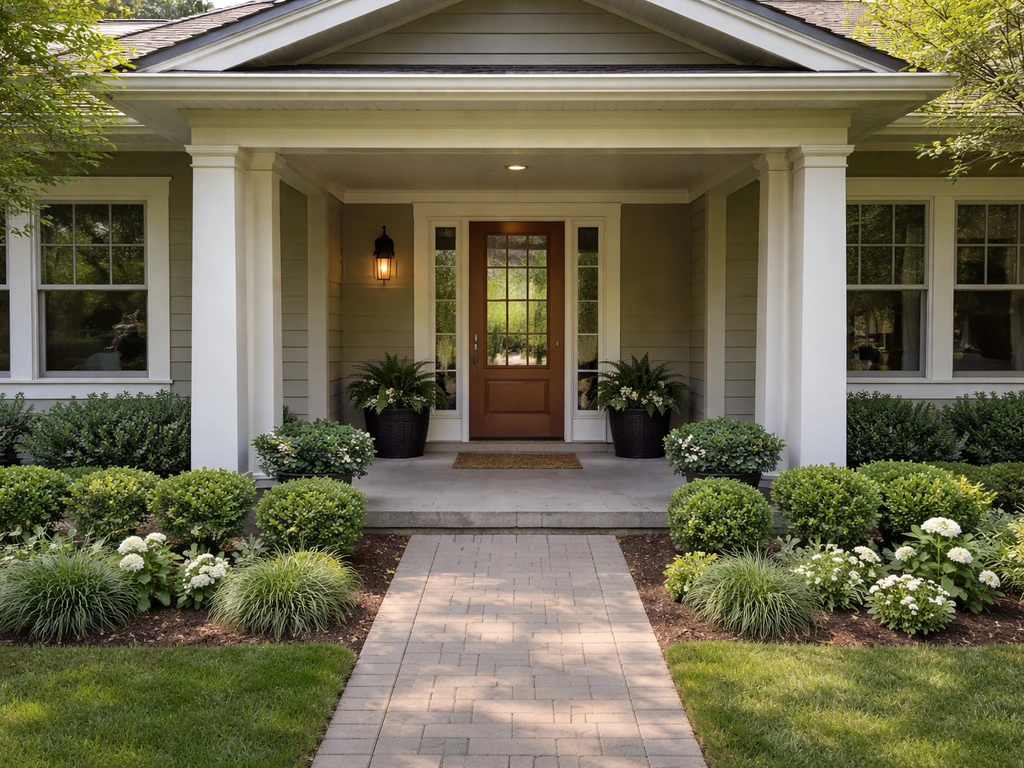
Front porches are almost always tied to the entry of the home. They create a formal approach, frame the front door, and give visitors a shaded place to wait. They work best on homes that are set back at least 15 to 20 feet from the sidewalk, where there's physical room for a covered projection without feeling cramped or blocking sight lines. Narrow lots, homes close to the street, or modern ranch-style homes often don't have the geometry to support a traditional porch.
Front patios are more flexible. You can use one in almost any front-yard layout, including small or shallow lots, urban row homes, or modern houses where a traditional porch wouldn't fit architecturally. A paved front courtyard, a simple bluestone landing surrounded by plantings, or a formal paver terrace can all qualify as a front patio. They don't have to follow the entry axis of the home, which gives you more freedom in layout and orientation.
Think about how you actually want to use the space. If you want to sit outside during a summer rainstorm, drink coffee in the morning without sun glare, or have a place where guests gather before coming inside, a porch delivers that. If you want to create a welcoming, landscaped arrival area, add outdoor seating that isn't tied to the front door, or simply improve the look and function of an unused front yard, a patio gives you more options in how you shape and arrange things.
Cost comparison and what drives the numbers
Porches cost significantly more to build than patios, mostly because they involve structural work: framing, roofing, footings, columns, and often stairs with railings. Current estimates (2026) put a professionally built front porch at $40 to $120 per square foot, with a typical front porch running $6,000 to $18,000 depending on size and materials. A large wraparound porch with premium wood or composite decking, a finished ceiling, and decorative columns will push well beyond that.
Patios are considerably more affordable. A professionally installed concrete or paver patio runs $10 to $30 per square foot installed, depending on the material. Standard poured concrete sits at the lower end. Concrete pavers and natural stone sit higher. A 200-square-foot front patio done in pavers might cost $2,400 to $6,000 installed, compared to $8,000 to $24,000 for a similarly sized porch.
| Feature | Front Porch | Front Patio |
|---|---|---|
| Typical installed cost | $40–$120/sq. ft. ($6K–$18K avg.) | $10–$30/sq. ft. ($2K–$6K avg.) |
| Roof/cover included | Yes (built-in) | No (add-on if desired) |
| Structural attachment | Yes, tied to house framing | No, sits independently on grade |
| Common materials | Wood, composite, concrete | Concrete, pavers, flagstone, brick |
| Annual maintenance | Sealing $3–$5/sq. ft.; repairs $15–$50/sq. ft. | Resealing pavers ~$300–$550; cleaning as needed |
| DIY feasibility | Limited (structural/roofing work) | Moderate to high (especially pavers) |
| Permit typically required | Yes, almost always | Often no (unless elevated or near lot line) |
Maintenance costs follow a similar pattern. A wood porch requires periodic sealing (around $3 to $5 per square foot), repainting, and occasional board replacement ($15 to $50 per square foot for structural repairs). A paver patio is lower effort: cleaning and resealing runs about $300 to $550 when you hire it out, and you can do it yourself for the cost of materials. One caution: avoid power washing paver patios aggressively, since high pressure dislodges the joint sand that keeps the pavers stable.
How each option affects curb appeal and resale value
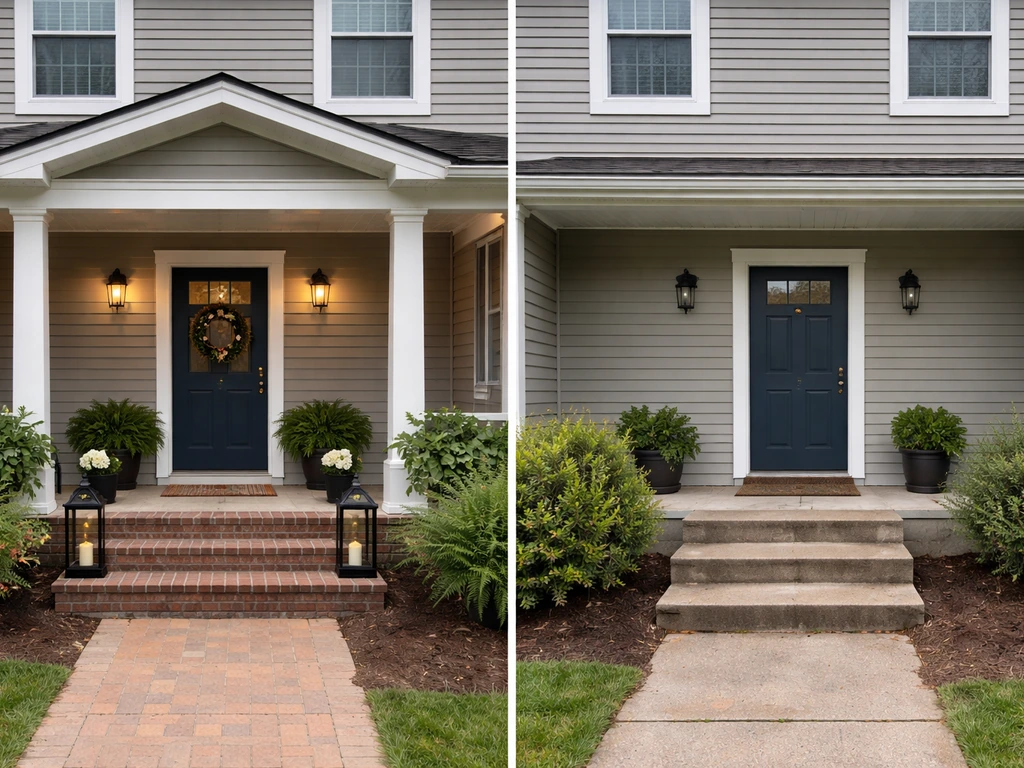
A well-designed front porch almost always improves curb appeal and resale value. It's one of the first things a buyer sees, and a covered, inviting front entry photographs well and signals that the home has been thoughtfully maintained. Appraisers consider exterior condition as part of their comparable-sales analysis, and a porch that's in poor shape (rotting boards, peeling paint, damaged columns) can actually hurt your appraisal. Rocket Mortgage notes that appraisers consider a home’s overall condition, and that maintenance and exterior updates like fresh paint and landscaping can add value, while poor condition can hurt the appraisal Appraisers consider exterior condition. The key is condition: a beautiful porch adds to buyer appeal, and a neglected one detracts from it.
Front patios are a smaller value driver, but they're not meaningless. A neat, well-landscaped paved entry area adds to the overall presentation of the home, especially if the lot is small and there isn't much front yard to work with. Buyers who prioritize outdoor living space respond well to any functional hardscaped area, even in the front yard. What hurts you here is a patio that looks unfinished, has weedy joints, or is mismatched with the home's style.
In practical terms: if you're renovating primarily to sell in the next year or two, a modest paver patio is a lower-risk investment that's unlikely to lose money and easy to maintain during listing. If you're staying in the home longer and the architecture supports it, a front porch is a stronger investment for both lifestyle and resale, provided you keep it in good repair.
Permits, building codes, and what to expect at the permit office
This is where porches and patios diverge most sharply. If you are weighing deck patio porch difference, use these basic definitions to avoid costly mix-ups when planning your front-yard upgrade. A front porch almost always requires a permit. It's a structural addition to the house: it needs footings, roof framing, and attachment points that have to meet local building codes. Philadelphia, for example, requires a zoning permit for any porch construction, erection, or alteration. Most jurisdictions follow similar logic. If your porch is elevated more than 30 inches above grade, guardrails are required under IRC guidelines (minimum 36 inches high). Stair geometry, handrail dimensions, and footing depth (at least 12 inches below undisturbed ground, often deeper in frost-prone climates) are all code-governed.
A simple ground-level patio usually doesn't require a permit. A basic concrete slab or paver surface at grade, not attached to the structure, and not near a property line is typically below the permit threshold in most municipalities. However, permits can be triggered if your patio is elevated (like a raised terrace), close to a property line or easement, includes electrical work (outdoor lighting, outlets), or involves a structural cover like a pergola or patio roof. The Oregon Residential Specialty Code, for instance, has an entire appendix specifically for deck, patio, and porch cover structures, which means once you add a roof to a patio, it moves into different regulatory territory.
- Front porch: almost always requires a building permit and sometimes a zoning permit
- Front patio at grade: usually permit-free unless elevated, near property line, or covered
- Adding a roof or cover to a patio can trigger permit requirements
- Porches elevated over 30 inches above grade require guards (36 inches minimum height)
- Footing depth for structural elements must meet frost-line requirements in your area
- Historic districts often have additional approval layers for any visible front-facade changes
- Check setback requirements before finalizing placement near property lines
If you're in a historic district or HOA-governed community, expect an extra review layer regardless of which option you choose. Changes to the front facade, including porch additions or even significant hardscaping, often need design approval before a permit is issued.
Weather protection, privacy, and how you'll actually use the space

This is probably the most practical difference on a day-to-day basis. A covered front porch lets you sit outside in rain, extend your usable season into early spring and late fall, and avoid direct afternoon sun. The roof is built in. You don't have to add anything. If you want even more weather coverage or insect protection, you can screen a porch or add side panels, which pushes into screened-porch territory (with its own cost range, roughly $5,500 to $12,000 for a screened-in upgrade).
A front patio is fully exposed unless you add a separate cover. A pergola, awning, or freestanding shade structure can help, but these are added costs and separate projects, and they don't give you the same solid weather protection as a proper porch roof. If you live somewhere with hot summers or frequent afternoon storms, that difference matters a lot. In mild, dry climates, an open patio in the front yard can be perfectly pleasant for most of the year.
Privacy is a real consideration for front-yard spaces, whichever you choose. Front porches face the street and are inherently more public-facing. Many homeowners add landscaping, lattice, or railings to create a sense of enclosure. A front patio, depending on layout, can be positioned to face a side garden or be partially screened by plantings or fencing, giving you more control over sightlines. If true privacy is a priority, a back porch or patio will always outperform a front option, and that comparison is worth thinking through before you commit to a front-yard project.
DIY vs. hiring a pro: what's realistic
A front patio is one of the more DIY-friendly outdoor projects you can take on. Installing concrete pavers at grade level requires renting a plate compactor, laying a gravel base, setting pavers, and filling joints with polymeric sand. A handy homeowner can complete a modest front patio (150 to 200 square feet) over a long weekend. You'll save most of the labor cost, which can be 50% or more of the total installed price. Poured concrete is less DIY-friendly because mixing and finishing large slabs requires skill and timing.
A front porch is a fundamentally different project. It involves structural framing, roof construction (which needs to tie into the existing roofline or be properly waterproofed), footing excavation, and in most cases a permit inspection. Unless you have real carpentry and framing experience, this is a project to hire out. The consequences of structural errors (sagging rooflines, inadequate footings, improperly fastened ledger boards) are expensive to fix and can create safety issues. A licensed contractor will handle the permit, schedule inspections, and carry liability insurance.
A realistic timeline for a DIY paver patio is one to two weekends for a small to medium project. A professionally built front porch typically takes one to three weeks from start to finish, depending on size, complexity, and contractor schedule. Permit processing time (often one to three weeks) adds to the total timeline and should be factored in before you start planning a move-in date or seasonal deadline.
How to evaluate your space and make the call
Before you decide, spend 15 minutes walking your front yard and doing a few measurements. How far is your front door from the sidewalk or street? If it's less than 10 feet, a traditional porch probably won't fit without encroaching on setbacks. What does the existing roofline look like? A porch addition needs a logical tie-in point. What's your front-yard soil grade? A sloped front yard often handles a patio better than a flush porch platform.
- Measure the distance from your front door to the property line and note your local setback requirement (usually 5 to 15 feet minimum from the street or sidewalk)
- Check whether your home's roofline and eaves have a logical attachment point for a porch roof
- Look up your municipality's permit requirements: search '[your city] building permit porch' or '[your city] patio permit' to get local specifics
- If you're in an HOA or historic district, request the design guidelines before you sketch anything
- Decide on your primary use case: covered seating and weather protection point to a porch; low-cost hardscaping and design flexibility point to a patio
- Get at least two contractor quotes if you're leaning toward a porch, and ask specifically what's included in permitting and inspections
- For a DIY patio, plan your base layer depth (typically 4 to 6 inches of compacted gravel plus 1 inch of bedding sand) before ordering materials
The most common mistake homeowners make is choosing based on aesthetics alone without checking setbacks and permits first. The second most common mistake is underestimating porch maintenance over time. A wood porch that isn't sealed and painted regularly will deteriorate faster than most people expect, especially in humid climates. If you want the look of a porch without the ongoing upkeep, composite decking and PVC trim materials cost more upfront but save time and money over a 10- to 15-year horizon.
If you're still on the fence, think about the portico vs. porch vs. patio comparison, which adds another option (a portico is a covered entry projection without the full porch platform) that sometimes fits where a full porch won't. The right choice almost always comes down to three things: your lot geometry, your local code environment, and how you realistically want to use the space on a regular Tuesday, not just during a summer party. If you want to weigh weather coverage, privacy, and cost side by side, this sunroom vs patio comparison can help you decide what fits your home best.
FAQ
If I add an awning or pergola to a front patio, does it still count as a patio or does it become a porch?
Yes, but the definition is about how it is built and attached. A patio that gets an attached roof or a fully supported overhead structure tied into the house can be treated differently by permitting and inspections. If you want coverage and you are open to paying for structure, a porch is often the clearer, code-aligned route.
How can I tell the difference between a porch and a patio in the real world when the exterior design looks similar?
Look for a “ledger” or attachment pattern and the type of foundation. If the structure is supported by footings and mechanically attached to the house framing, it is typically treated as a porch or an addition. If it is only resting at grade (no structural attachment to the building), it is more likely to be treated as a patio, even if it looks similar at first glance.
What are the biggest design details that affect how well a front porch or patio performs in rain or snow?
For weather and year-round use, prioritize roof form and drainage details. A porch roof needs proper flashing where it meets the house, gutters or splash protection at the edges, and a plan for melt water and snow loading if relevant. These items are usually not required for an open patio, so cost can swing depending on roof detailing.
Do I need different groundwork and drainage planning for a front porch versus a front patio?
Plan for different base and drainage strategies. Pavers typically need a compacted gravel base and stable joint sand, while a slab often needs correct subgrade preparation and expansion joints to reduce cracking. Also confirm where roof runoff will go if you build a porch, so water does not pool at the entry.
My front door is very close to the sidewalk, what options do I have if a traditional porch likely violates setbacks?
If your front door is too close to the property line or setback, you may still be able to improve the arrival area without building a full porch. Common alternatives include a smaller ground-level paver landing, a framed walkway with landscaping edges, or a separate detached shade structure that stays within setback rules.
Which option tends to help resale more, and what kinds of issues most often turn buyers off?
Yes, and it can be the deciding factor for which one to choose. A porch improves sheltered “waiting space” and photographs well, but if it is low quality or neglected it can hurt buyer perception. A patio is a smaller commitment, so it usually has a lower downside, but an unfinished-looking surface, shifting pavers, or messy joints can still create negative curb appeal.
If I want outdoor lights or an outlet near the seating area, how does that change permitting for a front porch vs patio?
In many areas, electrical for outdoor lighting, outlets, and fans can trigger permits regardless of whether you choose a porch or patio. The practical step is to sketch your lighting locations first, then ask the building department whether the same permit applies to “covered” and “uncovered” structures in your zone.
In an HOA or historic district, is a front porch or a front patio usually easier to get approved?
HOA and historic review often focus on visual compatibility. A porch can be harder because it changes the facade massing, rooflines, columns, and sometimes materials. A patio can still be reviewed, but it may be easier if you match existing masonry, keep heights low, and use materials that blend with the streetscape.
How should I evaluate privacy and sightlines when choosing a front porch versus a front patio?
Front porches are usually more exposed to street noise, headlights, and visitor visibility. If you need some privacy, consider orientation, partial screening, and landscaping that does not block sight lines at the entry. For patios, you can sometimes place seating to face a side garden or use taller planters and fencing within allowed heights.
Which option is safer and more comfortable to use in winter conditions, and what should I plan for at the entrance?
A practical approach is to start with access and circulation. If you want a smooth path during ice or heavy rain, a porch with steps and a sheltered entry can reduce slips at the threshold. If you choose a patio, ensure the landing is level, uses slip-resistant materials, and includes a slight grade away from the house.
What maintenance tasks should I realistically budget for over the next 5 to 10 years?
For maintenance, the “type” of upkeep differs. Porches typically require periodic inspection for rot, paint failure, fastener corrosion, and ledger or flashing leaks. Patios require keeping weed growth down, maintaining joint sand, and addressing any settlement early before it becomes a bigger re-laying job.
Can I build a simpler porch or patio now and upgrade it later (rails, screening, lighting, or a cover) without redoing everything?
Yes, and planning the base before you build is key. If you might add steps, screens, or rails later, choose materials and framing that can support those upgrades. For patios, pre-plan conduit routes if you will add power later, and confirm that the edging and base can handle future modifications without lifting pavers.
Next Article
Back Porch vs Patio: Differences, Costs, and Which to Choose
Back porch vs patio: definitions, layouts, materials, costs, maintenance, climate tips, and clear choosing checklist.