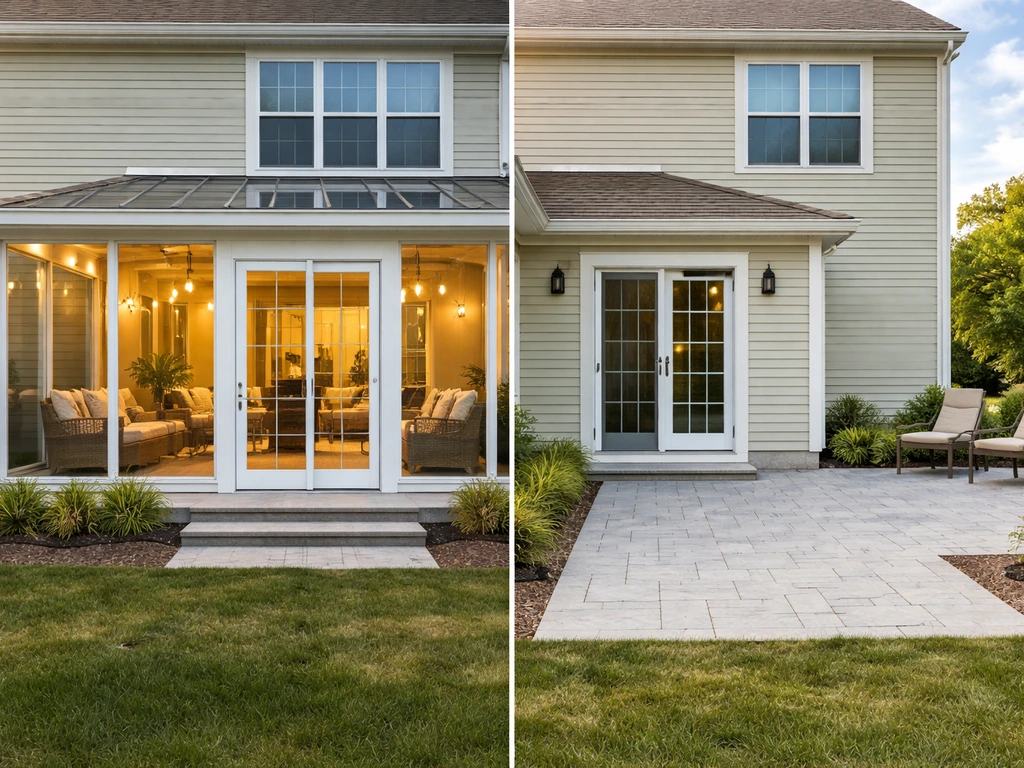
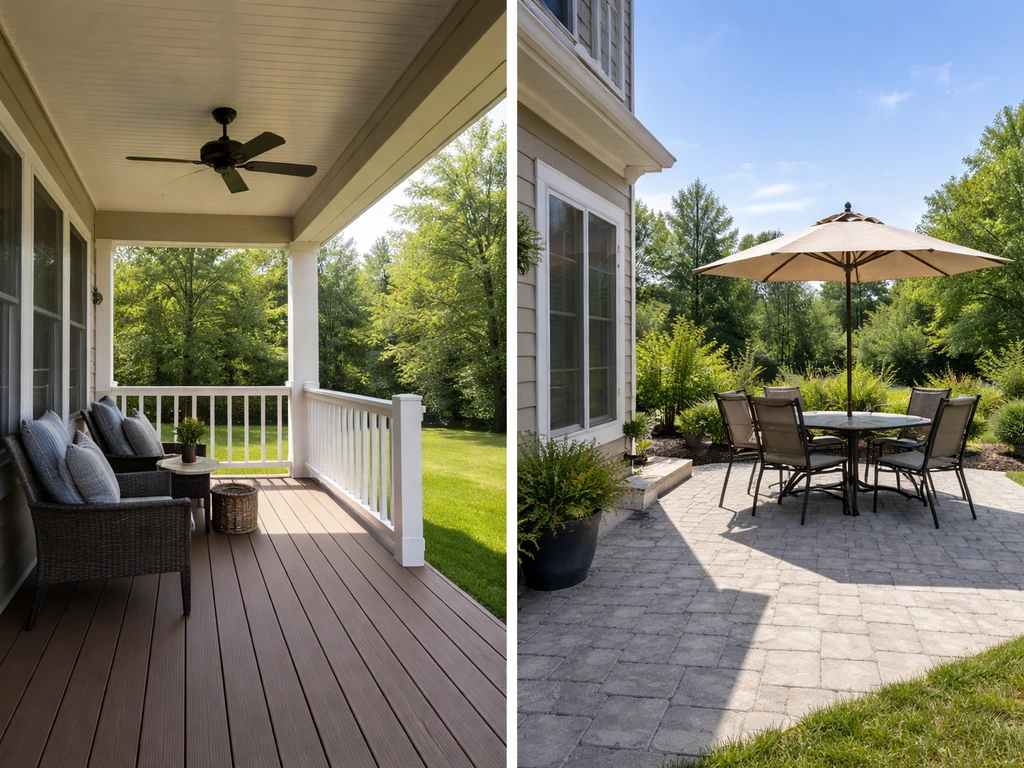
A back porch is a covered, attached structure that's built as part of the house, with a roof overhead and typically a raised floor. A patio is a ground-level outdoor surface, usually concrete, pavers, or brick, that sits beside or behind the house without a roof or structural connection to the building. The deck patio porch difference is mostly about whether the space is roofed and structurally tied to the house or left open at ground level. Both give you outdoor living space, but they're fundamentally different in how they're built, what they cost, and what they actually feel like to use day to day.
Back Porch vs Patio: Differences, Costs, and Which to Choose

Miles Hart
28 May 2026
What each one actually is (plain-English definitions)
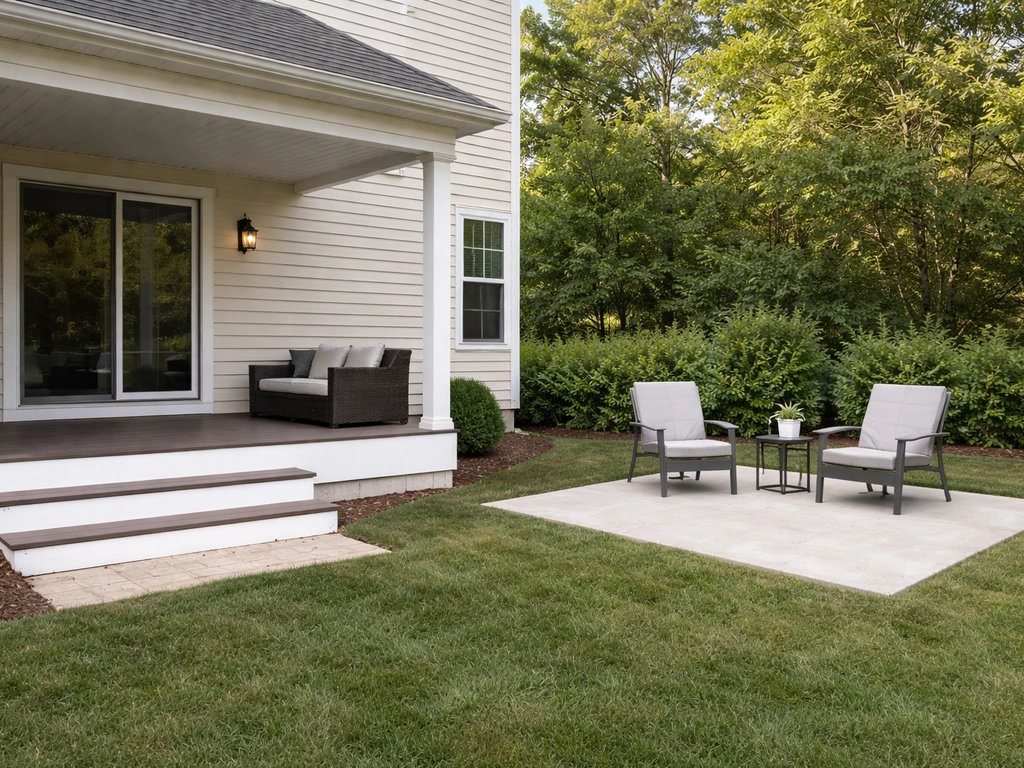
The word 'porch' in American home use almost always means a covered platform attached to the house that shares the building's roofline or has its own dedicated roof structure. According to InterNACHI, a porch is a wooden structure that forms a covered entrance to a doorway, typically featuring a roof, steps, and support posts or columns tied structurally to the house wall or foundation. On the back of the house specifically, it functions less as an entryway and more as an outdoor room, shaded and sheltered, where you can sit through a rainstorm or enjoy a summer evening without cooking in direct sun.
A patio is simply an outdoor surface area connected to a home for sitting, dining, or entertaining. Merriam-Webster and Dictionary.com both describe it as an open-air outdoor area adjacent to a house, and that openness is the key. There's no overhead covering by definition, no structural tie to the house, and no raised platform. It sits at or very near grade level, which is why patios are typically made from concrete slabs, pavers, brick, or compacted gravel rather than wood framing.
One area of common confusion: a 'covered patio' with a pergola or full roof cover starts blurring the line between patio and porch territory. If you add a solid roof over a concrete pad and attach it to the house, it's functionally acting like a porch even if you call it a covered patio. The same goes for screened porches vs. screen rooms built over a patio slab. Keep that in mind as you read, because the building requirements, costs, and maintenance change significantly the moment you add a roof to anything.
Layout and function: where people put each and what they actually do there
A back porch is almost always positioned directly at the rear exit of the house, most commonly off the kitchen, dining room, or living room. Its physical connection to the house means you step right out onto it, so it becomes a daily-use space, not just a weekend destination. The roof makes it usable in light rain, extends morning coffee hours into drizzly days, and creates a shaded zone during the hottest part of the afternoon. Because it has a defined structure with columns or walls, it also gives you a sense of enclosure and privacy that an open patio can't replicate without added fencing or landscaping.
Patios tend to work differently. That means a patio can be a great low-structure alternative when you are weighing patio vs deck vs terrace for your outdoor plans Patios. Their ground-level, open footprint means they can be shaped and sized to fit almost any backyard, including irregular or sloped lots after some grading.
They're naturally better for larger gatherings because you can spread furniture, a grill, a fire pit, and planters across a broad surface without columns in the way. But because they're open to the sky, sun exposure and rain are your reality. Many homeowners add a pergola, shade sail, or freestanding umbrella to a patio to deal with this, which is worth budgeting for if you plan to use it through hot summers.
Privacy, accessibility, and traffic flow
Porches sit higher than grade and typically require steps up from the yard, which can be a barrier for households with mobility needs. Patios are grade-level or close to it, making them significantly more accessible for wheelchairs, walkers, or toddlers. If accessibility matters in your household, that's a real factor, not just a nice-to-have. Porches also tend to have a more defined traffic flow (you enter and exit through the house door), while patios can be designed with multiple access points around the yard.
Materials, construction, and site requirements
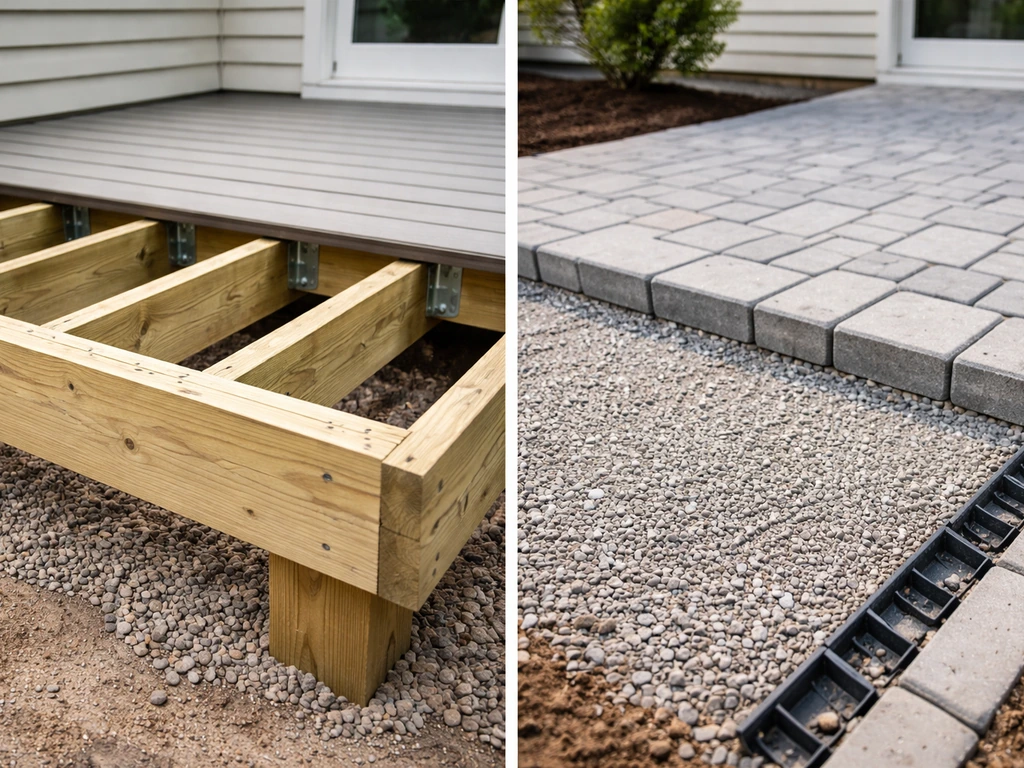
Porches are built like a small addition to your house. A standard wood-framed back porch uses pressure-treated lumber for the floor framing, deck boards (composite or pressure-treated wood) for the surface, posts or columns for vertical support, and a roof structure that ties into the existing roofline or uses its own rafters and sheathing. That roof connection is what makes it a porch rather than a deck, and it's also what makes it a more complex, more expensive build. Many jurisdictions treat a porch with a roof as a structural addition, meaning you'll likely need a permit, engineered drawings, and footings that extend below the frost line, a requirement spelled out in the IRC for any supported structure exposed to freeze-thaw cycles.
Patios are fundamentally a ground preparation and surface installation project. A concrete slab patio involves excavating a few inches, compacting a gravel base for drainage and stability, and pouring a reinforced concrete slab typically 4 inches thick. Paver patios involve a more labor-intensive base of compacted gravel and sand before the pavers are set and jointed. According to Home Depot's installation guidelines, the finished patio surface should slope approximately 1/4 inch per foot away from the house to prevent water pooling and foundation issues. That drainage requirement is easy to miss on DIY projects and almost always shows up as a problem later if ignored.
| Feature | Back Porch | Patio |
|---|---|---|
| Typical surface material | Composite or pressure-treated wood | Concrete, pavers, brick, gravel |
| Overhead covering | Yes, roof required by definition | No (unless covered patio added) |
| Structural connection to house | Yes, load-bearing | No |
| Height above grade | Raised, requires steps | At or near grade level |
| Permit typically required | Yes, usually | Sometimes (slab size/city rules vary) |
| Footing/frost depth requirements | Yes for posts/columns | Minimal unless attached |
| Drainage requirement | Roof gutters/downspouts | Surface slope 1/4" per foot |
| Site prep complexity | Moderate to high | Low to moderate |
What each one costs and what moves the number
Back porches carry a wider cost range because they involve more structural work. A basic screened or open back porch addition typically runs between $10,000 and $30,000 professionally installed, depending on size, roof complexity, and whether it's simply extending an existing roofline or building a new one. A fully enclosed or four-season porch can push past $50,000. The big cost drivers are the roof structure, footings, columns, and any electrical or ceiling fan work. Since it's treated as a structural addition, labor and permitting costs are higher than they are for a patio.
Patios are generally the more budget-accessible option. A basic poured concrete patio (around 200 to 400 square feet) typically costs $1,500 to $5,000 installed, with regional labor variation. A paver patio in the same size range usually runs $3,000 to $10,000 depending on paver style and the complexity of the base prep. Stamped concrete can push toward the higher end at $8 to $18 per square foot installed. The biggest budget swings on a patio come from site grading (if your yard isn't level), drainage solutions, and paver material choice. Natural stone patios like flagstone can reach $15 to $30 per square foot installed.
One honest budget note: if you want to add a pergola, shade structure, or full roof to your patio later, budget for that from the start rather than treating it as optional. A basic freestanding pergola adds $2,500 to $6,000 installed, and a solid covered patio roof can easily run $10,000 to $25,000 depending on attachment method and materials. At that point, you're approaching porch territory in cost anyway.
Maintenance and weatherproofing differences
Wood porches demand regular attention. Pressure-treated and painted wood surfaces need repainting or restaining every two to four years depending on sun and moisture exposure. Roof flashing, gutters, and any ceiling material need annual inspection because a small roof leak on a porch can damage the framing quickly and expensively. Composite decking on a porch floor significantly reduces surface maintenance compared to wood, but it doesn't eliminate the need to maintain the roof, columns, and any wood trim or railings. In humid climates, rot and mildew on wood structural members is a real concern that needs monitoring.
Patios are lower-maintenance overall, but they're not zero-maintenance. Concrete slabs can crack over time, especially in climates with hard freeze-thaw cycles, and sealing the slab every two to three years helps protect against staining and moisture infiltration. Paver patios need joint sand replenished periodically and some form of weed control in the joints, whether polymeric sand, a sealant, or manual weeding. Because patios sit at grade level with no roof, they collect leaves, algae, and moss in shaded yards and need periodic cleaning. In colder climates, pavers handle freeze-thaw cycles better than slabs in many cases because the joints allow for slight movement without cracking.
DIY vs. hiring a pro: what's realistic for each
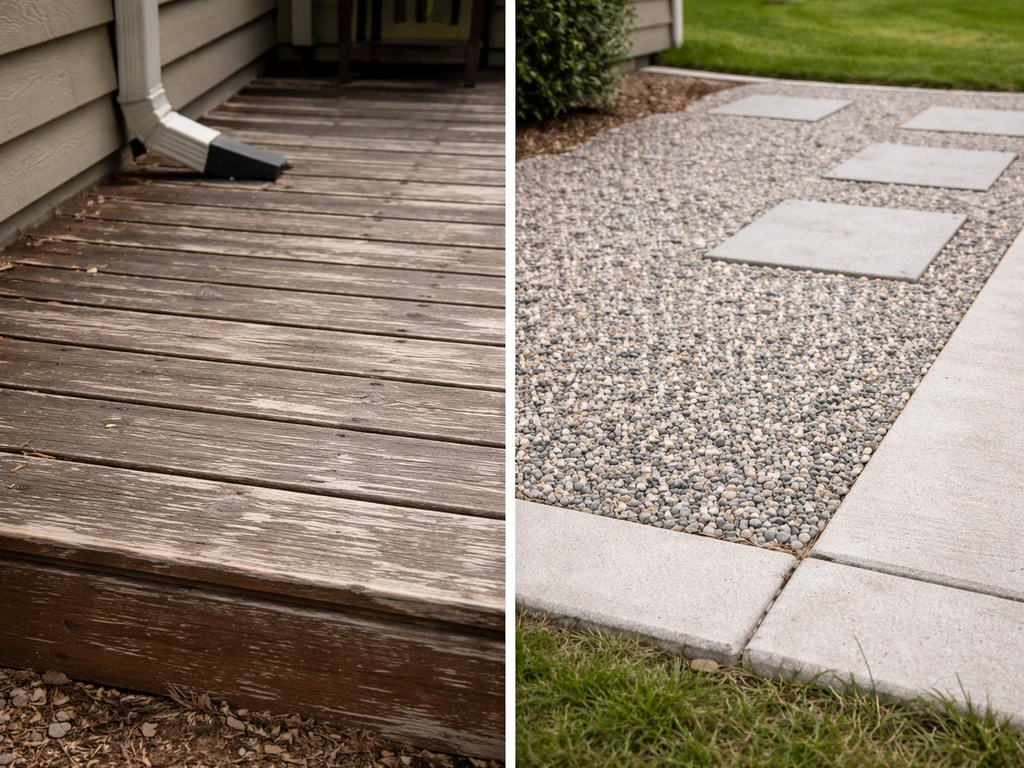
A patio is realistically within DIY reach for a motivated homeowner, especially a gravel or simple paver patio on a relatively flat lot. The tools involved (plate compactor, level, rubber mallet, circular saw with a diamond blade for cutting pavers) are rentable, and the skills are learnable from solid step-by-step resources. A concrete slab requires more experience or a concrete contractor because mixing and finishing concrete on a larger pour is genuinely difficult to get right, and a bad pour is expensive to fix. Budget for a concrete contractor if the slab is larger than about 100 square feet or if your site has drainage complexity.
A back porch addition is much harder to DIY well. The structural connection to the house, the roof framing and flashing, the footing work, and the permit process all point toward professional installation unless you have real carpentry and framing experience. Getting the roof tie-in wrong leads to leaks. Getting footings wrong in a freeze climate leads to heaving and structural movement. If you want to save money on a porch, focus on choosing simpler finishes rather than trying to handle the structural work yourself.
There is a middle path: if you have an existing concrete porch slab, adding a pergola or patio cover yourself is far more accessible than building a porch from scratch. Several kit-based pergola systems exist that a homeowner with basic power tools can install in a weekend, and they meaningfully change how usable and shaded a back porch or patio feels.
Home value and resale considerations
Both back porches and patios add usable outdoor living square footage, which buyers notice and value. A well-built back porch, especially a screened porch in a humid southern climate or a four-season porch in a northern climate, can be a strong selling feature because it extends usable living time outdoors. Buyers in the Sun Belt especially value a covered, shaded outdoor space that functions through long hot summers. The trade-off is that porches are expensive additions and you rarely recoup 100% of the cost at resale, though estimates for covered additions typically run in the 50 to 75% cost-recoup range.
Patios are often cited as high-ROI improvements precisely because they cost less to install and are widely appealing to buyers. A clean, well-designed paver or concrete patio with good drainage consistently shows up on real estate agents' lists of improvements that help homes sell faster. It adds outdoor functionality without the risk of buyer concern about roof maintenance or structural condition that can come with a porch addition. If your goal is resale within a few years, a quality patio often delivers better value for money than a full porch build.
How climate should shape your decision
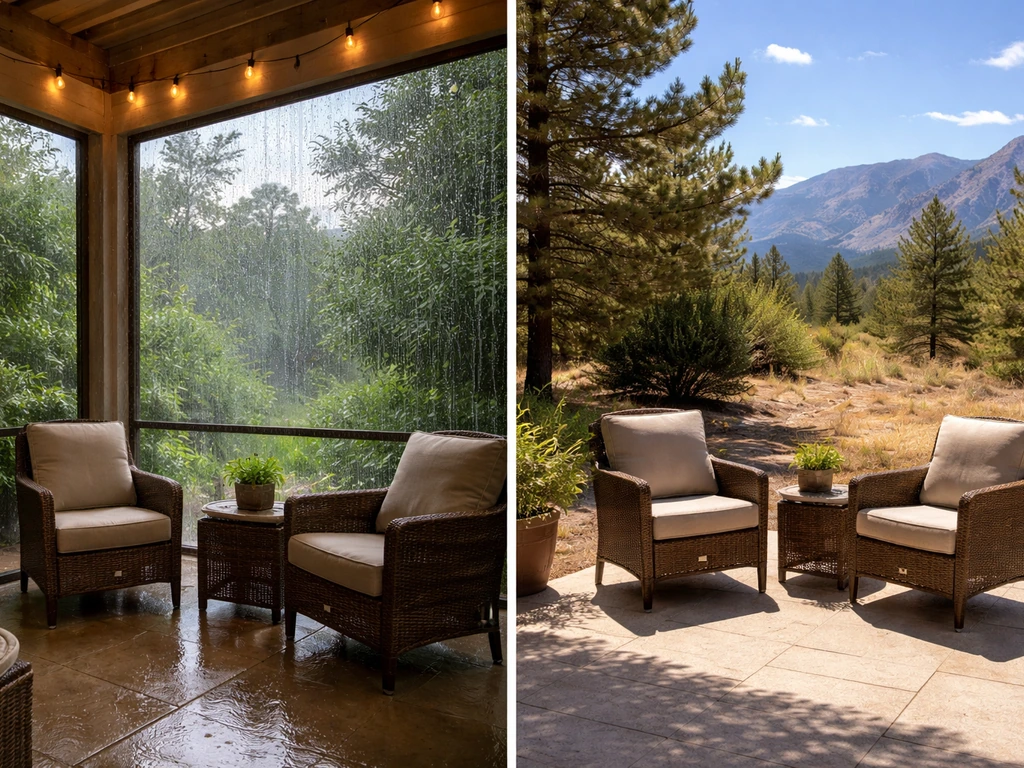
Climate is probably the single most underrated factor in this decision. In the Southeast, Gulf Coast, and Pacific Northwest, where rain is frequent and summers are hot and humid, a covered back porch pays for itself in usability because you can actually spend time on it year-round. In those climates, a patio without shade or cover is often uncomfortable or unusable for large parts of the year. Screening adds bug protection in areas with mosquito seasons, which is another strong argument for a porch in those regions.
In drier climates like the Southwest and Mountain West, an open patio is perfectly usable for most of the year, and the cost of adding a porch roof may not be justified by the weather. In freeze climates like the Midwest and Northeast, both structures need to account for frost: patios need proper drainage to prevent heaving, and porches need footings that extend below the frost line (the IRC specifically addresses this for any supported structural post or column). In those climates, a patio's lower profile and material flexibility (pavers especially) often make it the more durable low-maintenance option over the long haul.
Choose porch or patio: a quick decision guide
Here's a practical breakdown by common homeowner scenario:
| Your situation | Better fit | Why |
|---|---|---|
| Humid, rainy, or buggy climate | Back porch (screened) | Roof and screens make it usable; open patio isn't |
| Dry climate, plenty of sun | Patio | Open air is comfortable; a pergola adds shade cost-effectively |
| Small yard, tight budget | Patio | Lower cost, flexible sizing, no structural complexity |
| Frequently entertaining groups | Patio | Open layout, no column obstructions, easy furniture arrangement |
| Daily quiet use (coffee, reading) | Back porch | Covered, enclosed feel is better for daily routines |
| Accessibility needs (wheelchair, walker) | Patio | Grade-level, no steps required |
| Selling in 1-3 years | Patio | Higher ROI relative to cost, broad buyer appeal |
| Long-term homeowner, cold winters | Porch (consider 3-season) | Extends outdoor season considerably |
| Renter or rental property | Patio | Lower cost, simpler to install, no structural permit complexity |
Your next steps: how to plan this today
Before you contact a contractor or price materials, do this groundwork first. If you are still mixing up portico vs porch vs patio, mapping each term to its cover, elevation, and connection to the house will help you pick the right option faster. It will save you time, money, and frustration.
- Measure your available space: tape out the footprint of where your porch or patio would go. Note the distance from the house to property lines, fences, and any utilities. Call 811 (Dig Safe) before any excavation.
- Assess your yard grade: walk the area after a rain and observe where water flows. A patio needs positive drainage away from the house. A sloped yard may require grading costs before you can install either option.
- Check HOA and permit requirements: contact your HOA if applicable, and call your local building department to ask what permits a back porch addition or patio installation requires in your municipality. Some cities require permits for concrete pads over a certain size.
- Define your must-haves: write down the three things you want most from the space (shade, privacy, accessibility, entertaining capacity, year-round use). That list will guide material and structure decisions.
- Get at least three contractor bids: for a porch, get bids from licensed contractors who include permit costs and footings in the quote. For a patio, get bids from hardscape installers who specify base depth and drainage slope in writing.
- Budget for the complete project: include furniture, lighting, and any shade additions in your budget from day one so the total picture is clear before you start.
If you're still deciding between these two and related options (like a deck instead of a porch, or a sunroom instead of a covered patio), those comparisons are worth working through separately since the cost and construction differences are significant. The concepts covered here for back porches also apply closely to front porch comparisons with patios, where the design priorities shift more toward curb appeal but the structural principles are the same.
FAQ
Do I always need a permit for a back porch, and what about a covered patio roof?
Check the zoning or building code language for “porch,” “covered accessory structure,” and “deck with roof,” because the moment a roof is added and attached, many jurisdictions require permits, footings sized for frost depth, and sometimes engineered load calculations, even if it sits behind the house.
If I build a patio now, can I add a porch-style cover later?
Yes, but do it intentionally: if you add a roof later without reworking the base, you can trap water and accelerate slab cracking or wood rot. Plan the drainage slope away from the house and confirm the existing slab or subframe can handle new roof loads and connections.
Which option feels cooler in humid summers, a back porch or a patio?
The ceiling height and airflow matter. Porches that are fully enclosed can create heat buildup in summer unless you design for ventilation, ceiling fans, or operable panels. Open or screened porches generally feel cooler and stay usable without conditioning.
What water and drainage problems should I watch for on each option?
Look for “water management” details rather than just materials. For patios, confirm the slope away from the house and the plan for runoff paths. For porches, confirm flashing at roof-wall intersections, gutter routing, and how downspouts avoid saturating porch footings.
Which is more likely to have long-term structural problems, a back porch or a patio?
Patios usually have fewer structural failure points because they are surface installations on a compacted base, but they still need joint maintenance. Porches have more risk points tied to posts, ledger or roof tie-in, and flashing, which is why small roof leaks can turn into expensive framing repairs.
If I mostly want shade for outdoor dining, is a patio still the right choice?
For real comfort, you often need a shade system on a patio, like a pergola, shade sail, or umbrellas, and you need it placed so it does not block door access. If you already know you want consistent shade for dining or a grill area, a back porch is usually a more straightforward path.
How do steps, thresholds, and accessibility compare between a back porch and a patio?
Budget for “transition areas” like steps, handrails, and level flooring. A back porch typically needs steps and landing design to align with the interior door height, while a patio can be easier to level and access, especially if you want a continuous path from the house.
Which option is better on a sloped or uneven yard?
Start by verifying the yard’s current grade and how much leveling or grading it will take. A sloped lot can be workable for patios but may drive up base prep and retaining elements. Porches are tied to the house elevation, so the cost shifts to stairs, footings, and leveling the porch deck.
How can a “covered patio” end up being functionally a porch?
Yes, but the “label” can mislead. A “covered patio” that has a roof attached to the house and designed as a load-bearing addition often behaves like a porch in permitting, engineering, and maintenance. The practical test is whether it has structural tie-ins and a weather-sealed roof envelope.
Which performs better through freeze-thaw cycles, paver patios, concrete patios, or back porches?
In freeze-thaw climates, evaluate how the design handles movement. Patios often tolerate minor shifts through joints in pavers, while concrete slabs rely heavily on proper base prep and drainage. Porches require footings below the frost line and careful attention to post and column anchoring.
Do I need to plan electrical differently for a back porch vs a patio?
Prioritize electrical only where it will be used. Many homeowners add outlets, lighting, and ceiling fan wiring for a porch, while patios typically use exterior-rated extension paths at first or plan for buried conduit. If you want power for a grill, consider future locations before finalizing the surface layout.
What finish choices reduce maintenance on each option?
You can, but it affects maintenance and resale perceptions. Because patios are open-air, they can collect leaves and algae in shaded areas. Porches can reduce that but require roof and flashing upkeep. Choose finishes that match your cleaning comfort, like sealers for patios or composite decking to reduce porch board maintenance.
Next Article
Sunroom vs Patio: Costs, Differences, and Which Fits You
Sunroom vs patio guide: types, key differences, costs, permits, DIY vs pro, and which option fits your climate