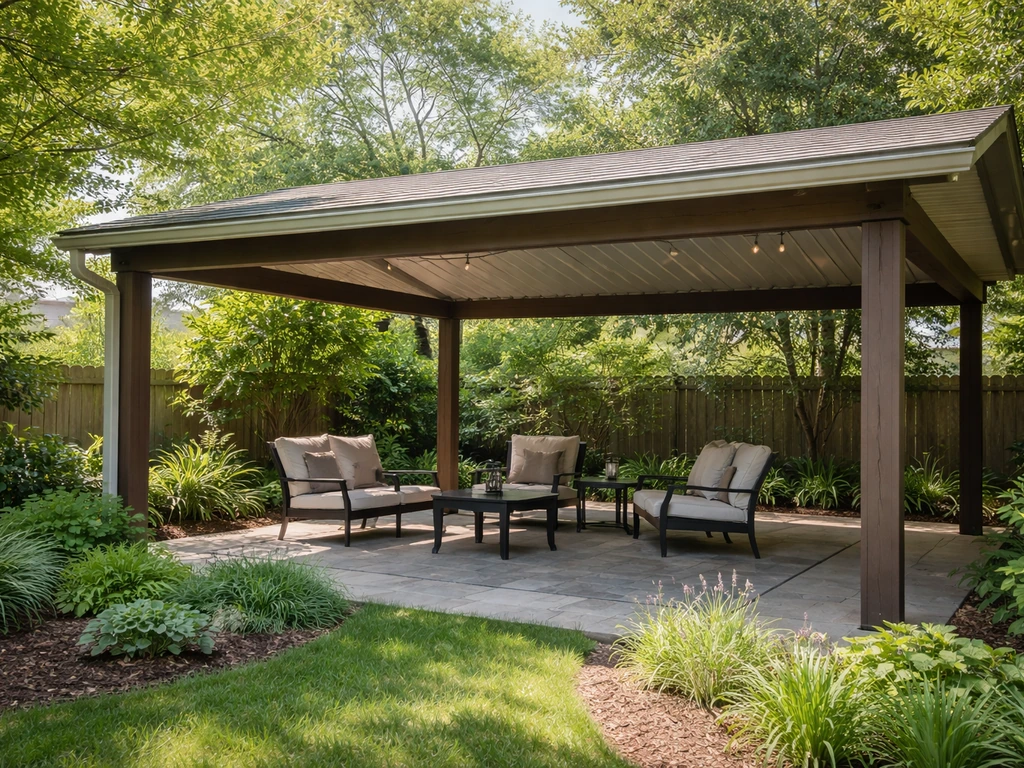
For a covered patio, you do not always need an outdoor-rated TV, but whether you can skip it depends on how well your cover actually protects the screen. A solid roof that blocks direct sun, rain, and wind-driven moisture gives you real options. A pergola or partial shade structure does not.
Do You Need an Outdoor TV for a Covered Patio?

Miles Hart
22 May 2026
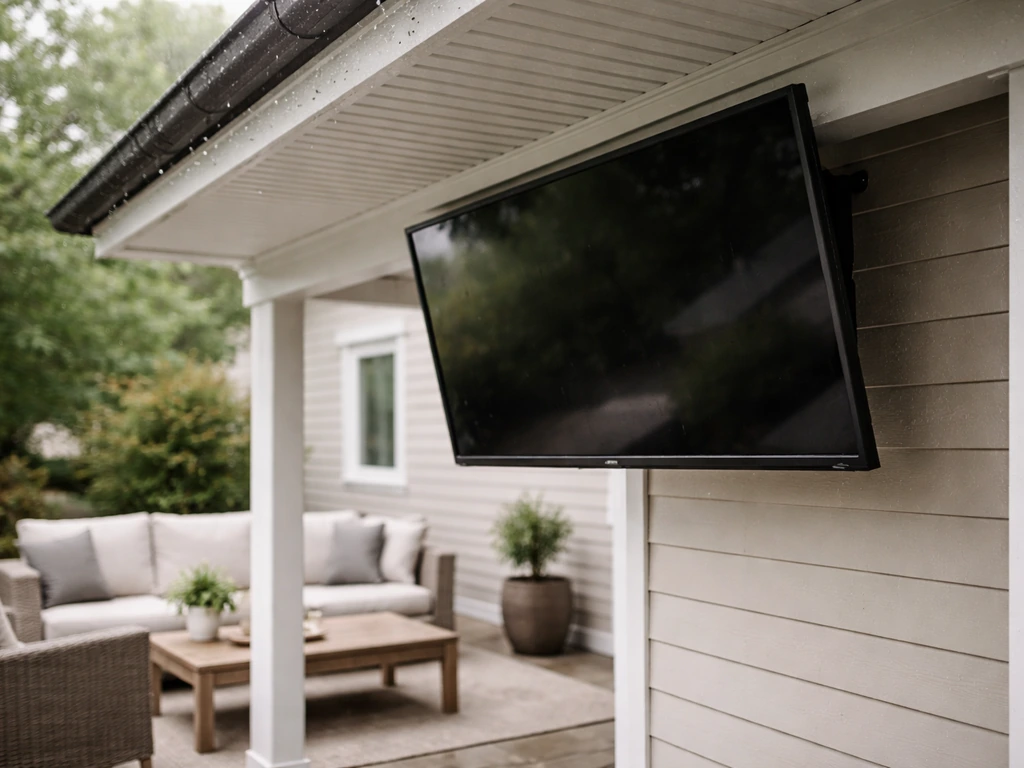
If your patio has a full roof, solid walls on at least two or three sides, and you watch mostly at night or in the evening, a quality indoor TV can work fine for years. If your cover is open to the elements, you get direct sun on the screen, or you live somewhere with high humidity and temperature swings, an outdoor-rated TV is the smarter long-term call.
If you are also planning to use a smoker under a covered patio, make sure it is placed to maintain safe clearance from overhead materials and that smoke and heat can vent properly.
What 'covered' actually protects from (and where it still falls short)
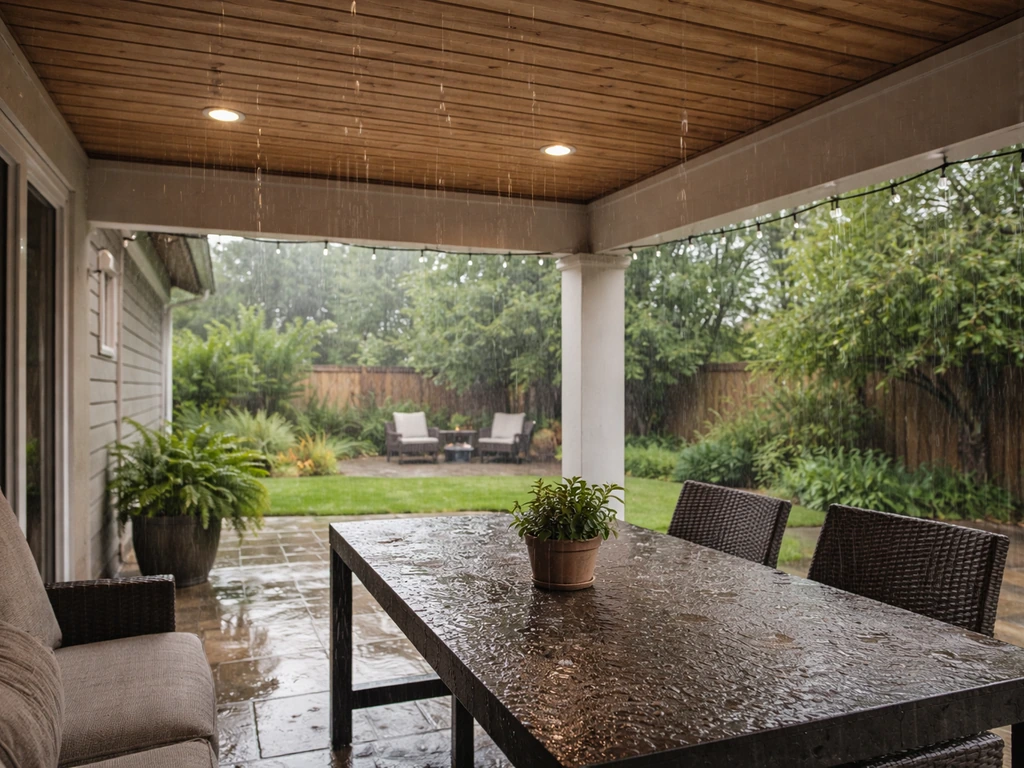
A covered patio is not a sealed environment. The cover handles the obvious threat: direct rain falling straight down. That is genuinely useful protection and it is why many homeowners assume their patio is safe enough for a regular TV. But there are several other threats a roof alone does not address. If you are trying to picture the space, an outdoor covered patio is often called a patio cover or sometimes a porch, depending on how enclosed it is. If you are wondering, can you have a fire pit under a covered patio, the answer depends on clearances and ventilation requirements.
- Wind-driven rain: Even a modest breeze can push rain horizontally under a roof overhang and directly onto a mounted screen. The more open the sides of your patio, the bigger this risk.
- Humidity and condensation: Covered patios in humid climates trap moisture-laden air. Warm, humid air condensing on a cold screen in the morning is one of the most common ways indoor TVs fail outdoors, and a roof does nothing to stop it.
- Direct sun and UV: If the sun hits your wall or mounting spot for even a few hours a day, an indoor TV panel degrades faster, glare makes it unreadable, and heat builds up behind the screen. A south or west-facing covered patio can still have intense afternoon sun exposure on the TV wall.
- Temperature extremes: Indoor TVs are generally rated for storage and operation between around 32°F and 104°F. Covered patios in cold-winter or extreme-heat climates will regularly push outside those bounds, especially if the TV is left mounted year-round.
- Insects and dust: Gaps in outdoor-rated TV enclosures are designed to resist dust and small bugs getting inside the panel. A standard indoor TV has no such protection, and debris inside the electronics shortens life significantly.
The takeaway is that your specific patio geometry and climate matter more than the simple fact that you have a cover. A fully enclosed porch with walls, screen panels, and low humidity exposure is a very different situation from an open-sided pergola in coastal Florida.
Use this checklist before you buy anything
Walk through these questions honestly. Your answers will tell you more than any spec sheet.
- How much of the roof is solid? A full solid roof (wood, metal, concrete) is real protection. A pergola with open slats or a shade sail is not, regardless of how it feels.
- How open are the sides? If two or more sides are fully open to the yard, wind-driven rain and direct sun exposure are real risks for a mounted TV.
- Which direction does the TV wall face? South and west exposures get hours of direct sun. North and east-facing walls are much more protected, even on open-sided structures.
- What climate do you live in? High humidity (Gulf Coast, Pacific Northwest, Florida, Southeast), frequent temperature swings, or hard freezes all push you toward an outdoor-rated set.
- When do you actually watch? If the honest answer is evenings only and rarely during the day, glare and UV degradation matter far less.
- How often do you use the space? For occasional weekend viewing, an inexpensive workaround makes sense. For a frequently used outdoor living room with regular entertaining, investing in the right equipment upfront saves money long-term.
- Is the TV staying mounted year-round? Bringing an indoor TV inside during winter dramatically extends its life if you go that route. Leaving it out permanently in a four-season climate is a much higher-risk choice.
What outdoor TV specs actually mean
If you decide an outdoor TV is the right call, here is what to look for on the spec sheet and why each number matters.
IP rating
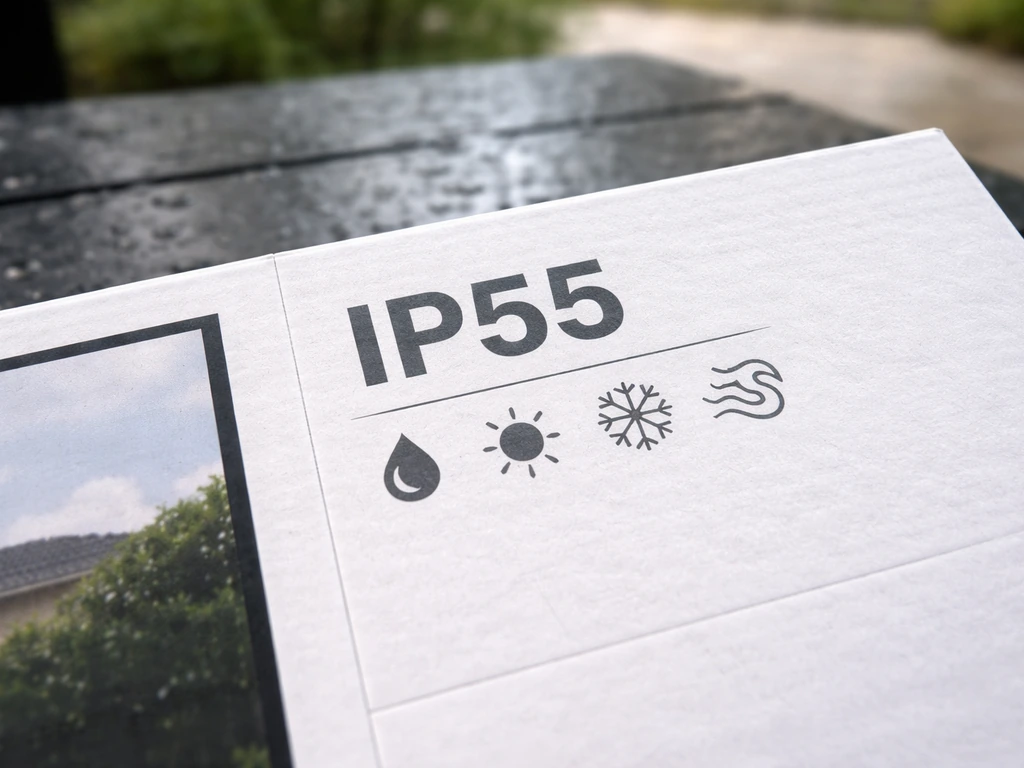
IP ratings tell you how well a TV resists dust and water. The two digits stand for solids protection and liquid protection respectively. Samsung's The Terrace carries an IP55 rating, which means it resists dust intrusion and can handle water projected from a nozzle from any direction for up to five minutes. That is useful for mist and rain splash but it is not the same as waterproof. IP56 adds resistance to heavier water jets. For a fully exposed or frequently wet environment, look for IP55 or higher. For a well-covered patio, IP54 is usually adequate.
Operating temperature range
This is one of the most important and most overlooked specs. Samsung's The Terrace Full Sun is rated for ambient temperatures between -24°F and 122°F. SunBrite's Veranda 4 (a partial shade model) handles 32°F to 122°F, while their Full Sun Pro 2 series is rated for -24°F to 104°F. Compare these to a typical indoor TV, which usually tops out around 104°F and has no real cold-weather rating. If your covered patio dips below freezing in winter and you leave the TV mounted, you need a set rated for those lows.
Brightness and anti-glare
Outdoor TVs are measured in nits (a unit of brightness). Indoor TVs typically run 250 to 500 nits. Partial-shade outdoor TVs start around 700 to 1,000 nits. Full-sun models like The Terrace Full Sun push 2,000 nits or more. The catch: Samsung notes that brightness may automatically decrease in high-heat or high-sunlight conditions to protect the panel, so peak brightness is not always available exactly when you need it most. Anti-glare screen coatings matter as much as raw brightness, so check both specs, not just nits.
Full sun vs. partial shade ratings
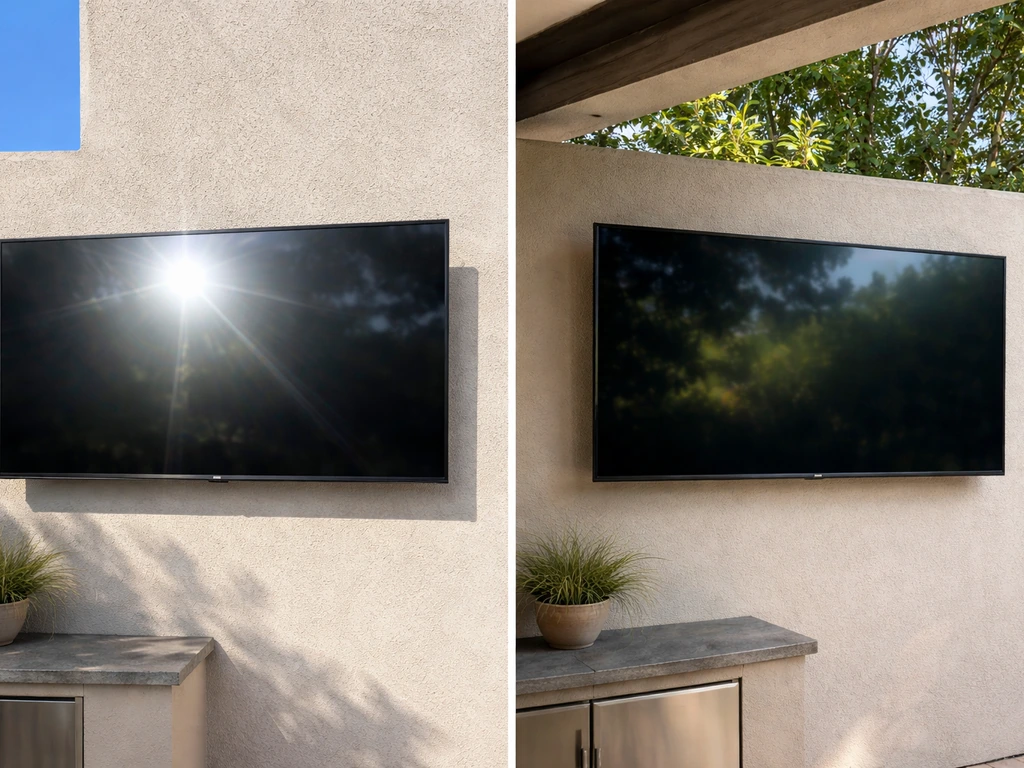
Outdoor TVs are sold in categories: full sun, partial sun, and partial shade. Do not buy a partial-shade model and mount it where direct sun hits the screen, even briefly. The brightness and UV resistance specs are calibrated for the intended exposure level. A covered patio that blocks most direct sun but gets some slanted afternoon light is a partial-shade situation. A patio with zero direct sun, good overhead cover, and mostly ambient light can often use a partial-shade or even a high-brightness indoor TV.
Audio
Outdoor TV speakers are built to project sound into open air rather than bounce it off walls. Indoor TV audio sounds thin and weak outside. Most dedicated outdoor TVs have larger, louder built-in speakers or weatherproof audio outputs. If you plan to use the TV for parties or movie nights on the patio, check the audio specs or budget for separate outdoor-rated speakers.
Ways to avoid buying a full outdoor TV
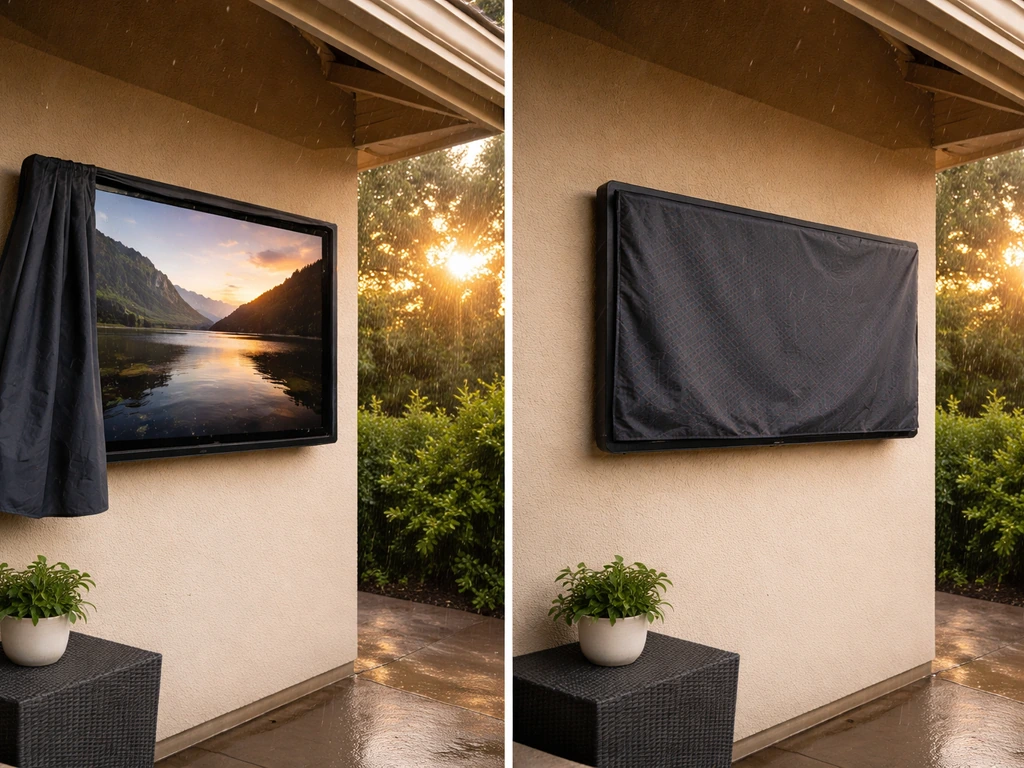
A dedicated outdoor TV is the most convenient option, but it is not the only one. These alternatives work well in specific situations.
TV covers and enclosures
A weatherproof TV cover (essentially a padded, waterproof sleeve) costs $30 to $80 and protects an indoor TV when not in use. This works well if you always put the cover on after watching and bring the TV inside in winter. It is a reasonable approach for occasional-use patios in mild climates. For more protection, full outdoor TV enclosures, which are ventilated polycarbonate or metal boxes the TV slides into, run $150 to $500 depending on size and brand. These are genuinely effective for protecting a standard indoor TV in covered-patio conditions, though they add bulk and can affect heat dissipation if not properly ventilated.
Smart placement and shade strategy
Mounting location is the highest-leverage variable if you are trying to use an indoor TV. A north-facing wall on a fully covered patio with good roof overhang is genuinely comparable to a semi-protected indoor location. Add a wall-mounted shade or a retractable awning above the TV zone if you get any afternoon sun on the screen, and you eliminate the single biggest threat to panel longevity: UV and heat.
Using an older or budget indoor TV
Some homeowners intentionally use a secondary or older indoor TV outdoors, accepting a shorter lifespan as the cost of entry. A $300 to $400 indoor TV that lasts three to five years under covered conditions might be a better financial decision than a $1,500 outdoor TV that lasts fifteen, depending on how much you actually use the space. This works best for well-covered patios in low-humidity, mild-temperature climates. In humid southern climates or anywhere with hard winters, the math changes: condensation and temperature stress kill indoor TVs fast.
Costs and what installation actually involves
| Option | Typical Cost Range | Best For | Main Limitation |
|---|---|---|---|
| Outdoor TV cover for indoor set | $30–$80 | Occasional use, mild climates, well-covered patios | Must be used consistently; no protection when watching |
| Indoor TV in outdoor enclosure | $150–$500 (enclosure only) | Covered patios with low direct-sun exposure | Adds bulk; ventilation must be managed |
| Partial-shade outdoor TV (e.g., SunBrite Veranda) | $700–$1,500 | Covered patios with ambient but not direct sun | Not suitable for direct sun; fewer model choices at lower prices |
| Full-sun outdoor TV (e.g., Samsung The Terrace) | $1,500–$5,000+ | Exposed or semi-exposed mounting with direct sun | High upfront cost; auto-brightness reduction in peak heat |
| Budget indoor TV accepted as consumable | $300–$500 | Mild climates, well-covered patios, low-frequency use | Shorter lifespan; potential for sudden failure |
Beyond the TV itself, installation adds real costs. A weatherproof outdoor outlet or GFCI outlet installation runs $150 to $300 if you do not already have one in the right location. Conduit for running cable through a wall or ceiling adds another $100 to $300 depending on distance. A professional wall mount installation for a large outdoor TV typically costs $100 to $200. If you want to run a dedicated circuit for the TV and audio, expect $300 to $600 for an electrician. For the full setup including outdoor TV, mount, outlet work, and cable management, budget $2,000 to $6,000 total for a quality installation.
Maintenance is real too. Outdoor TVs need periodic cleaning of the screen and vents, especially in dusty or pollen-heavy environments. Connections and cable entry points should be checked annually for corrosion or moisture intrusion. Even IP-rated sets benefit from a cover when not in use for extended periods, like winter months. Factor that into your planning.
Is an outdoor TV worth it for enjoyment or home value?
An outdoor TV does not add measurable appraised home value the way a covered patio structure itself does. Appraisers do not typically count mounted electronics as part of a home's value. What it does add is usability: a well-set-up outdoor TV turns a covered patio into a genuine living space, which makes your outdoor area more attractive to buyers and more enjoyable for you in the meantime.
For covered patios already equipped with comfortable seating, good lighting, and weather protection, a TV is often the finishing touch that pushes the space from occasional use to constant use. You can often place a chiminea on a patio, but you should check clearance, ventilation, and local fire-safety rules before deciding where it sits can i put a chiminea under a patio.
That said, if your covered patio still needs structural improvements, a TV should not be the priority. A better cover, ceiling fan, heater, or weatherproof lighting will do more for daily enjoyment and perceived value than a TV will. The TV makes the most sense once the space is already functional and comfortable. Think of it as the last upgrade, not the first.
If you are on the fence, start with your checklist answers. If your patio is fully covered, north or east facing, in a moderate climate, and you mostly watch evenings, try a good indoor TV with a protective cover first. If you’re wondering can you grill under a covered patio, it also comes down to safety factors like ventilation and clearances. If you are in a humid southern climate, have direct afternoon sun on the screen wall, or want a set-and-forget solution that survives year-round without babysitting, spend the extra money on a proper outdoor-rated TV. The cost difference is real, but so is the difference in how long it lasts.
FAQ
If my patio is covered, is it okay to use an indoor TV if I keep it under the shade but not fully enclosed?
Often yes only if the screen never gets direct sun and the TV stays protected from morning and afternoon dew. If you notice the screen gets a wet film after rain or foggy mornings, that is a sign indoor gear is being stressed, even when the roof blocks rainfall.
How can I tell whether my setup is “partial shade” versus “full sun” for buying brightness and UV protection?
Use a sunny-day observation test. Check where the screen area sits around late afternoon, look for any direct beam light on the screen bezel and viewing surface, and note whether brightness drops during the brightest hours. If you can see a distinct glare spot on the screen, treat it as direct-exposure and step up to a higher sun category.
Do I need to worry about snow or freezing temperatures on a covered patio TV?
Yes, especially if winter conditions dip below freezing and the TV stays mounted year-round. Many indoor TVs lack a low-temperature rating, and even outdoor models can be affected by condensation during freeze-thaw cycles. If freezing is common, choose a set explicitly rated for those lows and keep the mounting area covered from sideways moisture.
Is an IP rating enough, or do I still need to cover the TV when it is not in use?
IP ratings help with splashes and dust, but they do not replace protection from long periods of condensation, pollen buildup, and standing moisture near cable entry points. A fitted weatherproof cover during extended off-season use can reduce corrosion risk and make cleaning easier.
What should I check about the mounting location to protect the screen and electronics?
Avoid mounting where warm air from heaters or smoke exhaust vents will hit the TV, and keep it away from areas that trap moisture under the roof edge. Also confirm the TV is level and that there is enough space behind it for airflow, since poor heat dissipation shortens lifespan.
Will outdoor audio be loud enough without buying separate speakers?
It can be, but only in the conditions it was designed for. If your patio is open to wind, speaker output can sound weaker across long distances. Before buying, compare the audio power or sound mode descriptions and consider separate weatherproof speakers if you plan for parties or you have seating far from the TV.
Can I run the TV cable through walls or ceilings under a covered patio?
Yes, but you need proper outdoor-rated cable and moisture control at the penetrations. Cable entry points are a common failure area, so seal where cables enter enclosures or exterior wall systems and use weatherproof strain relief so water cannot wick into the connection.
Do I need a dedicated outlet or circuit for an outdoor TV?
Not always, but it depends on the TV size, any added sound equipment, and whether you are sharing the circuit with other high-load devices. A GFCI outlet is commonly required for safety, and if you run longer cable distances, having an electrician confirm correct breaker sizing and grounding is a smart safeguard.
What’s a realistic maintenance plan for a covered patio outdoor TV?
At minimum, wipe the screen monthly or after pollen-heavy days and inspect vents and seals a few times per year. Once annually, check cable entry points for discoloration or bubbling around connectors, and test that water is not pooling behind or under the mount.
If I use a TV cover, do I still need to worry about heat buildup inside the cover?
Yes. Choose a cover that is breathable or vents heat, and do not leave it on immediately after watching if the TV is still hot. Trapping heat can accelerate wear, so let the unit cool before covering, and avoid covers that balloon tightly against the screen or vents.
Does an outdoor TV change home insurance or coverage considerations?
Sometimes. If installation involves outdoor wiring, new penetrations, or a new outlet, your insurer may expect it to be completed to electrical code, especially with GFCI protection. Keeping receipts for the TV and any professional mounting or electrical work can help if you ever need to document compliance.
Next Article
What Is an Outdoor Covered Patio Called? Names Explained
Know common names for an outdoor covered patio and how porch, lanai, pergola, awning, and screened options differ.