You can use a smoker under a covered patio in some situations, but most smoker manufacturers explicitly say not to, and many local fire codes back them up. The safest answer is: get the smoker out from under the roof entirely. If that's not possible, the minimum you need is at least 36 to 40 inches of vertical clearance to any combustible overhead surface, proper airflow to carry smoke out, a non-combustible pad underneath, and a clear understanding of what your local code actually allows. Ignore those requirements and you're looking at real fire risk, voided warranties, and potential code violations.
Can You Use a Smoker Under a Covered Patio Safely?

Miles Hart
27 May 2026
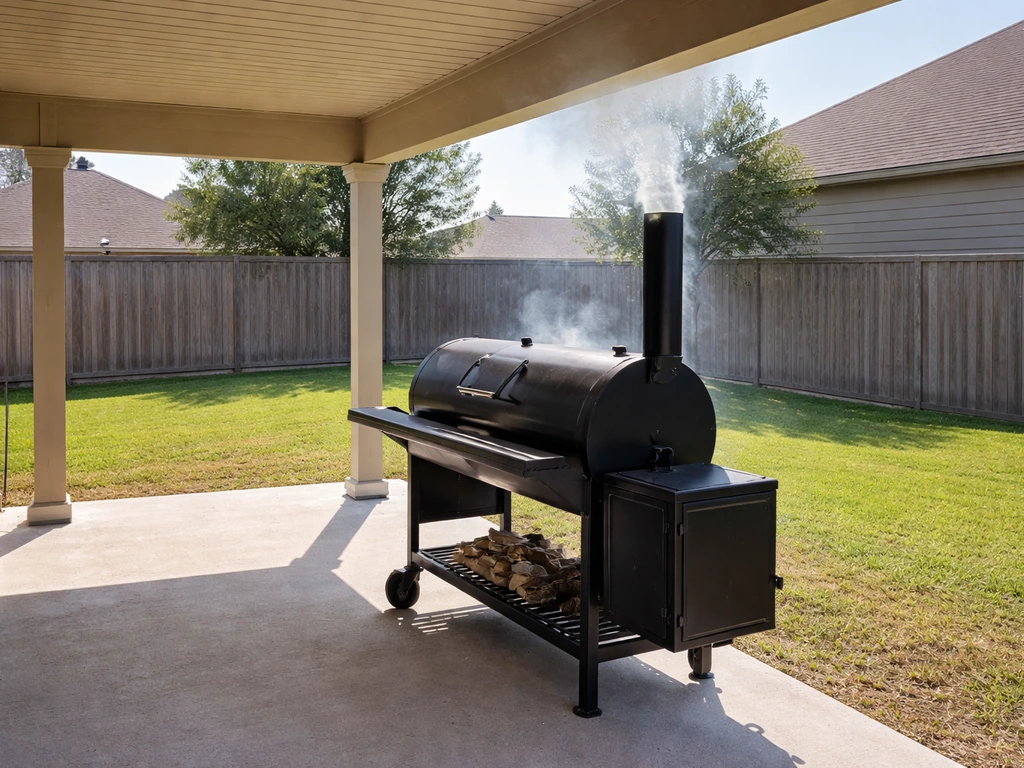
How a covered patio changes your smoker's behavior
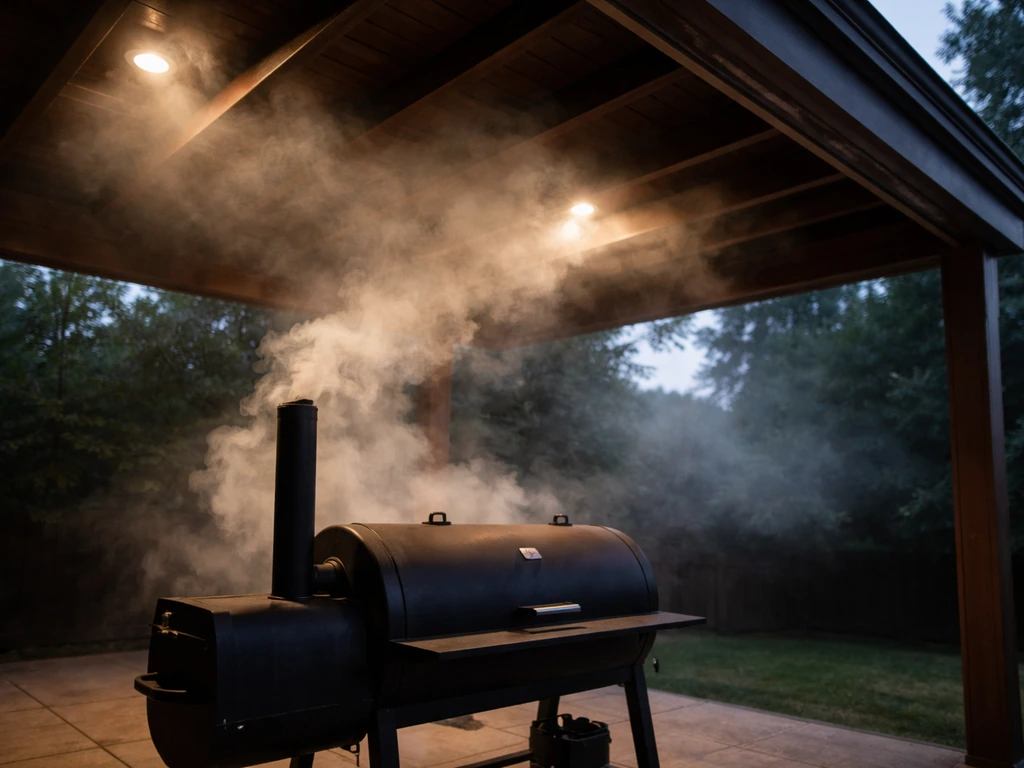
A covered patio does three things that make smoker use genuinely more complicated: it traps heat, it blocks smoke from rising and dispersing, and it disrupts the natural draft your smoker needs to burn cleanly. You may also hear a covered patio referred to as a porch or veranda, depending on the region and the design what is a covered patio called. Out in the open, heat and smoke rise freely, get caught by wind, and dissipate. Under a roof or pergola, they don't have anywhere to go as easily.
Heat buildup is the big one. Smokers run hot, especially offset or charcoal smokers that can radiate significant heat from the firebox. That radiant heat accumulates under a closed or semi-closed overhead structure, raising the ambient temperature around combustible framing, soffits, or lattice well above what it would be in open air. Even a pellet smoker, which burns more efficiently, puts out enough heat and exhaust to cause problems when that exhaust can't move freely.
Smoke accumulation is the second problem. If the smoke your unit produces can't exit the covered space efficiently, it banks downward. That means smoke exposure for anyone sitting nearby, potential carbon monoxide buildup in partially enclosed patios, and creosote deposits on your patio ceiling and walls over time. Traeger's own support documentation flags creosote as a real concern when airflow is restricted, noting it can accumulate on flues and surfaces if combustion isn't clean. Grease fires, which can produce thick, heavy smoke, make this even worse.
Draft and exhaust are the third issue. Most smokers are designed to work with open-air airflow pulling smoke up and out through the chimney or exhaust stack. A patio roof, especially one with solid panels or a low-pitched roof, can create back pressure or redirect wind in ways that push smoke back toward your house or down into the sitting area instead of carrying it away.
The safety rules you actually need to follow
Let's be direct about what the manuals say, because most people never read them and then wonder why something went wrong. The clearance requirements from major smoker brands are not suggestions. The same clearance and code issues apply if you're trying to put a fire pit under a covered patio. They're the minimum distances below which the company won't cover damage or injury, and below which fire risk becomes real.
| Brand | Overhead Clearance Requirement | Side/Rear Clearance | Overhead Construction Allowed? |
|---|---|---|---|
| Traeger | 40 inches to combustible overhead | 12 inches to combustible sides/back | Only with required clearance met |
| Pit Boss | Not specified separately | 36 inches (914 mm) from combustible construction | Clearance must be maintained |
| Camp Chef | No overhead construction at all | 36 inches from all sides | Prohibited entirely |
| Weber (charcoal) | Not specified separately | 24 inches (60 cm) minimum | Prohibited entirely |
| Weber Smoque (pellet) | Must be high and non-flammable | 24 inches (61 cm) minimum | Non-combustible only |
| Masterbuilt (charcoal) | No overhead construction at all | 10 feet from combustible materials | Prohibited entirely |
| Dyna-Glo | No overhead construction | 36 inches (91 cm) from combustibles | Not recommended |
| Napoleon | No overhangs or enclosed porches | Proper clearance required | Prohibited |
| Big Green Egg | 18 inches to combustible ceiling | 6 inches to combustible surfaces | With clearance and non-combustible pad |
The pattern here is clear: most brands either prohibit overhead construction entirely or demand substantial clearance. Camp Chef, Masterbuilt, Weber (charcoal), Napoleon, and Dyna-Glo are flat-out no. Traeger and Big Green Egg allow it with strict minimums. If your covered patio has a standard 8-foot ceiling, you've got maybe 5 to 6 feet between the smoker surface and the roof framing. That's well short of 40 inches from the smoker's exhaust stack to the ceiling, once you account for the unit's height. Pit Boss manual guidance similarly calls for a minimum 914mm (36 inches) clearance from combustible constructions, and that it must be maintained while the grill or smoker is operational blank" rel="noopener noreferrer">40 inches.
Beyond the smoker itself, combustibles on or near your patio are a fire hazard from sparks and embers. The American Red Cross recommends using a metal or glass screen large enough to contain escaping embers from any open-fuel cooking. Lattice panels, wood siding, fabric curtains, string lights mounted on wood, and dry vegetation all qualify as combustibles. Grease dripping onto a hot surface or accumulating under the unit is another ignition source that gets worse when the unit is in an enclosed or semi-enclosed space.
Ventilation and smoke management
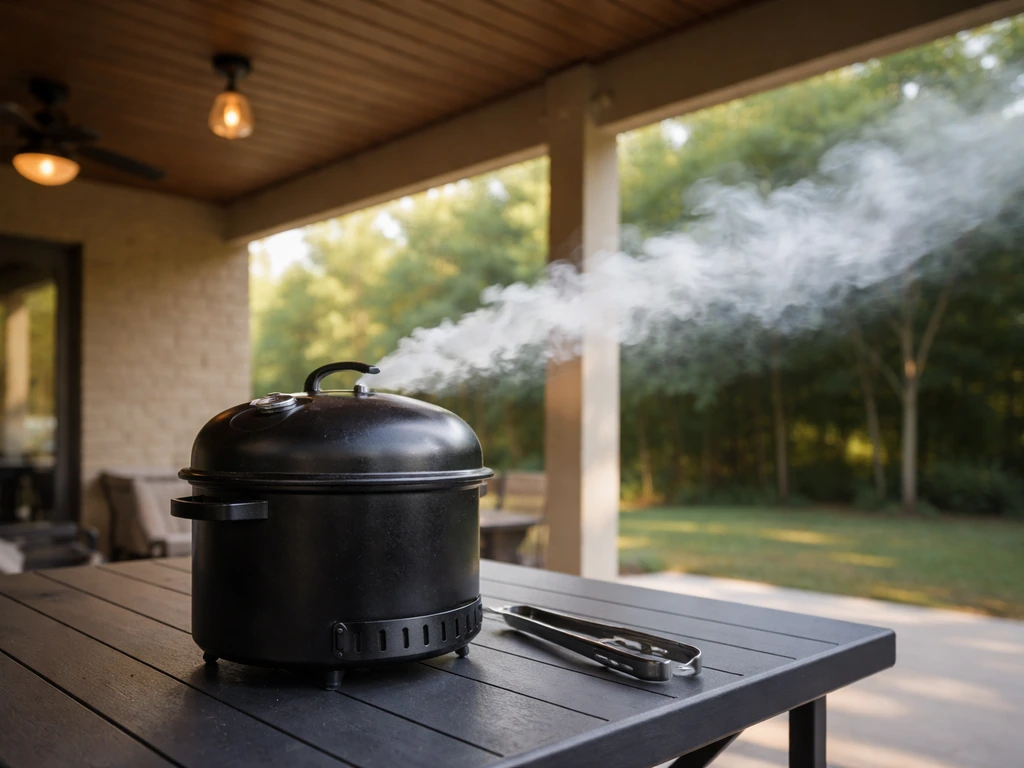
Even if your clearances are technically adequate, ventilation is what determines whether using a smoker under a covered patio is tolerable day-to-day. A covered patio with open sides on two or three sides is very different from one with walls, screens, or a tightly enclosed pergola. The more enclosed the space, the more smoke accumulates and the worse your draft situation gets. If your covered patio is that enclosed, you may also want to reconsider plans like an outdoor TV for a covered patio, since heat and smoke exposure can affect comfort and equipment do you need an outdoor tv for a covered patio.
Wind direction matters a lot. If prevailing winds push toward your house, the patio roof can catch smoke and direct it straight into your doors and windows. Positioning the smoker's exhaust stack so it points away from the house and toward the most open side of the patio helps, but it's not a complete fix under low ceilings. You want the smoke to have a clear, short path to open air.
Chimney and exhaust blockage is a real maintenance issue too. Traeger's support guidance notes that soot buildup in the chimney can restrict airflow and prevent smoke from escaping properly, and their documentation recommends keeping the chimney cap clear with roughly a thumb's worth of space. If you're running a smoker in an environment where airflow is already limited by overhead structure, even minor chimney restriction makes things significantly worse. Clean your smoker's exhaust system regularly, and check it before every long cook.
For partially enclosed patios, if you have a ceiling fan installed, running it on low can help move stagnant air and push smoke toward the open sides. It won't solve a fundamentally poor airflow situation, but it helps in marginal cases. Carbon monoxide is the silent risk here: Weber's Smoque documentation specifically calls out that burning wood pellets produces carbon monoxide, and that you shouldn't use the unit under an overhead roof unless it's high and non-flammable. That warning applies to any fuel-burning smoker.
Which smoker type handles this best (and where to put it)
Not all smokers are equal when it comes to this situation. The type of smoker you're running makes a real difference in how manageable the risks are.
| Smoker Type | Heat Output | Smoke Volume | Covered Patio Suitability | Notes |
|---|---|---|---|---|
| Pellet smoker | Moderate | Lower (cleaner burn) | Marginal — check manual | Most forgiving type; still requires clearance |
| Offset charcoal smoker | High | High | Not recommended | Large firebox, sparks, lots of smoke |
| Bullet/water smoker | Moderate | Moderate | Not recommended under cover | Charcoal-fueled versions prohibited by most brands |
| Kamado (e.g., BGE) | Variable | Lower when dialed in | Possible with 18"+ overhead clearance | Requires non-combustible pad; tightest clearance spec |
| Electric smoker | Low | Low-moderate | Best option if using under cover | No open flame, lower heat, less CO risk |
| Propane smoker | Moderate | Moderate | Use with caution; check manual | Open flame present; requires ventilation |
Placement strategy matters as much as smoker type. The single most effective thing you can do is move the unit to the edge of the covered patio, right at the drip line, so the exhaust stack is partially or fully outside the roof overhang. This gives you the convenience of nearby prep space while keeping the actual combustion zone exposed to open air. Even a foot or two of difference in position can meaningfully reduce heat and smoke buildup under the cover.
If you're comparing this situation to grilling under a covered patio, a smoker actually runs longer cooks at sustained temperatures, which means prolonged heat and smoke exposure to overhead structures, not just a 20-minute burger session. That extended duration is part of why the risk calculus is different and why clearance requirements matter more.
Local codes, HOA rules, and what your warranty actually covers
Manufacturer clearance requirements are just one piece of this. Local fire codes and HOA rules can be stricter, and they apply to you whether you've read them or not.
The International Fire Code (IFC) Section 308.1.4 is the baseline most jurisdictions use. It prohibits charcoal burners and open-flame cooking devices on combustible balconies or within 10 feet of combustible construction. Jurisdictions that have adopted IFC apply this broadly, and covered wood-framed patios almost always qualify as combustible construction. Fairfax County, Virginia, for example, follows this rule. Baltimore and San Antonio have local amendments that use the same 10-foot rule. Poudre Fire Authority in Colorado cites the same language. Massachusetts goes further, prohibiting grills on any porch, balcony, or deck with a roof, overhang, or wall, with limited exceptions. Your jurisdiction may be different, but the trend in code adoption is toward restriction, not flexibility.
Check your specific municipality's fire code before assuming you're fine. A chiminea is an open-flame outdoor heater, so the same clearance, smoke ventilation, and local fire-code limits apply, and many covered patio setups are still a bad fit. The fastest way is to call your local fire marshal's office or check your city's code online. If you're in an HOA, read your CC&Rs. Many HOAs have explicit rules about outdoor cooking appliances, and some prohibit open-flame devices on patios entirely regardless of local code.
On the warranty side: if you use your smoker in a configuration the manual explicitly prohibits (like under overhead construction when the manual says not to), you're operating outside the terms the manufacturer supports. That means if the unit causes property damage and you make an insurance claim, your insurer may push back, especially if the investigation shows the unit was used in a way that violates the manufacturer's guidance. Read your smoker's manual, screenshot or print the relevant clearance pages, and keep them with your records.
How to set it up today if you're going to do it
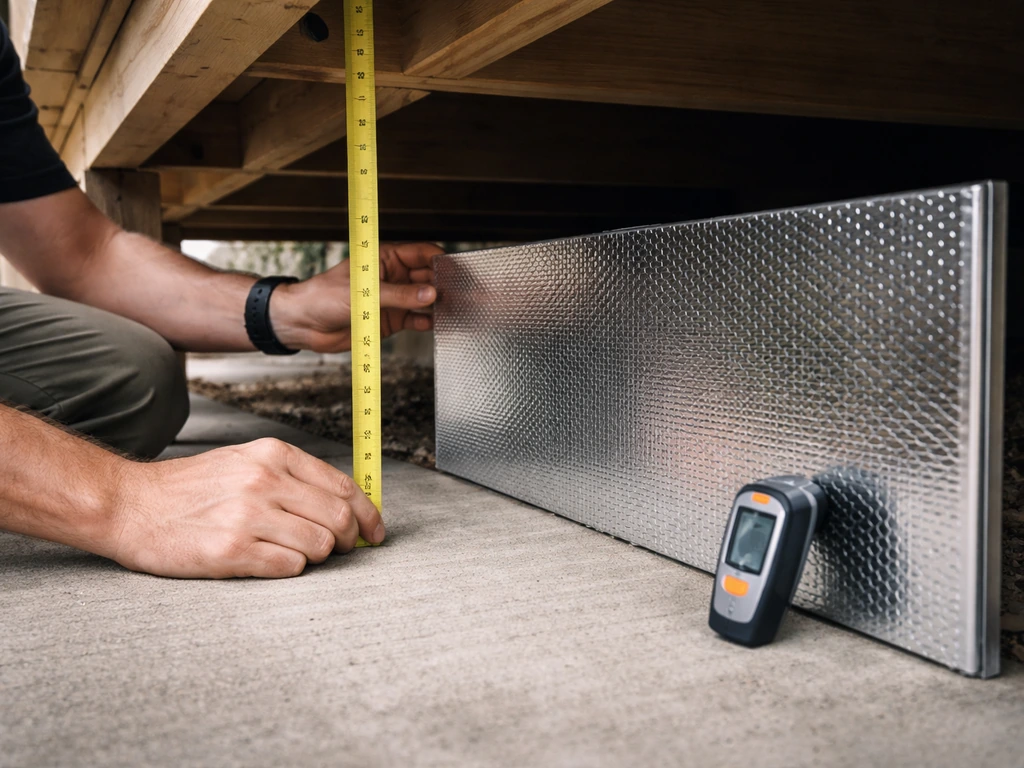
If you've checked your manual, confirmed your local code allows it, and decided to proceed, here's how to do it as safely as possible. If you want to bbq under a patio, the safest approach is to get the cooker out from under the roof and follow the manufacturer clearance rules.
- Measure your clearances first. Get the exact height from the ground to your patio ceiling, then subtract the height of your smoker including the exhaust stack. That number must meet or exceed your manual's overhead clearance requirement (36 to 40 inches for most pellet smokers; 18 inches minimum for a BGE-style kamado). If it doesn't, don't proceed.
- Position the smoker at the outermost edge of the covered area. The exhaust stack should be as close to open air as possible. Avoid placing the unit against walls, in corners, or near lattice, curtains, or any wood trim.
- Put down a non-combustible pad. The Big Green Egg manual specifies a 30 x 36 inch non-combustible floor protection area under the unit. Use a welding mat, concrete board, or purpose-built grill pad. This protects your deck or patio surface from radiant heat and any ember or grease drips.
- Clear combustibles in the surrounding area. Remove fabric chair cushions, decorative items, wood furniture, and anything flammable from within at least 3 feet of the unit. Check overhead for anything hanging or attached to the ceiling.
- Use a spark screen or ember guard if your smoker type produces sparks (charcoal, offset, or wood-fired units). A metal screen large enough to contain embers is the Red Cross recommendation for this kind of cooking.
- Monitor the cook actively. Never leave a smoker unattended under a covered structure. Keep a fire extinguisher rated for grease fires within reach, not inside the house but accessible in the patio area.
- Check the chimney or exhaust stack before you start. Clear any soot blockage and make sure the cap has proper clearance. A restricted exhaust under a covered patio compounds quickly.
- After the cook, let the smoker cool completely before moving it. Hot units near combustible structures or stored near the wall of the house are a continuing hazard even after cooking ends.
Better options if your covered patio just won't work
Sometimes the honest answer is that your specific covered patio, with its ceiling height, enclosed sides, or combustible materials, simply isn't a workable location for a smoker. Here are the realistic alternatives.
- Move it just outside the covered area: Place the smoker just beyond the drip line of your patio roof. You can still prep and monitor from the covered patio, but the unit itself is in open air. This is the simplest fix and eliminates most of the risk.
- Use a designated open-air pad: A small concrete or paver pad adjacent to the patio, even just 4 x 4 feet, gives you a dedicated, non-combustible surface with full open-air exposure. This is worth doing if you smoke regularly.
- Switch to an electric smoker: Electric smokers have no open flame, produce less radiant heat, and generate less carbon monoxide than charcoal or wood-fired units. They're the most covered-patio-compatible option if you're set on using the space. They won't give you the same smoke profile as a wood-fired unit, but they're practical.
- Consider an indoor electric smoker: Some compact electric smokers are designed for indoor or garage use with a window vent attachment. This is a niche solution but worth knowing about for cold-weather cooking.
- Use the covered patio for prep and finishing only: Run the smoker in open air and use the covered patio as your prep station, resting area, and serving space. This is actually how most serious backyard cooks work it.
- If you're planning a patio renovation: If this question is part of a bigger outdoor space decision, it's worth thinking about whether an open pergola structure (rather than a solid-roof covered patio) fits your goals better. A pergola with open rafters gives you partial weather protection while maintaining enough vertical airflow to make smoker use significantly more manageable, though you still need to check clearances and local codes.
The covered patio question connects to a broader decision most homeowners eventually face: what kind of outdoor structure actually fits how you live outside? If outdoor cooking, including smoking and grilling, is a regular part of your outdoor routine, that should inform the structure you build or renovate toward. A solid-roof enclosed patio and a backyard smoker are genuinely in tension. Understanding that early saves you the frustration of retrofitting a solution to a setup that was never designed for it.
FAQ
What’s the safest workaround if I must smoke under my covered patio because I need shelter from rain?
Use a “moveable” plan, place the smoker at the patio edge so the exhaust stack sits outside the roof line, and only keep the sheltered prep area under the cover. If you cannot get any part of the exhaust out of the overhead space, treat it as a no-go and relocate the cook, even for short sessions.
Does the clearance rule change for pellet, electric, or propane smokers under a roof?
Yes, but not enough to make overhead use universally safe. Pellet and propane still produce exhaust and can create carbon monoxide and heat buildup, electric models can still heat surrounding materials and create fire risk from grease drips. Always follow the exact manual for your fuel type, especially any notes about overhead roofs and exhaust routing.
How can I tell if my patio is “open” enough to reduce smoke and carbon monoxide risk?
Assess whether smoke and fresh air can move freely, meaning at least two sides are broadly open with no solid panels or tight screen enclosure overhead. If air movement depends on a door being opened, a screen wall being removed, or a fan running continuously, assume ventilation is marginal and risks increase substantially.
Is a ceiling fan enough to make smoking under a covered patio safe?
It can help in marginal cases, but it is not a substitute for clearance and an exhaust path to open air. If the fan cannot keep smoke from banking under the roof, your airflow problem remains. Also ensure the fan does not blow hot air or smoke toward the house entrances or seating area.
Can I use a smoker under a pergola with slats instead of a solid roof?
Sometimes more feasible, but “open-lamella” structures still restrict heat and can redirect exhaust. Slat spacing does not automatically meet clearance expectations, because radiant heat can warm beams and the smoke can still accumulate between supports. Treat it like an overhead construction and confirm the manufacturer’s clearance requirements.
What’s the most common mistake people make when using a smoker under an overhead structure?
They focus only on the distance to the ceiling while ignoring the exhaust route, draft, and soot buildup. Even with some headroom, back pressure can push smoke downward, increase creosote or soot on nearby surfaces, and trap combustion gases where people breathe.
Should I use a smoke hood, spark arrestor, or add-on exhaust extension to make it safer under a roof?
Be cautious. Attachments that alter airflow or exhaust height can void warranties or worsen draft if they are not manufacturer-approved. If you consider an exhaust extension, confirm it’s specifically designed for your smoker model and complies with your manual and local fire code.
What should I do before every cook if I decide to proceed under a covered patio?
Do a preflight check: confirm the smoker’s exhaust is unobstructed, inspect and clean the chimney or exhaust path, verify your ash and grease management, and check that the stack is aimed away from the house and toward the most open side. Also remove nearby combustibles like dry cushions, curtains, lattice, and any storage that could ignite from radiant heat.
How long can I safely smoke if the covered patio setup is marginal?
There is no reliable time limit, because heat and soot accumulation build over repeated exposure. Short cooks can still trigger creosote or soot deposition and increase carbon monoxide risk if exhaust cannot escape. If your setup is only “just barely” compliant, plan fewer cooks and stop at the first sign of smoke banking toward people.
Does using a “non-combustible pad” underneath the smoker solve the main fire risk under a roof?
It helps with the ground and radiant contact risk, but it does not address overhead heat transfer, blocked smoke exit, or back pressure. Combustible elements above and around the cooking area, like soffits, beams, lattice, and curtains, can still become hazardous even when the base is protected.
Next Article
Do You Need an Outdoor TV for a Covered Patio?
Decide if you really need an outdoor TV for a covered patio, with ratings, glare tips, costs, and smart alternatives.