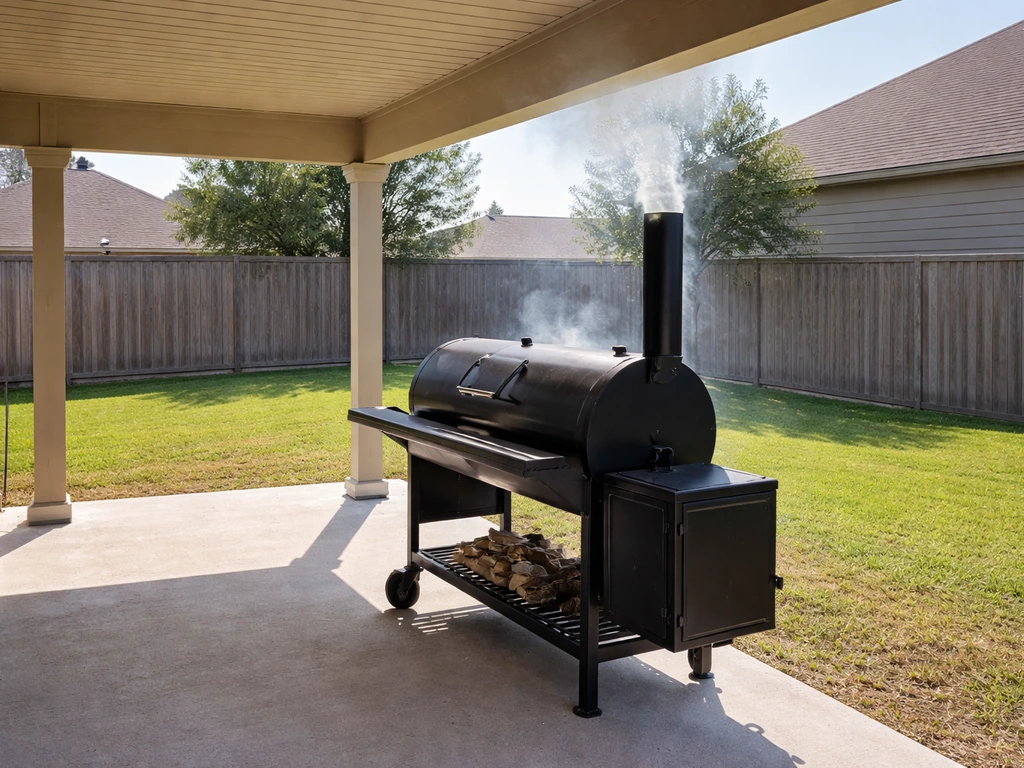
Technically you can put a chiminea under a covered patio, but most fire departments, chiminea manufacturers, and local fire codes say you shouldn't. The overwhelming consensus from safety guidance, fire department policies, and product manuals is that a chiminea should not be operated under any overhang, roof, or canopy. That said, a lot of homeowners do it anyway, so if you're going to consider it, you need to know exactly what the clearance requirements are, what surfaces are safe, how smoke and carbon monoxide behave under a roof, and what your local code and insurance actually say before you light the first fire.
Can I Put a Chiminea Under a Patio? Safety Checklist

Miles Hart
25 Jun 2026
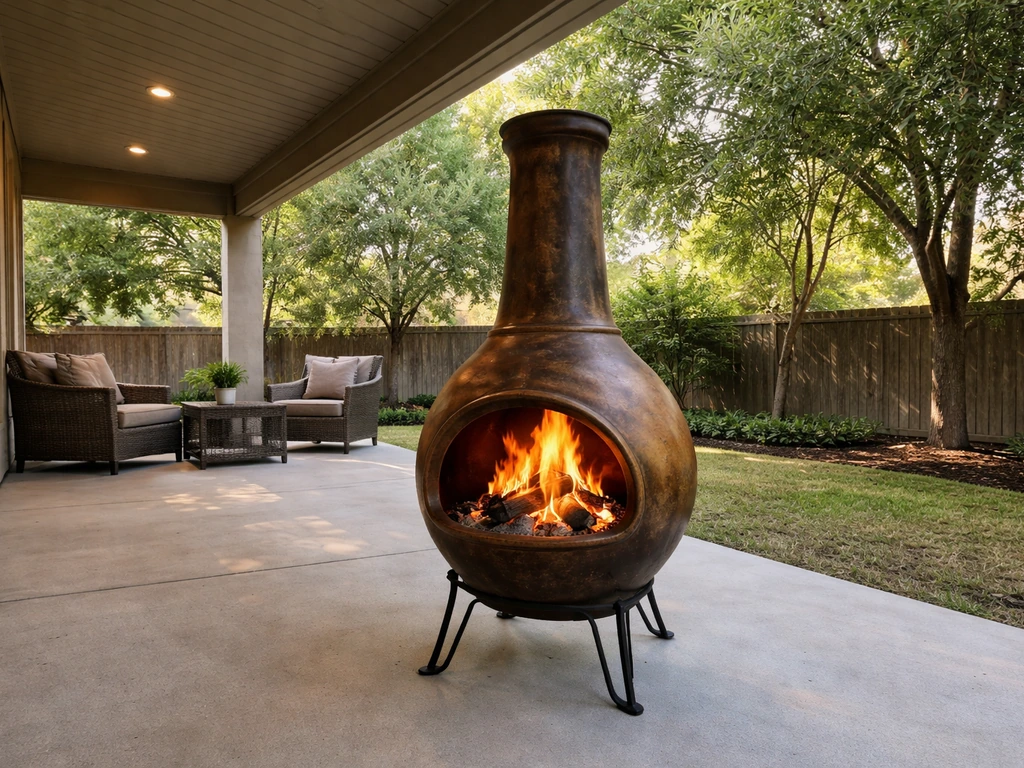
The quick answer and what really drives the decision
The safest answer is no. Multiple fire department guidelines, including policies from Tewksbury MA, Sturbridge MA, Wellesley MA, and Friendswood TX, explicitly prohibit chiminea use under any overhang, roof, or canopy. The Charmate chiminea manual states plainly: do not place the chiminea under a roof overhang or other enclosed area. The Tractor Supply product manual says the same thing.
Tractor Supply’s chiminea manual also says not to use the unit under any overhang or near combustible structures, and it lists minimum clearance requirements of 36 inches from the side and back [The Tractor Supply product manual says the same thing. ](https://media. tractorsupply. com/is/content/TractorSupplyCompany/tsc/product/2/24/48/58/2244858_Man1.
pdf). This isn't boilerplate language meant to avoid lawsuits. It reflects real risk from trapped heat, smoke accumulation, and fire spread to overhead materials.
That said, the real decision depends on a few specific variables. An open-sided pergola with no solid roof panels sits in different territory than a fully covered wood-framed patio with a shingle or vinyl ceiling. An outdoor covered patio is commonly called a covered patio, patio cover, or veranda, depending on the structure style and local terminology fully covered wood-framed patio with a shingle or vinyl ceiling.
The key factors are: how enclosed the space is, what the overhead material is made of, how high the ceiling or roof sits above the chiminea's flue, and whether the space has enough cross-ventilation that smoke doesn't collect. If you can check every one of these against your local fire code and still meet the clearance requirements from the manufacturer, you might be able to make it work. Most people can't.
Clearances, heat output, and fire-safety basics
Chimineas throw radiant heat in every direction, not just out the mouth. The NFPA 211 standard for solid fuel-burning appliances and the Massachusetts building code (780 CMR) both reference 36 inches as the standard clearance to combustibles on the sides, back, and above the appliance. One gas-log chiminea manual raises that to 4 feet (1.3 meters) between the top of the vent cap and any overhead combustible material. Consumer Reports recommends treating a chiminea like a fire pit and keeping at least 10 feet of clearance in every direction from anything combustible.
Now think about what that actually means under a typical covered patio. If you are asking can you BBQ under a patio, the clearance and airflow limits for chimineas and other small backyard fires are usually the deal-breakers. If your patio cover sits 8 feet above grade, and your chiminea stands 3 to 4 feet tall with a flue that extends another foot or two, you might have 3 to 4 feet of clearance to an overhead surface.
That's below the 10-foot Consumer Reports threshold and potentially under the 4-foot gas-chiminea requirement as well. A wood-framed patio cover with a vinyl or wood ceiling panel is exactly the type of combustible overhead material these clearances are designed to protect. Metal and masonry covers are less susceptible to ignition but still trap heat, carbon monoxide, and smoke.
- 36 inches minimum clearance on all sides and above the unit (NFPA 211, 780 CMR standard)
- 4 feet minimum between the top of the flue/vent cap and any overhead combustible (gas chiminea manuals)
- 10 feet recommended clearance in every direction from combustibles (Consumer Reports)
- 20 feet from any building, canopy, roof, overhang, or property line (Wellesley MA permit requirement)
- Radiant heat from the clay or cast-iron body can damage nearby columns, privacy screens, or furniture even without direct flame contact
The practical takeaway: if your covered patio ceiling is under 10 feet and includes any wood, vinyl, or fabric elements, you almost certainly cannot meet manufacturer clearance requirements. An open pergola with no solid roof and wide-open sides is a closer call, but you still need to check your specific local fire department rules before you assume it qualifies.
What surface the chiminea sits on matters a lot
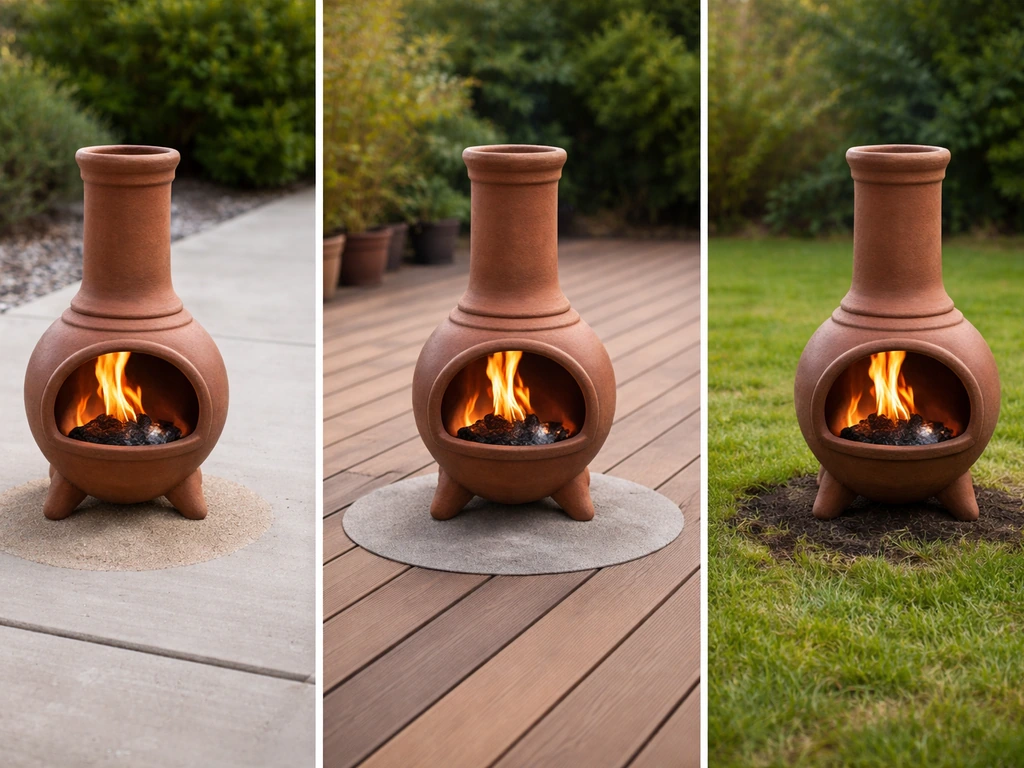
Even if your overhead clearance were acceptable, the surface underneath the chiminea is its own concern. Multiple fire department policies, including Tewksbury MA's guidance, require chimineas to sit at grade level on a non-combustible surface. Here's how common patio surfaces compare:
| Surface Type | Safe for Chiminea? | Notes |
|---|---|---|
| Concrete slab | Yes (with caveats) | Non-combustible, holds up to heat. Use a chiminea stand to prevent direct contact and cracking from heat transfer. |
| Pavers (brick, stone, concrete) | Yes (with caveats) | Generally non-combustible and a good choice. Check that pavers are properly set and stable so the unit won't tip. |
| Gravel or pea gravel | Yes | Non-combustible and allows good drainage. One of the more forgiving surfaces for ground-level placement. |
| Wood decking | No | Fire departments and most guidance explicitly prohibit chiminea use on wood decks. Embers and radiant heat can ignite decking. |
| Composite decking | No | Composite materials can warp, melt, or ignite. Same prohibition applies as wood. |
| Grass or soil | Marginal | Acceptable for ground-level use in some jurisdictions but introduces ember risk to surrounding vegetation. |
| Covered porch/balcony floor | No | Both Friendswood TX and Longmeadow MA guidance specifically prohibit chiminea use on porches or balconies regardless of surface material. |
If you have a concrete or paver patio that's covered by a solid roof, the surface itself might be fine but the overhead situation still creates problems. If your covered patio is actually a wood deck with a roof, you have two problems to solve simultaneously, and most guidance would say the answer is no on both counts.
Smoke, ventilation, and carbon monoxide under a roof
Smoke and carbon monoxide behavior changes dramatically once you add a roof over a fire. A chiminea's design channels smoke upward through the flue, but that only works well when there's enough open air around it for the draft to function. Under a covered patio, especially one with partial walls, privacy screens, or furniture blocking airflow, smoke can back up, linger at head height, and eventually find its way into adjacent indoor spaces. Carbon monoxide is the more dangerous piece: it's colorless, odorless, and produced any time you burn wood or charcoal. The Washington State Department of Health and the CPSC both emphasize that CO can build to dangerous concentrations faster than most people realize.
The problem with a covered patio is that it creates exactly the kind of semi-enclosed space where CO accumulates. Unlike a fully open backyard where wind disperses combustion byproducts continuously, a covered patio limits air movement. If the patio has any connection to the house interior (an open door, a pass-through window, a connected interior space), CO can migrate indoors. NIST guidelines for combustion appliances suggest placing them well away from any openings, with at least 25 feet from windows, doors, and vents as a general reference for combustion equipment exhaust.
The minimum standard for making any covered patio use less dangerous: the space should be open on at least two or three sides with no barriers restricting cross-ventilation, the ceiling should be high, and you should never use a chiminea when wind is pushing smoke directly under the cover or toward the house. Even then, placing a CO detector near any connected doorway is a reasonable precaution, though it shouldn't substitute for proper open-air placement. This is closely related to the considerations that come up with fire pits under covered patios more broadly. Fire pits under a covered patio raise similar clearance, smoke, and carbon monoxide risks fire pits under covered patios.
Moisture, rain, and keeping your chiminea from cracking
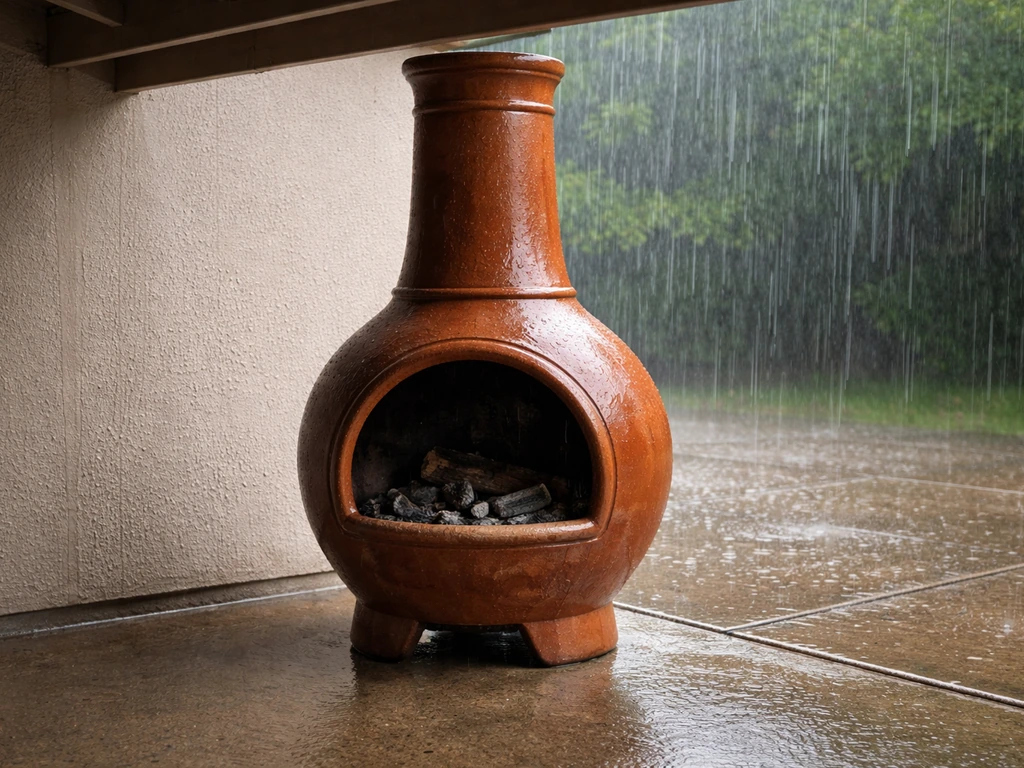
One argument homeowners make for placing a chiminea under a patio cover is moisture protection, and it's not entirely wrong. Clay chimineas are genuinely vulnerable to cracking from thermal shock and freeze-thaw cycles. The advice from multiple chiminea care guides is consistent: never pour water on a hot clay chiminea, never use a clay chiminea when it's wet, and protect it from moisture intrusion during cold months because water trapped in the clay expands when it freezes and causes cracks from the inside out.
A covered location solves the rain problem while creating the fire and CO problems described above. The smarter approach is to handle moisture separately from placement. When the chiminea isn't in use, cover it with a purpose-built fitted cover (not a cloth cover thrown over a hot or cooling unit, which creates burn and ignition risk on its own). Apply a water-repellent sealer appropriate for clay or cast iron on a regular basis. Store clay chimineas indoors or in a garage over winter in climates with hard freezes. These steps protect the chiminea from weather damage without requiring you to operate it in an unsafe location.
Cast-iron chimineas are more resilient to moisture and thermal stress than clay ones, though they still rust if left unprotected. If you want a chiminea in a climate with frequent rain, cast iron is the more practical material choice for outdoor year-round placement.
Codes, HOA rules, and what your insurer actually cares about
Local fire codes vary more than most people expect, and the variance matters. Some Massachusetts towns require no special permit for a chiminea or backyard fire pit at a single-family home (Stow MA is one example) as long as you follow safety guidelines. Others, like Wellesley MA, require a permit and mandate a 20-foot setback from any building, canopy, roof, overhang, or property line. Friendswood TX explicitly bans use on any porch or balcony. NFPA 1, the model fire code, prohibits use under overhangs, roofs, or within enclosed structures, and many municipalities adopt it directly or adapt it.
Before you set up a chiminea anywhere near a covered patio, call your local fire department's non-emergency line or check the fire marshal's page on your town or city website. This takes about ten minutes and gives you a definitive answer for your jurisdiction, not a general approximation. If you're in an HOA, check your CC&Rs specifically. HOA boards frequently adopt restrictions on open-flame devices, often mirroring the 10-foot setback rule or banning wood and charcoal-burning devices outright, sometimes pushed by their own insurance carrier requirements.
The insurance angle is worth understanding clearly. A standard homeowners policy generally covers accidental fire damage, but the insurer investigates the cause after a claim. Nationwide explains that homeowners insurance generally covers fire damage, but the outcome depends on the policy terms and how the claim is handled (including deductibles) and on the circumstances of the loss [A standard homeowners policy generally covers accidental fire damage](https://www. nationwide.
com/lc/resources/home/articles/does-homeowners-insurance-cover-fire). If your chiminea was placed in a way that violated manufacturer instructions, local fire codes, or both, the carrier can argue the fire resulted from negligence or non-compliance and reduce or deny the claim. Placing a chiminea under a covered patio, operating it on a wood deck, or ignoring required setbacks creates exactly the documented paper trail that gives an insurer grounds to dispute a claim.
Keeping records of how you complied with the rules (permit documentation, photos of placement, copies of the code or manufacturer guidance you followed) is basic risk management.
When the covered patio just isn't the right spot
If your property layout makes an open-air placement impossible, or you just want to be realistic about the risk, there are alternatives worth considering. A propane or natural gas patio heater produces far less radiant heat, no sparks, and minimal combustion byproduct at the levels typical for outdoor patio use. It also works reasonably well under a covered patio when used with adequate clearance and ventilation. An electric infrared heater eliminates combustion risk entirely and is specifically designed for covered patio use.
If the aesthetic of a real wood fire is what you're after, the honest recommendation is to designate an open-air spot in your yard that sits at least 10 feet from the house, the patio structure, fences, and any overhanging tree branches, and use it there. A simple non-combustible pad made from pavers or concrete blocks is inexpensive to set up (well under $100 in materials for a basic version) and gives you a safe, code-compliant surface. The chiminea goes out in the open, and the covered patio stays available for everything else.
The bottom line: a chiminea under a covered patio is the kind of thing that looks fine right up until it isn't. The clearance requirements, ventilation limits, surface restrictions, and local code landscape all point in the same direction. Use your covered patio for seating, shade, and outdoor living, and keep combustion appliances in the open where fire, smoke, and CO have somewhere to go.
FAQ
Does clearance only matter for the sides and top, or does the chimney flue change the rules too?
Most listings and manuals assume outdoor, open-air operation. If you want to run a chiminea anywhere near an overhang, verify the exact “installation” section of your model, because some units specify different clearances for the vent cap and flue versus the firebox body.
Can I use a weather cover or spark screen to make it safe under a patio?
A chiminea cover that is only meant for rain protection can be dangerous if it’s used while the unit is hot or to prevent sparks from landing on overhead materials. Use only a fitted, purpose-built cover after the appliance is fully cooled, and never put any cloth or plastic near the flue.
If I install a CO detector, is it okay to burn under a covered patio?
Use a carbon monoxide detector rated for indoor use if the chiminea could affect indoor air. Place it near any door or opening the patio shares with the house (for example, within the same room), and test it monthly, but treat it as backup, not a license to operate under a roof.
What if my patio ceiling is high enough, but I have wind screens or partial walls?
No. You can have adequate clearance from the ceiling and still be unsafe if the space is partially enclosed by walls, privacy screens, railings, or windbreak panels that block cross-ventilation and let smoke back up.
What should I do if the wind direction makes the smoke blow toward the house?
Most guidance treats the CO and smoke risk as higher when wind pushes smoke toward the house. If you see smoke drifting into eaves, toward the doorway, or pooling under the cover, stop using the chiminea immediately and choose an open-air location instead.
Can I put a chiminea under a patio if it sits on a metal plate or heat mat on top of wood?
If the chiminea is on a wood deck or any surface that isn’t specifically allowed as a base, you have to address that separately from overhead clearance. Guidance typically requires a non-combustible, grade-level surface with the manufacturer’s specified hearth pad construction.
Do I need to measure distances to doors and windows too, or only to the ceiling?
Check both the distance to overhead combustibles and the distance to openings, because many fire departments apply setbacks to windows, doors, vents, and property lines as well as roofs and canopies. Don’t assume the “side clearance” number covers exterior openings.
How do I find out whether my specific chiminea model is allowed under any type of patio cover?
Look for the model’s labeled clearances and whether it requires an “approved configuration.” Also, confirm whether your local fire code or HOA bans wood or charcoal chimineas entirely on porches, balconies, or covered structures, even if clearance could be met.
What happens with insurance if I use a chiminea under a patio cover against code or the manual?
If the chiminea is outside the permitted area, insurance may deny or reduce a claim by citing non-compliance with the manufacturer instructions or local code. The safest approach is to keep documentation (photos of placement, permit/inspection if required, and copies of the relevant rules).
If I only want the roof for rain protection, what’s the safest way to handle moisture on a clay chiminea?
If moisture is your main reason for wanting a roof, you’re usually better off protecting the unit when it is off. Use a fitted cover only after cool-down, and consider indoor storage for clay chimineas in freeze climates, since water trapped inside can crack the material.
Next Article
Can You Use a Smoker Under a Covered Patio Safely?
Safety guide on using a smoker under a covered patio: heat, smoke, clearance risks, and safer placement options.