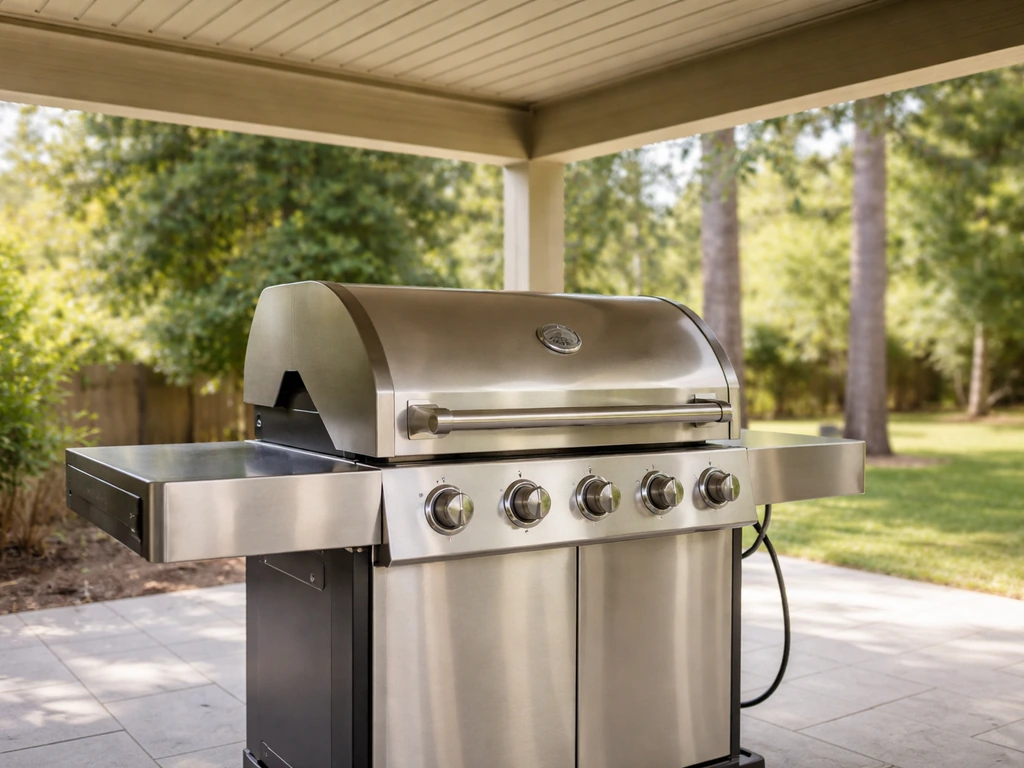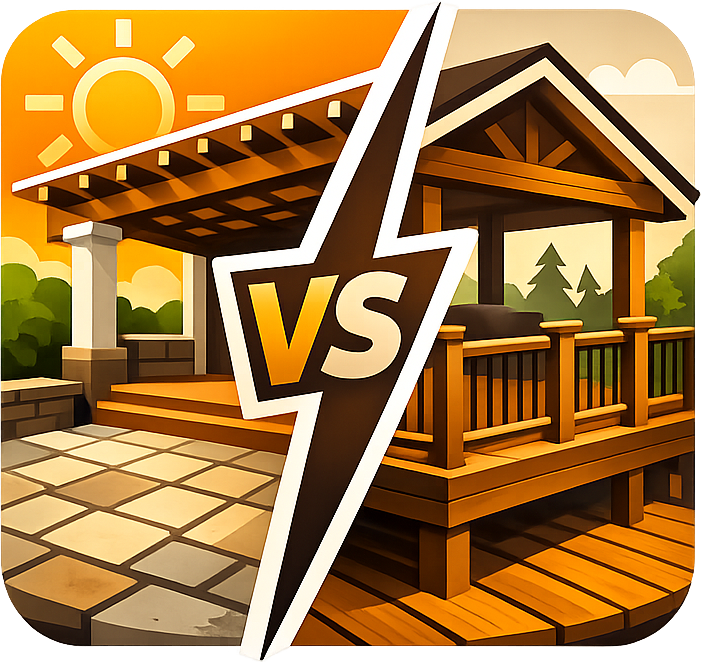
A covered patio is most commonly called a patio cover, and that is the term you will see in building codes, contractor quotes, and permit applications. Some people call it a covered patio, a shade structure, or even a patio roof. All of these phrases describe the same thing: a roofed structure built over a ground-level patio area for shade and outdoor living. If the structure also has screened or solid walls, it becomes a screened enclosure or patio enclosure. If it is built on a raised platform, contractors typically call it a covered deck rather than a patio cover.
What Is a Covered Patio Called? Patio Cover Terms Explained

Miles Hart
12 May 2026
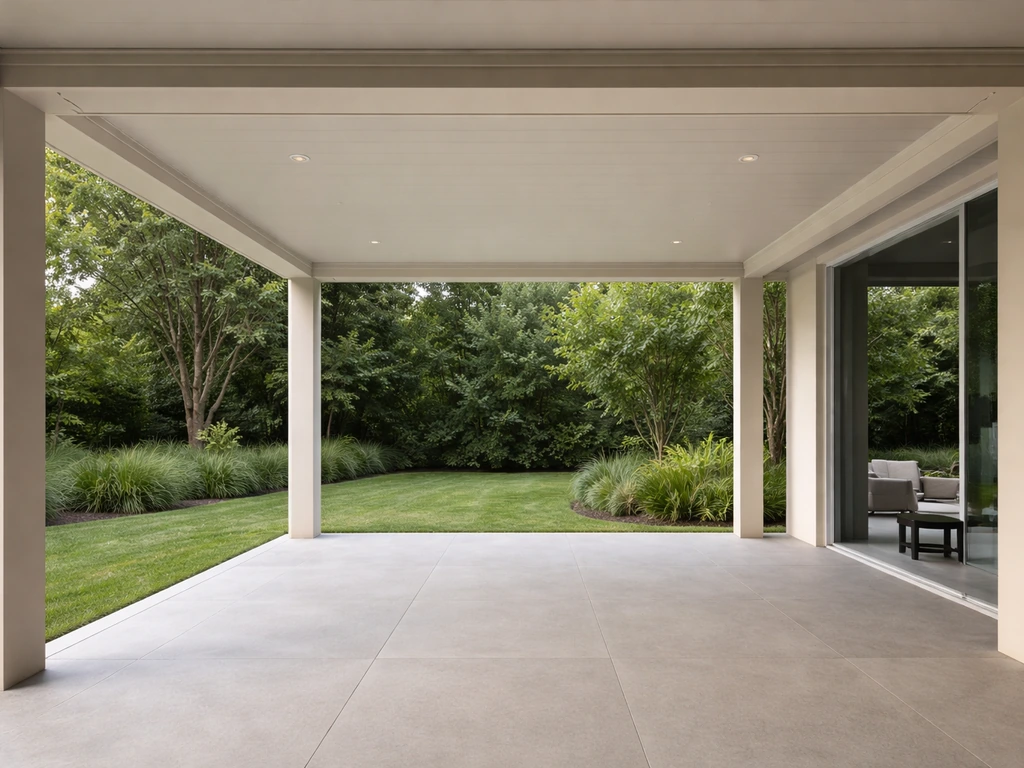
The common names (and why there are so many)
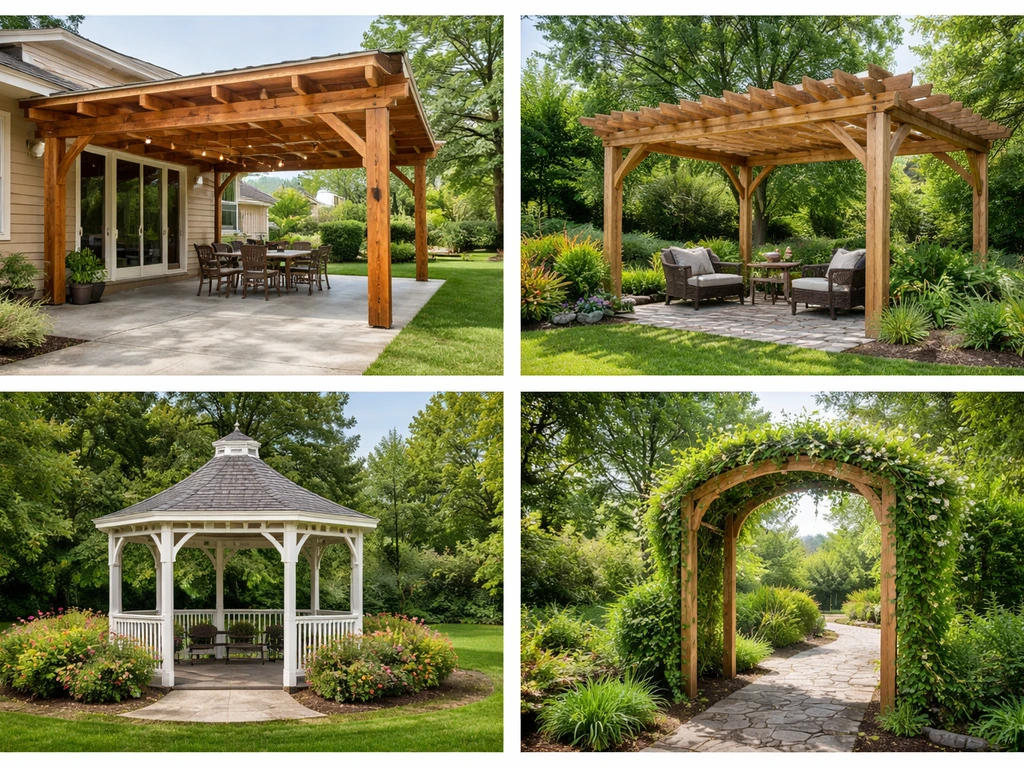
The Landscaping Network points out something any contractor will confirm: terms like patio cover, pergola, gazebo, arbor, and shade structure get used interchangeably all the time, which causes real confusion when you are trying to get accurate quotes. Knowing the distinctions is genuinely useful before you make a single phone call.
Here are the names you will actually encounter, in rough order of how often homeowners use them:
- Patio cover: the standard builder and permit term. It refers to a one-story roofed structure, attached or detached, built over a patio for recreational outdoor living. The California Building Code and the International Residential Code (IRC Appendix H) both use this exact phrase.
- Covered patio: a homeowner-friendly way to say patio cover. Contractors understand it immediately, though they will usually write "patio cover" in their proposal.
- Shade structure: a broader term that includes pergolas, shade sails, and anything else that blocks sun. When you say shade structure, contractors may not know if you want a solid roof or an open-lattice design, so you need to clarify.
- Pergola: technically an open-lattice or beam structure with no solid roof. It provides partial shade but not rain protection. Do not use this word if you want a solid roof.
- Gazebo: a freestanding, fully roofed structure, usually octagonal. It is not attached to the house and is used more for decorative seating areas than for extending your main patio.
- Patio enclosure or screened enclosure: a patio cover that also has screened or solid walls around the perimeter. Adds bug protection and privacy but typically requires additional permits.
- Awning or canopy: a fabric or lightweight metal cover that extends from the house wall. Smaller and less permanent than a patio cover, and treated very differently in building codes.
- Covered deck: the right phrase when the covered area sits on a raised wood or composite deck platform rather than a concrete or paver slab at ground level.
How a patio cover differs from a porch, pergola, and screened enclosure
A patio cover is defined in the IRC as a structure used only for recreational and outdoor living purposes. City of Chula Vista (CA) states that a patio cover is a one-story, roofed structure not more than 12 ft above grade, used only for recreational and/or outdoor living purposes [recreational and outdoor living purposes](https://www.
chulavistaca. gov/departments/development-services/city-permits/patio-covers). It cannot be used as a carport, garage, storage room, or habitable room. It can have a solid roof, a lattice roof, or anything in between, and it can be attached to the house or completely freestanding.
What makes it a patio cover rather than a porch or an enclosure comes down to three things: whether it is at grade level, how enclosed it is, and how it connects to the house.
A porch is a covered projection from the main wall of the building. Ventura County code describes it as an unenclosed covered area attached to the exterior that creates a transition from outside to inside, typically at the front or back entry. The key difference from a patio cover is that a porch is considered part of the home's architecture and usually shares the home's roofline. Philadelphia's building code makes an important point: once you enclose a porch with walls or screens, it is no longer legally a porch and becomes part of the primary structure, which changes your permit requirements significantly.
A pergola is an open-lattice or beam structure. It gives you dappled shade but rain falls straight through. If you see a structure where you can clearly see the sky through the roof, it is a pergola or an arbor, not a patio cover. A gazebo is freestanding (never attached to the house), usually has a solid pointed or domed roof, and is treated as its own separate accessory structure. A screened enclosure adds bug screens or glass/acrylic panels around the perimeter of what would otherwise be a patio cover. An awning or canopy is fabric-based, usually attached to the house wall, and much smaller in scale. Building codes and contractors treat awnings as a completely separate product category.
How to identify what you have or what you actually want
Before you call a contractor, answer these three questions about your existing or planned outdoor space. They will determine what your structure is called and what permits and costs you are dealing with.
Is it open-air or enclosed?
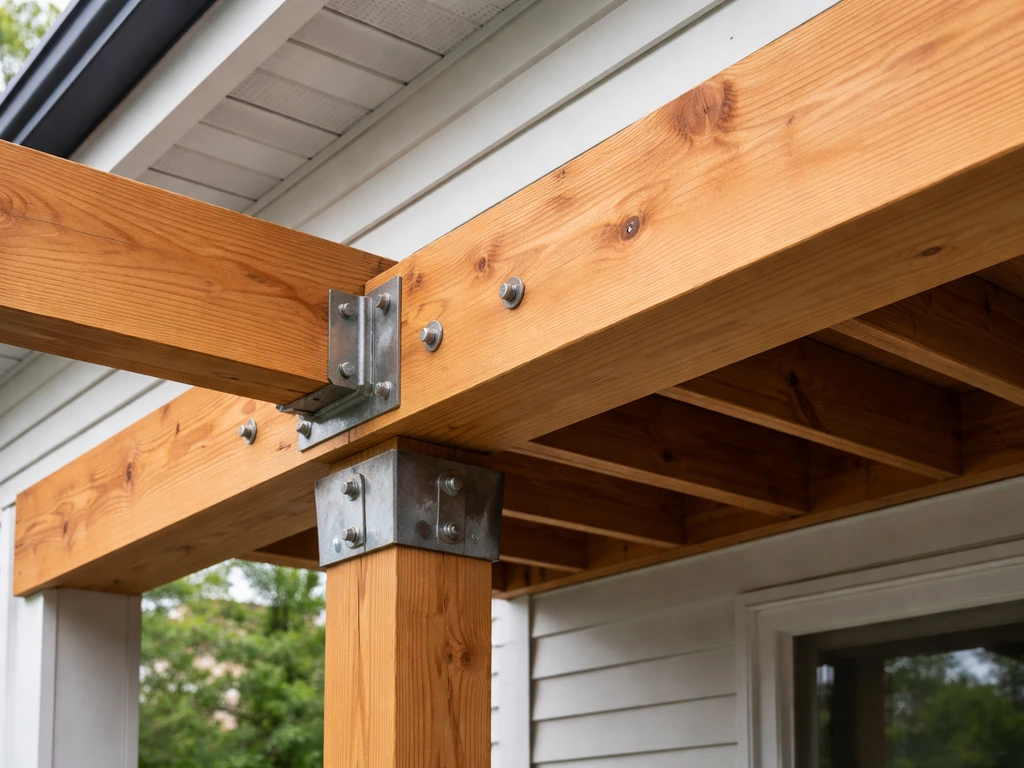
Most building codes define a patio cover as being open on at least three sides. The City of Woodland's patio cover definition is representative: the structure must be unenclosed (open on at least three sides) and covered overhead. If yours has solid or screened walls, it is an enclosure, not a plain patio cover. That distinction matters because enclosures fall under different code sections and often require more detailed permits.
Is it attached to the house or freestanding?
An attached patio cover has one side fastened directly to the home's exterior wall or roof framing. San Diego's building department requires attachment details and framing diagrams when one side is supported by the dwelling itself, because the load transfers to the home's structure. A detached patio cover is freestanding with its own posts and footings on all sides. Both are legitimately called patio covers, but the permitting process differs, and the cost can differ too since an attached cover typically needs a ledger board and proper flashing to prevent water intrusion.
Is it over a slab/pavers or a raised deck?
If your patio surface is a concrete slab or paver area at or near ground level, the cover above it is a patio cover. If the surface is a raised wood, composite, or PVC deck platform, contractors call the roof structure a covered deck or deck cover. Archadeck frames it this way: a deck with a roof is a covered deck, and using that term specifically helps contractors quote the right framing and attachment approach rather than defaulting to a patio-cover system that may not suit an elevated platform.
What to say to contractors and what to search for
The terminology you use directly affects the quotes you get. If you walk in saying you want a pergola when you actually want a solid roof, you will get proposals for an open-lattice structure. Here is how to phrase things for common scenarios:
- Solid roof, attached to the house, over a ground-level patio: say "attached patio cover with a solid roof" or "solid attached patio cover."
- Open-lattice or beam roof, attached or freestanding: say "pergola" or "open-lattice patio cover" if you want partial shade only.
- Roof plus bug screens around the perimeter: say "screened patio enclosure" or "patio cover with screen enclosure."
- Roof over a raised wood or composite deck: say "covered deck" or "deck with a roof."
- Small fabric cover attached to the wall: say "retractable awning" or "fixed awning" depending on whether you want it motorized.
- Freestanding roofed structure for a seating area away from the house: say "detached patio cover" or "gazebo" if it is octagonal/decorative.
For online searches, the most precise phrases are "patio cover installation," "attached patio cover," or "covered patio build." Searching for "pergola" will pull up mostly open-lattice results. Searching for "patio enclosure" will pull up screen rooms and sunroom-style builds, which are a bigger project and a bigger budget. Matching your search term to your actual goal saves a lot of time filtering out irrelevant results.
Covered patio vs porch vs deck cover vs screen enclosure: quick comparison
| Structure | Surface | Attached or freestanding | Enclosed? | Rain protection | Typical cost range | DIY feasibility |
|---|---|---|---|---|---|---|
| Patio cover (solid roof) | Ground-level slab or pavers | Either | Open on 3+ sides | Yes | $4,500 to $12,000 (avg $8,500) | Moderate: needs framing/permit skills |
| Pergola (open lattice) | Slab, pavers, or deck | Either | Open on all sides | No | $2,000 to $6,000 | Good for experienced DIYers |
| Covered deck (deck with a roof) | Raised wood/composite deck | Usually attached | Open on 3+ sides | Yes | $6,000 to $15,000+ | Moderate to hard: elevated framing |
| Porch | Typically concrete or wood at entry | Always attached | Open (enclosed = enclosure) | Yes (shares home roof) | Varies widely by scope | Rarely DIY: ties into home structure |
| Screen enclosure | Slab, pavers, or deck | Either | Screened on all sides | Yes (with roof) | $2,000 to $2,800 (screen materials for 200 sq ft) | Moderate: screen framing is manageable |
| Awning / canopy | Any | Usually attached to wall | No walls | Partial | $500 to $3,500 | Easy: most are kit-based |
A few trade-offs worth naming directly. A pergola costs less and looks great but offers zero rain protection, which matters a lot if you plan to use the space for grilling, outdoor TVs, or just regular afternoon use. If you want to grill under your patio cover, focus on choosing a roof and ventilation setup that keeps smoke and heat manageable grilling under a patio cover.
If you are wondering about using a chiminea on a covered patio, also check clearances and whether your setup is safe under the roof material. If you are planning to grill under a covered patio, you should also check ventilation and clearance requirements for your specific smoker or grill type. A screened enclosure solves the bug problem that a plain patio cover does not, but it adds structural complexity and cost.
If you are also thinking about whether you can grill, use a smoker, or run a fire pit under your covered structure, those are separate questions that depend on your roof material, clearance height, and local fire codes. If you want to grill under a covered patio, make sure you also plan for safe clearance, ventilation, and any local fire-code requirements.
Pick your option and start planning costs and complexity
Once you know what to call what you want, here is a practical starting framework for budgeting and deciding whether to DIY or hire out.
Patio cover (solid roof, attached)
Angi's 2025 data puts the national average patio cover installation at $8,500, with most projects landing between $4,500 and $12,000. Size, roof material (aluminum panel, corrugated polycarbonate, shingles), and whether you need a permit engineer for the attachment drawings all push that number up or down. Attached patio covers almost always require a permit in suburban and urban areas. Budget for that separately, as permit fees can run $200 to $800 or more depending on your jurisdiction. DIY is possible if you are comfortable with ledger-board attachment, post footings, and reading your local code, but this is not a first-time project for most homeowners.
Screened enclosure
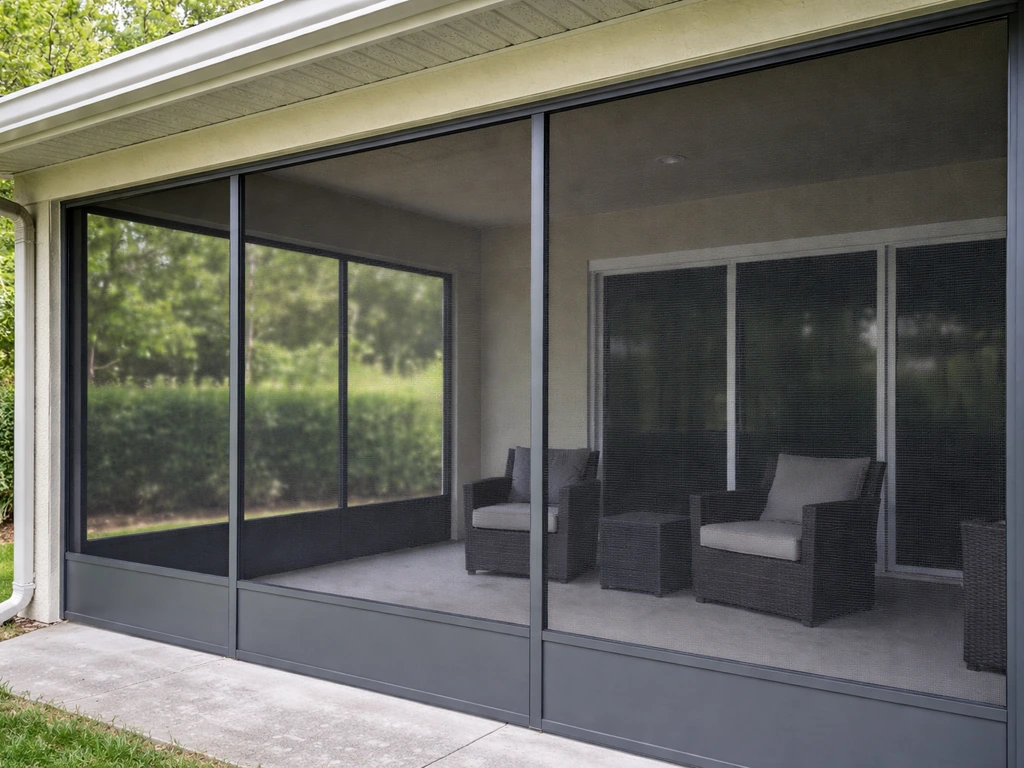
Adding screens to an existing patio cover is the least expensive enclosure path. HomeAdvisor's 2025 data puts screen materials at about $4.50 per square foot, so a 200-square-foot patio runs roughly $2,000 to $2,800 in materials. If you are starting from scratch with no existing roof structure, the total project cost climbs considerably because you need the cover first. Screen frame systems are one of the more manageable DIY enclosure projects, though getting the frame plumb and the screen tension right takes patience.
Covered deck
Costs run higher than a ground-level patio cover because you are dealing with elevated framing, often more complex attachment to the home, and sometimes structural engineering for the deck itself. Expect $6,000 on the low end and $15,000 or more for larger or more complex builds. This is generally not a DIY project unless you already have deck-building experience, because errors in elevated roof framing carry real safety risk.
Pergola
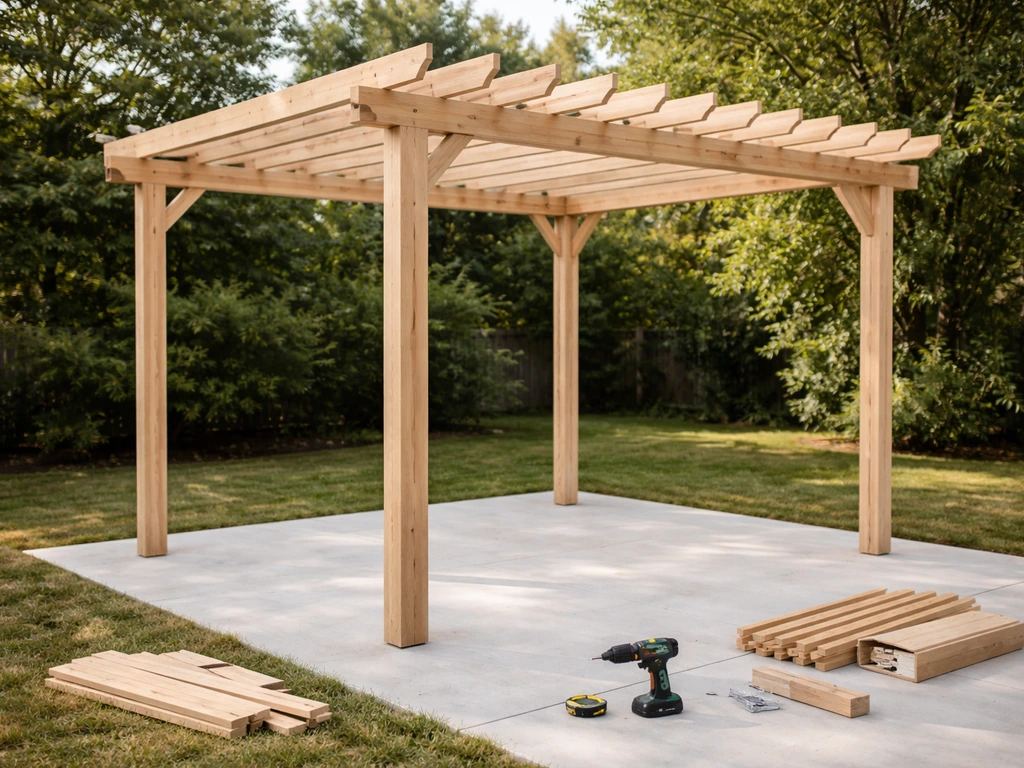
The most DIY-friendly option on this list. Kit pergolas from major home improvement stores can be assembled by two people over a weekend for $1,500 to $4,000 in materials. Custom-built wood or aluminum pergolas run higher. Just be honest with yourself about what you actually need: if you live somewhere with regular afternoon rain or you want to mount an outdoor TV or run speakers, a pergola with no solid roof is going to frustrate you quickly.
Your next concrete steps
- Identify your surface type (slab, pavers, or raised deck) and whether you want the cover attached to the house or freestanding.
- Decide whether you need a solid roof, open lattice, or full enclosure with screens based on your climate and how you plan to use the space.
- Check your local building department's website for patio cover permit requirements before contacting contractors. Many cities post their submittal checklists online.
- Use the correct terminology when requesting quotes: "attached patio cover with solid roof," "detached pergola," "screened patio enclosure," or "covered deck" depending on what you determined above.
- Get at least three quotes. Because the terminology is so loose in this category, ask each contractor to list the specific materials, roof type, and attachment method in writing so you are comparing the same thing.
FAQ
Is a covered patio ever called a carport or is that a different thing?
It should be treated as different categories. A patio cover is for recreational outdoor living and is typically not approved as vehicle shelter. If you are covering a driveway or trying to shelter a vehicle, contractors usually re-label it as a carport, which can trigger different structural and egress or clearance requirements.
If my patio cover has solid walls on two sides, is it still a patio cover?
Often no. Many codes and permitting rules key off “how enclosed” it is, for example open on at least three sides for a plain patio cover. If the walls are solid, screens, or panels that reduce openness, the structure may be reclassified as an enclosure, which can change the permit type and sometimes required plan details.
How do I tell whether my project is considered attached or detached before I talk to a contractor?
Look for direct structural support from the house. If one side is fastened to the home’s exterior wall or roof framing with proper ledger support, it is usually attached. If you have independent posts and footings that carry the roof load, it is typically detached. If you are unsure, ask the contractor whether the plan shows a ledger board and flashing, or post footings for every support.
What if the cover is for a hot tub or spa, does that change the term?
It can. Even if it sits over a patio, code officials may interpret the purpose as an accessory structure tied to a wet-use area. The cover may still be called a patio cover, but you should expect questions about ventilation, drainage, and safety clearances, especially if you plan heaters or enclosed screened sides.
Can I use the term “covered deck” and “patio cover” interchangeably when requesting quotes?
Not always. If the outdoor floor is a raised deck platform, contractors typically quote it as a covered deck because the framing and ledger attachment approach differs from a ground-level patio cover. Using the wrong term can lead to quotes that assume posts and footings at grade when you actually need deck framing reinforcement.
Will searching for “patio enclosure” always get me the right contractor for a screened-in patio?
Usually it helps, but it can also pull in sunroom-style builds that are larger and pricier. If you want screens only around the perimeter, try phrases like “screened patio enclosure,” “screen room,” or “patio cover with screens” so you get bids that match a less enclosed scope.
Are pergolas and arbors ever permitted the same way as patio covers?
Typically no. Pergolas are open-lattice structures where rain passes through, so permitting can be simpler. But if you add solid panels, a tight roof, or make it look like a fully roofed structure, the project may be reclassified. Before you buy materials, ask whether your local code treats your design as open shade or a roofed patio cover.
What is the fastest way to avoid getting quotes for the wrong product?
Send a one-paragraph description plus dimensions. Include roof type (solid vs lattice), whether it is open on three-plus sides, attached vs detached intent, and whether the structure covers a raised deck or ground-level slab. Contractors quote more accurately when you specify these details instead of relying on one label.
If I plan to install an outdoor TV or speakers under the roof, should I mention that upfront?
Yes, it can affect the scope. Ask whether the contractor will include blocking or reinforcement for mounts, and whether wiring routes (power and low-voltage) are part of the build. Many patio cover plans assume lighting or none at all, so add this early to avoid retrofit costs.
Next Article
Can You Grill Under a Covered Patio? Safety Guide
Learn if you can grill under a covered patio, with safe clearance, ventilation tips for gas, charcoal, and pellet grills