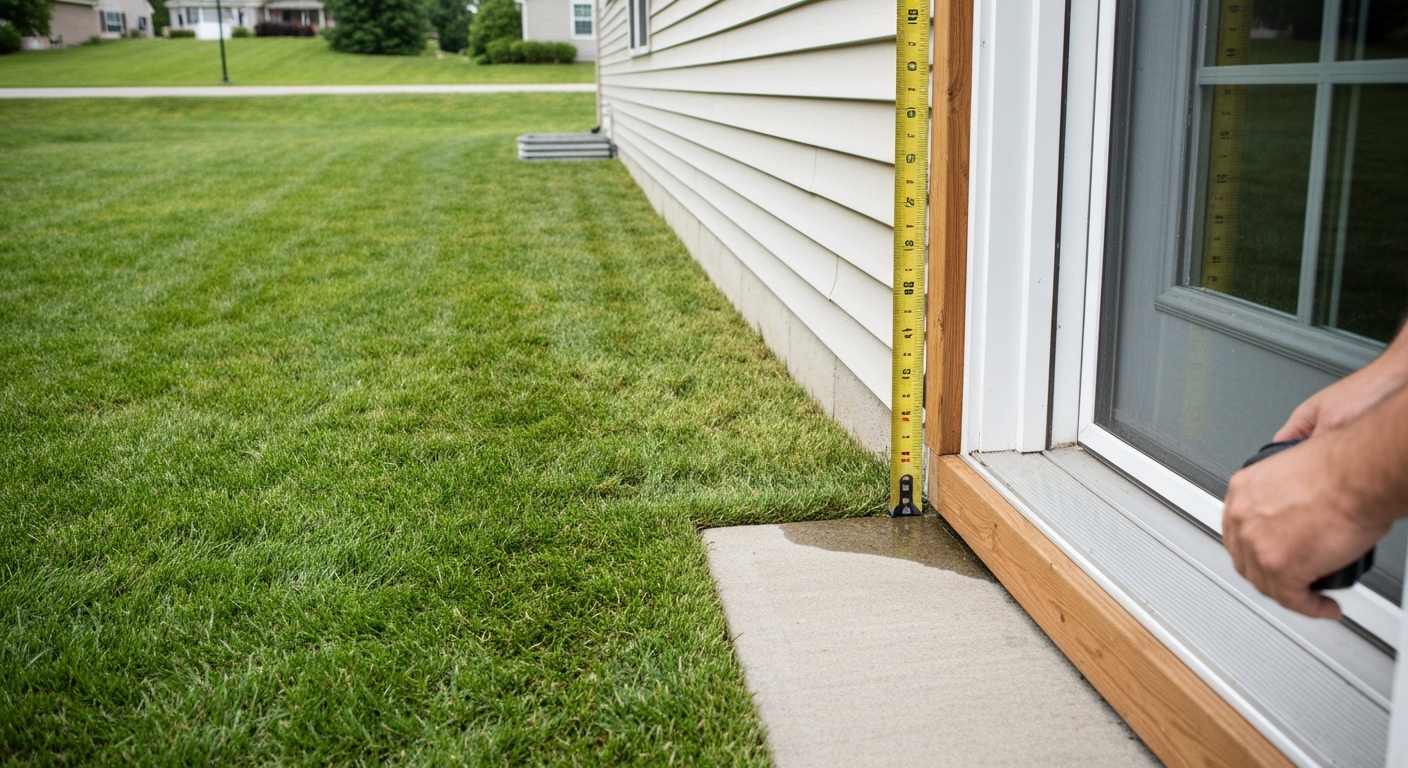
You can grill under a covered patio, but only under specific conditions, and several major grill manufacturers explicitly warn against it in their manuals. The key variables are your roof material, how much clearance you have above and around the grill, and whether the space is open enough to vent heat and smoke safely. Get those three things right and you can grill under a covered patio without a problem. Get them wrong and you are looking at a real fire hazard, carbon monoxide risk, or a voided warranty.
Can You Grill Under a Covered Patio? Safety Guide

Miles Hart
11 May 2026
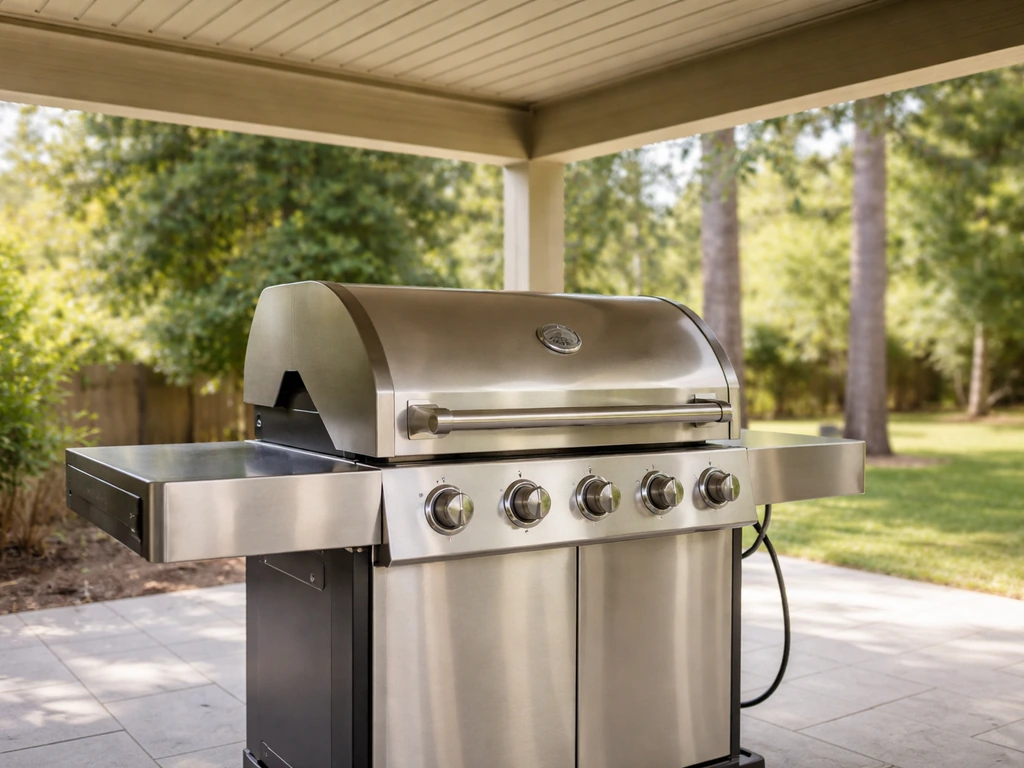
What "covered patio" actually means for grilling
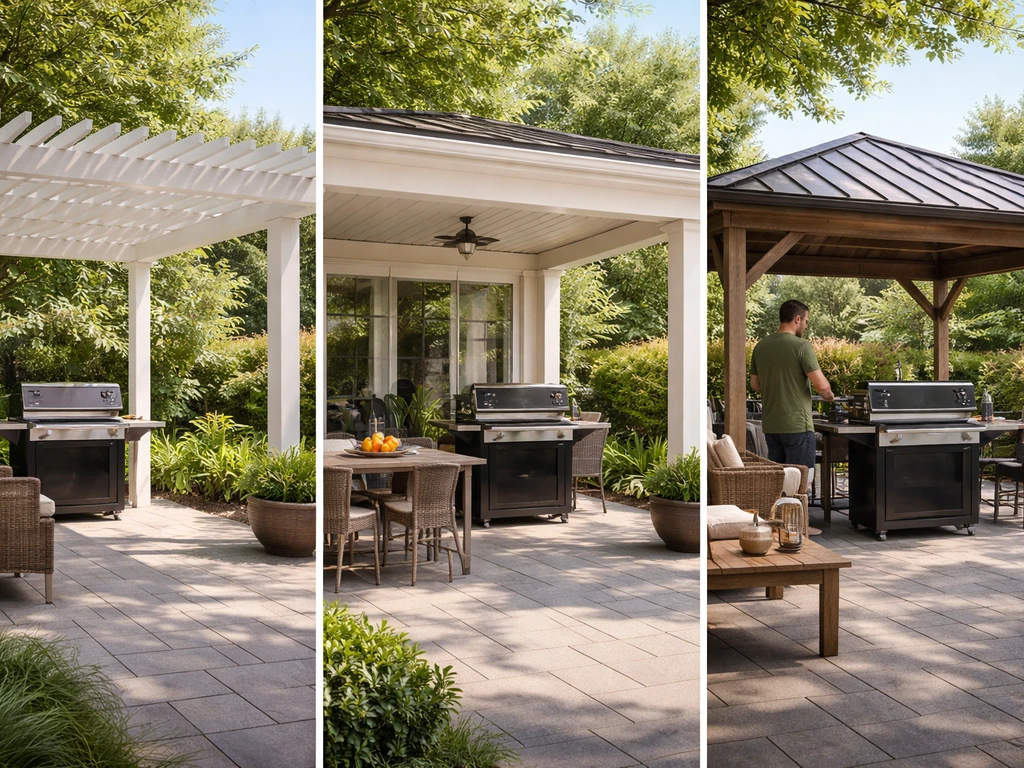
A covered patio can mean a lot of different things: a simple pergola with open slats, a solid wood or vinyl patio cover, a metal roof on a freestanding structure, a concrete or tile roof attached to the house, or a fully enclosed screen room. That distinction matters enormously when you are deciding whether to put a grill under it.
The two factors that determine whether your covered patio is grill-friendly are the roof material (combustible vs. noncombustible) and the openness of the space. A combustible overhead surface is anything made of wood, vinyl, composite, or other materials that can ignite from sustained heat or an ember. A noncombustible surface is concrete, metal, tile, or masonry. Most residential patio covers use wood framing at a minimum, which qualifies as combustible even if the roofing itself is metal or tile.
Openness matters because grills produce heat, smoke, and in the case of gas and charcoal, carbon monoxide. A patio that is open on two or more sides with good airflow is very different from one that has screen walls, glass panels, or is built into a corner. The more enclosed the space, the more dangerous it becomes. If you have been wondering about similar heat-source questions like using a fire pit or a chiminea under a covered patio, the same ventilation principles apply there too. Fire pit use under a covered patio should be treated the same way, with extra attention to overhead combustibles and ventilation fire pit under a covered patio.
Gas vs. charcoal vs. pellet grills: how each one changes the risk
Not all grills behave the same under a covered structure, and the type of grill you have changes your ventilation needs, fire risk, and what the manufacturer allows. Here is how they break down.
| Grill Type | CO Risk | Heat/Flame Risk | Manufacturer Stance | Usable Under Covered Patio? |
|---|---|---|---|---|
| Gas (propane/natural gas) | Moderate | High (open flame) | Most warn against combustible overheads; some allow with clearance on noncombustible structures | Yes, with strict clearance and ventilation |
| Charcoal | High | High (open flame + embers) | Most manufacturers explicitly prohibit covered/overhead use | Generally no; requires very open structure |
| Pellet | Moderate | Moderate (enclosed burn pot, but hot exhaust) | Several manuals explicitly prohibit use under any ceiling or overhang | High risk; most manufacturers say no |
Gas grills
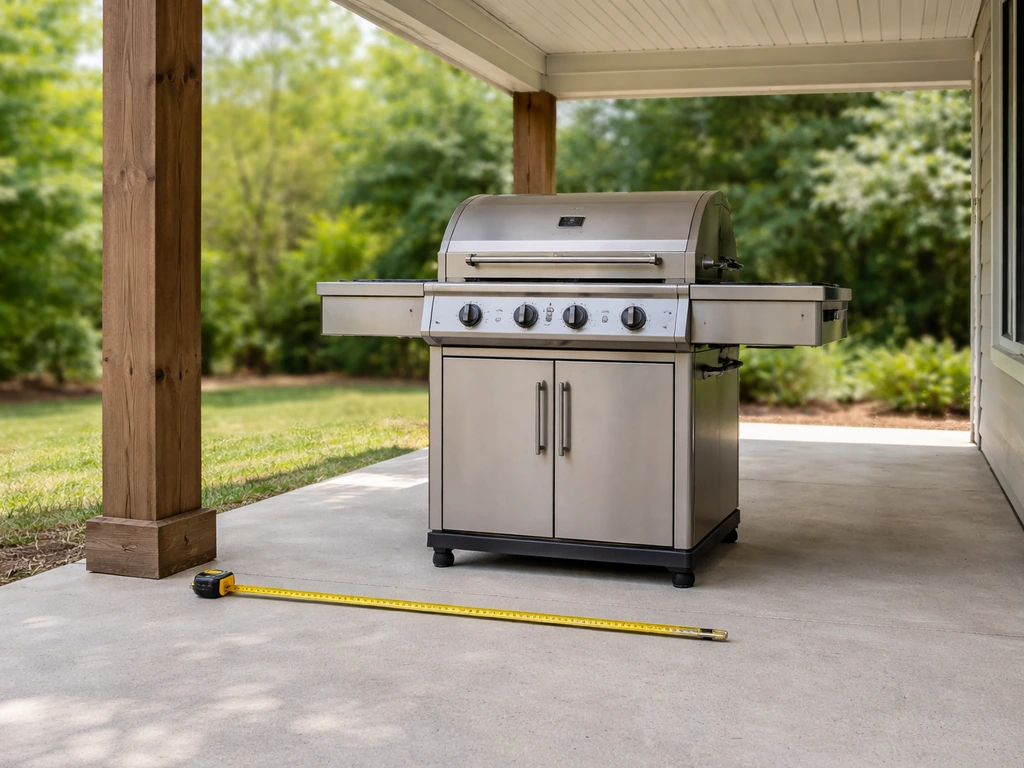
Gas grills are the most commonly used under covered patios, and they have the most detailed manufacturer clearance guidance. Weber's Genesis E360 and E460 installation guides include explicit warnings against using the grill under overhead combustible construction, and the Weber Q3600N+ guide specifies an 18-inch (457 mm) minimum clearance to any combustible surface. Wolf's outdoor grill documentation goes further, stating that their OG, SB, and BM products cannot be installed in any type of enclosed or covered area with a roof or overhang at all. So even with gas, you need to check your specific model's manual before assuming it is approved for covered use.
Charcoal grills
Charcoal is the riskiest option under a covered patio. Weber's charcoal grill owner's guide explicitly states: do not use this grill under any overhead combustible construction. Cuisinart's safety care manual goes even further, saying do not use in enclosed spaces such as a covered patio, and specifically calls out porches and gazebos as prohibited environments. The reasons are straightforward: charcoal produces the most carbon monoxide of any common grill fuel, throws embers that can travel, and takes longer to cool down. If you really want to use charcoal under your patio, you need an extremely open structure, ideally open on three sides, with no combustible overhead at all.
Pellet grills
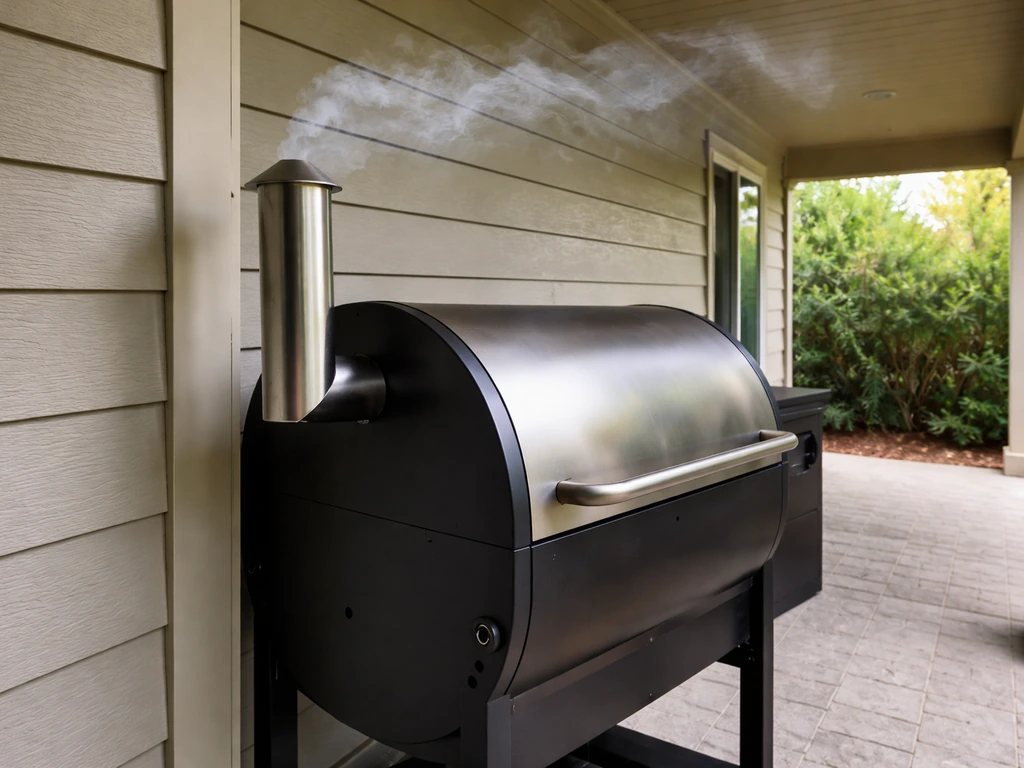
Pellet grills are becoming common on covered patios because they look and feel more like outdoor appliances, but the manufacturer warnings are some of the strictest of any grill type. One pellet grill manual hosted by Tractor Supply explicitly states: DO NOT OPERATE THIS GRILL UNDER A CEILING OR OVERHANG. blank" rel="noopener noreferrer">Coleman's Cookout pellet grill manual requires proper clearances and safe electrical setup. Pellet grills also add an electrical connection requirement, which introduces another hazard in a wet outdoor environment. These are not built for covered-patio use by most manufacturers, full stop. If you are also considering a smoker under your covered patio, the same restrictions apply and arguably more so, since smokers produce even more sustained smoke and heat. If you are specifically asking can you use a smoker under a covered patio, treat it like any other high-smoke heat source and double-check clearance and ventilation requirements first smoker under your covered patio.
Fire safety, code requirements, and clearances you need to know
Manufacturer warnings are not just liability language. They reflect real clearance physics. The standard minimum clearance to combustible surfaces for most gas grills is 18 inches on the sides and rear, and more than that overhead. For built-in gas grills, many require 36 inches or more of vertical clearance above the cooking surface to any combustible material. Noncombustible surfaces like concrete or masonry walls have lower clearance requirements, sometimes as little as 3 to 6 inches for side clearances, but overhead noncombustible clearance still needs to be generous enough to allow heat to escape.
On the code side, most jurisdictions follow the International Residential Code (IRC) or local fire codes that restrict open-flame appliances within a certain distance of combustible structures. Many local codes require a permit for a built-in outdoor grill or a permanently plumbed gas line. A freestanding portable grill generally does not require a permit, but it still must comply with clearance rules and any HOA restrictions. Check with your local building department if you are planning a built-in installation, especially if you are running a natural gas line.
Carbon monoxide is the hazard people underestimate most. CO is colorless and odorless, and it builds up in partially enclosed spaces faster than most people expect. Even a partially screened patio can trap enough CO from a charcoal grill to be dangerous within 30 minutes. If your patio has walls, screens, or is positioned in a corner where airflow is limited, treat it like an enclosed space for CO purposes.
How to set up and operate a grill safely under a covered patio
If your covered patio meets the clearance and ventilation requirements, placement and setup habits are what keep it safe day to day. Can you bbq under a patio? If you have enough clearance and good airflow, you can operate a grill more safely, but always follow the manufacturer’s manual. Do you need an outdoor TV for a covered patio? The same clearance and ventilation concerns apply, so plan for safe placement and enough airflow around heat sources your covered patio. Here is how to approach it practically.
- Measure your overhead clearance first. Get a tape measure out before you do anything else. You need at least 36 inches from the top of your grill's open lid to the nearest overhead structure. More is always better. If you cannot meet that clearance, move the grill out from under the cover.
- Identify your roof material and framing. Even if your roofing is metal or tile, check whether the framing underneath is wood. If it is, you have combustible overhead construction and the most restrictive clearance rules apply.
- Position the grill at the open edge of the patio, not in the middle or against a wall. The closer to the open perimeter, the better the natural airflow and the faster heat and smoke clear.
- Never place the grill against a wall, in a corner, or beneath a low-hanging ceiling fan. Ceiling fans over a grill are a fire risk and will circulate smoke into the space.
- For gas grills, check all connections before each use and never leave the grill unattended while lit. Keep the propane tank outside the covered area or in a well-ventilated spot, never stored in an enclosed cabinet under the patio.
- Plan for rain and wind. A patio cover helps protect the grill from rain, which is genuinely useful, but wind direction matters. If wind pushes smoke and heat back toward the structure, that is a problem. Orient the grill so prevailing winds move exhaust away from the overhead cover and any walls.
- Install a CO detector rated for outdoor use if your patio has any enclosed sections, screens, or walls. This is a low-cost step that provides real protection.
Best practices, common mistakes, and alternatives if it does not work
Best practices
- Use a gas grill over charcoal or pellet if you must grill under a covered patio. Gas produces less CO and no embers.
- Keep a fire extinguisher rated for grease fires (Class K or ABC) within arm's reach on the patio.
- Clean grease traps and drip pans before every use. Grease fires are the most common cause of grill-related structure fires.
- If your patio roof has a soffit, check for discoloration or soot buildup after each use. That is a sign heat and exhaust are accumulating and you need to move the grill outward.
- Never grill during high-wind events. Wind can push flames and embers unpredictably under a covered structure.
- Check your homeowner's insurance policy. Some policies have exclusions or require disclosure of outdoor grilling setups, especially built-in gas grills.
Common mistakes to avoid
- Assuming a metal roof means you are safe. Metal roofing over wood framing is still combustible overhead construction.
- Relying on a ceiling fan to ventilate the space. Fans circulate air but do not exhaust smoke or CO the way open sides do.
- Using a portable charcoal grill because it seems less serious than a built-in gas grill. Portable charcoal grills produce more CO and ember risk than built-in gas, not less.
- Placing the grill under the deepest part of the patio to keep it sheltered from rain. That is usually the least-ventilated spot and the worst place for a grill.
- Ignoring manufacturer warnings because the patio looks open enough. If the manual says no overhead use, that warning applies to your setup.
Alternatives if your covered patio does not meet the requirements
If your current patio cover does not give you the clearance, ventilation, or noncombustible materials to grill safely underneath it, you have a few practical options. The simplest is to position the grill just outside the covered area, at the edge of the patio, where the overhead cover provides some weather protection without trapping heat and exhaust. Even a foot or two outside the roofline can make a meaningful difference in airflow.
If you want a more permanent solution, some homeowners build a dedicated grill station with a noncombustible canopy, essentially a metal or concrete structure designed specifically for outdoor cooking with open sides and a heat-tolerant overhead. A covered patio is often described as a patio cover or outdoor roof structure that shields the grilling area from sun and light weather. These are different from a standard patio cover and are sometimes called grill gazebos or outdoor kitchen covers. People often use terms like outdoor covered patio or outdoor kitchen cover to describe purpose-built structures for grilling outdoor kitchen covers. They are engineered for the purpose rather than retrofitted from a standard patio roof.
You can also look at upgrading your existing covered patio's ventilation. A pergola-style cover with open slats, or replacing a solid patio roof section with a louvered panel system, can bring a previously enclosed patio into safe territory for gas grilling. This is a structural change that may require a permit, but it solves the problem at the source rather than working around it.
Your grilling-under-a-patio safety checklist
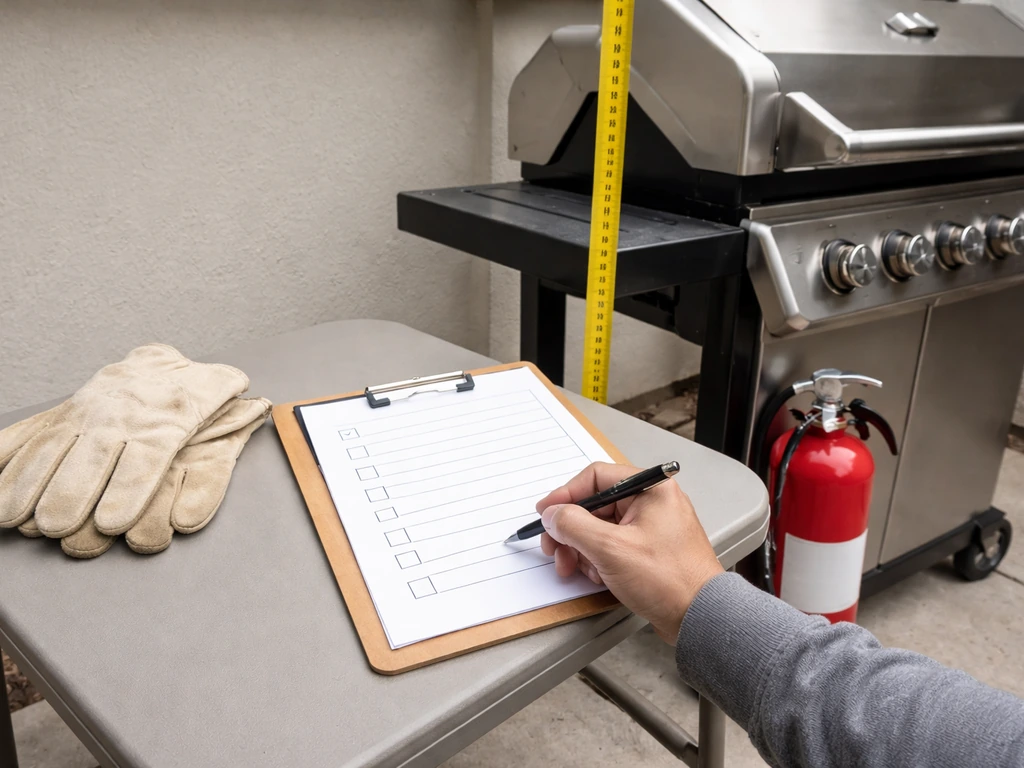
- Confirm grill type: gas is preferred, charcoal and pellet grills face the strictest restrictions.
- Measure vertical clearance from open lid top to the nearest overhead surface: minimum 36 inches, more if the manufacturer requires it.
- Identify roof framing material: wood framing equals combustible overhead construction regardless of roofing material.
- Check your specific grill's manual for covered or overhead use restrictions before placing it.
- Position the grill at the open perimeter of the patio, not in a corner or against a wall.
- Confirm the space is open on at least two sides with no screens, walls, or barriers that restrict airflow.
- Install an outdoor-rated CO detector if the patio has any enclosed sections.
- Keep a Class K or ABC fire extinguisher accessible on the patio.
- Check local building codes and HOA rules if running a gas line or installing a built-in grill.
- Review your homeowner's insurance policy for any outdoor grill disclosures or exclusions.
FAQ
Can you grill under a covered patio if the grill is placed right at the edge of the roofline?
Often yes, but only if the top of the grill, flue, and heat plume have the clearance your manufacturer specifies. Aim for placement so hot exhaust is not directed under the roof, and measure from the cooking surface to any combustible overhead, not just from the sides of the firebox.
Does a screen enclosure (or glass wind panels) count as “open enough” for grilling under a covered patio?
Usually it does not. Screens and glass can restrict airflow enough to trap heat and carbon monoxide, especially in corners or partially enclosed bays. Treat screened patios as enclosed for CO risk, then follow the strictest clearance guidance your grill manual provides.
What clearance measurements should I use, and where exactly do I measure from?
Measure from the cooking surface and any heat-exhaust point to the nearest combustible overhead surface, and from the grill’s sides and rear to nearby combustibles. Also account for the grill lid open position, because clearance needs often change when the lid is raised.
If my patio cover is noncombustible (like tile or metal), is it automatically safe to grill under it?
Not automatically. Many roofs are noncombustible on the surface but still have combustible framing (wood, vinyl trim, composite materials) overhead. Check for combustible structure under the roof, and follow clearance rules to any combustible component, not just the visible top layer.
Can you use a pellet grill under a covered patio if you keep the lid open and use a long preheat?
No, because the restrictions are typically about operation under an overhang or ceiling regardless of lid position or cooking duration. Also, pellet grills can generate sustained heat, so “short sessions” do not reliably reduce the clearance requirement or the manufacturer’s prohibition.
Is it safer to use charcoal under a covered patio if I use a charcoal chimney and start outdoors?
Starting outdoors does not solve the CO and ember hazards once the grill is moved or the lid remains under the cover. Charcoal manuals often prohibit use under overhead combustibles entirely because CO can accumulate quickly in partially enclosed spaces.
Can I grill under a covered patio on a windy day or with a stronger fan?
Wind can help airflow but it is not a controllable safety measure, and it can also push heat toward combustible surfaces. Fans may move smoke locally but they do not replace the required clearances or ensure safe CO dissipation, so do not treat ventilation boosters as a workaround.
What about running a natural gas grill under a covered patio, are there extra requirements?
Yes. Beyond clearance, ensure the gas line and regulator connections are rated for outdoor use and protected from moisture. If your grill is built-in or plumbed, many jurisdictions require a permit and inspections, and you should confirm the approved installation location with local rules.
Can I mount a grill station hood or add a small vent directly under the patio cover?
Only if it is specifically designed for outdoor cooking and installed to code with proper clearances. Improvised venting, ducting, or enclosing parts of the area can trap heat and CO, and some setups can be worse than leaving it open.
How can I reduce CO risk if I’m determined to grill in a partially covered area?
Choose fuels and appliances that the manufacturer explicitly allows in covered settings, and never rely on smell or short cooking times as a safety signal. Keep the area fully open on at least two or three sides when possible, use CO alarms rated for indoor/outdoor proximity where applicable, and shut down immediately if anyone feels headache, dizziness, or nausea.
Does a covered patio affect whether I can use an outdoor TV or other electronics near the grill?
Yes. Heat and smoke can damage electronics faster under a cover due to reduced dispersion. Maintain separate clearances from the grill, avoid mounting devices where hot exhaust can rise directly, and prioritize heat-resistant placement over convenience.
What should I do if my grill manual conflicts with local advice or my patio cover looks “safe”?
Follow the stricter rule set. Manufacturer instructions are typically tied to real clearance physics and warranty safety conditions, while local advice may be general. If you are unsure, contact the grill manufacturer with your model number and provide photos and measurements for overhead clearance and openness.
If my patio cover is not suitable, what’s the most practical upgrade path?
The most reliable options are either moving the grill just outside the covered area or building a purpose-designed grill canopy with noncombustible overhead and open sides. Retrofitting a standard solid patio roof to improve airflow, such as adding louvered sections, can help but may require permits depending on your local code.
Next Article
Grass Is Higher Than Patio: Causes, Fixes & Deck vs Patio
Grass higher than patio? Causes, slope checks, repair options, lower lawn, raise patio, or build a deck, with costs & DIY