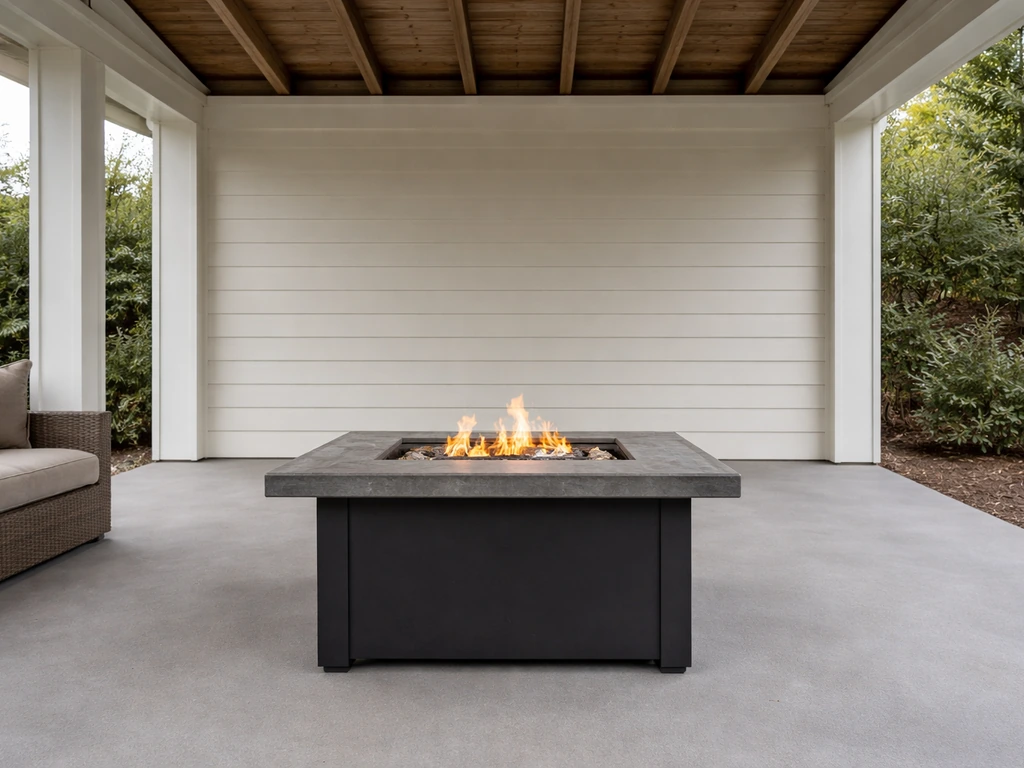
The most common term is simply a "covered patio" or "patio cover," but depending on how it's built and how enclosed it is, builders and permit offices might also call it a pergola, awning, porch, veranda, lanai, screened porch, or 3-season room. The name you use actually matters: it affects what permit you need, how much it costs, and what a contractor will quote you. Getting the right label upfront saves a lot of back-and-forth.
What Is an Outdoor Covered Patio Called? Names Explained

Miles Hart
17 May 2026
Common names for an outdoor covered patio
Most homeowners use these terms interchangeably, but each one describes a slightly different structure. Here's how builders and permit offices generally use them:
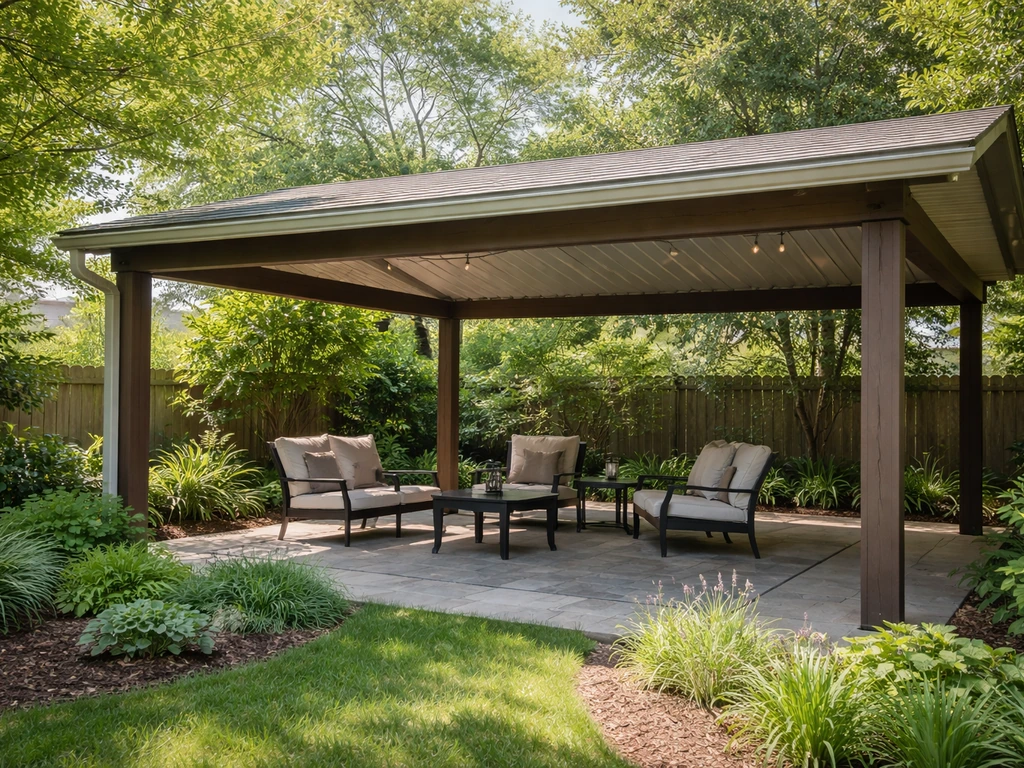
- Patio cover: The broadest and most official term. Building codes in California, for example, define a patio cover as a one-story roofed structure no more than 12 feet above grade, used strictly for recreational or outdoor living. It can be attached to the house or freestanding, and the walls can be open, screened, or glazed.
- Covered patio: Everyday homeowner language for the same thing. If you say 'covered patio' to a contractor, they'll picture a solid or lattice roof over a ground-level concrete or paver slab.
- Pergola: A structure with an open or slatted roof (not solid), usually freestanding. It provides shade but not full rain protection. Often made from wood, aluminum, or vinyl.
- Awning: A fabric or metal cover attached directly to an exterior wall, usually with limited projection. Cities like Kettering, OH distinguish awnings from framed patio covers in their building codes because awnings have simpler structural requirements.
- Porch: A covered structure attached to and integrated with the house, typically at the front or back. It usually has a finished floor and sometimes a railing. The roof is part of the main house roofline.
- Veranda: Essentially a large wrap-around porch, common in older and Southern-style homes. Open-sided but roofed and attached to the house.
- Lanai: A Hawaiian term used heavily in Florida and the Southwest for a covered outdoor living space, often screened. It's functionally the same as a covered patio or screened porch.
- Screened porch or 3-season room: A covered patio or porch with screen walls (or in the case of 3-season rooms, glass or vinyl panels). Provides protection from bugs and weather while staying open to air. A 4-season room adds insulation and HVAC and crosses into habitable space territory.
Covered patio vs porch vs deck: how to tell them apart
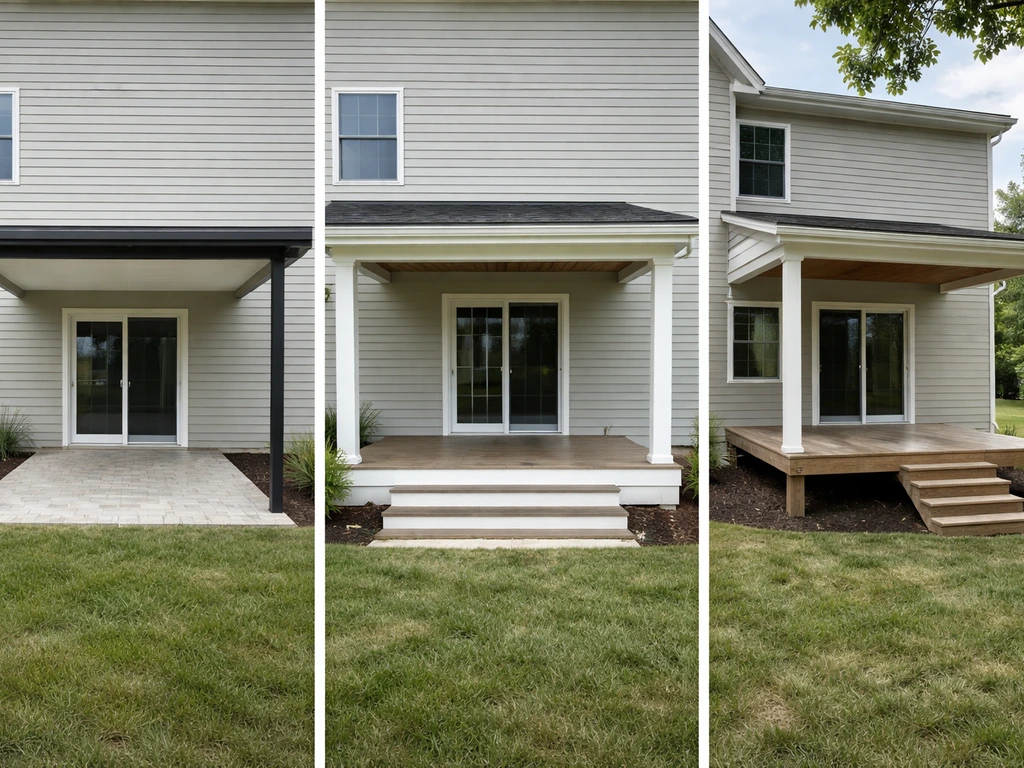
The easiest way to sort these out is to look at three things: what the floor is made of, how the roof attaches, and how far off the ground it sits.
| Structure | Floor type | Roof | Height off grade | Attachment |
|---|---|---|---|---|
| Covered patio | Concrete, pavers, or stone (ground level) | Solid, lattice, or fabric | At or near ground level | Attached or freestanding |
| Porch | Wood, composite, or concrete | Integrated with house roofline | Varies, often raised | Always attached to house |
| Deck | Wood or composite boards | Usually none (uncovered) | Often elevated | Attached or freestanding |
| Pergola | Any (structure sits on top) | Open slats or beams | At grade or elevated | Attached or freestanding |
| Screened porch / Lanai | Concrete or wood | Solid roof with screen walls | At grade or slightly raised | Usually attached |
If your outdoor space has a concrete or paver floor that's at ground level and a roof overhead, it's a covered patio. If it has a wood-framed floor raised above grade, it's more likely a deck or porch. A porch is almost always attached to the house and has a roof that flows from the main structure. Decks are typically uncovered unless someone has added a patio cover or pergola on top of them.
Roofed vs enclosed: patio covers, pergolas, screened rooms, and everything in between
Once you know your floor type, the next thing that defines the structure is how much overhead and side protection it has. This is also what pushes a project from a simple permit to a more complex one.
Open-roof structures (pergolas and trellises)
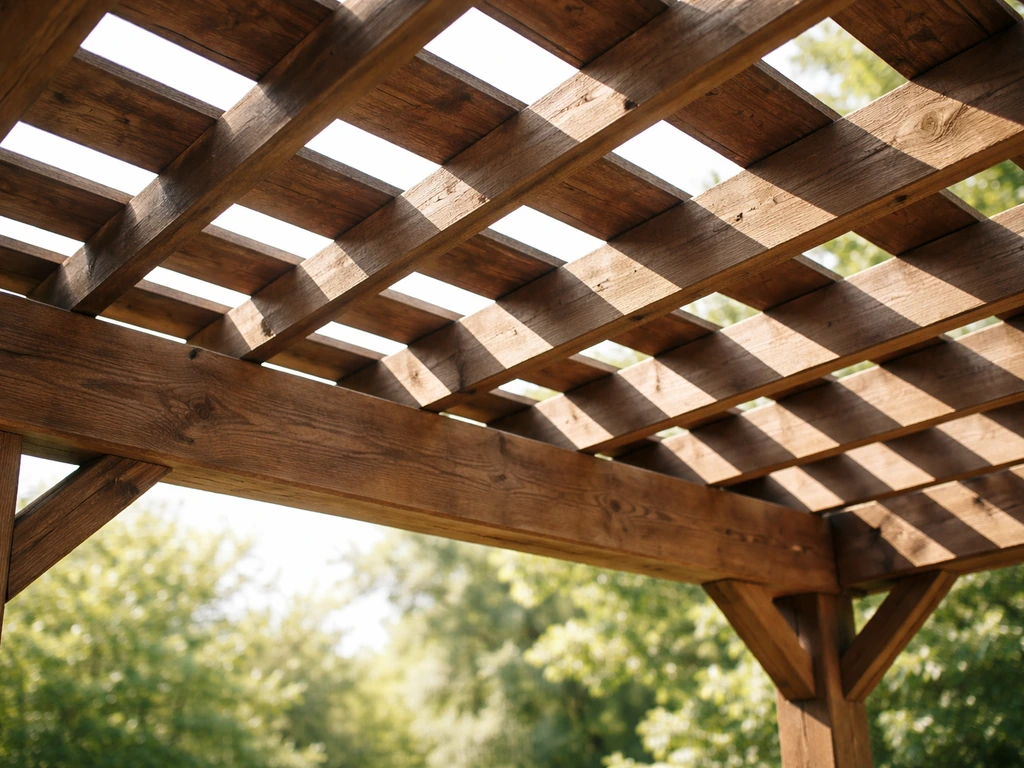
Pergolas and trellises have a framework of beams with gaps, so they filter sunlight but don't block rain. They're great for growing climbing plants and creating ambiance, but they won't keep you dry. Because they're not solid-roofed, many jurisdictions treat them differently than full patio covers in terms of permits. Some cities consider them accessory structures with simpler requirements; others still want a permit if they're over a certain square footage (commonly 200 square feet).
Solid-roof patio covers
A solid-roof patio cover gives you full rain and sun protection. The roof can match your house (shingles, tile, metal) or be made from aluminum, polycarbonate panels, or even insulated roof panels. Per building codes in cities like San Rafael and Woodland, CA, these are defined as patio covers only if the walls remain open or minimally enclosed on at least three sides. As soon as you start fully enclosing the walls with glass or solid panels, the structure may get reclassified as a sunroom or addition, which triggers different (and usually stricter) permits.
Screened porches and 3-season rooms
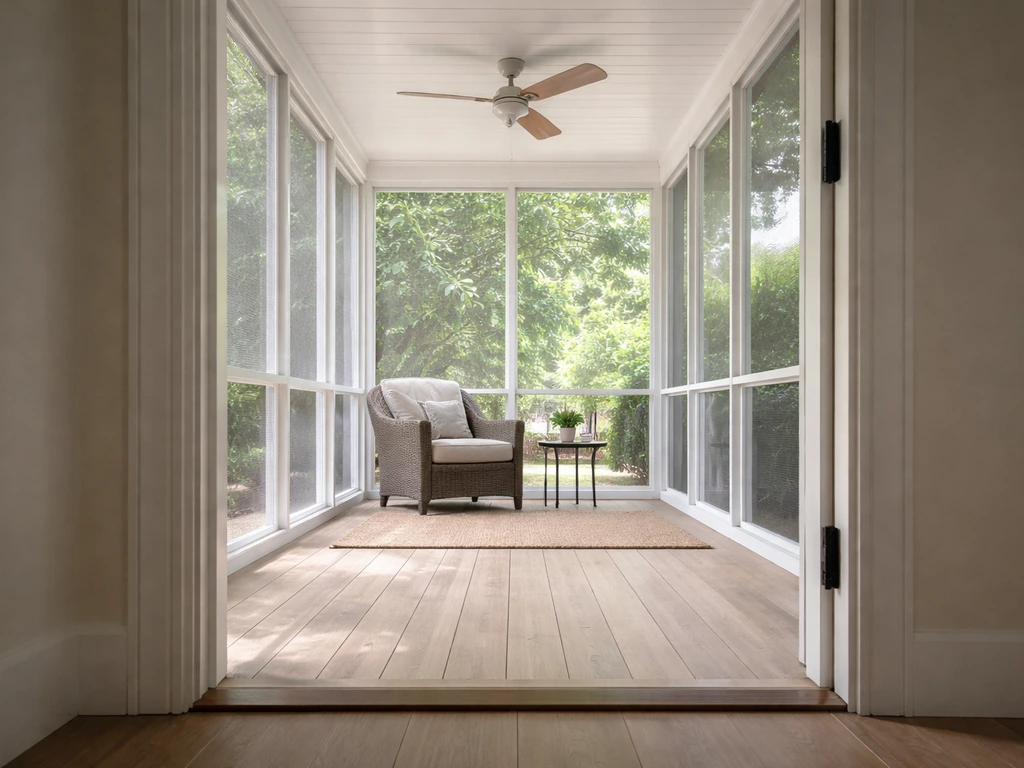
These are covered patios or porches with screen or panel walls. Screened porches use fiberglass or aluminum mesh, which keeps bugs out but lets air through. A 3-season room typically uses glass or vinyl panels that can be opened or removed, giving you weather protection from spring through fall. Once you add permanent insulated walls and climate control, you're in 4-season or sunroom territory, which is essentially a home addition. The permitting and cost jump significantly at that stage. If you're thinking about using your covered patio for grilling, fire pits, or smokers, the level of enclosure becomes especially important for safety and ventilation. If you want to can you grill under a covered patio, check the ventilation, clearance from the roof, and how much the enclosure blocks smoke before you light anything.
Planning your covered patio: location, permits, and design basics
Where it fits on your property
Before you pick a name for your structure, check your property's setback requirements. Most municipalities require covered structures to sit a certain distance from the property line, typically 5 to 10 feet on the sides and rear. Attached patio covers also need to meet the setback rules that apply to the main house. If you're in an HOA, you'll need design approval on top of the city permit, and some HOAs restrict visible materials or colors.
Permits: when you need one and what to call it
Most solid-roofed patio covers require a building permit. In San Rafael, the city’s CRC Appendix H language defines patio cover structures as one-story and not exceeding 12 feet in height with open or glazed walls, which helps determine whether the project is treated like a patio cover rather than a habitable structure most solid-roofed patio covers require a building permit. When you go to your local permit office, use the term "patio cover" rather than vague descriptions. That specific term maps to a defined category in most residential building codes. The city of Chula Vista, for example, uses California Building Code language to define a patio cover as a one-story structure not exceeding 12 feet in height at the eave, used for outdoor living. If your project fits that definition, you'll get a patio cover permit, which is simpler and cheaper than a room addition permit. Pergolas and trellises may fall under a different or lighter permit category, and awnings with limited projection (like Kettering, OH's 54-inch rule) sometimes require only a zoning review rather than a full building permit.
Design basics to nail down early
- Measure your existing patio slab or the area you want to cover before talking to anyone. Contractors quote by square footage.
- Decide if you want attached (tied to your house) or freestanding. Attached covers share your house wall for structural support; freestanding covers need posts on all four corners.
- Choose your roof style upfront: solid shingle/tile to match the house, aluminum pan roofing, polycarbonate panels, or open lattice. This affects cost, permits, and appearance.
- Plan for gutters. A solid roof dumps water somewhere, and you don't want that somewhere to be the base of your foundation.
- Think about what you'll use the space for. If you want a TV, outlets, or ceiling fans, add electrical to the permit now. Adding it later is more expensive.
What covered patios cost and what they do for home value
| Structure type | Typical cost range | Home value impact | Notes |
|---|---|---|---|
| Pergola (kit, DIY) | $1,500 – $5,000 | Low to moderate | Open roof; limited rain protection |
| Pergola (contractor-built) | $4,000 – $15,000 | Moderate | Depends heavily on materials and size |
| Aluminum patio cover (attached) | $5,000 – $15,000 | Moderate | Durable, low maintenance, mid-range appeal |
| Wood patio cover (solid roof) | $8,000 – $25,000 | Moderate to high | Matches house aesthetics; needs maintenance |
| Insulated roof panel cover | $15,000 – $35,000 | High | Best insulation; common in hot climates |
| Screened porch / 3-season room | $10,000 – $35,000 | High | Adds livable-feeling space; strong ROI |
| Sunroom / 4-season room | $25,000 – $80,000+ | High | Treated as addition; full permits required |
A well-built covered patio or porch addition typically returns 50 to 80 percent of its cost in resale value, though that number varies by region and how well the structure integrates with the house. In warmer climates like the Southeast, Southwest, and coastal areas, covered outdoor spaces are almost expected and carry stronger value impact. In colder climates, screened porches and 3-season rooms tend to get more value credit than a basic patio cover because they extend usability. The materials you choose also matter for appraisals: a patio cover that matches the house's roofing and trim reads as intentional design, which appraisers notice.
DIY vs hiring a contractor: what's realistic
What homeowners can realistically tackle themselves
A freestanding pergola from a kit is genuinely DIY-friendly for someone comfortable with basic tools. Manufacturers like Yardistry and Sojag sell complete kits with pre-cut lumber, hardware, and instructions. You can put one up over a weekend for $1,500 to $5,000 in materials. Attaching a simple shade sail or fabric canopy over an existing patio is even easier and permits-free in most places. If you're handy with framing and comfortable pulling permits, a basic attached patio cover with a prefab aluminum kit is also within reach, though you should expect to spend several weekends and be prepared for the permit inspection process.
When to hire a contractor
Anything that requires cutting into your existing roofline, tying into the house structure, running electrical, or pouring a new concrete slab should go to a licensed contractor. You can also use a smoker under a covered patio, but you should plan for safe ventilation and keep heat and smoke away from the roof materials. If you plan to mount an outdoor TV under a covered patio, you will also want to think about weatherproofing, power, and where the screen will be positioned for comfortable viewing outdoor TV for a covered patio. Solid-roof patio covers that attach to the house fascia or ledger need proper flashing to prevent leaks, and that's not a detail to improvise. Before you plan the grill placement, check whether you can bbq under a patio cover in your area and follow any ventilation or fire-clearance rules Solid-roof patio covers. Screened porches and 3-season rooms involve framing, roofing, screen or glass installation, and often electrical, so they're typically contractor jobs from start to finish.
What to ask when you talk to a contractor
- Are you licensed and insured for structural work in this state or county?
- Will you pull the permit, or is that my responsibility?
- Does your quote include footings or slab work if needed?
- What roof material do you recommend for this climate, and why?
- How will you flash and seal the connection to my house to prevent leaks?
- What's the warranty on labor and materials separately?
- Can you show me two or three completed projects similar in size and style?
Your next steps
Start by measuring the area you want to cover and sketching out whether you want it attached to the house or freestanding. Then check your local building department's website for the term "patio cover" to see what their permit threshold is (usually a square footage minimum and height maximum). A similar question is whether you can put a chiminea under a patio cover, which depends on clearances and whether your setup is considered a fire hazard. If you're searching real estate listings or contractor sites, use the specific term that matches your structure: patio cover for a solid-roofed ground-level space, pergola for an open-slatted structure, or screened porch if you want walls. Getting the vocabulary right means you'll get accurate quotes, pull the right permits, and avoid surprises during inspection.
FAQ
What should I call it on a permit application, patio cover or pergola or screened porch?
If you are applying for a permit, use the closest code term to your design, not just what people call it casually. For example, a solid roof with open sides is usually treated as a patio cover, while adding permanently fixed glass panels on three or more sides often starts looking like a sunroom category (which can change engineering, setbacks, and approvals).
Can my outdoor space still be called a covered patio if the floor is raised or on a deck?
You can have a “covered patio” feel but still be categorized differently if the floor is not at grade or if the roof attachment ties into a cantilevered deck. A raised wood platform usually triggers “deck or porch” assumptions, so expect different permit forms and railing requirements than a ground-level masonry patio cover.
At what point does a screened porch become a sunroom or home addition?
A screen enclosure that is not insulated can still be treated as a screened porch, but the moment you add weatherproofing intended to regulate temperature (insulated walls plus heat or A/C), you may cross into 4-season or sunroom territory. In practice, permitting often hinges on whether walls are permanent, whether systems are added, and how the structure is described in the drawings.
Is a freestanding patio cover permitted differently than an attached one?
Detached structures often fall under accessory-structure rules with different setback and height limits than attached patio covers. If you can fully describe it as freestanding on its own supports, you may avoid some “attached to house” requirements, but you still need to confirm setbacks, snow load or wind rating, and roof drainage requirements.
Do awnings always require the same permits as solid-roof patio covers?
Most jurisdictions look at how the roof projects beyond the house and whether the structure is effectively a permanent roof addition. A fabric canopy or shade sail may be treated as temporary or zoning-only if it does not form a solid enclosure and stays within projection limits, but a rigid aluminum roof tied into the building usually triggers a building permit.
Can I grill under a covered patio cover, and what usually gets people in trouble?
If you are using the patio cover for grilling, you need to treat it like an enclosed cooking area in terms of risk, even if it is not fully walled. Focus on clearance to combustibles, smoke movement away from the roof surface, and the type of grill (freestanding grill vs. built-in unit), because inadequate ventilation is a common inspection failure.
If I mount an outdoor TV under a patio cover, do I need extra permits or special wiring?
Yes, but placement matters. If a hardwired outdoor TV or mount requires power, it can change the scope of electrical permitting and inspection, especially when penetrations are made through the roof or fascia. Use exterior-rated wiring and plan cable routing so you do not rely on non-rated fasteners or weather-sealing DIY fixes.
Why do inspectors sometimes treat a structure as a pergola instead of a patio cover?
A common mistake is describing everything as “a patio cover” even when the structure has open-lattice beams, thatched or slatted roofing, or a roof that does not block rain. Because pergolas and trellises often filter light but do not form a solid roof, the permit category and the inspection items can differ.
Does using the right name or label affect resale value, or is it just design quality?
For value and resale, the integration details are what appraisers remember, not just the label. Matching roof color and trim, keeping the line-of-sight consistent from the main house, and avoiding awkward transitions between old and new surfaces can help the project read like a planned addition.
Next Article
Can You Have a Fire Pit Under a Covered Patio?
Learn if a wood or gas fire pit or fire table can go under a covered patio, including safety and code checks.