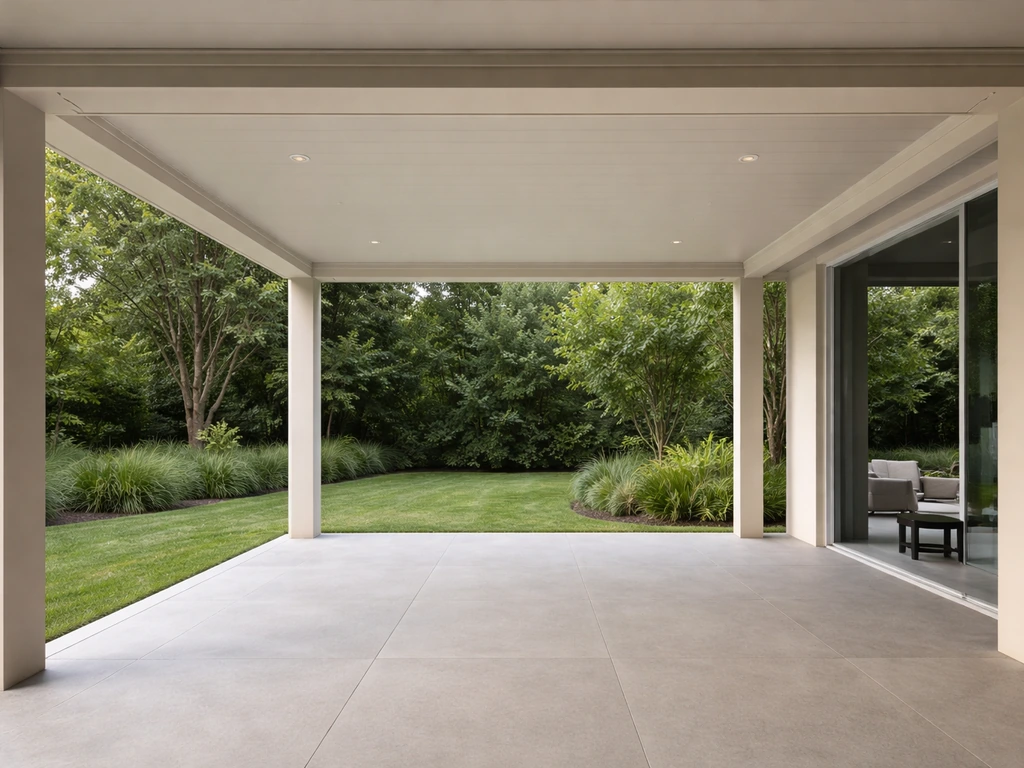
You can use a fire pit or fire table under a covered patio in some situations, but it depends heavily on the fuel type, your roof material and height, how open the structure is, and what your local codes allow. Gas and propane fire tables are generally the most workable option under a covered patio, provided you have adequate clearance above and around the unit, good airflow, and follow the manufacturer's installation specs. Wood-burning fire pits are a much harder case, and in many setups they're genuinely unsafe or outright prohibited under a covered structure. The details below will help you figure out exactly where you stand.
Can You Have a Fire Pit Under a Covered Patio?

Miles Hart
16 May 2026
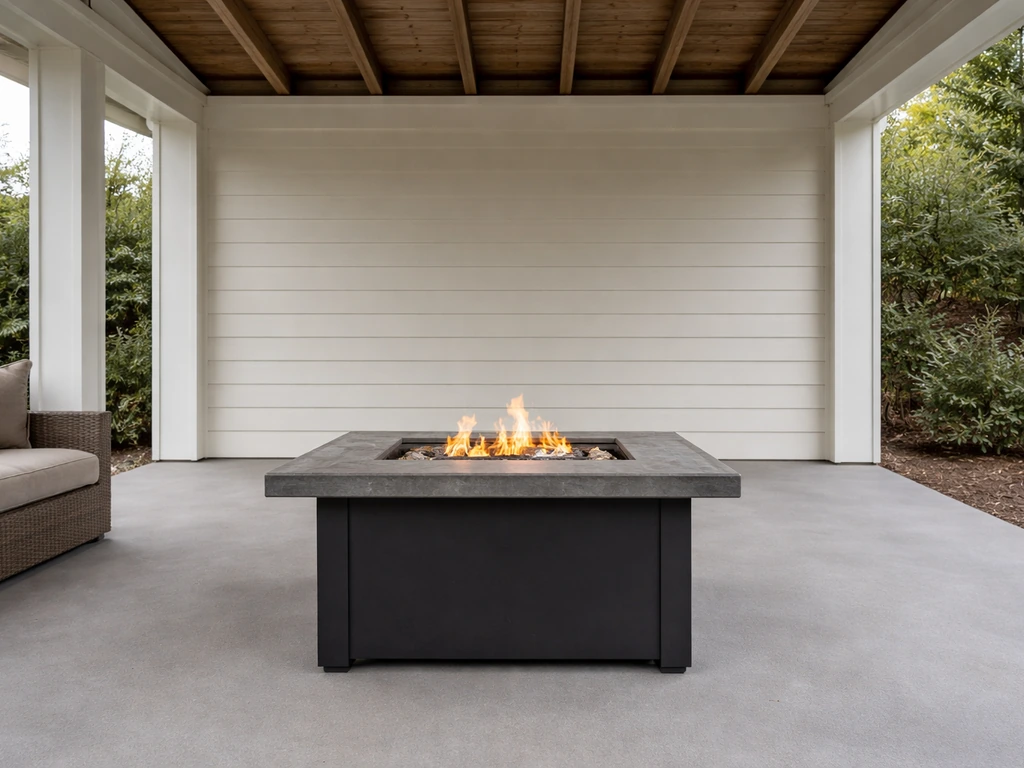
Fire pits vs fire tables under a covered patio: the real difference
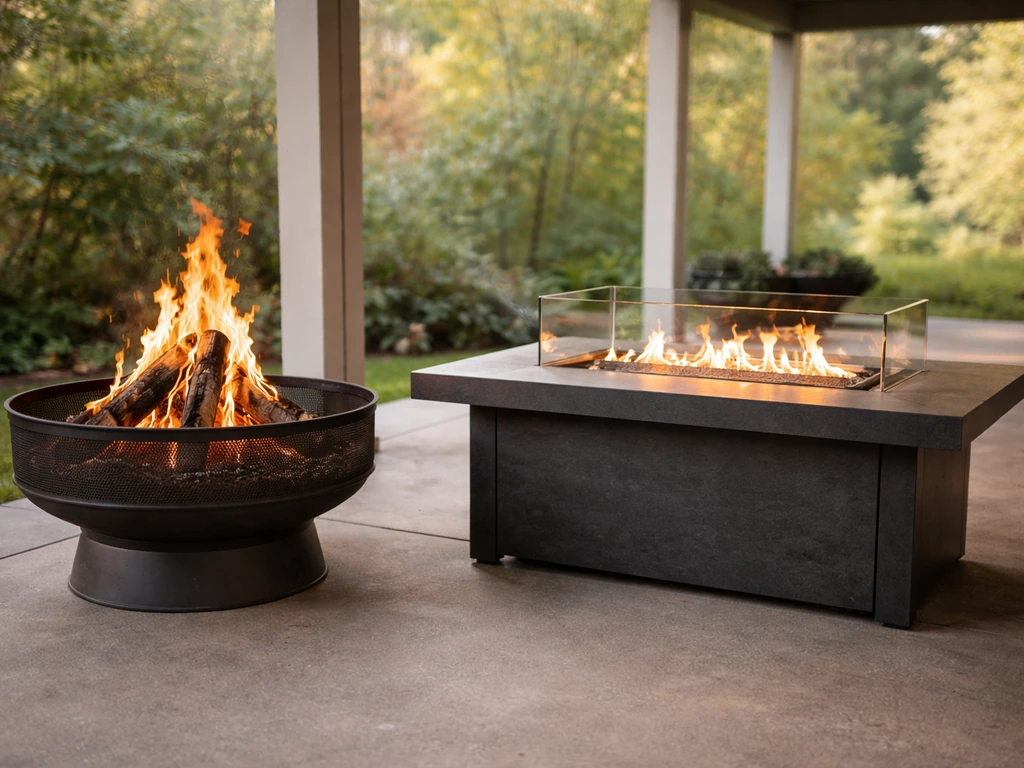
When people ask this question, they're usually picturing one of two things: a freestanding wood-burning fire pit (a bowl or ring sitting on the patio floor) or a gas/propane fire table (a table-height unit with a burner in the center). The structure itself is often called a covered patio, which is the kind of setup that affects what fire options are safe and code-compliant. These two setups carry very different risks under a covered structure, and conflating them leads to bad decisions.
A wood-burning fire pit produces open flames that can climb 3 to 6 feet or more, throws sparks, and generates a large volume of smoke. Under any enclosed or semi-enclosed roof, that smoke has nowhere to go efficiently, and the radiant heat buildup against a ceiling or soffit is a real fire hazard. A gas or propane fire table, by contrast, produces a controlled flame (typically 6 to 18 inches high), no sparks, and far less radiant heat. It's still not zero-risk under a covered patio, but it's a fundamentally different category of risk.
Fire tables also come in configurations specifically listed and tested for covered or semi-outdoor use, which gives you a code-compliant path that wood-burning pits simply don't offer. If you're weighing whether to go gas vs. wood-burning, that distinction matters more under a covered structure than it does in an open yard.
The safety issues you actually need to understand
Heat buildup and combustible clearances
Every fire appliance has required clearances from combustible construction, meaning the minimum distance between the unit (or its flames and exhaust) and any wood, vinyl, composite, or fabric surface above, beside, or below it. These clearances are set by the appliance manufacturer, tested and listed by organizations like UL or CSA, and then governed by the IRC (specifically Chapter 10, which covers chimneys and fireplaces).
The number that matters most is the vertical clearance to the ceiling or roof structure above you. For most gas fire tables used outdoors, manufacturers specify a minimum of 48 to 96 inches of overhead clearance, depending on the unit's BTU output. A typical covered patio with a 9- or 10-foot ceiling may technically meet that threshold for a lower-BTU gas table, but you need to verify against your specific unit's installation manual, not a rule of thumb.
IRC code is clear on one point: blank" rel="noopener noreferrer">the controlling requirement is the appliance listing and its manufacturer installation instructions. Generic rules of thumb don't override that. blank" rel="noopener noreferrer">If your fire table's manual says 84 inches of overhead clearance and your covered patio ceiling is 96 inches, you're potentially in compliance. If the manual says 96 inches and your ceiling is 96 inches, you're at the edge, and any combustible soffit trim or a ceiling fan above reduces that margin further.
Smoke, carbon monoxide, and airflow
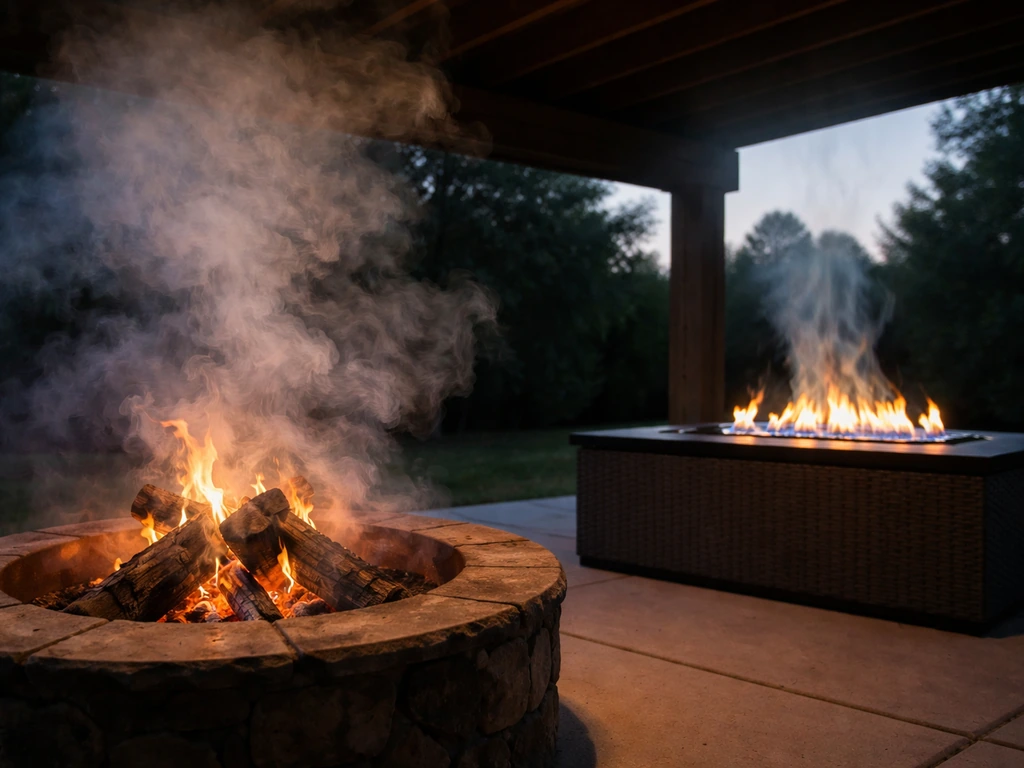
This is where wood-burning fire pits fail hardest under covered patios. Smoke from a wood fire contains carbon monoxide, fine particulates, and creosote compounds. In a fully or partially enclosed space, smoke accumulates fast. Even a pergola-style covered patio with open sides can trap enough smoke to create a health hazard and a fire risk against wood beams or a fabric ceiling. You can use a smoker under a covered patio, but you still need to follow clearances and ventilation guidance from the manufacturer and local codes. Carbon monoxide is odorless and builds up faster than most people expect in semi-enclosed spaces.
Gas and propane fire tables produce combustion byproducts too, including carbon monoxide, but at much lower volumes when burning cleanly. The risk is still real, which is why natural ventilation (fully open sides, no screens or walls enclosing the space) matters. A covered patio that's enclosed on two or more sides with screens, glass, or solid walls is a much riskier environment for any open flame, and many manufacturers explicitly void their warranty or prohibit use in those setups.
What's under the fire pit matters too
Patio surfaces vary a lot. Concrete and natural stone are non-combustible and generally fine. Composite decking, wood decking, and some sealed pavers can be damaged by radiant heat from beneath a fire table or scorched by embers from a wood-burning pit. If your covered patio has a wood or composite deck floor, you need a fire-rated pad under the unit (typically a listed ember-catching mat or a concrete paver platform) and increased side clearances. For wood-burning fire pits on any deck surface, most deck manufacturers and fire pit manufacturers explicitly advise against it.
Building codes and permits: what local rules typically say
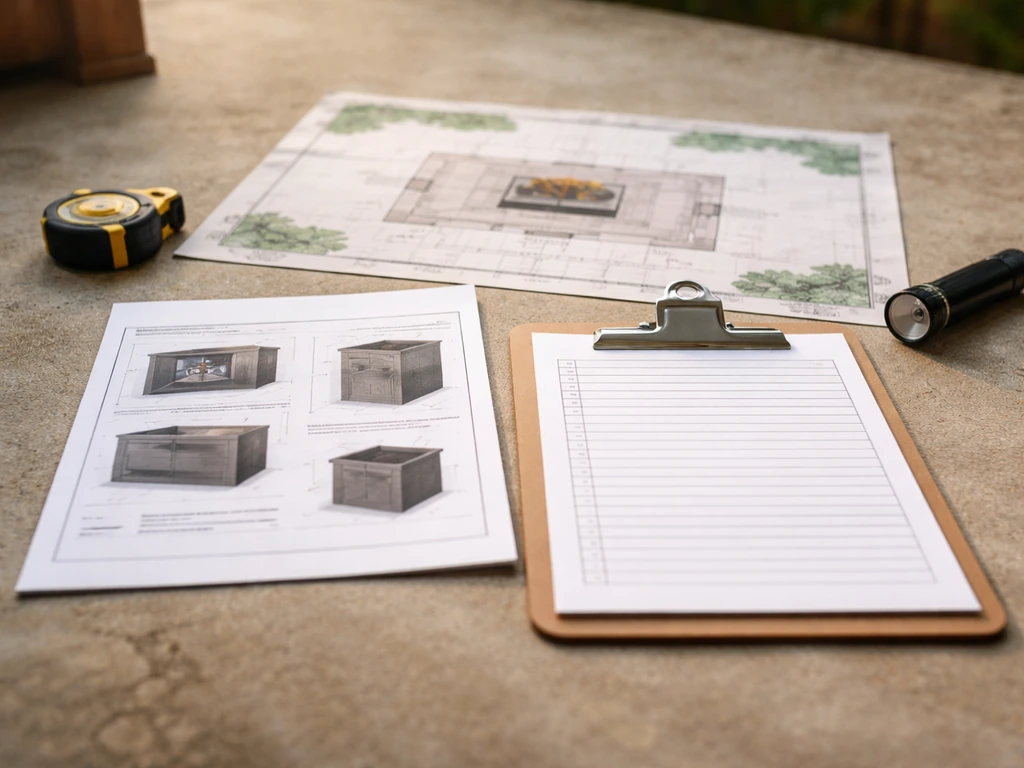
There's no single national rule that says "fire pits are allowed" or "fire pits are prohibited" under covered patios. What exists is a patchwork of the International Residential Code (which many jurisdictions adopt as their baseline), local amendments, and fire department ordinances that can tighten or loosen those baseline rules.
Under the IRC, residential fire appliances are governed by Chapter 10, which addresses clearances from combustible construction, chimney and venting requirements, and appliance listing compliance. An open wood-burning fire pit typically doesn't have a chimney and can't meet the venting requirements for an enclosed or semi-enclosed installation, which is one reason local codes often restrict or prohibit them under roofed structures. Gas fire features may be treated more like outdoor gas appliances, which have their own listing and clearance requirements under ANSI/CSA standards.
The permit question depends on your jurisdiction and your setup. A portable propane fire table sitting on a covered patio may not require a permit in many areas. A permanently installed natural gas fire feature with a dedicated gas line almost certainly does, and that permit process will involve an inspection of the installation clearances, the gas line work, and possibly the structure itself. Before you do anything, check with your local building department and fire marshal.
A five-minute phone call can tell you whether your specific setup needs a permit and whether there are any blanket prohibitions on open flames under covered structures in your area. That same rule-of-thumb applies to whether you can BBQ under a patio, so confirm your exact setup with the local building department open flames under covered structures.
Wood-burning vs gas vs electric: how the risk actually breaks down
| Fire Type | Open Flame | Smoke/CO Risk | Spark Risk | Typical Covered Patio Feasibility | Permit Likely? |
|---|---|---|---|---|---|
| Wood-burning fire pit | Yes, large | High | High | Not recommended; often prohibited | Varies; many areas ban under roofs |
| Propane fire table (portable) | Yes, controlled | Low-moderate | None | Possible with adequate clearance and ventilation | Usually no, if portable |
| Natural gas fire feature (fixed) | Yes, controlled | Low-moderate | None | Possible with proper installation | Yes, for gas line work |
| Bioethanol fire table | Yes, moderate | Low | Minimal | Possible with clearance; no gas line needed | Varies |
| Electric fire table | No (simulated) | None | None | Generally fine under covered patios | Usually no |
Wood-burning is the hardest case. The smoke, sparks, and uncontrolled flame height make it genuinely dangerous under most covered patio structures, and many municipalities explicitly prohibit open wood fires under any roofed structure. If you have a wood-burning fire pit and a covered patio, the safest answer is to use the fire pit out in the open yard away from the structure.
Propane and natural gas fire tables are the most practical choice for covered patios. They produce a controlled flame, no sparks, and far less smoke. The key variables are BTU output (lower BTUs mean lower heat output and easier clearance compliance), overhead clearance, and ventilation. A propane fire table in the 40,000 to 60,000 BTU range in a well-ventilated covered patio with 9 or 10 feet of ceiling clearance is workable if the manufacturer's specs support it.
Electric fire tables are the most permissive option. They use LED lighting and sometimes a heat element to simulate fire, produce no combustion, no smoke, and no CO. They work under any covered patio and don't require clearance calculations or permits. The trade-off is that they don't provide the ambiance or warmth of a real flame, which matters to most people asking this question.
Placement and setup checklist before you light anything
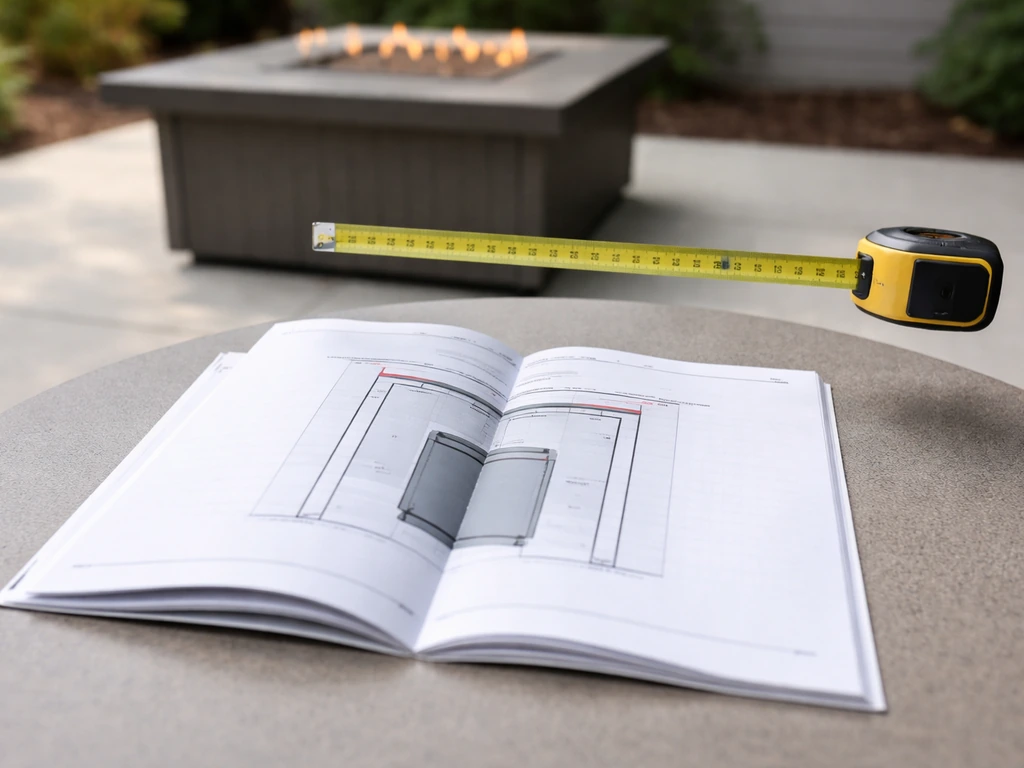
If you've determined that a gas or propane fire table is your direction, here's what to actually verify before setup:
- Pull the manufacturer's installation manual and find the required overhead clearance. This number is specific to your unit, not a generic standard. Don't skip this step.
- Measure your actual ceiling or roof height above the intended placement spot, accounting for any hanging lights, fans, or soffits that reduce that clearance.
- Check all horizontal clearances too. Most fire tables require 24 to 36 inches of clearance to any combustible wall, curtain, furniture, or plant on all sides.
- Identify your patio floor material. If it's combustible (wood or composite decking), place a non-combustible fire-rated pad or concrete pavers under the unit. The pad should extend at least 12 inches on all sides of the fire table.
- Assess the ventilation situation. Is your covered patio open on at least two sides? If it's screened or walled in, you need to seriously reconsider or consult a pro before proceeding.
- Call your local building department to confirm whether your setup requires a permit and whether there are local fire ordinances restricting open flames under covered structures.
- For natural gas units, hire a licensed plumber or gas fitter for the line connection. Don't DIY gas line work.
- Check your homeowner's insurance policy or call your agent. Some policies have exclusions or requirements related to fire features on covered patios.
Better alternatives and design options if the standard setup won't work
If your covered patio doesn't meet the clearance or ventilation requirements for a gas fire table, or if you simply want to avoid the hassle, there are several design directions that still give you the atmosphere and warmth you're after.
A built-in outdoor fireplace with a proper chimney that extends above the roofline is the most code-friendly option for a covered patio. It's designed for exactly this context, it vents correctly, and it can burn wood or gas depending on the insert you choose. The downside is cost: expect to spend $3,000 to $10,000 or more depending on materials and whether you're building from scratch or adding to an existing structure.
A chiminea is another option worth considering if you want a wood-burning experience. A properly used chiminea directs smoke upward through its chimney stack more efficiently than an open fire pit bowl, which makes it marginally more compatible with semi-covered spaces. That said, it still produces sparks and smoke, so the same clearance and ventilation concerns apply. A chiminea is still a flame and smoke source, so clearance and ventilation rules for covered patios apply to it too. This is a nuanced choice that deserves its own evaluation.
If warmth is the main goal rather than flame ambiance, an outdoor infrared heater mounted to the covered patio ceiling or wall is a very practical alternative. Ceiling-mount electric heaters produce no combustion, no smoke, and no clearance issues beyond what the manufacturer specifies. They're relatively affordable (often $150 to $600 for a quality unit) and work exceptionally well under covered patios. If you’re wondering whether a true outdoor TV will work in a covered patio setup, you’ll want to consider weatherproofing and heat exposure as well outdoor TV for a covered patio.
If you want flame aesthetics without combustion risk, a tabletop electric fire feature or a decorative bioethanol lantern-style piece gives you visual warmth with much lower risk. These aren't the dramatic centerpiece that a full fire table is, but they're a practical middle ground for smaller or more enclosed covered patios.
DIY vs hiring a pro: where to draw the line
A portable propane fire table on a covered patio with adequate clearance and ventilation is a reasonable DIY project for most homeowners. You're not doing any permanent installation, no gas line work, and the main tasks are measurement, placement, and surface protection. Read the manual, do the checklist above, and you can handle this yourself.
The moment a natural gas line is involved, stop and hire a licensed pro. Gas line connections require permits and inspections in virtually every jurisdiction, and improper connections are a serious life-safety issue. This isn't about skill level; it's about the legal and safety framework that exists for exactly this reason.
If you're building a covered patio structure around a planned fire feature (or modifying an existing one to accommodate a fire table), you should also consult with a contractor or structural engineer, especially if any part of the overhead structure is combustible wood framing. A covered outdoor patio is often called a covered patio, porch, or even an outdoor living room depending on the layout what is an outdoor covered patio called. Retrofitting a fire feature into an existing covered patio requires the same clearance analysis as new construction, plus a look at whether the existing structure can safely accommodate the heat load.
If you're unsure whether your setup is compliant, a one-time consultation with your local building department or a licensed contractor costs very little and can save you from an insurance claim denial, a fire, or a stop-work order. When in doubt, ask before you light.
FAQ
Can I place a fire pit or fire table under a patio ceiling if the patio is mostly open?
Yes, but only if the fire feature’s manual specifically allows it for roofed or semi-enclosed locations and you still meet overhead and side clearances. Many wood-burning units that are fine in an open yard are prohibited under a roof due to smoke control and listed installation limits. For gas or propane, the practical risk limiter is whether the patio is effectively open on multiple sides, not just “under cover.”
Do ceiling fans or soffit trim change whether it’s safe to use under a covered patio?
It matters. If your “covered patio” has a ceiling fan, decorative soffit trim, or recessed lights above the unit, they can reduce the effective overhead clearance below what the manufacturer specifies. A unit that is compliant on paper can become non-compliant in practice once you account for trim thickness, fan blades, or enclosed ducting. Always compare clearance numbers to the hottest nearby surface, not just the highest point of the ceiling.
Can I use wind guards, covers, or spark screens to make a fire pit safer under a covered patio?
If it’s gas or propane, you generally should not add accessories that interfere with airflow unless the manufacturer approves them. Common issues include using decorative glass wind guards that weren’t tested with the specific model, blocking vents, or covering the unit’s base. For wood-burning pits, “spark screens” are not a solution to smoke or radiant heat concerns under a roof.
Will my fire table still be covered by the manufacturer warranty if I run it under a partially enclosed patio?
For gas or propane, the warranty and “allowed locations” language in the listing is the decision aid. Many units are only covered if the installation matches listed outdoor conditions, including ventilation and enclosure type. If the patio is enclosed with screens or walls on two or more sides, the safest approach is to treat it as a no-go unless the manual explicitly says it’s permitted.
Can I put a gas or propane fire table on composite decking or a wood deck under a covered patio?
You can, but you need the right kind of surface protection for the unit and the fuel type. For gas or propane, a major concern is heat transfer to combustible flooring and any materials directly below the burner base, so use the exact listed base or ember mat the manufacturer recommends. For wood-burning on decks, the article’s baseline guidance applies, most manufacturers advise against it entirely, even if you add a pad.
Do I need a permit for a propane fire table under a covered patio versus a natural gas installation?
Often, no. Portable propane tables may not trigger permitting in many places, but anything plumbed to a natural gas line usually does. Also, some jurisdictions treat “any open flame under a roofed structure” as a category that can require approval even if the appliance itself is listed. Verify by giving your building department the appliance type, BTU rating, and whether it is temporary or fixed in place.
What if my patio has removable screens or curtains, can I still use a fire table?
Yes. A covered patio that is open on paper can become effectively enclosed if the patio has retractable screens, removable panels, roll-down shades, or clear vinyl curtains. These can change airflow enough to violate ventilation expectations and increase CO risk, especially in semi-enclosed corners. If you use any of those features, confirm the manual’s allowed use with them in place.
How close can I place nearby furniture, railings, or decorative elements to a fire table under the patio?
It depends on the unit’s clearance requirements and the type of mounting. For example, if a heat source is mounted high, like a ceiling or wall infrared heater, you still must follow the heater’s clearance to combustibles and keep it away from drapes or ceiling materials. For fire tables, you generally need to keep combustible materials, railings, and anything above the unit within the manufacturer’s minimum distances, not just “safe spacing from people.”
Can I use a wood-burning chiminea instead of a fire pit under a covered patio?
Avoid assuming you can, especially with wood-burning. If your covered patio has a soffit, enclosed beam pockets, or a low ceiling, smoke and heat can linger and accumulate despite open sides. If you want wood-like ambiance with fewer variables, consider a chiminea or a code-friendlier alternative, but still treat it as a clearance-and-ventilation problem under a roofed structure. When in doubt, switch to electric options for fully enclosed setups.
What CO-related safety checks should I do before lighting anything under a covered patio?
Yes, and it’s a common mistake to underestimate how fast CO can build up in semi-enclosed areas. Even with gas, you should avoid running the appliance when winds are calm and sides are blocked by screens or furniture that restricts airflow. If you ever feel eye or throat irritation, or you notice soot patterns or abnormal burner behavior, stop using the unit and ventilate, then have the appliance serviced.
If I’m building or retrofitting the patio, how do I plan for a compliant overhead structure?
Yes, if you plan the structure as a “listed installation” zone. A safer approach is to position the fire appliance so the ceiling directly above it is non-combustible, or at least so any combustible elements stay beyond the manufacturer’s overhead clearance. Retrofitting into an existing patio often requires re-checking clearances, heat load, and whether the overhead structure is combustible framing.
If my patio ceiling is too low or sides are too enclosed, what are the safest alternatives?
If you can’t meet the required overhead clearance or ventilation conditions, the article’s practical alternatives are the decision path. Choose an electric fire table or flame feature, or use an outdoor fireplace designed to vent above the roofline. This avoids the clearance calculation trap that comes with forcing real flames into a roofed area.
Next Article
What Is a Covered Patio Called? Patio Cover Terms Explained
What is a covered patio called? Patio cover vs pergola and porches, plus how to identify the right outdoor structure.