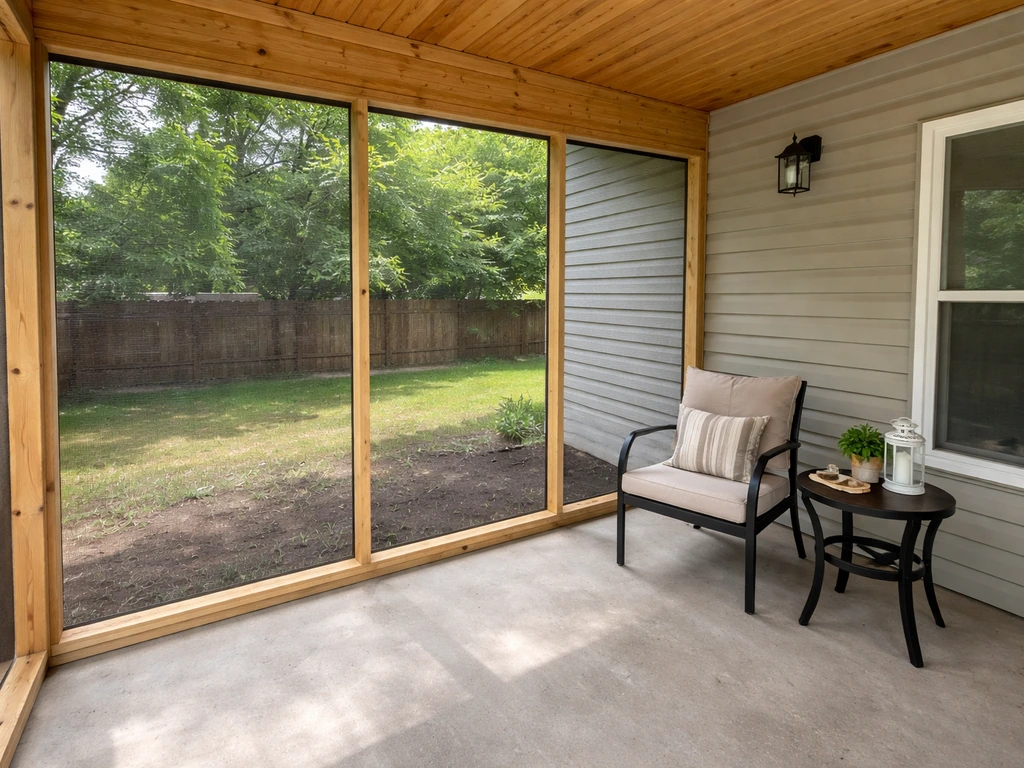
Most standard patio screens block some UV rays, but not enough to protect your skin or prevent furniture fading on their own. A typical fiberglass insect screen blocks roughly 30 to 50 percent of UV radiation, which sounds decent until you realize dermatologists recommend 97 percent or higher for meaningful skin protection. Screens specifically rated for sun protection, usually labeled with a UPF (Ultraviolet Protection Factor) rating, can hit UPF 40 or UPF 50+, which means they block 97.5 to 98 percent or more of UV. The gap between a standard bug screen and a UV-rated solar screen is large enough to matter, and it's worth understanding exactly what you're getting before you build or buy.
Do Patio Screens Block UV Rays? What to Expect and How to Choose
Miles Hart
15 Jun 2026
How UV rays actually pass through patio screens
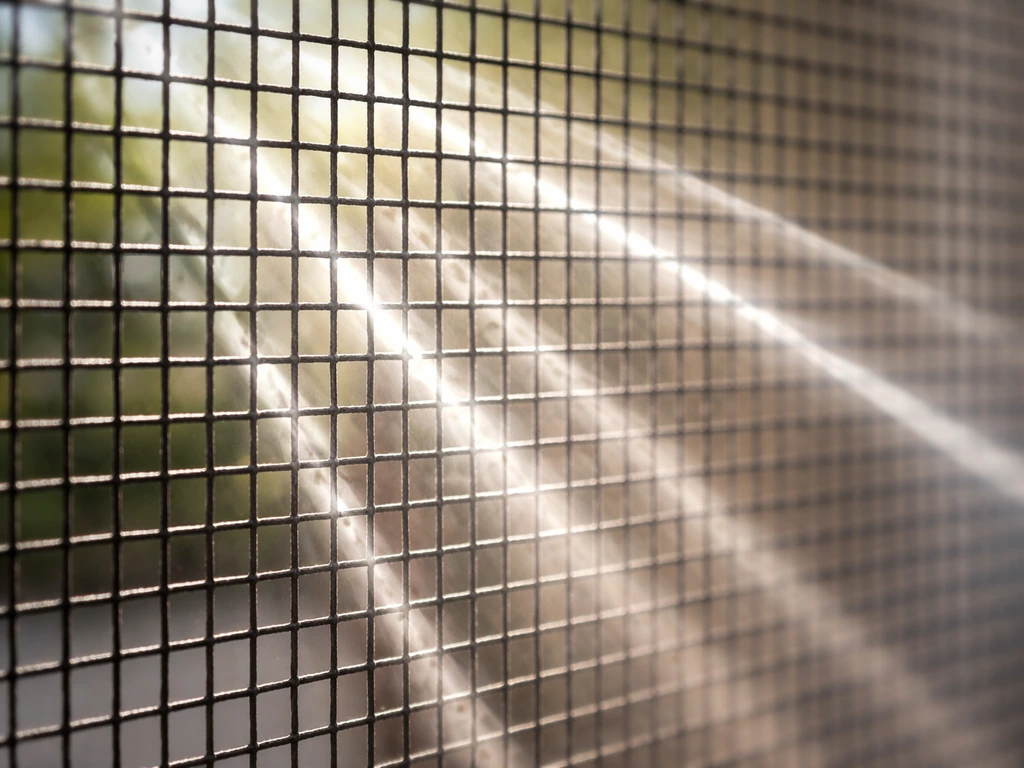
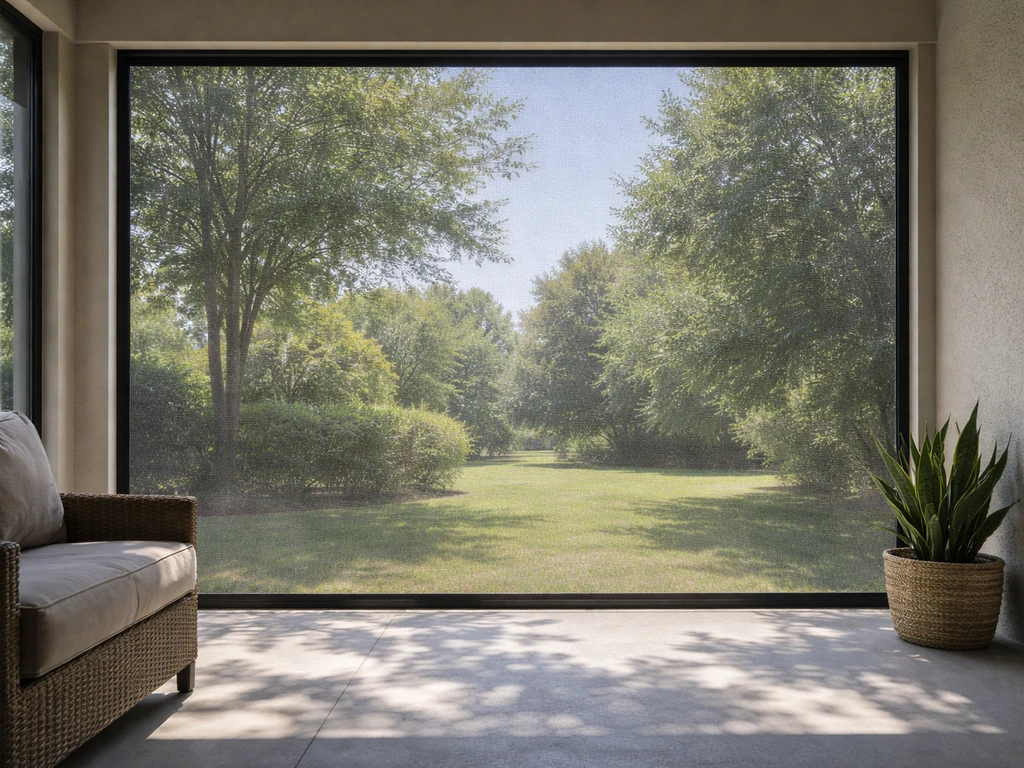
UV radiation travels in a straight line from the sun, and screen mesh is essentially a grid of open holes. Every gap between threads is a direct path for UV to pass through. The more open space in a mesh, the more UV gets through. A standard insect screen has an "openness factor" somewhere between 30 and 50 percent, meaning 30 to 50 percent of the screen's surface area is literally nothing but air. Even the woven threads themselves transmit some UV if they're made from uncoated fiberglass or basic polyester.
There's also a geometry factor most people don't think about. UV doesn't just come straight down. It bounces off light-colored concrete, reflected off the house's exterior walls, and arrives at low angles in the morning and evening. Even if a screen blocks UV from the front face, UV can enter from uncovered sides, gaps at the top where a screen meets a roofline, or underneath if the screen doesn't reach the floor. This is why a "screened patio" often still feels sunny inside, and why a screen alone rarely gives you the kind of coverage you'd expect from a solid awning or roof.
What actually determines how much UV a screen blocks
Several factors stack on top of each other to determine real-world UV performance. Getting one of them right and ignoring the others still leaves you exposed.
Mesh material and thread diameter
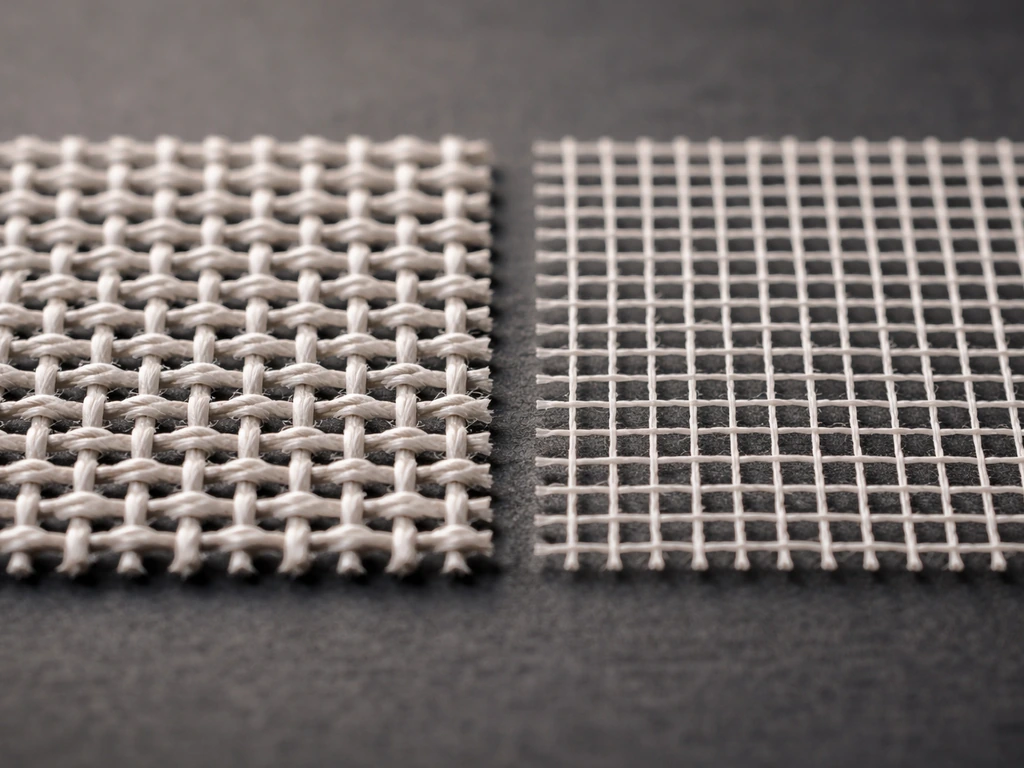
The base material matters a lot. Fiberglass is the most common screen material and has moderate UV blocking on its own, but uncoated fiberglass transmits more UV than coated or denser alternatives. PVC-coated polyester (used in most solar screen fabrics) blocks more UV because the coating itself absorbs and reflects UV energy rather than just physically blocking it through weave density. Aluminum screens reflect UV rather than absorbing it, which gives them decent blocking characteristics but makes them poor for visibility. Heavier thread diameters mean less open space between threads, which directly reduces UV transmission.
Openness factor
Openness factor is the percentage of a screen's surface that is open space. Solar screen fabrics are typically available in 1 percent, 3 percent, 5 percent, and 10 percent openness. Lower openness means more UV blocking but less airflow and reduced outward visibility. A 3 percent openness solar screen blocks significantly more UV than a 10 percent openness version. Standard insect screens have an openness factor closer to 30 to 50 percent, which is why they block so little UV despite feeling like a physical barrier.
Color and finish
Darker screen colors, especially charcoal and black, absorb more UV than lighter colors like white or beige. This is counterintuitive since white feels like it should reflect UV, but with screen mesh, a darker thread absorbs UV energy that would otherwise pass through the gaps around a lighter-colored thread. Charcoal and bronze are the most common colors for solar screens for exactly this reason. They also improve outward visibility by reducing glare.
Installation gaps and edge sealing
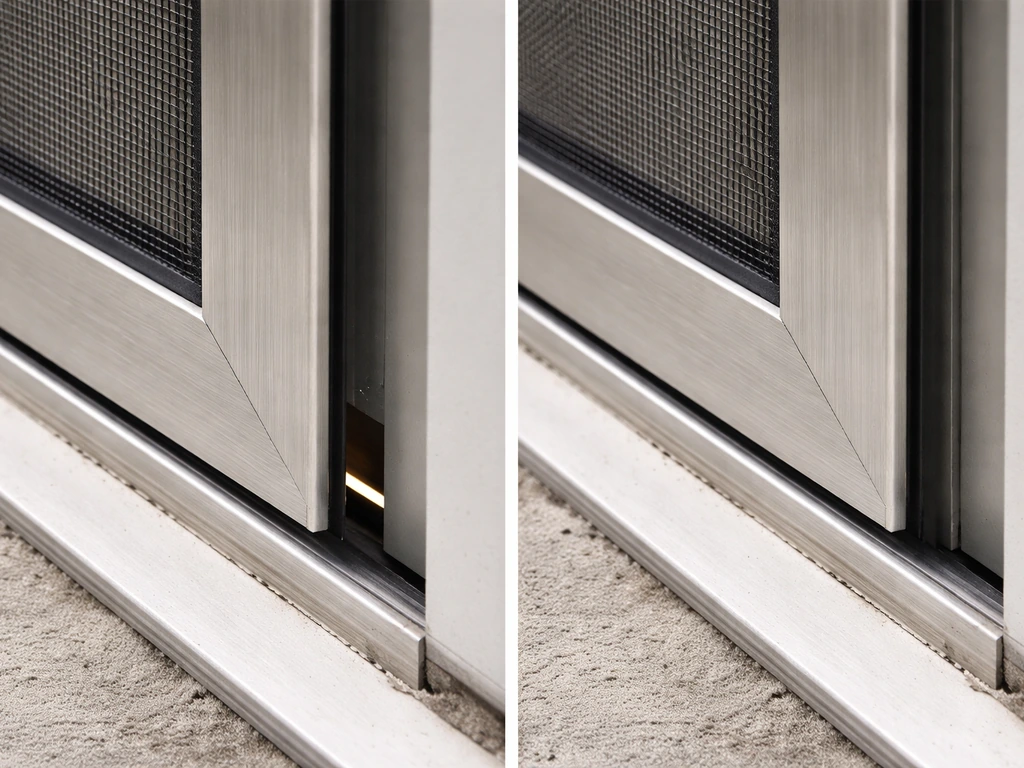
This is where a lot of DIY and even professional installs fall short. A UV-rated screen installed with a one-inch gap at the top because the frame wasn't measured precisely, or with a retractable screen that leaves side gaps, loses most of its UV protection advantage right at the edges. UV pours through any gap.
For a screened patio enclosure to deliver meaningful UV protection, panels need to meet tightly at corners, tops need to seal against the roofline or header, and the bottom needs to reach the floor or a kick panel. If you're considering how to screen in a patio or build a full patio screen enclosure, tight framing and proper spline installation aren't just aesthetic concerns, they directly affect UV performance.
If you are trying to screen in a patio under a deck, pay special attention to the top edge seal and any gaps along the deck underside where UV can sneak through how to screen in a patio under a deck. If you want step-by-step help with how to screen in an apartment patio, focus on choosing a UV-rated solar screen and sealing all installation gaps how to screen in a patio.
To get the setup right, focus on UPF-rated solar screen fabrics, tight framing, and sealing edges so UV does not slip in through gaps how to screen in a patio. If you want a quick checklist, pay close attention to openness factor, UPF rating, and especially how well the edges and corners are sealed how to screen in a patio.
Reading product claims: UPF, UVA, and UVB specs
UPF stands for Ultraviolet Protection Factor, and it's tested using blank" rel="noopener noreferrer">AATCC Test Method 183 in the United States, with related standards including BS EN 13758-1 used in Europe. The test measures how much erythemally weighted UV (the kind that causes sunburn and skin damage) passes through the material. The number tells you the fraction of UV that gets through: UPF 15 means 1/15th of UV reaches your skin, UPF 40 means about 1/40th (roughly 97.5 percent blocked), and UPF 50+ means less than 2 percent transmission. blank" rel="noopener noreferrer">ASTM D6603 governs how UPF labels must be applied to textiles sold in the U.S., so products carrying a UPF label should have actual test data behind them.
When a product claims "UV protection" without a UPF number, ask for specifics. Marketing phrases like "UV-resistant," "UV-stabilized," or "blocks harmful rays" don't tell you the percentage blocked or the test method used. UV-resistant usually means the material itself won't degrade quickly in sunlight, not that it blocks UV from passing through. Always look for a UPF number and check whether the claim distinguishes UVA from UVB. UVA (long wave) penetrates more deeply and causes skin aging and some cancers; UVB (short wave) causes sunburn. Ideally you want a product that addresses both, and under EN 13758-1 classification, a high-protection rating requires average UVA transmission below 5 percent alongside a UPF above 40.
If a screen product has no UPF data at all, you can do a rough field check: hold the screen up to bright sunlight and look through it. If you can see the sun's disk clearly, very little UV is being blocked. Solar screens with very low openness factors will appear significantly darker when backlit. This isn't a precise test, but it's a quick filter.
How much protection you can actually expect
For your skin
A standard fiberglass insect screen offers minimal skin protection, maybe equivalent to UPF 5 to 10 in practice, which means 85 to 90 percent of UV still reaches you. You'll still burn under a standard screened porch if you sit there long enough. A good solar screen with 3 percent openness and a UPF 40 or 50+ rating is a real improvement, but it's still not a substitute for sunscreen on extended outdoor stays, especially because screens don't cover every angle of UV exposure. Think of a high-quality solar screen as adding meaningful protection, not eliminating the need for other precautions.
For furniture, flooring, and fabrics
UV fading is cumulative, and even low-level UV exposure adds up over months and years. A solar screen with UPF 40+ blocking 97.5 percent of UV will dramatically reduce fading compared to no screen or a standard insect screen. If you have outdoor rugs, cushions, wood furniture, or composite decking that you're trying to protect, a UV-rated solar screen makes a noticeable real-world difference. Standard insect screens, with their 30 to 50 percent openness, will slow fading slightly but won't stop it.
For patio temperature
A tighter solar screen (3 to 5 percent openness) also reduces solar heat gain, which can make a screened patio meaningfully cooler in summer. Some homeowners report 10 to 15 degree Fahrenheit reductions in perceived temperature under a solar screen versus an open patio or standard screen, depending on orientation and exposure. This is a meaningful side benefit, but airflow is reduced proportionally, so in humid climates a very dense solar screen can feel stuffy without a ceiling fan.
When screens aren't enough: stronger UV options to consider
If your goal is maximum UV protection and you're starting from scratch, a screen-only solution has real limits. Here's how the main options compare. If you still want insect control, a patio screen alternative is often a UV-rated solar screen with low openness stronger UV options.
| Option | UV Blocking | Airflow | Visibility | Bug Control | Rough Cost Range |
|---|---|---|---|---|---|
| Standard fiberglass insect screen | Low (UPF ~5-10) | High | Clear | Yes | $2-$5/sq ft installed |
| Solar screen (3-5% openness, UPF 40-50+) | High (97-98%+) | Moderate | Reduced but usable | Yes | $5-$12/sq ft installed |
| Retractable solar screen | High when deployed | Adjustable | Reduced when closed | Partial (depends on gaps) | $800-$2,500+ per panel |
| Solid awning or fabric canopy | Very high (blocks direct overhead UV) | No reduction on sides | Blocks overhead view | No | $500-$4,000+ depending on size/type |
| Solid patio cover or roof extension | Complete overhead blocking | Not affected | No overhead view | No (still need screens) | $5,000-$30,000+ depending on structure |
| UV-blocking window film on glass enclosure | High (70-99% UV blocked) | None (sealed) | Near-clear | Yes (sealed) | $5-$14/sq ft for film |
For most homeowners who want both insect control and meaningful UV protection, a UV-rated solar screen at 3 to 5 percent openness is the practical sweet spot. It handles bugs, cuts UV by 97 percent or more, reduces heat gain, and doesn't require a structural project. If you want protection from every angle including overhead, you need either a solid roof or a combination of a roof and screen walls. A screen alone, even an excellent solar screen, doesn't protect you from UV bouncing off adjacent surfaces or arriving at low angles through the open top if your patio doesn't have a roof.
If you're exploring full enclosure systems, the best screen for a patio enclosure will generally be a solar fabric rather than a standard insect mesh. And if you're weighing whether to add a roof at all, that decision affects UV protection significantly, because a screen-only patio with no overhead covering still allows direct overhead sun exposure unless you add a canopy, pergola cover, or solid roof panel.
Cost, tradeoffs, and what to expect as a homeowner
Standard fiberglass insect screen runs roughly $0.50 to $1.50 per square foot for the material itself, with installed costs typically in the $2 to $5 per square foot range depending on framing complexity and your region. Solar screen fabric costs more, typically $1.50 to $4 per square foot for material, with installed prices in the $5 to $12 range. For a 200 square foot screened patio, that's roughly $400 to $1,000 more for solar screening over standard screening. Given the UV protection improvement, that premium is usually worth it if sun exposure or fading is a concern.
Retractable screen systems are significantly more expensive and introduce mechanical components that require maintenance, but they offer flexibility, letting you deploy screens when needed and retract them for full openness at other times. The tradeoff is cost, potential for gaps when partially deployed, and moving parts that can fail. Fixed solar screen panels have no moving parts and maintain consistent UV protection continuously.
One honest tradeoff worth flagging: denser solar screens at 1 to 3 percent openness can feel significantly darker and more enclosed than standard insect screens. If you have a beautiful backyard view and you're used to a standard screen's near-invisible profile, a 3 percent charcoal solar screen will feel like a noticeable visual change. Some homeowners love the reduction in glare; others feel closed in. Testing a small panel in your actual space before committing to a full enclosure is always worth the effort.
DIY installation is practical for fixed solar screen panels if you're comfortable working with spline rollers, framing channels, and accurate measurements. Professional installation adds cost but typically delivers better tension, tighter gaps, and longer-lasting results. For a screened patio project where UV protection is a primary goal, inconsistent tension and edge gaps from a rushed DIY install can undermine the whole point of upgrading to a UV-rated fabric.
How to verify and maintain UV protection over time
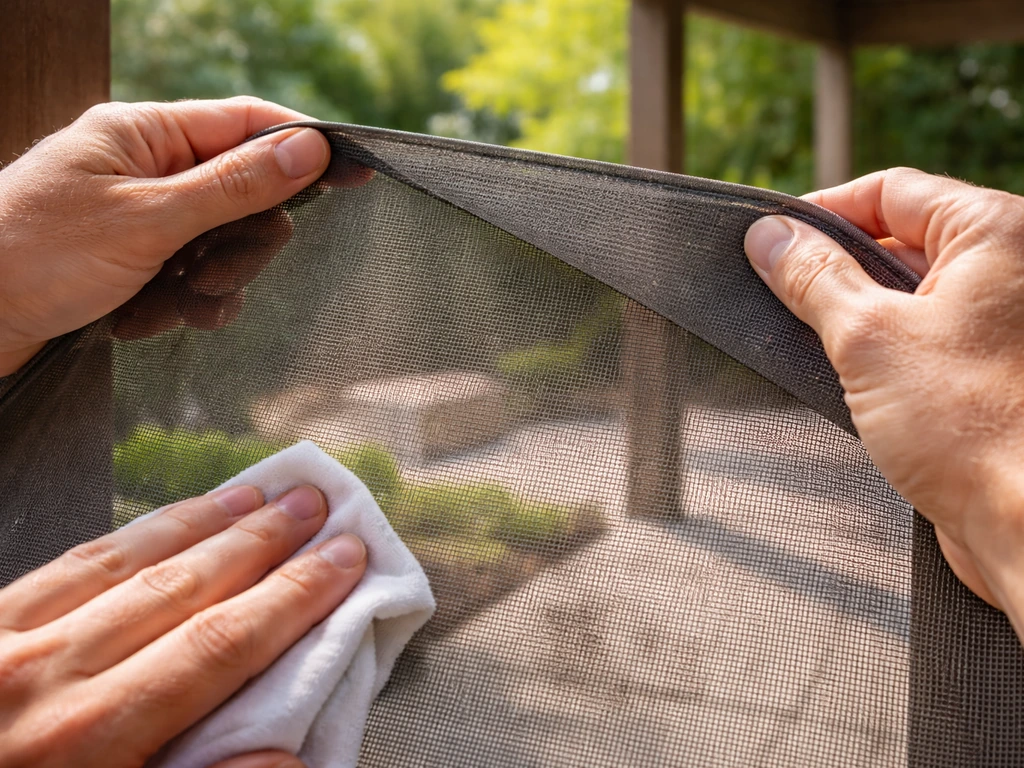
UV-blocking performance degrades over time as screen materials oxidize, stretch, develop holes, or accumulate dirt and mildew. Here's how to check and maintain performance on a regular schedule.
- Inspect the screen annually for holes, tears, and edge gaps. Even small holes let UV through disproportionately and invite insects, so patch or replace damaged sections promptly.
- Check spline and frame connections each spring. Screen that has pulled away from the frame channel, even slightly, creates edge gaps that eliminate UV protection at the perimeter.
- Clean solar screens once or twice per year with mild soap and water. Dirt and mildew buildup can degrade UV-absorbing coatings over time on PVC-coated fabrics.
- Re-check tension after the first winter or after any severe weather event. Temperature cycling causes screen material to loosen, increasing the effective openness factor.
- Replace screens every 7 to 15 years depending on sun exposure and material quality. UV-stabilized solar fabrics last longer than standard fiberglass, but no screen lasts indefinitely. Fading or brittleness in the fabric is a sign that UV-blocking performance has degraded.
- If you added screens primarily for UV protection and you're unsure whether they're still performing, contact the manufacturer for replacement specs and compare the original UPF rating to the product's stated useful life.
Before buying or replacing screens, measure your patio openings carefully: width, height, and the depth of any existing frame channels. Knowing the square footage of each panel helps you compare material costs accurately and order the right amount with a modest overage (about 10 percent is standard). When comparing enclosure systems, ask the supplier specifically for the UPF rating of the screen fabric, the openness factor, whether the framing system allows for tight edge sealing, and what the warranty covers for UV performance degradation. Those four questions will cut through most of the marketing noise.
FAQ
If my patio screen has a high UPF rating, does that mean UV exposure inside is basically eliminated?
Not entirely. UPF applies to the screen fabric itself, but real-world protection depends on the enclosure’s coverage, especially the top edge against the roofline, sealed corners, and the bottom closure. If UV can enter from the sides or from above at low angles, you can still get meaningful exposure even with a high UPF screen.
Do retractable patio screens offer the same UV protection as fixed solar screens?
Usually only when fully deployed. Partial retraction often creates side gaps, uneven overlap, or uncovered sections, which lets UV in directly through openings. If you want UV-focused protection, confirm the overlap and closure design, and test the edges for light leaks under bright sun.
Will black or charcoal solar screens block more UV than white ones, or is the difference mainly appearance?
Color can affect UV performance. Darker thread colors tend to absorb more UV energy around the mesh, which can improve practical blocking compared with lighter colors. That said, the biggest drivers are the UPF rating and openness factor, so don’t rely on color alone.
How can I tell whether the UPF claim on a patio screen is real and tested?
Look specifically for a numeric UPF value and whether the product distinguishes UVA and UVB protection. Avoid generic phrases like “UV-resistant,” since they often describe resistance to fading or degradation, not how much UV passes through. If the listing lacks UPF test data details, assume performance is uncertain.
Can I do a quick home check to estimate whether my screen blocks enough UV?
A backlit “see the sun disk clearly” test can flag very low-blocking screens, but it is not precise. For a better quick check, compare two candidate fabrics under the same lighting and note how much the mesh visually transmits bright light, then verify the UPF number for the final decision.
Do patio screens help with skin aging from UVA, or are they only about preventing sunburn?
You want both UVA and UVB coverage. UPF testing is focused on erythemally weighted UV, but many high-protection products also report UVA transmission or meet standards that limit UVA. If a product only talks about sunburn or SPF-like marketing, look for UVA-specific information before choosing.
How much does an installation gap matter, like a 1-inch gap at the top?
It can matter a lot. UV travels in straight lines through open paths, so even a small continuous gap can become a direct channel, especially when the sun is at an angle. For UV-focused enclosures, prioritize tight edge sealing at top, corners, and sides over purely aesthetic trim.
What openness factor should I choose if I’m trying to balance UV protection with airflow?
A lower openness factor increases UV blocking but reduces visibility and can feel warmer or stuffier. As a practical range for UV protection, many homeowners target about 3 to 5 percent openness, since it typically provides a large blocking improvement while still allowing some ventilation. If you live in humid climates, plan for airflow (fans) to offset reduced breathability.
Will dirty screens or mildew reduce UV protection over time?
Yes, performance can degrade as screens stretch, develop holes, or accumulate dirt and mildew. Cleaning can help maintain the intended fabric condition, but you should also inspect for sagging, tears, or loose framing that creates new UV pathways. If the screen looks loose or uneven, treat it as a performance issue, not just a cosmetic one.
Is a UV-rated screen enough to stop furniture fading outdoors?
It can significantly reduce fading, but it may not stop it completely, especially for items exposed from multiple directions or near strong reflected light surfaces. For best results, place UV-rated panels so they cover the worst sun angles, and consider pairing with fabric-protected covers for rugs and cushions during peak sun hours.
Do I need a roof or pergola if I already plan to install solar screen walls?
Often yes for maximum protection. Solar screens mainly address UV that passes through the mesh, but they cannot block overhead UV arriving from above, especially when bounce light enters at low angles. If you are serious about avoiding overhead exposure, add an overhead cover (solid roof panel, pergola with UV-blocking top) and then use screens for side protection.
How should I choose between fiberglass insect screens and solar screens if my primary concern is UV risk?
If UV risk matters, standard insect mesh is usually not a strong solution. Its higher openness lets a large fraction of UV through, so you may still burn or see fading over time. Solar screens with a verified UPF rating and low openness are the practical upgrade when UV protection is the goal.
Next Article
What Is the Cheapest Way to Screen in a Patio?
Find the cheapest way to screen in a patio: DIY vs kits vs full enclosures, material picks, total cost checklist, and av