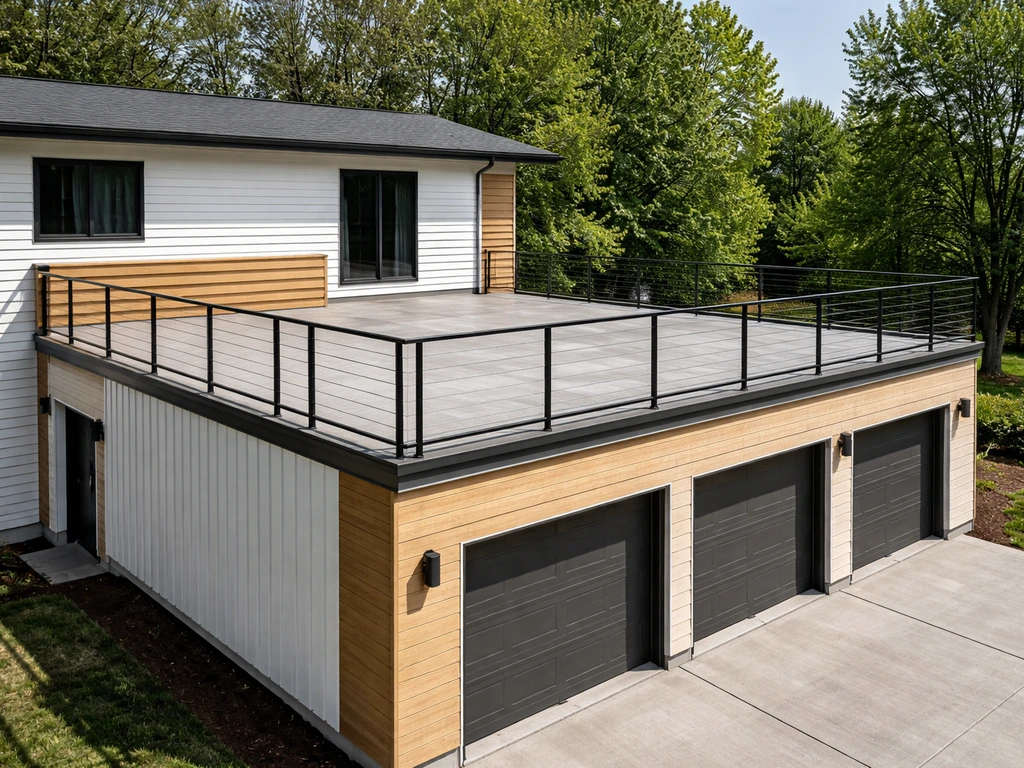
A carport with a patio on top is exactly what it sounds like: a vehicle shelter at ground level with a usable outdoor living space built on the roof. It works, it's been done thousands of times, and it can genuinely add value to a property when it's designed and built correctly. The catch is that it's not a simple carport and it's not a simple deck. It's both at once, which means the structural requirements, waterproofing demands, permit process, and cost all scale up compared to either project done on its own.
Carport With Patio on Top: Design, Cost, Loads, and Waterproofing

Miles Hart
30 May 2026
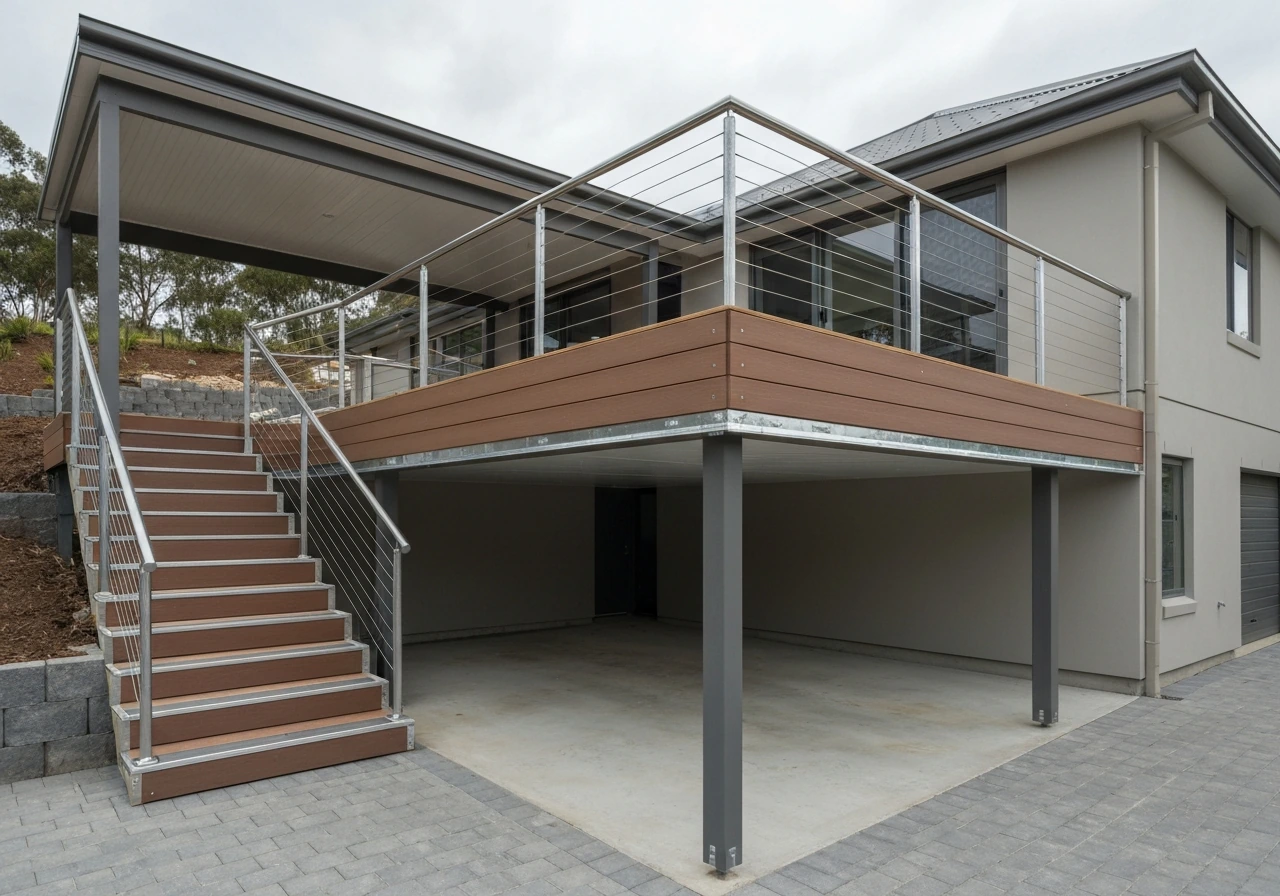
What to call this structure (and why the name matters)
Homeowners search for this under a lot of different names: carport with rooftop deck, carport with patio above, two-level carport, elevated patio over carport, or sometimes just 'carport deck. ' Contractors and structural engineers will typically call it a rooftop deck assembly or an elevated deck over occupied space. That second phrase is important because 'occupied space below' is the trigger for stricter waterproofing requirements in most building codes.
Unlike a simple second-floor deck attached to a house, this structure is freestanding (or semi-attached), sits over a vehicle, and has to manage water, drainage, and loads all in one integrated system. It's closely related to a garage with a patio on top, but a carport is open-sided, which changes both the structural approach and the permit classification in many jurisdictions.
Key design decisions before anything else
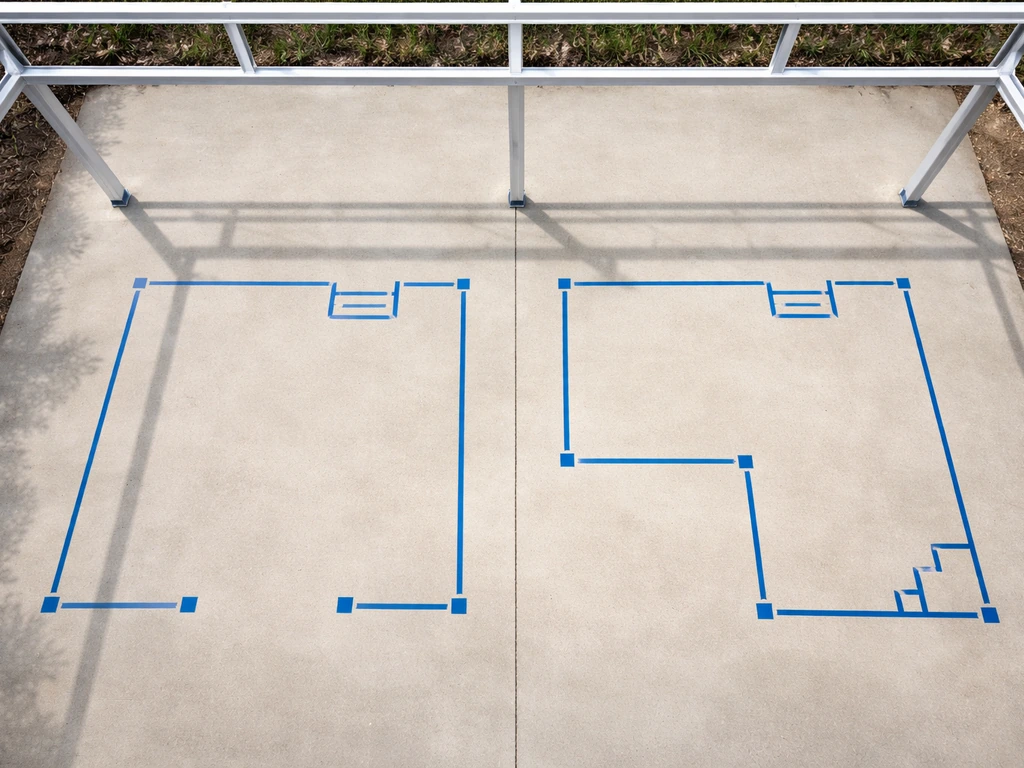
Before you talk to a contractor or pull a permit, you need to make four basic decisions that will shape everything downstream: the layout and orientation, how you access the upper patio, how water drains off it, and how much privacy or enclosure you want up there. If you’re asking whether there should be a gap between the patio and the house, that detail affects how water moves at the connection and whether movement and sealing stay intact over time.
Layout and orientation
The footprint of the patio doesn't have to match the carport exactly, but in practice it usually does because the carport columns and beams become the structural supports for the deck above. A single-car carport typically runs about 12 by 20 feet; a two-car version is closer to 20 by 20 or 22 by 22. That gives you 240 to 480 square feet of potential patio space, which is a solid usable area. The orientation matters for sun exposure, view lines, and where you locate the stairs. If the carport faces south, the patio gets full afternoon sun, which is great in cold climates and miserable in hot ones. Think through that before you finalize dimensions.
Stair and landing placement
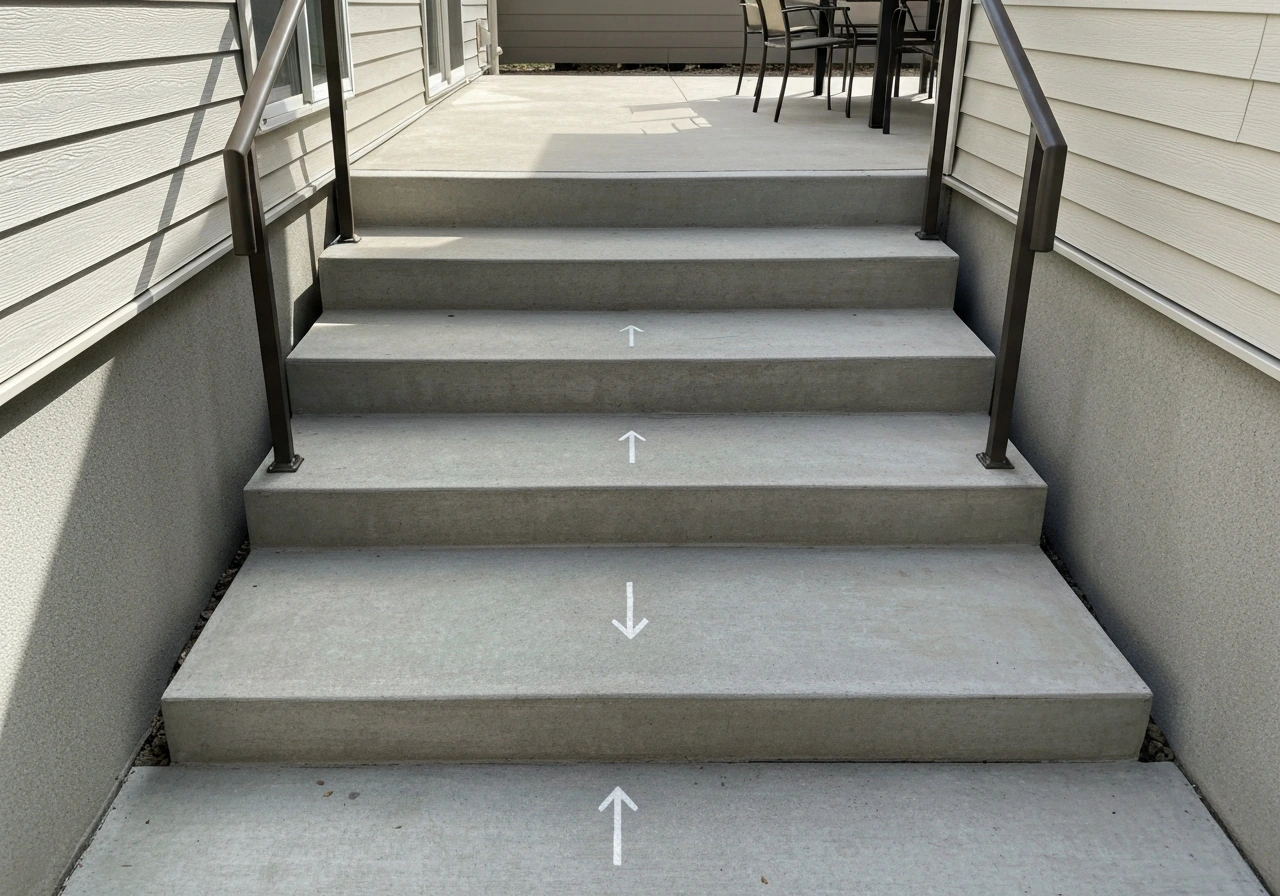
Stairs to the upper patio need a landing at top and bottom. The IRC requires landings with a minimum depth of 36 inches in the direction of travel in most configurations, and that footprint has to come from somewhere. You can run stairs along the side of the carport, attach them to the house if the carport is positioned alongside it, or build a freestanding stair tower.
For other layout choices like whether the upper patio should go right up to house or stay separated, make sure you plan the stairs and column locations in the same structural plan should patio go right up to house. Side-mounted stairs are the most common approach because they don't eat into the parking space below.
Whatever you choose, the stair location will affect column placement and possibly require an additional footing, so it needs to be part of the structural plan from the start, not added later.
Drainage and slope
This is the single most important design decision for the long-term performance of the structure. Water has to get off the deck surface and away from the carport below without pooling, seeping through the structure, or dumping onto a parked vehicle. You may also need to consider whether a patio slope can be directed away from the house foundation to reduce risk of water intrusion patio slope towards house.
The standard approach is to build the deck framing with a minimum slope of 1/4 inch per foot toward drains or scuppers at the perimeter. Drains need to connect to a downspout or discharge point that clears the carport opening. If you skip this or undersize the drainage, you will get leaks. This is the most common failure point on these projects.
Privacy and enclosure
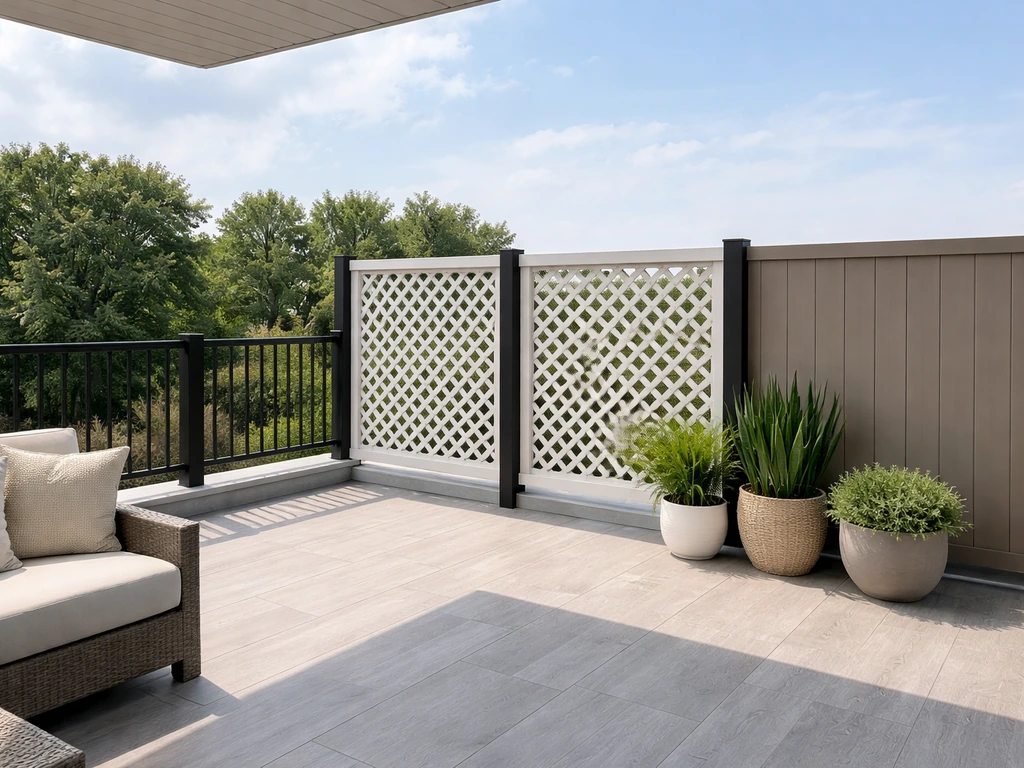
An open railing gives you the cleanest look but no privacy. Lattice panels, cable railing with planters, or solid privacy screens along one or two sides can make the space much more usable if you're in a dense neighborhood. Keep in mind that taller privacy screens add wind load to the structure, and anything over the guardrail height requirement (36 inches minimum in most IRC jurisdictions, 42 inches in others) needs to be accounted for in the structural design. If you want a shade sail, pergola top, or partial roof over the patio, those loads add up too.
Structural requirements: what actually holds this up
This is where a carport-with-patio project gets meaningfully more complex than a standard ground-level deck. You're building a platform that will hold people, furniture, and potentially snow, and that platform sits on top of columns that also have to resist lateral loads from wind and the patio above. The IRC's minimum live load for exterior decks and balconies is 40 pounds per square foot. Add snow load (which varies enormously by region, from near zero in the deep south to 50-plus psf in mountain climates) and you can quickly be designing to 70 or 80 psf combined. Every column, beam, and footing has to be sized for that.
Footings and columns

Because this is a freestanding elevated structure, the footings carry everything. Standard ground-level deck footings are typically 12 to 16 inches in diameter and extend below the frost line. For a rooftop-deck carport, you'll almost certainly need larger diameter footings (18 to 24 inches is common) because the point loads from an elevated platform with full live and snow loads are significantly higher. If you're in a high-wind or seismic zone, the engineer will also need to design for lateral resistance, which often means adding hold-down hardware or bracing. This is not a footing-size decision you can make from a span table alone.
Beams, joists, and spans
A typical residential deck uses standard dimensional lumber and follows published span tables. A rooftop deck assembly over occupied space usually warrants engineered lumber (LVL beams) or steel for the primary beams to minimize deflection, because even minor flex in the deck frame will stress the waterproofing membrane above and eventually cause leaks. Joists are typically 2x10 or 2x12 at 12 or 16 inches on center for spans of 12 to 16 feet. The structural engineer will specify this based on your actual loads and spans, and most jurisdictions will want to see those calculations as part of the permit submittal.
Guardrails
Any deck surface 30 inches or more above grade requires a guardrail. The IRC minimum is 36 inches measured from the walking surface to the top of the guard, though many jurisdictions have adopted 42 inches, especially for commercial or higher-elevation applications. Guards also have to resist a 200-pound point load at the top rail and a 50 psf load on infill panels. Cable railing, glass panels, aluminum balusters, and wood all meet this requirement if properly installed, but the post connections to the framing are where failures happen. Post bases bolted through the rim joist with proper hardware are the standard approach.
Permits, codes, HOA rules, and inspections
You will need a building permit for this project almost everywhere in the US. There is no version of this that legally skips the permit process in a typical jurisdiction, and if you try to sell the house later with an unpermitted elevated deck over a carport, it will come up in the inspection and you'll be dealing with it at the worst possible time.
The permit submittal for this type of project typically requires a site plan showing the structure's location and setbacks, floor plans of the deck layout, section drawings showing footing depth and framing connections, and often engineer-stamped structural calculations. Portland, Oregon's permit office, for example, explicitly requires section drawings showing footing and structural members for new additions, and most jurisdictions follow similar logic. If your jurisdiction sees a rooftop deck as an 'elevated deck over occupied space,' they may also trigger IBC waterproofing provisions rather than just IRC deck rules.
The inspection sequence almost always follows three stages: a footing inspection before concrete is poured, a framing inspection after structural members are up but before decking is installed, and a final inspection after everything including railings, stairs, and drainage is complete. Some jurisdictions add a waterproofing inspection between framing and final, which is worth asking about upfront. Getting waterproofing inspected before decking covers it can save you from having to tear up your new deck surface to show an inspector the membrane underneath.
HOA rules are a separate layer from building codes. Even if the city approves your permit, your HOA may restrict structure height, materials, colors, or roof-level use. Check your CC&Rs before you finalize any design, because HOA approval timelines can add weeks to the project start. Setback rules at the property line are also critical since a carport-plus-patio structure is taller than a standard carport and may violate height limits even if the footprint is fine.
Waterproofing and roof finishes: the part that can't be rushed
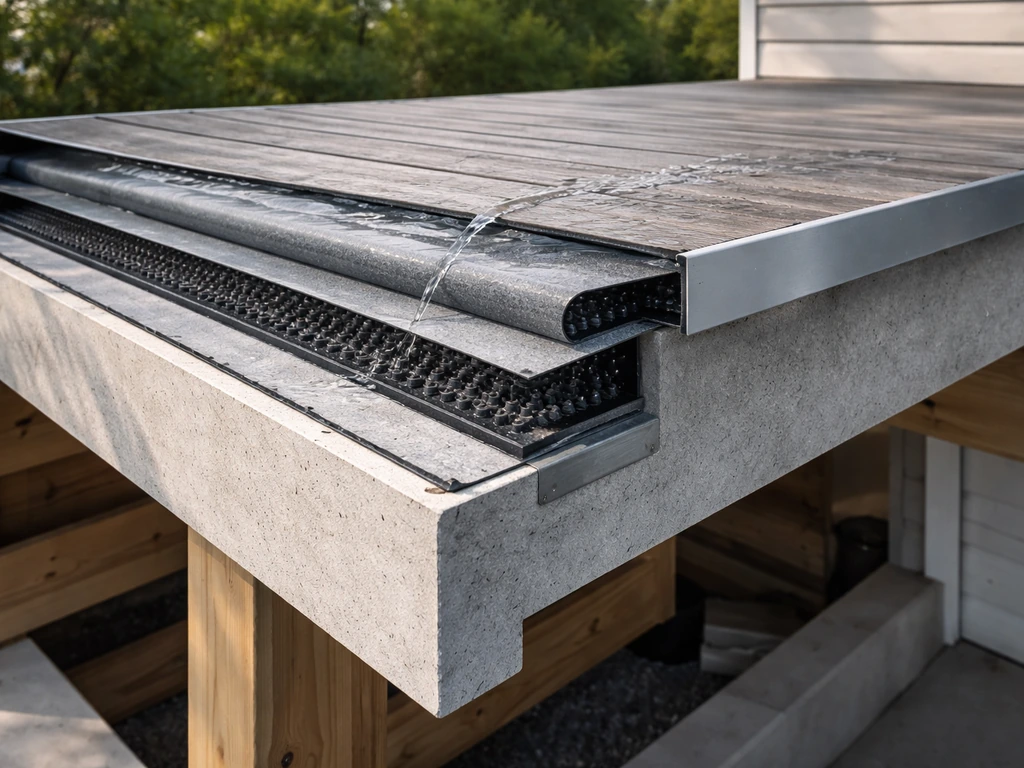
Waterproofing a deck over occupied space is fundamentally different from sealing a ground-level patio. You need a continuous waterproof membrane beneath the finish surface that directs all water to drains and prevents any moisture from reaching the structural framing or the carport below. This is not a paint-on sealer or a caulk-and-hope approach. It's a system, and getting it wrong is expensive to fix after the fact.
Membrane options
| System Type | Installed Cost (per sq ft) | Lifespan | Best For |
|---|---|---|---|
| Vinyl sheet membrane | $8–$15 | 15–25 years | Budget-conscious builds, DIY-friendly in some cases |
| TPO or EPDM membrane | $10–$18 | 20–30 years | Larger flat surfaces, professional install recommended |
| Liquid-applied waterproofing | $12–$22 | 15–20 years | Complex shapes, penetrations, detailed areas |
| Self-adhered modified bitumen (e.g., low-slope SA systems) | $15–$25 | 20+ years | High-performance, pro install required, slopes 1/4:12 to 2:12 |
Vinyl sheet membrane is the most common choice for residential rooftop decks because it's relatively affordable, well-understood by deck contractors, and field-seamed to handle complex shapes. Products like torch-down or self-adhered modified bitumen membranes (similar to Owens Corning's DeckSeal SA system, which is specified for slopes between 1/4:12 and 2:12 and requires professional installation) offer excellent performance but need an experienced installer. Liquid-applied systems are useful around penetrations and at transitions where sheet goods are harder to detail. Most high-quality rooftop deck assemblies use a combination: sheet membrane for the field, liquid-applied at edges and drains.
The FORTIFIED Home program, developed by IBHS, frames rooftop decks as combined structural and waterproofing assemblies, meaning you can't treat the structural deck framing and the waterproofing layer as independent decisions. The slope, the drain placement, and the membrane selection all have to be coordinated in the design phase, not figured out during installation. A minimum slope of 1/4 inch per foot toward primary drains is the baseline standard. Scuppers at the perimeter are a good secondary drainage backup if a primary drain clogs.
Deck surface finish options
Once the waterproofing layer is down and inspected, you can choose almost any finish surface: composite decking, porcelain tile on pedestals, natural wood, or concrete pavers on adjustable supports. Pedestal systems (tile or paver on screw-jack supports) are popular because they let you access the membrane below for inspection and repairs without demolishing the surface. Composite decking runs roughly $30 to $85 per square foot installed according to current (2026) data, with premium materials at the high end. Tile on pedestals is in a similar range. The key is that whatever you use on top can't trap water against the membrane, so the surface needs to be elevated slightly or drained through to the membrane below.
What does it actually cost?
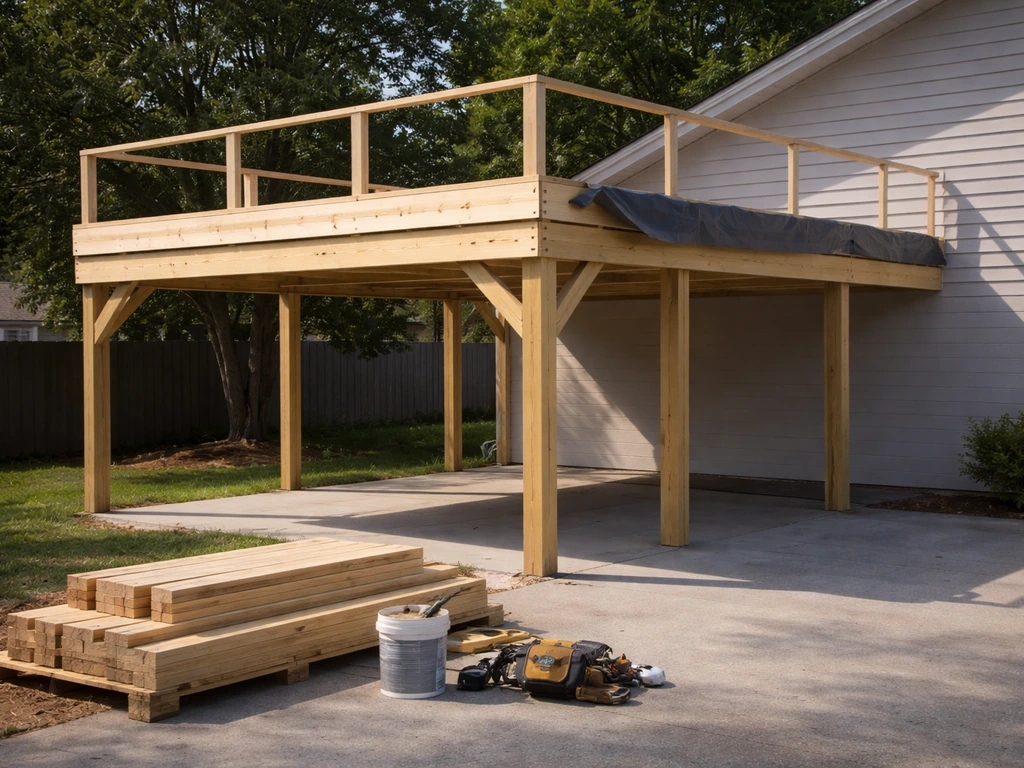
A carport with a rooftop patio is one of the more expensive outdoor structure projects a homeowner can take on, and the cost breakdown is different from a standard deck because you're paying for a structural system, not just framing and decking. Here's how the major cost buckets break down for a typical 400-square-foot two-car carport with a usable patio above.
| Cost Component | Typical Range | Notes |
|---|---|---|
| Footings and foundation | $3,000–$8,000 | Deeper, larger-diameter footings than standard decks; higher in frost or seismic zones |
| Structural framing (columns, beams, joists) | $8,000–$20,000 | Engineered lumber or steel for primary beams; complexity drives cost |
| Waterproofing system | $3,200–$10,000 | At $8–$25/sq ft for 400 sq ft; includes membrane, drainage, flashing |
| Deck surface finish | $12,000–$34,000 | At $30–$85/sq ft installed for composite, tile, or pavers |
| Guardrails and stairs | $3,000–$9,000 | Cable, aluminum, or wood railing; stair complexity varies widely |
| Permits and engineering | $2,000–$6,000 | Stamped drawings, structural calcs, permit fees, inspections |
| Total estimated range | $31,000–$87,000+ | 400 sq ft; varies significantly by region, complexity, and finishes |
For context, HomeGuide's 2026 data puts a basic carport at $2,000 to $18,000 and a rooftop deck surface at $25 to $80 per square foot. The combination of the two into an integrated elevated structure with waterproofing is substantially more. If your budget is tight, the places where you can save are the finish surface (composite instead of tile, for example) and the railing style. You cannot meaningfully cut corners on footings, framing, or waterproofing without increasing long-term risk. Ongoing maintenance costs for a rooftop deck membrane run $500 to $1,500 every 5 to 10 years for inspection and resealing, more if a membrane needs replacement.
DIY vs. hiring it out: where the line is
This is not a project where a competent DIYer can handle everything, and it's worth being direct about that. The structural design and waterproofing installation are the two areas where doing it wrong has serious consequences, and both require professional involvement in most cases.
What you can reasonably handle yourself
- Site planning, layout, and measurements before engaging a structural engineer
- Permit application assembly (gathering documents, submitting drawings prepared by a designer or engineer)
- General labor on framing under the direction of an engineered plan, if you have solid carpentry experience
- Installing composite or wood decking surface over a completed, inspected framing and waterproofing system
- Installing pre-engineered aluminum or cable railing systems with documented hardware
- Painting, staining, or finishing work after structural completion
What you should hire out
- Structural engineering: load calculations, beam sizing, footing design, connection details (stamped drawings required for permit in most jurisdictions)
- Waterproofing membrane installation: most membrane manufacturers and code authorities require professional installation, and improper seaming or flashing voids warranties and fails inspections
- Concrete work for footings if they require sizing or depth beyond simple tube-form pours
- Any electrical work if you want lighting, outlets, or a ceiling fan below
- Final framing connections and ledger attachment if the structure ties into the house
A realistic hybrid approach for a capable DIYer is to hire the structural engineer for design and drawings, hire a waterproofing contractor for the membrane, and self-perform the framing and finish work. This can reduce labor costs meaningfully without taking on the high-risk tasks. That said, some jurisdictions require a licensed general contractor to pull permits for structures of this complexity, so check your local rules before assuming you can owner-build.
Home value, resale impact, and common mistakes
A well-built carport with a rooftop patio can add real value to a home, particularly in urban or suburban areas where outdoor living space is at a premium and land is limited. The dual functionality (covered parking plus usable outdoor space) is a legitimate selling point that buyers notice. That said, value impact depends heavily on the quality of execution and whether it was permitted.
Unpermitted elevated structures are a significant problem at resale. A buyer's inspector will flag an elevated deck over a carport immediately, and if there are no permits on record, you're looking at either retroactive permitting (expensive and uncertain), price reductions, or the buyer walking. The upfront cost of doing it right legally is almost always less than the retroactive headache.
The most common construction mistakes on these projects, based on patterns in contractor callbacks and waterproofing repair jobs, are:
- Inadequate slope to drain: the most common cause of chronic leaks; anything less than 1/4 inch per foot will pool water on the membrane
- Improper flashing at the house wall or posts where the deck meets vertical surfaces: water always finds the gaps
- Undersized footings: easy to underestimate loads on a freestanding elevated structure, especially in snow or high-wind zones
- Membrane installed directly over unsupported sheathing without a cover board: deflection in the deck frame cracks the membrane over time
- Missing expansion or isolation joints where the structure meets the house foundation or driveway slab: differential movement cracks finishes and opens leak paths
- Guardrail posts bolted to rim joists without proper hardware: posts that feel solid at installation can flex significantly under load over time
It's worth noting that building code requirements for patios at grade are fairly minimal, but once you go elevated and add waterproofing over occupied space, you're in a different regulatory and technical category. If you are asking, can a patio be on the second floor, the answer is yes, but the structure needs the right loads and waterproofing details. The same logic applies to questions about whether a patio can slope toward a house or how it should connect to the foundation: those concerns are magnified significantly when the patio is 10 feet in the air over a vehicle. In these elevated rooftop deck builds, deciding whether to leave a gap and how to detail the connection to the house matters just as much as slope and drainage to prevent leaks should there be a gap between patio and house.
Your practical next steps
If you're ready to move forward, here's the sequence that actually works for getting this project from idea to built structure without expensive surprises.
- Measure and document your site: carport footprint, proposed patio size, setbacks from property lines and the house, existing utility locations, and slope of the ground. A site survey is worth the cost if you don't have a current one.
- Check zoning and HOA rules before spending money on design: confirm height limits, setbacks, and whether your HOA requires design approval. A five-minute call to your city's planning department can save weeks of rework.
- Hire a structural engineer for a preliminary consultation: bring your site measurements, the intended use (patio furniture, hot tub, planter boxes all add load), and your general layout idea. Ask specifically about footing requirements for your soil type and local snow/wind loads. Budget $800 to $2,500 for stamped drawings and calculations.
- Get two to three bids from contractors experienced with rooftop deck assemblies: ask specifically whether they have experience with waterproofing membranes over occupied space, and ask to see photos of completed projects. This is not a project for a general handyman.
- Get your permit application submitted early: permit review times vary from two weeks to three months depending on jurisdiction and complexity. Submitting early in your planning cycle keeps the schedule intact.
- Sequence your inspections carefully: confirm with your inspector whether there's a waterproofing inspection phase before decking is installed, and plan your construction schedule around it. Don't cover the membrane before it's inspected.
- Choose your deck surface after the structural and waterproofing system is designed: don't reverse-engineer the structure around a tile pattern you like. Get the bones right first, then select finishes.
A carport with a patio on top is genuinely one of the more satisfying outdoor structure projects you can do, because you're adding two functions to a space that previously had one. Yolanda is building a patio in her backyard, and the same planning and waterproofing priorities apply if she is adding one over a carport. The planning overhead is real, but once you have an engineered design, proper permits, and a solid waterproofing system in place, the day-to-day use of the space is simple and low-maintenance. The projects that turn into regrets are almost always the ones that skipped the structural or waterproofing step to save money up front.
FAQ
How high can the patio be over the carport and still meet code requirements for railings and steps?
Guardrails are triggered once the walking surface is 30 inches or more above grade, so even if your deck is only slightly elevated you may still need guards and compliant balusters. Also plan the stair geometry early, because changing stair run or landing size later can force column and footing changes.
What’s the best way to prevent water from running onto parked cars during heavy rain?
Don’t rely on the deck surface only. Build a drainage plan that includes the required deck slope plus perimeter scuppers or drains that discharge beyond the carport opening. If you only place drains in the center or the discharge point ends over the parking bay, leaks and wetting are common.
Can I waterproof this like a normal deck with sealant or paint?
No. Over occupied space, you need a continuous waterproofing system beneath the finish, with properly detailed seams, flashings at drains, and treatment of penetrations. Sealants and coatings are supplemental at best, and they usually fail at edges, fasteners, and transitions.
Should the patio surface be level or sloped, and how steep is too steep?
It should be sloped at least 1/4 inch per foot toward your primary drainage points to prevent pooling. Avoid making it steeper just to “help runoff,” because that can create ponding at edges, more washout risk around drains, and harder-to-detail transitions to stairs and rail bases.
Where should I place drains relative to furniture and traffic paths?
Keep drains and scuppers where they can serve the entire deck without channeling water across seating areas. In practice, you typically center drainage to align with joist/beam framing and ensure drains land where downspouts can discharge away from the vehicle, while leaving enough clear deck area for furniture placement.
How do I handle plumbing, electrical, or a ceiling fan on the structure below?
Treat penetrations as high-risk areas. Coordinate electrical and lighting conduits and any hose bibs early with the waterproofing contractor, so penetrations are flashed and sealed into the membrane system. After framing, retrofitting penetrations often means cutting and re-detailing the waterproofing.
Is pedestal tile or pavers always better than composite decking for a rooftop patio?
They can be, because the raised system helps prevent water from being trapped against the membrane and makes it easier to access and inspect below. That said, pedestals still require correct drainage slopes and must be designed to avoid rocking that can stress waterproofing details at edges and drains.
Can the patio extend beyond the carport footprint?
Sometimes, but it increases structural complexity because any overhang still has to be carried by engineered framing, and lateral wind and load paths change. If you extend beyond the base, you may need additional beams, altered column placement, or stronger footings to keep the deck within allowable deflection limits and waterproofing stresses.
Do I need engineered plans even if my carport and deck are small?
Usually yes. Even with modest dimensions, the combination of elevated loading, waterproofing over occupied space, and snow or wind exposure typically pushes the design into engineered territory. Plan on structural calculations and member sizing rather than span tables alone.
What’s the most common permit or inspection issue that causes delays?
A frequent issue is waterproofing not being detailed and inspected as expected before decking goes on. Ask your inspector or permit office whether they require a waterproofing inspection after membrane installation but before finishes, and schedule that stage to avoid tearing up new work.
Can I owner-build this if I hire only the engineer and waterproofing contractor?
A hybrid approach can work, but check local rules. Some jurisdictions require a licensed general contractor to obtain permits for elevated decks over occupied space, and the framing must match the engineer’s drawings exactly. If you plan to self-perform, confirm code acceptance of your scope before construction starts.
What ongoing maintenance should I plan for to protect the waterproofing layer?
At minimum, budget for periodic inspection of drains, scuppers, and edge details to ensure nothing blocks discharge and no flashing or membrane seams are separating. If you use pavers or tile, also check grout lines, pedestal stability, and any water routing that could direct runoff to the membrane instead of toward the drains.
How do HOA rules typically affect the design of a carport with a rooftop patio?
HOAs often focus on height, rail style, visible materials on the roof level, and whether the space is considered a “roof structure” or “deck.” Submit your drawings early for approval, because the combination of a taller structure and privacy enclosures can trigger multiple review cycles.
Next Article
Garage With Patio on Top: Build, Cost, Loads, and Codes Guide
Step-by-step guide to building a garage with patio on top, covering loads, codes, costs, waterproofing, and maintenance.