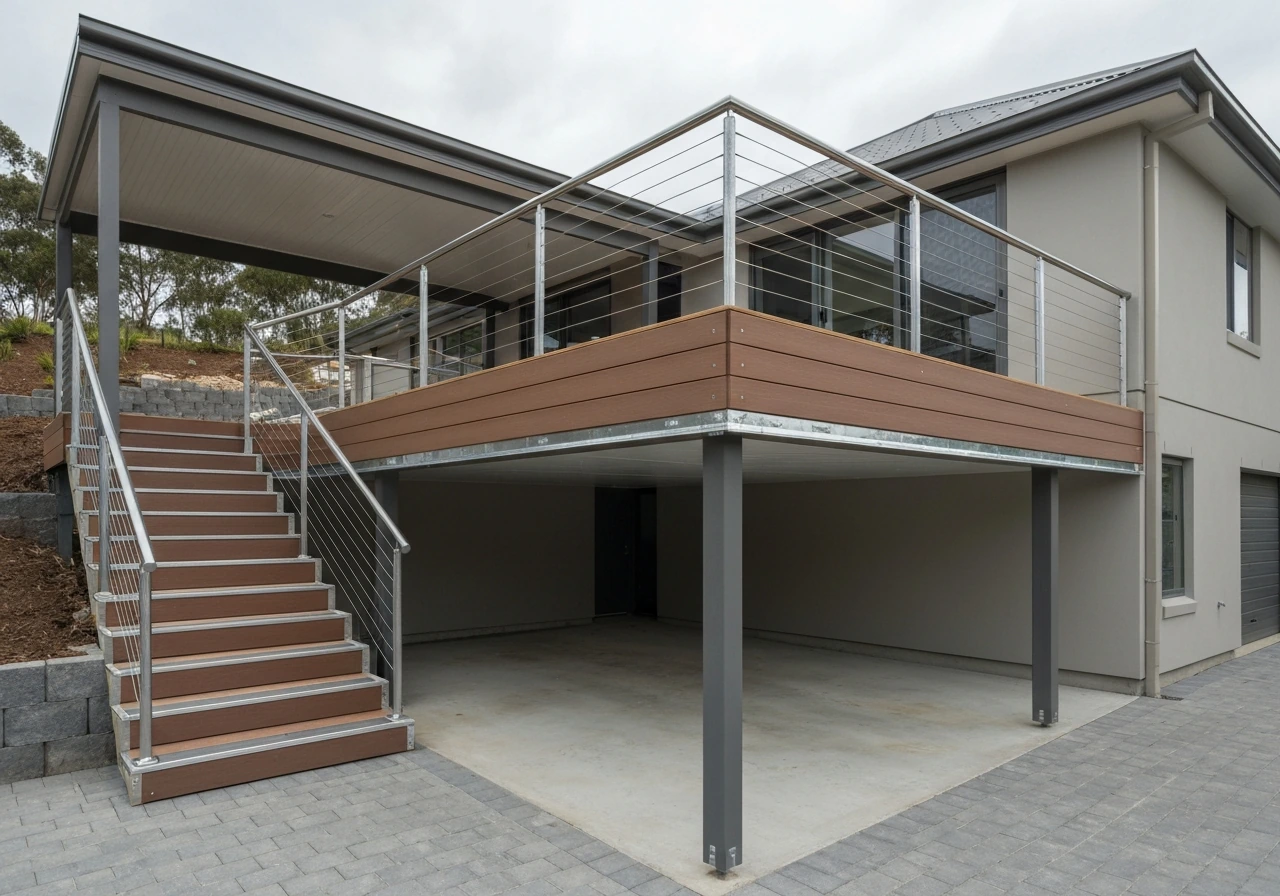
Yes, you can absolutely build a patio-style outdoor living space on the second floor of a house, but what you're actually building isn't a patio in the traditional sense. It's a balcony, elevated deck, or rooftop terrace, and that distinction matters a lot for permits, structural requirements, waterproofing, and cost. The good news: second-floor outdoor spaces are done all the time and add real value. The catch is that they're more structurally demanding and more expensive than a ground-level patio, and skipping the engineering step is how people end up with leaky ceilings and failed inspections.
Can a Patio Be on the Second Floor? Requirements, Costs

Miles Hart
3 Jun 2026
What people actually mean by a second-floor "patio"
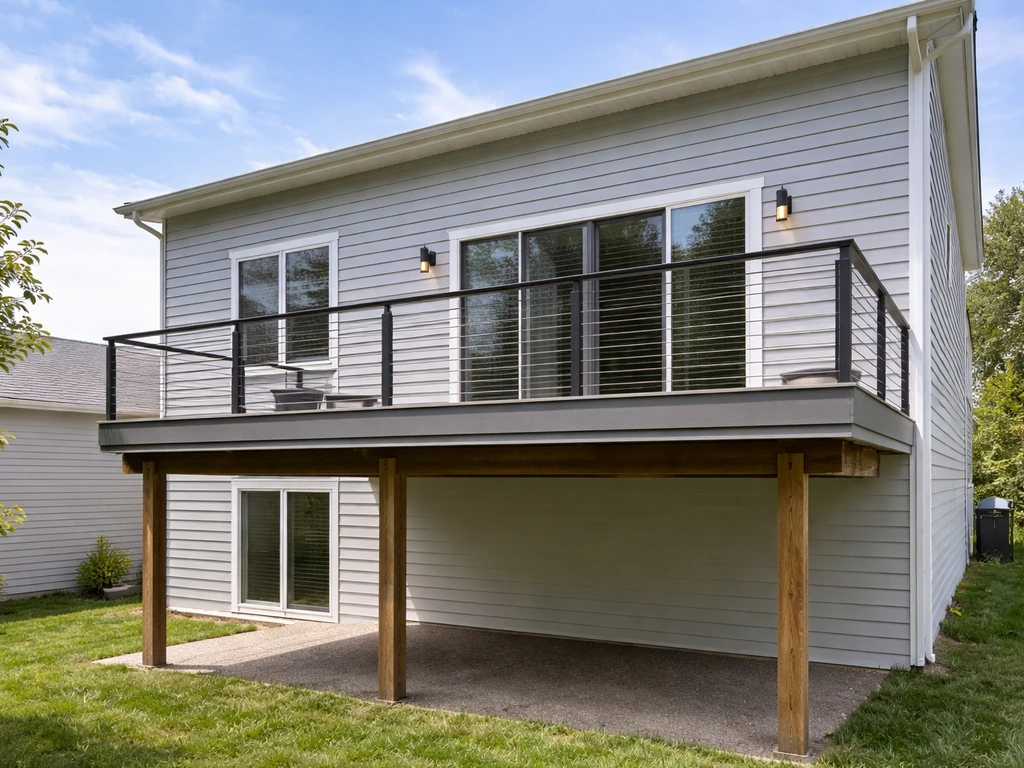
A traditional patio is a ground-level slab, usually concrete or pavers, that sits directly on compacted soil or a gravel base. It carries its own weight through the ground, drainage runs off naturally, and there's no structural load transferred to your house framing. The term "second-floor patio" is really shorthand for any elevated outdoor surface above grade, and that could mean several different things depending on your home's layout.
- Balcony: a cantilevered or bracket-supported platform that projects from the house wall, usually fairly small (under 100 sq ft)
- Elevated deck: a wood-framed platform attached to the house via a ledger board, sitting on posts and footings, at second-floor height
- Rooftop terrace: a finished outdoor surface built directly on top of a flat or low-slope roof section (like over a garage, addition, or first-floor bump-out)
- Covered second-floor porch: an elevated deck or terrace with a roof structure above it
The wording matters because codes treat these differently. Under the 2024 International Building Code (IBC), a "patio cover" defined in Appendix I has specific structural and drainage rules tied to ground-supported conditions. An elevated outdoor platform falls under deck, balcony, or terrace provisions instead, which trigger different framing tables, live load requirements, guardrail rules, and in some cases waterproofing requirements that simply don't apply to a ground slab. When you talk to a building department or contractor, be specific about what you're describing.
Can it actually be built? Structural basics you need to understand
The structural question is where most second-floor patio projects either get a green light or hit a wall. There are three things your home needs to support: the dead load (the weight of the structure itself, decking, railings, furniture), the live load (people moving around on it), and lateral loads (wind pushing sideways against the platform and everyone on it).
Live load: the 40 psf rule
The 2024 IRC Table R301.5 assigns exterior balconies and decks a minimum live load of 40 pounds per square foot (psf). That means every square foot of your deck surface needs to be designed to handle 40 lbs of occupancy load on top of the dead load of the structure itself. For a 200 sq ft balcony, that's 8,000 lbs of live load capacity required. Your existing house framing, joists, and foundation may or may not be designed to accept that transfer of force, which is exactly why an engineer needs to look at it.
Framing spans and ledger connections
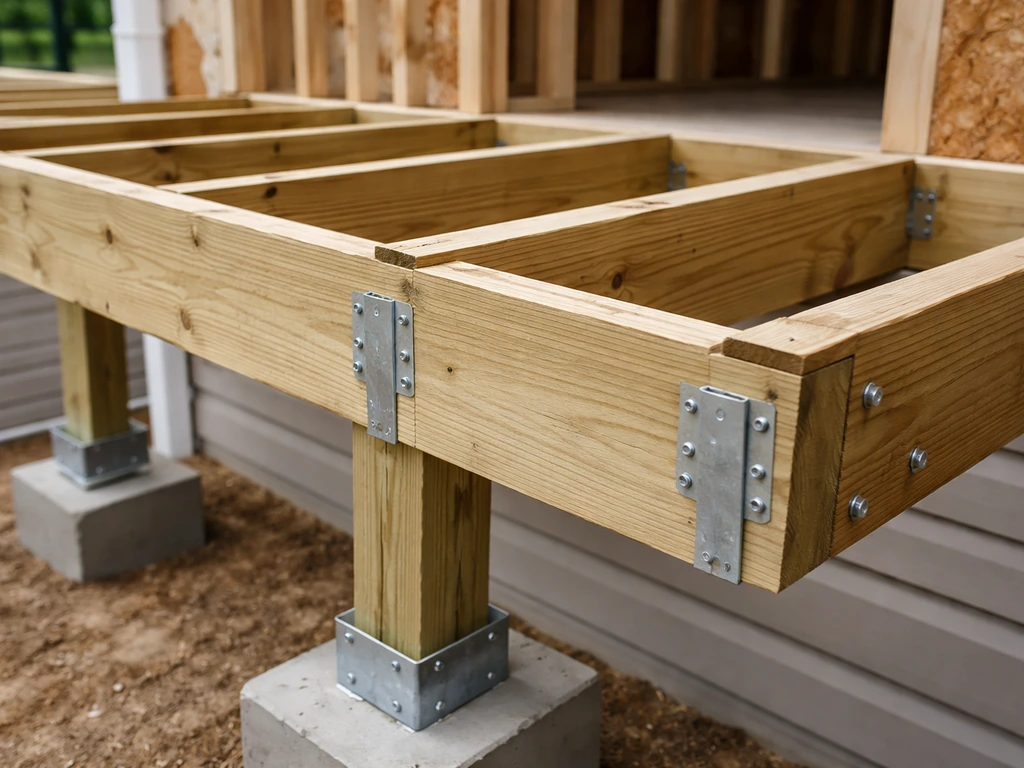
If you're building an attached elevated deck, the ledger board connection to your house is the single most critical structural point. The 2021 IRC Chapter 5 (R507) includes prescriptive joist and beam span tables for exterior decks, and R507. 9. 2 covers hold-down connections for lateral load resistance.
These connections are sized based on your wind zone, the deck's height and size, and the existing wall assembly. Flashing at the ledger is equally critical: IRC Section R703 and Section R703. 4 require corrosion-resistant flashings at the ledger-to-wall interface, integrated with the water-resistive barrier (WRB), so water doesn't migrate into your wall assembly or floor system. Skipped or improperly installed ledger flashing is one of the most common causes of rot in elevated deck framing.
Rooftop terrace waterproofing
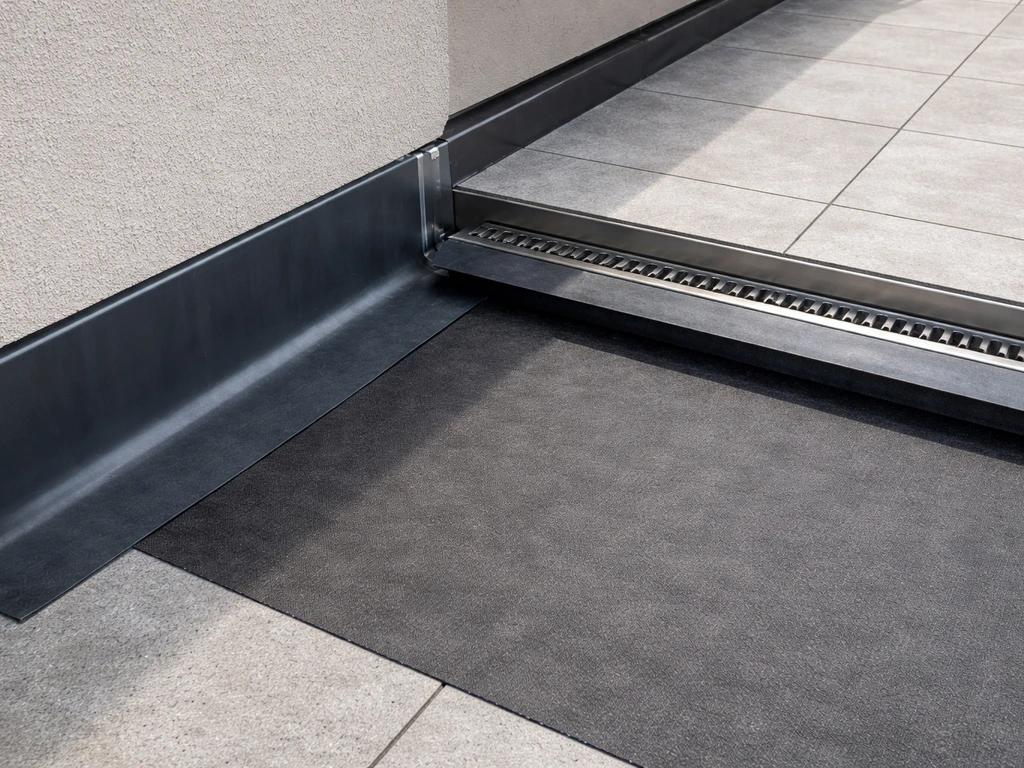
If your second-floor outdoor space sits over living space (like a deck built on top of a first-floor addition or garage), waterproofing becomes a non-negotiable structural component, not just a finishing detail. There's no ground to absorb a leak. A failed membrane means water goes directly into the room below.
The most common failure modes are clogged drains or scuppers, structural deflection that creates low spots where water ponds, and compromised flashing details where the membrane transitions at walls or penetrations. A proper waterproof deck system uses a continuous membrane (liquid-applied or sheet-applied), integrated drain bodies, and sloped substrate to maintain positive drainage of at least 1/8 inch per foot toward drains or scuppers. Installed waterproofing membranes typically run $10 to $25 per square foot depending on the system.
Permits, codes, and when you need an engineer
Almost every elevated outdoor platform above 30 inches requires a building permit. Because second-floor patio projects often fall under deck and balcony code requirements, the local building code for patios and elevated outdoor spaces will determine what you need to submit building permits. Minnesota's residential deck guidelines, for example, explicitly require permits and footing-supported structures for any deck more than 30 inches above grade. That 30-inch threshold is also the trigger for guardrail requirements under IRC R312.1.1. The same rule has been adopted at the state level broadly, including states like South Carolina. So if your second-floor deck is 10 feet off the ground, guardrails are mandatory and must be at least 36 inches tall per IRC R312.1.2.
Beyond the guardrail basics, here's what a permit review typically touches for an elevated outdoor space:
- Structural framing drawings or an engineer's stamp showing load calculations
- Ledger attachment method and flashing details
- Footing size and depth (frost depth varies by region)
- Guardrail height, baluster spacing (4-inch max opening), and post connections
- Drainage plan showing where water goes and how scuppers or drains tie in
- Setback compliance (your deck can't encroach on property line setbacks, even at height)
- In some jurisdictions, impact on the building's thermal envelope if conditioned space is below
Jurisdictions vary more than you'd think. NYC, for example, has additional provisions beyond the IRC under NYC Building Code, and introducing occupancy to a rooftop can trigger parapet and guardrail loading requirements that go beyond standard residential rules. Always call your local building department before doing any design work. Ask specifically: does this project require an engineer's stamp? In most cases, for anything structural or over living space, the answer will be yes.
Design options that actually work at second-floor height
Once you've confirmed your home can structurally support something, there are four design approaches that work well at second-floor height. Each has a different cost profile, structural demand, and use case.
Attached elevated deck
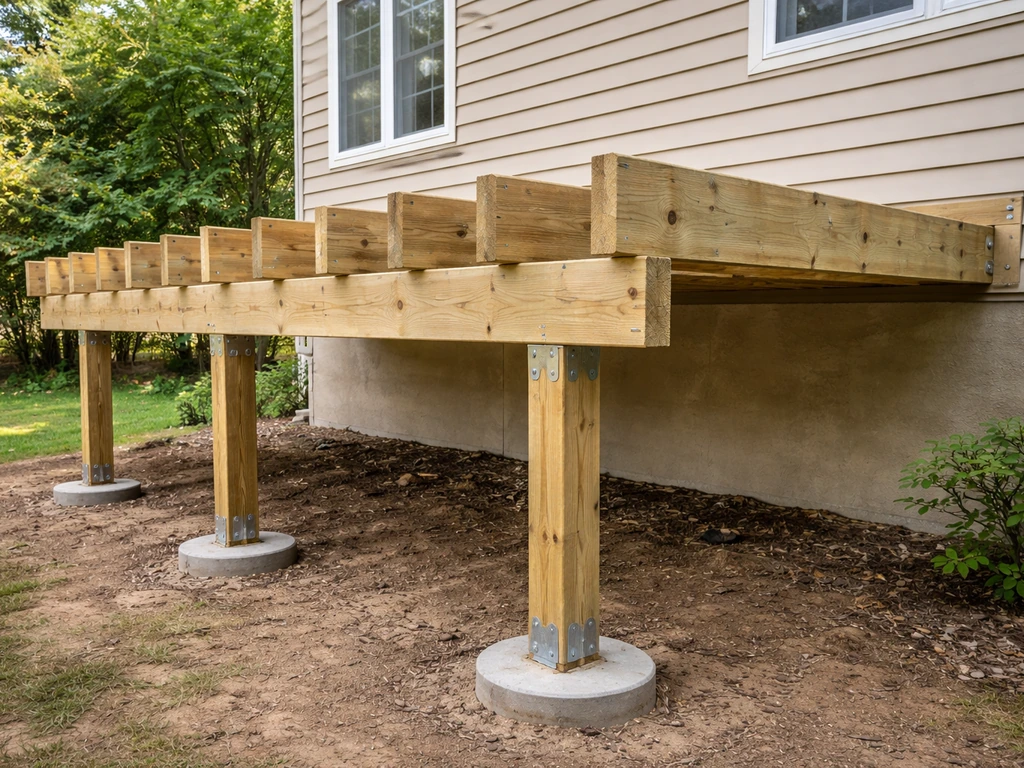
This is the most common approach: a wood-framed or composite deck attached to the house via a ledger, supported by posts sitting on concrete footings. It's well-understood by contractors, covered thoroughly in the IRC prescriptive tables, and can span large areas. The main design constraint is access from the house (usually through a second-floor door) and post footing locations, which need to avoid utilities and work with your soil conditions. This doesn't sit over living space, so waterproofing is typically not required, though proper ledger flashing still is.
Cantilevered or bracket balcony
A balcony that projects from the house without posts works well for smaller spaces (typically under 6 feet of projection). It requires the floor joists to either cantilever out from the house framing or be supported by structural brackets bolted into the house's rim or floor system. The structural analysis here is more involved than a post-supported deck because the loads transfer directly into your house framing rather than to independent footings. An engineer is almost always required.
Rooftop terrace over a lower level
If your home has a flat or low-slope roof over a garage, first-floor addition, or sunroom, that roof can potentially become a terrace. The existing roof structure needs to handle the 40 psf live load plus the dead load of the decking system and waterproofing assembly. Most residential roofs are not designed for this from the start, so structural reinforcement is commonly needed. Waterproofing is critical here and adds significant cost. This approach is expensive but can result in a very usable outdoor space since it doesn't require posts or footings.
Covered second-floor porch
Adding a roof structure above an elevated deck or balcony creates a covered porch. This protects furniture, extends seasonal use, and can include ceiling fans and lighting. The roof adds dead load to the platform structure, which needs to be factored into the original design. In some jurisdictions, a roofed structure triggers different zoning treatment than an open deck, so check with your building department before adding a roof to an existing deck or designing one in from the start.
Costs and home value: second-floor terrace vs. ground patio vs. deck
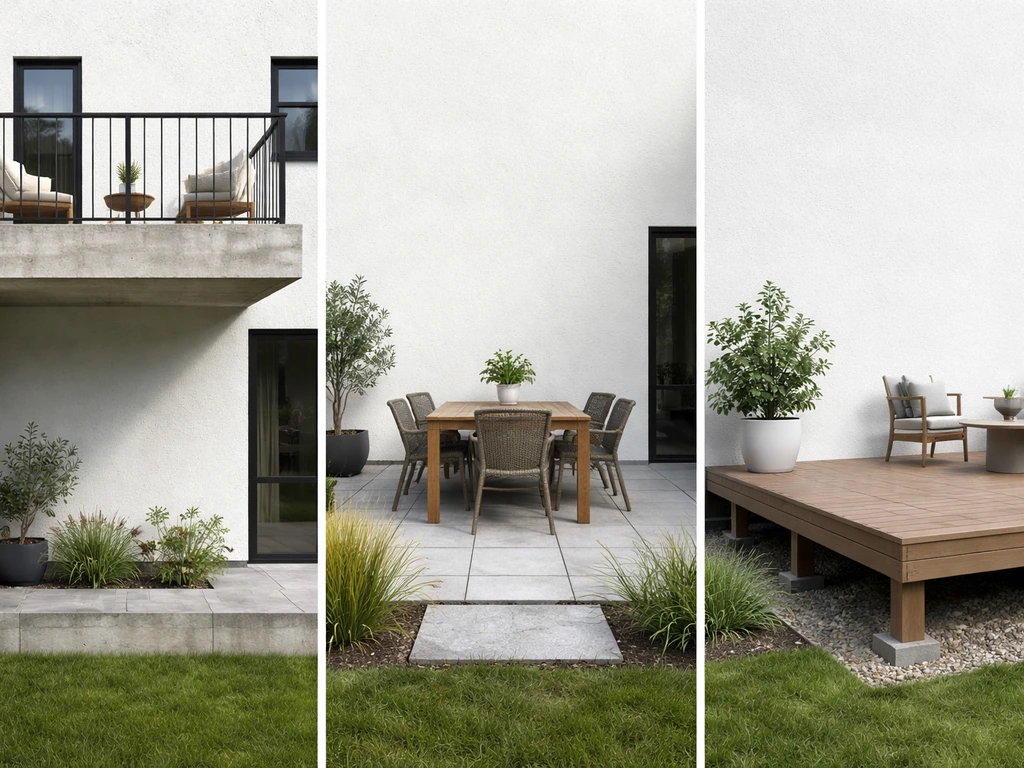
Here's where the reality check hits. A second-floor outdoor space costs significantly more than a ground-level patio with similar square footage. The reasons are structural complexity, waterproofing requirements, railing systems, and the cost of working at height. A Columbia County handout also breaks down how cost factors vary by deck and foundation type, including differences in elevated slab and wood-deck approaches. Here's how the options generally compare:
| Option | Typical Cost Range (installed) | Key Cost Drivers | Home Value Impact |
|---|---|---|---|
| Ground patio (concrete/pavers) | $8–$25 per sq ft | Material choice, size, site prep | Moderate; adds usable outdoor space |
| Elevated wood deck (2nd floor, post-supported) | $35–$65 per sq ft | Height, decking material, railing system, footing depth | Good; decks consistently recover 60–70% of cost |
| Cantilevered balcony | $50–$100+ per sq ft | Engineering, structural reinforcement, railing | Strong if well-integrated with home design |
| Rooftop terrace over living space | $75–$150+ per sq ft | Structural upgrade, waterproofing membrane, drainage, decking finish | High potential but high upfront cost |
| Covered second-floor porch | $60–$120 per sq ft | Roof framing, columns, ceiling, lighting, railing | Strong; covered outdoor space is highly valued in most markets |
The rooftop terrace over living space is the most expensive because it combines structural upgrades, a complete waterproofing system (typically $10–$25 per sq ft just for the membrane and drainage), and finished decking on top of that. A 300 sq ft rooftop terrace can easily run $25,000 to $45,000 or more before any furniture or shade structures. A post-supported elevated deck of the same size might come in at $12,000 to $20,000 depending on materials and your region.
From a home value perspective, second-floor outdoor spaces tend to recover well, particularly in markets where outdoor living is a strong selling feature. A well-built elevated deck or covered porch adds more appraised value than a basic ground patio because it's structurally integrated with the house and seen as a true extension of living space. Rooftop terraces in urban markets with limited yard space can add substantial value, but in suburban markets with large backyards, the same investment may not pencil out as well.
DIY vs. hiring a pro: where the line actually is
This is the section where I'll be direct: second-floor outdoor spaces are not beginner DIY projects. That doesn't mean there's nothing a capable homeowner can do, but the structural and waterproofing work is not the place to learn on the job.
What you can reasonably handle yourself
- Research and planning: measuring your space, gathering existing framing information, pulling old permits or plans from the building department
- Permit research: calling your local building department to understand what's required before spending money on design
- Material and finish selection: choosing decking material, railing style, and surface finishes once the structural design is set
- Basic finish work: installing composite decking boards, adding planters, outdoor lighting (low voltage), and furniture after the structure is inspected and approved
- Railing installation in some jurisdictions: if the structural posts are already set and inspected, installing balusters and top rails is often within DIY range, but check local rules first
What should be done by licensed professionals
- Structural engineering: any load calculations, ledger attachment sizing, cantilever analysis, or rooftop structural upgrades need a licensed structural engineer
- Waterproofing system installation: membrane application over living space requires professional installers; improper installation voids warranties and causes expensive damage
- Drainage tie-ins: connecting scuppers or deck drains to your home's drainage system involves both waterproofing and potentially plumbing or site drainage expertise
- Footing installation: concrete footings at frost depth need to be sized correctly and placed correctly, particularly on sloped sites
- Ledger attachment and flashing: this is the highest-risk connection point for long-term water damage; it needs to be done by someone who understands IRC flashing requirements and your specific wall assembly
- Electrical rough-in: any 120V or higher electrical for outlets, fans, or lighting at the second-floor level should be done by a licensed electrician
The waterproofing point is worth emphasizing. A rooftop terrace or any elevated deck over conditioned space is essentially a roof. Roofing and waterproofing systems are specialized trades. Getting multiple competitive bids from waterproofing contractors specifically (not just general deck contractors) will get you better results and more accurate pricing.
Your checklist for today: how to evaluate feasibility and get real quotes
If you're actively planning this, here's a concrete sequence of steps to move from "I want a second-floor outdoor space" to "I have a real plan and a real number. If Yolanda is building a patio in her backyard, she should confirm whether her plan is truly a ground-level patio or an elevated second-floor platform before moving forward with permits and engineering. "
- Gather your home's existing framing information. If you have original blueprints or structural drawings, pull them out. If not, your building department may have permit records from original construction. You need to know what's below and beside where you want to build.
- Measure the target area carefully. Note the floor-to-grade height, the location of any existing doors or windows that would serve as access points, the condition of any existing roof surface if you're building over it, and where the nearest downspouts or drainage outlets are.
- Check your roofline and any existing flat roof sections. Look for signs of existing drainage problems: staining, soft spots, ponding water marks, or cracked caulk around flashings. These are red flags that need to be addressed before adding a deck surface on top.
- Call your local building department. Ask what permits are required, whether an engineer's stamp is needed, what the setback rules are at height, and whether any zoning restrictions apply to elevated structures on your property.
- Consult a licensed structural engineer before talking to deck contractors. Getting an engineer's preliminary assessment (typically $300 to $800 for a site visit and feasibility review) tells you whether the project is even viable before you spend money on design drawings or contractor bids.
- Get at least three contractor bids with the same scope. Require that each bid include framing, ledger attachment with flashing, railing system, and drainage in the base price. If the project involves waterproofing over living space, get separate waterproofing contractor bids.
- Ask each contractor for examples of similar elevated projects and references you can call. Second-floor work is specialized; not every deck contractor has done it correctly at height over living space.
- Review your homeowner's insurance. Adding an elevated structure sometimes affects your coverage or requires a notification. Better to know before you build.
One more practical note: if your project involves building over a garage specifically, or adding outdoor space above a carport, those are slightly different structural scenarios with their own considerations around ceiling height, ventilation, and load paths. If your plan is for a carport with patio on top, treat it as an elevated outdoor structure with specific load-path and waterproofing considerations.
The building code requirements around drainage, waterproofing, and structural design all apply, but the existing structure underneath changes the conversation with your engineer. Similarly, if you're thinking about how your new elevated space connects to the ground level and how grading and drainage should work between the two, the slope and gap details at the house foundation become relevant to get right. If you are also considering drainage and grading for a patio area near the house, you may wonder whether a patio slope can run toward the foundation can a patio slope towards house.
When you plan placement details, decide whether the patio surface should go right up to the house or stop short so drainage and waterproofing are easier to manage. That same idea is why people ask whether a patio slope can be directed toward a house without causing water issues grading and drainage should work between the two.
A common question is should there be a gap between patio and house when you connect an elevated outdoor surface to the building.
The bottom line is this: a second-floor outdoor space is absolutely buildable, often worth it, and can be a genuine improvement to how you use your home. But it's a structural project first and a design project second. Get the engineering right, get the permits, and the rest follows. For example, Montgomery County’s 2018 IRC changes deck code mapping document shows how local jurisdictions publish change notes that affect which deck provisions apply jurisdictions that publish 2018 IRC change documents with deck section mapping. Skip either of those steps and you're setting yourself up for expensive problems down the road.
FAQ
Is a second-floor “patio” always treated differently than a ground-level patio by code and inspectors?
Not in most cases. If the space is above grade, many jurisdictions treat it as a deck, balcony, or terrace, not a ground patio, and that changes structural design and permits. Use your intended layout terms with the building department, for example “deck over living space” or “balcony projecting from rim joists,” so you are reviewed under the right code pathway.
What should I ask an engineer to check for a second-floor deck or elevated patio?
Start by getting the required beam and joist capacity and then verify the substructure, not just the surface. Ask your engineer to provide design loads for dead load, 40 psf live load where applicable, and lateral loads, then confirm connections like ledger bolts, rim reinforcement, and any hold-downs match the deck height and local wind conditions.
Do I really need waterproofing if my second-floor outdoor space is “mostly open”?
Yes, and it can be the most expensive part if you skip planning. If your elevated platform is over conditioned space or a garage, you typically need a continuous waterproof membrane with proper transitions at walls, penetrations, and drain bodies. A key detail is ensuring the deck system includes a dedicated drainage layer so water does not get trapped behind the finish surface.
When are guardrails required for a second-floor elevated patio or balcony?
It depends on distance, height, and jurisdiction rules, but a common trigger is when the walking surface is more than 30 inches above grade, which usually means guardrails are required. Even when a rail is not strictly required for every situation, adding rails can reduce injury risk and may be demanded by permitting or lender requirements for safety.
Can I avoid an engineer’s stamp for a small second-floor deck?
Usually yes for anything structural, but the main edge case is a small, simple, permitted deck built using code prescriptive tables. If it is attached with a ledger, projects beyond the house, sits over living space, or includes major alterations to framing, expect an engineer review or stamp in many areas. Confirm by asking the permit office whether prescriptive design is allowed for your exact construction type.
Can I slope the second-floor deck surface toward the house to make drainage easier?
A common mistake is draining toward the house or relying on “natural” runoff. Elevated deck and terrace systems often require positive slope to drains or scuppers, and the slope direction must keep water away from the wall assembly. Your plan should show where water goes (to gutters, scuppers, or approved discharge points) and how splashback is prevented.
What is the most common failure point at the ledger where a deck attaches to a house?
You should usually treat the ledger connection as a flashing and corrosion-control system, not just a structural attachment. Ask for a ledger flashing plan that integrates with the home’s water-resistive barrier (WRB), uses corrosion-resistant fasteners, and includes correct end dams or drip edges so water is routed out and cannot migrate into framing.
If I add a roof over the second-floor patio, do I need new structural and permit approvals?
Yes, and it affects loads, framing, and safety. If you plan a roof structure over the deck, you must account for added dead load, changed wind uplift and lateral forces, and sometimes different requirements for egress and zoning or parapet treatment. Ask your designer whether the roof converts the space into a different permit category.
Can I turn an existing roof over a garage into a rooftop terrace without major reinforcement?
Sometimes, but only if the roof-to-terrace conversion is designed for the added weight and water management. Many existing roofs are not built for deck live load and the installation can compromise roofing warranties and drainage pathways. Expect possible reinforcement of rafters, sheathing, and underlayment, plus an elevated waterproofing system that ties correctly into existing roof details.
Should there be a gap between the elevated patio surface and the house when I build the connection?
Often it should. If the finished deck surface meets the building wall, you need a controlled detail that prevents capillary action and trapped water at that junction. Many projects require a properly flashed termination and sometimes a small separation or drainage break so water does not backflow behind cladding or into the WRB.
Next Article
Carport With Patio on Top: Design, Cost, Loads, and Waterproofing
Plan a carport with patio on top: loads, waterproofing, costs, permits, layout options, and DIY vs pro steps.