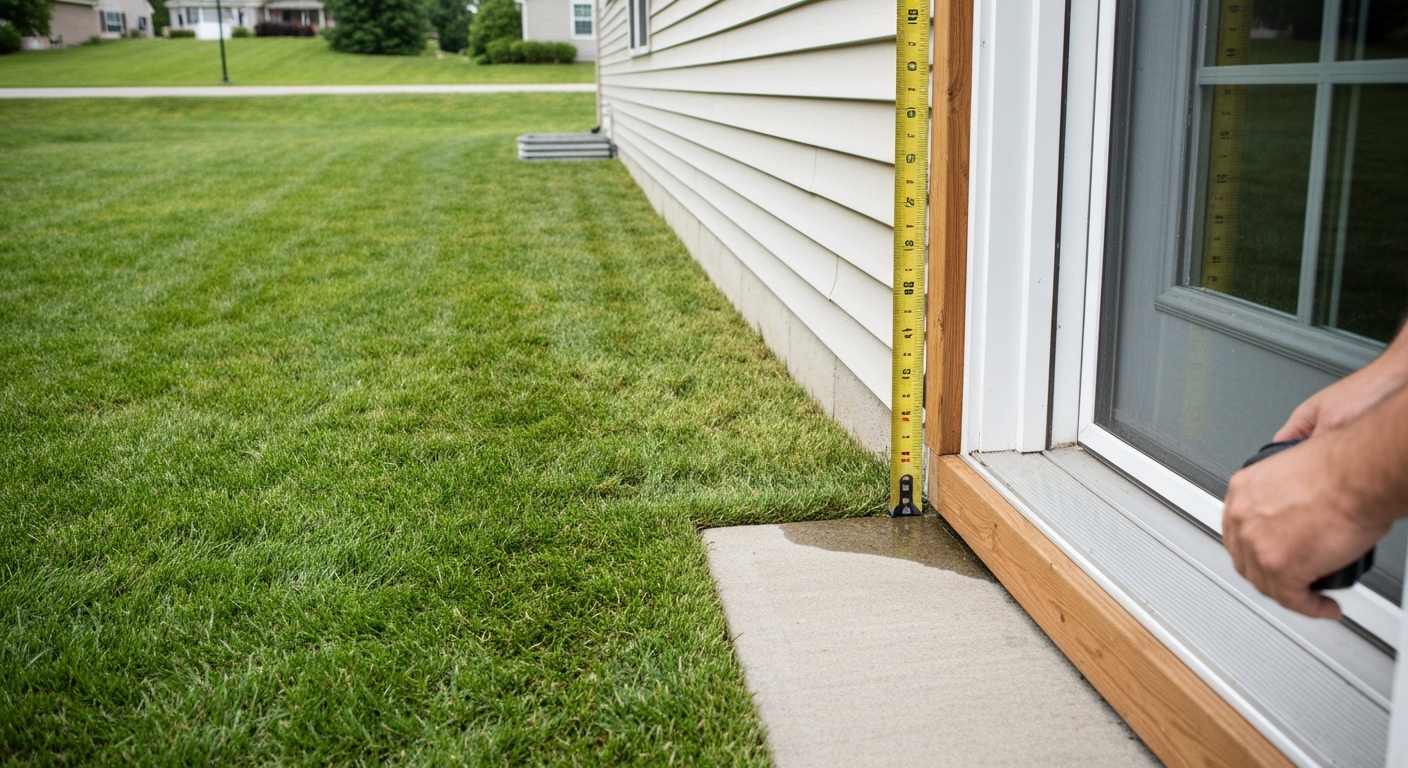
The most useful things to put on a patio are: seating that fits your actual square footage, some form of shade overhead, lighting so you can use it after dark, and a few planters or a rug to make it feel like a real room rather than a slab of concrete. If you’re wondering whether a paddling pool can work on patio, place it on a stable, level surface and keep water drainage in mind can you put paddling pool on patio. Everything else depends on whether you're trying to entertain, relax, grow herbs, get privacy from neighbors, or some combination of all four. Start there, and the rest of the decisions get a lot easier.
What to Put on a Patio: Furniture, Lighting, Privacy, More

Miles Hart
18 May 2026
Start with your patio goals
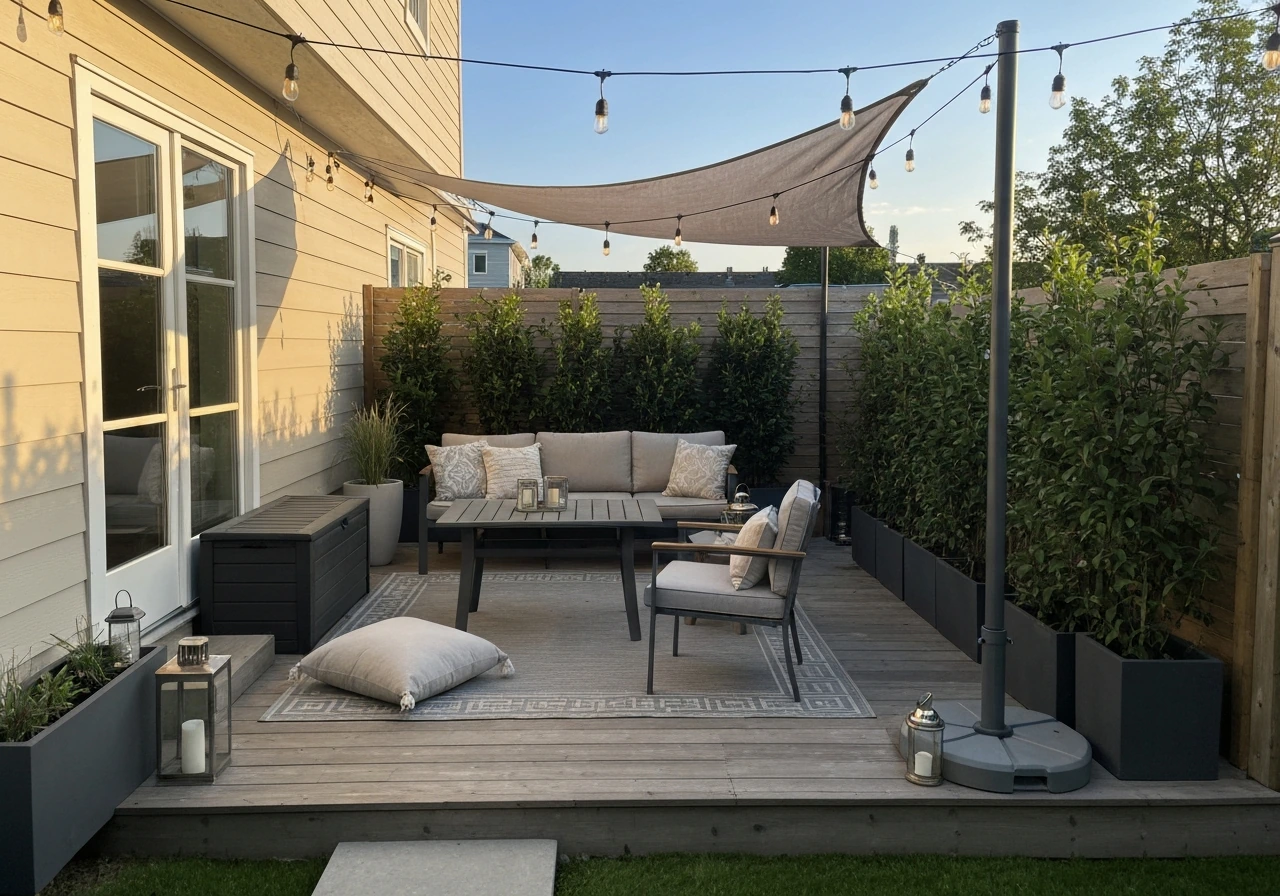
Before you buy a single chair or planter, spend five minutes answering these questions: Who uses the patio and how often? Is it mostly one or two people unwinding after work, or are you regularly hosting eight to twelve people for dinner? Do you want low maintenance above all else, or are you willing to do seasonal upkeep in exchange for a better look? Is privacy from neighbors a real concern, or is your yard already pretty sheltered? Sunny, exposed location or mostly shaded? Your answers will push you toward completely different setups.
A quick way to frame it: think about your patio in four goal buckets. Comfort (cushions, shade, warmth). Privacy (screening, plants, barriers). Entertaining (dining table, task lighting, storage for outdoor gear). Low maintenance (durable materials, covered storage, fewer fussy plants). Most patios need a mix of all four, but knowing which one ranks first keeps you from overspending in the wrong place.
Choose furniture and plan your layout first
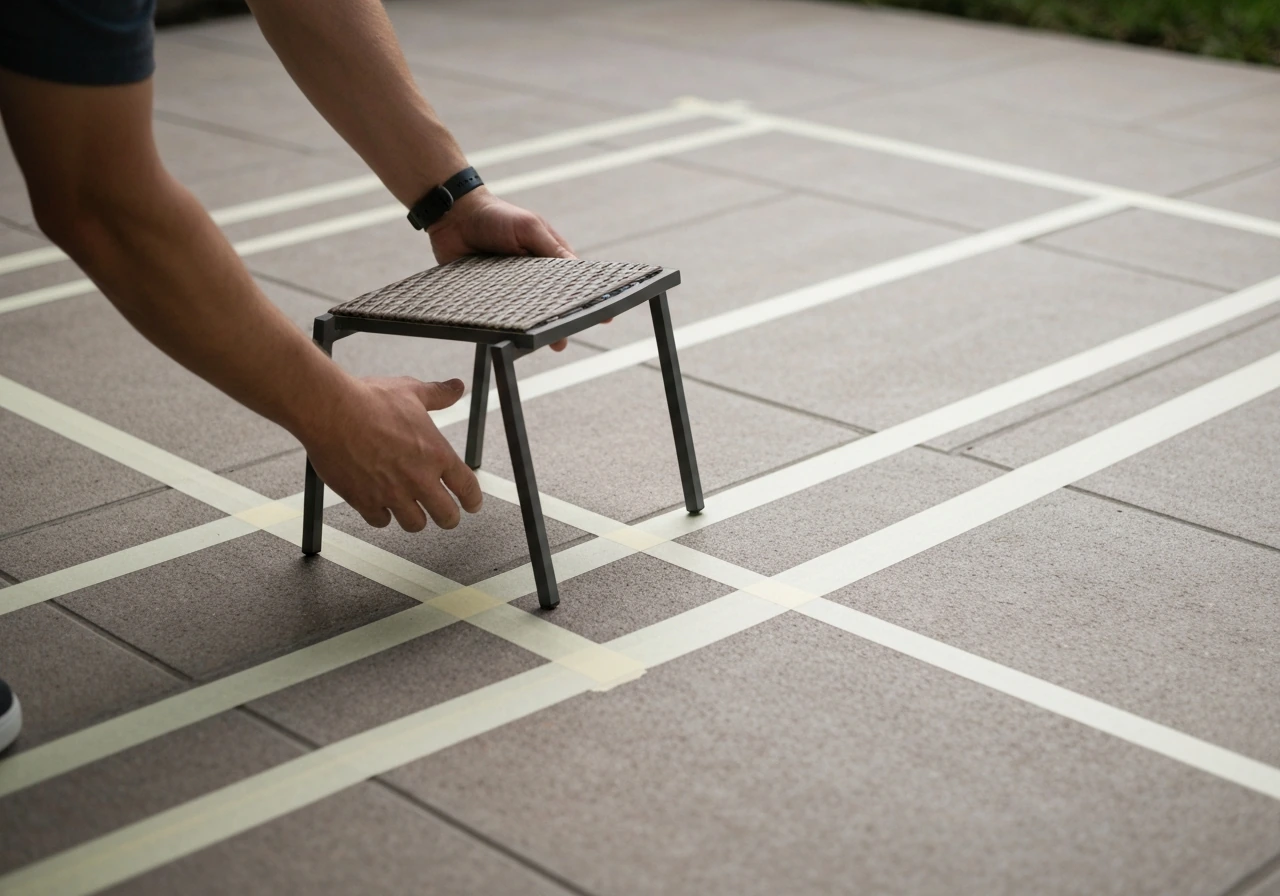
Furniture is the single biggest decision you'll make for your patio, and it's where most people either overspend on the wrong size or underbuy and end up cramped. Before ordering anything, measure your patio and mark out the space with chalk or painter's tape. A standard four-person outdoor dining set needs roughly a 10x10 foot zone with chairs pulled out. A sectional sofa for lounging typically needs at least a 12x12 foot area if you want comfortable traffic flow around it.
Traffic flow and zoning
Leave at least 36 inches of clear walkway between furniture groupings and around doors. If your patio connects to a kitchen or living room door, that path needs to stay completely clear. For larger patios (anything over 200 square feet), consider zoning it: a dining area closer to the house for easy food access, and a lounging area farther out or off to the side. A rug under each zone helps define them visually without building anything.
Furniture materials: what actually holds up
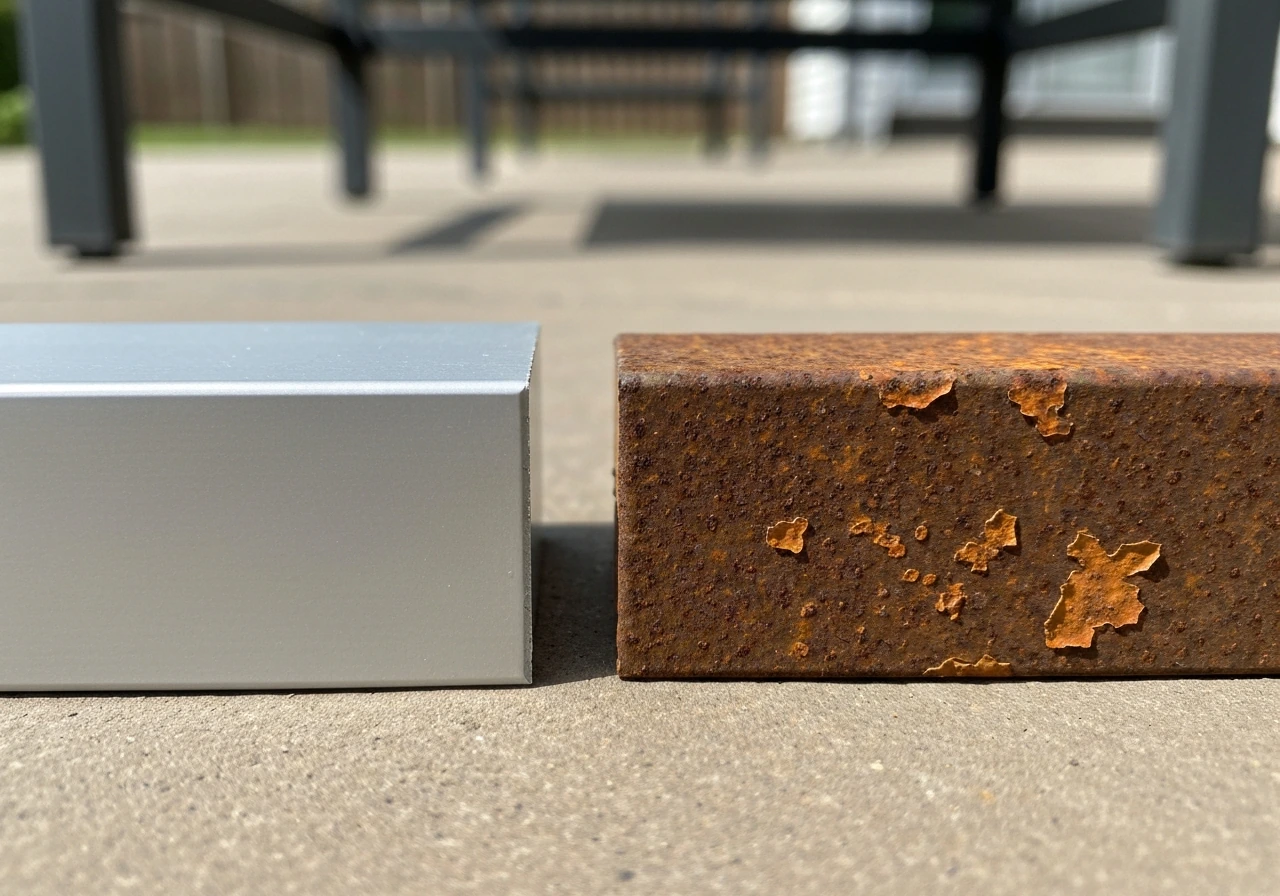
Powder-coated aluminum frames are the most practical choice for most homeowners. They're lightweight, rust-proof, and come in almost any style. Pair them with solution-dyed acrylic cushion fabric (Sunbrella is the most recognized brand) and you have a setup that sheds water quickly, resists mildew and fading, and requires almost no maintenance beyond hosing down. Teak is the premium natural-wood alternative: genuinely weather-resistant and beautiful, but it will turn silver-gray if you don't oil it seasonally. Wrought iron looks great but adds significant weight and needs attention if the finish chips. Resin wicker (not natural wicker) sits in the middle: affordable, decent durability, but the weave can crack in extreme temperature swings after several years.
| Material | Durability | Maintenance | Best For |
|---|---|---|---|
| Powder-coated aluminum | Excellent, rust-proof | Very low | Most homeowners, all climates |
| Teak | Excellent if oiled | Seasonal oiling | Premium look, humid climates |
| Resin wicker | Good (3-7 years) | Low, but watch for cracking | Budget-friendly, covered patios |
| Wrought iron | Good if finish intact | Moderate (touch up chips) | Shaded, dry climates |
| Recycled HDPE (poly) | Excellent, won't rot or fade | Very low | Beach, pool, or high-UV areas |
Dining vs lounging setup
If entertaining is the priority, anchor the space with a dining table and chairs sized for your realistic guest count, not your maximum guest count. A six-person table that you only fill twice a year can dominate a medium-sized patio year-round. Consider a four-person table with two extra folding chairs stored inside. If relaxing is the priority, a sectional or a few deep-seat lounge chairs with a low coffee table will get used far more often than a dining set. For patios under 150 square feet, a bistro set (two chairs, one small table) plus a side bench or loveseat is usually the smartest combination.
Shade and privacy around the perimeter
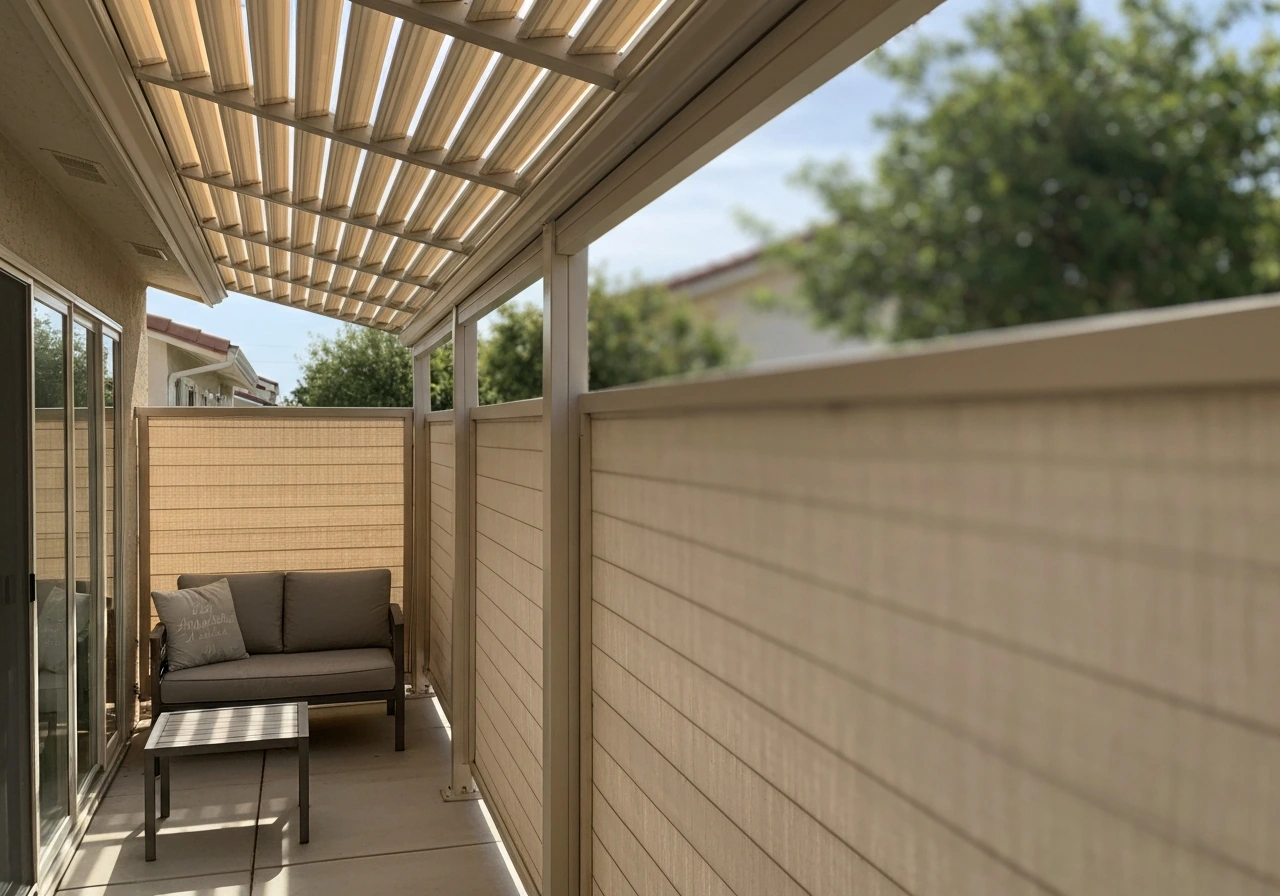
Shade is often the thing that determines whether a patio actually gets used or just looks nice in photos. If you're in a sunny region, an unshaded south or west-facing patio can hit 100 degrees by early afternoon in summer. Shade should be one of your first purchases, not an afterthought.
Shade structures: pergola, awning, or sail
A pergola frames the patio like a room with open slats overhead. You get filtered shade and the feel of an outdoor space with structure, but not full rain protection. A retractable awning mounted to the house wall gives you adjustable coverage and can fully block sun or light rain when extended. Shade sails (tensioned fabric triangles or rectangles anchored to posts or walls) are a flexible and relatively affordable middle ground. Each approach is a step toward a more enclosed outdoor structure, so if you think you might eventually want a screened enclosure or a full covered patio room, factor that into which shade system you install now so you're not removing it in two years.
For privacy specifically, the perimeter of the patio is where you work. Options include: lattice or privacy panels attached to the pergola posts, outdoor curtains hung from a pergola or ceiling track, tall planters with columnar shrubs or bamboo, a low fence or trellis with climbing plants, or freestanding privacy screens made from wood, metal, or composite. Outdoor curtains are the most affordable and flexible option, starting around $40 to $80 per panel. Purpose-built privacy screens run $100 to $400 depending on material and size. A pergola with built-in lattice sides is a bigger investment but creates the most complete sense of an outdoor room.
Wind screens
If your patio is exposed and windy, privacy screens and curtains actually do double duty. Mesh wind screens (similar to what you see on construction sites, but designed for residential use) can reduce wind speed noticeably without fully blocking light. They attach to railings, posts, or fence panels and typically cost $30 to $80 for a 6x10 foot panel. This is a good DIY weekend project.
Lighting and power on the patio
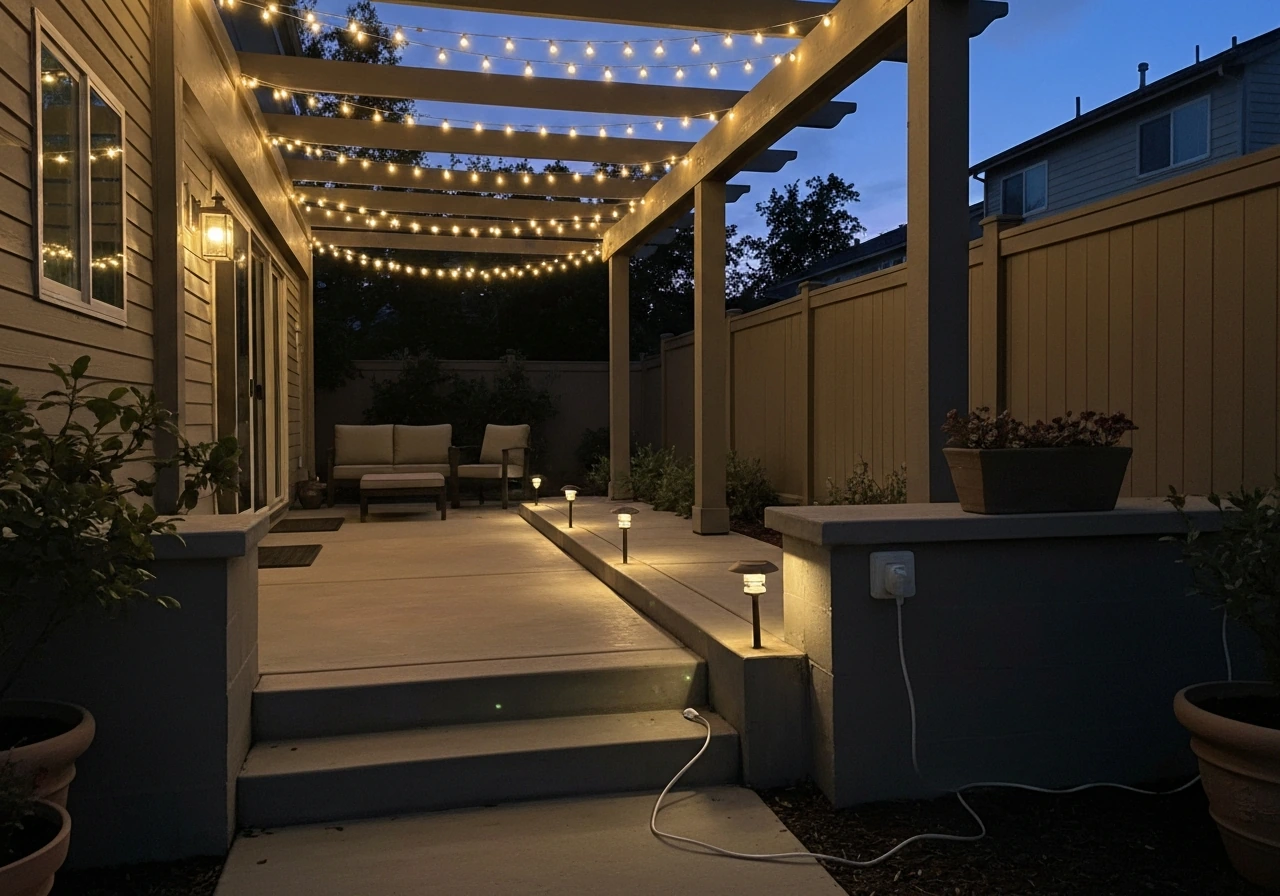
Good lighting turns a patio from a daytime space into one you actually use most evenings. The key is layering three types: ambient (overall glow so you can see), task (bright enough to eat, cook, or read by), and accent (mood-setting, lower intensity). You don't need all three to start, but ambient and task together make a huge difference.
- String lights: the easiest and most affordable ambient option. Run them along a pergola, fence, or between posts. Weatherproof LED string lights cost $20 to $60 for a 48-foot strand and last for years.
- Wall-mounted lanterns or sconces: good task and ambient light near the door; typically need an electrician if you're adding a new circuit, but you can replace existing fixtures yourself for $30 to $150.
- Solar path lights: define the patio edge and guide foot traffic with zero wiring. Quality varies a lot; expect to pay $10 to $25 per light for ones that actually stay bright after a year.
- Plug-in floor or table lamps rated for outdoor use: great for a covered or semi-covered patio; look for UL-listed outdoor or damp-rated fixtures.
- Low-voltage landscape lighting kits: run on a transformer you plug into an existing outlet; good for illuminating planters, steps, or the patio perimeter. Full kit runs $80 to $200.
Power access is the practical constraint most people hit. If your patio has an existing exterior outlet, you're in good shape. If it doesn't, a licensed electrician can add a GFCI-protected outdoor outlet for roughly $200 to $500 depending on how far the run is from your panel. That's money well spent if you want to power a fan, outdoor speakers, a patio heater, or a mini fridge. Running an extension cord through a door is a short-term solution, not a long-term one, especially if it becomes a trip hazard. If you're wondering about adding larger water features or a hot tub, those have their own power and load considerations worth investigating separately.
Planters, greenery, and soft framing around the edges
Plants are the fastest way to make a patio feel finished and intentional rather than like furniture just sitting on concrete. The goal is soft framing: using planters and greenery around the edges of the patio to visually contain the space, add privacy, and break up hard surfaces. This doesn't require a green thumb or expensive landscaping.
The most practical approach is large planters (18 inches or bigger) at the corners or along the back edge of the patio. Larger planters dry out more slowly, so they're more forgiving if you forget to water. Fill them with a mix of thriller (tall statement plant), filler (medium, bushy), and spiller (trailing plant over the edge). For privacy, columnar plants like Italian cypress, ornamental grasses, or dwarf Alberta spruce in large containers can grow to 6 to 8 feet and create a natural screen. For low maintenance, succulents, ornamental grasses, lavender, and boxwood are all reasonably drought-tolerant once established.
Raised garden beds placed just off the patio edge are another option: they mark the boundary between patio and yard while giving you space to grow herbs, vegetables, or flowers. A simple 4x4 foot cedar raised bed kit runs $50 to $150. Trellises with climbing plants like jasmine, clematis, or climbing roses can do double duty as privacy screening and a fragrant backdrop. Edging (metal, stone, or brick) where the patio surface meets the lawn or garden beds creates a clean visual line that makes the whole space look more intentional.
Weatherproof accessories and finishes
The accessories are what make a patio feel designed rather than assembled. An outdoor rug is the single item that does the most to define the space and make it feel like an actual room. Choose one sized so that the front legs of all your seating furniture sit on it, which is the same rule used for indoor rugs. For a four-person lounge grouping, an 8x10 foot rug is usually the right size. Look for polypropylene or recycled PET material: both are water-resistant, mold-resistant, easy to hose down, and hold up to UV exposure far better than natural fiber rugs.
Cushion storage is a practical issue that most people don't plan for until they're frustrated by it. If your furniture cushions aren't rated to stay out in rain, you need somewhere to put them. A deck box or outdoor storage ottoman can double as seating or a coffee table surface and hold four to eight standard seat cushions. Expect to pay $80 to $200 for a weather-resistant storage box. Alternatively, invest upfront in solution-dyed acrylic cushions that you can leave out: they shed water and dry quickly, so storage is optional rather than required after every rain.
Other accessories worth including: an outdoor-rated side table or two (you can never have enough surface area), a patio umbrella with a weighted base if you don't have a pergola or awning (look for 9-foot or 11-foot diameter for adequate coverage), a small outdoor rug runner near the door to catch debris, and weather-resistant throw pillows in a color that coordinates your space. Avoid anything labeled only 'indoor/outdoor' without checking the actual material spec: that term is often applied to items that won't last more than one season.
DIY vs buy: what to tackle and what to spend
The good news is that most patio upgrades are either genuinely DIY-able or require only basic tools. The areas where you'll want a professional are anything involving electrical work, any structural footings (like permanent pergola posts set in concrete), and anything that requires a permit in your municipality. If you're also thinking about adding exercise equipment to your setup, check whether you can put a treadmill on patio safely for the best surface and weather considerations can i put treadmill on patio. Everything else is fair game.
| Item | Typical Cost Range | DIY Possible? | Do This First? |
|---|---|---|---|
| Outdoor furniture set (4-person) | $400–$2,500+ | N/A (assembly only) | Yes |
| Patio umbrella + weighted base | $80–$400 | Yes | Yes if no shade |
| String lights (48 ft) | $20–$60 | Yes | Yes |
| Outdoor rug (8x10) | $60–$300 | Yes | Yes |
| Privacy screen or curtains | $80–$400 | Yes | Yes if privacy is a concern |
| Large planters + plants | $50–$300 per planter | Yes | After furniture |
| Deck box / cushion storage | $80–$200 | Yes (some assembly) | Early on |
| Pergola (freestanding kit) | $800–$3,500+ | Yes (two people, weekend) | After basics are covered |
| Retractable awning | $500–$3,000+ | Partially (professional install recommended) | When shade is priority |
| New outdoor electrical outlet | $200–$500 | No (hire electrician) | Whenever power is needed |
A practical budget order for a mid-range patio makeover: start with furniture and an umbrella or basic shade (budget $600 to $1,500 for both), add a rug and string lights ($100 to $300 total), then invest in planters and privacy screening ($200 to $600). That covers the essentials for most people. Bigger investments like a pergola, awning, or permanent lighting come after you've lived with the space for a season and know what you actually need.
Quick next-steps checklist
- Measure your patio: length, width, and note where the door(s) are and which direction it faces (sun exposure matters).
- Tape out your furniture layout on the surface before buying anything. Mark traffic paths at 36 inches minimum.
- Decide your top goal: comfort, entertaining, privacy, or low maintenance. Let that pick your first purchase.
- Buy furniture and shade first. Everything else layers on top of those two decisions.
- Add lighting next. String lights or a plug-in floor lamp can be done the same weekend as furniture delivery.
- Frame the edges with planters or a rug to make the space feel finished.
- Fill in accessories (cushions, storage, side tables) over the first season as you identify what's missing.
- Plan any structural additions (pergola, awning, screens) only after you've used the space long enough to know where the sun hits, where the wind comes from, and what your actual usage pattern is.
One last thing worth knowing: once you start adding pergolas, screens, or full enclosures, you're moving from patio accessories into covered outdoor structure territory, which involves different cost ranges, potential permits, and home value implications. That's a separate conversation from outfitting a patio, but it's worth being aware of the line so your current purchases don't conflict with future plans. If you’re wondering what can i put on my patio, the best starting point is to define your main goal, then work through the basics like seating, shade, lighting, and greenery outfitting a patio.
FAQ
What should I put on a small patio if I want it to feel bigger, not crowded?
Use fewer, larger pieces instead of many small items. Keep the seating low and scale down to a bistro or two deep lounge chairs, then add one big outdoor rug that fits all front legs. If you have room for only one “feature,” prioritize shade or a privacy screen, because visual clutter shrinks the perceived space faster than missing decor.
How do I choose outdoor furniture sizes if my patio is oddly shaped (not a clean rectangle)?
Measure every usable side and mark a clear circulation path first. Then “zone” based on doors and walkways, not just the overall area, and place the dining zone closest to the kitchen. For irregular layouts, plan for 36 inches of clear passage around your main path, and shift furniture inward until it never blocks the door swing.
Can I put a rug on a patio, and what rug materials are safest to leave outside year-round?
Yes, but choose true outdoor materials like polypropylene or recycled PET. Avoid natural fiber rugs unless you can store them, because they absorb moisture and degrade in sun and freeze-thaw cycles. Also, make sure the rug is large enough that the seating front legs sit on it, not just partly under it.
What should I do about cushions if I want to leave everything out and still not worry about rain?
Either use solution-dyed acrylic cushions that can stay out and dry quickly, or plan a storage box so cushions go inside during storms. If your cushions are not explicitly rated for outdoor exposure, don’t rely on tossing them under furniture because trapped moisture leads to mildew.
Is it worth buying a pergola if I mainly need shade, not full rain protection?
Often yes, if you want filtered shade and a “room” feeling. If rain exposure matters to you, a pergola alone usually won’t keep the furniture comfortable, so consider an awning or retractable roof section for the dining area. A common mistake is installing a pergola for shade, then later adding a second shade device because rain coverage was underestimated.
How do I get privacy without blocking too much light in a sunny backyard?
Use taller plants in large planters or mesh wind screens that reduce visibility while still letting sun through. If you need solid privacy panels, keep them on the side that faces neighbors and leave the sunny seating side more open. Outdoors curtains can also be positioned to “open” during the day and close only when needed.
What’s the best way to reduce wind on a patio if I also want airflow?
Don’t aim for fully solid walls unless you’re okay with less airflow. Mesh wind screens can cut wind speed while still preserving some light. Place screens on the windward side and secure them to railings or posts properly, since loose panels can act like sails and flap.
Do I need to have an electrician install outdoor outlets, or can I just use an extension cord?
You can use an extension cord short-term, but it’s usually not safe long-term because it creates trip hazards and is harder to weatherproof. The better approach is a GFCI-protected outdoor outlet installed by a licensed electrician, especially if you plan to run a heater, fan, or mini fridge regularly.
What should I put on a patio for lighting if I don’t want to drill into walls?
Start with plug-in string lights on a weather-rated outdoor setup and use battery or solar pathway lights for steps. If you have posts or a pergola, you can often hang lights there instead of drilling into siding. For best results, layer ambient and task lighting (for seating and eating) and reserve accent lighting for small highlights like planters.
How many planters should I use, and where do they look best?
A practical rule is 18-inch or larger planters at corners and along the back edge to create soft framing. If you want privacy, add columnar plants in fewer, larger containers rather than many small pots, because larger planters dry more slowly and look more intentional.
What plants work best if my patio is very sunny and I’m trying to keep maintenance low?
Consider drought-tolerant options once established, such as succulents, ornamental grasses, lavender, and boxwood. For maximum impact with minimal watering, pick large planters and give them consistent initial watering during establishment so the roots develop before you reduce frequency.
Can I put a hot tub, fire pit, or grill near my patio furniture without planning differently?
You should plan as a separate category, because heat output and power or fuel requirements change layout rules. Keep heat sources away from cushions and rugs, and if you’re adding anything that requires substantial power or has unique load needs, confirm safe placement and electrical capacity before buying furniture that assumes normal outdoor use.
What’s the most common mistake people make when outfitting a patio?
Sizing errors and walkway blockage. People buy furniture that fits in a showroom, then realize too late there’s not enough clearance from doors and routes. Fix it by measuring and leaving at least 36 inches of clear path around doors and between furniture groupings before you order anything.
When should I stop buying “decor” and start budgeting for structure changes like screens or enclosures?
If you repeatedly notice the patio isn’t usable due to wind, neighbor visibility, or weather exposure after one season, that’s the signal to upgrade to more permanent solutions. Once you’re considering pergolas, built-in lattice sides, or full enclosures, think about permits and cost differences, because these upgrades are not the same category as rugs, lights, and planters.
Next Article
Grass Is Higher Than Patio: Causes, Fixes & Deck vs Patio
Grass higher than patio? Causes, slope checks, repair options, lower lawn, raise patio, or build a deck, with costs & DIY