You can put almost anything on a patio, but the stuff that actually gets used comes down to four decisions: how you use the space, what your weather throws at it, how much you want to spend, and whether you're doing it yourself or hiring someone. The core categories are furniture and seating, dining and cooking setups, shade and weather protection, flooring upgrades, lighting and greenery, and storage.
What Can I Put on My Patio? Best Add-Ons by Budget

Miles Hart
8 Jul 2026
Most homeowners start with furniture and a rug, then layer in shade, lighting, and eventually a grill or outdoor kitchen as budget allows. This guide walks through every category with real cost ranges and material recommendations so you can figure out exactly what to buy or build next. This guide will help you figure out what to put on a patio based on your space, budget, and how you want to use it.
Start with how you actually use your patio
Before you buy a single thing, spend five minutes thinking about what you actually do out there, or want to do. This sounds obvious but it's where most people go wrong. They buy a big dining set when they mostly just drink coffee alone in the morning, or they spend $800 on a grill cart before they have any shade and then never use it because it's too hot. The way you use your patio shapes every decision that follows.
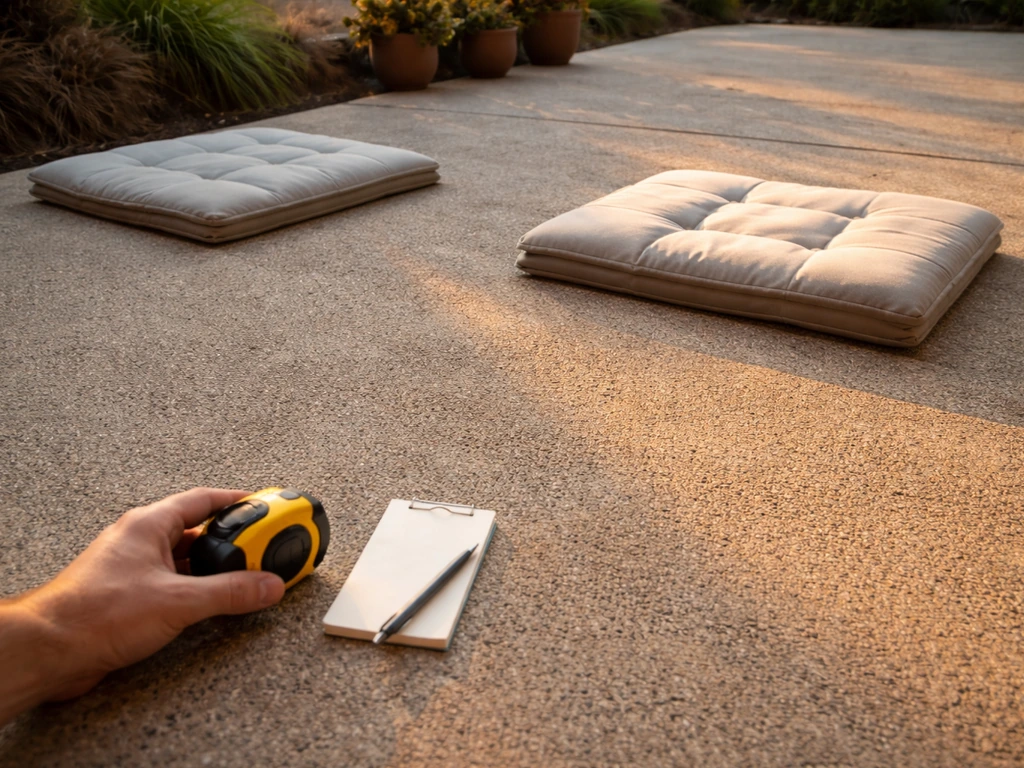
Ask yourself a few quick questions: Do you eat outside, or just lounge? Do you entertain groups or is it mostly just you and a partner? Is the space exposed to sun all afternoon, or is it already shaded? Do you get hard winters that mean everything has to go into storage? How much square footage are you actually working with? A 10x12 patio has different priorities than a 20x30 one. Once you know your answers, the right additions become pretty obvious.
- Mostly relaxing solo or with a partner: lounge chairs, a side table, a small bistro set, and some overhead string lights get you 90% of the way there for under $500
- Entertaining groups regularly: a dining set that seats 6+, a grill or cooking station, and shade coverage become the priority
- Kids and pets: durable, easy-clean materials, a paddling pool or play structure, and slip-resistant flooring matter a lot more
- Working from home outside: a comfortable chair with arms, a surface at desk height, shade coverage, and an outdoor-rated power strip
- Serious cooking: a built-in grill, outdoor kitchen counter space, and potentially a pergola or roof for weather protection
Patio furniture and layout ideas
Furniture is almost always the first purchase and the one with the most options. The main material categories are aluminum, synthetic wicker (resin), teak and other hardwoods, and recycled plastic lumber (brands like POLYWOOD). Each has a different lifespan, maintenance requirement, and price point. For example, synthetic wicker (resin) is often estimated to last about 8 to 15 years, while wood types like teak, cedar, or eucalyptus can last about 10 to 30 years depending on care and conditions synthetic wicker (resin) and wood lifespan estimates.
| Material | Typical Lifespan | Maintenance Level | Rough Cost (4-piece set) | Best For |
|---|---|---|---|---|
| Powder-coated aluminum | 10-20+ years | Low (wipe down, touch up chips) | $400–$1,500 | Low-maintenance, modern look, coastal areas |
| Synthetic wicker (resin) | 8–15 years | Low (hose off) | $300–$1,200 | Classic patio look, budget-friendly |
| Teak / hardwood | 10–30 years with care | Medium (annual oiling) | $800–$4,000+ | Premium look, longevity, natural aesthetic |
| Acacia | 5–15 years with care | Medium (cover in rain, oil periodically) | $300–$1,000 | Budget hardwood with natural character |
| Recycled plastic lumber | 25–50 years | Very low (soap and water) | $600–$2,500 | Zero-maintenance, harsh climates |
A few things worth knowing before you buy: powder-coated aluminum holds up well but some owners report the coating starting to look worn after three or four years in high-UV or coastal environments, so it's worth checking if a manufacturer offers touch-up paint. Teak is genuinely beautiful and can last decades, but it needs to be oiled regularly after cleaning, not just once.
After thorough cleaning, oiled teak is typically retreated with teak oil, so retreating regularly is recommended rather than doing a one-time oiling oiled teak is typically retreated with teak oil after thorough cleaning. Letting it go gray and dry without treatment shortens its life considerably.
Acacia is a step down from teak in weather resistance and most manufacturers recommend covering it during extended rain or harsh weather, which is worth factoring in if you won't want to bother with a cover.
Layout basics that actually work
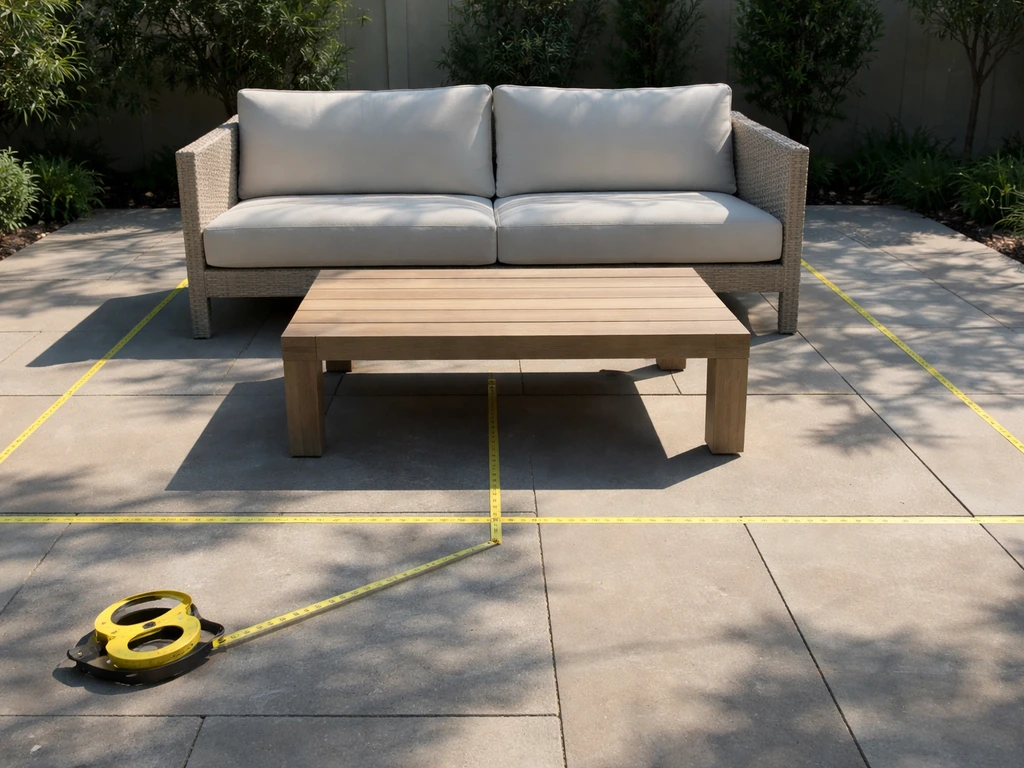
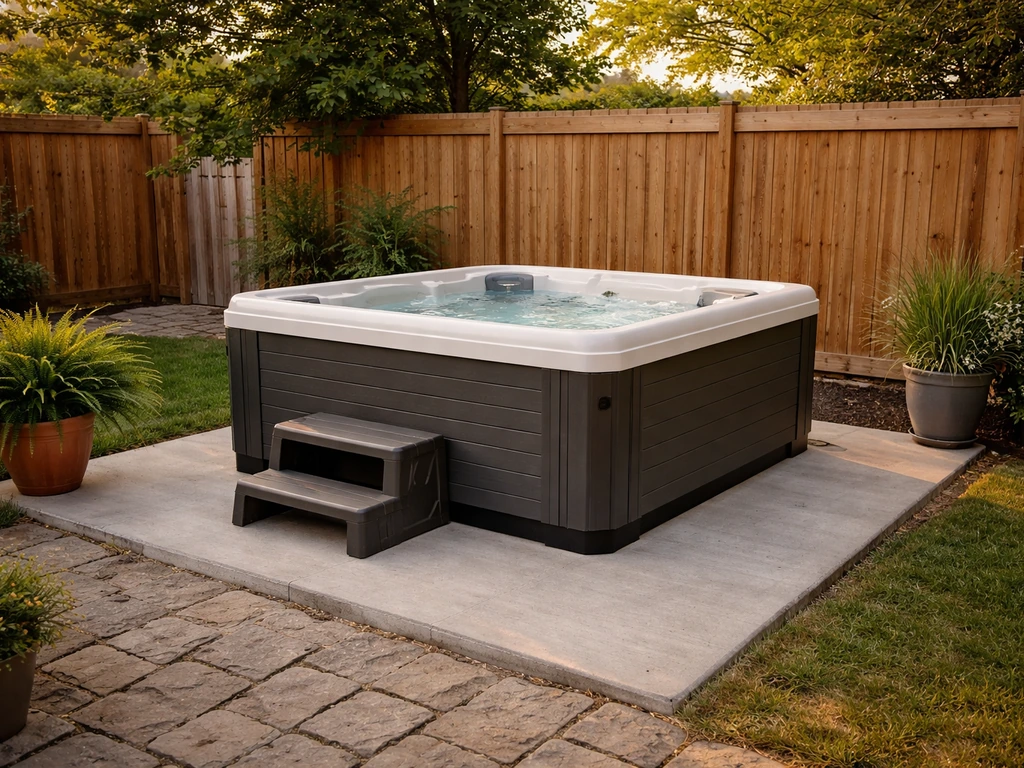
For layout, the main rule is to leave at least 3 feet of clearance around furniture for comfortable movement, and 18 inches between a sofa and a coffee table. If you’re considering a hot tub on your patio, use the same clearance and placement rules to make sure it’s safe and comfortable to use.
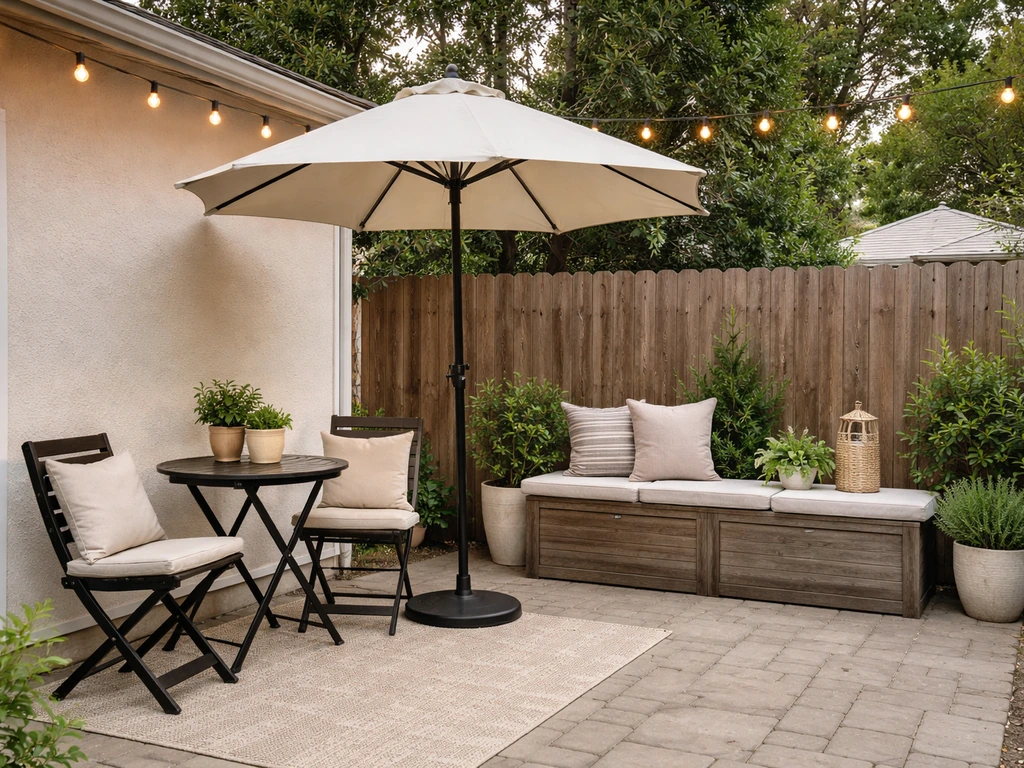
On smaller patios under 150 square feet, a bistro set (two chairs and a small round table) or a loveseat with two chairs keeps the space from feeling cramped. On larger patios, anchor the space with a rug, which defines zones the same way it does indoors. Outdoor rugs in polypropylene are durable, fade-resistant, and easy to hose off, with decent options starting around $60–$150 for a 5x8.
Dining, cooking, and comfort upgrades
If you eat outside at all, a proper outdoor dining table and chairs is one of the highest-value additions you can make. A basic 6-person outdoor dining set runs $300–$800 at the mass-market level and $1,200–$3,000+ for solid wood or powder-coated aluminum. Look for chairs with weather-resistant cushions (solution-dyed acrylic fabric like Sunbrella holds color and resists mildew far better than cheaper polyester) or go with cushion-free sling chairs for zero-maintenance seating.
For cooking, the entry point is a freestanding grill, which you can get in gas or charcoal starting around $150 for a basic charcoal kettle and $300–$600 for a decent gas grill. If you're serious about outdoor cooking, a grill cart with side shelves, a prep table, and a small refrigerator gives you a functional outdoor kitchen for $1,500–$5,000 depending on the components. Full built-in outdoor kitchens with stone or stucco surrounds and countertops run $5,000–$20,000+ and at that point you're into contractor territory, permits, and a real investment that affects home value.
Comfort extras that consistently get used: outdoor throw pillows and cushions (budget $50–$200 for quality weather-resistant ones), a side table or two for drinks and phones, and a fire pit for cooler evenings. A propane fire pit table runs $200–$600 and doubles as a coffee table. Wood-burning fire pits start around $80 but check local burn ordinances before you buy, since many municipalities restrict or prohibit open burning in residential areas.
Shade, weather protection, and privacy
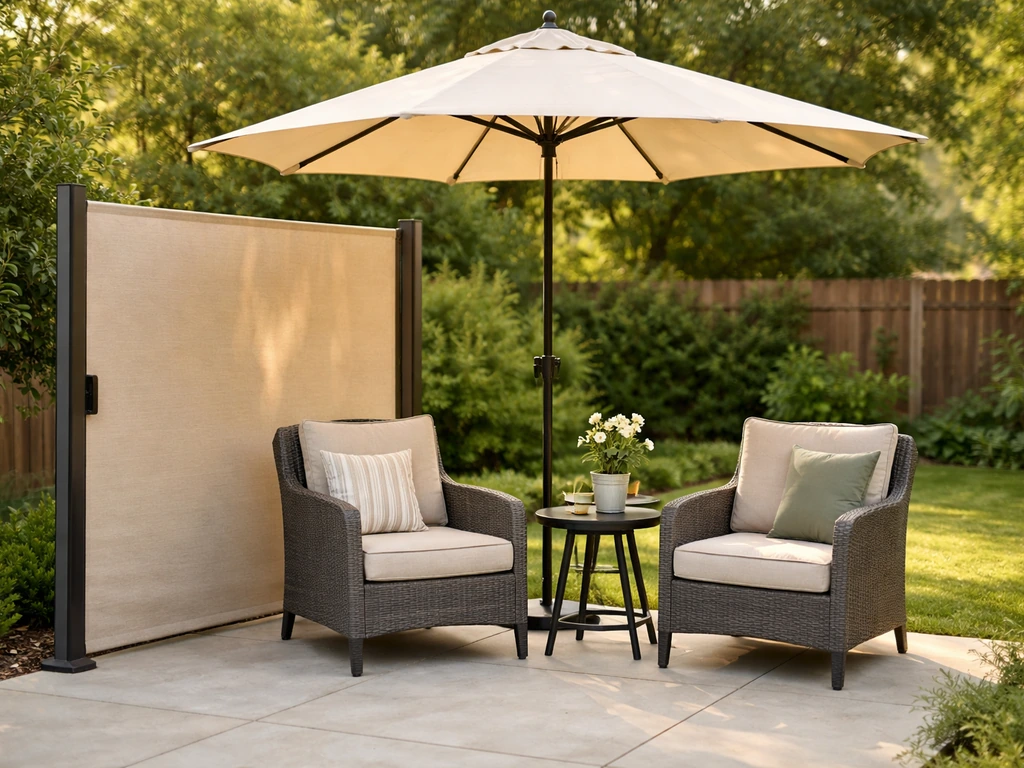
Shade is often the difference between a patio that gets used every day and one that sits empty from noon to 6pm. There are several ways to add it, ranging from a $30 umbrella to a $15,000 pergola addition, and the right choice depends on your budget, how permanent you want it, and whether you want it to cover the whole space or just one zone.
| Shade Option | Coverage | Cost Range | Permanence | Permit Usually Needed? |
|---|---|---|---|---|
| Offset cantilever umbrella | One seating area (up to ~12 ft diameter) | $100–$500 | Portable | No |
| Sail shade (shade sail) | Large area (10x13 ft up to 20x20 ft) | $50–$300 DIY | Semi-permanent | Rarely |
| Freestanding pergola kit | Full patio or zone (10x12 to 20x20) | $800–$4,000 DIY | Permanent-ish | Sometimes |
| Attached pergola (pro install) | Full patio | $3,000–$15,000 | Permanent | Often yes |
| Retractable awning | Full patio width (10–20 ft typical) | $1,500–$5,000 installed | Permanent (retractable) | Rarely |
| Motorized pergola with louvers | Full patio, adjustable coverage | $5,000–$20,000+ | Permanent | Often yes |
A shade sail is the cheapest real shade you can add and it looks good if installed with proper tension points. A freestanding pergola kit from a home center (aluminum or cedar) is a good middle-ground DIY project for a weekend, but if it's attached to the house it almost always needs a permit and potentially a footing inspection. That's not a reason to avoid it, just something to check with your municipality before you start. Once a pergola gets a roof (polycarbonate panels, shingles, or a proper shade structure), it starts crossing into covered porch or patio cover territory and definitely triggers permits in most areas.
For privacy, the main options are privacy screens (freestanding panels at $100–$400 for a set), outdoor curtains on a pergola or tension rod system ($30–$150), or living privacy walls using tall planters with bamboo, ornamental grasses, or arborvitae. A living wall takes time to fill in but looks natural and adds greenery. A lattice panel with climbing plants is another classic approach that costs $50–$200 in materials.
Flooring and surface upgrades that hold up
If your patio surface is cracked concrete, plain gray slabs, or a material you're not happy with, there are several ways to improve it without a full tear-out. A treadmill can be a good patio workout option if you plan for weatherproofing and stable, slip-resistant flooring treadmill on patio. The key priority for any patio flooring is slip resistance, especially when wet. Look for materials with a COF (coefficient of friction) rating above 0.6 for outdoor use.
- Interlocking deck tiles: snap together over existing concrete, available in wood composite, porcelain, or stone look; $2–$6 per square foot; no tools needed; great DIY option for renters or anyone who doesn't want to commit
- Concrete paint or stain: resurfaces existing concrete for $0.50–$2 per square foot in materials; anti-slip additives (like aluminum oxide or polymer grit) can be mixed in for safety
- Paver overlay: thin concrete or porcelain pavers set over existing slab; $5–$15 per square foot installed; looks high-end but requires professional leveling for best results
- Rubber or foam tiles: excellent for play areas or fitness zones; slip-resistant and cushioned; $1–$4 per square foot; easy DIY
- Gravel or decomposed granite: works around or adjacent to a patio to extend the usable area cheaply; $0.50–$2 per square foot in materials but needs edging to stay contained
If you're thinking about a full patio replacement or a brand-new patio surface, that's a bigger project. Stamped concrete runs $8–$18 per square foot installed, natural stone runs $15–$30+, and basic poured concrete is $6–$10. At that level you're really building a new outdoor room, not just adding to an existing one, and the decision overlaps with whether a covered structure or deck makes more sense for your needs.
Lighting, plants, and style upgrades
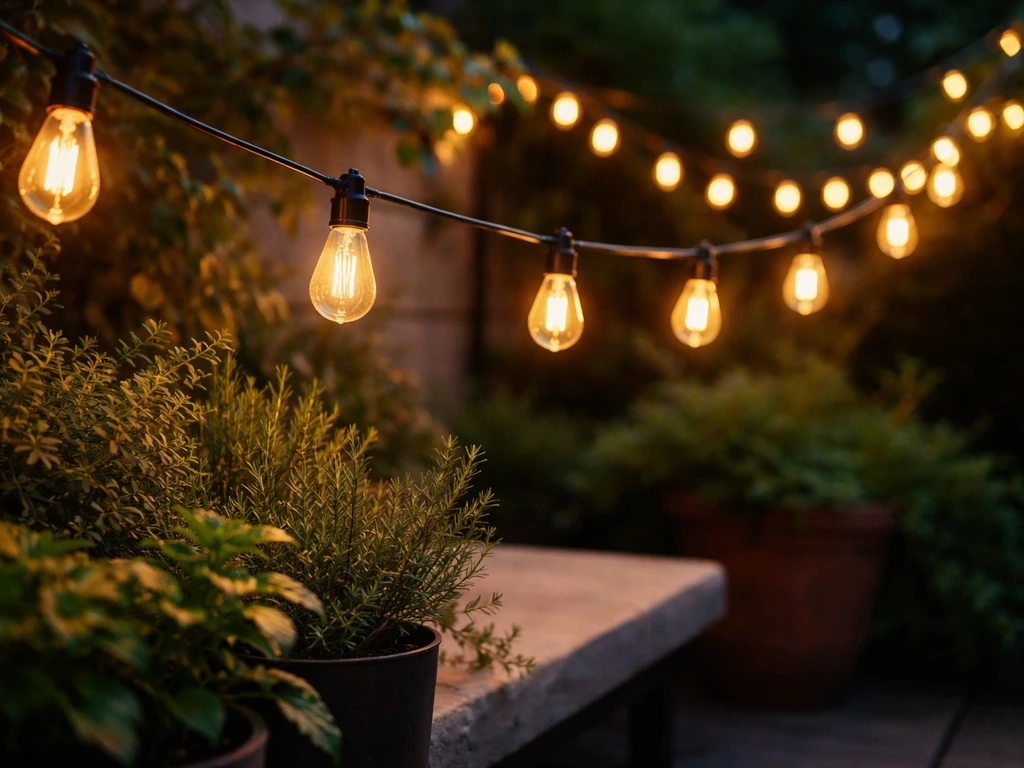
String lights are the single highest-impact, lowest-cost upgrade you can make to a patio. A 48-foot strand of outdoor-rated Edison or globe string lights costs $20–$60 and transforms the space for evening use. Run them overhead on a pergola, between posts, or along a fence line. Use weatherproof sockets rated for outdoor use (most string lights sold for outdoor use already have this, but worth confirming). Solar-powered options avoid running extension cords but are dimmer than plug-in versions.
Beyond string lights, layered lighting makes a patio feel intentional. Ground-level path lights or step lights add safety, wall sconces or flush-mount ceiling fixtures on a covered patio add ambient light, and a tabletop lantern or two adds warmth at eye level. Budget $100–$300 to do all three layers well. If you want smart lighting (color-changing, app-controlled), outdoor-rated smart bulbs and plugs work well and start around $15–$30 each.
Plants make an enormous difference to how a patio feels. Tall planters at $30–$150 each anchor corners and create height. Go for plants that match your climate and sun exposure honestly, because a shaded patio needs shade-tolerant plants (ferns, hostas, impatiens) while a full-sun space can handle lavender, rosemary, or ornamental grasses. Herbs in a small planter near a dining table are practical and look great. If you don't want to maintain soil, high-quality faux plants for outdoor use have gotten genuinely convincing and won't die during a vacation.
Storage, safety, and a maintenance checklist
Storage is underrated on a patio. A deck box or outdoor storage bench ($80–$300) keeps cushions, tools, toys, and accessories dry and out of sight. Look for units with UV-resistant resin construction and a lid that opens fully for easy access. If you have a grill, a fitted cover ($20–$60) and a small shelf unit for propane, tools, and seasonings keeps the cooking zone organized.
Safety is worth a specific mention. Slip resistance on the surface matters most, but also check that any overhead structures are anchored properly (freestanding pergolas can become projectiles in high winds if they're not staked or weighted), that outdoor extension cords and lighting are rated for wet locations, and that a fire pit is placed at least 10 feet from the house and any combustible materials. If you're adding a hot tub or anything with significant weight, verify your patio slab can handle it before placing it. If you're trying to cool off in summer, consider whether you can put a paddling pool on the patio without putting weight on weak spots or making the area unsafe when it gets wet.
Quick seasonal maintenance checklist
- Spring: clean all furniture with mild soap and water; inspect for rust, cracks, or mold; re-oil teak or hardwood pieces if they look dry; check string lights for damaged sockets
- Summer: hose off cushions and let them dry fully before storing; sweep or blow off patio surface regularly to prevent staining; check umbrella or shade sail hardware for wear
- Fall: store or cover cushions; move acacia or softwood furniture indoors if possible during prolonged rain; drain any water features; cover the grill
- Winter (cold climates): drain and store or cover all furniture; bring in anything not rated for freezing temperatures; inspect patio surface for frost-heave cracks after the first hard freeze
- As needed: touch up powder-coated aluminum chips before rust sets in; re-treat teak with teak oil after cleaning; re-level any interlocking deck tiles that have shifted
The best next step is to pick the one category where your patio falls shortest right now, whether that's no seating, no shade, or just no personality, and start there with a budget you're comfortable spending. A $200 investment in the right spot (string lights plus a couple of outdoor pillows, or a shade sail for a sun-blasted concrete slab) will change how often you actually use the space. Once you're using it more, you'll know exactly what to add next.
FAQ
What should I buy first if my patio furniture gets hit by rain and high humidity?
Start with weather-appropriate cushions and covers even if you plan to upgrade later. For seating, choose solution-dyed acrylic or sling styles, then budget for an all-weather storage plan (deck box or bins). If you leave cushions out without protection in rain or high humidity, fading and mildew can make “good furniture” unusable long before the frame wears out.
How do I choose what to put on my patio when I’m not sure how I’ll use it?
Consider a “single-zone” approach first, then expand. Place your furniture to support one main activity (morning coffee, evening lounge, or dining) and add a rug to visually anchor that zone. This reduces the chance you’ll buy a large dining setup you rarely use, especially on smaller patios under about 150 square feet.
Can I put a treadmill on my patio, and what risks should I watch for?
Yes, but only if you control the weight and surface stability. Confirm your patio can handle the added load (especially for a heavy grill, built-in components, or a hot tub), use non-slip mats or slip-resistant outdoor flooring if needed, and keep electrical items on wet-rated gear. If you can’t verify the slab condition, keep the treadmill off cracked areas or switch to lighter options.
Where should a grill or outdoor kitchen go on the patio so it actually gets used?
Before buying a grill or outdoor kitchen items, measure access to power and your preferred cooking spot, then plan for shielding. Even great grills can get neglected if they’re placed in full afternoon sun with no shade or if propane storage is inconvenient. If you’re adding a side fridge or prep station, ensure you can open doors fully and maintain the same circulation clearance you use for seating.
What should I look for in patio flooring if it gets slippery when it rains?
If your patio gets wet often, treat slip resistance as a materials specification, not a marketing claim. Look for outdoor flooring with a COF above 0.6 for wet conditions, and avoid glossy surfaces that can feel “safe” when dry but become slick when wet. Also plan drainage so water does not puddle between seating areas.
How can I hang string lights safely if my patio is exposed to rain and wind?
String lights are easiest when the run is short enough to stay taut and supported. Use outdoor-rated sockets, keep connections off the wet ground, and avoid indoor extension cords that are not wet-location approved. If you want a cleaner look, mount along a pergola, fence line, or between posts so you do not create a low-hanging trip hazard.
What is the smartest order to buy patio upgrades without wasting money?
Do it in layers. Start with a “workhorse” item you use daily (shade, seating comfort, or a dining setup), then add one budget-friendly atmosphere upgrade (string lights, lanterns, or a rug). After that, choose a practical add-on (storage bench or covered grill area) before buying decorative items that may not survive your weather.
What’s the biggest mistake people make when adding shade structures?
Watch wind loads and anchoring. Freestanding structures like pergolas and shade sails can shift or rack in high winds if not staked, weighted, or installed per instructions. If your area has frequent storms, consider smaller, adjustable shade options first, and delay permanent installs until you’ve confirmed permit and anchoring requirements.
What’s a low-maintenance way to increase privacy on a patio?
If you care about privacy but don’t want heavy fixed panels, use “fast fill” planting plus screens. Tall planters, ornamental grasses, and lattice with climbers can soften views quickly, and privacy screens create instant coverage while plants mature. For a cleaner look, match planter heights to the eye level of your usual seating.
How do I keep patio items from becoming a maintenance problem?
You can reduce ongoing maintenance by choosing cushion-free seating and keeping fabrics out of direct weather. Sling chairs, covered storage for cushions, and a fitted grill cover are usually more effective than trying to remember daily bringing-in. If you travel, prioritize a storage solution that fully closes (not just a loose cover).
Are fire pits allowed everywhere, and what should I confirm before buying one?
Yes, but verify your local rules because open burning is commonly restricted. Even when fire pits are legal, you may need a certain distance from structures, a spark screen, and limits on fuel type. If you’re not sure, a propane fire pit table is often a safer, more predictable option for year-round use.
What patio seating size should I choose if I’m mostly using the space for two people?
Use a “two-person reality check” for layout. If you often host, leave a wider walking path, but if it’s mostly two people, a bistro set or loveseat with chairs can create comfort without crowding. Measure clearance around every seating piece, and do not block doorways or access to the grill, storage, or any sliding doors.
Can I make my patio lighting smart, and what’s the simplest way to start?
If you want smart features without a full overhaul, start with one control point. Outdoor-rated smart plugs for string lights or lamps provide app control, but keep the devices in wet-location approved setups. For the most reliable results, choose lighting that does not require frequent manual adjustments and make sure you can reach the plug location safely.
Next Article
Can I Put a Hot Tub on My Patio? Placement Checklist
Checklist for placing a hot tub on a patio, including covered areas, clearance, load limits, permits, electrical and saf