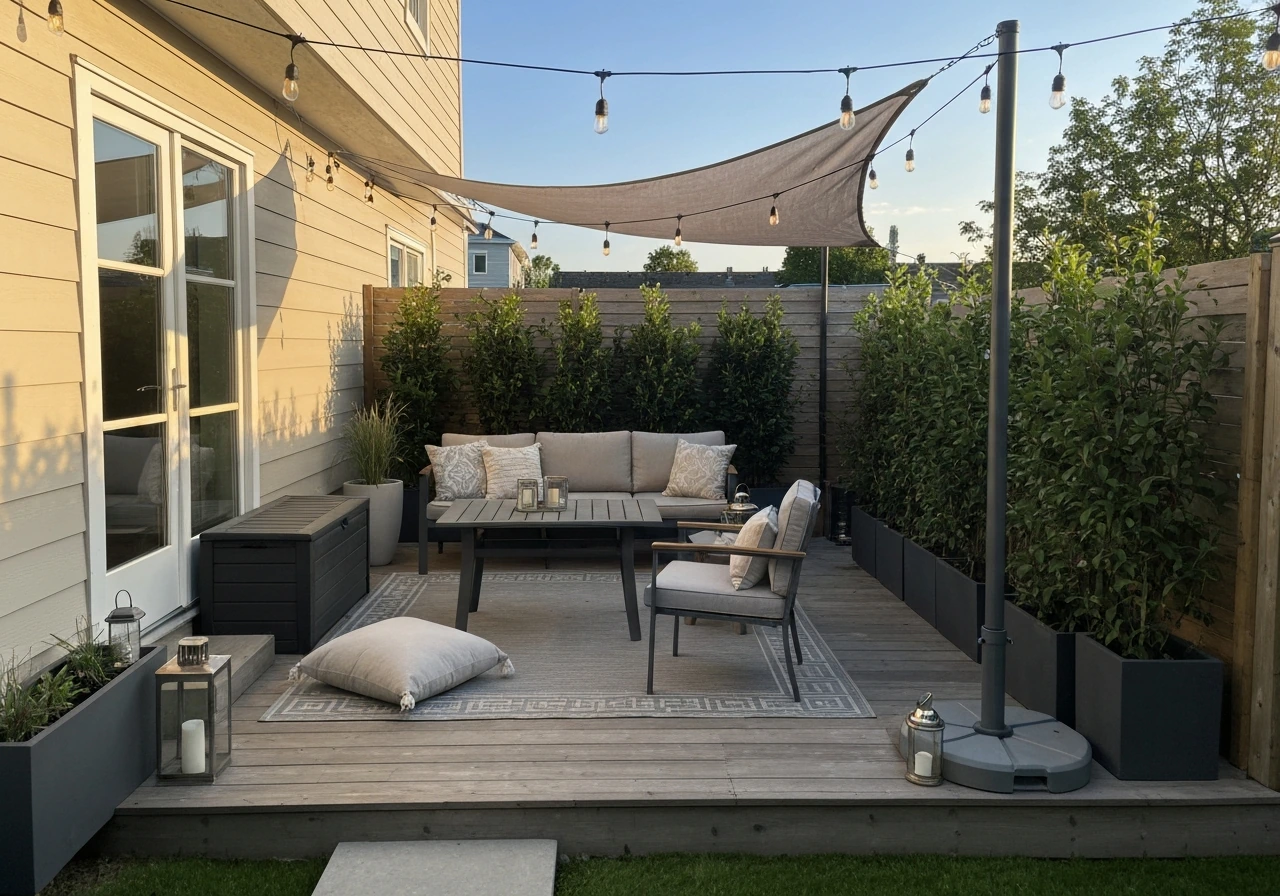
Yes, you can put a paddling pool on a patio, and for most homeowners it works perfectly well. The main things to sort out beforehand are whether your patio surface is level and structurally sound enough to handle the weight, whether you need any kind of permit (most small paddling pools don't require one, but deeper pools sometimes do), and how you'll manage the water so it doesn't pool against your house foundations or flood a neighbour's garden. Get those three things right and you're good to go.
Can You Put a Paddling Pool on a Patio? Safe Steps

Miles Hart
19 Jun 2026
Is it allowed? Permits, planning, and property rules
For the vast majority of homeowners, a standard inflatable paddling pool on a patio requires no planning permission and no building regulations approval. It's a temporary, movable item, not a structure. That said, the rules get more complicated as pool depth increases, and there are a few specific situations worth checking before you fill anything up.
The 24-inch depth rule
The key threshold in most North American municipalities and many UK bylaws is 24 inches (600 mm) of water depth. Above that depth, local pool enclosure bylaws often kick in. Ottawa's pool enclosure bylaw, for example, applies to any outdoor pool capable of holding 600 mm or more of water. Deep River, Ontario explicitly states that inflatable and temporary pools capable of holding more than 24 inches of water must comply with pool enclosure requirements. Highland Park, Illinois ties permit requirements to the same depth. A shallow kids' paddling pool that holds 10 to 15 inches of water almost certainly falls below that threshold. A larger soft-sided Intex-style pool that holds 24 or 30 inches? Check your local rules before filling it.
HOA covenants and rental agreements
If you live in a community with a homeowners association, the HOA may have its own pool policy that's stricter than local planning law. Some HOAs allow temporary wading pools under 24 inches high and under 10 feet in diameter, provided there's no pump or filter system attached. Others limit portable children's pools to 12 inches or under. If you're renting, check your tenancy agreement before installing anything that sits on the patio and holds water. Many landlords are fine with a small paddling pool but would want to know if you're setting up something larger.
UK-specific planning notes
In England, planning permission and building regulations approval are two separate things, and even where permitted development rights apply, they don't automatically remove other requirements. For a temporary paddling pool on an existing patio, neither usually applies. However, if your home is a listed building or in a conservation area, different rules may apply to any changes to the grounds, so it's worth a quick check with your local authority if you're in any doubt.
Weight, base, and drainage: what your patio actually needs to handle
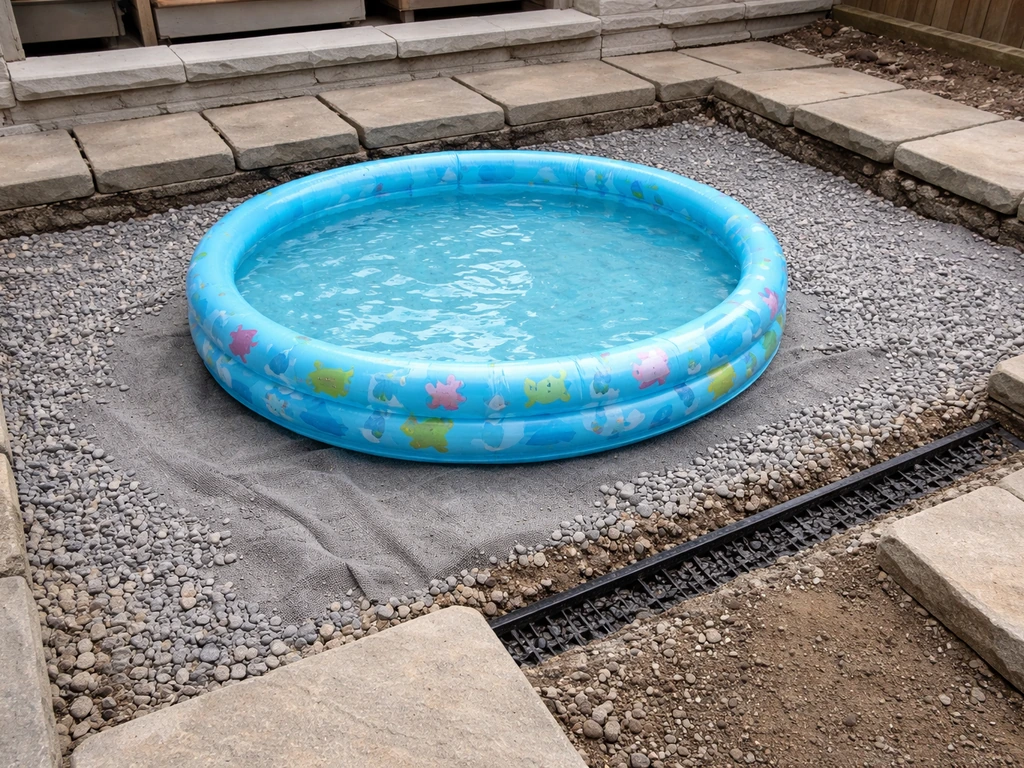
Water is heavy. One cubic metre weighs 1,000 kg, and even by imperial measure, a cubic foot of water weighs 62.4 pounds. A family paddling pool that's roughly 8 feet across and 18 inches deep holds somewhere in the region of 500 to 700 litres of water when filled. That's 500 to 700 kg concentrated in a relatively small footprint. For a solid concrete patio or well-laid paving slabs on a proper sub-base, this isn't a problem. For a patio that already has cracked, uneven, or poorly-bedded slabs, that kind of concentrated load can make existing problems worse.
Drainage is the bigger practical concern. Patios are designed with a slight fall (typically 1:60 to 1:80 gradient in the UK) to move water away from the house. When a paddling pool sits over that gradient, water escaping from the pool, splashout from kids playing, and any overflow has to go somewhere. If it runs toward the house wall, you risk water sitting against the damp-proof course. If it runs over the edge of the patio and onto a neighbour's property or the footpath, that's a nuisance problem. Standing water that doesn't drain quickly also encourages algae and moss growth, which makes the patio surface dangerously slippery. Think through where your patio naturally drains before you decide where to place the pool. If you are wondering what else you can put on your patio besides a paddling pool, the same rules for weight, drainage, and your local bylaws usually apply what can i put on my patio.
Surface prep and leveling: getting the base right
Intex, one of the most common paddling pool brands, explicitly states in their manuals that you should not set up a pool on a slope or inclined subsurface. That's not just about comfort for swimmers, it's a structural issue. A pool sitting on a gradient will have uneven water pressure on its walls, which stresses the seams and liner and makes the whole thing more likely to shift or collapse. On a patio, this means you need to identify the flattest area and check it with a spirit level before setting up.
If the patio has a slight drainage fall but is otherwise flat and consistent, a small paddling pool will generally be fine. If there are individual slabs that have sunk, heaved, or tilted, those are the ones to avoid. You can't re-bed paving slabs quickly, but you can work around a problem area by positioning the pool on the better part of the surface. For soft-sided or frame pools, even a 1 to 2 inch difference in height across the pool diameter will cause the water to sit noticeably off-level and put asymmetric pressure on the frame.
Placement practicalities: safety, sun, spacing, and electrics
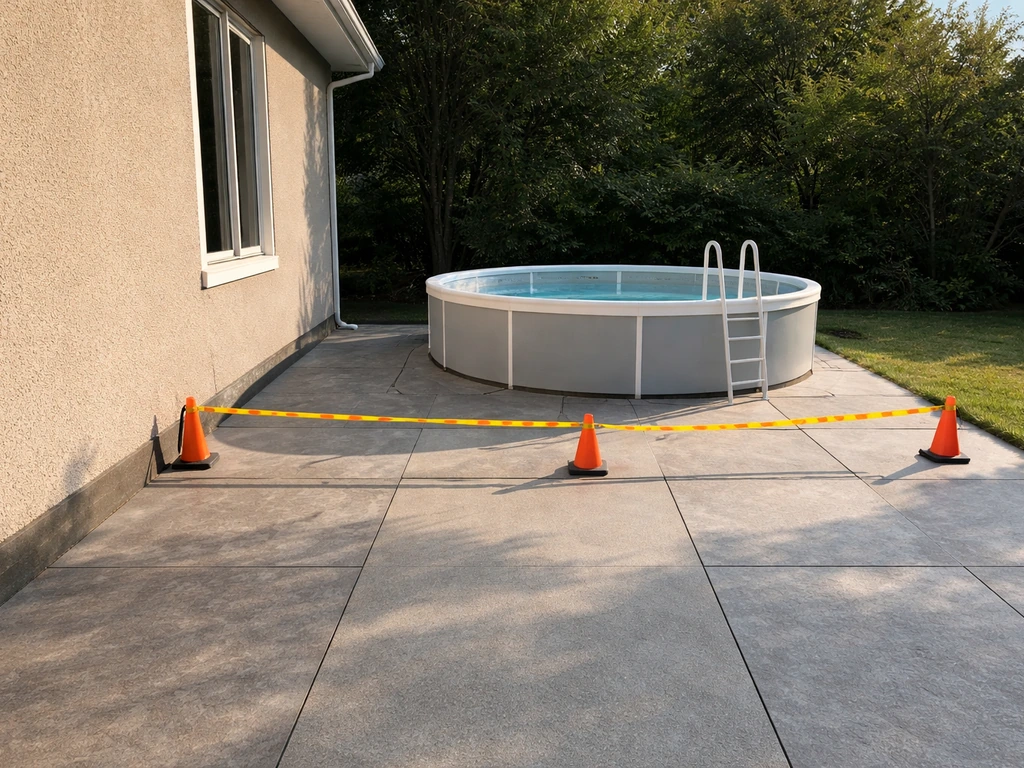
Where exactly you place the pool on the patio matters more than most people think. If you mean a treadmill, the same patio placement basics apply: choose a stable, level spot and consider drainage and safety around wet weather treadmill on patio. Here's what to factor in before you inflate anything. For pool areas, Leviton’s Captain Code excerpt notes the blank" rel="noopener noreferrer">NEC requires GFCI protection for receptacles that service the pool/pool area within specified measurement distances, which is useful when planning temporary pool electrical setups.
- Keep the pool at least 1 to 1.5 metres away from the house wall. This protects the damp-proof course from persistent splash and runoff, and gives you a safe working margin around the pool edge.
- Don't position the pool directly over or near a patio drain. The pool will block the drain, and overflow or splash water won't clear properly. Keep drains accessible and downhill from the pool.
- Check for outdoor electrical sockets and lighting nearby. UK HSE guidance is clear that socket outlets should not be in wet areas. NEC guidance in the US (NEC 680.22) requires GFCI protection for receptacles within defined distances of a pool. Either way, keep the pool well clear of any outdoor sockets, and never run extension leads or electrical appliances into the pool area.
- Sun exposure is worth thinking about. Morning sun is fine; a patio that bakes in full afternoon sun will heat the water quickly and make it less comfortable for young children, and warm water also degrades faster hygienically.
- Leave enough clearance around the pool edges for adults to supervise. A pool pushed into a corner creates a supervision blind spot.
- Avoid positioning the pool near fragile paving features, raised edges, or steps where a slip on wet paving could be dangerous.
Materials and setup: liner, underlay, and protecting your patio
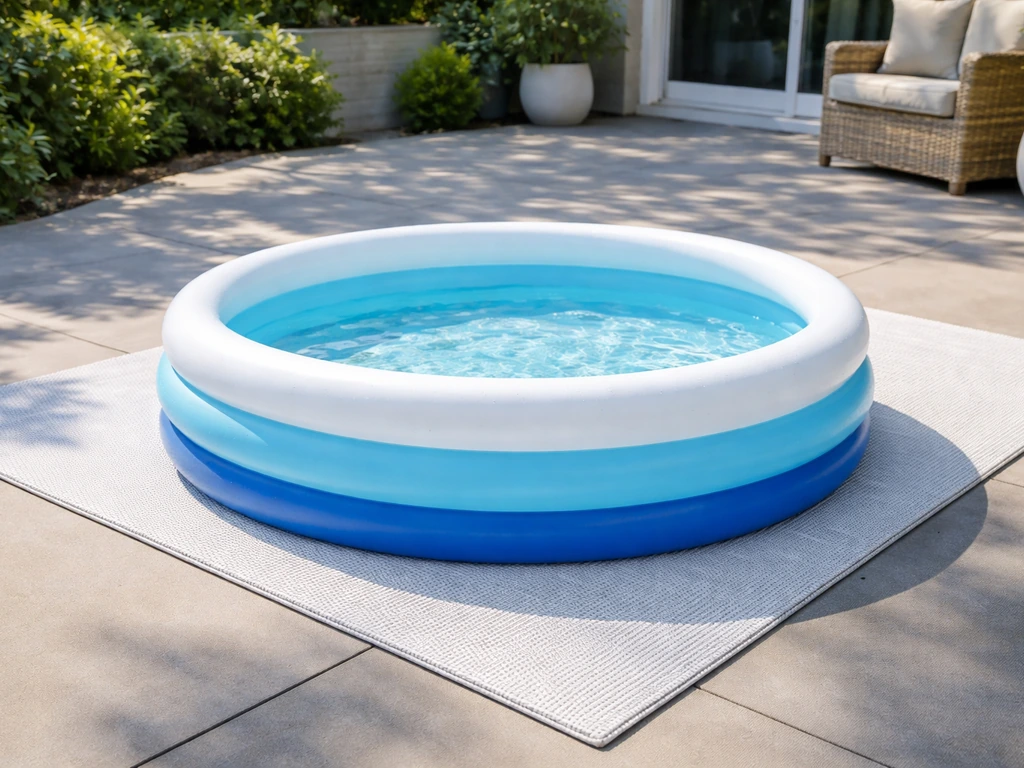
The underside of a paddling pool, particularly a hard plastic shell or a soft-sided pool with a textured base, will abrade your patio surface over time if there's nothing between them. It will also trap moisture underneath, which creates a persistent wet patch that encourages algae, moss, and in colder climates, freeze-thaw damage to the paving joints. Both issues are easily fixed with the right underlay.
Underlay options
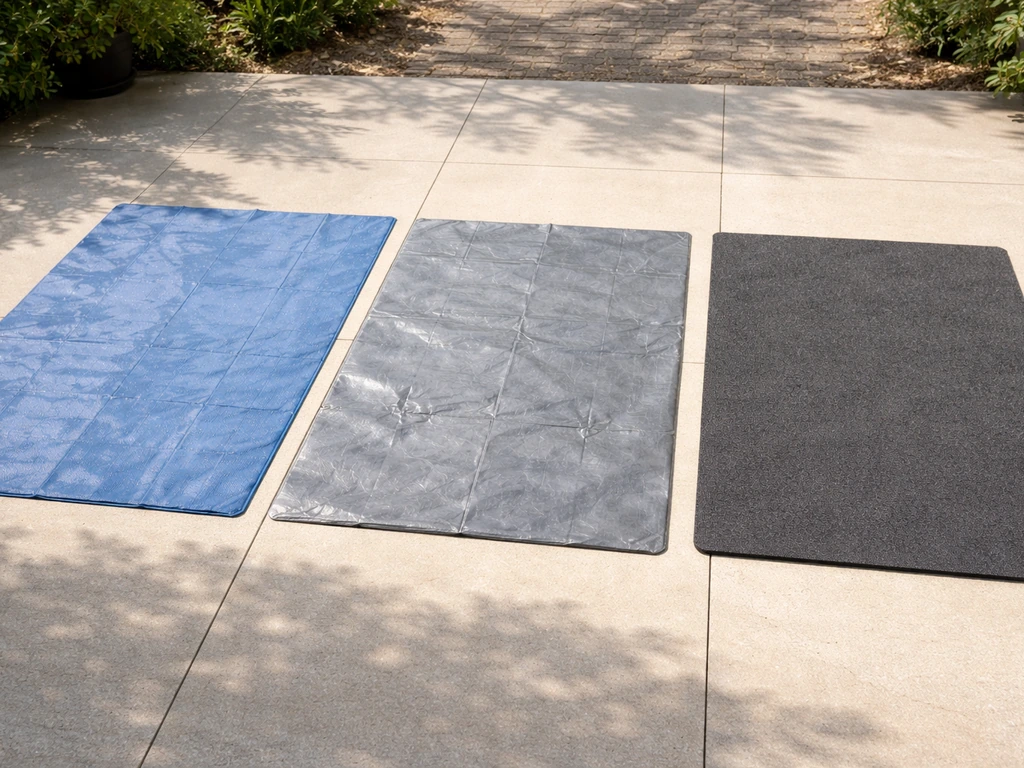
| Underlay type | Protection level | Cost (approx) | Best for |
|---|---|---|---|
| Dedicated pool ground cloth (e.g. Bestway, Intex branded) | Good abrasion and moisture barrier | $15 to $25 / £12 to £20 | Soft-sided and frame pools; matches pool shape |
| EVA foam interlocking tiles | Excellent cushioning and abrasion protection | $20 to $40 for a set | Any pool; adds comfort and insulation |
| Heavy-duty tarp or woven ground sheet | Basic abrasion protection, moisture traps underneath | $5 to $15 / £4 to £12 | Budget option; less effective at drying out |
| Nothing (bare paving) | None | $0 | Not recommended; causes staining and abrasion |
The dedicated pool ground cloths sold by brands like Bestway and Intex are the simplest option, typically around $20 at US retailers. EVA foam tiles give better cushioning and are easier to dry out between uses. A basic tarp works in a pinch but tends to trap moisture underneath it rather than letting things breathe, which can leave tide marks on the paving. Whatever you use, lift it and let the patio dry out fully on any day the pool isn't in use.
Protecting the patio from staining and damage
Concrete and natural stone paving can develop efflorescence (white salt deposits) when moisture repeatedly cycles through the surface and evaporates. This is a cosmetic issue rather than a structural one, but persistent wet patches from a paddling pool sitting in the same spot all summer can accelerate it. On limestone or sandstone slabs, chlorine and pool chemicals can also cause discolouration over time. Use an underlay, move the pool to slightly different positions when you can, and rinse the patio surface after emptying the pool.
Cleaning, water management, and end-of-season storage
Daily water management
CPSC guidelines are pretty direct on this: empty smaller portable pools after every use and put them away. That might sound like a hassle, but it's the single best thing you can do for both safety and pool longevity. Stagnant water in a warm pool breeds bacteria and algae quickly, the CDC notes that small inflatable pools don't have the sanitation controls of regulated pools, and a full pool left unsupervised is a drowning risk. If you have a larger soft-sided pool that you keep topped up over several days, you'll need to treat the water with a kid-safe sanitiser and test it regularly.
Where to drain the pool water
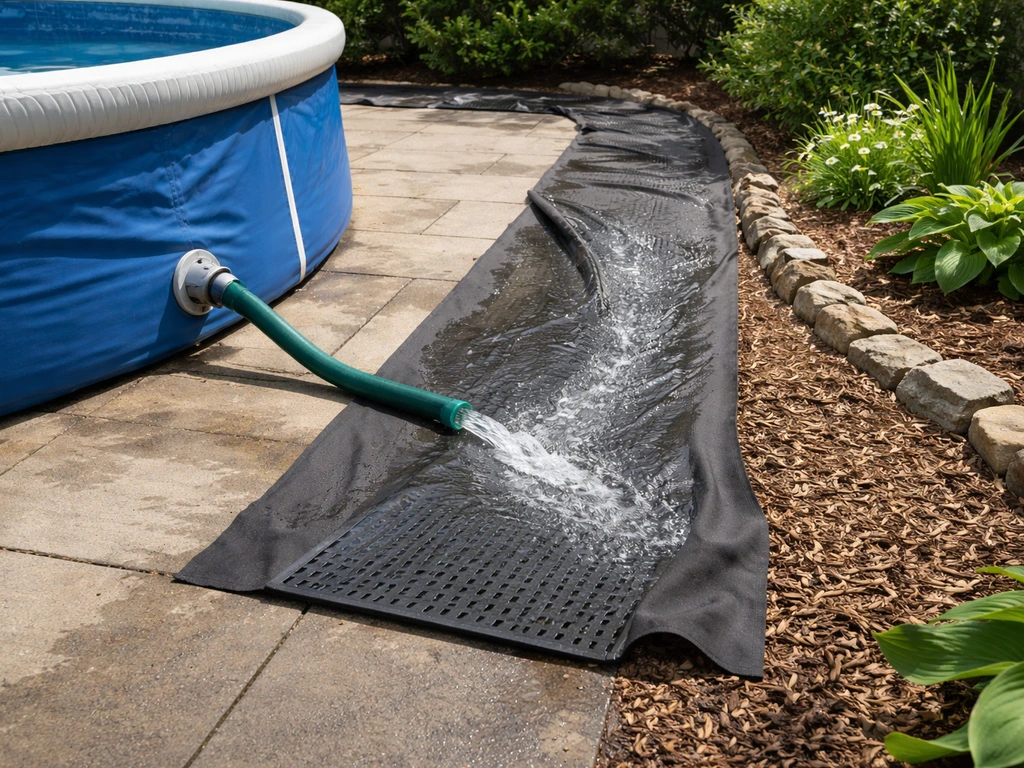
Don't drain directly onto the patio surface in one go if you can avoid it. The sudden volume of water will overwhelm the drainage fall and spread across the patio, potentially running against the house wall or toward neighbours. Instead, attach a hose to the pool drain valve and direct the water to a garden border, lawn, or the nearest garden drain. Untreated paddling pool water is generally fine for garden use. If you've added chlorine or other chemicals, let the water sit for 24 to 48 hours before using it on plants, or route it to a foul drainage point. Check your local utility rules if you're unsure.
Cleaning and storage
After the paddling pool season is done, empty the pool completely, rinse it with clean water, and let it dry fully before storing it. Lowe's and Intex both recommend this specifically to prevent mould and mildew from forming inside the folds. Intex's own manual states the pool should be stored so it cannot collect rainwater. A damp pool folded up and put in a shed will be unusable by next summer. Once dry, fold it loosely, store it in a cool dry place, and check the valve fittings before packing it away.
Keeping the patio clean after pool use
Rinse the patio surface after emptying the pool. This washes away any chemical residue and prevents algae from getting a foothold in the damp paving joints. If you notice the patio is developing slippery green patches during the season, a dilute patio cleaner used with a stiff brush sorts it out quickly, but don't leave it until the problem gets serious because algae and moss on wet paving is a genuine slip hazard.
Costs and whether alternatives are worth considering
Setting up a paddling pool on an existing patio is one of the lowest-cost summer water setups available. A small inflatable pool runs from around $10 to $30. A mid-size soft-sided family pool costs $80 to $200. Add a ground cloth at roughly $20 and some basic sanitiser, and you're looking at well under $250 for a complete setup. That's a very different proposition to a permanent plunge pool or even a budget above-ground pool with a filter system, which starts at several hundred dollars and carries ongoing running costs.
The patio is usually the right choice over lawn for one practical reason: it's flat, which is the single most important variable for a stable setup. Grass grows, worms come up, the ground gets waterlogged, and an inflatable pool sitting on a lawn all week kills the grass underneath. A patio surface is consistent and easy to clean. The trade-off is harder underfoot (hence the value of foam tiles) and slightly higher risk of damage to the paving surface if you're not using an underlay.
If you're thinking bigger, the comparison shifts. A hot tub on a patio has similar placement and drainage considerations but adds significant weight, electrical requirements, and permanent installation complexity. If you're already thinking about patio improvements to accommodate water features, it may be worth thinking about the patio structure itself: whether it can handle recurring wet-load use, whether drainage is adequate, and whether a covered patio or pergola would extend the season usefully. Those are bigger decisions, but they come up naturally once you've spent a summer working around the limitations of an exposed patio setup.
Quick setup checklist before you fill the pool
- Check local rules: if your pool holds more than 24 inches of water, check whether a pool enclosure permit is required in your municipality.
- Check your HOA or tenancy agreement if either applies.
- Identify the flattest part of your patio using a spirit level and choose that spot.
- Confirm the spot is at least 1 to 1.5 metres from the house wall and not directly over a drain.
- Check for outdoor electrical sockets or lighting circuits nearby and keep clear of them.
- Lay an underlay (dedicated ground cloth, foam tiles, or a tarp) before inflating the pool.
- Have a plan for where the pool water will drain to before you fill it.
- Drain and dry the pool after each use, or treat and test the water daily if you're keeping it filled.
FAQ
How do I check if my patio is level enough for a paddling pool?
Use a spirit level across the exact spot where the pool will sit, not just along the patio overall. Check both directions (left to right and front to back), because even a small slope can tilt the water line and stress the liner. If you see any rocking when you place the pool base cloth first, move to a different section.
Is it safe to put a paddling pool over patio joints or gaps between slabs?
Avoid sitting the pool on raised edges or uneven joints. Gaps can allow the pool base to flex, which increases seam strain and can lead to leaks. If the paving has lots of movement, put down an EVA foam tile underlay that spans a wider area than the pool footprint.
Can I leave a paddling pool filled overnight on the patio?
For smaller portable pools, the safer practice is to empty after each use rather than leaving stagnant water overnight. Leaving it filled increases bacteria and algae growth, and in warm weather it can become a slip hazard and an unsupervised drowning risk.
What should I do if water from the pool is running toward my house wall?
Reposition the pool to a portion of the patio that drains away from the building, or direct the pool discharge using a hose to a nearby garden border or drain. Don’t rely on the patio fall alone if it carries splashout toward the damp-proof course, because repeated wetting can encourage moss and joint erosion.
Can I drain the pool by pouring it out near the patio edge?
If you can, use the pool drain valve with a hose so the outflow goes to a controlled spot. Sudden draining in one go can overwhelm the patio drainage and spread across the surface, which can then run toward neighbors or the house. If you must empty without a hose, do it slowly and watch the direction of runoff.
Will chlorinated water or pool chemicals damage patio paving?
Chlorine and repeated chemical exposure can discolor certain stones (especially limestone or sandstone) and can contribute to residue that accelerates efflorescence around persistent wet patches. Rinse the patio thoroughly after emptying, and move the pool to a slightly different position from time to time when you can.
What underlay should I use under the pool, and do I need one?
It’s strongly recommended to prevent abrasion and trapped moisture. A dedicated pool ground cloth is usually the simplest option, EVA foam tiles are better for cushioning and drying, and a basic tarp can trap moisture and leave tide marks. Whatever you use, lift and dry it between uses.
Can I use a paddling pool on a tiled balcony or roof terrace patio?
Be careful. Even if the surface looks flat, balconies and roof terraces often have different load limits and drainage designs, and water may flow differently in wind. If you have any doubt about structural capacity or waterproofing, check with building management or a qualified professional before placing a water-filled pool on elevated areas.
My patio feels slightly rough and slippery when wet, what’s the best prevention?
The main prevention is stopping repeated stagnant dampness. Empty the pool each day if possible, rinse after emptying, and address green algae early with a suitable patio cleaner and stiff brush. Also keep a dry mat or foam tiles around the pool so kids and adults don’t track slick residue across the whole patio.
Do I need to treat the water if I’m topping up a soft-sided pool for several days?
Yes, if you keep it for multiple days it needs basic water management. Use a kid-safe sanitiser and test the water regularly, because the pool will not have the filtration system of a regulated pool. If you can’t test and treat reliably, empty and refill more often.
Will efflorescence or algae spots definitely happen?
They’re not guaranteed, but a pool left on the same patch can accelerate cosmetic changes, especially where concrete and stone repeatedly cycle wet and dry. Moving the pool slightly, using an underlay, rinsing after emptying, and ensuring good drainage will reduce the risk.
What should I do if the patio slabs look cracked or some are slightly loose?
Don’t place the pool over the worst areas. The concentrated weight of several hundred kilograms (depending on pool size) can worsen already cracked or poorly bedded slabs, and uneven support can stress the pool structure. Choose the flattest, most stable section, or pause until the patio is repaired.
Next Article
What to Put on a Patio: Furniture, Lighting, Privacy, More
Actionable patio must-haves: furniture, lighting, privacy, shading, rugs, plants, storage, weatherproofing, and how to p