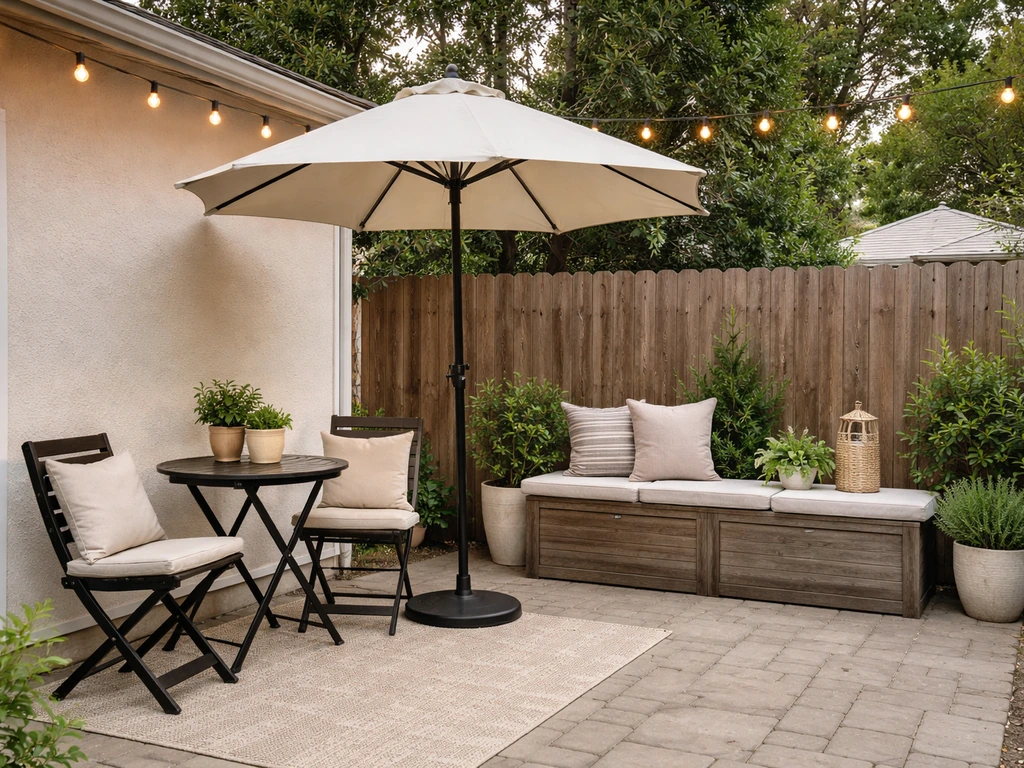
Yes, you can put a treadmill on a patio, but whether it's a good idea depends almost entirely on two things: how much weather protection your patio has, and what your treadmill's manufacturer actually allows. If you’re also wondering, “can you put paddling pool on patio,” the safety and surface considerations depend on drainage, heat, and how much weather exposure the patio gets. A covered patio with a nearby dedicated outlet and a solid, level surface is a reasonable setup for most treadmills. An open-air patio with no roof, direct rain exposure, and a long extension cord running across the pavers is asking for a voided warranty, a corroded motor, or worse. The difference between those two scenarios is what this guide is about.
Can I Put a Treadmill on Patio Safely? Setup Checklist

Miles Hart
10 Jul 2026
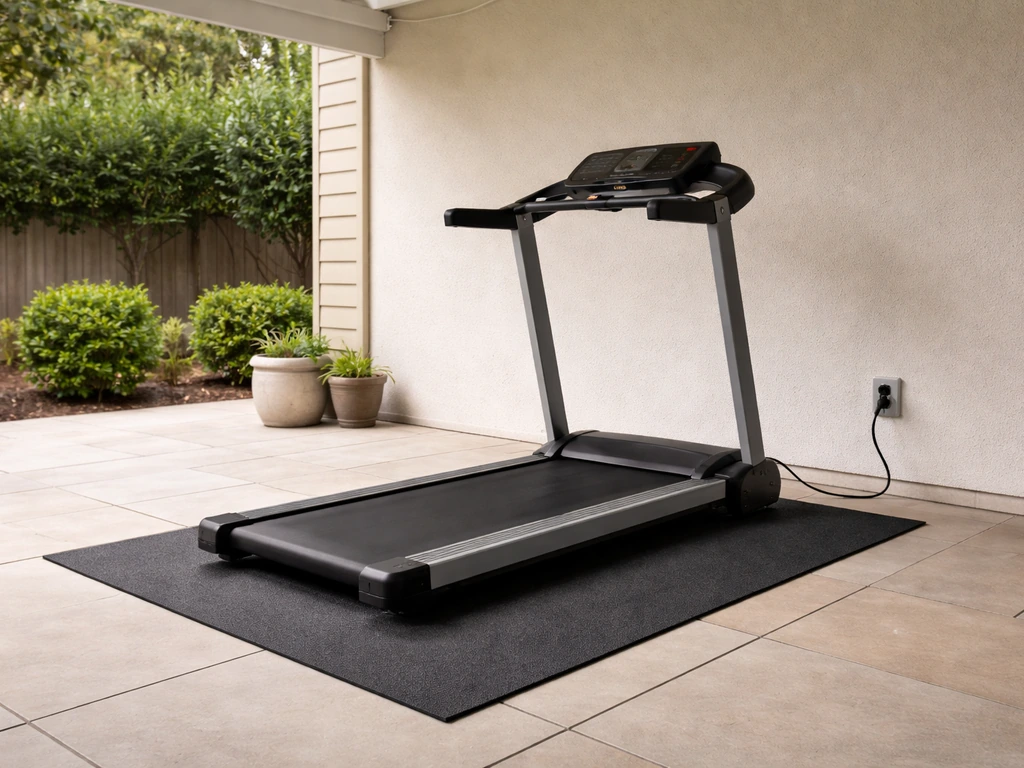
Quick verdict: when it works and when it doesn't
Here's the honest short version before we get into the details.
| Patio Situation | Verdict | Key Condition |
|---|---|---|
| Fully covered patio (roof overhead, partial walls) | Generally fine | Needs GFCI-compatible outlet, level surface, and a treadmill mat |
| Screened or enclosed patio/porch | Best outdoor option | Humidity control helps in humid climates; keep it away from screens where rain blows in |
| Open patio with a patio umbrella or pergola | Risky | Not enough rain/UV protection; moisture still reaches the machine |
| Completely open/uncovered patio | Not recommended | Direct rain, UV, and temperature swings will damage the treadmill and void your warranty |
| Temporary outdoor use (dry day, brought inside after) | Acceptable with care | Must be completely dry before storage; don't leave it out overnight |
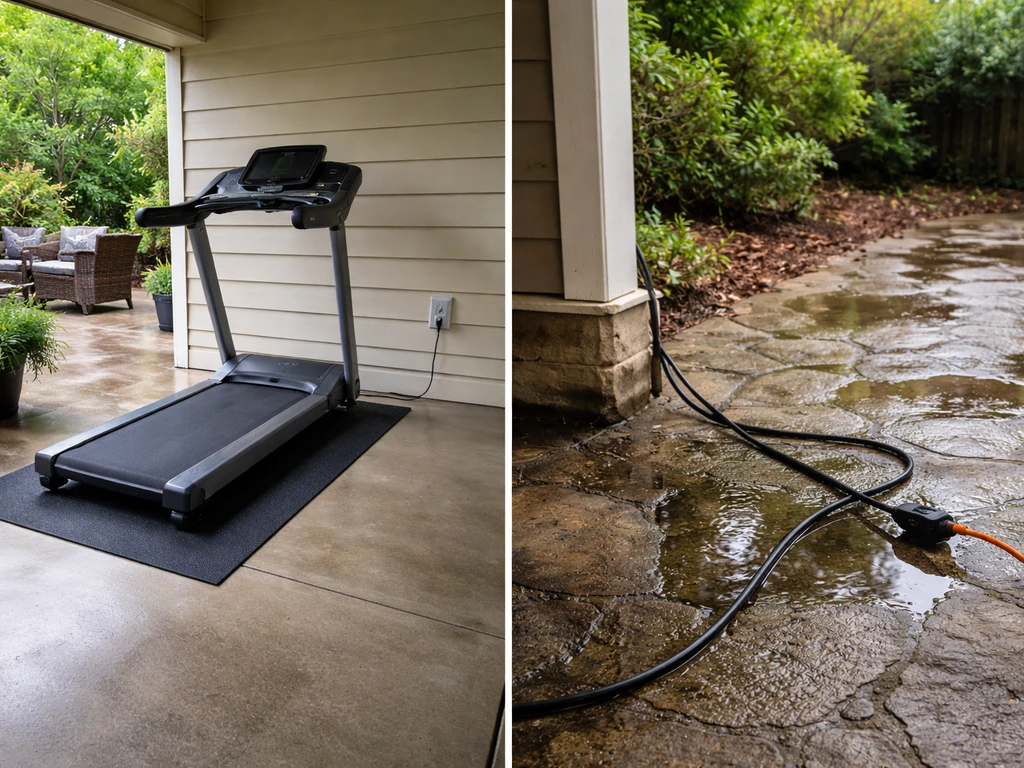
The clearest line is rain. A treadmill is not outdoor equipment. It has exposed electronics, a high-draw electric motor, and metal components that will rust in prolonged humidity. If your patio keeps rain completely off the machine, you're working with a manageable situation. If rain can hit the treadmill directly, you're fighting a losing battle no matter what cover or mat you use. If you're working through how much protection you really need for patio treadmill setups, also consider the coverage details for weather.
Check your treadmill's specs before anything else
Pull out your owner's manual before you move the machine an inch. Manufacturers are often very specific about operating conditions, and outdoor placement almost always bumps up against those limits. The SOLE F80 manual, for example, lists a maximum operating humidity of 95% non-condensing and a maximum temperature of 40°C. More importantly, it explicitly states that weather-related damage is not covered under warranty. That's not fine print you can ignore. If the belt seizes up or the motor controller fries after six months on the patio, you're paying out of pocket.
ProForm and Horizon manuals include similar intended-use language that effectively limits the machine to indoor, climate-controlled environments. The phrase "blank" rel="noopener noreferrer">operate only as described in the manual" in ProForm documentation is doing a lot of work. Even if your specific model doesn't say "do not use outdoors" in capital letters, the environmental limits it lists will almost certainly be exceeded by an uncovered or partially covered patio in most regions.
What to check in your manual before setting up outdoors:
- Operating temperature range (most residential treadmills top out around 40°C/104°F, which rules out direct sun exposure in summer)
- Maximum humidity rating (non-condensing means no water droplets forming on surfaces, which is easy to violate in humid climates)
- Any explicit "indoor use only" language
- Warranty exclusions tied to environmental conditions
- GFCI guidance (the SOLE F80 manual actually warns against using a GFCI outlet, which complicates outdoor electrical requirements significantly)
That last point deserves its own section, but the takeaway here is: read the manual first, because outdoor setup can create a conflict between what the machine requires electrically and what outdoor electrical codes require for safety.
Patio surface and placement: level ground, traction, and mats
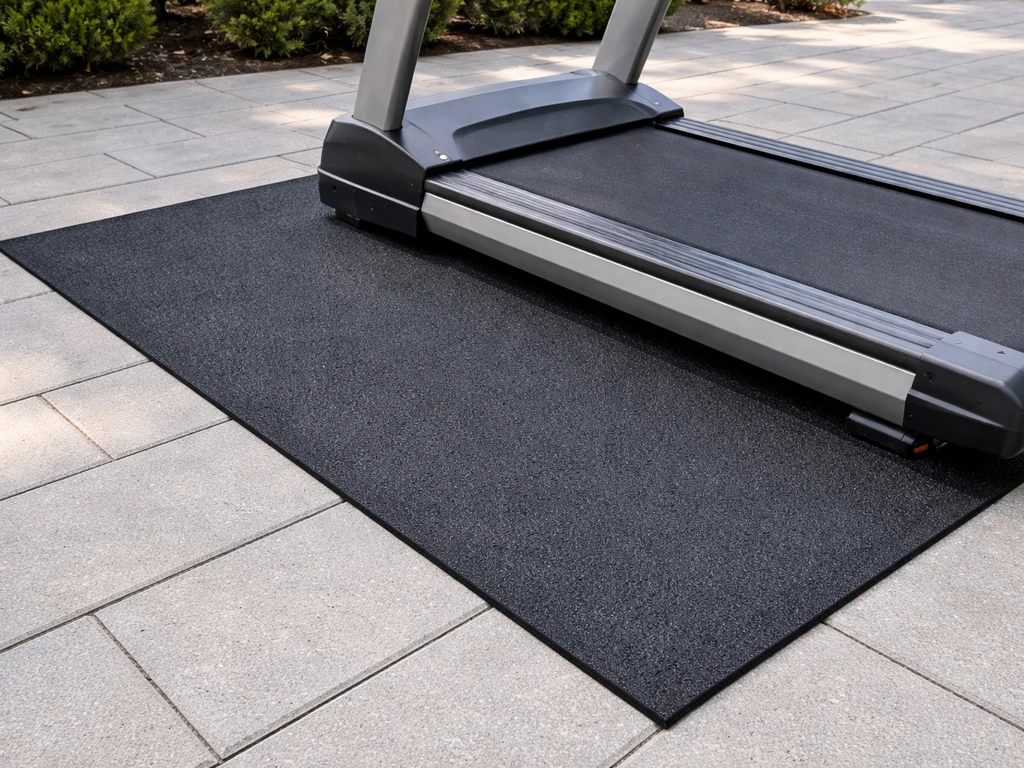
Treadmills need a flat, stable surface. Even a slight slope affects belt tracking, can cause the machine to shift during use, and creates a slip hazard if the feet aren't gripping the surface evenly. Before you put the machine down, check your patio with a level. Concrete slabs and pavers are generally fine if they were poured or laid correctly, but older patios often have settled unevenly, and any slope greater than about half an inch over the machine's footprint is worth fixing before you proceed.
Surface texture matters too. Smooth concrete and polished pavers can be slippery when wet, and a treadmill's rubber feet don't grip them the same way they grip a padded floor mat. The solution here is simple: use a treadmill mat. A mat in the 4mm to 6mm thickness range handles most vibration and noise dampening on hard patio surfaces. Thicker mats, up to around 12.7mm, add more cushion if you're on a particularly hard or uneven surface, but they also add more flex, which can feel unstable under a heavy machine. For most concrete or paver patios, a 6mm dense rubber mat is a practical choice.
The mat also protects your patio surface from scratches, oil drips from the belt lubricant, and the constant compression of the treadmill's feet. If you're renting or care about preserving your patio finish, this is worth doing regardless of which treadmill you have.
- Use a level to confirm the surface is flat before placement
- Place the treadmill at least 3 feet from any wall or fence at the rear for emergency dismount clearance
- Choose a mat rated for outdoor use if the patio surface can get wet or damp
- Avoid placing the treadmill on composite decking without checking the deck's weight capacity and moisture tolerance first
- Keep the treadmill away from any drainage slope that could direct water toward the machine
Weather protection: how much coverage you actually need
The minimum viable protection for a patio treadmill is a solid roof overhead that prevents any rain from reaching the machine, combined with some form of side protection from wind-driven rain. A standard covered patio with a permanent roof meets that bar for most setups. A pergola with open slats does not. A retractable awning does not, especially in areas with afternoon thunderstorms. You need actual coverage, not shade.
Humidity is the sneaky problem, especially in the Southeast, Gulf Coast, or anywhere that gets hot, wet summers. Even if rain never touches the treadmill, ambient humidity above 80% sustained over weeks will cause condensation to form inside the motor housing and on metal belt components. A small dehumidifier on the patio (particularly on an enclosed or screened patio) makes a real difference in extending the machine's life. Homeowners on Reddit who've run treadmills on screened patios consistently point to humidity control as the most important factor for long-term success.
UV is a slower, less dramatic problem but still real. Direct sun exposure degrades rubber belt material and can crack plastic side rails over a few seasons. A good treadmill cover helps when the machine isn't in use. Look for a cover rated for UV resistance and made from a breathable material, since a non-breathable cover traps humidity underneath the machine and creates its own moisture problem. If the patio gets direct afternoon sun, covering the machine between uses is a non-negotiable habit.
Temperature swings matter most in cold climates. If temperatures drop below freezing in winter, lubricant on the belt and deck can thicken and cause motor strain on startup. Most manufacturers recommend not operating the machine when it's been stored in below-freezing temperatures without letting it warm up first. In practice, if you're in a cold climate, a patio treadmill setup probably only works reliably from spring through fall.
Electrical safety: outlets, GFCI rules, and cords
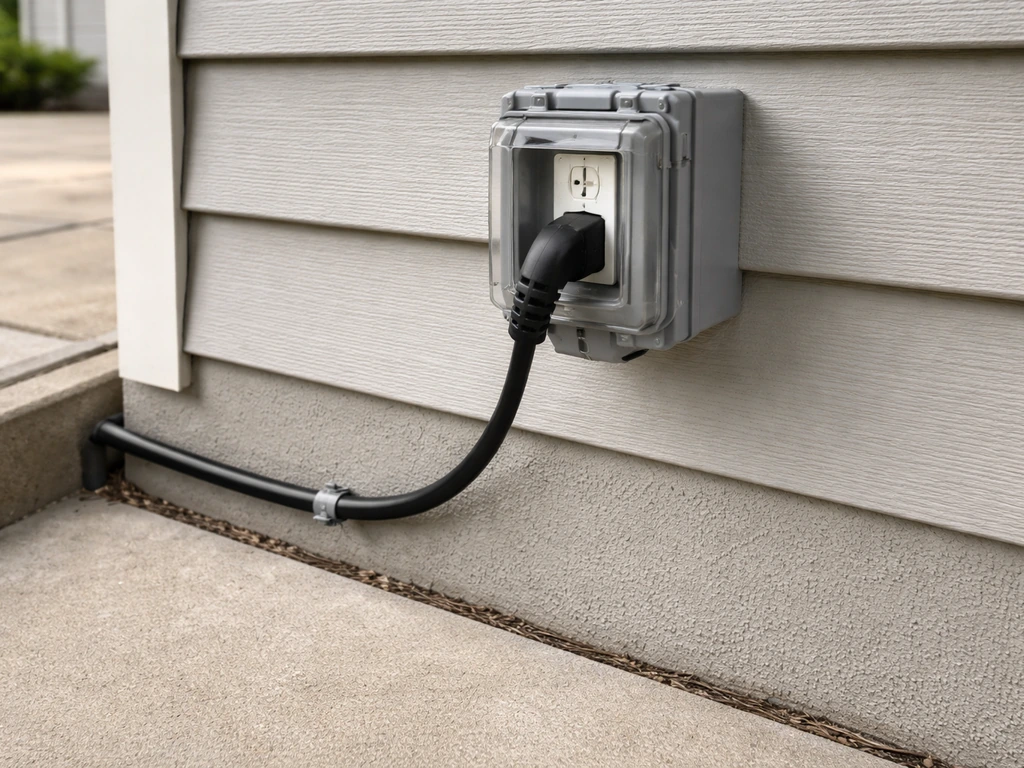
This is where patio treadmill setups get complicated fast, and it's worth spending real time on before you plug anything in. Treadmills are high-draw appliances. Horizon Fitness notes that most of their North American treadmills require 120 volts at 60Hz AC, and they specifically warn against using extension cords, noting that they can cause performance problems, create fire hazards from overloading, and may not deliver enough voltage to run the motor safely. The recommendation across most manufacturers is a dedicated circuit.
On a patio, the nearest outlet is often a standard weatherproof outdoor receptacle, which may or may not be on a dedicated circuit. If you're not sure, have an electrician check it. Running a treadmill on a shared circuit with other outdoor loads is a bad idea, particularly in summer when you might also have fans, lighting, or other equipment on the same breaker.
The GFCI situation is genuinely tricky. The NEC (Section 406.9) requires that outdoor wet-location receptacles use weatherproof "while-in-use" covers, the kind that keep the enclosure weatherproof even with a cord plugged in. This is sometimes called a bubble cover. At the same time, the SOLE F80 manual explicitly warns users never to use a GFCI outlet with that specific treadmill. This creates a real conflict: outdoor electrical code pushes you toward GFCI protection, and your treadmill manual may push back against it. You need to read your specific manual and, if there's a GFCI restriction, talk to a licensed electrician about how to handle it safely and to code for your jurisdiction. Do not just skip the weatherproof cover requirement because the manual says no GFCI.
- Never use an extension cord as a permanent solution for a patio treadmill
- Confirm the outlet is on a dedicated 20-amp circuit if possible
- Use a while-in-use (bubble cover) weatherproof receptacle cover per NEC 406.9 requirements
- Check your manual for GFCI compatibility before assuming a GFCI outlet is the right call
- Keep all cord connections off the patio floor to avoid water pooling at the connection point
- If the nearest outlet requires a cord longer than 6 feet to reach the treadmill, have an electrician install a new outlet closer to the placement location
Maintenance and longevity: keeping rust, grime, and moisture in check
A treadmill on a patio needs more maintenance than one indoors, full stop. Pollen, dust, moisture, and insects find their way into the motor compartment and under the belt faster than they would inside a house. The upside is that most of the maintenance tasks are simple and take less than 15 minutes.
Belt lubrication needs to happen more frequently in an outdoor environment, particularly in low humidity or high temperature conditions that dry out the silicone lubricant faster. Most manufacturers recommend lubrication every 3 months or every 150 miles of use indoors. Outdoors, check the belt every 6 to 8 weeks by lifting the edge and feeling whether the underside of the belt and the deck feel dry or tacky. If they feel dry, lubricate. Use only 100% silicone lubricant and avoid petroleum-based products.
The motor compartment is the most vulnerable part. Even on a covered patio, debris and moisture work their way in. Every month or two, use a can of compressed air to blow out the motor compartment (disconnect power first). Check the frame and any exposed metal components for early rust spots. If you catch surface rust early, a quick wipe with a rust-inhibiting product stops it before it becomes structural. If you're in a coastal area with salt air, do this more frequently.
Seasonal storage is worth planning for. If you live somewhere that gets cold winters or a rainy season with sustained high humidity, bringing the treadmill indoors for those months dramatically extends its life. If that's not practical, at minimum: clean and dry the machine thoroughly, apply a fresh coat of belt lubricant, cover it with a breathable UV-resistant cover, and consider placing a desiccant pack or small moisture absorber under the cover to reduce condensation during storage.
Noise, vibration, and keeping the peace with neighbors
A treadmill on an open or semi-open patio is louder than one indoors, because there are no walls and insulation absorbing the sound. The motor hum and footfall thud travel across a yard in a way that indoor setups simply don't. If your patio is close to a fence line or a neighbor's window, this is worth thinking through before you set up.
The mat helps here too. A dense rubber mat reduces the vibration transmitted into the patio surface, which cuts down the low-frequency thump that carries the farthest. If you're on a raised deck rather than a ground-level slab, this matters even more, since deck boards amplify vibration significantly compared to concrete.
Timing is the practical answer to the neighbor problem. Running the treadmill between 8am and 8pm is a reasonable standard. If you share a wall, fence, or close yard with neighbors, a quick heads-up about your setup goes a long way. Some HOAs also have rules about equipment noise or mechanical equipment on patios, so it's worth checking your HOA documents if you're in a managed community.
Safety around the machine itself also changes outdoors. Kids and pets can approach from more directions on an open patio than in a dedicated indoor gym room. The safety key lanyard that shuts off the machine is more important outdoors, not less. Make it a habit to clip in every single time, and keep the patio area immediately behind and beside the treadmill clear of trip hazards.
Your decision checklist before setting up
If you're ready to make a decision, here's the practical sequence to work through before moving the machine outside. If you're still wondering what to put on your patio to support a treadmill safely, start with level ground, a dense rubber mat, and real weather coverage patio treadmill setup.
- Read your treadmill's manual and confirm operating temperature and humidity limits, warranty exclusions for outdoor use, and any GFCI restrictions
- Assess your patio: is there a solid overhead roof that completely prevents rain from reaching the machine?
- Check the surface with a level and confirm it's flat enough to place the machine safely
- Identify the nearest outdoor outlet, confirm it's on a dedicated or high-capacity circuit, and plan cord routing that avoids floor-level water pooling
- Get a while-in-use weatherproof receptacle cover installed if one isn't already there
- Buy a treadmill mat (4mm to 6mm dense rubber for most concrete or paver patios)
- Plan a humidity control approach for enclosed patios in humid climates (a small dehumidifier is cheap insurance)
- Get a breathable UV-resistant treadmill cover for when the machine isn't in use
- Set a maintenance calendar: belt lubrication every 6 to 8 weeks outdoors, motor compartment cleaning every 2 months, rust inspection monthly
- Plan your seasonal storage strategy if your climate has harsh winters or extended rainy seasons
If your patio checks those boxes, putting a treadmill out there is a legitimate setup that plenty of homeowners make work long-term. If two or three of those steps reveal problems (no roof, no nearby dedicated outlet, or a manual that explicitly voids the warranty for outdoor use), the smarter path is either to invest in improving the patio first or to use the outdoor space for something that's actually designed for it. A screened or enclosed patio that you're already considering improving is often the setup that makes a patio treadmill genuinely practical rather than a constant maintenance headache.
FAQ
Can I put my treadmill on a patio if it’s covered but not fully enclosed (for example under a pergola)?
If rain can blow in or splash from the sides, it usually defeats the protection you need. A pergola’s slats typically leave enough gaps for wind-driven droplets, which can still damage exposed electronics. Use the manufacturer’s humidity and temperature limits plus a cover that blocks splash, not just shade.
What’s the safest way to power a treadmill on a patio if I don’t have a dedicated outlet nearby?
The safest default is a dedicated circuit installed by an electrician, especially because treadmills draw enough power that shared breakers can cause voltage drops or nuisance trips. If you must run wiring longer-term, only use code-compliant outdoor-rated methods, not an extension cord, since many treadmill manuals treat that as a warranty risk.
Do I need a GFCI for an outdoor treadmill setup?
Outdoor wet-location code generally expects GFCI protection, but some treadmill manuals explicitly restrict certain GFCI configurations. The decision aid is to check your exact manual, then have a licensed electrician design a setup that satisfies both the electrical code requirements in your area and the treadmill’s operating instructions (including the correct weatherproof in-use cover type).
Can I use a treadmill mat, but just put the treadmill on pavers or deck boards without leveling fixes?
You can, but unevenness is one of the easiest ways to create belt tracking issues and extra wear, plus the feet can slip on wet stone or wood even with a mat. If you find noticeable slope with a level (even small dips across the machine’s footprint), correct it before placing the treadmill, then choose a mat thickness that feels stable under the machine’s weight.
Will leaving the treadmill outside in light rain be okay if I cover it with a tarp?
Usually no. Tarp-style covers often trap moisture against the machine, increasing condensation on the motor housing and metal parts. If rain exposure is possible, use manufacturer-approved coverage, remove power when appropriate, and prioritize breathable, UV-rated storage when the machine is not in use.
How do I handle condensation on a covered patio where it never gets direct rain?
Condensation can form from high ambient humidity, especially during warm, wet seasons. A practical step is adding a small dehumidifier near the treadmill during humid months (or running one when humidity is persistently high) and using a breathable cover that does not seal the machine airtight.
Is UV a problem if the treadmill is under a roof but still gets sun in the afternoons?
Yes, direct sun can degrade rubber components and crack some plastic parts over time, even when rain is blocked. Cover the treadmill when not in use with a UV-rated, breathable cover, and if possible, position the treadmill so the belt area and side rails are shielded from direct afternoon rays.
What belt lubrication schedule should I follow if the treadmill is outside?
Many indoor schedules assume drier conditions. Outdoor use typically means checking more often, such as inspecting the belt underside and deck for dryness every 6 to 8 weeks, then lubricating only when it feels dry or tacky per your manual. Use the lubricant type specified (commonly 100 percent silicone), and avoid petroleum-based products.
How often should I clean under and around the treadmill if it’s on a patio?
Plan on more frequent debris control than indoors because pollen, dust, and insects accumulate faster. A practical routine is monthly or every couple of months to blow out the motor compartment with power disconnected, then visually check the belt area and surrounding openings for buildup before it affects airflow or causes noise.
If I live somewhere with freezing winters, can I keep the treadmill on the patio year-round?
Most models are not meant to operate after prolonged storage in below-freezing temperatures, and lubricants can thicken and strain the motor on startup. If you cannot move it indoors, at minimum you should thoroughly dry it, cover it with a breathable UV-resistant cover, and consider moisture absorbers to reduce condensation during storage.
How loud will a patio treadmill be, and what can I do to reduce noise for neighbors?
Patios amplify both motor hum and footfall since there’s less sound insulation. To reduce transmission, use the right dense rubber mat thickness and place it on stable, level ground, then run during reasonable hours (commonly daytime). If you’re in an HOA, verify any rules about exterior mechanical equipment and noise.
What safety setup is most important outdoors for pets and kids?
Create a clear zone around the treadmill and make the safety key lanyard a strict habit every session. Outdoors, approaches can happen from more angles, so keeping the area behind and beside the treadmill free of trip hazards and ensuring the lanyard is clipped before use is critical.
Next Article
What Can I Put on My Patio? Best Add-Ons by Budget
Patio add-ons by budget: furniture, dining, shade, lighting, privacy, storage, and outdoor kitchen options with cost tip