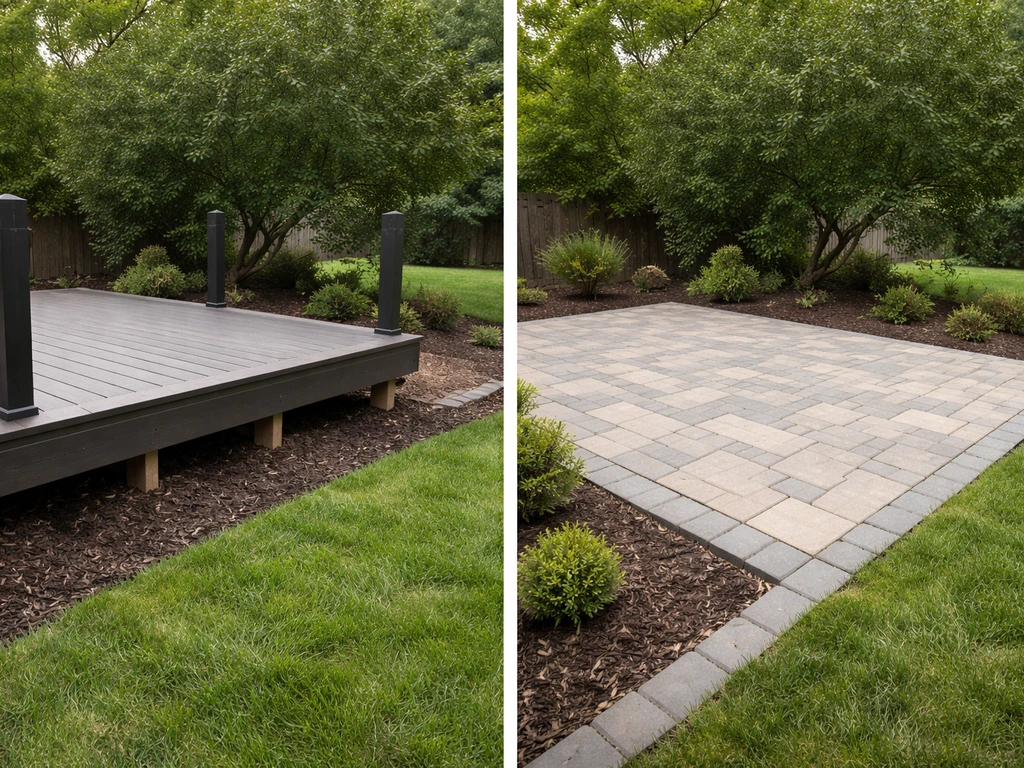
If your yard is flat and well-drained, a patio will almost always cost less, require less permitting, and last longer with minimal upkeep. If your yard slopes, sits above a crawlspace, or you want a raised outdoor room that connects seamlessly to a back door, a deck makes more sense even though it costs more and needs regular maintenance. Neither option is universally better, the right choice comes down to your specific site conditions, budget, and how you actually plan to use the space.
Patio vs Deck Pros and Cons: A Practical Decision Guide

Miles Hart
25 Jun 2026
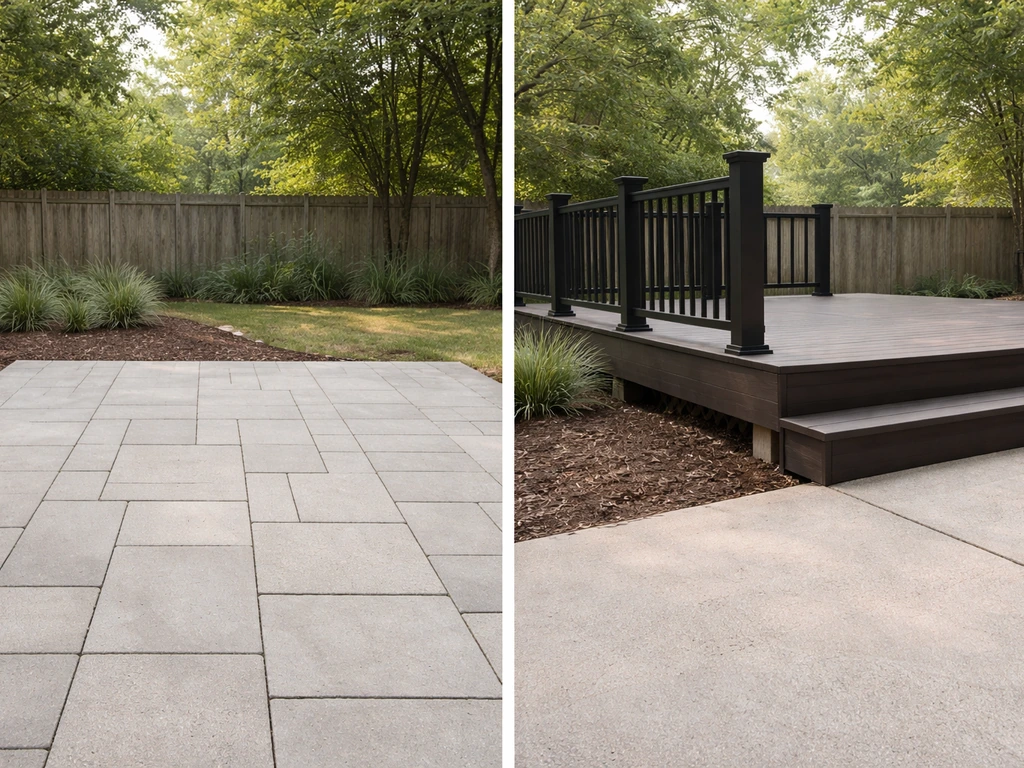
What you're actually comparing
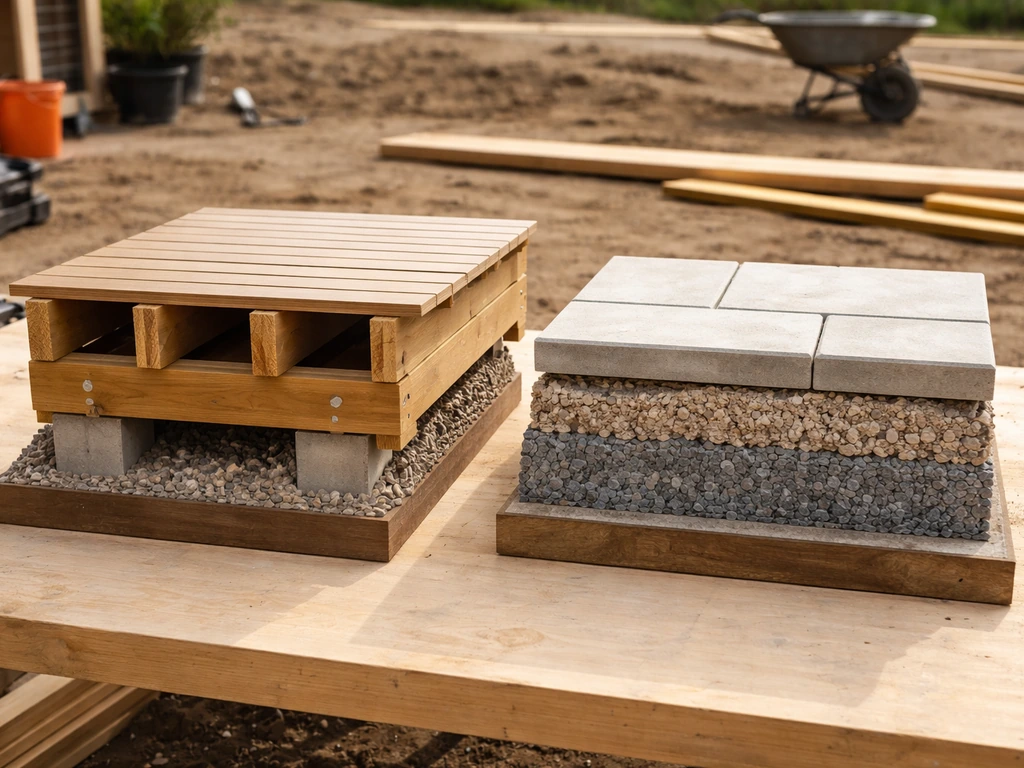
Patio notes that decks are raised platforms built from framing or joists and decking boards, while patios are hardscape installations like slabs, pavers, or stone built on a prepared base or subbase shaped to drain away from the home A deck is a raised, off-ground platform supported by a structural frame, posts, beams, joists, and decking boards.
Because it sits above grade, it usually requires footings or piers dug below the frost line, and once it reaches 30 inches above the ground, building codes (including the 2021 International Residential Code) require guardrails. A patio is a ground-level hardscape surface, concrete slab, pavers, natural stone, or gravel, installed directly on or just above grade on a prepared compacted base.
It's not a structural system in the framing sense; it's more like a shaped, durable floor that sits on the earth. That fundamental difference in construction drives almost every other distinction between the two.
It's worth noting that some projects blur the line. A raised patio (built on a retaining wall system on a sloped lot) and a low deck (sitting just inches off the ground) can look similar from the outside, but their construction methods, permit requirements, and long-term maintenance needs differ quite a bit. If you're comparing those specific scenarios, the raised patio vs. deck and low deck vs. patio comparisons go deeper on those edge cases.
Side-by-side pros: where each one wins
Cost
Patios generally win on upfront cost. A basic poured concrete patio runs $8 to $15 per square foot installed, and a mid-range paver patio typically lands between $15 and $30 per square foot depending on the paver type, pattern, and base prep required.
A pressure-treated wood deck, on the other hand, usually starts around $15 to $25 per square foot for a simple attached design, and a composite deck with hidden fasteners and built-in lighting can easily reach $45 to $75 per square foot or more. For a 300-square-foot space, that's a real gap: a concrete patio might run $3,000 to $4,500, while a composite deck could cost $13,500 to $22,000 or more.
The deck's extra cost comes from the structural framing, footings, ledger attachment to the house, and often permits and inspections.
Maintenance
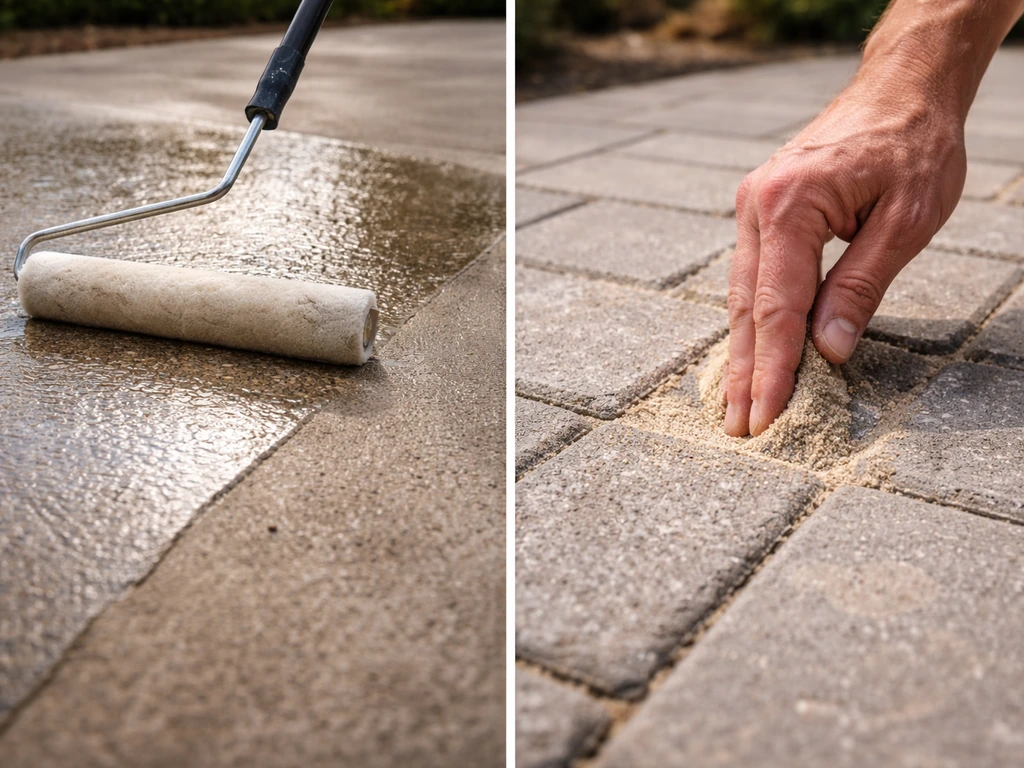
Patios are lower maintenance across the board. Concrete needs occasional resealing (every 2 to 5 years) and crack repair. Paver patios may need occasional re-sanding of joints and releveling of individual pavers that shift, but there's no staining, no annual sealing required, and no rot risk. Pressure-treated wood decks need cleaning and resealing or staining every 1 to 3 years, and even with diligent upkeep, boards eventually rot, warp, or splinter, particularly around fasteners and in areas where water pools. Composite decking cuts most of that work out, but it doesn't eliminate it entirely; mold and mildew can still form in shaded, damp conditions, and it needs periodic cleaning.
Durability
A well-built paver patio on a properly compacted base with solid edge restraints can last 25 to 50 years with minimal intervention, Unilock and other major paver manufacturers emphasize that the base is the real determinant of long-term performance, not the pavers themselves. Concrete slabs are similarly durable when poured correctly and sealed against moisture intrusion. A wood deck's lifespan depends heavily on the species and upkeep: pressure-treated pine might last 15 to 20 years with consistent maintenance; hardwoods like ipe can last 25 to 40 years but require more care. Quality composite decking products typically carry 25- to 30-year warranties, though the underlying frame is still wood and can fail faster in wet climates.
Comfort and usability
Decks offer a few real comfort advantages. Being elevated puts you above the lawn, which means better airflow (important on hot, humid days), and for many homeowners the view from a raised deck is simply more enjoyable. Furniture sits level and stable on a flat decking surface, and the wood or composite material stays cooler underfoot than dark concrete or certain pavers in direct sun.
The downside is that composite and wood decks can still get very hot in full sun, and open decks offer zero shade unless you add a pergola or awning. Patios can get brutally hot underfoot in summer if you use dark materials; light-colored concrete or natural limestone stays noticeably cooler. Patios also tend to be slip-resistant when textured properly, though smooth concrete when wet can be hazardous.
Side-by-side cons: where each one falls short
| Factor | Patio drawbacks | Deck drawbacks |
|---|---|---|
| Upfront cost | Low to moderate; rises sharply with premium pavers or complex patterns | Higher baseline cost; rises steeply with composite materials, multi-level design, or railings |
| Maintenance | Pavers can shift or sink if base fails; concrete cracks over time | Wood needs annual or biannual sealing/staining; rot risk at ledger, posts, and board ends |
| Site requirements | Needs flat or nearly flat ground; poor drainage = heaving, pooling, and failure | Needs solid footing/pier installation; attached decks require proper ledger flashing to prevent house rot |
| Permits | Often none required for at-grade patios; check local rules | Almost always requires a permit; inspections typically required at footing and framing stages |
| Heat/comfort | Dark surfaces get very hot; can be uncomfortable in full-sun yards in summer | Elevated position can feel exposed; railings required above 30 inches add cost and visual weight |
| Longevity risks | Poor base prep causes uneven surfaces and drainage issues within 3 to 5 years | Ledger rot, post rot, and joist failure are common failure points if not properly detailed and maintained |
| Resale/visual appeal | Can look plain or dated with basic concrete; premium materials change this | Adds visual character but aging wood decks are a red flag to buyers; can detract from value if in poor condition |
One underappreciated patio failure point: the base. If the subbase isn't properly excavated, compacted, and graded for drainage, you'll get shifting pavers, pooling water, and an uneven surface within a few years. This is especially true in areas with clay soil or freeze-thaw cycles. On the deck side, the single most common expensive failure is ledger rot, where the board connecting the deck frame to the house isn't properly flashed and sealed, allowing water to infiltrate behind the siding and into the rim joist. This is a structural issue that can cost thousands to fix and, in some cases, has caused deck collapses.
Which one is right for your situation
Most decisions come down to a handful of real-world conditions. Here's how to think through the most common scenarios:
| Your situation | Better choice | Key reason |
|---|---|---|
| Flat lot, good drainage | Patio | Simpler installation, lower cost, no structural framing needed |
| Sloped or uneven lot | Deck | Easier to build level on a slope than to excavate/fill and retain for a flat patio |
| Tight budget | Patio (concrete) | Poured concrete patio is the lowest-cost permanent outdoor surface |
| Hot, sunny climate | Patio (light stone or light concrete) | Light-colored masonry stays cooler underfoot; shade structures add the same to either |
| Wet or humid climate | Patio | No wood framing to rot; composite deck is a workable alternative if you want the elevation |
| Families with young kids or pets | Patio | No fall risk, no splinter risk, easier to clean, no railing gaps to worry about |
| Resale-focused renovation | Deck (composite) | Decks consistently show up in realtor surveys as a valued feature; composite avoids the aging-wood liability |
| Low maintenance priority | Patio (pavers or concrete) | No annual sealing, staining, or board replacement |
| Renters or short-term owners | Patio | Lower cost, no permit hassle, and easier to leave behind without depreciation concerns |
| Want a multi-level or elevated outdoor room | Deck | Elevation and framing flexibility are inherent to deck construction |
If safety is a concern, particularly for households with young children or elderly family members, patios have a clear edge since they eliminate fall risk entirely. A raised deck with guardrails is safe when properly built, but the guardrail requirement above 30 inches adds cost, and even code-compliant railing systems have gaps that require attention with small children or pets. The 4-inch sphere rule in the IRC (no opening large enough for a 4-inch sphere to pass through) exists specifically to address this.
Installation and DIY feasibility
Building a patio yourself
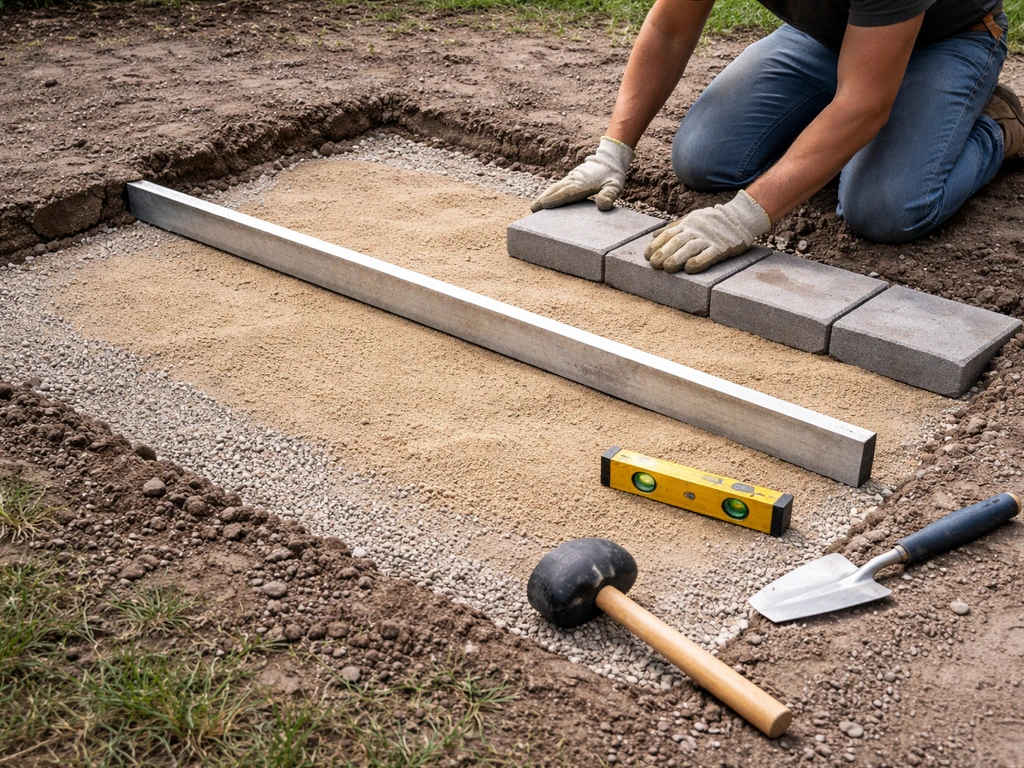
A paver patio is one of the most DIY-friendly outdoor projects a homeowner can tackle, assuming the space is accessible and reasonably flat. The process involves excavating 6 to 8 inches of soil, compacting a gravel base (typically 4 to 6 inches), adding a 1-inch bedding layer of coarse sand, laying pavers, and installing edge restraints to lock everything in place. A motivated DIYer working weekends can typically complete a 200- to 300-square-foot paver patio in one to two weekends.
The tools needed, plate compactor, hand tamper, level, and a wet saw or paver splitter, are readily rentable. A concrete slab is harder to DIY because the pour needs to happen fast and be finished correctly before the concrete sets; most homeowners hire that part out even if they do the prep work themselves.
Building a deck yourself
A deck is a more complex DIY project, but it's absolutely manageable for someone with basic carpentry skills and comfort using power tools. The typical sequence is: dig and pour footings (or install helical piers), set posts and beams, frame with joists, install decking boards, then add stairs and railings. An attached deck requires properly flashing and fastening the ledger board to the house, this is the step most DIYers get wrong, and it's the most consequential one.
A simple ground-level deck (24 inches or less above grade) is considerably easier and often doesn't require the same railing or permit requirements as an elevated deck. A realistic timeline for a 200-square-foot DIY deck is 3 to 5 weekends for an experienced DIYer; more if you're learning as you go. Budget for permit fees ($100 to $500 in most jurisdictions) and plan on at least one inspection visit.
If you're comparing DIY difficulty head-to-head: patio wins for approachability. In the patio vs decking decision, the best approach is to match the surface to your site conditions and your maintenance tolerance. The skills are more forgiving, mistakes are easier to fix (a crooked paver can be pulled and reset; a miscut joist is a bigger problem), and you're less likely to create a safety issue. That said, both projects are realistic for a capable DIYer who does proper research and takes the permit process seriously.
Materials and design options, and how they shift the math
Material choice is where the patio vs. deck comparison gets more nuanced, because the right materials can close the gap on some disadvantages significantly.
Patio materials
- Poured concrete: Lowest cost ($8 to $15/sq ft installed), highly durable, can be stamped or stained for aesthetics, but cracks over time and requires periodic sealing
- Concrete pavers: Mid-range cost ($15 to $25/sq ft), huge design flexibility, individual units can be replaced if damaged, but base quality is everything
- Natural stone (bluestone, flagstone, travertine): Premium look and feel ($25 to $50+/sq ft), excellent durability, but some stone types (like travertine) are porous and slippery when wet
- Gravel or decomposed granite: Very low cost, good drainage, easy DIY, but not suitable as a primary entertaining surface — furniture sinks in and it scatters
- Resin-bound or porcelain tile: Newer options with premium aesthetics and good durability, but installation requires expertise and costs are at the high end
Deck materials
- Pressure-treated pine: Most affordable ($15 to $25/sq ft installed for a simple deck), widely available, but requires consistent maintenance and has a limited aesthetic
- Cedar or redwood: Better natural rot resistance and appearance than PT pine ($20 to $35/sq ft), still needs sealing, but a more premium wood option
- Tropical hardwoods (ipe, teak, cumaru): Extremely durable (25+ year lifespan), beautiful grain, but expensive ($30 to $50/sq ft for materials alone), heavy, hard to cut, and requires specific fastener systems
- Composite decking (Trex, TimberTech, Fiberon, etc.): Mid- to high-range cost ($30 to $60/sq ft installed depending on brand and tier), low maintenance, good aesthetics, strong warranties — the most popular upgrade choice for homeowners who want low-maintenance decking
- PVC decking: Similar to composite but fully synthetic; excellent moisture resistance, slightly higher cost, can look less natural
Choosing composite decking largely eliminates the annual maintenance burden that makes wood decks a hassle, but it doesn't fix the structural framing underneath, the posts, beams, and joists are still typically wood and still need proper detailing to avoid rot. If low maintenance is your top priority and you want a deck, budget for composite decking plus properly treated or steel structural members. If low maintenance is your priority and you're open to a patio, concrete pavers or natural stone will serve you well with far less annual effort. The resin patio category is another option worth considering if you want a decorative finish without the maintenance of wood.
Home value, permits, and your next steps
What the numbers say about resale
Remodeling Magazine's Cost vs. Value reports consistently show wood deck additions recouping roughly 50 to 65 percent of their cost at resale, with composite decks slightly lower in cost recovery but higher in buyer appeal. Patios don't appear as a standalone category in the same way, but real estate agents generally agree that a clean, well-designed patio adds perceived value and broadens buyer appeal, especially for buyers who don't want the maintenance responsibility of a wood deck.
An aging, weathered, or structurally questionable deck can actually hurt a sale by triggering inspection flags and negotiation leverage for buyers. The safest resale play is a composite deck or a well-constructed paver patio in good condition, both read as 'move-in ready' to most buyers.
Permits: what to expect
Most attached decks and any deck elevated more than 30 inches above grade will require a building permit in virtually every U. S. jurisdiction. Some areas require permits for any deck regardless of height.
Poured concrete patios and paver patios at grade typically do not require permits in most jurisdictions, though setback rules still apply. Before you start, call or check your local building department's website to confirm, some cities (like New York City, with its detailed Buildings Department guidance for decks and porches) have very specific requirements.
Unpermitted decks are a real problem at resale: if a buyer's inspector flags it, you may be required to pull a retroactive permit, bring the structure up to current code, or even remove it.
Your practical next-steps checklist
- Measure your available space and note the slope: use a line level or a smartphone level app to determine if your ground is flat or drops more than 6 to 8 inches across the area. More than that and a deck becomes significantly more practical than a patio.
- Check drainage patterns: after a rainstorm, where does water pool or run? A patio built where water accumulates will fail prematurely. Mark problem areas.
- Observe sun and shade: track which parts of your yard are in direct sun during peak hours (10am to 3pm) — this matters for material choice and comfort planning.
- Call your local building department and ask two questions: (1) Do I need a permit for an at-grade patio in my zone? (2) What triggers a permit for a deck?
- Get at least two contractor quotes for each option you're considering — ask them to break out materials, labor, base prep, and permits separately so you can compare apples to apples.
- Ask contractors: How will you handle drainage/grading? What flashing system do you use on the ledger (for decks)? What base depth are you spec-ing for this soil type (for patios)?
- Run your decision through this quick rubric: Flat lot + tight budget + low maintenance priority = patio. Sloped lot + want elevation + okay with higher cost and some maintenance = deck. Somewhere in between = get quotes for both and compare total 10-year cost of ownership, not just installation price.
- If you're leaning toward a deck, research composite vs. wood decking costs in your area — the maintenance savings from composite often justify the higher upfront cost over a 10-year horizon.
- If you're leaning toward a patio, get a soil assessment or at minimum dig a test hole 8 inches deep to understand what your base material looks like — clay soil behaves very differently from sandy loam and will affect how the base is built.
The bottom line is this: a patio is the simpler, lower-cost, lower-maintenance choice for most flat, well-drained lots, and for a lot of homeowners, it's genuinely the smarter long-term investment once you factor in maintenance costs and permit headaches. For a quick sense of what to choose, compare low deck vs patio based on your elevation needs, budget, and maintenance expectations. A deck earns its higher price tag when your site conditions demand elevation, when you want that raised-outdoor-room feel, or when you're building with resale in mind and want to add a feature buyers actively look for. Run the real numbers for your specific space, check your permit requirements, and don't let aesthetics alone drive a decision that your site conditions and maintenance tolerance should be driving.
FAQ
Which option helps more with drainage and standing water, a patio or a deck?
Yes, but the “right” way is different for each. For a patio, prioritize slope and drainage during base prep (a slightly positive grade away from the house) and use proper edge restraints so the surface does not migrate. For a deck, focus on water management at the ledger and at post locations, use flashing and drip edges, and confirm that the structure allows airflow under it so the underside does not stay damp.
If I want a private, “outdoor living room” feel, should I choose a patio or a deck?
A deck can be built to feel like a room, but you should plan for wind, sun, and privacy early. Add a roof, pergola, or shade system if you want usable time in summer, and for privacy choose solid skirting or lattice backed by adequate airflow. On patios, privacy is often better handled with freestanding screens or planters because attaching privacy walls directly to a slab can create drainage and cracking issues if the base shifts.
Which is easier to modify later if my outdoor setup changes (grill, seating, built-ins)?
Consider a patio if you want easy adaptability. You can swap furniture layouts, add a grill, or even change the finish without touching a structural frame. You can do these on a deck too, but adding heavy built-ins (like a stone fireplace) often triggers structural and permitting considerations and may require extra framing or fire clearances.
How do space and access constraints affect patio vs deck decisions?
If you have a small yard or tight access for deliveries, a patio can be logistically simpler because most materials are flat and you can work in phases. A deck requires delivery of long framing members and careful staging, and footings or piers mean equipment access. Measure whether you can get a plate compactor and enough bags of base material onto the site before choosing.
Which option is safer in freeze-thaw and winter conditions?
For icy climates, neither choice is automatically “safer,” but texture matters more than material. Use trowel-finished or smooth concrete only if it stays non-slippery when wet, otherwise specify broom-finished or stamped textures, and for pavers keep joint sand in place to reduce rocking. For decks, choose slip-resistant deck boards if available, and clear snow quickly, because the elevated gap can hide meltwater that refreezes on the ground below.
I have pets, which is usually better for durability and odor management, a patio or a deck?
If you expect pets, patios are often easier to maintain clean without worrying about rot around claw scrapes and water pooling. Decks can be fine, but check that you do not trap water in low spots around fasteners, and keep vegetation trimmed away so shaded areas do not become consistently damp. Also consider how you will manage urine exposure, because concentrated pet urine can discolor and degrade finishes.
My yard slopes, can a raised patio mimic a deck, and what should I watch for?
A deck typically offers easier sightline viewing from an elevated platform, but a patio can also be a better “view” option if you regrade or raise it slightly with a proper retaining system. If the reason you want elevation is to clear a slope or to connect to a back door, a raised patio can match the appearance, but you still need to treat it like a drainage project, not just a finish upgrade.
What costs are most often underestimated for decks and patios, and why do they show up later?
Look beyond the deck surface cost and budget for the “substructure” reality. Ledger flashing problems and wet climates can shorten component life even if the deck surface looks fine. For patios, budget for base quality and edge restraints, because the finish can look great while base drainage or compaction errors show up as settling within a few seasons.
Which option is more likely to develop visible problems first after installation?
Yes, and it can happen with both. A concrete patio can crack from shrinkage, freeze-thaw, or settlement, but good installation limits the impact, resealing and patching are usually localized. A deck can also develop squeaks, loose boards, or sagging framing if the structure is not square and properly fastened. The practical takeaway, do your inspection early, not just after completion.
What should I verify during permits and inspections for each option to avoid rework?
Plan for a realistic inspection workflow. For a deck, make sure the design includes correct flashing details and that the inspection covers ledger attachment, footings or piers, and railing height and baluster spacing when required. For a patio, inspections are less universal, but you should confirm setbacks, any required base depth or drainage considerations, and ensure the final grade matches drainage away from structures.
Next Article
Low Deck vs Patio: Costs, Maintenance, and Best Choice
Low deck vs patio guide: costs, maintenance, durability, DIY vs pro, and a checklist to choose the best fit.