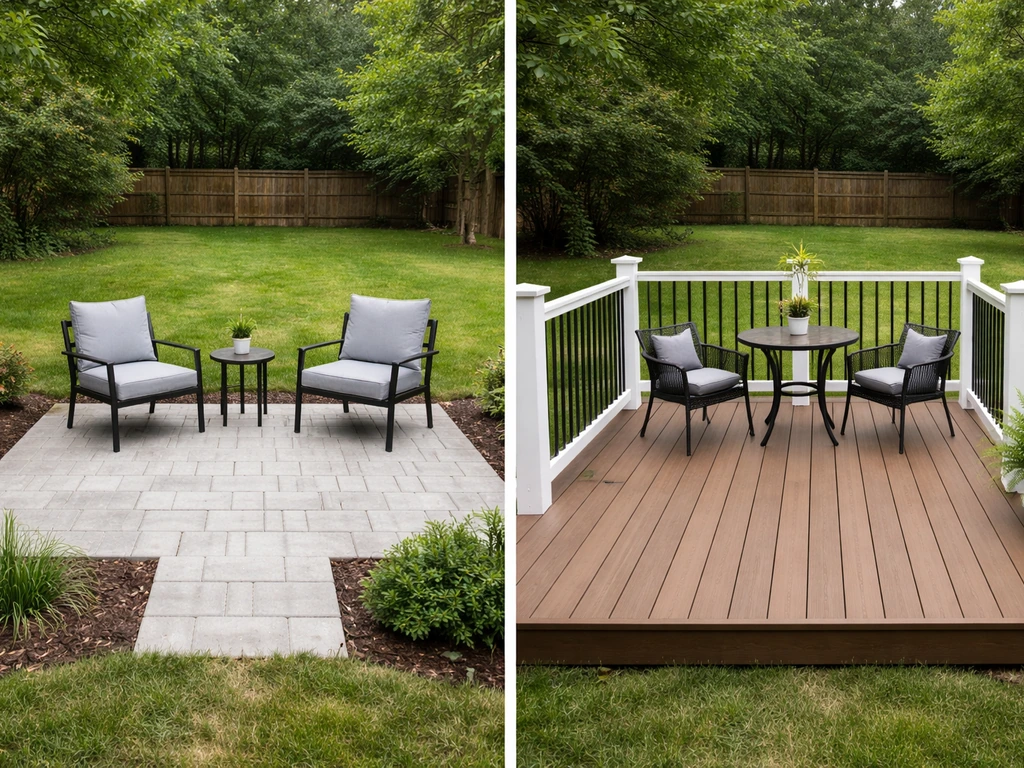
If your yard slopes away from the house, a deck almost always makes more practical sense. If the ground is relatively flat and you want a low-maintenance surface that blends into the landscape, a raised patio is often the better call. That's the 80% answer. The remaining 20% depends on your specific slope, soil, budget, how much upkeep you're willing to do, and what your local building department requires. This guide walks through all of it so you can make a confident decision today.
Raised Patio vs Deck: Which One Fits Your Home Better?

Miles Hart
14 May 2026
What counts as a raised patio vs a deck
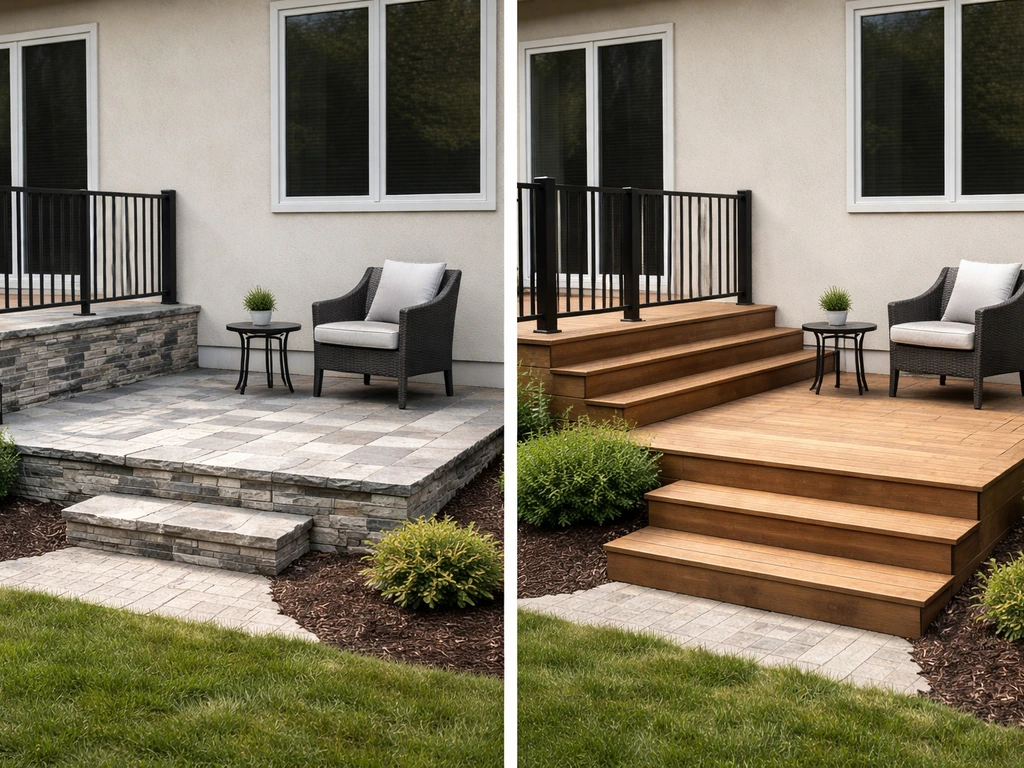
A raised patio is a hardscape surface, typically concrete, pavers, or natural stone, that sits above natural grade. It's built up using fill material, a retaining wall, or a combination of both. The surface itself rests on the ground (or compacted fill), not on structural framing elevated above it. Common heights range from a few inches up to about 2 to 3 feet above the surrounding yard.
A deck is a framed, elevated platform that's structurally supported by posts, beams, and joists. The walking surface sits above open air, not fill dirt. Decks are typically built from wood (pressure-treated lumber, cedar, redwood) or composite decking boards. They attach to the house via a ledger board in most cases, though freestanding decks exist. When people talk about a 'raised deck,' they usually mean a deck elevated significantly above grade, sometimes 4, 6, or even 10-plus feet off the ground.
The key distinction is structural: a raised patio is built from the ground up using mass and fill; a deck is built from a frame down using engineered support. That difference drives almost every cost, maintenance, and permit consideration that follows.
How they're actually built
Raised patio construction
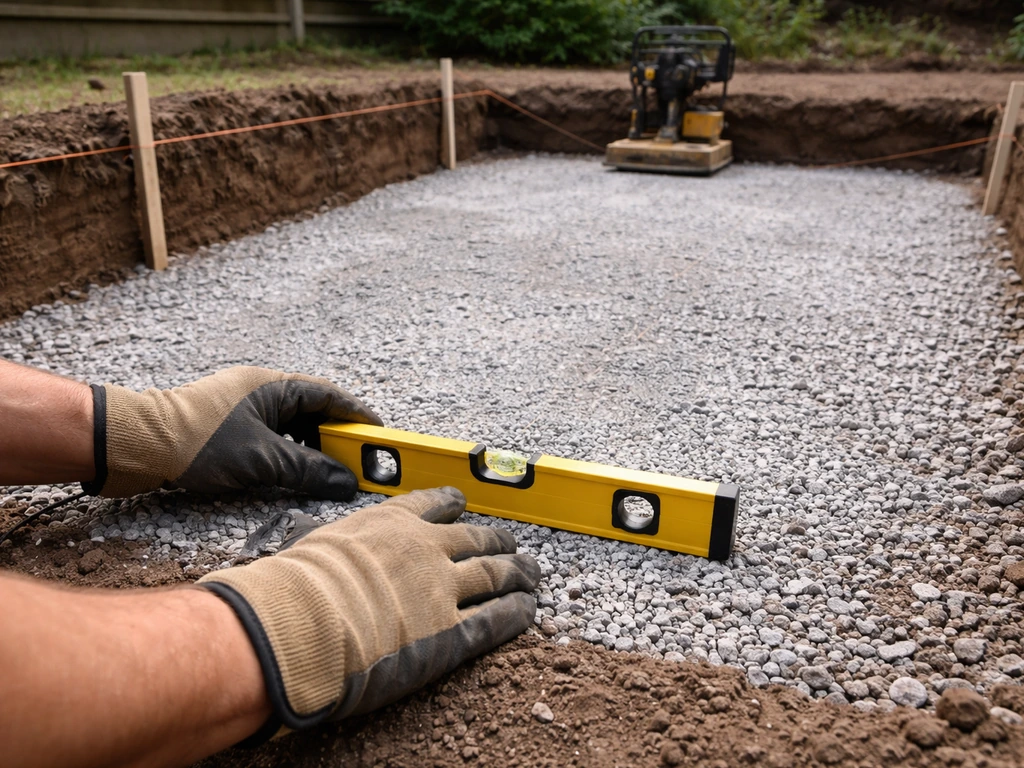
A raised patio starts with grading and excavation. The area is typically leveled or shaped, then compacted gravel base (usually 4 to 6 inches) is laid down before the surface material goes on top. If the patio needs to be raised significantly, a retaining wall made of concrete block, natural stone, or segmental retaining wall units holds back the fill on the downhill sides. The surface layer, whether poured concrete, concrete pavers, or flagstone, gets installed on top. Drainage is built into the slope of the base and the surface pitch, typically 1/8 to 1/4 inch per foot away from the house.
Deck construction
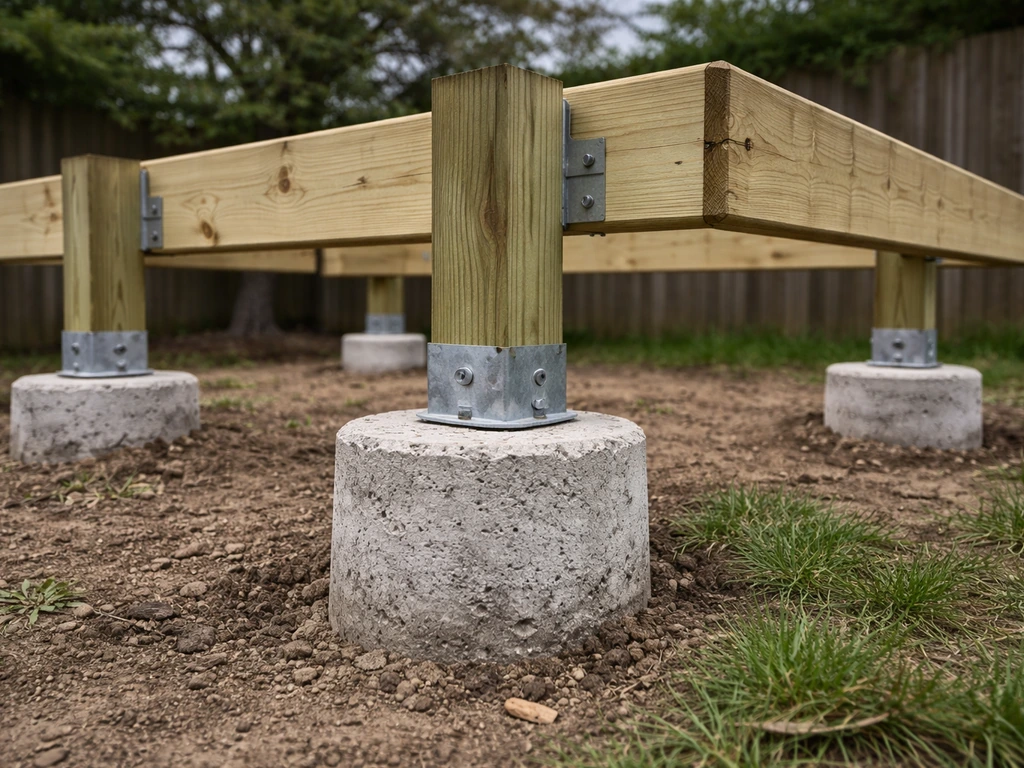
A deck starts with footings, typically concrete piers poured below the frost line, which varies by region but is commonly 12 to 48 inches deep. Posts sit on those footings, beams span between posts, and joists run perpendicular to the beams. Decking boards are fastened on top of the joists. An attached deck gets a ledger board bolted directly to the house rim joist or band board with lag screws or through-bolts and proper flashing to prevent water intrusion. The height of the deck above grade is controlled by the post length, which is also why decks work so naturally on sloped lots: you just cut the posts to the right height.
Surface materials side by side
| Material | Used On | Typical Life Span | Maintenance Level | Relative Cost |
|---|---|---|---|---|
| Concrete pavers | Raised patio | 25–50 years | Low | Mid |
| Poured concrete | Raised patio | 20–40 years | Low to medium | Low to mid |
| Natural flagstone | Raised patio | 30–50+ years | Low | High |
| Pressure-treated lumber | Deck | 15–25 years | Medium to high | Low to mid |
| Cedar / Redwood | Deck | 20–30 years | Medium | Mid to high |
| Composite decking | Deck | 25–30+ years | Low | High upfront |
When a raised patio wins vs when a deck wins
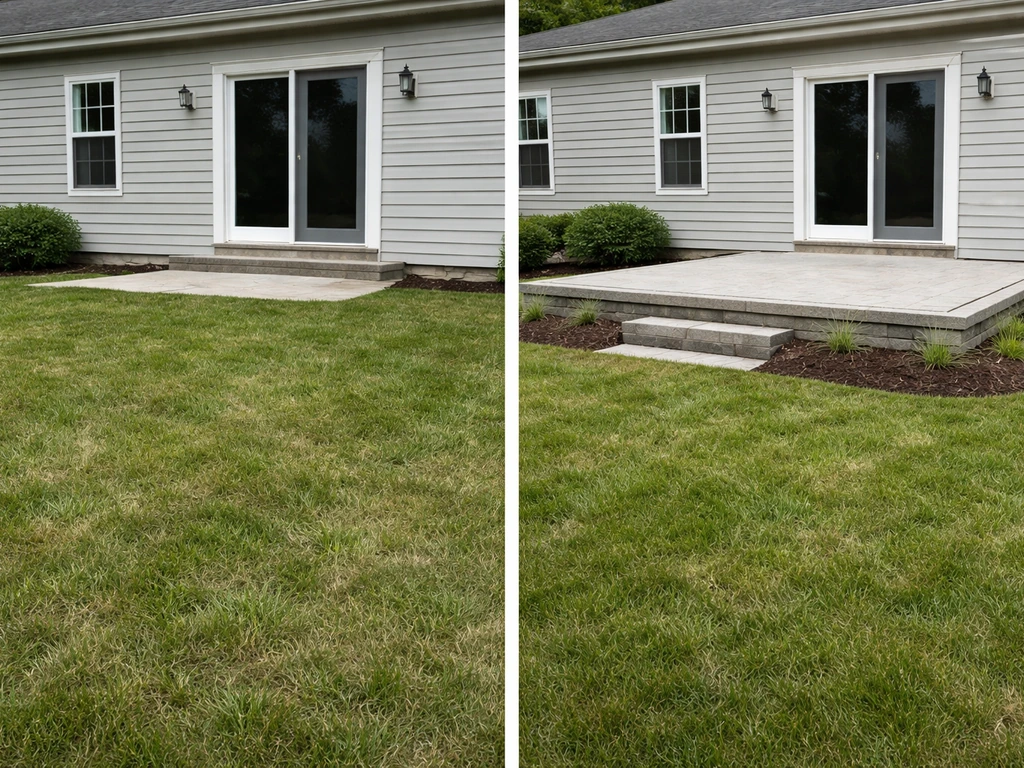
Go with a raised patio when...
- Your yard is relatively flat or only gently sloped (less than 12 to 18 inches of grade change across the patio footprint).
- You want the lowest long-term maintenance option and don't want to seal, stain, or replace boards every few years.
- You're planning a heavy feature like a built-in grill station, outdoor kitchen, fire pit, or large dining table with an umbrella base, since pavers and concrete handle weight and heat far better than wood decking.
- You want the surface to feel like an extension of the landscape rather than an elevated platform.
- Budget is tight and you're open to DIY, since laying pavers is a realistic weekend project for a reasonably handy homeowner.
- You need a surface for a hot tub: poured concrete or pavers can easily handle 80 to 100+ pounds per square foot, no structural engineering required.
Go with a deck when...
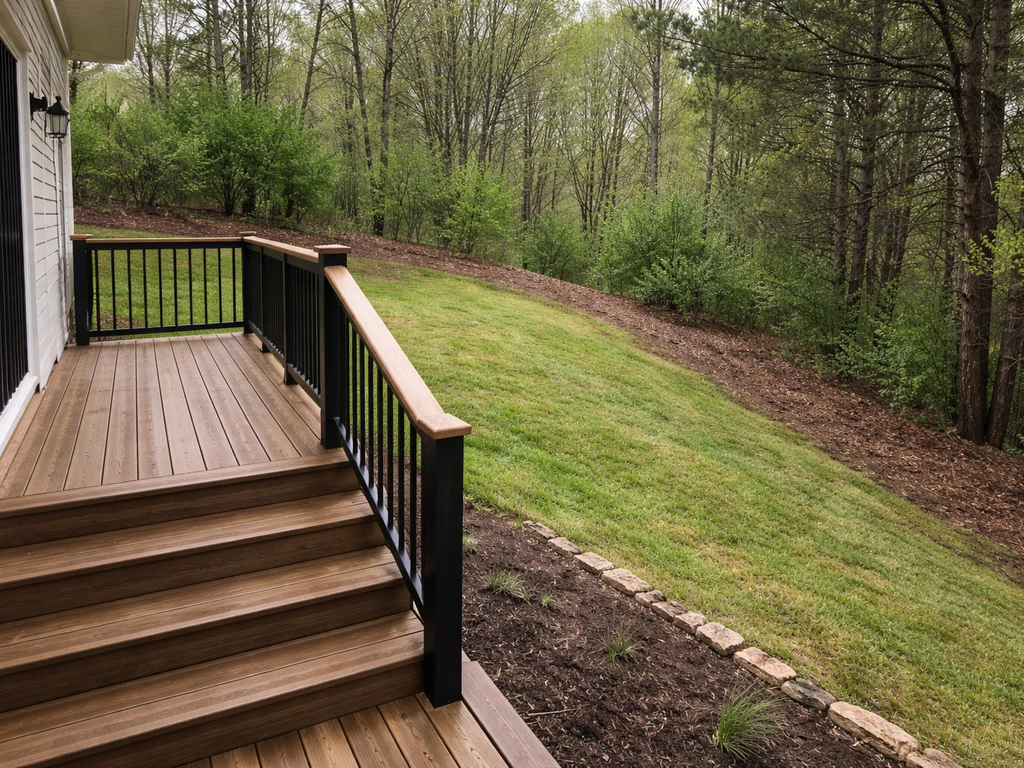
- Your yard drops away from the house significantly (more than 18 to 24 inches across the structure's footprint). Filling that slope with compacted material and retaining walls gets expensive and complex fast.
- You need the outdoor space to be at or close to the interior floor level for easy step-free access from the house.
- Drainage under the structure is a concern: decks let water pass through the boards and drain naturally, while a raised patio requires careful grading and drainage design.
- You're dealing with expansive or unstable soil (clay-heavy yards, poorly draining ground) where large fills can settle or shift over time.
- You want the ability to run utilities (outdoor lighting conduit, gas line for a grill, hot tub wiring) below the surface discreetly.
- Aesthetically, you prefer the warm look of wood or composite boards over hard masonry.
Cost comparison: what to actually expect
Costs vary a lot by region, materials, and site conditions, but here are realistic installed ranges as of 2025 to 2026 for a typical 300 to 400 square foot outdoor space:
| Option | Low End (installed) | Mid Range (installed) | High End (installed) | Key Cost Drivers |
|---|---|---|---|---|
| Poured concrete raised patio | $6/sq ft | $10–14/sq ft | $18+/sq ft | Retaining wall complexity, reinforcement, finish |
| Paver raised patio | $12/sq ft | $18–25/sq ft | $35+/sq ft | Paver material, base depth, retaining walls, edge restraints |
| Pressure-treated wood deck | $15/sq ft | $20–30/sq ft | $40+/sq ft | Height above grade, stair length, railing type |
| Composite deck (mid-grade) | $25/sq ft | $35–50/sq ft | $70+/sq ft | Board brand/quality, framing complexity, fascia, hidden fasteners |
| Cedar / Redwood deck | $20/sq ft | $28–40/sq ft | $55+/sq ft | Wood grade, stair and railing scope |
A few things move the number significantly in either direction. If you are considering resin patio options, it's worth comparing how resin surfaces handle heat, drainage, and maintenance versus other common patio materials resin patio pros and cons. For raised patios, the biggest variable is the retaining wall. A 2-foot-tall segmental block wall around a patio edge might add $2,000 to $5,000 or more depending on length. Stairs add $500 to $1,500+ each. For decks, height above grade is the dominant cost driver because taller posts need larger footings, more structural material, and longer stair runs. A deck that sits 8 feet above grade will cost noticeably more per square foot than one sitting 18 inches up. Railings and guards also add up: a code-compliant composite or aluminum railing system runs $150 to $300+ per linear foot installed.
Permits add cost too, typically $200 to $800 depending on the jurisdiction, but they're non-optional once you're over the thresholds covered below. Factor that in from the start.
Maintenance and durability over time
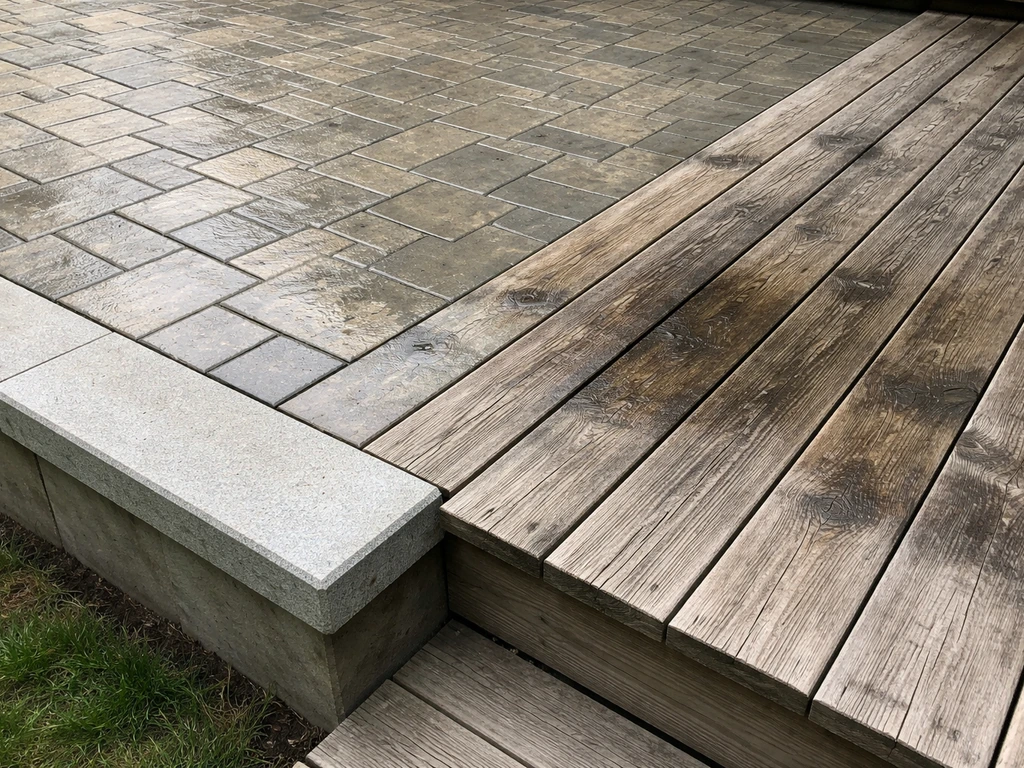
Raised patios made from pavers or concrete are the low-maintenance winner in this comparison. Concrete needs occasional pressure washing and potentially a sealer every few years to resist staining. Pavers can shift over time if the base wasn't properly compacted, but individual units can be releveled without replacing the whole surface. Neither rots, warps, or splinters.
Wood decks require more active maintenance. Pressure-treated lumber needs cleaning and a water-repellent sealant or semi-transparent stain every 1 to 3 years to prevent checking, graying, and surface deterioration. Cedar and redwood are more naturally resistant but still benefit from periodic sealing. The bigger risks with wood are rot at the ledger connection and at the post base, which is why proper flashing and post-base hardware matter so much during installation. Skipping those steps is one of the most common (and expensive) mistakes.
Composite decking largely solves the rot and staining issue but isn't completely maintenance-free. It needs periodic cleaning with a deck wash to prevent mold and mildew in humid climates, and lower-quality composite products can fade, scratch, or stain from grill grease. The trade-off: high upfront cost, much lower ongoing labor.
If you're comparing long-term total cost of ownership, a concrete paver patio often wins over a wood deck over a 20-year horizon. But composite decking on a well-built frame comes very close. The right material comparison is really between patio surfaces and composite boards, not patio vs pressure-treated wood.
Permits, codes, drainage, and safety rules
The 30-inch rule is the most important threshold to know. Under the International Residential Code (IRC), which most U.S. jurisdictions have adopted in some form, any walking surface more than 30 inches above adjacent grade requires a guard, which is the code term for a guardrail. Under the International Residential Code (IRC), decks or patios with an open-side walking surface more than 30 inches above adjacent grade require guard (guardrail) protection in many jurisdictions open-side walking surface more than 30 inches above adjacent grade requires a guard. That guard must be at least 36 inches tall, and the openings in the guard must be small enough that a 4-inch-diameter sphere cannot pass through. That applies to both decks and raised patios equally.
Whether you need a building permit is a related but separate question. In many jurisdictions, a deck or patio under 30 inches above grade and not within 3 feet of a property line doesn't require a permit. Portland, Oregon's residential permitting materials, for example, explicitly state that decks with no part of the walking surface more than 30 inches above adjacent grade and located at least 3 feet from the property line are exempt. Once you exceed that 30-inch height, you're typically in permit territory regardless of the structure type.
Drainage is a critical design consideration for raised patios specifically. A raised patio that isn't properly sloped away from the foundation can direct water toward the house, creating basement moisture issues or foundation problems over time. The standard is a minimum slope of 1/8 inch per foot away from the structure. Also check whether filling and raising the grade near your foundation could block existing drainage paths or violate local grading ordinances. Your local building department can tell you if a grading permit is required.
For decks, the permit process typically involves submitting a plan showing footing locations, post sizes, beam spans, joist spacing, and railing details. Inspections usually cover the footing pour, framing, and final completion. It's not complicated, but it's real paperwork. Skipping permits creates problems when you sell the house: unpermitted decks often show up in buyer inspections and can require removal or retroactive permitting to close a sale.
DIY or hire a pro, and what to ask if you hire
DIY feasibility
A ground-level or slightly raised paver patio is one of the most accessible DIY outdoor projects for a handy homeowner. The skills required are physical (digging, compacting, leveling) more than technical. Renting a plate compactor, buying the right base gravel depth, and taking your time on the layout accounts for 90% of a successful result. Expect to spend 2 to 4 weekends on a 300 square foot patio.
A low deck (under 18 to 24 inches above grade, no complex stairs) is also a realistic DIY project for someone comfortable with basic carpentry and willing to read the IRC span tables for their lumber size and species. If you're deciding between a low deck and a patio, the slope, maintenance expectations, and local permit rules will usually make the choice obvious. The critical steps are getting footings below the frost line, using proper ledger flashing, and making sure everything is square before you start decking.
Hire a pro when: the deck is more than 30 inches above grade (you're now in permit and engineering territory), there's a significant slope requiring retaining walls, you want a composite railing system with complex corners, or the ledger attachment involves masonry or engineered lumber that requires specific fastening specs.
Questions to ask contractors before signing
- Will you pull the permit, and is that included in the quote? (It should be.)
- What footing depth are you using, and how does that match the frost line in this area?
- For decks: what's the ledger attachment method and what flashing system do you use?
- For raised patios: how deep is the gravel base, and what's the drainage plan at the perimeter?
- What's the warranty on labor vs materials, and are you using manufacturer-approved installation methods for composite products (which affects their warranty)?
- Can I see two or three comparable projects you've completed locally in the last 12 months?
- What happens if we hit unexpected site conditions (rock, high water table, buried debris)? Is there a change order process?
What to measure and assess on your property first
Before you call anyone, spend 30 minutes with a tape measure and a level. Measure the grade change across the area where you want the structure. A simple way: drive a stake at the house and one at the far edge, tie a string between them at the same height, then measure down from the string to the ground at several points. That tells you your actual slope. If the drop is under 12 inches across the full depth, a raised patio is likely viable. If it's 24 inches or more, you're probably building a deck. Also note where your downspouts discharge, whether there's any standing water after rain, and how close the area is to your property line.
If you're still weighing the broader patio vs deck question beyond the raised/elevated scenario, the considerations around materials, cost per square foot, and long-term value overlap with decisions covered in a general patio vs deck comparison. If you're still weighing the broader patio vs deck question, this overview can help you compare materials, costs, and long-term value. And if budget is the primary driver, looking at the raw cost differences between patio surfaces and decking materials in more detail can help you set a realistic number before you start getting quotes. Because pricing changes a lot by height, materials, and site conditions, it helps to compare patio vs decking cost before you request quotes.
FAQ
Does the 30-inch guard rule apply to raised patios as well as decks?
If the top surface will sit more than 30 inches above adjacent grade, plan on adding a guard on both decks and raised patios, then budget for the railings and posts to support it. Even if your structure looks like a “patio,” height triggers the same safety expectations.
When would a raised patio require more than just a simple hardscape permit?
Yes, when a raised patio includes a retaining wall or substantial fill, you may need a grading permit or engineered wall design. Many jurisdictions also treat long retaining wall segments, taller walls, or walls near property lines differently, so confirm with your building department before finalizing the retaining-wall height.
What exactly counts as “adjacent grade” for height and permit decisions?
The “adjacent grade” measurement matters. Measure from the finished ground level right next to the structure, not from original soil before excavation or from the low end of a sloped yard, because that can move you above or below the 30-inch threshold.
What are the biggest mistakes at the deck ledger connection?
To prevent water intrusion into the house, decks need correct flashing and a clear plan for how water will drain away from the ledger area. A common mistake is using improper fasteners or skipping flashing, which can lead to rot around the ledger, even if the rest of the frame is built correctly.
What drainage problems should I watch for with a raised patio?
A raised patio can fail like a deck if drainage is wrong. If water can’t move away from the house, you can get freeze-thaw heaving of pavers, settlement of the base, and moisture problems near foundations, so verify the slope and outlet plan before installing the surface layer.
Can I fix paver shifting later without replacing everything?
For paver patios, a properly compacted, thick gravel base is what stops shifting. If you see uneven settling after rains, you can often correct it by lifting and resetting individual pavers, but only if the base was built well enough to re-level without major reconstruction.
How do I extend the lifespan of a wood deck if I want low long-term hassle?
Deck maintenance depends heavily on the substructure staying dry. If you choose wood, focus on keeping water from pooling near the post bases and ledger, using correct flashing and ventilation space, because most long-term rot starts at those moisture-prone interfaces.
Is composite decking truly maintenance-free?
Composite boards still need cleaning to prevent mold and mildew buildup, especially in humid, shaded areas. Also, check product ratings for grill heat exposure, because some composites scratch or stain from grease without the right surface care.
Which option is usually easier to clean and access over time?
If the deck is elevated significantly, it can trap water on the underside and increase moisture loading on the ground and siding area, so consider whether you have clearance for proper cleaning and whether neighbors or landscaping will be affected. Patios, by contrast, can allow easier access for seasonal cleaning because the surface is closer to grade.
Am I more likely to succeed with DIY on a raised patio or a low deck?
DIY is more realistic for a low raised patio with limited retaining-wall height and straightforward drainage, because the work is mostly digging, compacting, and layout. A deck gets harder quickly if you need taller posts, complex stairs, or nonstandard footing conditions, especially if you are near or beyond frost-line depth requirements.
At what height do stairs and railing costs start to change the comparison?
When you go from 18 to 24 inches up, stairs and railing often become more than an afterthought. Those additions increase both cost and complexity, so get a rough stair count and guard/rail length early, then include them in your quote comparison.
How can I avoid problems selling the house with a deck or raised patio?
If you plan to sell soon, insist on documentation. Unpermitted work, especially a deck with new footings or a patio with significant fill or retaining walls, can show up in inspections and force removal or expensive retroactive approval.
Do property line setbacks affect decks and raised patios differently?
If you are building close to a property line, setback rules and fence or guard requirements can affect both decks and raised patios, even when height is under 30 inches. Measure your structure footprint early and check whether guard requirements or easements change where you can place the elevated surface.
What should I prioritize if my main goal is long-term durability in a wet climate?
If you are choosing between “raised patio vs deck” mainly for durability, concrete or properly built paver surfaces usually handle rot-free conditions better than wood, but the trade-off is that you must plan for long-term base drainage. If you expect lots of shade and wet seasons, verify mold and mildew behavior for any composite option you consider, and design for water shedding in both cases.
Next Article
Patio vs Decking Cost: Real Price Breakdown and Guide
Compare patio vs decking cost with a real breakdown of materials, base, permits, labor, and maintenance to budget right.