For most homeowners in 2026, a patio is the easier, cheaper, and lower-maintenance choice, while a deck makes more sense when your yard slopes, you want to stay level with your back door, or you need to get up above a problem area. Neither is universally better. The right answer depends on your slope, your budget, your soil, and how much upkeep you're willing to do every few years.
Patio vs Decking: Which Is Better for Your Home?

Miles Hart
29 Apr 2026
What you actually get with each option
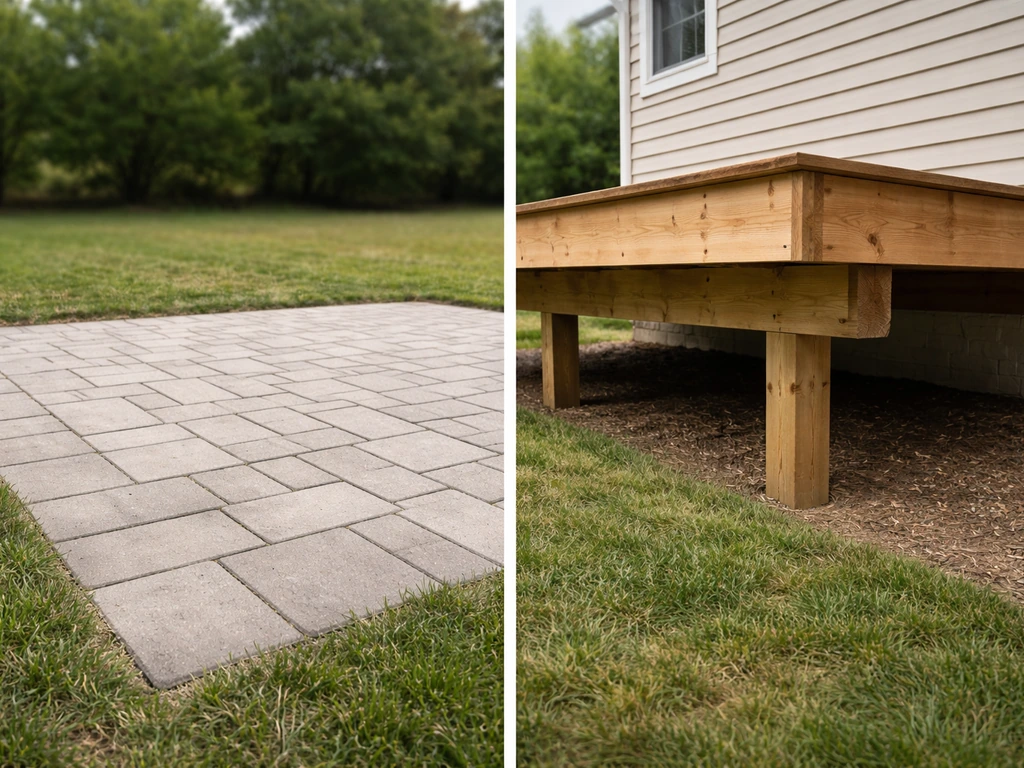
A patio is a ground-level hardscape surface built directly on or into the ground. The most common materials are concrete slabs, clay or concrete pavers, and natural stone like flagstone or bluestone. Patios sit on a compacted gravel base and don't need posts, beams, or structural framing. That simplicity is a big part of why they cost less and last longer with fewer headaches.
A deck is a raised or at-grade platform built from structural framing (posts, beams, joists) topped with decking boards. Traditional decks use pressure-treated lumber, but composite decking from brands like Trex and TimberTech now makes up a huge share of new builds. Composite boards need a solid substructure with specific joist spacing, and if the deck is more than 30 inches off the ground, you're legally required to add guardrails at least 36 inches high under IRC guidelines. That structural complexity is what drives up cost and the need for permits.
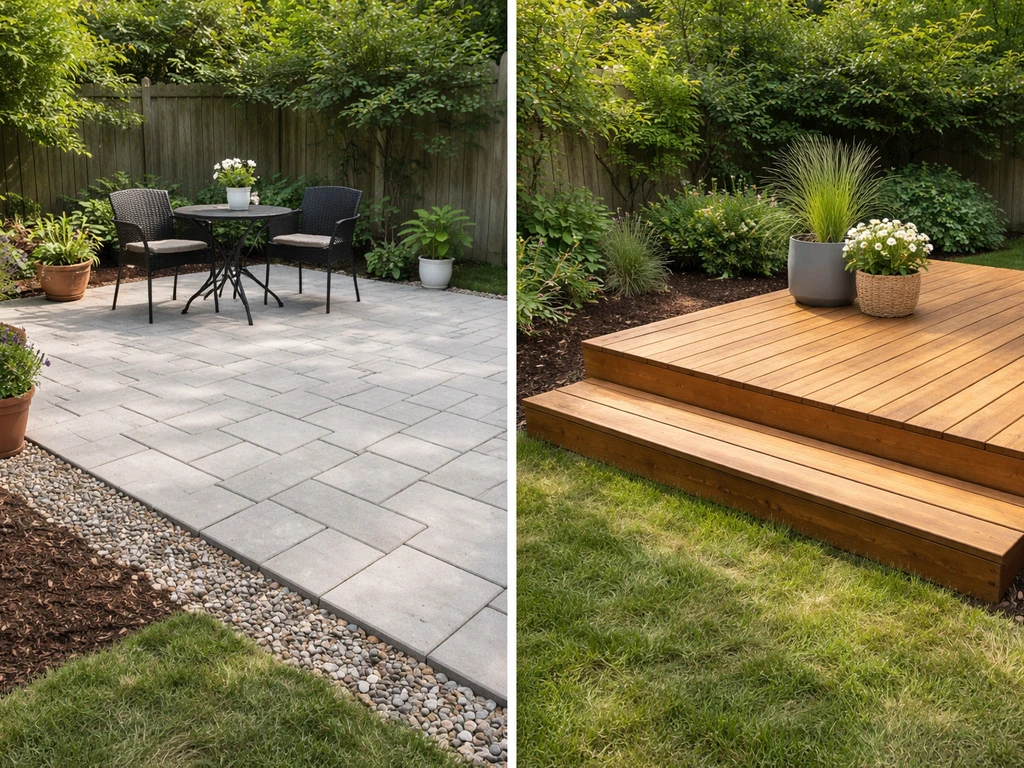
The feel underfoot is genuinely different. A paver or stone patio feels solid and cool. A wood or composite deck has a little give to it, and in full sun composite boards can get noticeably warm. Both can be comfortable outdoor living spaces, but they behave differently across seasons and climates.
Deck vs patio: costs to build and maintain
Patios are almost always cheaper to install. A basic concrete patio runs roughly $6–$15 per square foot installed when you factor in labor (typically $3–$8/sq ft) and materials. Paver patios land somewhere between $4–$20 per square foot depending on the paver type, pattern complexity, and your local market. For a 300 sq ft patio, you're realistically looking at $2,000–$6,000 for concrete or $3,000–$8,000 for quality pavers. If you need to demolish an existing surface first, budget an extra $2–$6 per square foot for that.
Decks cost more to build. Pressure-treated wood decks, the most budget-friendly option, typically run $15–$25 per square foot installed. A full deck build with composite materials or added features like railings, stairs, and lighting can push the average to $30–$60 per square foot, with many homeowners spending $8,000–$20,000 for a standard-sized deck. Factor in permit fees, which are common for decks and often not required for ground-level patios.
Maintenance costs over time close the gap somewhat. A pressure-treated wood deck needs staining or sealing on a regular interval (roughly every 2–3 years) and annual inspections for rot, loose fasteners, and structural integrity. Composite decks skip the staining requirement but need cleaning twice a year to prevent mold and mildew buildup, and the pressure-treated subframe still needs the same inspection attention as a wood deck. A paver patio needs joint sand topped up periodically, sealing every 3–5 years if you want to protect the surface, and occasional releveling if individual pavers shift. Concrete is lower maintenance still but can crack over time, especially in freeze-thaw climates.
| Factor | Patio (Concrete/Pavers) | Deck (PT Wood) | Deck (Composite) |
|---|---|---|---|
| Installed cost per sq ft | $4–$20 | $15–$25 | $30–$60 |
| Typical 300 sq ft project | $2,000–$6,000 | $4,500–$7,500 | $9,000–$18,000 |
| Permit usually required | Often not | Yes | Yes |
| Staining/sealing needed | Every 3–5 yrs (optional) | Every 2–3 yrs | No (cleaning only) |
| Expected lifespan | 25–50+ years | 10–20 years | 25–30+ years |
| Annual maintenance burden | Low | Moderate–High | Low–Moderate |
Durability, weather performance, and maintenance
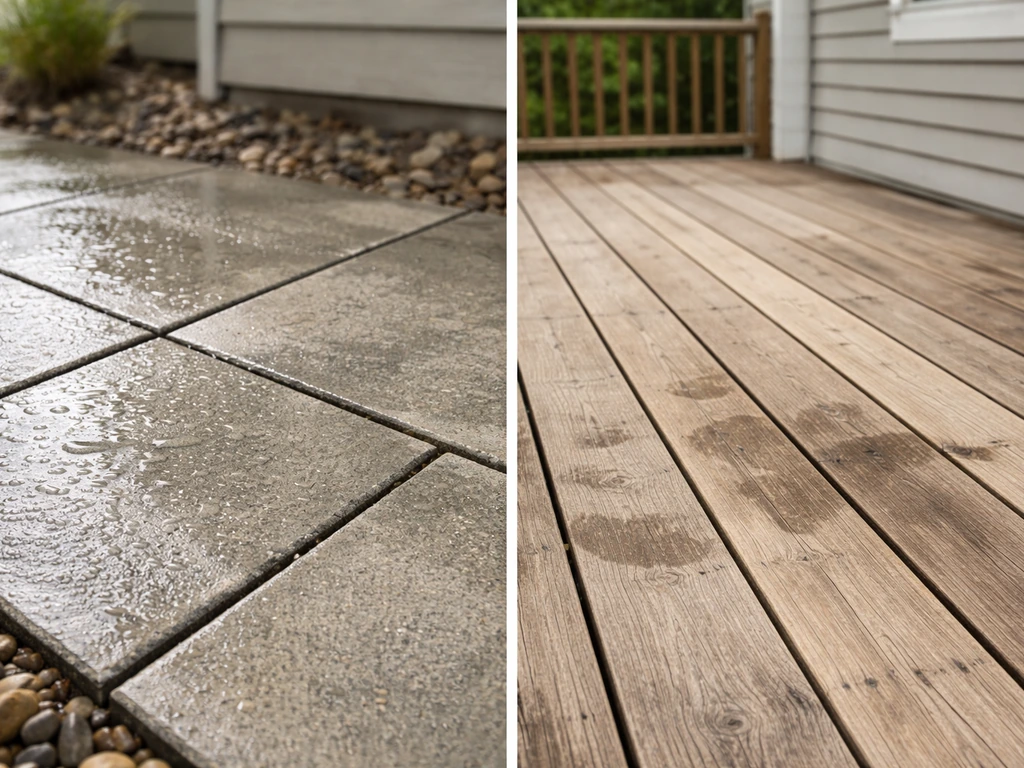
Patios generally win on raw durability. Concrete and pavers are engineered for exterior exposure, and quality concrete pavers are tested to withstand freeze-thaw cycling (Unilock, for example, tests to 49 freeze-thaw cycles as part of their product certification). A well-installed paver patio on a proper base can last decades with minimal structural intervention. The main ongoing tasks are keeping joint sand full to suppress weeds, occasionally re-leveling sunken pavers, and sealing if you want to preserve color and reduce staining.
Wood decks are the most maintenance-demanding option. Without regular staining and sealing, pressure-treated wood weathers, grays, and eventually rots or splinters, which is why the typical lifespan is 10–20 years. Composite decks perform much better on that front. Newer capped composite boards from Trex and TimberTech resist fading, staining, and mold far better than first-generation products, and some lines carry warranties up to 50 years. But even composite decks need their substructure inspected annually, and the subframe is usually still pressure-treated wood, so the structural components have the same vulnerabilities as a wood deck.
Climate matters a lot here. In wet or heavily shaded yards, composite decks can still develop surface mold if they're not cleaned regularly. In harsh freeze-thaw regions, a poorly built concrete patio can crack and heave just like a poorly built deck footing can shift. Both options need to be installed correctly for your climate to perform well long-term.
Site fit: slope, drainage, footing, and layout
This is often the factor that makes the decision for you. If your yard is flat and well-drained, a patio is straightforward. If your yard slopes more than a few inches over the footprint you're working with, a patio gets expensive fast because you need grading, fill, or a retaining wall to create a level surface. A deck handles slope naturally because the framing just gets taller as the ground drops away.
Decks come with footing requirements that patios don't. In cold climates, deck footings must extend below the frost line to prevent heaving, and that depth can be substantial. In some northern jurisdictions, the code requirement is at least 42 inches below finished grade. Digging and pouring footings to that depth adds labor and cost, and it's a step that requires some skill to do correctly. A patio sits on a compacted gravel base that's much shallower, though it can still shift if the base isn't prepared properly.
Drainage is another practical consideration. Patios need to be graded with a slight slope (typically about 1/8 to 1/4 inch per foot) away from the house to prevent water pooling. If your yard has poor drainage, a patio can become a wet spot after heavy rain. Decks drain naturally through the board gaps, which is a real advantage in wet climates, though that drainage lands right under the deck and can create a muddy or moldy area below if it's not addressed.
Sun, shade, and access from the house also shape the decision. If your back door sits at ground level and the yard is flat, both options work. If your back door is elevated, a deck is the natural match to maintain a seamless transition from inside to outside. If you're planning on adding a pergola, shade structure, or eventual enclosure, both patios and decks can accommodate covers, but decks have some structural advantages for attaching overhead framing.
Home value, comfort, and everyday usability
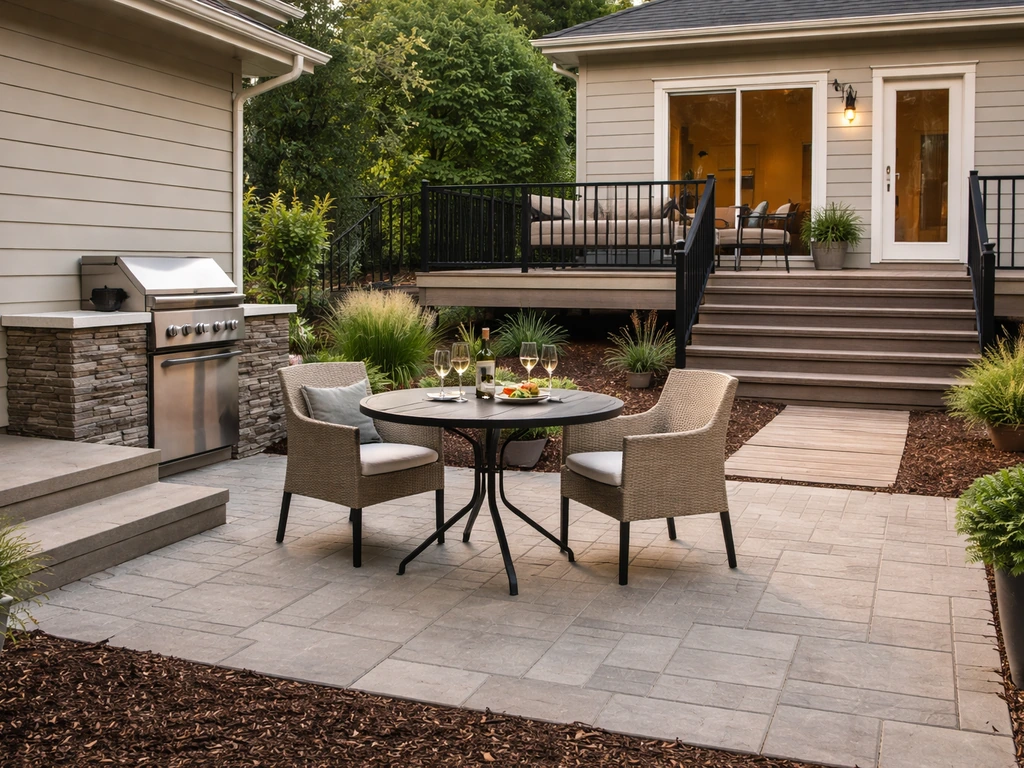
Both patios and decks add value to a home, but the numbers vary. Wood decks have historically shown strong ROI, with some analyses citing figures around 95% cost recovery, though more typical estimates from recent reports land in the 60–80% range depending on material, region, and how the market is reading outdoor living at the time of sale. Paver patios tend to show similar or slightly lower recovery percentages, but they hold up better as a long-term asset since they don't depreciate as fast as wood. In neighborhoods where outdoor living is highly valued, a well-designed deck or patio can be a genuine selling point.
For day-to-day usability, patios have a few practical edges. They're easier to place furniture on because the surface is completely flat and rigid. They don't flex, creak, or have gaps that catch chair legs or small toys. They also tend to stay cooler underfoot in summer than a dark composite deck surface baking in the sun. Decks have their own comfort advantages: they feel more intimate and elevated, they can create usable space above a sloped yard, and the natural wood aesthetic is hard to replicate with any patio material.
Privacy is worth thinking about too. A ground-level patio is more visible to neighbors unless you add screening or plantings. A raised deck, especially one that sits higher than fence lines, can feel exposed. Neither has an automatic privacy advantage, but the design solutions are different for each.
DIY vs hiring a pro: what's realistic for each
Patios are more accessible for DIY. A basic paver patio on a flat, well-drained yard is one of the more achievable weekend projects for a motivated homeowner. The main requirements are renting a plate compactor, buying the right base material (usually compacted gravel and bedding sand), and working carefully to keep everything level. It takes time and some physical labor, but it doesn't require specialized tools or structural knowledge. A concrete slab is trickier because the pour needs to happen quickly and correctly, so most homeowners hire that part out even if they do the prep themselves.
Deck building is more complex. A simple ground-level deck is manageable for someone with carpentry experience, but anything with footings, posts, and elevated framing has real safety implications if done wrong. Footing depth requirements, beam sizing, joist spacing (which is also critical for composite decking warranty compliance), and railing code compliance all need to be right. Most jurisdictions require a permit for a deck, which means inspection and approval of the structural work. If you're not confident with framing, or if the deck is more than a step or two above grade, hiring a licensed contractor is the right call.
Maintenance tasks for both options are solidly DIY territory. Staining or sealing a wood deck, cleaning composite boards, re-sanding paver joints, and doing annual inspections are all things you can handle yourself with standard supplies. The Decks.com DIY maintenance checklist is a useful reference for what to check and when.
Which is better for your yard? A decision guide
Here's how to cut through the comparison and figure out which way to go for your specific situation. If you want a quick way to compare the patio vs deck pros and cons, start by matching each option to your slope, budget, and maintenance tolerance.
Choose a patio if:
- Your yard is flat or only gently sloped
- Budget is a priority and you want the most space for the least money
- You want the lowest long-term maintenance commitment
- You plan to do DIY installation
- You want furniture to sit perfectly level with no flex or gaps
- You're in a climate with extreme freeze-thaw cycles (quality pavers handle this well)
- You're considering an eventual covered patio or enclosure on a concrete base
Choose a deck if:
- Your back door is elevated and you want a seamless indoor-outdoor connection
- Your yard slopes significantly and grading for a patio would be expensive
- You want to create usable space above a problem area (drainage issues, steep drop)
- You prefer the look and feel of wood or composite decking
- You need a raised entertaining space with a view over landscaping or fencing
- You're comfortable getting permits and working with a licensed contractor
Next steps you can take this week
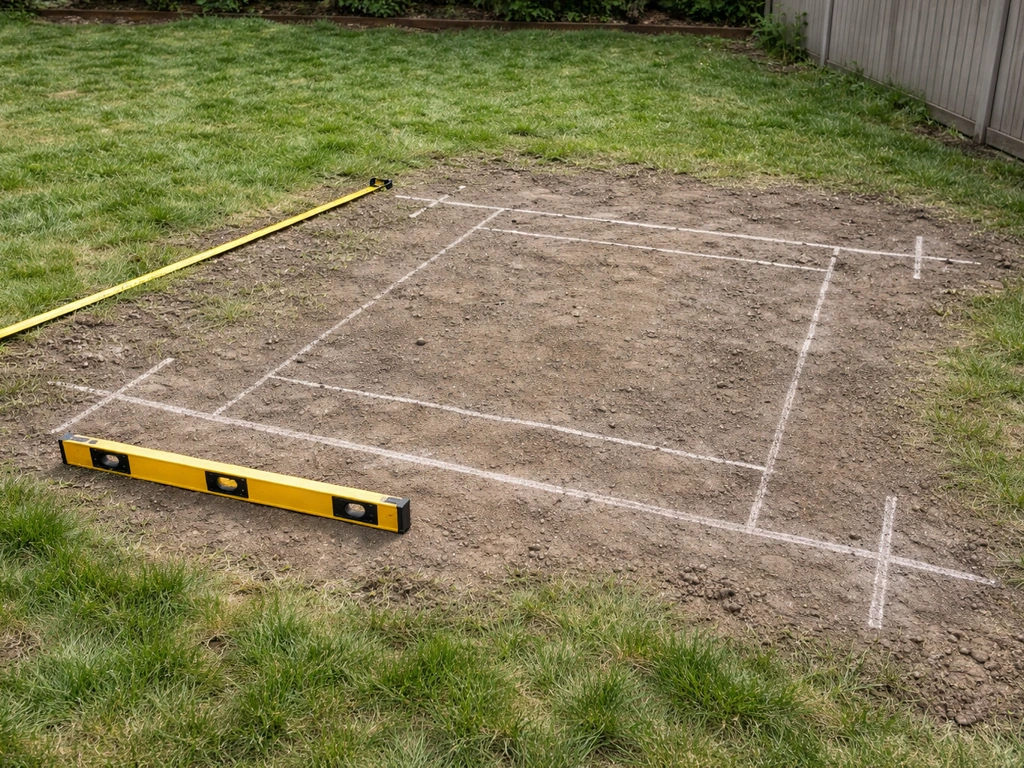
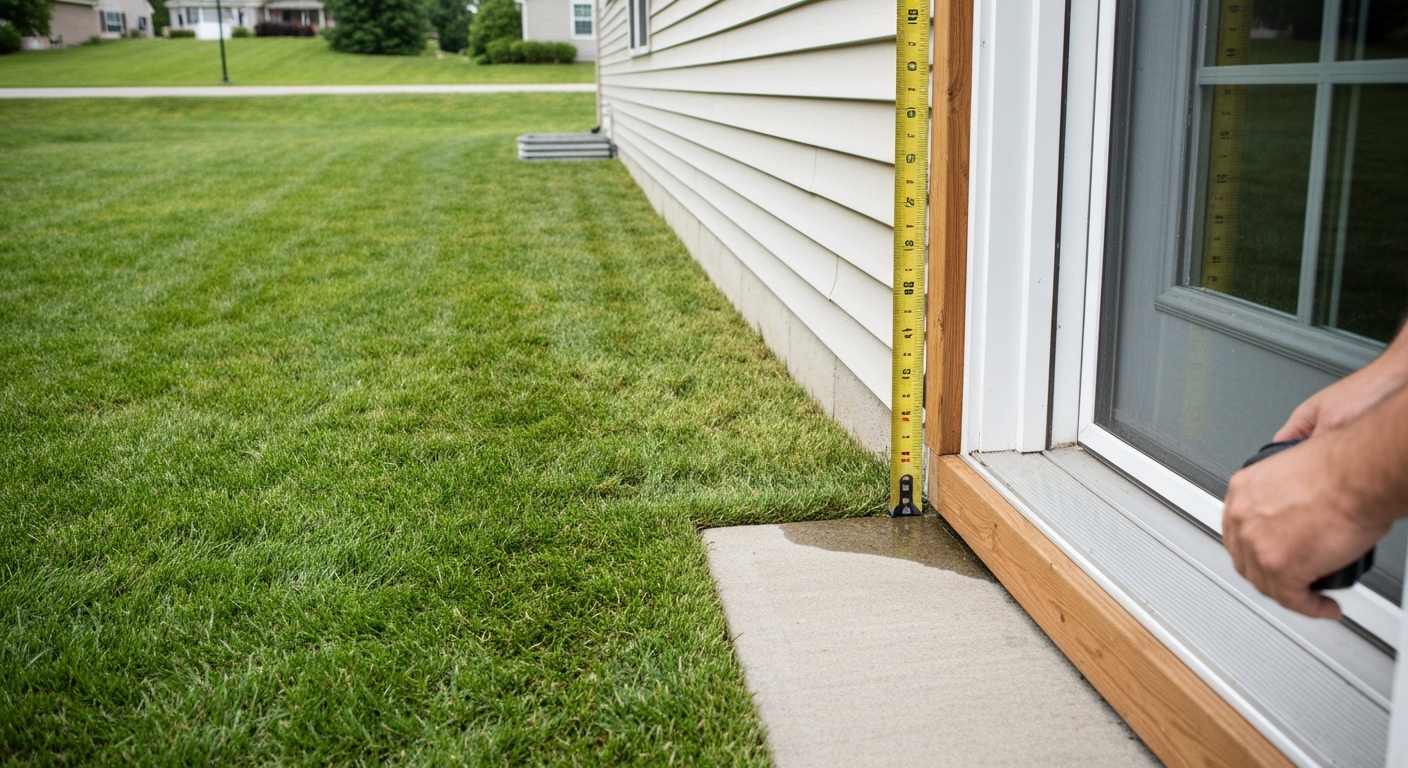
- Measure the footprint you're working with and check grade change from one corner to another (a 4-foot level and a tape measure are enough to get a rough read).
- Walk the area after a heavy rain and note where water flows or pools. This tells you a lot about drainage and whether a patio or deck will need special attention.
- Check your back door threshold height. If the door sill is more than 6–8 inches above grade, a deck will give you a much cleaner transition than a patio with steps.
- Get at least two quotes for each option from local contractors so you're comparing real installed prices for your yard, not national averages.
- Call your local building department and ask whether a permit is required for a ground-level patio (usually not) and for a deck (almost always yes). Ask about frost-line requirements while you're at it.
- Decide on your DIY tolerance honestly before you get too far into planning. Patios are the more realistic DIY project; decks with footings and elevation are better left to pros unless you have framing experience.
If you're still weighing the numbers, the cost comparison between these two options deserves a closer look, especially once you factor in materials, size, and regional labor rates. If you're still weighing the numbers in your low deck vs patio decision, the full cost breakdown is where you’ll see the biggest differences once materials, size, and labor are factored in.
For homes with a significant elevation change between the house and the yard, the raised patio vs deck question is a specific variation worth exploring on its own. And if you've landed on a patio but aren't sure which surface material to use, the resin patio pros and cons comparison covers one of the newer and faster-growing alternatives to traditional concrete and pavers.
If you are comparing materials for your outdoor space, the patio vs deck pros and cons can help you narrow down the best fit. Before you commit, compare the resin patio pros and cons so you know how it will hold up in your specific climate and usage level.
FAQ
Can a deck and a patio be built together on the same property, or does one eliminate the need for the other?
They can complement each other, for example a deck for access off a back door plus a ground-level patio for dining away from steps. The key is drainage and transitions, plan a clear pathway between levels so runoff from the deck does not dump onto the patio (use proper flashing, scuppers, or downspout routing). Also budget for matching surface heights at door thresholds and consider whether you want one continuous railing line or separate safety/containment elements.
What’s the safest way to handle door thresholds, especially if your back door is slightly above grade?
If the door landing is above the yard, a deck often creates a smoother, code-friendly transition because you can align framing height to the landing. With a patio, you may need a raised step-up and that can create a usability and trip-height problem if the rise becomes uneven. Measure from the door threshold to the finished yard surface and aim for consistent step heights, then verify local code requirements for exterior stairs if you will have more than a couple of steps.
Which one holds value better when you plan to sell in a few years?
Decks can deliver strong buyer appeal, but they often age visually and structurally over time, especially pressure-treated wood without consistent maintenance. Patios tend to stay more uniform in appearance, but designs that look dated (small size, plain concrete without visual detail) can reduce perceived value. If resale is the priority, prioritize craftsmanship and scaling (enough space for furniture) over trendy materials, and in freeze-thaw areas ensure both options are installed with correct base and drainage.
Is composite decking worth it if I’m trying to minimize long-term maintenance?
Composite usually reduces staining work, but it is not zero-maintenance. Expect periodic cleaning to prevent mold and mildew in shaded or damp areas, and still treat the deck as a structural system that needs annual substructure inspection. If you are sensitive to heat, consider light-colored boards, ventilation under the deck, and sun exposure mitigation (shade sails or a pergola), since composite can get noticeably warmer in full sun.
Do patios need a permit and inspections like decks?
Often ground-level patios are less likely to require permits than raised decks, but requirements vary by municipality and by whether you are altering drainage, adding retaining walls, or building near property lines. If you are excavating extensively, tying into existing footing drains, or changing grades, assume you may need review. When in doubt, ask your local building department, and confirm whether you must submit a simple site plan for erosion control.
What happens if my yard is poorly drained, and I still want a patio?
A patio can become a persistent wet area if the base and surface grading are not right. Before installing, verify downspout discharge and roof runoff, then confirm the patio area slopes away from the house (commonly around 1/8 to 1/4 inch per foot) and that the base is properly compacted. If water ponds after rain, fix drainage first (regrading, swales, or a drain solution) because sealing pavers or concrete will not solve underlying pooling problems.
Can I DIY the base and hire someone only for the finishing on either option?
Yes, partial outsourcing is common. Many homeowners DIY site prep for both patios and decks, but decks involve structural components where mistakes can be safety-critical, so it is usually best to hire a pro for footings, beams, joists, and railings. For patios, DIY is more feasible when you are comfortable with base compaction and keeping pavers or slab elevations consistent, but concrete slab pours require tight scheduling and proper technique to avoid surface and curing issues.
How deep should footings be for a deck, and what if I’m near a frost line but not sure of my local requirement?
Deck footing depth requirements depend on your frost depth and local code, and they can be significantly different across regions. Do not guess based on general averages, contact your local building department or use the code requirement for your zip code. Also consider soil type (clay vs sandy soils), bearing capacity, and whether you need additional bracing or engineered solutions, because shallow footings can lead to movement and long-term settlement.
If my patio uses pavers, how do I know when to re-sand joints or re-level them?
Look for recurring weed growth in the same areas, joint sand that has washed away after heavy rains, and uneven pavers that rock when stepped on. If pavers settle gradually, you may need to lift and re-set localized sections rather than repeatedly topping up sand. Address the underlying cause, poor base compaction or drainage issues, because re-sanding will not last if water keeps migrating under the surface.
What are the main mistakes homeowners make when choosing between patio vs decking?
A common mistake is matching the surface to the yard slope incorrectly, trying to force a ground-level patio on a significant grade without planning grading, fill, or retaining support. Another mistake is underestimating maintenance expectations, for example assuming composite means no upkeep, or assuming concrete never requires attention in freeze-thaw regions. Finally, many people skip drainage planning, which affects both options but shows up as early surface damage on patios and moisture issues around deck framing.
Does a deck drain through board gaps mean the area underneath will stay wet?
It can, especially if the deck has limited airflow, the underside is enclosed by skirting, or your soil stays damp. Water that drops below can contribute to persistent mud, mildew on nearby surfaces, and algae growth on the ground. Solutions include keeping a clear gravel or ventilated zone under the deck, managing runoff direction with downspouts and splash blocks, and installing under-deck drainage systems where appropriate.
Next Article
Grass Is Higher Than Patio: Causes, Fixes & Deck vs Patio
Grass higher than patio? Causes, slope checks, repair options, lower lawn, raise patio, or build a deck, with costs & DIY