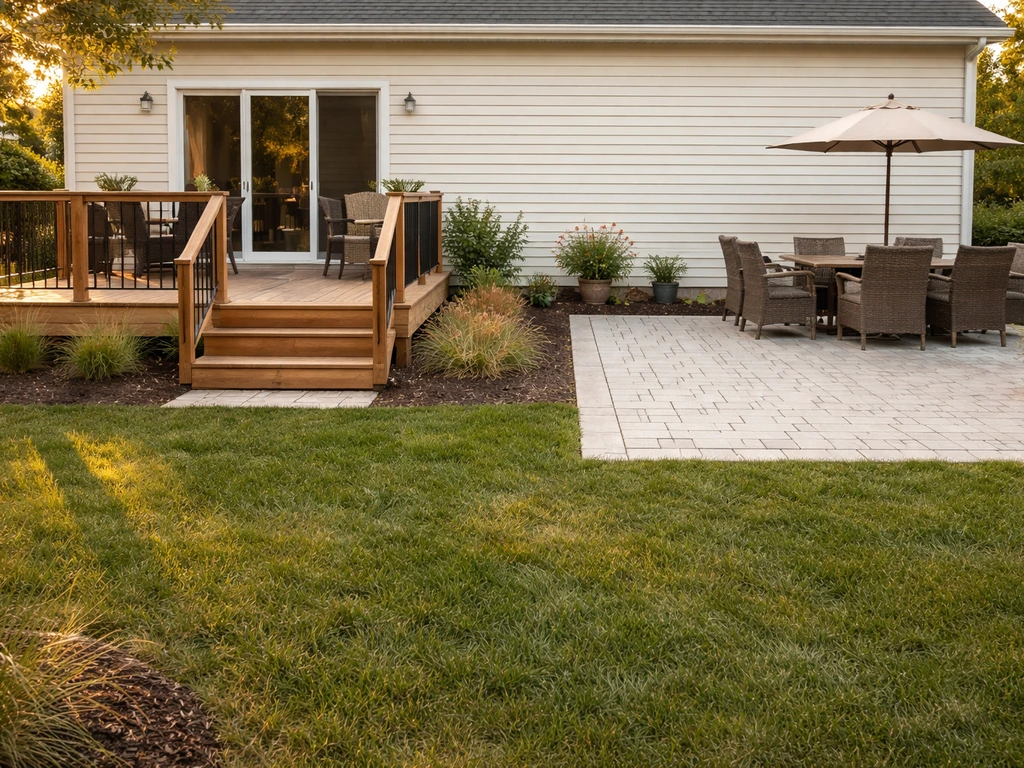
For most homeowners, a patio offers better resale value per dollar spent than a deck, primarily because patios cost significantly less to build and carry almost no structural red flags that can spook buyers or home inspectors. That said, decks can add more total dollar value to a home in the right neighborhoods and markets, particularly if you use composite decking and build it to code. The honest answer is: it depends on your lot, your neighborhood comps, and your budget, but patio wins on ROI percentage while decks can win on perceived lifestyle appeal.
Is a Deck or Patio Better for Resale? Cost and ROI Guide

Miles Hart
18 Jun 2026
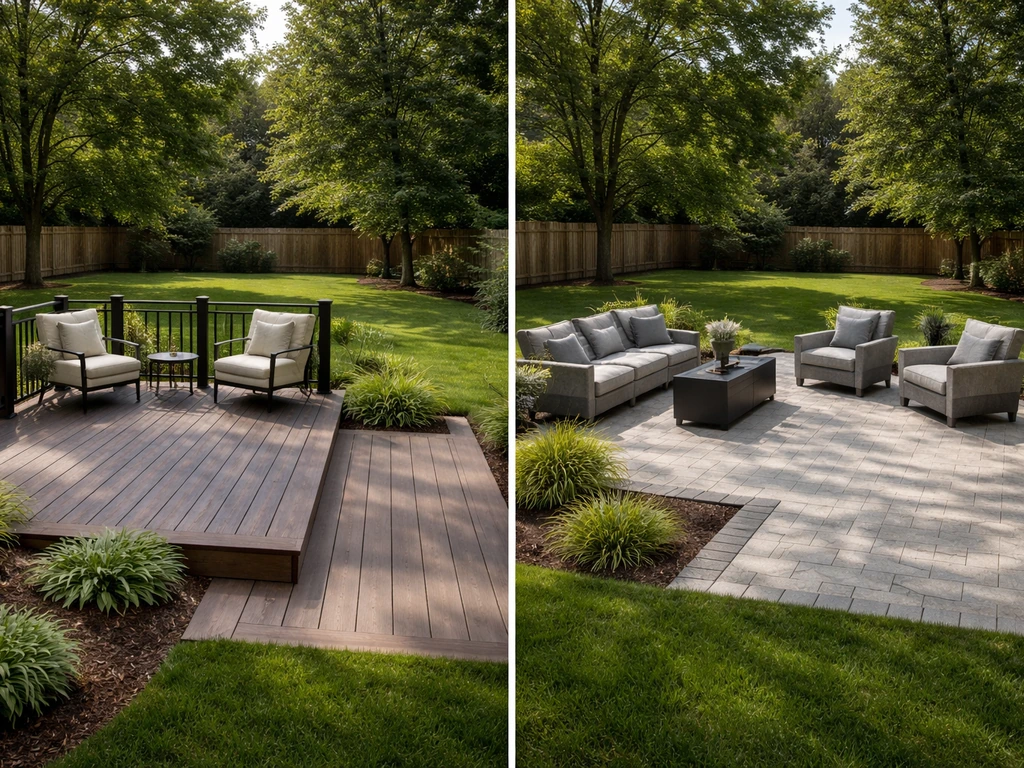
What buyers actually think when they see a deck vs a patio
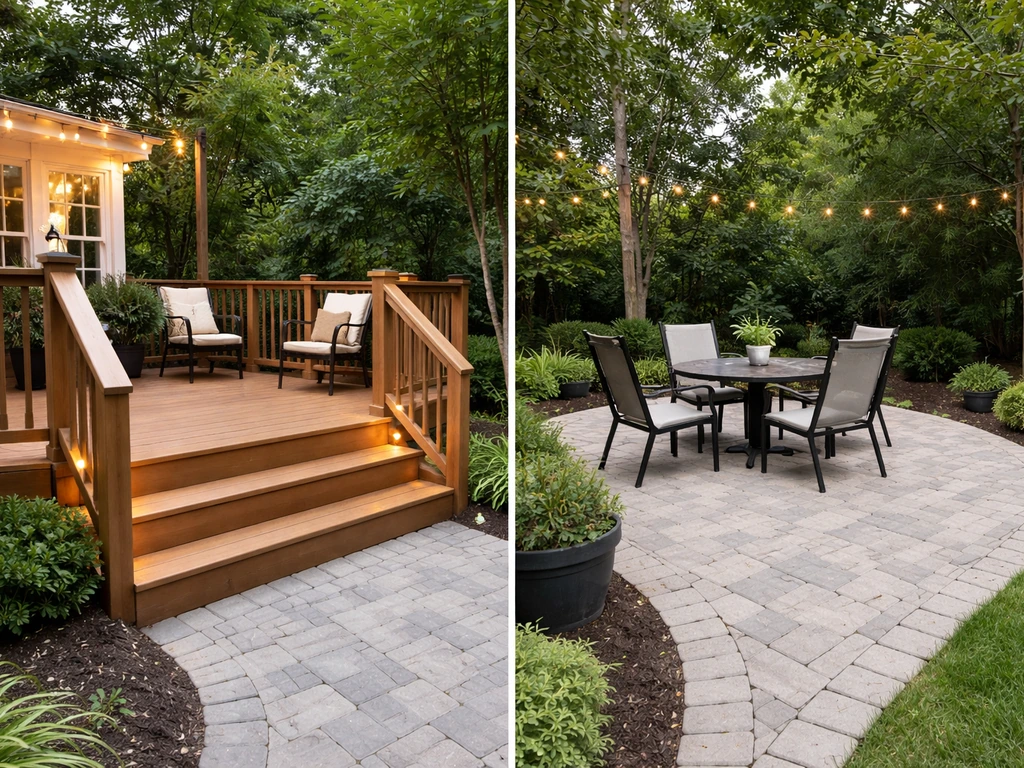
Buyers don't walk into a backyard thinking about ROI percentages. They think about whether the space feels usable, safe, and finished. A deck signals elevated outdoor living, especially when it's attached to the main living area at door level. It reads like an extension of the interior, almost another room. A patio reads as a grounded, low-maintenance entertaining zone. If you are comparing deck vs patio based on what people say on Reddit, this is one of the key buyer-experience factors that keeps showing up A patio reads as a grounded, low-maintenance entertaining zone.. Both can look great or terrible depending on condition, and that condition is almost always what drives buyer perception more than the material itself.
Where decks can lose buyers fast is when they look neglected. A pressure-treated wood deck with peeling stain, splintered boards, or a wobbly railing raises immediate red flags. Buyers start mentally calculating inspection risk and repair costs. A concrete or paver patio with a few weeds poking through the joints is a much easier fix in a buyer's mind. That asymmetry in perceived risk is real and shows up during negotiations.
Neighborhood fit matters too. In higher-end subdivisions where most homes have composite decks, pulling up to a listing with only a basic poured concrete slab can feel like the home is under-improved. The reverse is also true: in a neighborhood full of modest ranches with simple patios, a $40,000 composite deck build will likely price itself right out of any hope of recouping that investment. Checking what comparable homes in your area actually have is the single most important step before committing to either option.
Resale value drivers: ROI, buyer demand, and neighborhood fit
The Cost vs Value framework (tracked annually by Zonda) gives us some concrete benchmarks. A wood deck addition nationally has been cited with an installed cost around $18,000 to $25,000 and recoup rates that can reach the high double digits in percentage terms. A composite deck addition at roughly $25,000 installed has been reported with recoup around 88.
UseCalcPro's Remodeling Cost vs Value overview similarly reports that a composite deck addition at about $25,000 installed can show recoup around 88% in some national snapshots composite deck addition at roughly $25,000 installed has been reported with recoup around 88. 5% in some national snapshots.
Those are favorable numbers compared to many interior remodels, but they're national averages. Your actual recoup will be pulled heavily by local buyer demand and what your neighbors' homes are selling for. Deck resale value often depends more on buyer demand and neighborhood expectations than on the material itself.
Patios don't have their own dedicated Cost vs Value line item the way decks do, which itself tells you something: appraisers and industry trackers treat decks as more quantifiable value-add features. Patios tend to be lumped into general landscaping and hardscaping improvements. That doesn't mean they don't add value, but it does mean the value is harder to isolate in an appraisal. In practice, a well-done paver or stamped concrete patio regularly increases buyer interest and can support a higher listing price, especially in warmer climates where outdoor living drives purchase decisions.
Buyer demand for outdoor space broadly went up after 2020 and hasn't fully retreated. NAR's Remodeling Impact Report consistently frames outdoor features as buyer-facing improvements with strong satisfaction and perceived joy scores, not just utilitarian additions. Both decks and patios benefit from that trend, but decks tend to photograph better for listings in colder climates where elevation off the ground and clear sightlines matter.
Cost and payback: what you'll actually spend and get back
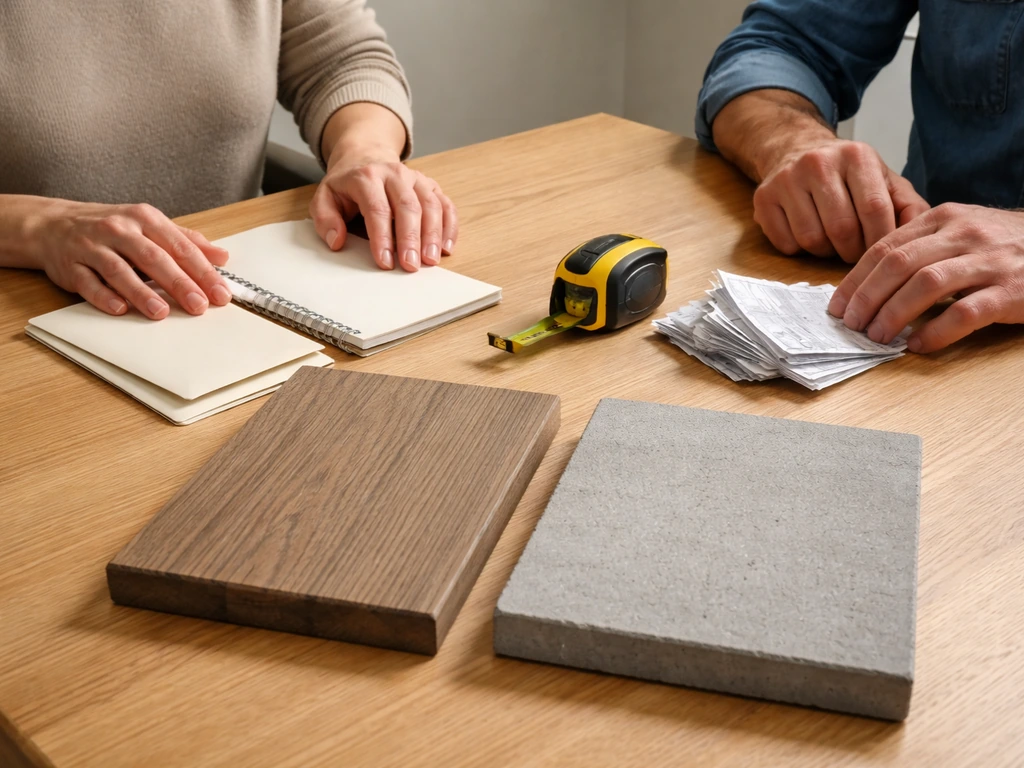
The cost difference between decks and patios is significant enough that it should drive a lot of your decision. The cost difference between decks and patios is significant enough that it should drive a lot of your decision, so review the deck vs patio price before you pick a surface. Here's a realistic 2026 look at what each option costs installed, and what you're likely to spend on upkeep over time.
| Feature | Pressure-Treated Wood Deck | Composite Deck | Concrete Patio | Paver Patio |
|---|---|---|---|---|
| Installed cost (per sq ft) | $25–$45 | $40–$75 | $6–$25 | $12–$30 |
| Typical 16x20 project cost | $8,000–$14,400 | $12,800–$24,000 | $1,920–$8,000 | $3,840–$9,600 |
| Stain/seal frequency | Every 1–2 years | Rarely (cleaning only) | Reseal every 2–3 yrs (stamped) | Weed/sand every 1–3 yrs |
| Major repair risk | Rot, ledger issues, railings | Hardware/ledger issues | Cracking, spalling | Settlement, drainage |
| National recoup estimate | High % (varies by market) | ~88.5% (national avg) | Not separately tracked | Not separately tracked |
The ongoing maintenance cost is where patios often win quietly. A pressure-treated wood deck needs cleaning and staining or sealing on roughly a one-to-two year cycle to stay looking good and avoid rot. For pressure-treated decks, decks. com’s maintenance checklist recommends periodic cleaning and annual stain/seal practices to help prevent rot and decay [cleaning and staining or sealing on roughly a one-to-two year cycle](https://www.
decks. com/media/34de4r5z/deck-maintenance-checklist. pdf). Skipping that maintenance doesn't just make the deck look bad, it actively degrades the wood and can lead to structural issues that kill resale value entirely.
Composite decking dramatically reduces that burden (mostly occasional washing), but you're paying $40 to $75 per square foot to buy that ease. A stamped concrete patio needs resealing every two to three years, and a basic poured concrete patio needs almost nothing beyond occasional cleaning, though cracking is a real long-term issue in freeze-thaw climates.
When you factor in both the lower build cost and the lower maintenance cost, patios almost always have a better percentage return on dollars spent. If you want help deciding between a deck or a patio, this is the part where you weigh the resale dollars against the return percentage deck or patio: which to recommend. But if your goal is maximizing the dollar amount added to your home's value (not just the percentage back), a well-built composite deck in the right market can still be the stronger move.
Durability and long-term upkeep: what can go wrong and hurt resale
Deck failure points to know
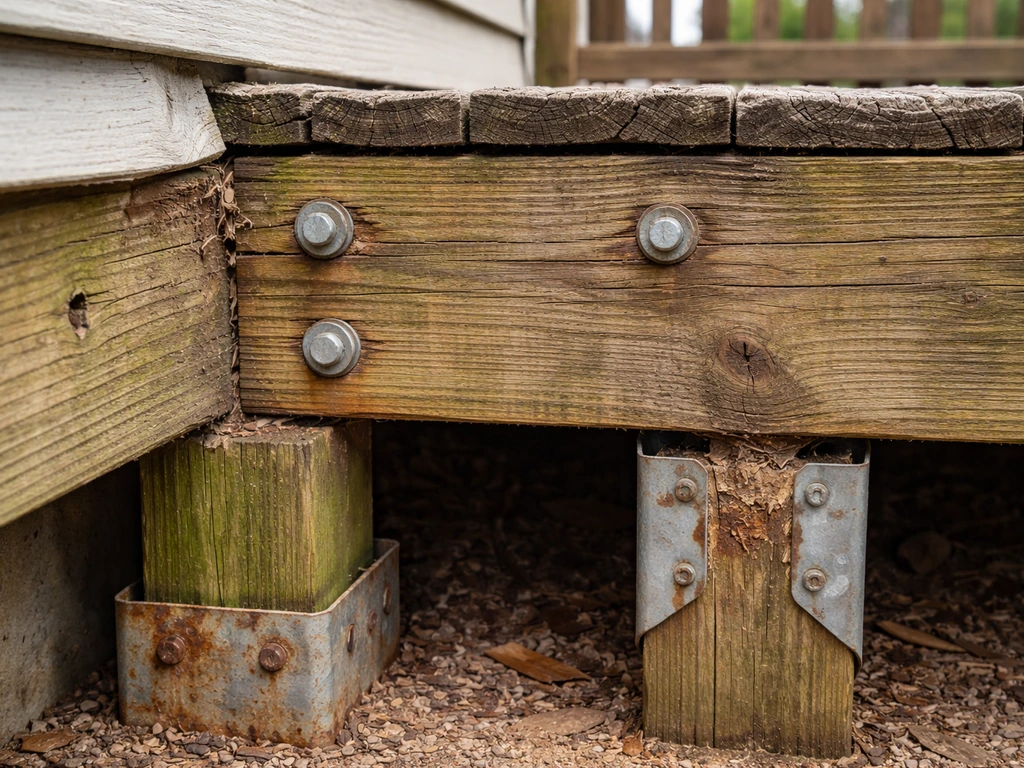
Decks fail in predictable places: the ledger board where the deck attaches to the house, post bases at ground level, and connection hardware throughout. These aren't cosmetic issues. A ledger board that's been improperly flashed lets water infiltrate behind the band joist, and that rot can be invisible until an inspector or buyer's agent catches it. Post-base corrosion and overloaded connection points are the three concentrated structural failure modes that deck safety resources flag repeatedly. The takeaway for resale is simple: a deck with any visible structural concerns will either kill a deal or force a price reduction, because buyers know that "I need to check the ledger" is code for potentially thousands in repairs.
Wood deck boards, railings, and fascia boards all show wear. A pressure-treated deck that hasn't been maintained will look grey, splintered, and tired within five to seven years. That visual deterioration directly reduces buyer confidence even if the structure underneath is sound. Composite boards avoid most of that, which is a real resale advantage, but the framing under a composite deck is still typically wood and still requires proper flashing and hardware.
Patio failure points to know
Patios have their own failure modes, just different ones. Poured concrete and stamped concrete are vulnerable to freeze-thaw cycles. Water gets into surface pores, freezes, expands, and causes spalling, which is progressive surface flaking that gets worse over time. Deicing salts accelerate this badly.
In cold climates, a concrete patio that hasn't been properly sealed or that sits in poor drainage conditions can look rough within ten years. Paver patios are more freeze-thaw tolerant because the individual units can shift slightly without cracking, but they're prone to settlement and weed growth when the base wasn't properly prepared or drainage wasn't addressed at install.
A patio with obvious heaving, settled sections, or chronic puddles will concern buyers, though the concerns are usually less alarming than structural deck issues.
Design, materials, and upgrades that actually move the needle at resale
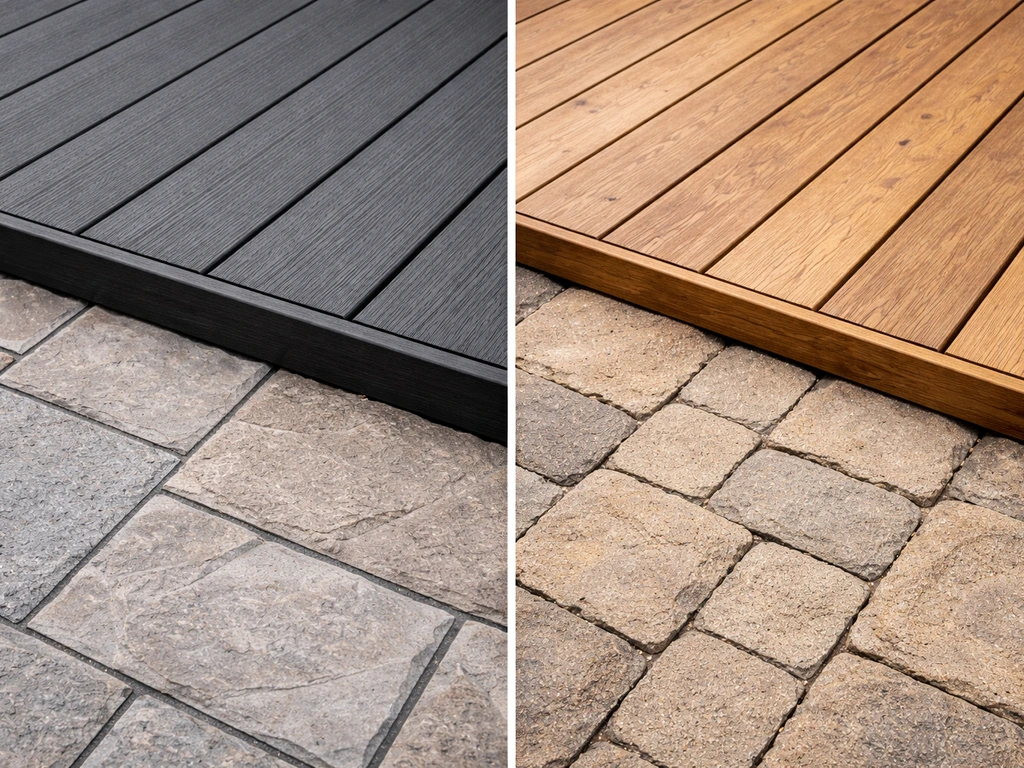
For decks, the material choice buyers care about most is wood versus composite. Composite decking is genuinely easier to maintain, looks more finished longer, and is increasingly what buyers in mid-to-upper markets expect. If you're building a deck primarily for resale, composite boards are worth the premium, but only if the rest of the build quality matches. A composite surface on a poorly built frame with flimsy metal railings won't impress anyone. Aluminum or high-quality powder-coated metal railings outlast wood rails and look cleaner, and code-compliant cable or glass infill panels are popular with buyers in lifestyle-forward markets.
For patios, stamped concrete and natural or tumbled pavers read as higher-end than plain poured concrete slabs. The gap in cost is real but not enormous: basic concrete runs $6 to $10 per square foot installed while stamped finishes run $12 to $25 per square foot, and pavers land around $12 to $30 per square foot. For resale purposes, the bump from plain to stamped or pavers is usually worth it because the visual difference is immediate and buyers notice it in listing photos.
Across both options, there are a few upgrades that reliably build buyer confidence and support higher offers:
- Integrated lighting (string lights on a pergola, step lighting, or low-voltage landscape lighting around a patio perimeter) makes the space feel designed rather than functional
- Steps and transitions that are wide, stable, and clearly defined, because buyers visualize using the space and narrow or awkward steps feel unsafe
- Proper drainage that visibly slopes water away from the house foundation, which appraisers and inspectors both notice
- Privacy elements (privacy screens, planted borders, or pergola structures) that make the outdoor space feel like a room rather than just a surface
- Accessibility: a patio is naturally at grade and wheelchair/stroller friendly, while a deck with well-designed steps or a ramp scores better with a broader buyer pool
Permits, code, and build quality: what can bite you at closing
This section matters more for decks than patios, but don't skip it either way. Decks are structural attachments to the house in most configurations, and most jurisdictions require permits for attached decks over a certain size (often 200 square feet, though this varies). Building without a permit doesn't just create legal risk, it creates resale risk. Buyers' agents increasingly ask for permit history, and a deck built without permits can be flagged during inspection or discovered during title review. At that point you're looking at either pulling a retroactive permit (which requires the deck to meet current code) or negotiating a price reduction.
Code compliance specifics that buyers' inspectors check include guard height (the IRC baseline is 36 inches measured from the deck surface to the top of the guard), baluster spacing (the 4-inch sphere rule, meaning no gap should allow a 4-inch sphere to pass through), and ledger attachment per IRC R507 including proper flashing at the ledger-to-house connection. Older decks often fail on baluster spacing because codes tightened over time, and retrofitting compliant balusters is a real cost. Faulty or missing ledger flashing is the most common serious code deficiency, and it's the one that most often requires significant repair work rather than a simple fix.
Patios generally don't require permits (though some jurisdictions have rules about impervious surface coverage), but drainage is a code and neighbor issue in some areas. A patio that directs runoff toward a neighbor's property or toward your own foundation can become a liability that shows up in inspection reports.
DIY vs hiring a pro: how it affects what buyers think
A well-executed DIY patio carries almost no resale stigma. Poured concrete and even paver installation are within reach for skilled DIYers, and the result is visually indistinguishable from professional work if done right. Buyers can't easily tell the difference, and even if they could, a flat, well-drained, attractive patio surface doesn't raise structural concerns.
DIY deck builds are a different story when it comes to resale. The issue isn't whether you can build a structurally sound deck yourself. Many homeowners can. The issue is that buyers and their inspectors are specifically trained to look for the places where DIY decks go wrong: missing ledger flashing, incorrect hardware, under-sized beams, inadequate post footings, and non-compliant railings. When those red flags show up, buyers don't just see a repair cost, they see an unknown risk. That uncertainty almost always shows up as a negotiating chip against you. Inspectors who flag "appears to be owner-built" and "ledger flashing missing" in the same report can effectively kill a deal with nervous buyers.
If you're determined to DIY a deck for resale purposes, pull the permit, follow it through inspections, and have the ledger and connections verified by the inspector before closing in the decking surface. A permitted DIY deck with inspection sign-offs carries significantly less resale risk than an unpermitted one, regardless of actual build quality.
Pick this if: a clear decision framework
Choose a patio if your lot is relatively flat, your budget is limited, your neighborhood comps don't include elevated decks as a standard feature, you're in a climate with harsh freeze-thaw cycles (choose pavers over concrete in that case), or you want the highest percentage return on your outdoor renovation investment. In short, deck vs patio home value is best judged by local buyer demand, maintenance expectations, and the kind of outdoor space your nearby comps already reward. Patios are also the right call if your timeline to sell is under three years and you want a low-maintenance finish that will still look good at listing time without much upkeep.
Choose a deck if your lot has significant grade change that makes a patio impractical, your neighborhood comps consistently include decks and buyers expect them, you're willing to invest in composite decking and quality hardware for a lower-maintenance finish, and you plan to stay in the home long enough to enjoy the space before selling. If you want a quick, market-minded comparison like deck vs patio 2021, this decision framework helps you weigh fit, maintenance, and resale expectations before you commit. A professionally built, permitted composite deck in the right market can be a genuine value driver, not just a lifestyle upgrade.
Your next steps before you commit to anything
- Pull recent sold comps in your neighborhood and look specifically for what outdoor features those homes had. Your real estate agent can pull this, or you can check listing photos on Zillow or Redfin for homes sold in the past 12 months within a quarter mile.
- Get at least two contractor estimates for each option you're considering so you have real local pricing, not just national averages. Per-square-foot costs vary dramatically by region and material availability.
- Call your local building department and ask what requires a permit. This takes ten minutes and saves you from a permit problem at closing.
- Ask a local appraiser or your real estate agent whether decks or patios are more commonly called out as value-adds in your specific market. This is a free conversation that can sharpen your decision significantly.
- If you're leaning toward a deck, ask any contractor you talk to specifically about their ledger flashing and connection hardware approach. A contractor who can explain their flashing method clearly is one who actually does it right.
The deck versus patio decision for resale is genuinely not one-size-fits-all, but it is answerable once you have your local comp data and a real budget in hand. The cost difference between the two options is large enough that most homeowners in average markets will find a well-done patio gives them more money back per dollar spent, while the right composite deck in the right neighborhood can add more total dollar value. Either way, the quality of the build and the condition at time of sale matter far more than which option you choose.
FAQ
How should I compare deck vs patio resale value using local comps?
Start by comparing “like-for-like” in your own zip code, not county averages. Look at sold comps that include either an attached deck or a clearly defined patio area (pavers or stamped concrete), then note the maintenance cues from photos (rails condition, staining, weeds, standing water). If your comps rarely show elevated decks, a deck may struggle to recoup even if it costs more.
What visual issues on a deck are most likely to lower buyer confidence?
A deck can become a resale drag if the build looks “elevated but unfinished,” for example missing fascia trim, inconsistent step heights, or railings that don’t match the rest of the design. Buyers often interpret these as shortcuts, which increases inspection friction and negotiation leverage, even when the structure is adequate.
Are patio maintenance problems different from deck maintenance problems, and what should I watch for?
Don’t assume a patio is always cheaper to maintain. If your patio is poured concrete in a freeze-thaw climate, resealing schedules matter, and salt can accelerate surface damage. For pavers, improper base prep can cause shifting and weeds, which often shows up within a few seasons and can force costly reset work.
How does drainage affect resale, and which option is more forgiving if I’m not sure about drainage?
If you have poor drainage or downspouts that dump onto the patio/deck area, neither option will age well, but patios often reveal the issue sooner through puddling and efflorescence, while decks may hide it until ledger or post-base rot appears. Fixing grading and runoff direction before you build usually protects resale more than choosing a more expensive surface.
Do permits matter for resale for both patios and decks, and what documentation should I keep?
Yes, permits and documentation can materially affect resale. A deck built without permits can get flagged in inspection, and retroactive permitting can require upgrades to current guard and connection rules. For patios, check local rules on impervious coverage and any HOA design approvals, since documentation gaps can still create buyer hesitation.
What specific deck vs patio features do inspectors and buyers scrutinize most during resale?
For decks, buyers often focus on connection details, especially the ledger and flashing line, guard height, and baluster spacing. For patios, buyers focus on surface condition and water behavior, like cracks with uplift, spalling, settled edges, and persistent weed growth in joints.
Which upgrades add resale value more reliably, and where do people waste money?
Yes, but choose your “high-ROI” upgrades based on the base condition and climate. On decks, cable or glass infill and durable metal railings tend to photograph better and feel more modern, but they only help if the framing and ledger are already correct. On patios, switching from plain concrete to stamped concrete or quality pavers can boost photo impact, especially when edges look crisp and the slope drains away from the home.
What’s a good deck vs patio choice if I plan to sell within a few years?
If your goal is sale within about three years, prioritize things that look complete at listing time with low ongoing hassle. Patios usually win when you want a finished, grounded space that won’t demand frequent staining or sealing. A composite deck can still fit a short timeline, but only if the installer handles flashing, hardware, and railing compliance so buyers see confidence, not uncertainty.
In freeze-thaw climates, is a patio always safer than a deck for resale?
If you’re in a very cold region or your ground freezes deeply, pavers often handle freeze-thaw better because individual units can shift slightly without catastrophic cracking, while poured concrete can spall if not sealed and properly drained. That said, pavers still need a well-prepared base to prevent settlement lines and weed pockets that buyers notice quickly.
Is DIY acceptable for resale, and which project type is riskier to DIY?
If you DIY a patio professionally in appearance, you usually reduce resale stigma because there are fewer “house-attachment” risk signals. DIY decks are different because errors in ledger flashing, hardware sizing, and railing code compliance are exactly what inspectors target. If DIY is your plan, a permitted and inspected deck is the minimum risk reducer.
How do condition and safety cues outweigh material when a buyer decides which to offer on?
Most buyers understand that outdoor spaces are subjective, but they still benchmark “quality” through condition and safety. A deck with a wobbly railing, peeling stain, or visible gaps reads as risky. A patio with heaving, chronic puddles, or lifting edges reads as neglected, even if the surface is attractive.
Can a deck ever beat a patio on total resale dollars, not just ROI percentage?
Yes, the “bigger total dollars added” point matters most when the deck fits local expectations and buyers are used to elevated outdoor rooms. In neighborhoods where decks are standard, a well-built composite deck with code-clean details can outperform in total value. In contrast, in areas where patios are the norm, a deck may not translate into proportionate offers.
Next Article
Deck vs Patio: Reddit-Style Tradeoffs, Costs, and Choice Guide
Deck vs patio choice guide with real Reddit-style tradeoffs, costs, maintenance, climate, permits, and resale impact.