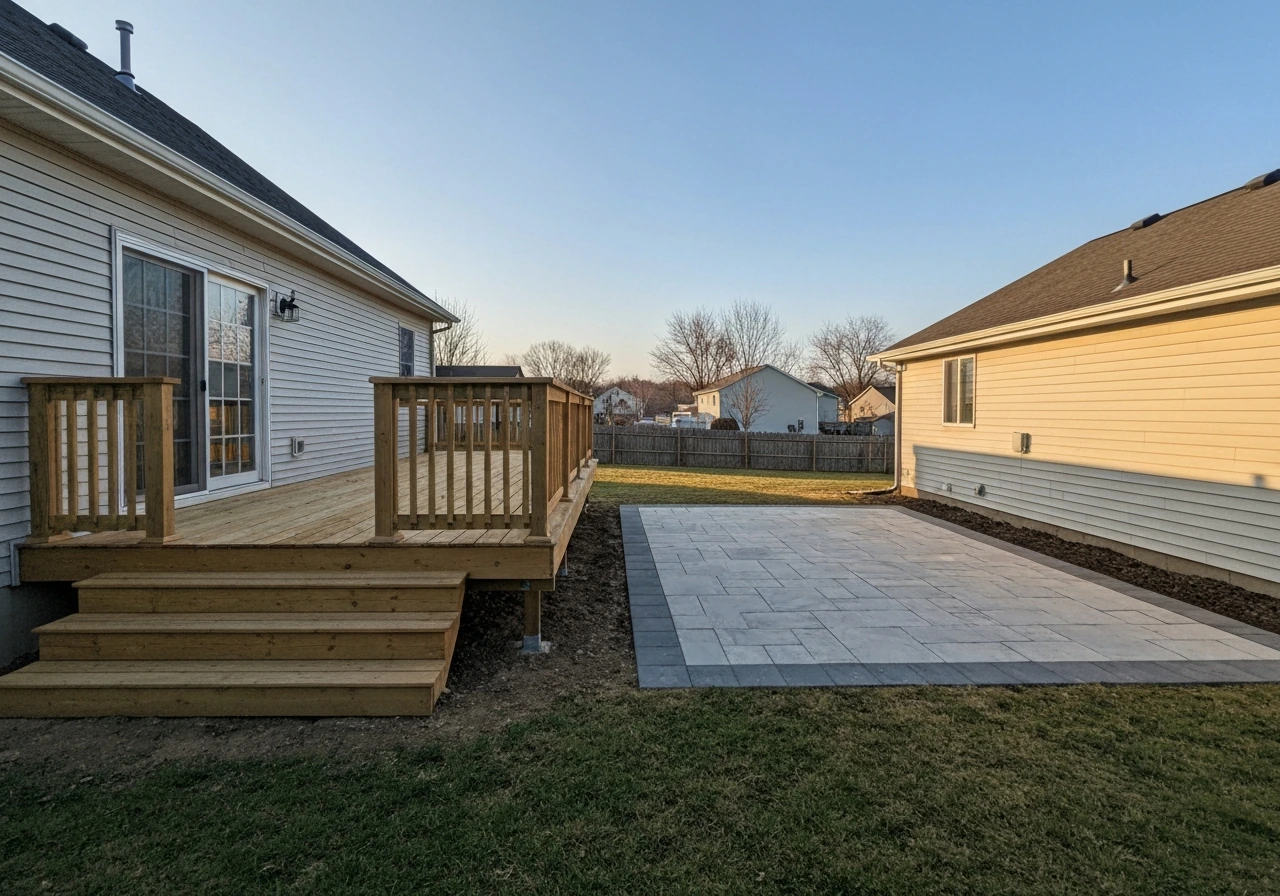
A deck or patio can realistically add somewhere between 60% and 95% of its cost back into your home's resale value, but that range swings dramatically based on what you build, what material you use, and what buyers in your specific market actually want. A wood deck addition in a competitive suburb can recoup close to 95% of its cost according to the 2025 Cost vs.
Deck vs Patio Home Value: Costs, ROI, and Resale Impact

Miles Hart
12 Jun 2026
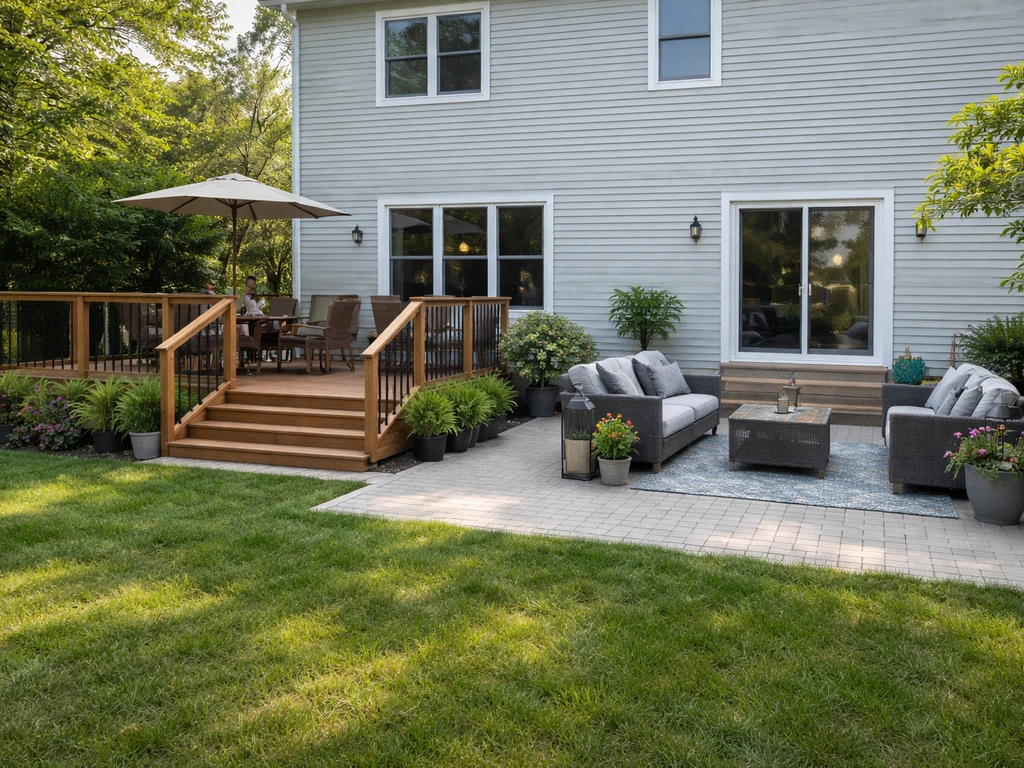
Value Report, while a poorly drained concrete patio in a wet climate can actually hurt your sale by raising buyer concerns about drainage and rot. The answer isn't simply 'deck beats patio' or vice versa. It depends on your site, your budget, your neighborhood, and how well you execute and document the project.
What buyers actually see: deck vs patio at resale
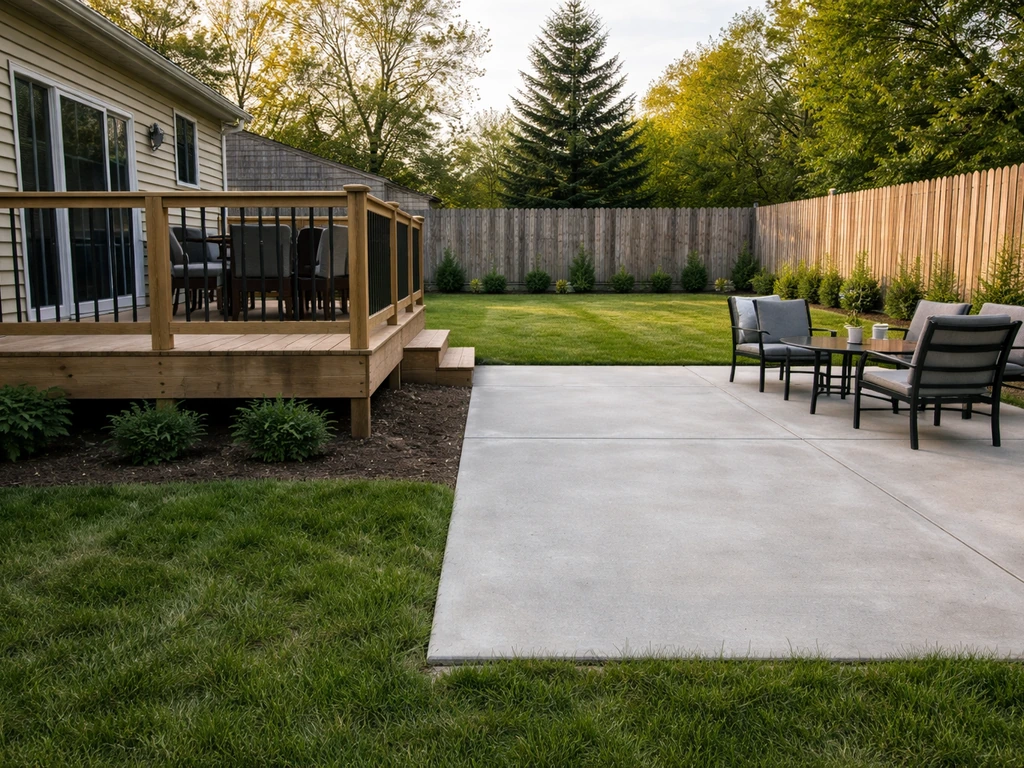
When a buyer walks through your home, they're not running ROI math in their head. They're asking one question: can I picture myself out here? Usability is the real driver of buyer appeal, and both decks and patios can deliver it or fail at it depending on execution. The NAR has consistently flagged patios and decks as amenities that extend a home's appeal in competitive markets, but the key word is 'refreshed.' A weathered, splintered wood deck or a cracked, stained concrete patio signals deferred maintenance and creates hesitation, not enthusiasm.
From an appraisal standpoint, neither a deck nor a patio counts toward your home's gross living area (GLA) unless the space has been converted to enclosed, permitted living space. Appraisers treat them as amenities, meaning they show up as line-item adjustments when comparable homes have similar (or lack) features. If you're trying to decide between deck vs patio resale outcomes, focus on usability and what local comps show buyers are already paying for patio and deck.
A well-built, large composite deck can generate a meaningful positive adjustment if nearby sold homes also have decks. But if your neighborhood comps are all modest patios and you've built a $40,000 multi-level deck, you may not recover the full cost simply because the market ceiling doesn't support it. That gap between cost and value is one of the most important things to understand before you start planning.
Cost comparison: what you'll actually spend on each
The cost difference between a deck and a patio is real and worth understanding before you commit. Decks are typically more expensive to build because they require structural framing, footings, ledger attachment, and railings when elevated. Patios sit at grade and skip most of that structural work, which is why they often come in cheaper per square foot for a basic installation. A clear deck vs patio price comparison helps you estimate total project cost and what you’re likely to recover at resale.
| Option | Typical Installed Cost (per sq ft) | 16x20 Example (320 sq ft) | Key Cost Drivers |
|---|---|---|---|
| Pressure-treated wood deck | $30–$60/sq ft | ~$9,600–$19,200 | Height off ground, stairs, railings, ledger complexity |
| Composite deck | $35–$80/sq ft | ~$11,200–$25,600 | Decking brand, hidden fasteners, subframe, add-ons |
| Concrete patio (basic) | $8–$18/sq ft | ~$2,560–$5,760 | Thickness, reinforcement, drainage prep |
| Stamped concrete patio | $15–$35/sq ft | ~$4,800–$11,200 | Pattern complexity, coloring, site grading |
| Paver patio | $18–$40/sq ft | ~$5,760–$12,800 | Paver material, base prep, labor intensity |
| Covered patio/patio roof addition | $3,000–$15,000+ (total) | Varies by span and structure | Roof style, attachment, permits, material |
The 2025 Zonda/Remodeling benchmarks put a national-average wood deck addition at roughly $18,263 for a 16x20 deck (about $57/sq ft installed), and a composite deck addition at around $25,096 (about $78/sq ft). Ergeon likewise reports a 2026 installed-cost band for composite decks that lines up with current market pricing, with typical bids in the mid-$30s to high-$70s per square foot range [Composite deck addition at around $25,096 (about $78/sq ft). ](https://www. ergeon.
com/blog/post/composite-deck-cost). Those are national averages, and in higher-cost metros like the Pacific Coast or Northeast, real bids often run 20–40% higher. On the patio side, stamped concrete and pavers add complexity costs quickly: retaining walls, drainage correction, and site grading can easily double the base patio cost if your yard isn't already flat and well-drained.
One thing that catches homeowners off guard: stairs and railings on a deck can add $1,000–$4,000 or more to the final bill, and they're usually non-negotiable on elevated structures for code compliance. Budget for them from the start rather than treating them as optional line items.
Maintenance, lifespan, and the risks that quietly eat value
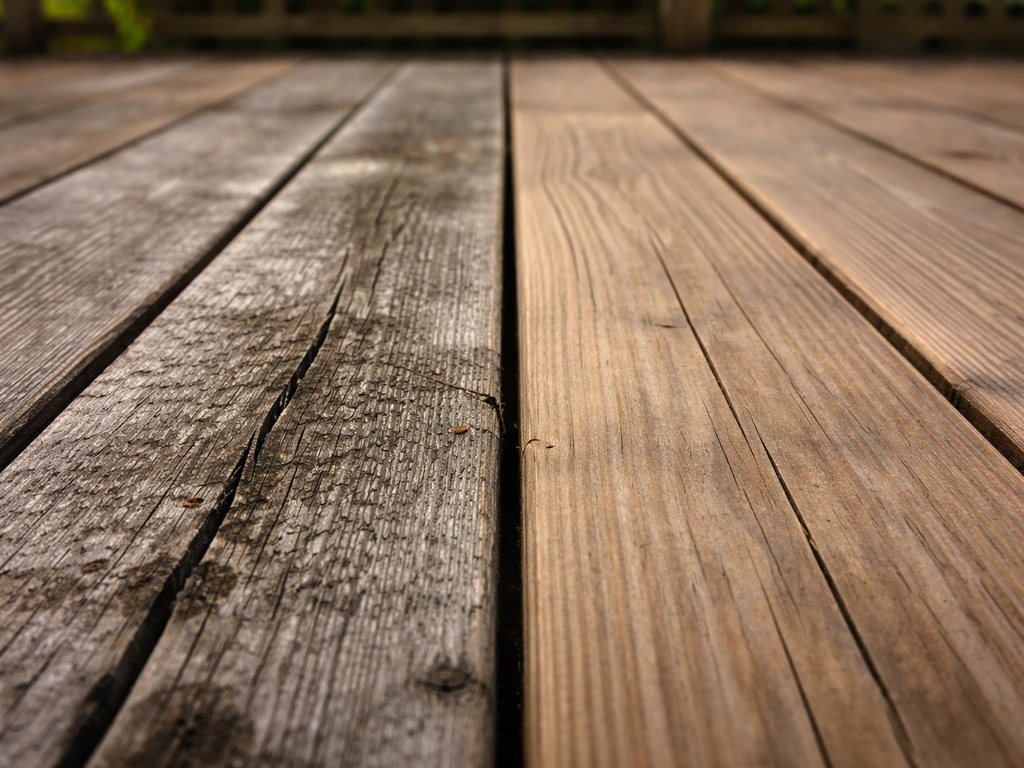
Lifespan and maintenance requirements directly affect how a buyer perceives your outdoor space at resale. A pressure-treated wood deck, well-maintained, can last 10–20 years. Composite decks carry longer limited residential warranties and resist the main failure modes of wood (rot, splinter, UV fading) much better, though they're not maintenance-free. Concrete patios, when properly installed with good drainage, can last 25–40 years. Pavers are highly durable and the individual units can be replaced if damaged, which is a real resale advantage.
The biggest risk for wood decks isn't surface wear. Deck failures typically start at the ledger board (where the deck attaches to the house) and around fasteners where moisture gets trapped and can't dry out. This is hidden damage that buyers or their inspectors can flag during a sale, and it's one of the most common reasons decks become negotiating points rather than selling points. To preserve your deck's value, the standard guidance is to re-seal or re-stain every 1–3 years, keep the ledger area clear of debris, and do an annual inspection of structural connections, especially after harsh winters.
For patios, the main risks are drainage-related. If water pools on or around the patio surface, you'll see cracking, heaving (especially in freeze-thaw climates), efflorescence staining on concrete, and paver settling. These are fixable problems, but they read as 'deferred maintenance' to buyers. Getting drainage right during installation is far cheaper than correcting it later.
Maintenance at a glance
- Pressure-treated wood deck: reseal/restain every 1–3 years, annual structural inspection, board replacement as needed
- Composite deck: annual cleaning, periodic check of fasteners and subframe, minimal surface refinishing needed
- Concrete patio: reseal every 2–5 years, repair cracks early before water penetrates, check for drainage slope
- Paver patio: re-sand joints every few years, reset settled pavers, weed and clean periodically
- Covered patio or porch enclosure: inspect roofing material and flashing annually, check any screen or panel fasteners seasonally
Home value and ROI: what actually moves the needle
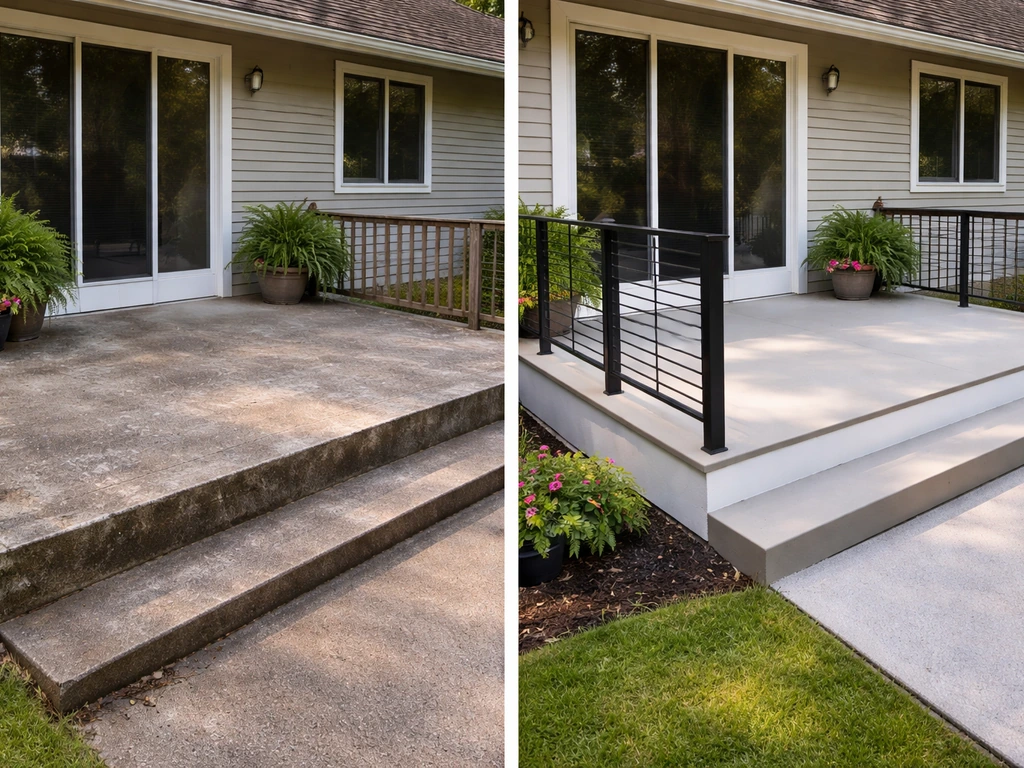
The 2025 Cost vs. Value Report puts a wood deck addition at roughly 95% ROI nationally, which is one of the better returns in the entire remodeling category. Composite decks recoup a somewhat lower percentage (closer to 60–70% nationally) because of the higher upfront cost, even though buyers often prefer composite for its low-maintenance appeal. Patios aren't specifically broken out in the same way in major remodeling cost studies, but industry data generally suggests they return 50–80% of cost, with the higher end going to well-executed stamped concrete or paver installations in markets where outdoor entertaining space is in high demand.
Here's the honest reality: ROI numbers are national averages and your local market can diverge significantly. If you're researching deck vs patio 2021 trends, use these resale factors to gauge what your local market will reward. In the Pacific Northwest where outdoor season is shorter, a patio often matches or outperforms a deck for resale because it's lower-maintenance and grade-level.
Because these value effects vary by market, it helps to weigh patio vs deck resale value based on what buyers in your area will reward most. In the Sun Belt where people are outdoors 10+ months a year, a large, well-designed deck or covered patio can be a genuine differentiator. The Zonda/Remodeling Cost vs. Value report publishes regional breakdowns, and checking your specific region before planning is worth the 15 minutes it takes.
Specific upgrades that appraisers and buyers tend to reward include: quality composite or hardwood decking materials over basic pressure-treated wood, built-in lighting (especially low-voltage LED stair or rail lighting), privacy screens or pergola structures that define the space, appropriate size (a 16x20 or larger deck generally performs better than a token 10x10), and clean, well-maintained finishes. Upgrades that often don't recoup their cost include elaborate built-in outdoor kitchens in markets where buyers aren't specifically seeking them, highly customized materials that appeal to a narrow taste, and oversized installations that push well above the neighborhood's market ceiling.
Common value-killers to avoid
- Unpermitted work: buyers' lenders and inspectors flag it, and it can require costly remediation or force price concessions at closing
- Poor drainage: standing water on or around any outdoor surface is a red flag for inspectors and buyers alike
- Low-quality materials or visible deferred maintenance: a weathered, graying deck or cracked, stained patio undermines rather than adds perceived value
- Confusing or unusable layout: a deck or patio that doesn't connect logically to the interior or has awkward traffic flow reduces usability in buyers' eyes
- Non-structural add-ons that deteriorate: low-quality pergola kits, wobbly railings, or flimsy privacy screens signal overall build quality concerns
Where 'patio home' fits in: covered patios, porches, and enclosures
The phrase 'patio home' can mean a few different things. In real estate listings it often describes a single-story home with an attached patio (common in HOA communities and retirement-oriented neighborhoods). But in the context of outdoor renovation decisions, the more relevant angle is covered patio and porch enclosure scenarios, which represent a middle path between a basic open patio and a full room addition.
Adding a roof or cover to a patio typically costs $3,000 to $15,000 or more depending on span, structure type, and materials. A basic pergola or shade structure sits at the low end; a full solid-roof patio cover with proper attachment to the house sits at the higher end and usually requires a permit. Fully enclosing a covered patio with screens, glass panels, or insulated walls pushes cost higher still, with patio enclosure projects ranging widely from around $5,000 for a basic screen enclosure up to $30,000 or more for a fully insulated three-season room.
The value question with enclosures is nuanced. A screened porch or three-season room is not automatically counted as gross living area in an appraisal unless it meets the specific requirements for conditioned, permitted living space. HomeAdvisor similarly notes that enclosing patios or porches can add functional living space and influence home value, but that the final cost depends on factors like size, labor, and the enclosure type [Appraisers typically treat it as an amenity](https://www. homeadvisor.
com/cost/outdoor-living/build-a-patio-enclosure/). Appraisers typically treat it as an amenity, similar to a deck, and adjust for it when comparables support the adjustment. The practical upside is that covered and enclosed spaces dramatically increase usability across more months of the year, which drives real buyer appeal in climates with rain, insects, or shoulder-season use. In Florida or the Gulf Coast, a screened enclosure is often expected by buyers and can be a genuine differentiator.
In a Northern climate, a three-season room that's well-constructed can command a meaningful premium over comparable homes without one.
Choosing between deck and patio for your specific property
The right choice between a deck and a patio isn't universal. Several property-specific factors should drive your decision more than national ROI statistics. If you want a quick way to decide deck versus patio for your situation, focus first on usability, site conditions, and how your market typically values outdoor space.
| Factor | Points Toward a Deck | Points Toward a Patio |
|---|---|---|
| Grade/slope | Sloped yard where grade-level surface isn't practical | Flat or near-flat yard where a slab or paver base is straightforward |
| Climate | Drier climates where wood/composite drainage is manageable | Wet or freeze-thaw climates where drainage slope is critical but achievable |
| HOA rules | Some HOAs allow decks but regulate patio materials or colors | Some HOAs restrict elevated structures or certain deck finishes |
| Interior connection | Elevated first-floor door that needs a matching-height transition | Grade-level door that walks directly out to a ground-level surface |
| Maintenance preference | Composite deck appeals to low-maintenance buyers | Concrete or pavers require less ongoing finishing than wood |
| Budget | Higher budget allows elevated deck with full framing | Tighter budget often goes further with a patio per square foot |
| Buyer demographic | Families/entertainers in markets where decks are expected | Markets where easy maintenance and outdoor flow are priorities |
One scenario worth naming specifically: if your yard is flat and your door exits at grade level, there's almost no structural reason to build an elevated deck. You'd be paying for framing, footings, and ledger work that a patio at grade doesn't require, and the result isn't meaningfully more functional. On the flip side, if your yard drops away quickly from the house, a grade-level patio either requires significant fill and retaining wall work (expensive and complex) or simply isn't practical, and a deck becomes the obvious choice.
Privacy and sun/wind exposure also matter more than most homeowners account for upfront. A deck that bakes in full afternoon western sun in Phoenix without shade is going to get less use than an equivalent patio with a pergola or cover. Think about what makes you want to actually go outside, because buyers will think about the same thing.
How to estimate value impact locally and set yourself up for resale
National ROI numbers are a starting point, not a destination. Deck vs patio comes up a lot in forums like Reddit, because the “best” choice depends heavily on local resale buyer preferences, not just general ROI data deck vs patio reddit. To get a realistic sense of what your specific project will do for your home's value, there are several concrete steps worth taking before you break ground.
- Pull comparable sales in your neighborhood: look at homes that sold in the last 6–12 months and note which ones had decks or patios versus those that didn't. If homes without outdoor spaces are selling just as quickly at similar prices, the marginal value of your project may be lower than the national average suggests.
- Check the regional Cost vs. Value data: Zonda publishes regional breakdowns of the Cost vs. Value report. Your region may recoup significantly more or less than the national average for the same project type.
- Talk to a local appraiser or real estate agent before major spend: a 30-minute conversation with someone who works your specific market can tell you whether buyers in your price tier actually care about decks vs. patios, and what the realistic adjustment looks like in current appraisals.
- Pull your permit requirements early: most municipalities require permits for decks (especially elevated ones), any structure attached to the house, and enclosures or covered structures over a certain size. Non-permitted work is the single fastest way to turn a selling point into a negotiating liability. Check with your local building department before starting.
- Document everything for your listing: keep the permit, inspection sign-off, materials specifications, and any warranties (especially composite decking warranties) in a folder. Buyers and their agents notice when you can hand over a clean permit history and manufacturer documentation. It builds confidence and can justify your asking price.
- Photograph the build process: before-and-after photos showing proper subframe, ledger flashing, drainage slope, and finishing details give buyers and inspectors confidence that the work was done right. This is especially useful for DIY or owner-managed projects.
- Consider timing: if you're building primarily for resale, finishing and staging the outdoor space before listing matters. A freshly cleaned and sealed deck or a patio with new outdoor furniture photographs well and creates the 'I can picture myself here' reaction that moves buyers.
When to DIY and when to hire out
Ground-level paver patios and basic concrete slabs are among the more accessible DIY projects if you're comfortable with physical labor and willing to do the prep work carefully (especially compacted base depth and drainage slope). Elevated decks are a different story. Ledger attachment to the house, footing depth, and structural framing all have code requirements, and mistakes in these areas are both safety risks and serious resale liabilities. If you're building an elevated deck and don't have prior structural framing experience, hiring a licensed contractor for at least the framing and ledger work is worth the cost. Surface boards and finishing work are more DIY-friendly if the structure is sound underneath.
Covered patio enclosures and full porch conversions typically require permits and often involve roofing work, which in most markets requires a licensed contractor. The permit process itself is protective here: it ensures the work gets inspected and documented, which pays off directly at resale. The short-term savings of skipping permits rarely survive contact with a buyer's home inspection report.
FAQ
How can I estimate deck vs patio home value impact before I pick materials?
Start with your closest recent sales, not national ROI. Look for comps that already have decks or patios and note size, upgrades (lighting, railings, pergola/cover), and condition. If sold listings with similar features are selling for a premium, that suggests your market pays for the amenity, but only up to the neighborhood’s “ceiling.”
Does a larger deck or patio always increase resale value?
Not necessarily. If your project pushes far beyond what nearby buyers typically have, appraisers and buyers may view the size as over-improvement. Aim for a scale that matches current comps, and consider functional improvements first (usable layout, shade, privacy, stairs that make access easy).
Will an elevated deck appraise the same as a ground-level patio?
Neither usually counts as gross living area unless it becomes enclosed, permitted, and conditioned space. The practical difference is that elevated decks carry higher perceived risk at the ledger and fasteners, and buyer concerns about hidden moisture damage can create negotiation even when the deck looks fine on the surface.
Can I improve deck ROI by choosing composite instead of pressure-treated wood?
Composite can help because it often reads as lower-maintenance, but ROI still depends on local willingness to pay. If your neighborhood mostly has pressure-treated decks and buyers expect lower monthly maintenance, premium composite may not fully recover its extra cost. Target composite upgrades when comps show buyers already paying for low-maintenance materials.
What condition details hurt resale the most for decks?
The red flags are usually around the ledger board, post-to-framing connections, and areas with trapped moisture. Look for staining or discoloration near attachment points, loose or missing fasteners, and boards that lift or feel soft. These are the kinds of issues buyers or inspectors can quickly turn into price reductions.
What condition details hurt resale the most for patios?
Water-related symptoms. Cracking from settling, heaving in freeze-thaw climates, efflorescence staining on concrete, and paver unevenness all signal drainage problems or incomplete base prep. Even when repairs are possible, buyers may treat them as evidence of deferred maintenance.
Is a covered patio enclosure always a better choice than an uncovered deck for home value?
Not automatically. A screened porch or three-season room may not add gross living area, and it can still be treated as an amenity in appraisal adjustments. Value improves most when the enclosure clearly extends usable seasons in your climate and is properly permitted and built to a quality standard.
How do permits affect resale for deck vs patio projects?
Permits and documented inspections can reduce buyer friction. Decks especially involve ledger attachment and structural safety considerations, and unpermitted work is more likely to be questioned during inspections. While homeowners sometimes skip permits to save money, the resale impact can outweigh those short-term savings.
What ROI mistake do homeowners make when budgeting deck vs patio projects?
Forgetting the “must-haves” that are expensive to add later. On decks, stairs, railings, and code-driven guard heights can materially raise the total cost. On patios, drainage correction, grading, and retaining walls can double or more the base patio price when the yard is not already well-suited for a slab-level build.
If I have a flat yard and an exit door at grade, should I still consider a deck?
Usually, no. If you can access outdoors directly at grade, a ground-level patio typically avoids ledger and footing complexity without sacrificing usable space. A deck can still make sense if you need elevation for privacy or view reasons, but otherwise it often becomes extra cost for limited added function.
When does a deck outperform a patio based on site conditions?
When the yard slopes away quickly from the house and a grade-level patio would require significant fill, retaining walls, or complicated drainage. In those situations, a deck may be the more practical way to create usable space, and it can also avoid long-term settlement issues that show up as cracking or uneven pavers.
How should I think about sun and wind in deck vs patio decisions for resale?
Choose features that preserve comfort in your specific exposure. A deck that bakes in harsh afternoon sun without shade often gets underused, which buyers notice during showings. If your market values outdoor entertaining, adding a pergola, shade structure, or privacy screening can increase perceived livability even when ROI varies by region.
What upgrades are most likely to be “value-neutral,” meaning they help without overpricing the home?
Amenities that feel functional and common in your area, like modest built-in LED lighting on steps/rails, a well-defined layout with privacy screens, and clean finishes. In contrast, highly customized features like elaborate outdoor kitchens can be polarizing, and that can cap resale value if your buyer pool does not want them.
Is DIY realistic for patios versus decks if I care about resale value?
DIY is more realistic for ground-level patios and basic slabs if you can execute prep correctly (compaction, base depth, drainage slope). Elevated decks are riskier because structural framing and ledger attachment must meet code and durability expectations, and mistakes can become visible during a sale as hidden moisture or connection issues.
What should I photograph or document for resale after building a deck or patio?
Keep project documentation, material receipts, and inspection paperwork. Also take photos during key stages that buyers and inspectors cannot see later, like ledger installation, flashing, post locations, and drainage details. This helps you answer due-diligence questions quickly and supports credibility at showings and inspections.
Next Article
Deck vs Patio Price: Cost Ranges, Add-Ons, and What to Choose
Deck vs patio price breakdown with cost ranges per sq ft, add-ons, hidden costs, and tips to choose the cheaper option.