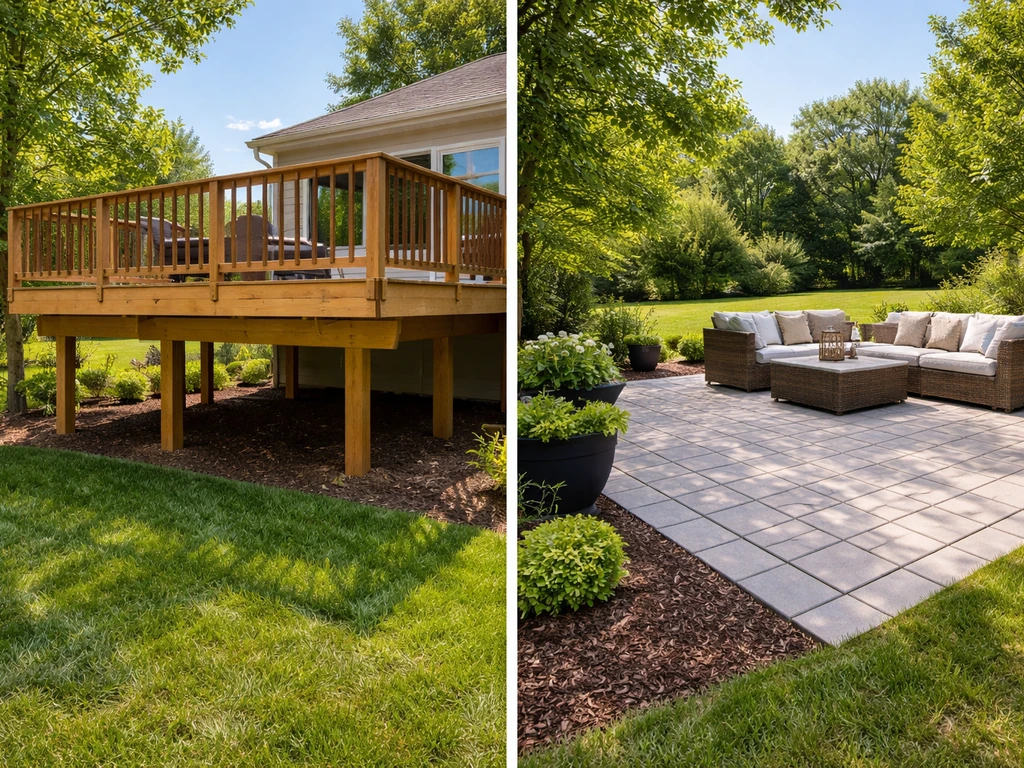
Patios are almost always cheaper to build than decks. A ground-level patio typically runs $10 to $35 per square foot installed, while a wood deck starts around $25 to $45 per square foot and a composite deck can push $45 to $80 per square foot. For a 400-square-foot project, that gap can easily mean $5,000 to $20,000 more for a deck. But price alone doesn't tell the whole story: site conditions, how high your yard drops off, what materials you choose, and what add-ons you need can all flip the math in a hurry.
Deck vs Patio Price: Cost Ranges, Add-Ons, and What to Choose

Miles Hart
4 May 2026
First, make sure you're comparing the right things
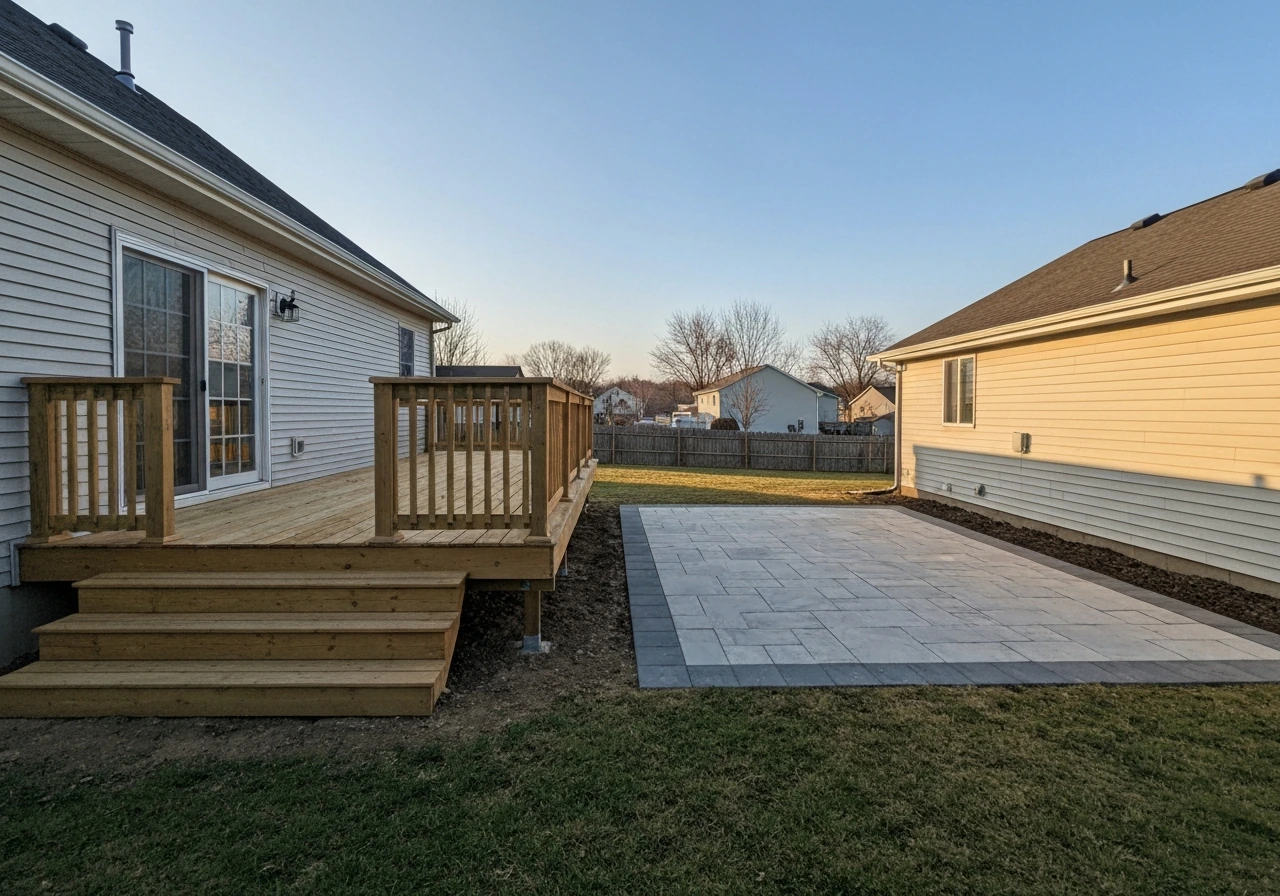
A deck is an elevated platform attached to (or freestanding near) your house, built on posts and framing with a structural subframe. A patio is a ground-level or near-ground-level surface: poured concrete, pavers, natural stone, gravel, or similar materials laid directly on a prepared base. The distinction matters for pricing because decks require footings, framing lumber, and often railings, while patios mostly skip all of that. People sometimes lump in covered structures like pergolas, screened rooms, or porch enclosures when they ask about deck vs. patio costs, but those are separate scopes with their own price tags. If you want to estimate deck versus patio costs more reliably, keep pergolas and porch enclosures out of the flat-surface comparison and compare the scopes separately deck vs. patio costs. This article focuses strictly on the flat outdoor surface itself.
Typical costs by material type
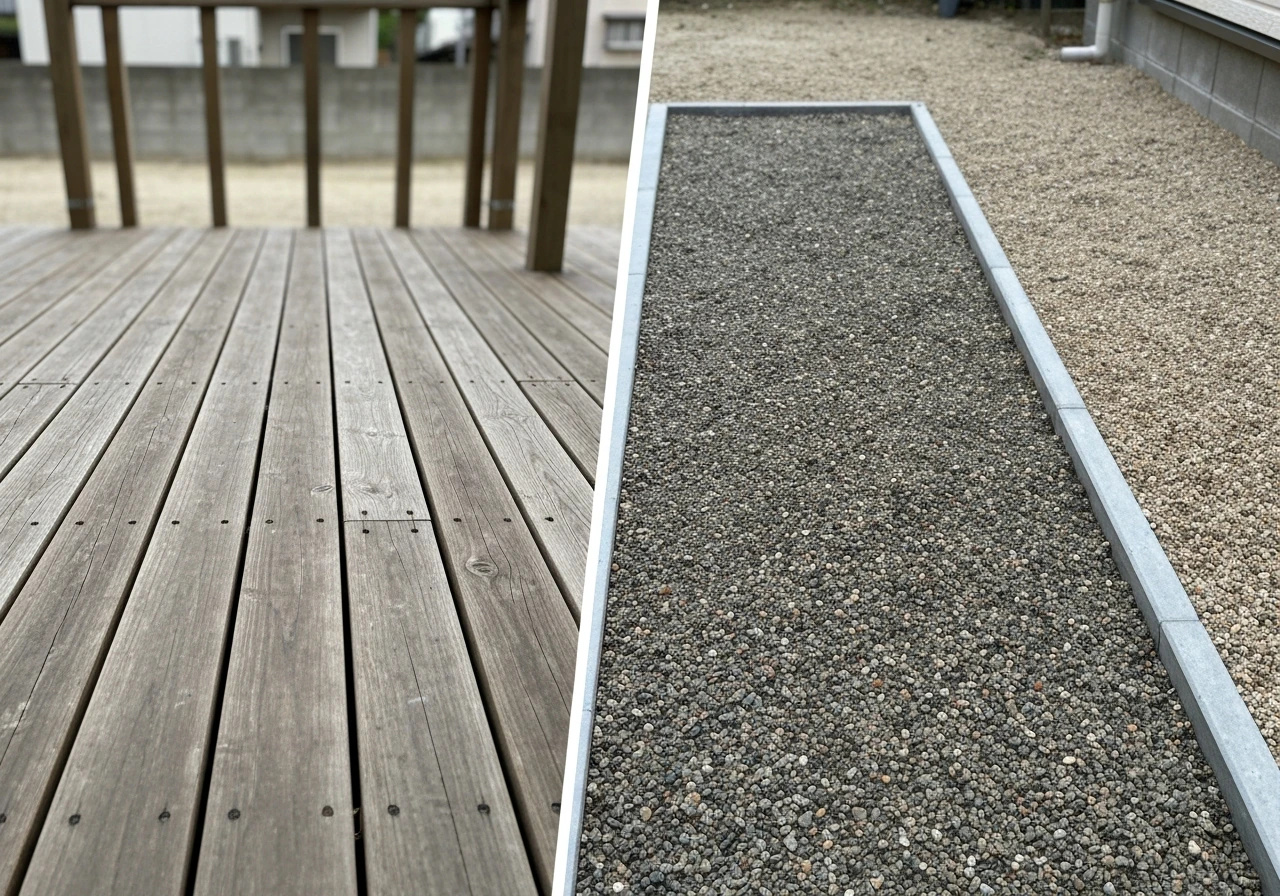
Here's where each major option lands in 2026, based on professionally installed projects. These are total installed costs including labor and materials, not just the materials alone.
| Surface Type | Cost Per Sq Ft (Installed) | Notes |
|---|---|---|
| Gravel patio | $2.35–$6.20 | Lowest upfront cost; needs edging and periodic replenishment |
| Concrete patio | $4–$30 | Wide range; stamped/decorative finishes push toward the high end |
| Paver patio | $10–$50 | Mid-range for standard pavers; premium stone or complex patterns cost more |
| Natural stone patio | $16–$35 | Higher material cost; labor-intensive to set properly |
| Pressure-treated wood deck | $25–$45 | Most affordable deck option; requires ongoing maintenance |
| Composite deck | $45–$80 | Higher upfront; lower long-term maintenance cost |
Concrete is the most common patio material and lands around $10 per square foot on average, but basic broom-finished slabs can come in around $4 to $6 per square foot while stamped concrete with color and texture can reach $20 to $30. Paver patios are popular because they look great and are relatively forgiving to repair, but installed costs range widely: HomeGuide puts a typical 20x20 paver patio at $3,800 to $6,800 all in. Natural stone is beautiful but expensive, running $16 to $35 per square foot installed. Gravel is the budget wildcard at $2.35 to $6.20 per square foot, though it works better for low-traffic zones than primary outdoor living areas.
For decks, pressure-treated lumber decks run roughly $25 to $45 per square foot installed, and composite decking bumps that to $45 to $80. Labor alone on a pressure-treated deck averages $15 to $30 per square foot depending on complexity and region. If you're in a high cost-of-living area or need a complex multi-level design, you'll land near the top of those ranges.
What actually drives the price difference
The biggest cost driver separating decks from patios is structural work. A deck needs footings (concrete piers dug below the frost line), posts, beams, joists, and decking boards, all before a single board of the surface is in place. That structural skeleton is expensive. A patio skips most of that: you excavate a few inches, lay a compacted gravel base, and set your surface material. The labor and materials for that substructure are a fraction of what a deck frame costs.
Elevation matters a lot. A deck that sits just a few inches off the ground is cheaper than one that's 6 or 8 feet in the air. Higher decks need taller posts, more structural bracing, and mandatory guardrails once the deck surface exceeds 30 inches above grade. Railings aren't a luxury add-on at that height, they're a code requirement, and they cost real money.
Permits are another line item that hits decks harder than patios. Most areas require a permit for any attached deck or elevated structure, with permit fees typically running $100 to $500 depending on project size and municipality. Patios at grade often don't require a permit at all, though projects that alter drainage or grading, or sit near property lines or easements, can trigger review requirements in some jurisdictions.
Site prep costs vary by project type too. Patios require grading, excavation, and sometimes drainage solutions if water runs toward the house. Poor drainage or heavy clay soil can add hundreds to a patio project. Decks have their own site prep headaches: rocky soil makes footing excavation expensive, and limited equipment access (like a narrow side yard) can force contractors to do more by hand, which adds labor hours fast.
Hidden costs and common add-ons
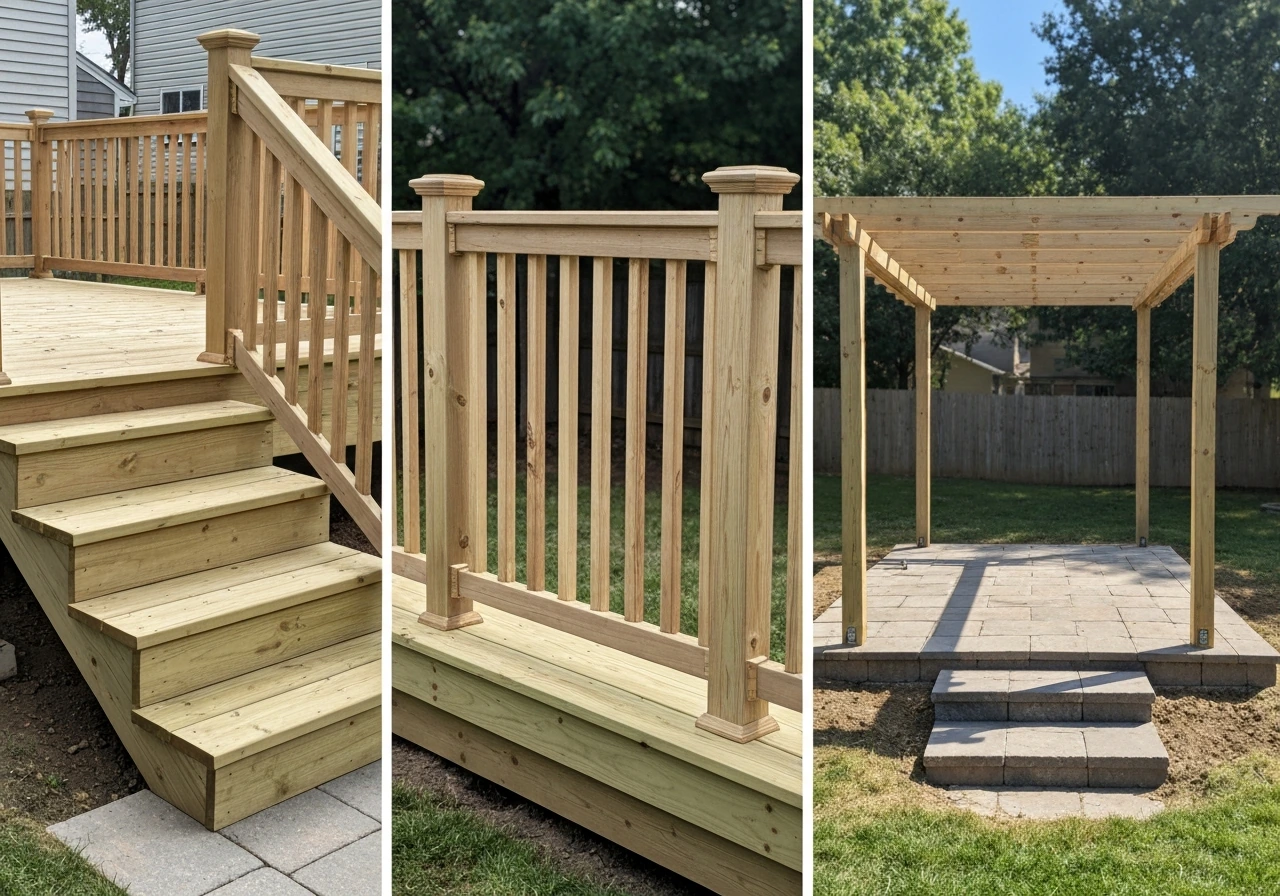
The base cost per square foot never captures the full picture. Here are the add-ons that routinely catch homeowners off guard.
- Stairs: A simple stair run off a deck or raised patio adds cost quickly, especially if you need a landing or multiple turns. Complex staircases with landings are one of the biggest per-square-foot cost spikes on any deck project.
- Railings and guards: Required by code once the deck surface is 30 or more inches above grade. Guards on stairs must be at least 34 inches high per IRC requirements. Cable railing and glass panels cost significantly more than basic wood or aluminum.
- Lighting: Low-voltage step lights or post lights are a popular add-on that can run $500 to $2,000+ depending on the number of fixtures and whether wiring needs to be run.
- Built-ins: Benches, planters, and outdoor kitchen rough-ins all add to the scope. A built-in bench that doubles as seating and storage can add $1,000 to $3,000 depending on materials.
- Pergola or shade cover: Often priced separately but frequently bundled with deck/patio projects. A basic pergola kit can start around $2,000 installed; custom structures run much more.
- Removal of the old surface: If you're replacing a concrete patio or old deck, demo and disposal costs add up. Thicker concrete slabs with rebar are especially expensive to break up and haul away. Old deck removal including brackets, pilings, and debris disposal is also a meaningful line item.
- Drainage and grading: Poorly graded yards or high-clay soils can require regrading, French drains, or dry wells, adding $500 to $3,000+ before the surface work even begins.
- Skirting (for decks): Closing in the space under a deck with lattice or solid panels can add $500 to $2,000 depending on perimeter length and material.
- HOA review fees or required landscaping restoration: Some HOAs charge review fees and require disturbed landscaping to be restored after construction, which rarely shows up in contractor quotes.
What real projects actually cost: examples by size
Numbers per square foot are useful for comparisons, but most homeowners think in terms of total project cost. Here's how the math shakes out for three common project sizes, using mid-range material choices and professional installation, without major add-ons.
| Project Size | Concrete Patio | Paver Patio | Pressure-Treated Deck | Composite Deck |
|---|---|---|---|---|
| 200 sq ft (small) | $800–$6,000 | $2,000–$10,000 | $5,000–$9,000 | $9,000–$16,000 |
| 400 sq ft (mid) | $1,600–$12,000 | $4,000–$20,000 | $10,000–$18,000 | $18,000–$32,000 |
| 600 sq ft (large) | $2,400–$18,000 | $6,000–$30,000 | $15,000–$27,000 | $27,000–$48,000 |
A few things stand out in those numbers. First, a basic concrete patio is genuinely cheap for smaller sizes, which is why it's such a popular budget option. Second, a high-end paver patio and a mid-range pressure-treated deck can overlap in price, especially once you factor in add-ons. Third, composite decking carries a substantial upfront premium over everything except natural stone. The resale and home value implications of that premium are worth thinking about separately, but from a pure construction-cost standpoint, patios win on price for most comparable sizes and finishes. If patio vs deck resale value matters to you, the initial price difference can look very different once you consider longevity and buyer appeal resale and home value implications. If you’re weighing deck vs patio home value, it helps to consider how resale appeal and maintenance expectations tend to differ between elevated decks and ground-level patios resale value.
DIY vs. contractor: when the math flips
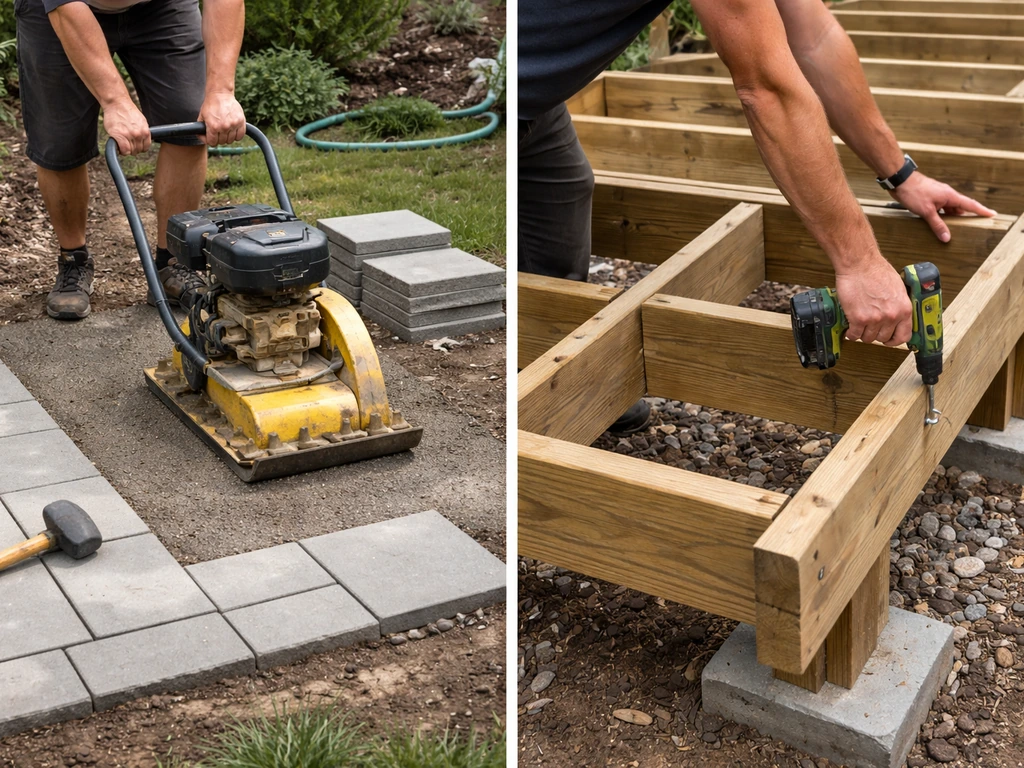
Patios are generally more DIY-friendly than decks, and that's where the cost advantage gets even more dramatic. A paver patio for a motivated homeowner is a realistic weekend project. According to one 2026 estimate, a roughly 200-square-foot DIY paver patio takes two to four full weekends and around $200 to $500 in equipment rentals (plate compactor, etc.), with the main savings coming from cutting out labor that would otherwise run $4 to $11 per square foot or more. DIY material costs for pavers themselves are reasonable, and there are no permit headaches for most ground-level patio projects.
Decks are a different story. Framing a deck correctly requires understanding load paths, ledger attachment, footing sizing, and local building codes. Getting the footings wrong isn't just an aesthetic problem, it's a structural and safety one. Decks.com puts DIY deck material costs at roughly $17 to $38 per square foot (materials only, no labor), which means you save the $15 to $30 per square foot labor premium, but you take on significant liability if the structure fails inspection or causes an accident. Many jurisdictions also require inspections at multiple stages of deck construction, so a DIY deck isn't quite as simple as building it and walking away.
Here's a practical breakdown of when to DIY and when to hire out:
| Scenario | DIY Realistic? | Why |
|---|---|---|
| Ground-level paver or gravel patio | Yes, for most homeowners | No structural engineering; equipment rental is straightforward; mistakes are fixable |
| Concrete patio pour | Possible but risky | Mixing, forming, and finishing concrete is unforgiving; a bad pour is expensive to redo |
| Low, simple attached wood deck | Yes, with experience | Requires code knowledge and at least basic carpentry skills; permit inspection likely required |
| Elevated deck (3+ feet above grade) | Not recommended | Structural complexity, guardrail requirements, and footing engineering increase risk significantly |
| Composite deck | Possible for materials; hire for framing | Composite boards install similarly to wood; the structural frame underneath is where mistakes get costly |
One scenario where DIY clearly flips the math: a simple 12x16 paver patio where a contractor might quote $3,500 to $5,000 installed. Do it yourself and you might spend $800 to $1,500 in materials and rentals. That's a $2,000 to $4,000 savings for two or three hard weekends of work. The same math doesn't apply nearly as cleanly to decks, where the structural risk and permit process eat into the DIY advantage.
Local factors that shift the price
Construction costs vary significantly by region, and deck vs. If you search “deck vs patio reddit,” you will find homeowners comparing real-world costs, DIY challenges, and resale impressions. patio pricing is no exception. For a deck vs patio decision in 2021, also compare how your local labor rates and code requirements may affect total installed cost. Labor rates in coastal metros run 30 to 50 percent higher than in rural Midwest markets. Cold climates require deck footings dug below the frost line, which means deeper (and more expensive) footings in Minnesota than in Georgia. Rocky soil adds excavation costs regardless of whether you're pouring footings or grading for a patio. Limited equipment access, like a backyard accessible only through a narrow gate, forces more hand labor and raises costs on both project types.
HOA rules can also affect your options and costs. Some HOAs restrict deck height, require specific materials or colors, or mandate approval processes that take weeks. Getting HOA approval denied after you've already hired a contractor is an expensive lesson. Check your HOA covenants before getting any bids.
How to get accurate quotes and compare bids fairly
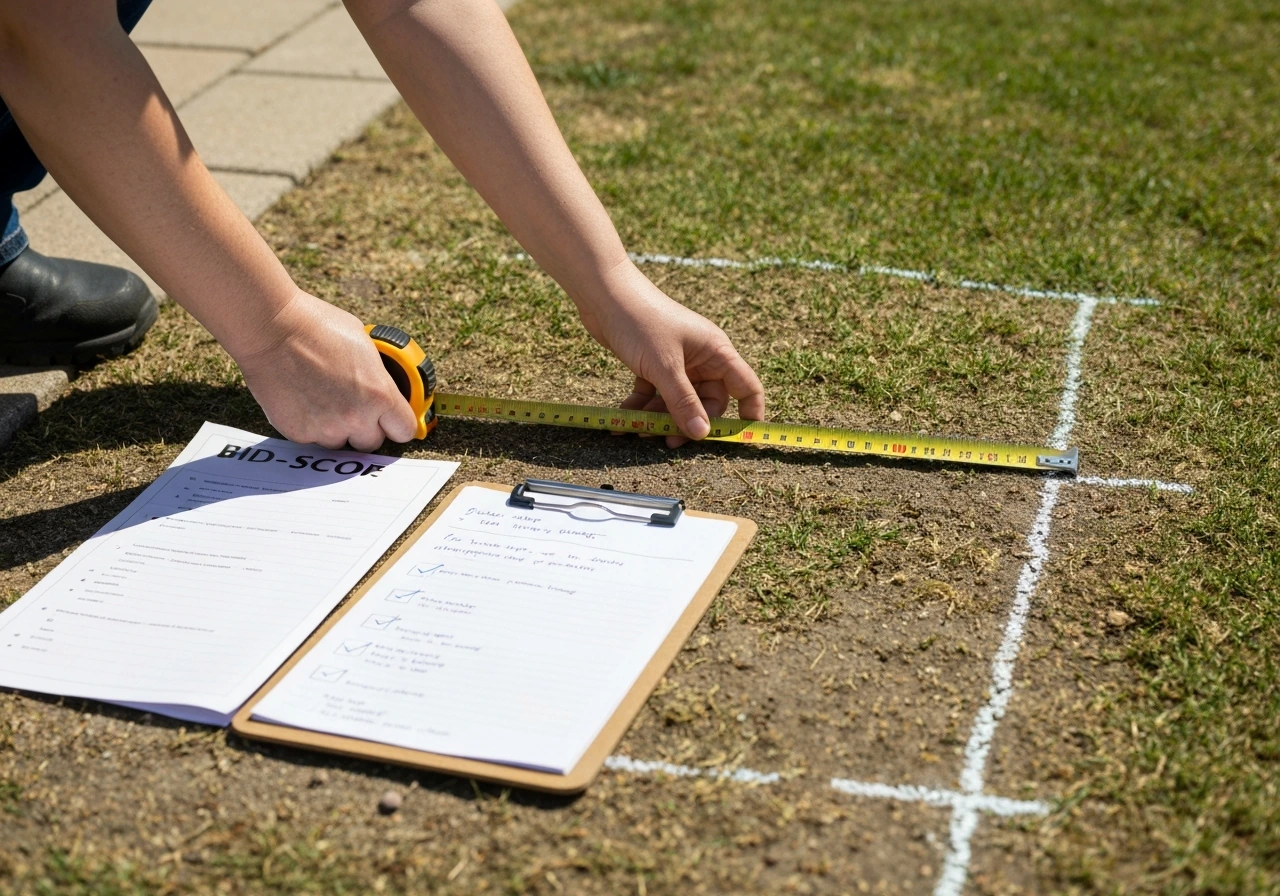
Getting three quotes is the standard advice, but getting three comparable quotes is what actually helps you. Contractors often scope projects differently: one might include site grading, another won't. One might include a stair run in the base price, another prices it separately. Here's how to make bids apples-to-apples.
- Measure your space before calling anyone. Know the square footage you want covered, plus any specific dimensions driven by your house layout or yard shape. Contractors who have to guess at scope will quote loosely.
- Write a simple scope document. One paragraph describing the project: surface type, approximate size, whether you need stairs, whether you want railings, and any specific materials you're leaning toward. Send the same document to every contractor.
- Ask each contractor to itemize the quote. You want to see materials, labor, permit fees, site prep/grading, and any disposal fees listed separately. A one-line total tells you very little.
- Ask specifically about drainage and site prep. How are they handling slope? What's their plan if they hit rock or tree roots during footing excavation? What's their drainage solution for water runoff from the new surface? These questions reveal whether a contractor has actually thought through your specific site.
- Ask about permit responsibility. Who pulls the permit, who pays for it, and who is responsible for scheduling inspections? This should be clearly defined in the contract.
- Get the payment schedule in writing. A reasonable contractor asks for a deposit (typically 10 to 30 percent) and milestone payments tied to project completion stages. Anyone who asks for more than 50 percent upfront is a red flag.
- Compare total installed cost, not just per-square-foot rate. A contractor with a lower per-square-foot rate but who excludes site prep, permit fees, and disposal can easily end up costing more than a higher-rate contractor who includes everything.
If you're torn between a deck and a patio purely on price, ask your top two or three contractors to quote both options for your specific site. The delta between them in your yard, with your soil conditions and your local labor market, will be more accurate than any national average. That real-world number is what you should be making your decision on.
One last thing worth keeping in mind: the price you pay upfront isn't the only cost. A pressure-treated deck will need staining or sealing every two to three years. A composite deck won't, but it costs more to build. A concrete patio can crack and require patching. Pavers are easy to repair individually but can shift over time if the base wasn't done right. Factor in a rough ten-year cost of ownership, not just the day-one install price, and the gap between some options narrows. Decks can also have ongoing upkeep costs that change the long-term comparison day-one install price. The resale value question is a whole separate conversation worth exploring, but from a pure construction-cost standpoint, a patio is almost always the more budget-friendly starting point. For most homeowners, knowing which option is a deck or patio better for resale depends on costs, durability, and how it fits your yard and local buyer preferences resale value question.
FAQ
Why can my deck quote be close to (or even higher than) a patio quote even though decks are usually more expensive per square foot?
Decks can close the gap when the patio is upgraded (pavers or stamped concrete), when you need significant drainage work for the patio, or when the deck design requires extras like stairs, complex railing, or a multi-level frame. Ask both contractors for an exact scope list (stairs included or not, grading included or not, railings included or required) so you compare apples to apples.
Does the “per square foot” comparison change if my yard has a slope or requires retaining walls?
Yes. Patios often need additional base thickness and drainage adjustments on sloped sites, while decks may need taller posts, more bracing, and sometimes retaining-wall style support for access stairs. If your quote doesn’t mention drainage, soil stabilization, or wall work (even briefly), that cost may show up later as a change order.
Are railings always required for a deck, and how does that affect deck vs patio price?
Once the deck surface is more than 30 inches above grade, guardrails are typically code-required, and they are usually one of the biggest “missing” line items in early estimates. If your deck is elevated, request rail pricing as a specific scope item (number of sections, length, and height) rather than assuming it is included.
What’s the most common add-on that makes a patio cost more than expected?
Drainage and site prep. If water currently flows toward your house, a patio may require improved grading, subdrain systems, or adjustments to the patio base thickness, which can materially raise the installed price. Make sure your estimate explains how runoff will be handled, not just how many square feet will be covered.
Do patios ever require permits like decks do?
Sometimes. Ground-level patios may not, but permits can be triggered if you alter grading or drainage, build near property lines, work within easements, or cross certain size thresholds in your municipality. Ask the contractor to confirm permit requirements for your specific location and project footprint before you sign a contract.
How should I budget for stairs, because they seem to appear in quotes inconsistently?
Treat stairs as a separate scope component. Some contractors include a standard stair run in the base price, others price it separately, and the cost varies with rise height, number of steps, and whether the stairs are framed (deck) or built as an integrated feature (paver or stone). If you can’t see a line item, ask for the stair quantity and finish details in writing.
Is DIY savings realistic for a patio if I already own a compactor or tools?
Partly, but you still need the right process and equipment. Even with a compactor, you may need proper excavation depth, base material, edge restraints, and correct compaction passes. If your site has clay, poor drainage, or limited access, DIY can lose time and money, so compare DIY equipment rental plus materials against the contractor’s timeline and warranty.
What’s the biggest DIY mistake that drives up real deck costs after the fact?
Underestimating structural requirements, especially ledger attachment details, footing depth, and load paths. A deck that fails inspection can require partial rebuilds, and inspectors may require changes to framing members or guardrail systems. If you do DIY, plan for multiple inspection stages and keep all structural plan details documented.
How do I make quotes comparable when one contractor “includes” more than another?
Request a scope checklist: exact materials (pressure-treated vs brand of composite, type of pavers or concrete finish), number and type of footings (decks), base build-up thickness (patios), drainage solutions (if any), and whether demo and haul-off are included. Also ask for the contract to specify what is excluded, like tree root removal or grading beyond a certain amount.
Will a patio or deck hold up better in freezing climates, and does that change the price conversation?
Freeze-thaw cycles tend to penalize both improperly prepared patios and decks with shallow or incorrectly constructed support. Decks benefit from footings designed for frost depth, but that can raise costs. Patios benefit from a well-draining base and correct installation details to reduce heaving. If you live in a cold climate, prioritize correct substructure over lowest initial price.
If I’m near an HOA, what details should I ask for before getting bids?
Ask for the HOA’s written requirements on deck height, railing style/material, approved colors, and any approval lead time. Also confirm whether the HOA requires architectural drawings or specific footing plans. Getting rejected after contractor start can cost you design fees and rework, so check before you schedule installation.
How should I compare long-term cost of ownership between deck and patio?
Use a simple 10-year budget model: expected maintenance frequency and costs, plus likely surface refresh timing (deck staining or sealing cycles, patio crack patching, and paver resetting). For deck products, remember pressure-treated usually needs more frequent maintenance than composite, while patios can shift if the base prep was inadequate. Ask contractors for a realistic maintenance plan, not just installation pricing.
Next Article
Deck vs Patio: Costs, Maintenance, and Which Fits You
Deck vs patio comparison: costs, permits, upkeep, comfort, drainage, and resale plus site checks to pick the best fit.