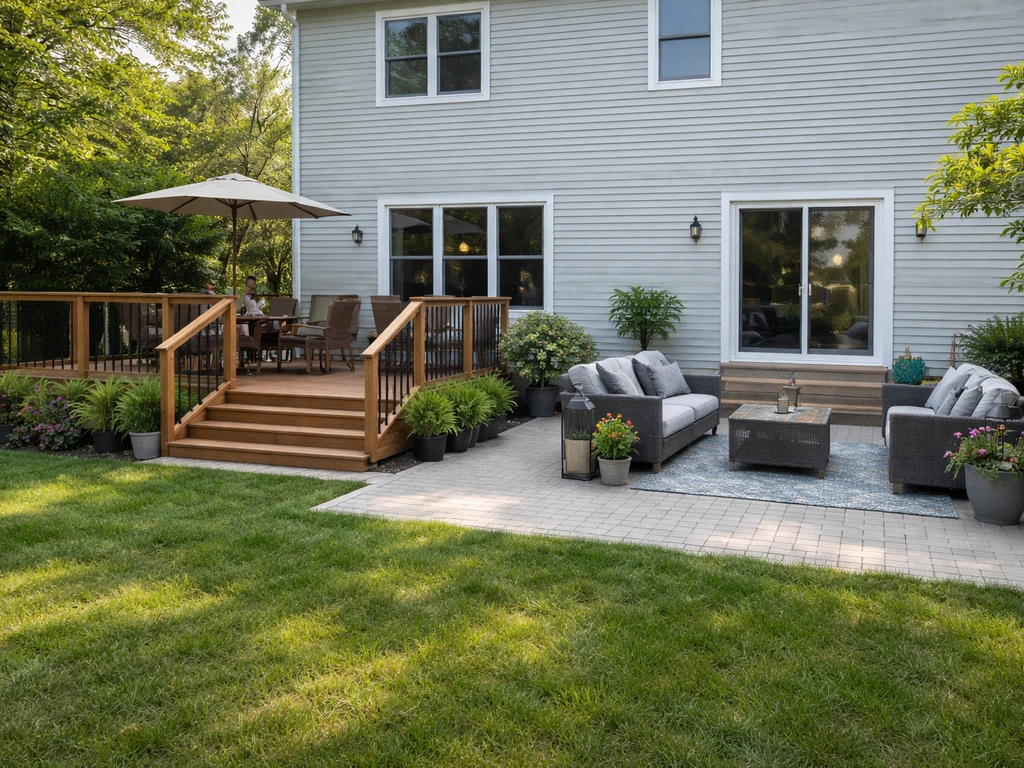
For most homeowners, the honest answer is: if your yard is flat and your budget is tight, build a patio. If your yard slopes, your door opens well above grade, or you want something that feels like an extension of the house, build a deck. That's the Reddit consensus in a sentence, and it holds up once you dig into the real numbers and tradeoffs.
Deck vs Patio: Reddit-Style Tradeoffs, Costs, and Choice Guide

Miles Hart
12 Jun 2026
What actually counts as a deck vs a patio (clearing up the confusion)
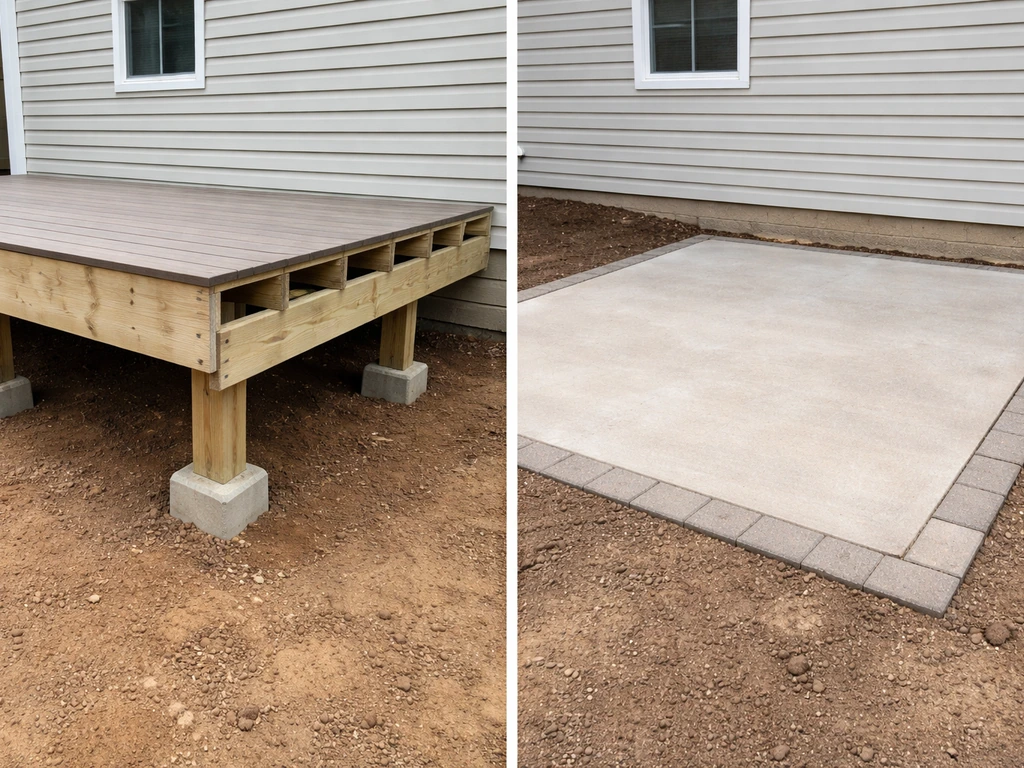
A deck is a raised platform with a structural frame, typically wood or composite, usually attached to the house via a ledger board. It sits above grade and needs footings, joists, beams, and often railings and stairs. A patio is placed directly on graded ground, no frame underneath, typically poured concrete or pavers. The key difference is elevation and structure: decks are built up, patios are laid down.
Here's where Reddit threads go sideways. People ask about 'a covered patio' or 'a patio with a roof' and suddenly nobody agrees on what it is. A covered patio is still a patio if it's at ground level with a pergola or shade structure on top. Once you add a roof with structural posts attached to the house, many municipalities start treating it like a room addition or a porch, not a patio. And a 'ground-level deck' made of composite boards sitting on a frame just above grade? That's technically a deck in most building codes, even if it looks and functions like a patio. The surface material doesn't define it. The structure and elevation do.
One more common mixup: patios cannot be raised. By definition they're at grade. If someone's talking about a 'raised patio,' they usually mean a deck with paver or concrete surface, or a grade change using retaining walls with a patio area on top. Those are more complex and more expensive than a standard patio, and they often need permits just like a deck.
Cost comparison: materials, labor, and ongoing upkeep
Patios are almost always cheaper to install per square foot than decks. Here's how the 2026 installed cost ranges shake out across common materials: If you're comparing deck vs patio options for 2021 pricing, the same cost drivers apply, but exact material and labor rates will be different 2026 installed cost ranges.
| Option | Installed Cost (per sq ft) | Typical 320 sq ft Project |
|---|---|---|
| Pressure-treated wood deck | $15–$25 | $4,800–$8,000 |
| Composite deck (mid-grade) | $35–$80 | $11,200–$25,600 |
| Composite deck (national avg, 16x20) | ~$78 | ~$25,100 |
| Poured concrete patio | $8–$20 | $2,560–$6,400 |
| Decorative/stamped concrete patio | $15–$30 | $4,800–$9,600 |
| Paver patio | $8–$30 | $2,560–$9,600 |
Those deck numbers include the structural frame, footings, decking boards, and basic stairs or railings. Patios don't have that structural overhead, which is why a basic poured concrete patio at $8–$12 per square foot is the most affordable backyard surface you can buy. CountBricks' 2026 cost guide places poured concrete patio installation ranges around $8, $20 per square foot, with decorative finishes potentially pushing higher a basic poured concrete patio at $8–$12 per square foot. A premium paver patio with natural stone can creep toward $30 per square foot, which starts to overlap with a pressure-treated wood deck, but you're getting a very different look and feel at that price.
Don't forget permits. Decks almost always require a building permit, which adds inspection fees and sometimes plan-review costs that typically run a few hundred dollars depending on your municipality. Patios often don't require a building permit, though some jurisdictions do require them for slabs and pavers (more on that below). That permit cost is usually baked into contractor bids but shows up when you're doing cost comparisons.
Ongoing maintenance costs
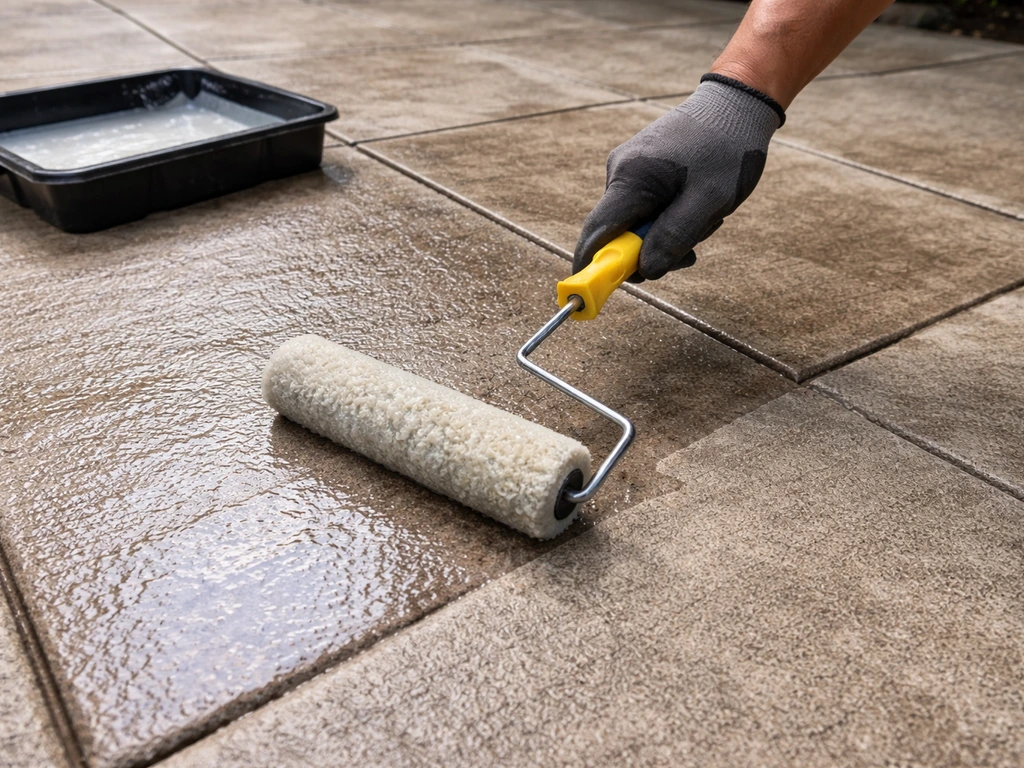
This is where decks and patios diverge significantly over time. A pressure-treated wood deck needs staining or sealing every one to three years to prevent warping, splitting, and rot. Skip it for a few years and you're looking at board replacement, not just refinishing. Composite decks are designed to cut that maintenance cycle: you clean with soap and water one or two times a year, and there's no staining or sealing. The tradeoff is the higher upfront cost. Pooled water is still a concern with composite because it can accelerate mold and mildew and damage the substructure over time, so you need proper drainage slope even with 'low maintenance' composite.
Concrete patios need a sealer every two to three years to reduce staining, spalling, and freeze-thaw damage. Skip the sealer in a freeze-thaw climate and you'll see surface cracking sooner than you'd like. Paver patios need joint sand replenishment periodically and weed management, especially once the original polymeric sand starts to break down. Polymeric sand can suppress weeds for up to five years when properly applied, but it does wash out eventually, and once dirt fills the joints, weeds follow. Neither is a huge burden, but both are real recurring tasks.
Best use cases by lifestyle and yard constraints
The most useful question isn't 'which is better?' It's 'which fits my actual yard and how I use outdoor space?' Here's how the two options stack up against the most common homeowner scenarios:
- Sloping lot: Deck wins. A deck frame can span grade changes and uneven ground that a patio can't. Trying to build a patio on a slope requires significant grading or retaining work that often costs more than just building a deck.
- Flat yard, tight budget: Patio wins. A poured concrete patio on a flat yard is the fastest and cheapest way to get usable outdoor space. No framing, no footings (beyond basic compacted base), less labor.
- Entertaining and grilling: Both work, but a deck attached to the house at door height gives you better flow from kitchen to outdoor cooking area. A patio works well if it's close to a sliding door at grade.
- Kids and pets: Patios are generally safer for young kids (no fall risk, no gap issues). Decks with proper railings are safe for older kids, but check that balusters are spaced less than 4 inches apart to meet code.
- Privacy and shade: Neither structure provides this on its own. A pergola, shade sail, or privacy fence works with both. If you want a roof, know that adding one to either structure changes the permit picture.
- Resale and curb appeal: Decks photograph better attached to the back of a home and tend to show up in MLS listings as a feature. A well-done paver patio can be equally attractive but reads differently to buyers.
- Access issues: If your back door is 3 or 4 feet above grade and opening to a deck is the obvious solution, a patio literally doesn't solve the problem without a staircase down from the door anyway.
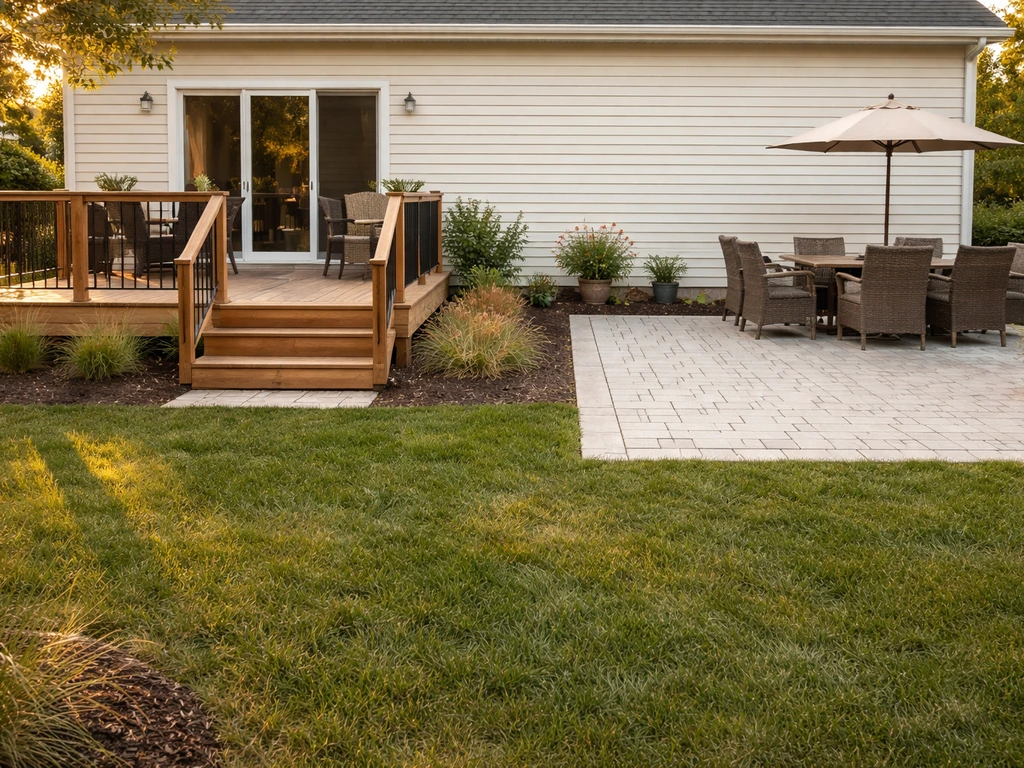
One thing that comes up constantly in landscaping forums: the synthesis option. A deck that steps down to a patio. This isn't a cop-out answer. For yards with moderate slope or homes where the door is slightly elevated, a small deck landing with stairs down to a paver patio gives you the best of both. It's more expensive than either alone, but it solves the grade problem while giving you a large, usable patio surface area at a lower cost per square foot than a full deck.
Maintenance, durability, and climate considerations
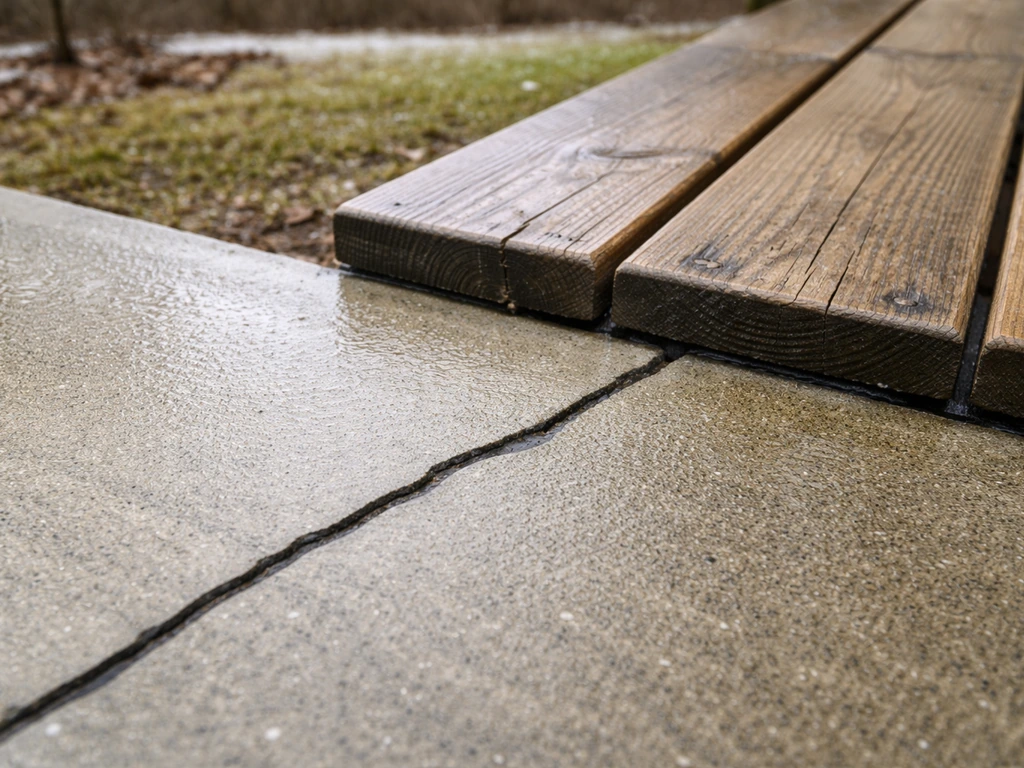
Climate matters more than most homeowners account for when they're shopping inspiration photos. If you're in a freeze-thaw region (basically anywhere that sees regular winter temperatures below 32°F), both patios and decks need specific design choices to hold up.
For concrete patios, freeze-thaw cycling is the main durability risk. Water gets into micro-cracks, freezes, expands, and spalls the surface. Air-entrained concrete mix is the technical defense against this, and keeping water draining away from the slab (proper grade and keeping downspouts pointed away) reduces the exposure. De-icing salts are hard on concrete surfaces, so use sand for traction instead when possible.
For wood decks in wet or humid climates, rot and mold are the enemy. Pressure-treated lumber resists rot by design, but the surface still needs regular sealing in wet climates to prevent checking and surface degradation. Composite decking holds up better in wet conditions but still needs adequate drainage slope and airflow underneath to prevent mold on the surface and rot on any wood substructure.
In hot, dry, UV-heavy climates (the Southwest, for example), composite decking can get hot enough underfoot to be uncomfortable on sunny afternoons, and certain composite products can fade or chalk over time without UV inhibitors. Concrete and pavers handle heat well and stay cooler than composite in direct sun, though dark pavers in full sun can still get uncomfortably warm. Wood in dry climates tends to check and crack unless sealed consistently.
Longevity comparison: a well-maintained composite deck lasts 25 to 30 years. Pressure-treated wood, well-maintained, runs 15 to 25 years before significant board replacement. A properly installed concrete patio can last 30 to 50 years before major work is needed. Paver patios can last as long as the base and drainage hold up, and individual pavers can be replaced without redoing the whole surface, which is a genuine advantage over poured concrete for long-term repair costs.
Permits, codes, safety, and HOA rules
This is the section most homeowners skip and then regret. The common assumption is: decks need permits, patios don't. That's partially right but dangerously oversimplified.
Deck permit triggers
Decks almost universally require a building permit when attached to the house via a ledger board, when they're over 30 inches above grade, or when they exceed roughly 200 square feet (though this threshold varies by jurisdiction). The ledger attachment is a structural connection to your home's rim joist, and inspectors specifically check this because a failed ledger attachment is one of the most common causes of deck collapses. Footings must extend to frost depth (42 inches minimum in colder climates) and must be sized for the deck's load. Guardrails are required when open sides are more than 30 inches above grade, and the IRC standard for railing height is at least 36 inches from deck surface to top of rail. Some jurisdictions also require deck electrical planning (outlet placement along the perimeter) as part of the permit.
Patio permit and zoning triggers
Patios can require permits too, depending on where you live. Some municipalities require permits for concrete slabs and paver patios, particularly when they cover a significant area. For example, Rosemount MN’s Patios/Slabs page notes that a building permit is required for patios and concrete slabs (including pavers) and outlines setback requirements and impervious-surface coverage limits permits for concrete slabs and paver patios. Beyond building permits, zoning setback rules apply almost everywhere: your patio can't go within a certain distance of the property line or principal structure, and many jurisdictions have impervious surface coverage limits that cap how much of your lot can be covered by hard surfaces (driveway, roof, patio combined). A Reddit cautionary tale that circulates regularly: homeowner pours a concrete patio without checking setback rules, discovers it violates a 3-foot setback, and also created a drainage problem that floods the yard. Both issues are expensive to fix after the fact.
HOA rules
If you're in an HOA, assume you need architectural review approval for either a deck or a patio before you start. Many HOAs restrict materials, colors, and placement. Some prohibit certain deck materials or require that patios not be visible from the street. Check your CC&Rs and submit an architectural review application before pulling a building permit, because an HOA denial after a permit is issued is a mess.
A note on fastener compatibility
This is a detail that matters for deck builders specifically. Modern pressure-treated lumber uses ACQ or CA preservatives that are corrosive to standard fasteners. You must use hot-dipped galvanized fasteners that meet ASTM standards, or stainless steel in higher-exposure or coastal applications. Mixing metals (for example, using regular zinc-plated screws with ACQ lumber and aluminum flashing) causes galvanic corrosion and can fail structurally. This comes up in permit inspections and in deck failures, so don't let a contractor cut corners on hardware.
DIY vs hiring a pro: what's realistic
Patios are more DIY-friendly than decks for most homeowners. A basic paver patio on a flat yard is a genuine weekend project if you're comfortable with compacting a gravel and sand base, cutting pavers, and doing the joint sand finish. Poured concrete is harder to DIY well because timing the pour, finishing the surface, and getting consistent thickness and grade requires experience. Most homeowners who try to pour a concrete slab without prior experience end up with surface quality issues or drainage problems.
Decks are a more demanding DIY project, but absolutely doable for a competent builder. The ledger attachment, footing installation, and joist framing are the technically critical parts. If you're comfortable with framing basics and can read a permit drawing, a ground-level or low-rise deck is a realistic DIY. An elevated deck with complex stairs, multilevel framing, or electrical requirements is where most homeowners should hire a pro, at least for the structural and electrical portions.
When getting contractor bids: get at least three. Deck and patio pricing varies significantly by region and by contractor workload. Specify materials exactly (composite brand and line, paver type and size, concrete finish) so you're comparing the same scope across bids. Ask specifically whether the bid includes permit fees and whether the contractor pulls the permit in their name (they should, for licensed work). A bid that seems significantly lower often means permits aren't included or materials are unspecified.
Home value and resale impact
Both decks and patios add value, but neither returns 100 cents on the dollar at resale. The 2024 Zonda Cost vs Value data shows composite deck additions recouping in a typical range nationally, with wood decks often recouping at a slightly higher percentage than composite because the upfront cost is lower. Broadly, deck and patio projects are estimated to return roughly 60 to 80 percent of their cost at resale according to outdoor living industry surveys, though this varies heavily by region, local market demand, and the quality of the installation.
Decks tend to show up more prominently in real estate listings as a named feature, which can help with buyer interest. A well-maintained paver patio can close the gap, and there's an argument that patios require less buyer anxiety about structural maintenance than a deck. That matters because deck vs patio home value often hinges on how visible and low-maintenance the outdoor feature feels to buyers a well-maintained paver patio. Research cited by contractors suggests outdoor living spaces influence buyer interest by 20 to 30 percent, which is meaningful even if the dollar-for-dollar recoup isn't full.
The practical advice for resale: don't build a deck or patio solely as a value play. Build it because you'll use it. The resale return is a bonus, not a guarantee. If you're comparing deck vs patio resale, focus on how your local market values outdoor features and what buyers will worry about during inspections. If you're trying to decide is a deck or patio better for resale, focus on your local buyer expectations and how well the structure is maintained resale return. And a poorly built or unmaintained deck can actually hurt resale if buyers see rot, loose railings, or unpermitted construction that shows up in a home inspection.
For a deeper look at the resale math, the cost and value differences between deck and patio projects, and how specific materials affect buyer perception, it's worth comparing across the related topics of deck vs patio price, deck vs patio home value, and whether a deck or patio is better for resale, since regional market conditions shift these numbers considerably.
How to actually decide: a checklist and common mistakes
Here's a practical decision sequence. Work through these before you call a contractor or price materials.
- Measure the grade. Stand at your back door and look at where you want the outdoor space. Is the ground level with the door threshold, or is there a drop? If it's more than 18–24 inches of drop over the planned area, a deck is likely the simpler structural solution. If it's flat or close to flat, a patio is the default unless you have a specific reason for a deck.
- Check drainage first. Walk the area after a heavy rain. Does water pool? Which direction does it drain? A patio or deck built in a low spot without addressing drainage first will have chronic water problems. Grade should slope away from the house at a minimum of 1 inch per 8 feet.
- Pull your local permit requirements before designing. Call your building department or check their website. Ask specifically about permits for decks (attached vs freestanding), permits for patios and concrete slabs, setback requirements, and impervious surface limits. This takes 20 minutes and can save you from a costly mistake.
- Check your HOA documents if applicable. Look for the architectural review process and any material restrictions before you get attached to a specific design.
- Set a realistic budget. Use the per-square-foot ranges above and multiply by your planned square footage. Add 10–15 percent for contingency. If a patio fits the budget and site, start there. If you need the structural solution a deck provides, budget accordingly.
- Get three contractor bids with identical scope. For patios: specify the concrete mix or paver type, base depth, drainage provisions, and finish. For decks: specify lumber species and treatment, decking material, railing system, footing depth, and whether the bid includes permit fees.
- Consider the deck-plus-patio combination. If your site has moderate slope and a large flat area below, a small deck landing with stairs down to a paver patio often solves both the door-height problem and the cost-per-square-foot problem at once.
Common mistakes (the ones Reddit warns about most)
- Building without a permit and discovering it during a home sale when the unpermitted structure shows up in inspection and must be brought to code or removed.
- Choosing composite decking for low maintenance but skipping proper drainage slope, leading to mold and substructure rot that costs more to fix than the maintenance you avoided.
- Assuming a patio needs no permit and violating setback rules, then having to remove or modify a completed concrete pour.
- Using the wrong fasteners with pressure-treated lumber and seeing hardware fail or corrode within a few years.
- Grading a patio area without checking where the water goes, and directing runoff toward the foundation or a neighbor's property.
- Getting one contractor bid and accepting it without comparison, missing the typical 20–40 percent price variation across bids for the same project.
- Building the largest possible deck to maximize perceived value when a smaller, well-built deck with a patio extension would cost less and function better.
The bottom line is that 'deck vs patio' is usually a site question more than a style question. Let your grade, your door height, your drainage, and your budget drive the choice. If all those factors point either way, then you get to make it a style and lifestyle decision. And if you're still on the fence, the deck-plus-patio combo is less of a compromise than it sounds and more of a practical answer to a genuinely split situation.
FAQ
Is a “covered patio” always a patio, or can it become a deck/porch for permitting?
If your “patio” has posts anchored to the house or a freestanding roof frame that creates a room-like footprint, inspectors often treat it more like a covered porch or accessory structure. The practical tell is whether the roof loads are carried by structural members tied into the house, not just a lightweight cover like a pergola.
Can I install a patio without a permit if it’s just concrete or pavers? What else should I check?
Yes, in many places a slab or paver surface still falls under zoning and sometimes permit rules even when no building permit is required for the construction itself. You should confirm both, setback compliance (distance to property lines and principal structure) and any impervious-surface limits, because those can change after you add the patio area.
What if I want the look of a patio but build it slightly elevated with composite boards, is it still considered a patio?
A deck board material is not the deciding factor, the structure and elevation are. A low platform with a supporting frame and footings that sits slightly above grade will usually be treated as a deck in code terms, even if it looks and functions like a patio.
Why do people get tripped up by the idea of a raised patio?
A “raised patio” in the strict sense usually means you are actually creating a platform with retaining walls or structural fill. That triggers additional engineering or at least detailed drainage design, and it can require permits similar to a deck because the support and water management are what make it complex.
What drainage mistake causes the most long-term problems for both decks and patios?
If water can’t drain away from the slab or deck, you get faster surface deterioration and mold risk. For concrete, proper slope and directing downspouts away from the structure matters more than just adding a sealer, and for decks you still need airflow under the platform even with composite.
Should I get HOA approval before I pull the building permit for a deck or patio?
If you’re in an HOA, approval timing is a big issue. Many HOAs require an architectural review before permits, and starting work before that approval can force removal or modifications even if the city issues a permit.
Do deck or patio projects always require electrical permits too?
Not always, and it’s worth clarifying in writing. Some jurisdictions regulate deck electrical when it includes new circuits or where outlets are placed, and contractors may price the work differently depending on whether they include electrical routing and required inspections.
Do composite decks really need no maintenance at all compared with pressure-treated wood?
Composite is marketed as low maintenance, but it is not maintenance-free. You still need basic cleaning and you must keep leaves and debris from trapping moisture, especially in shaded areas, because trapped water can encourage mildew and accelerate substructure issues.
What maintenance tasks do paver patios have that people often forget?
For patios, joint sand and weed control are often the recurring tasks people underestimate. Expect to refresh joint sand periodically (often every few years depending on traffic and washing) and plan for weed management once joint material breaks down or migrates.
If a section gets damaged, are pavers easier and cheaper to repair than concrete?
Resurfacing or patching is the difference. With poured concrete, a damaged area often means cutting out and replacing sections or applying resurfacing coatings. With pavers, individual stones are replaceable once the base and drainage are correct, so localized damage can be cheaper to fix.
What deck detail should I scrutinize during inspection to avoid common structural failures?
For ledger-attached decks, the hardware and flashing details are a major failure point. Make sure the contractor uses the correct fasteners for treated lumber chemistry and the right flashing approach, then verify the design includes flashing to manage water at the house connection.
When I compare deck vs patio contractor bids, what should I request in the written scope so bids are truly comparable?
Bid gaps usually come from scope ambiguity: whether stairs and railings are included, what “deck stairs” means in terms of rise/run, whether the contractor includes hauling and disposal, and whether the permit fees are included or handled separately. Ask for a line-item breakdown so you can compare apples to apples.
What’s the safest way to add shade over a patio or deck without creating a more complex permit situation?
If you want shade without triggering “room addition” behavior, a pergola or lightweight shade structure is typically easier to keep in a simpler permitting category, but the exact cutline varies by jurisdiction. The safer move is to tell the permit reviewer what you’re planning (height, attachment method, and how posts carry load) before construction.
How can a deck or patio hurt resale if it’s not built or maintained well?
If you’re choosing between a deck and a patio for long-term value, your resale risk is usually about inspection findings, not the concept itself. An unpermitted or poorly built structure, loose railings, water stains, or drainage flooding can turn the outdoor feature into a negotiation item during sale.
Next Article
Deck vs Patio Home Value: Costs, ROI, and Resale Impact
Deck vs patio home value guide with costs, ROI, resale impact, materials, permitting, and buyer-ready upgrade tips.