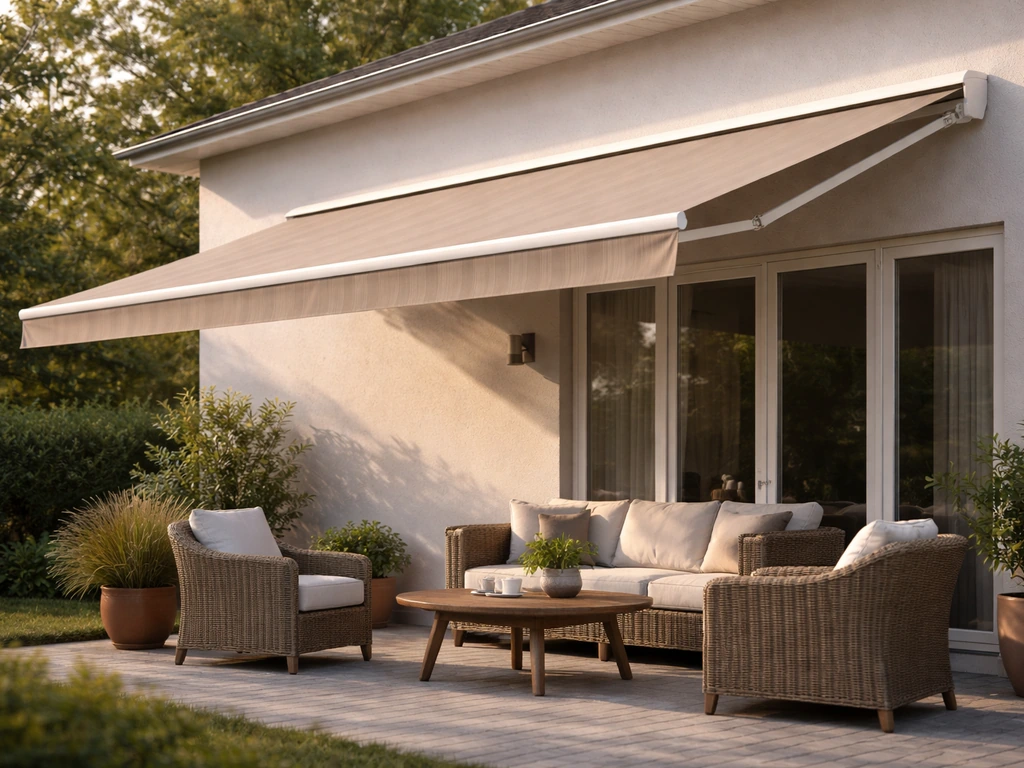
Most homeowners pay somewhere between $1,000 and $6,000 to have a patio awning professionally installed, with motorized retractable models sitting toward the top of that range and basic manual hand-crank awnings at the low end. If you want a quick ballpark: budget around $2,500 to $3,500 for a mid-size motorized retractable on a standard patio, or closer to $600 to $1,500 for a manual fixed or crank awning covering the same space. The final number depends heavily on size, whether it retracts, how it's operated, and what your wall is made of, all of which are easy to estimate once you know what to look for.
How Much Is an Awning for a Patio? Cost Guide

Miles Hart
21 May 2026
Quick cost ranges for patio awnings
Here's how the numbers typically shake out in 2026 for professionally installed patio awnings, from the most basic to the most feature-rich:
| Awning Type | Typical Installed Cost | Best For |
|---|---|---|
| Manual / hand-crank retractable | $200 – $3,000 | Budget-conscious buyers, smaller patios |
| Motorized retractable (standard) | $1,000 – $6,000 | Most homeowners, mid-size to large patios |
| Motorized retractable (premium/large) | $6,000 – $8,500+ | Wide spans, high-end brands, sensor packages |
| Fixed / stationary awning | $300 – $2,500 | Permanent shade, low maintenance, no moving parts |
On a per-square-foot basis, most installers price patio awnings at roughly $12.50 to $27.50 per square foot, with retractable models trending toward $15 to $30 per square foot. A national average for a motorized retractable installation lands around $2,700. These figures include the unit and standard labor, but not always electrical work, permits, or specialty mounting on masonry surfaces, more on those below.
What changes the price most
Awning pricing isn't random. A handful of factors account for most of the difference between a $900 job and a $7,000 job.
Size and projection
Width and projection (how far the awning extends from the house) are the two core dimensions that drive cost. A wider awning needs more fabric, a heavier frame, and longer mounting hardware. A deeper projection requires longer arms and, on motorized models, a more powerful motor to retract that extra weight. Standard retractable awnings commonly come in widths from about 8 feet to 20 feet, with projections up to roughly 10 feet 2 inches. Going wider or deeper than that usually means ordering a custom unit or using two awnings side by side, both of which push costs up.
Materials: frame and fabric
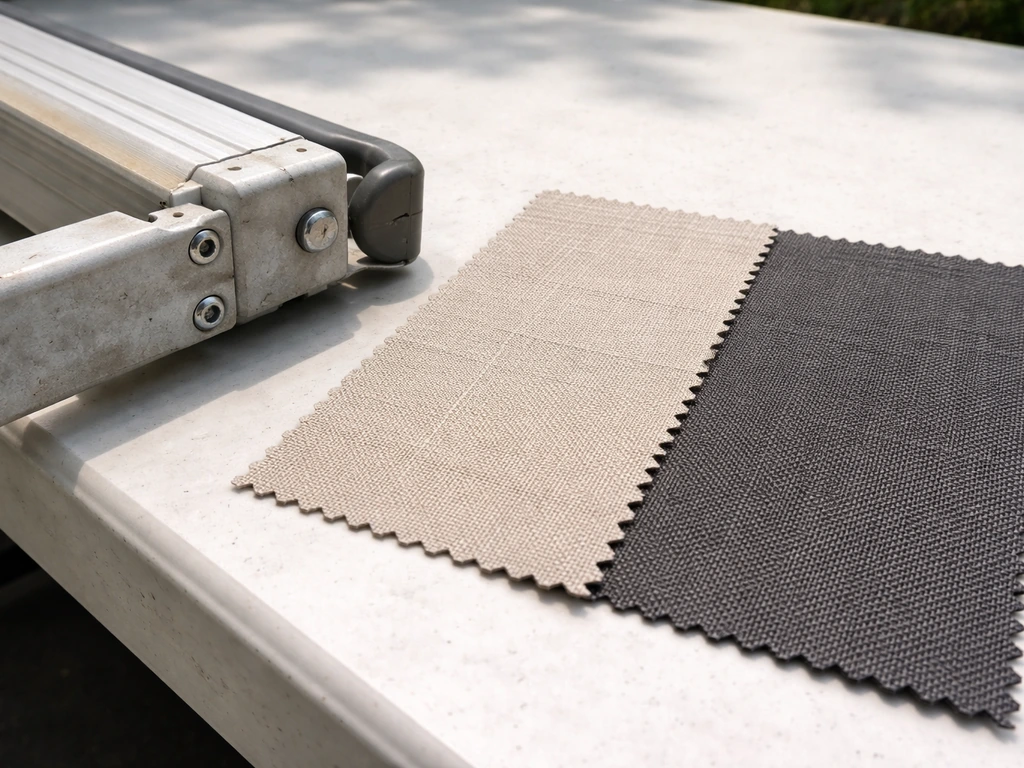
The frame is almost always aluminum (powder-coated for weather resistance) at most price points. Fabric is where the variation shows up. Entry-level awnings use basic acrylic or polyester weave. Mid-range and premium awnings use solution-dyed acrylic (think Sunbrella-grade fabric), which holds color longer and resists mildew better. That fabric upgrade can add $200 to $500 to the unit cost, but it's worth it if the awning is getting daily sun exposure.
Operation: how the awning opens and closes
Manual hand-crank awnings are the cheapest to buy and install. Motorized awnings add a tubular motor inside the roller, a receiver, and some form of control (wall switch, remote, or smart home integration). That motor and its wiring can add $300 to $1,500 to the unit cost alone, not counting the electrician if you need a new circuit run to the mounting location.
Add-ons and accessories
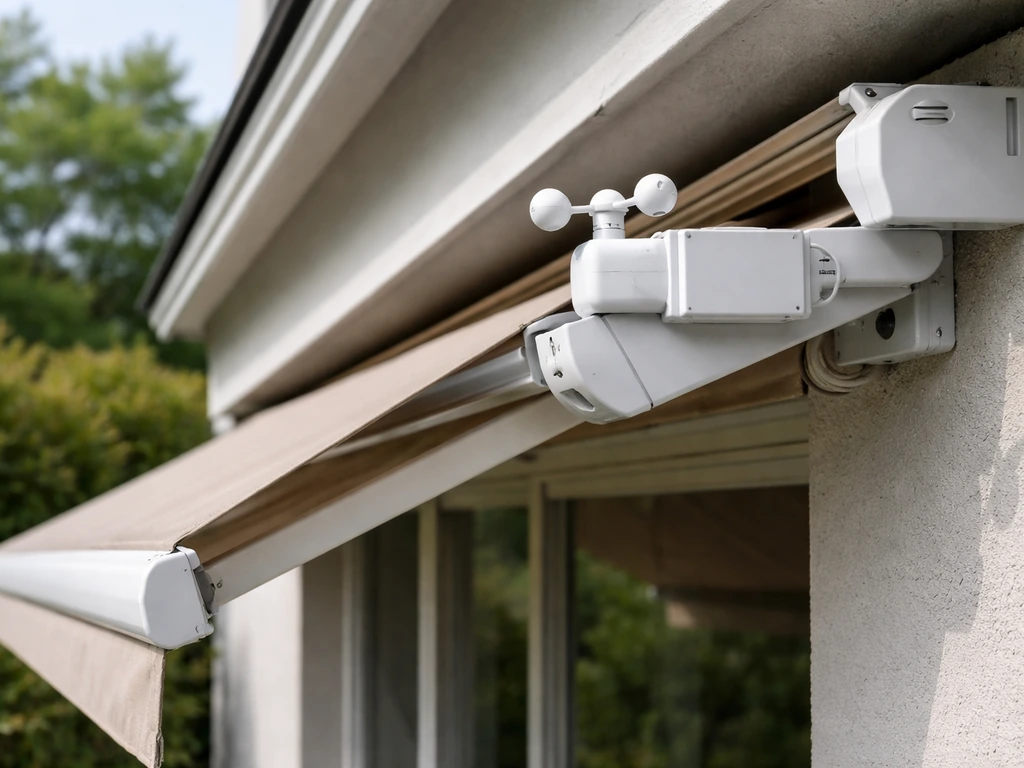
Sensors and controls are the most common add-ons that surprise buyers on the final invoice. A wireless wind sensor (which automatically retracts the awning at wind speeds around 25 mph) typically adds $100 to $250. A sun sensor adds similar costs. LED light strips, hood covers, valances, and wireless wall switches each add smaller amounts, but they stack up quickly. Plan for $300 to $800 in accessories if you want a fully automated, weather-aware setup.
Retractable vs fixed, motorized vs manual
The retractable vs fixed decision is the single biggest price fork in the road. Fixed awnings are stationary structures, basically a permanent roof extension over part of your patio. They cost less upfront and require no mechanical maintenance, but they block light and airflow year-round whether you want shade or not. Retractable awnings give you control, extend when the sun hits, retract when you want open sky or when wind picks up, but all that mechanical complexity costs more to buy and more to repair if something breaks.
| Feature | Fixed Awning | Manual Retractable | Motorized Retractable |
|---|---|---|---|
| Typical installed cost | $300 – $2,500 | $200 – $3,000 | $1,000 – $6,000+ |
| Mechanical parts to maintain | None | Crank mechanism | Motor, receiver, controls |
| Flexibility of use | None (permanent shade) | Good (manual effort) | Best (push-button or auto) |
| Wind/weather risk | Structurally mounted, low risk | Must crank in manually | Auto-retract with sensor |
| DIY friendliness | Moderate | Most DIY-friendly | Harder (electrical involved) |
Within retractable awnings, going from manual crank to motorized typically adds $500 to $1,500 to the total project cost. Motorized awnings add real convenience, especially for large awnings where cranking a 16-foot span by hand gets old fast. If the awning is 10 feet wide or smaller and you're price-sensitive, a manual crank is a totally reasonable choice. Above 14 feet wide, most homeowners find the motor upgrade worth it.
Installation and site factors that raise or lower cost
The awning unit itself is only part of the bill. Where and how it gets mounted can move the final number by hundreds of dollars.
- Wall surface: Wood siding is the easiest and cheapest to mount on. Stucco, brick, stone, and cultured stone require a masonry bit and more labor time. Drilling through brick (into the brick itself, not the mortar) and then waterproofing the penetrations adds time and cost. Budget an extra $150 to $400 for masonry mounting.
- Structural backing: Brackets must anchor into wall studs or a solid ledger board, not just into surface cladding. If studs are spaced oddly or the wall doesn't have backing where you need it, installers may need to add blocking, which adds time.
- Mounting height: You need at least 7 feet 6 inches of clearance from the patio floor to whatever the awning will mount below (eave, overhang, soffit). Optimal mounting height is around 9 feet. If your wall height is tight, the installer may need to relocate the bracket position or the job may simply not be feasible without modifications.
- Electrical access: Motorized awnings need power at the mounting location. If there's a convenient outdoor outlet nearby, hardwiring is simple. If a new circuit needs to run from the panel, expect to add $200 to $600 or more for an electrician.
- Permits: Most municipalities require a permit for permanent awning installations. Permit fees typically run $25 to $100, but in some jurisdictions they can be higher. Always ask your installer whether they pull permits — it protects you if you ever sell the home.
- Labor rates: Installer labor runs roughly $50 to $150 per hour depending on your region. Standard patio awning installation typically takes 2 to 4 hours for a straightforward job on wood siding.
How to measure your patio and estimate the awning size
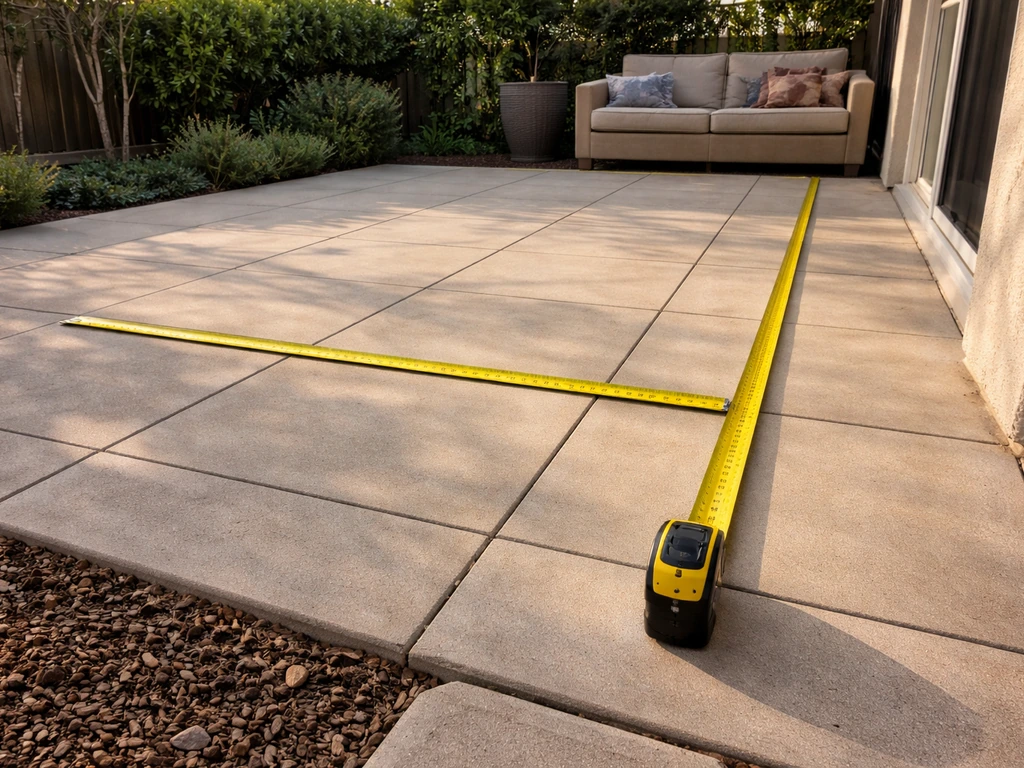
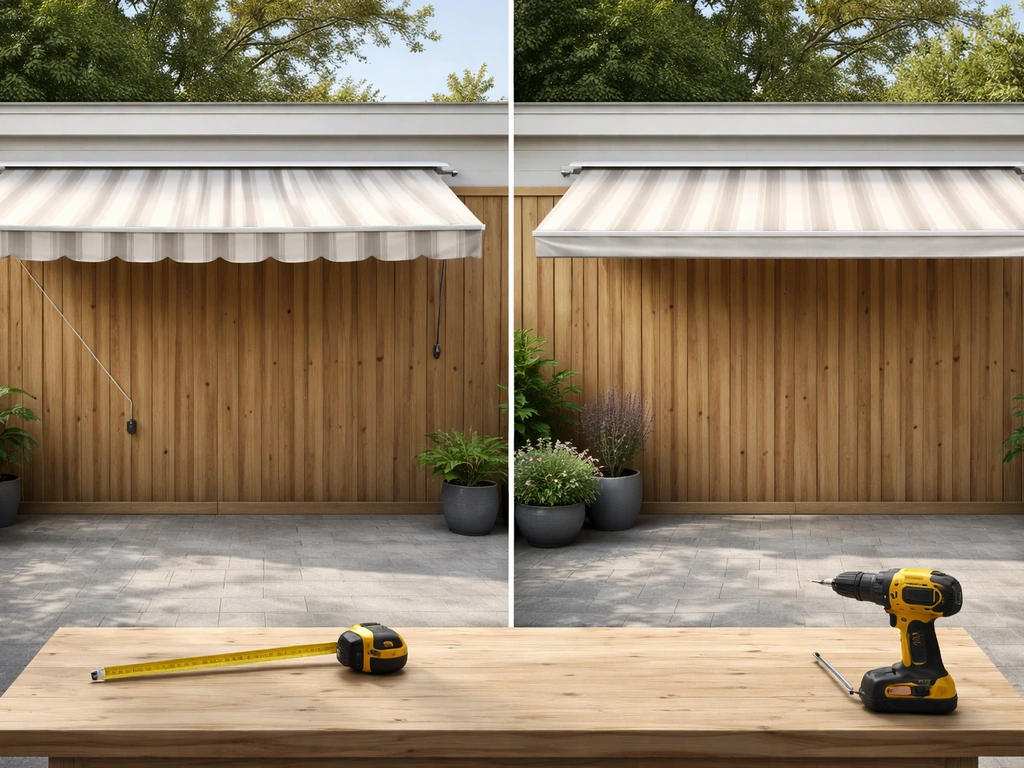
You only need two measurements to size a patio awning: width and projection. Width is how far the awning spans across your patio wall. Projection is how far it extends out from the house. Here's how to get both accurately before you call for a quote.
- Measure the width of the area you want to shade. This is typically the width of the patio opening or the span between any obstructions (light fixtures, downspouts, corners). Note that the awning fabric will be about 5 to 6 inches narrower than the frame, so if you need to shade right to the edge of a specific feature, size up slightly.
- Measure your desired projection — how far from the house wall you want coverage. This is measured along the fabric slope down to the front bar, not as a flat horizontal distance. For most patios, 8 to 10 feet of projection covers the seating area comfortably.
- Check your clearance height. Measure from the patio floor up to the soffit, eave, or overhang where the awning will mount. You need a minimum of 7 feet 6 inches of clearance, with 9 feet being ideal. If you're below that minimum, a retractable awning may not fit.
- Check the bracket strip. You need about 8 inches of clear, unobstructed horizontal space along the entire mounting width at bracket height — no rafter tails, light fixtures, or other obstructions in that strip.
- If your patio is wider than about 24 feet, plan on using two awnings side by side rather than trying to span the whole thing with one unit. Single retractable awnings are not built to span that distance reliably.
Once you have your width and projection, multiply them to get approximate coverage in square feet. Then apply the per-square-foot range ($12.50 to $30 depending on type) for a rough installed estimate. For example, a 14-foot-wide awning with a 10-foot projection covers 140 square feet. At $20 per square foot, that's a rough estimate of $2,800, right in line with the national average for a standard motorized retractable.
How to get accurate quotes and compare bids
Getting useful quotes means giving every installer the same information and asking the same questions. Here's how to do it without wasting anyone's time.
Before you call, have your measurements ready: width, desired projection, mounting height clearance, and wall surface type. Tell each installer the same spec so you're comparing apples to apples. Ask them to quote both manual and motorized options if you're on the fence, the difference in the quote will tell you whether the upgrade is worth it to you.
- Ask what's included: Does the quote cover the awning unit, all mounting hardware, labor, and any electrical work? Or is electrical a separate line item?
- Ask about permits: Will they pull the permit, and is the permit fee included in the quote?
- Ask about the fabric: What brand and grade is the fabric? Solution-dyed acrylic vs standard polyester is a significant durability difference.
- Ask about warranty: Most quality awnings carry a 5-year warranty on the frame and 3 to 5 years on the fabric. Labor warranties vary widely.
- Ask about wind/weather ratings: If you're in a windy area, ask for the awning's rated wind resistance. A wind sensor add-on is worthwhile if the unit isn't rated for the gusts you get.
- Get at least three bids. Awning installation pricing varies significantly by region and by how busy a particular installer is. A third bid often reveals whether the first two were competitive or not.
When comparing bids, don't just look at the total. Break down what each quote includes. A $3,200 quote that covers permits, electrical, and a quality fabric is often better value than a $2,600 quote that leaves electrical to you and uses a lower-grade canvas.
DIY vs pro installation: when it's worth it
A manual retractable or fixed awning on wood siding is one of the more DIY-accessible outdoor projects you can take on. Most manufacturers (SunSetter, for example) design their consumer-grade units for homeowner installation, and the process mostly involves locating studs, drilling, and mounting brackets before sliding the awning in. If you're comfortable using a drill and working on a ladder, you can realistically save $300 to $800 in labor on a smaller unit.
That said, a few situations make professional installation clearly worth the cost. If you have a masonry wall (brick, stucco, stone), the drilling and waterproofing requirements are genuinely tricky, an improper masonry installation can lead to water intrusion behind the wall. Jans Awnings also recommends drilling through brick (not mortar) and using flashing and waterproofing to help prevent leaks when mounting awnings on masonry exteriors drilling and waterproofing requirements. If the awning is motorized and you need new electrical, you need a licensed electrician regardless. And for any awning wider than about 14 feet, having a second set of trained hands for the mounting step is much safer than improvising with a neighbor and two ladders.
A practical approach: buy the unit yourself (cutting out installer markup on the product, which can be 20% to 40%) and hire a pro just for the installation labor. On a $2,500 motorized awning, doing it this way could save $400 to $700 versus having the installer supply everything. Just confirm the installer is comfortable working with your chosen unit before you order.
Patio awnings vs other covered patio options
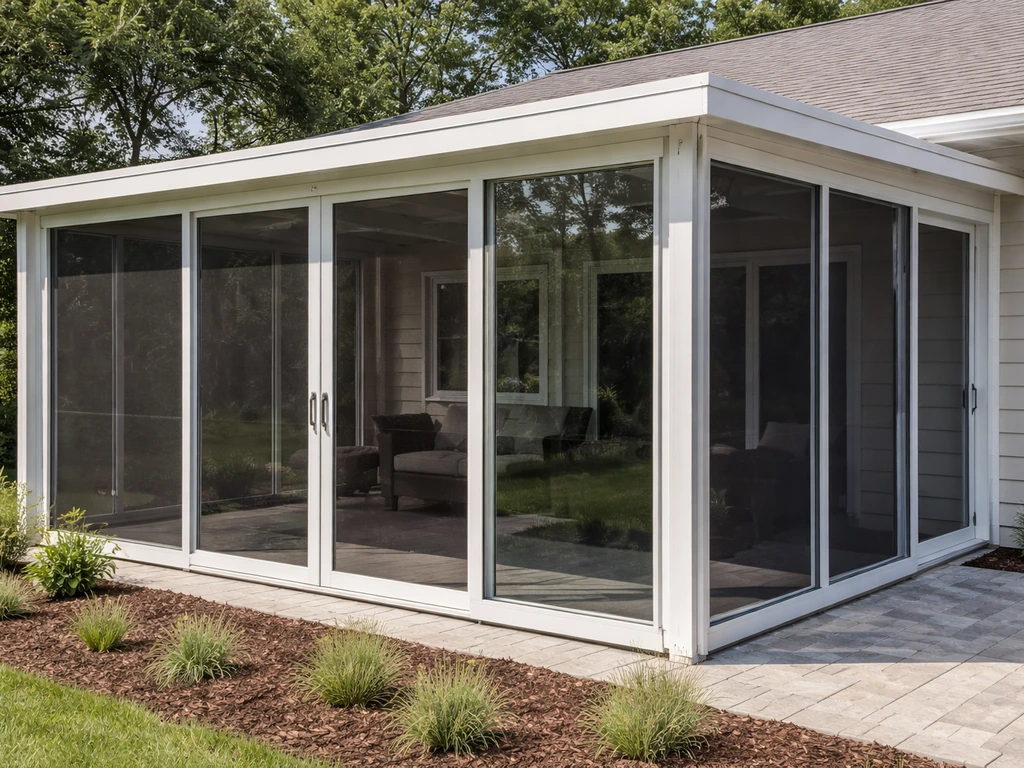
If you're weighing a patio awning against other shading or enclosure options, it helps to know where awnings sit on the cost and permanence spectrum. A patio screen enclosure is another popular alternative if you want to block bugs while keeping airflow through the space enclosure options. An enclosed patio is a different level of buildout, so it typically costs more than a basic patio awning and has more design and construction factors to price.
A patio awning is typically the most affordable way to add adjustable shade to an existing patio without any permanent structure. Pergolas and patio covers cost considerably more, often $5,000 to $20,000+ depending on size and material, but they add structural presence and can include roofing. Enclosed patios have different pricing drivers than an awning, so the total often depends on how much of the space you want covered, the materials, and the complexity of the build enclosure options. For an enclosed patio, costs are often driven by whether you want full walls and glazing versus a partial cover, plus the frame and roofing material enclosed patios.
If you're thinking about fully enclosing your patio with screens or solid walls, those projects are in a different cost category entirely, with screened patios and patio enclosures often running $5,000 to $30,000 or more depending on scope. An awning is the right call when you want practical shade and weather protection on a patio you already have, without committing to a permanent structure.
FAQ
Does the awning cost include electrical work for a motorized model?
Yes, electrical work can be a separate line item if your mount point is far from an existing outlet or circuit. Ask the installer to confirm whether they provide wiring and include a licensed electrician, and get the cost shown as either “electrical allowance” or a fixed amount.
Why can two quotes for the same patio awning model be very different?
Most patio awnings are priced around the main unit and standard labor, but some jobs need extra mounts or waterproofing details. If you have brick, stucco, or stone, request a line item for waterproof flashing or sealants so you can compare bids fairly.
Can I buy a manual awning now and motorize it later?
In most cases, you can move from a manual to a motor later, but it is not always a simple swap. Make sure the awning roller and frame are compatible with a motor tube and that the control gear (remote, wall switch, smart hub) matches what you want to use.
What happens if my patio width is wider than the typical 20-foot awning range?
If your opening is longer than a single standard unit, many installers recommend either custom sizing or using two awnings. Expect a price jump for custom widths, and if you use two, ask about center clearance and whether both units include separate controls or can run together.
How much mounting height clearance do I need for the awning to work properly?
Many contractors will recommend keeping a minimum clearance so the awning does not interfere with doors, windows, or gutters. Provide the mounting height and the lowest point of any nearby fixture, and ask them to state the clearance they assumed in their design.
Will a wind sensor always protect the awning in storms?
Yes, it can affect the wind sensor and how retract settings are calibrated. If you live in a high-wind area, ask whether the sensor has adjustable thresholds and whether the installer can test retraction settings during the appointment.
Are there add-ons that help with rain splash, debris, or sun fading?
Extra fabric protection is often overlooked. Ask about whether you can add a fabric hood, valance, or side profiles to reduce splash and debris, and whether those options change the effective projection or require extra structural support.
Do I need a permit for a patio awning, and how do I confirm it?
Permits vary by city and by the type of mounting, especially for retractable units. When comparing bids, ask whether permits are included, who files them, and whether the price assumes any HOA approval requirements.
What should I check in the warranty before I choose an installer?
A warranty usually differs between the frame, the motor, and the fabric. Before paying, ask for warranty duration for each component and whether warranty coverage requires professional installation (common for motorized parts).
Is upgrading fabric worth it, and will it matter in my climate?
Yes, it can, especially if you choose solution-dyed acrylic versus entry-level fabrics. If the patio is exposed to long daily sun or coastal conditions, ask the installer to recommend a fabric grade appropriate to UV exposure and mildew resistance, and request the expected service-life range.
If I buy the awning myself to save money, what risks should I watch for?
Buy-direct can be cheaper, but only if the installer will mount that exact brand model without modifications. Confirm in writing that they provide the same workmanship warranty when installing a customer-supplied unit and that they will still handle permits and scheduling.
What details should I request in a quote so I can compare bids apples to apples?
Avoid relying only on square footage when comparing quotes. Ask each installer to list the included width, projection, number of arms (if applicable), motor specs, control type, and accessory list, because “price per square foot” can hide missing components.
Next Article
How Much Is a Patio Enclosure Cost? 2026 Pricing Guide
2026 guide to patio enclosures with real cost ranges by size, materials, type, and extras plus quote checklist.