Most enclosed patios cost between $8,000 and $50,000 installed, depending on how far you're taking the project. A simple screen enclosure added to an existing covered patio can run $2,000–$5,000. A fully glazed, climate-controlled room built from scratch can push well past $50,000. The single biggest cost driver isn't size, it's how enclosed you want it: screens, glass, or a fully conditioned four-season room each occupy a completely different price tier.
How Much Does an Enclosed Patio Cost? 2026 Pricing Guide

Miles Hart
21 May 2026
Typical enclosed patio cost ranges
Here's a plain breakdown of what you'll actually pay at different levels of enclosure. These are total installed costs (materials plus labor) for a typical 200–400 sq ft patio space.
| Enclosure Type | Typical Total Cost | Cost Per Sq Ft |
|---|---|---|
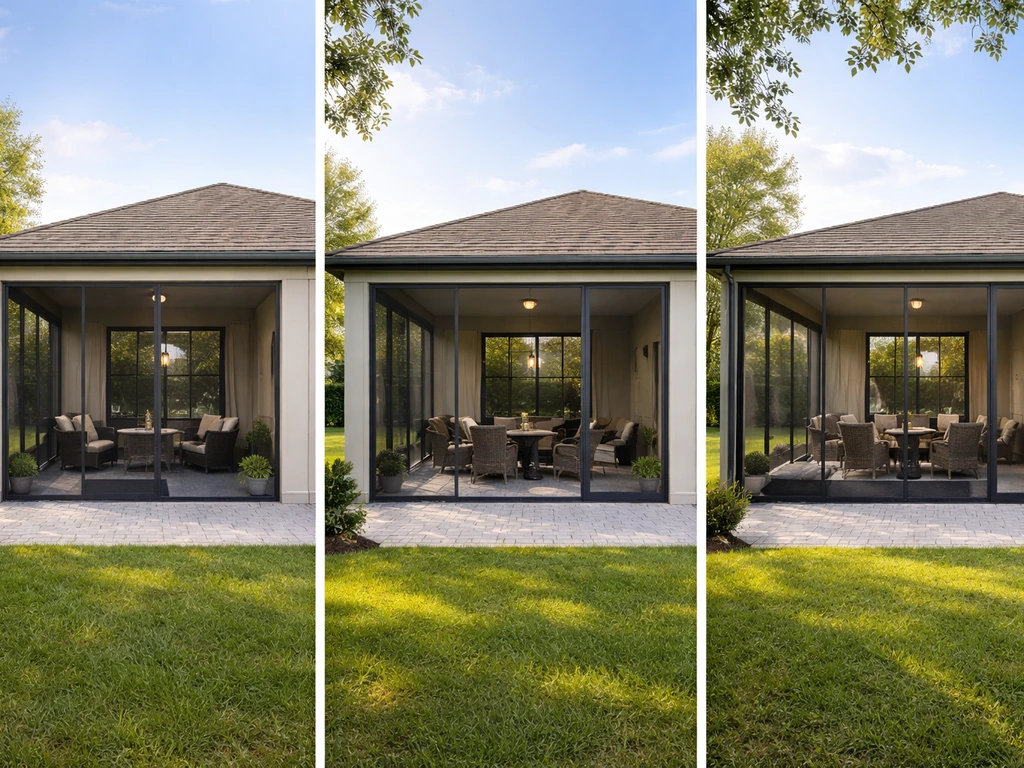
| Screens added to existing covered patio | $2,000–$5,000 | $10–$25/sq ft |
| New screened patio (built from scratch) | $10,000–$30,000+ | $50–$175/sq ft |
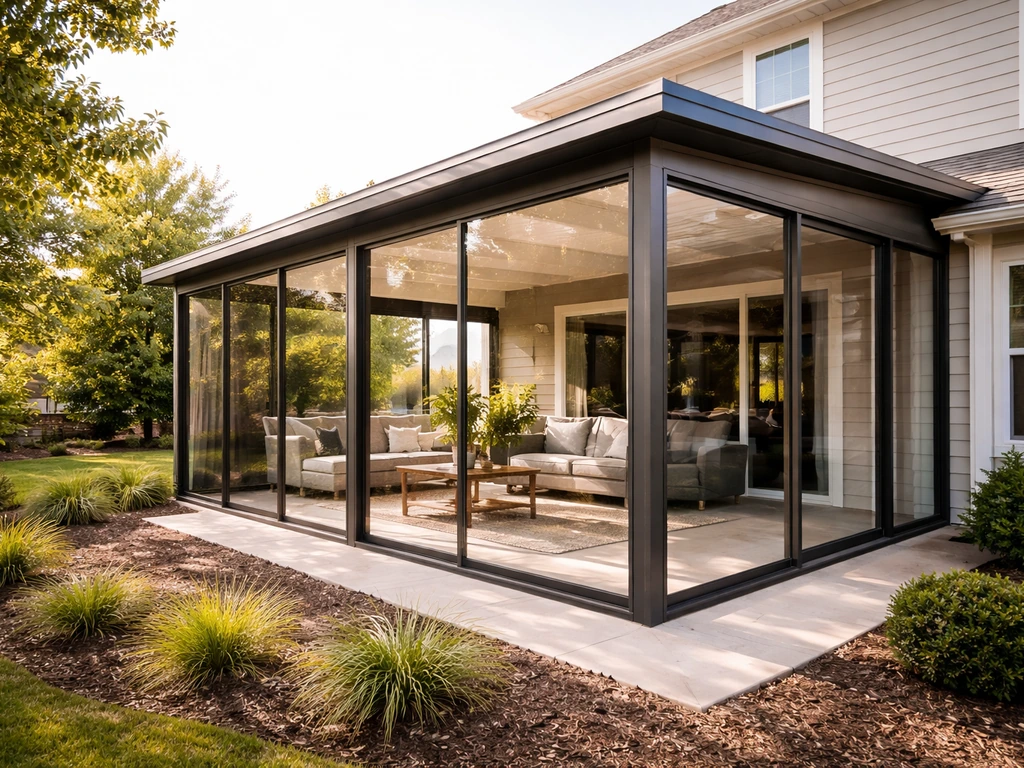
| Glass/acrylic panel enclosure (existing patio) | $5,000–$18,000 | $30–$80+/sq ft |
| Three-season glass room (new build) | $15,000–$40,000 | $60–$120/sq ft |
| Four-season sunroom / fully conditioned room | $25,000–$80,000+ | $100–$350/sq ft |
The screen-only option is the most accessible entry point. If your patio already has a roof and posts, you're mostly paying for framing channels, screen material, and labor. At roughly $10–$25 per square foot installed, a 200 sq ft screen enclosure lands between $2,000 and $5,000 for most homeowners. Glass changes the math entirely. Tempered glass walls on a mid-size patio can push the total to $12,000–$18,000 before any HVAC is added. And if you're building a new structure rather than enclosing an existing one, expect per-square-foot costs to jump to $50–$175 because you're now paying for foundation, framing, roofing, and enclosure walls all at once.
What actually moves the price up or down
Size
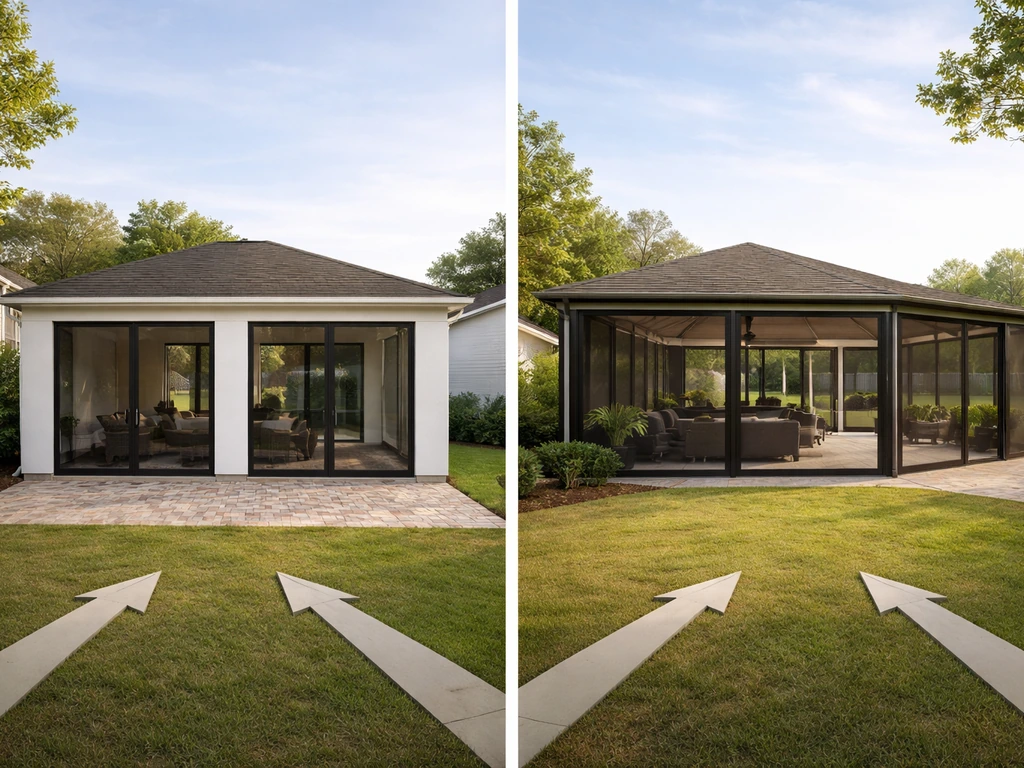
Bigger patios cost more in absolute terms, but the per-square-foot cost often drops as you scale up because fixed costs like permits, site prep, and contractor mobilization get spread over more square footage. A 400 sq ft enclosure isn't twice the price of a 200 sq ft one.
Enclosure style: screens vs. glass vs. solid walls
This is the biggest lever in your budget. Screens are the cheapest wall infill by a wide margin. Glass panels (tempered or insulated glass units) cost significantly more per linear foot of wall, and insulated glass required for a true four-season room costs more still. Polycarbonate and acrylic panels sit in the middle of that range. If you're comparing options, screened patios and glass patio enclosures are effectively different products with different price floors.
Roof type
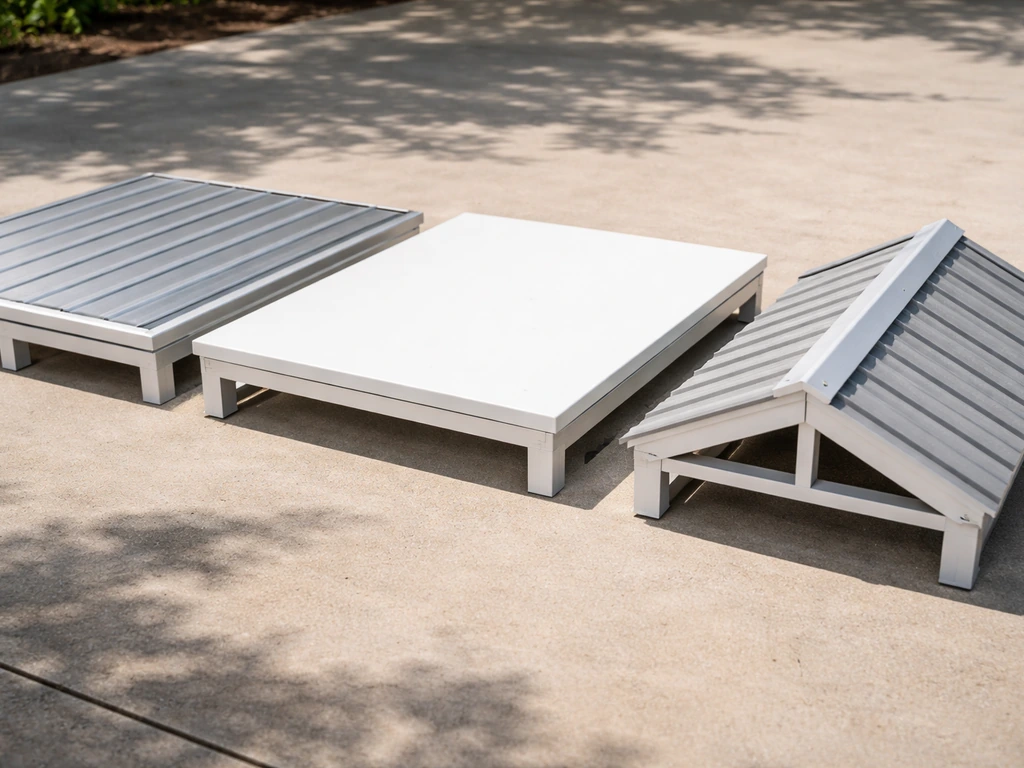
A flat aluminum patio cover runs $20–$50 per square foot to install. An insulated patio cover goes $30–$60 per square foot. A full pitched-roof structure tied into the home's existing roofline costs more, both in materials and labor, because that roof tie-in is genuinely complicated work that requires careful flashing and framing coordination. If you're adding an enclosure to a patio that already has a solid roof, you skip this cost entirely.
Materials and framing
Aluminum framing is the default for most patio enclosure systems because it's lightweight, rust-resistant, and relatively affordable. Wood framing costs more but can look better on traditional homes and takes paint well. Vinyl falls in the middle and needs less maintenance than wood. Whatever system you choose, framing accounts for a real chunk of the labor budget, especially on custom builds.
Site conditions
If your existing patio slab is cracked, sloped incorrectly, or undersized for an enclosure, you'll pay to address it before the enclosure work begins. Drainage, grade changes, and access for equipment can all add to the base cost in ways that don't show up in any online estimate tool.
Utilities: HVAC and electrical
Adding heating and cooling to a patio enclosure is expensive but entirely reasonable if you want year-round use. A ductless mini-split is the most common choice for patio enclosures since running new ductwork is rarely practical. Expect to pay $3,500–$5,000 installed for a basic single-zone unit (materials and labor combined), and more if the electrical panel needs an upgrade to support it. Lighting and outlets are comparatively modest additions, but they require a licensed electrician and pull permits of their own.
New build vs. adding an enclosure to an existing patio
This distinction matters more than most homeowners realize when budgeting. These are genuinely different scopes of work with different cost structures.
If you already have a covered patio with a solid roof and posts, adding screens or glass panels is a retrofit job. You're essentially filling in the open walls. That's the $2,000–$18,000 range depending on materials. HomeGuide (2026) reports that adding screens to enclose an existing covered deck or patio costs about $2,000, $5,000 on average, or roughly $10, $25 per square foot adds screens to enclose an existing covered deck or patio costs $2,000–$5,000 on average or $10–$25 per square foot. The structure is already there; you're just enclosing it.
If you're starting from a bare concrete slab or open backyard space, you're building a new structure: footings or foundation, posts, framing, a complete roof system, and then the enclosure walls on top of all that. That's why new screened patio builds start around $50 per square foot and can reach $175 per square foot for higher-end materials and finishes. A 300 sq ft new-build screened patio can easily run $15,000–$50,000 once you add a quality roof and proper framing.
The middle ground is an existing open patio with no roof. Here you're adding a cover first (roughly $20–$60 per square foot for the roofing system) and then the enclosure walls. Budget this as a two-part project and get separate line items for each so you understand where your money is going.
Budget line items: where the money actually goes
Breaking down a contractor quote helps you verify it's complete and catch omissions. Here's what a typical enclosed patio budget looks like at the line-item level.
| Line Item | Typical Cost Range | Notes |
|---|---|---|
| Foundation / footings | $2,000–$5,000 | Only needed if existing slab is inadequate or no slab exists |
| Framing and posts | $1,500–$6,000 | Aluminum, wood, or vinyl; custom builds cost more |
| Roof / cover system | $3,000–$12,000+ | $20–$60/sq ft depending on type and pitch |
| Screen walls / panels | $1,500–$5,000 | Materials and installation; screen mesh is cheapest option |
| Glass or acrylic panels | $3,000–$15,000+ | Tempered glass costs more; insulated glass for four-season rooms |
| Doors (screen, sliding, French) | $300–$2,500+ | Per door; glass doors cost more than screen doors |
| Windows | $150–$400 per window | Upgrades to insulated or impact-rated glass add cost |
| Electrical (outlets, lighting) | $500–$2,500 | Requires licensed electrician and permit |
| HVAC / mini-split | $3,500–$12,000+ | Single-zone standard; multi-zone or ceiling-mount costs more |
| Permits and inspections | $200–$1,500+ | Varies significantly by municipality |
| Site prep / demolition | $200–$2,000 | Depends on existing conditions |
A straightforward screen enclosure added to an existing covered patio might only touch the screens, door, and permit line items. A full new-build enclosed room with glass and a mini-split will hit nearly every row in that table. That's why the total range is so wide: two projects called 'enclosed patio' can have completely different scopes.
DIY vs. hiring a contractor
Be honest with yourself about where DIY is realistic here. Screen replacement and minor rescreening work are genuinely DIY-friendly. Screen repair kits cost $5–$20 in materials, and replacing individual screen panels in an aluminum frame takes a basic spline tool and an afternoon. If your existing enclosure needs a refresh, that's very doable without a contractor.
Installing a complete new screen enclosure on an existing covered patio is in the moderate DIY range if you have construction experience. You're working with aluminum channel systems, which are designed for installation, and the learning curve is manageable. Expect to save 30–50% on labor, which on a $5,000 project could mean $1,500–$2,500 in savings. The trade-off is time, mistakes that require rework, and the fact that some jurisdictions require licensed contractors for permitted work.
Once you get into glass enclosures, structural framing, roof work, or any utilities (electrical, HVAC), hire professionals. Roof tie-ins into existing home structure require real expertise to do correctly and safely. Electrical work that doesn't pass inspection creates problems when you sell the house. HVAC installation for mini-splits involves refrigerant handling that requires certification. Labor for a full enclosed patio project typically runs 40–50% of the total cost, so on a $20,000 project expect $8,000–$10,000 in labor.
What you'll spend after it's built, and what you get back
Maintenance costs
Screen enclosures are low-maintenance but not zero-maintenance. Screen panels degrade over time from UV exposure and physical wear, and you'll likely rescreen individual panels every few years and potentially do a full rescreen every 10–15 years. Aluminum framing is durable and doesn't need painting. Glass enclosures need periodic cleaning and eventual seal replacement on insulated glass units. If you added HVAC, budget for annual service the same as any mini-split system.
Energy efficiency
A screened patio provides ventilation with bug protection but doesn't insulate. A glass enclosure with low-e glazing can actually reduce solar heat gain into adjacent interior rooms, which has a modest positive effect on your home's cooling load. A fully insulated, climate-controlled enclosed patio is essentially a room addition and should be treated as one in energy terms: insulated walls, ceiling, and proper glazing matter a lot for keeping operating costs reasonable.
Home value and resale impact
Enclosed patios generally add value, but not dollar for dollar. A well-built screened room adds usable square footage and broad buyer appeal, especially in regions where outdoor living season matters. Fully conditioned glass rooms start to approach the economics of a room addition and can add meaningful value when done with permits and quality materials. Unpermitted enclosures are a different story: they can actually complicate a sale and may need to be disclosed or removed. Always pull the permit.
How to get an accurate quote today
Online estimates get you in the right ballpark, but a real quote requires someone looking at your specific space. If you want a budget estimate for your specific setup, also factor in whether you are enclosing an existing covered patio versus building a new structure real quote. Here's how to set yourself up for useful, comparable quotes.
Measurements to take before you call anyone
- Overall dimensions of the patio (length x width in feet)
- Ceiling or roof height at the lowest and highest points
- Linear feet of open wall space that needs to be enclosed
- Number and size of any existing openings (doors, pass-throughs)
- Whether the patio already has a roof and what it's made of
- Distance from the house electrical panel to the patio (if adding utilities)
Questions to ask every contractor you call
- Does your quote include permits and permit fees, or are those extra?
- What enclosure system brand and material are you using, and why?
- Is the foundation/slab adequate as-is, or will it need work?
- What's included in the roof scope: new cover, tie-in to existing, or none?
- Are electrical and HVAC subcontracted, and are those costs included?
- What's the warranty on labor vs. materials, and who handles warranty claims?
- Can you provide references for similar enclosed patio projects in this area?
Comparing quotes intelligently
Get at least three quotes. Make sure each one itemizes the same scope: a $12,000 quote that excludes permits and electrical isn't cheaper than a $15,000 quote that includes everything. Ask each contractor to break the quote into structure, roofing, enclosure walls/windows, doors, utilities, and permits as separate line items. That structure makes real comparison possible and often reveals what one contractor assumed you didn't want.
Also check whether local pricing applies. Enclosure costs vary by region, and in some markets (like Florida's coastal counties), specialized enclosure contractors have competitive pricing because it's a high-volume business. In other markets you may be working with a general contractor who subs out parts of the work, which changes both price and scheduling. Your local permit office can also tell you upfront what's required for your specific project type, which helps you confirm a contractor's quote is complete before you sign anything.
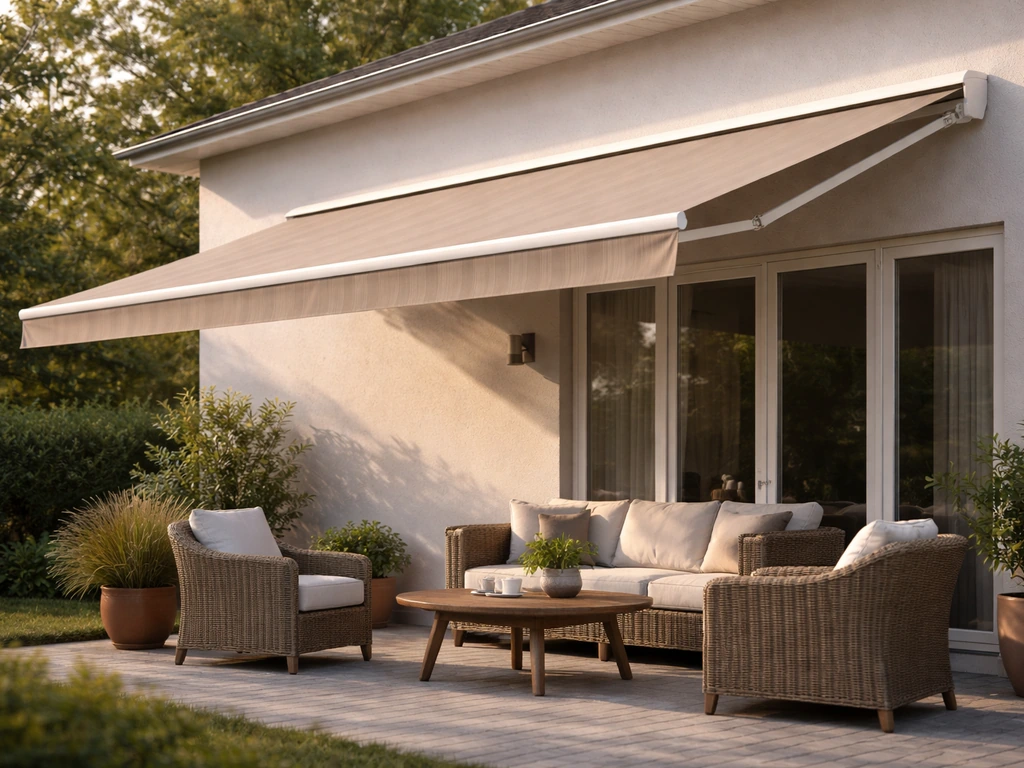
If you're still deciding between a basic screen enclosure, a glass patio enclosure, or a more substantial covered addition, it's worth understanding how closely those options relate to each other in cost and scope. A screened patio is often the entry point, while a glass or panel enclosure sits in the middle range, and a full room addition or sunroom is at the top. Knowing which category your project falls into before getting quotes will save you a lot of back-and-forth. To estimate how much is an awning for a patio, focus on the awning size, mounting type, and installed material and labor rates in your area.
FAQ
What’s the typical cost per square foot for an enclosed patio if I already have a roof and posts?
If your patio already has a solid roof and posts, you usually pay a much lower per-square-foot rate because you are mainly adding wall infill and hardware. In that retrofit setup, expect roughly $10 to $45 per square foot for screened enclosures and roughly $60 to $120 per square foot for glass or insulated panel enclosures, depending on door type and whether you add electrical for lighting or outlets.
Do permits usually change the total enclosed patio cost a lot?
Permits can be a meaningful add-on, but the bigger issue is whether the scope triggers multiple permits (building, electrical, and sometimes mechanical). Even when permit fees look small, you can also see schedule impacts and required inspections that add labor. A good next step is to ask the contractor to list permit fees as a separate line item and confirm what is and is not included (doors, electrical, HVAC, and any structural work).
How does adding a ceiling fan, outlets, or speakers affect the price?
Small interior comforts can still move your quote because they require electrical work and inspection. Typical additions include a ceiling fan, one or more outlets, and exterior-rated switches. The work is usually incremental, but the cost can rise if your electrical panel needs an upgrade or if you need to run wiring across greater distances than the contractor expects.
Will an enclosed patio require an electrical permit even if I’m only adding lighting?
Often yes. If you add new lighting circuits, exterior-rated fixtures, or any outlets, most jurisdictions treat it as electrical work requiring a permit and inspection. If your goal is budget control, request two options from your contractor, one that uses existing nearby circuits and one that includes a new circuit, then compare both cost and permitting requirements.
What’s the cheapest version of an enclosed patio that still blocks bugs and wind?
A screen-only enclosure is typically the lowest-cost path while still providing bug protection and airflow. To keep it functional in breezier areas, prioritize full-height screen panels, a properly sealed perimeter, and a high-quality door system. Adding even one or two glass panels for glare or privacy can raise cost disproportionately, so decide whether you truly need glazing before you expand the scope.
Can I mix screen and glass, and does that usually cost less than fully glass?
Yes, hybrid designs are common and often cheaper than fully glazed walls because you replace only selected wall sections with glass. A practical approach is to use screens on the sides that face prevailing wind and use glass or insulated panels on the hottest sun exposure or the most visible walls. Ask for pricing by wall section so you can compare, for example, screen for three sides and insulated glass for one side.
What should I check if my contractor quote seems unusually low?
First, verify they are including the same scope and not excluding items that are commonly forgotten. Look for omissions like permits, door hardware, proper framing at the perimeter, drainage considerations, electrical conduit or wiring, and any roof tie-in details if they are modifying structure. Also confirm material type, especially the glazing system (tempered vs. insulated glass units) and whether glass includes low-e coatings.
What happens if my patio slab is not level or has drainage issues?
If the existing slab is cracked, sloped toward the house, or undersized for expected loads, the contractor may need to repair or re-grade before enclosure framing goes up. That can add cost and timeline, and it’s one reason two quotes for the same square footage can differ a lot. Ask for an explicit plan and cost line item for slab prep and any drainage adjustments.
How long do screen and glass enclosures typically last, and how does that change costs over time?
Screens usually require periodic refresh, individual panel replacement every few years, and a more complete rescreening every 10 to 15 years depending on sun exposure and wear. Aluminum framing generally lasts longer with minimal upkeep. Glass enclosures often require periodic cleaning and, for insulated units, eventual seal-related service. If you compare options, include these maintenance intervals in your “real” long-term budget rather than focusing only on the install price.
Does a fully enclosed, climate-controlled patio function like a room addition for energy cost?
Yes. Once you fully insulate walls and ceiling and use HVAC for year-round comfort, treat it like a small conditioned room. Energy costs depend heavily on glazing type (low-e and insulation performance), air sealing quality, and whether the ductless system is correctly sized and placed. If energy bills matter, request that the contractor discuss insulation targets and mini-split sizing, not just the equipment price.
When is DIY reasonable for an enclosed patio, and where do homeowners usually get in trouble?
DIY is usually reasonable for screen repair, rescreening panels, and replacing individual screen sections with proper spline tools. Homeowners tend to get into trouble with structural changes, roof modifications, and anything electrical or HVAC-related, because those jobs require permits, inspections, and specific safety practices. A good rule is to DIY only non-structural screen work, and hire professionals for glass structure, roof tie-ins, wiring, and mini-split installation.
How do I compare quotes from different contractors fairly?
Ask each contractor for an itemized breakdown that matches your scope by category, such as structure, roof/covering, enclosure walls, doors, utilities (electrical and HVAC if applicable), and permits. Also confirm unit pricing assumptions like how they measure square footage, whether door count is included, and which glazing spec or screen grade is being quoted. This prevents a “cheap” quote from being low because it used lower-grade materials or excluded required permitting and electrical runs.
Next Article
How Much Is an Awning for a Patio? Cost Guide
Get real patio awning price ranges, cost drivers, how to measure, and DIY vs pro tips to compare quotes fast.