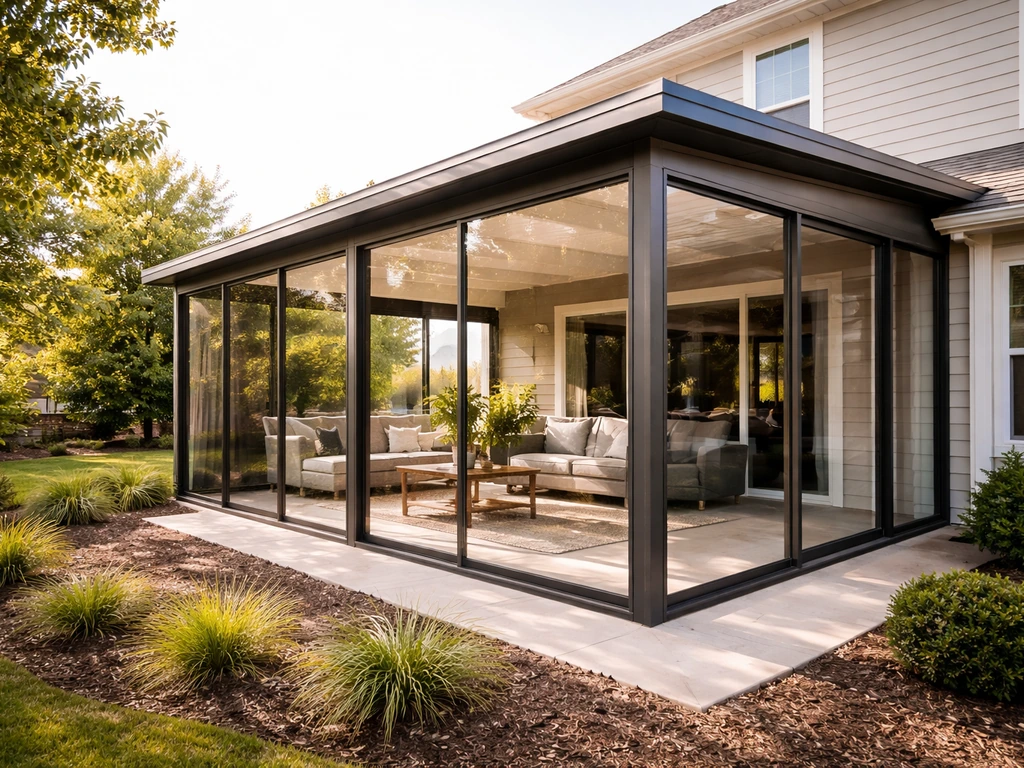
A patio screen enclosure typically costs between $2,000 and $35,000 installed, depending on whether you're adding screen walls to an existing covered patio or building a full screened-in room from scratch. The most common middle-ground projects, screening an existing 200–300 sq. ft. covered patio with aluminum framing and standard fiberglass mesh, land in the $3,000–$8,000 range.
How Much Is a Patio Screen Enclosure Cost Breakdown

Miles Hart
24 May 2026
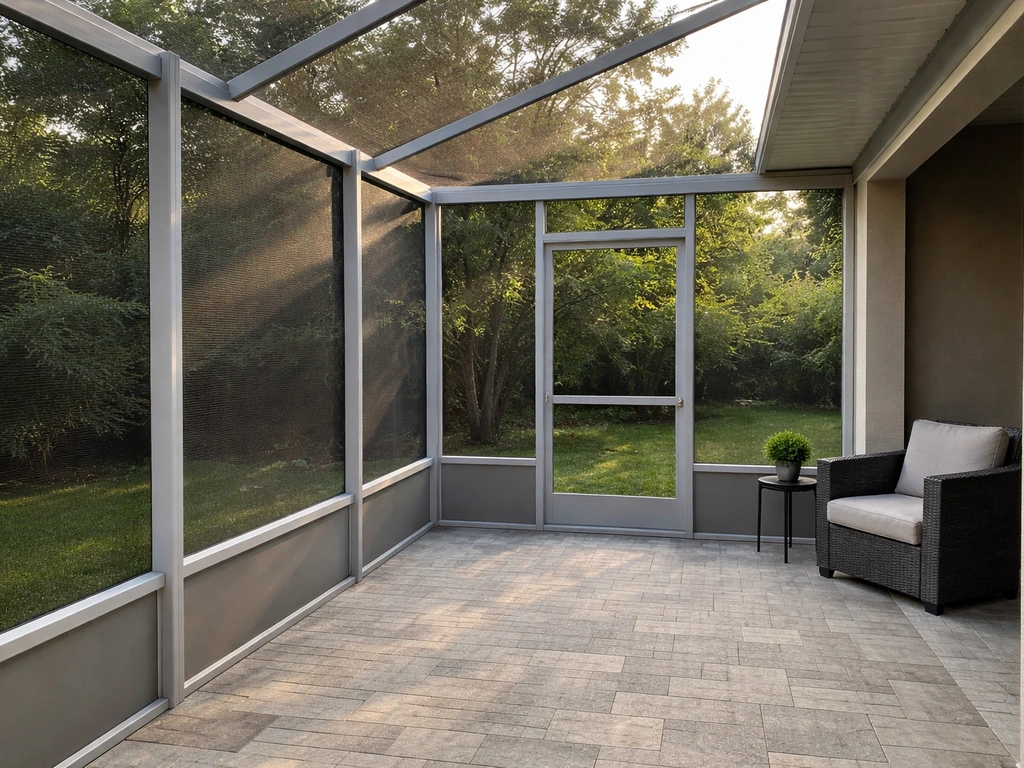
If you're starting without a roof structure and need the whole build, budget closer to $10,000–$35,000. Where you land depends almost entirely on four things: square footage, whether a roof already exists, the materials you choose, and local labor rates. Patio awnings can add cost too, especially if you need new brackets or reinforcement for the roof structure how much is an awning for a patio.
Typical Total Cost Ranges
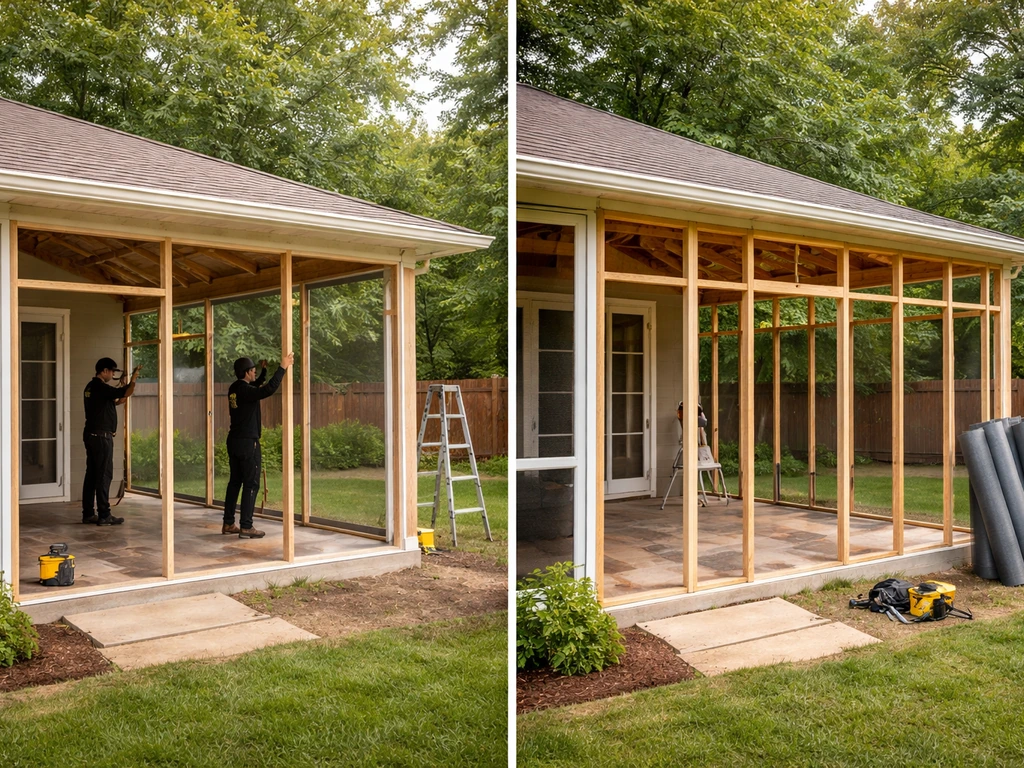
The clearest way to think about this is to split it into two scenarios: adding screen walls to a patio that already has a roof and floor, versus building a brand-new screened room. These are very different projects financially.
For a screen-only addition to an existing covered patio, most cost guides cite a rate of about $10–$25 per sq. ft. installed. That means a 200 sq. ft. patio runs roughly $2,000–$5,000, a 300 sq. ft. patio runs $3,000–$7,500, and anything over 500 sq. ft. can push $5,000–$12,500 before upgrades. These numbers assume the roof, floor, and framing are already in good shape.
For a new screened-in porch built from the ground up, the installed cost typically runs $25–$175 per sq. ft., which translates to roughly $10,000–$35,000 for a typical residential project. The lower end of that range reflects a simple rectangular footprint with basic screens and standard aluminum framing. The higher end reflects complex rooflines, premium mesh, upgraded doors, and markets where contractor labor is expensive.
| Project Type | Size | Estimated Installed Cost |
|---|---|---|
| Screening existing covered patio (low) | 200 sq. ft. | $2,000–$5,000 |
| Screening existing covered patio (mid) | 300 sq. ft. | $3,000–$7,500 |
| Screening existing covered patio (large) | 500+ sq. ft. | $5,000–$12,500 |
| New screened room (entry-level) | 100–200 sq. ft. | $10,000–$15,000 |
| New screened room (typical) | 200–400 sq. ft. | $15,000–$25,000 |
| New screened room (premium/large) | 400+ sq. ft. | $25,000–$35,000+ |
If you've been comparing costs for a general enclosed patio or a fully screened-in porch, you'll notice these ranges overlap with those discussions, which makes sense since they share the same core labor and material inputs. The distinctions get clearer once you pin down exactly what's already in place on your property.
What Actually Drives the Cost Up or Down
Size and Footprint
Square footage is the most predictable cost driver. More area means more linear feet of framing, more screen material, and more labor hours. But the shape matters too. A simple rectangle is the cheapest to frame and screen. Add corners, angles, or a non-standard roofline and you're adding both materials and labor time. Contractors generally quote per sq. ft., so a 400 sq. ft. L-shaped enclosure will cost more per sq. ft. than a 400 sq. ft. rectangle.
Attached vs. Freestanding
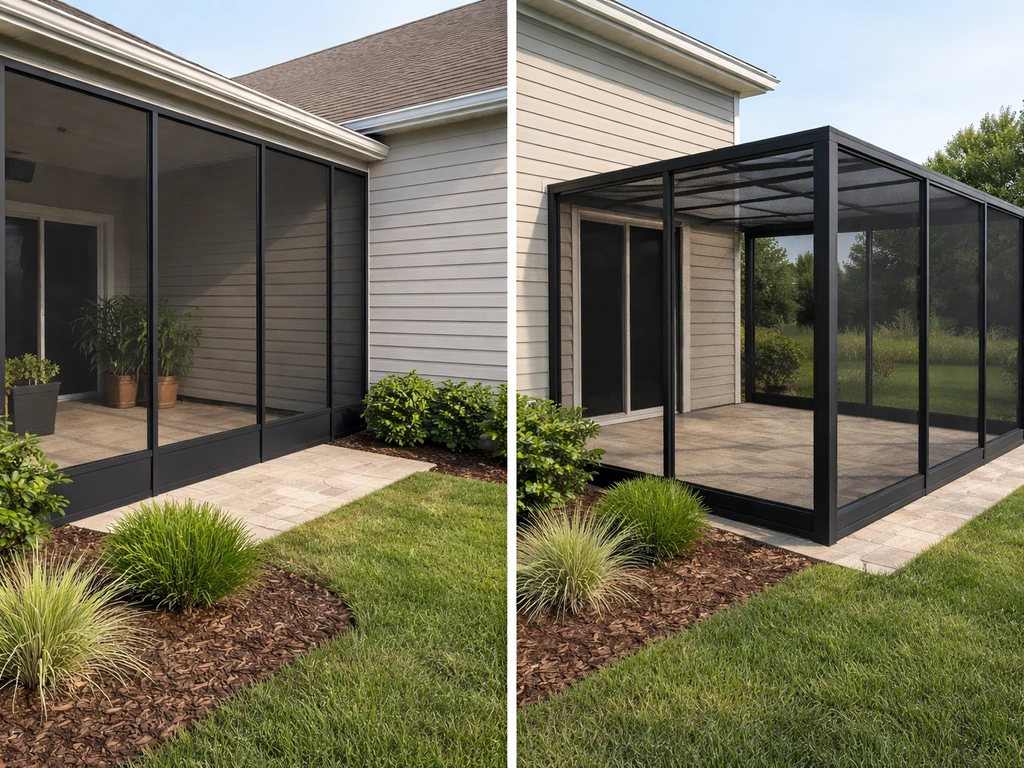
An attached enclosure that ties into your home's exterior wall shares structure with the house, which usually reduces framing costs. A freestanding enclosure needs its own complete structure including posts, beams, and a roof system, which adds significant cost. Attached also creates tie-in work: flashing, caulking, and sometimes modifying exterior siding or trim. Done right, it's manageable. Done wrong, it creates water intrusion problems later.
Frame Material
Aluminum is the dominant framing choice for screen enclosures because it's lightweight, rust-resistant, and holds screen tension well without warping. It's also what most professional systems are designed around. Wood framing costs less upfront but requires more maintenance and is more susceptible to rot and insect damage in wet climates. Vinyl framing is an option in some kit systems but has limitations on larger spans. For most homeowners, aluminum is the right call, and most contractor bids will default to it.
Screen Mesh Type
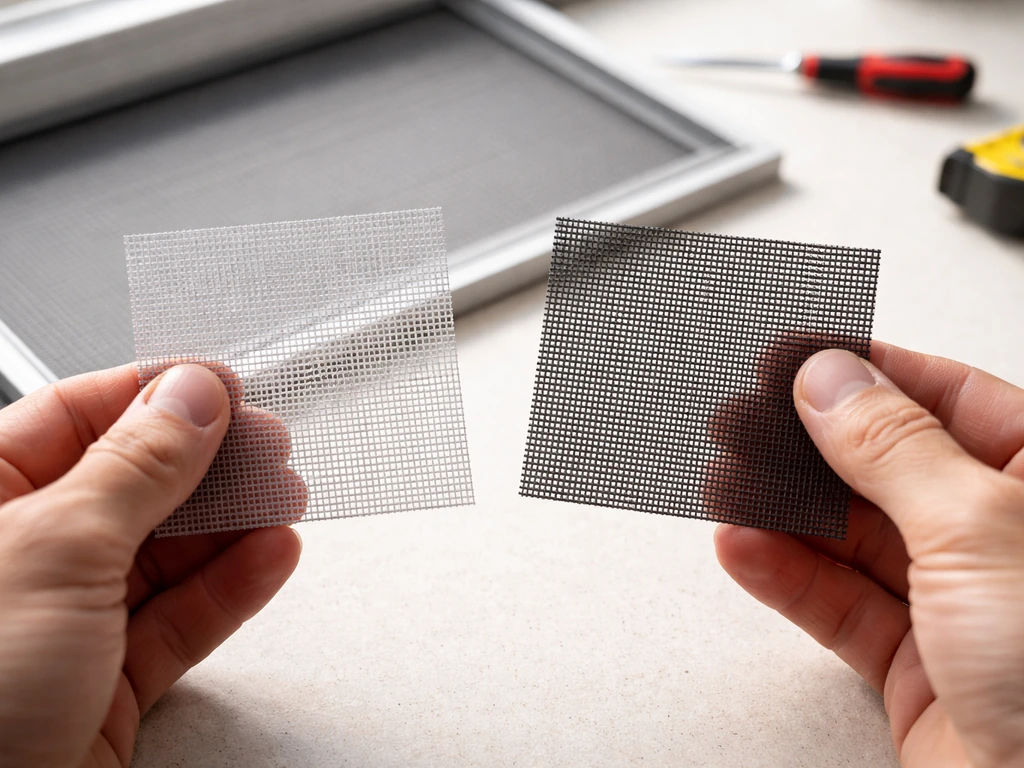
The screen mesh itself is a smaller line item than framing but the quality range is wider than most people expect. Standard fiberglass mesh runs about $0.35–$0.70 per sq. ft. and handles most climates fine. Polyester mesh is slightly more durable and costs roughly $0.70–$1.20 per sq. ft. Aluminum mesh runs $0.35–$2.50 per sq. ft. depending on gauge and weave. Stainless steel is the premium option and can add several dollars per sq. ft. If you're in a bug-heavy climate or want better wind resistance, the upgrade is worth considering, but for most projects the cost delta between fiberglass and polyester is minor compared to the framing and labor costs.
Installation Costs vs. DIY Options
Contractor labor for screened-in porch work runs about $50–$120 per hour depending on your market and the contractor's specialty. A basic screened-in porch build typically involves 60–120 labor hours across framing, screening, trim, and finishing work. A 2026 screened-in porch cost guide example estimates labor at about 60, 95 hours for a basic screened-in porch build 60–95 hours for a basic screened-in porch build. At $75/hour average, that's $4,500–$9,000 in labor alone on a full build, which is a significant portion of your total budget.
DIY is genuinely feasible in one specific scenario: adding screen walls to an existing covered patio that already has a sound roof and level floor. Several manufacturers sell aluminum screen wall kits designed for exactly this situation. If you're handy with basic tools and comfortable following a detailed installation guide, a walls-only kit install on a simple rectangular patio can be done in one to two days. You'll save several thousand dollars in labor. The tradeoff is that mistakes in tensioning the screen or securing the frame properly can show up quickly, and a DIY enclosure may not satisfy your local permitting requirements.
DIY is not a realistic option for full screened room builds. When you're adding a roof system, footings, or tying into the house structure, the complexity and potential for costly errors makes professional installation the safer path. Contractors also carry liability insurance, which matters if something goes wrong with the tie-in to your home.
Add-On Features and Upgrades That Change the Price
Most base quotes cover the structural frame and standard screening. The following upgrades are common upsells that can add meaningfully to your total: Hotian’s guide to retractable and pleated screen door setups benchmarks that the add-on hardware for a wider “proper” retractable or pleated configuration can run about $800, $2,000 per opening, versus much cheaper standard sliding screened doors upgraded doors.
- Screen doors: A standard hinged aluminum screen door adds a few hundred dollars. A retractable or pleated-style door per opening runs $800–$2,000 and is more convenient for high-traffic areas but significantly more expensive.
- Upgraded screen mesh: Switching from standard fiberglass to solar screen, pet-resistant mesh, or no-see-um mesh (tighter weave for small insects) adds $0.50–$2.00+ per sq. ft. over the area being screened.
- Ceiling integration: If the enclosure ties into an existing porch ceiling with fans, lighting, or a finished ceiling surface, that work is often a separate line item from the screen framing.
- Roofing upgrades: For new builds, the choice of roofing material (asphalt shingles, metal, polycarbonate panels) affects both cost and appearance. Polycarbonate or clear panels cost more but let in light.
- Electrical: Adding outlets, lighting, or a ceiling fan circuit inside the enclosure requires a licensed electrician and can add $500–$2,000+ depending on how far the run is from your panel.
- Flooring: If you're also upgrading the patio floor (pavers, composite decking, concrete finishing), factor that in separately. A new poured concrete slab or deck base can add $2,000–$5,000 on its own.
Permits, Inspections, and Site Prep Costs
This is the part of the budget that surprises people most often, because it's invisible until you're already committed to the project. Almost every municipality requires a building permit for a screened porch or enclosure, even if you're just adding screen walls to an existing covered patio. In Northbrook, IL, for example, any change to the exterior walls or roof of a structure triggers a permit requirement. In Frederick County, MD, the permit fee structure actually shifts based on whether the project is under or over 499 sq. ft., so your project size can bump you into a different fee tier.
Permit fees themselves vary a lot by municipality. Some use flat fees; others charge based on the assessed value of the work. Anoka, MN, for instance, values screened porch space at $90 per sq. ft. for permit calculation purposes. A 300 sq. ft. project at that rate would be assessed at $27,000 in value, and the permit fee is a percentage of that. Budget $200–$800 for permits on a typical project, and ask your contractor upfront whether permit fees are included in their quote or billed separately.
Site prep is the other frequently underestimated cost. If your existing patio slab is not level, you'll need to address that before framing. If the area doesn't drain well, water management or grading work may be needed. Foundation and leveling work typically runs $2,000–$5,000 if significant. For some projects, an impervious surface increase over a certain threshold (400 sq. ft. net increase in some jurisdictions) triggers civil engineering drawings, which adds another $500–$2,000 in professional fees. Ask about this early if your project is large or if you're adding both a patio and an enclosure at the same time.
How to Get Accurate Quotes From Contractors
Getting quotes that are actually comparable requires giving every contractor the same information and asking for the same line items in return. Here's a checklist to work through before you call anyone.
What to Measure and Prepare Before You Call
- Measure your patio's length, width, and height from floor to ceiling or roofline. If it's irregular, sketch it out with dimensions.
- Note whether you have an existing roof over the patio or if a new roof structure is needed.
- Identify how many openings you need (doors, pass-throughs) and where they should go.
- Check whether your patio slab or deck base is level and in good structural condition.
- Know your local HOA rules (if applicable) and whether your neighborhood has restrictions on enclosure materials or colors.
- Pull up your local building department's permit requirements online so you know what's required before contractors give you a number.
What to Ask Each Contractor to Itemize
- Materials breakdown: framing type and gauge, screen mesh type and brand, door hardware.
- Labor: hours estimated and hourly rate, or a fixed labor cost with scope defined.
- Site prep: is leveling, grading, or existing structure repair included or excluded?
- Permits: who pulls the permit, and is the fee included in the quote or added later?
- Timeline: estimated start date and project duration.
- Warranty: what's covered on materials and workmanship, and for how long?
- Exclusions: what is explicitly not included in the quoted price?
Get at least three quotes and make sure you're comparing them on the same scope. A quote that looks $2,000 cheaper than the others often excludes permits, site prep, or uses thinner framing gauge. Ask contractors to specify aluminum frame thickness (1-inch vs. 1.5-inch vs. 2-inch tube) and screen mesh weight, because those details affect durability and are easy to cut to lower a bid.
How to Tell If Your Project Is Low, Mid, or High Budget
Once your quotes come back, here's a simple way to sanity-check where you land. Divide the total installed cost by your square footage. If you're screening an existing covered patio and the per-sq-ft number is under $15, that's on the low end and worth verifying what's excluded. To get a realistic estimate for how much a screened patio costs, focus on the project size and the scope of what is being added.
Between $15–$25 per sq. ft. is a typical healthy range for screen-only work. For a full new build, $50–$100 per sq.
ft. is common for a mid-range project, and anything above $120 per sq. ft. should come with a clear explanation of what complexity or premium materials justify the number.
If quotes vary wildly, the itemized breakdown will show you exactly where the difference is.
One more thing worth knowing: screen enclosure pricing is closely related to broader enclosed patio and screened porch costs. If you're trying to figure out how much is a patio enclosure for your specific project, use these pricing drivers to narrow down a realistic range screen enclosure pricing. If your project is starting to look more like a full three-season room or you're considering glass panels instead of screens, the cost picture shifts significantly upward and becomes a different conversation altogether.
FAQ
How do I estimate my screen enclosure cost if I am not sure whether it counts as “screen-only” or a full build?
Start by listing what you already have (roof, level slab, drainage plan, and any existing exterior wall connections). Then decide whether you need only screen walls (no roof work) or a full enclosure with a new roof and tie-ins. This distinction usually flips pricing from the $10–$25 per sq. ft. neighborhood to the $25–$175 per sq. ft. range.
Why are two patio screen enclosure quotes so different, even when the square footage is the same?
If a contractor’s quote per square foot is unusually low, ask them to confirm the framing tube size and mesh type in writing, and whether permits, site leveling, and water management are included. Thin framing or missing permit/site-prep scope is one of the most common reasons bids end up far apart.
What tie-in details should I ask about for an attached patio screen enclosure?
Ask whether your project will include any roof tie-in work like flashing, sealant specification, and how water will be routed at the junction. Incorrect tie-in details are a common cause of leaks later, and they are also a major driver of hidden labor and material costs.
Do I always need a building permit if I am only adding screen walls to an existing covered patio?
Even for screen-only additions, many municipalities require a permit if exterior surfaces are altered or the enclosure changes the roof or wall configuration. The fastest way to avoid surprises is to ask your contractor to confirm permit needs for both the exact square footage and the roof/wall changes.
How can I sanity-check a quote beyond looking at the total price?
Use a per-square-foot reality check, but also verify what that number includes. A low per-sq-ft figure is credible only if permits and site prep are covered, the framing specs match, and the doors and hardware are listed (not just basic mesh).
What happens if my patio slab is not perfectly level when installing a screen enclosure?
Plan for at least a small adjustment if your slab is not level. Contractors often need to shim, re-level, or otherwise correct the base before installing framing so screen tension and alignment work properly.
Which upgrades matter most for a bug-heavy or windy climate, and how do they affect cost?
If you expect frequent storms or high winds, ask specifically about mesh strength and whether the door and corner framing will be upgraded for wind load. Better mesh (like polyester or stainless options) can help, but the framing and attachment method are what ultimately control performance.
Can I DIY my patio screen enclosure, and when is DIY likely to be a bad idea?
DIY is usually limited to adding walls onto an existing roof and floor that are already in good shape, and it typically assumes a simple rectangular footprint. If you need any roof system work, new posts, footings, or home tie-ins, professional installation is the safer route.
Are screen doors and hardware usually included, or should I expect extra charges?
Ask whether the quote includes the type of screen door (single vs. double), hardware, closers/latches, and whether roll-up or hinged options are available. Doors are often priced as an add-on or upgrade and can noticeably change the final total.
How do drainage and “impervious surface” rules affect the final price of a screen enclosure?
If your project creates additional impervious area or changes drainage, some jurisdictions require engineering drawings once you pass a threshold. Tell your contractor your exact plan and ask early whether you might trigger additional professional fees for stormwater or civil review.
Next Article
How Much Does an Enclosed Patio Cost? 2026 Pricing Guide
2026 enclosed patio cost ranges, cost breakdown, DIY vs contractor tips, and a quote checklist to estimate your project.