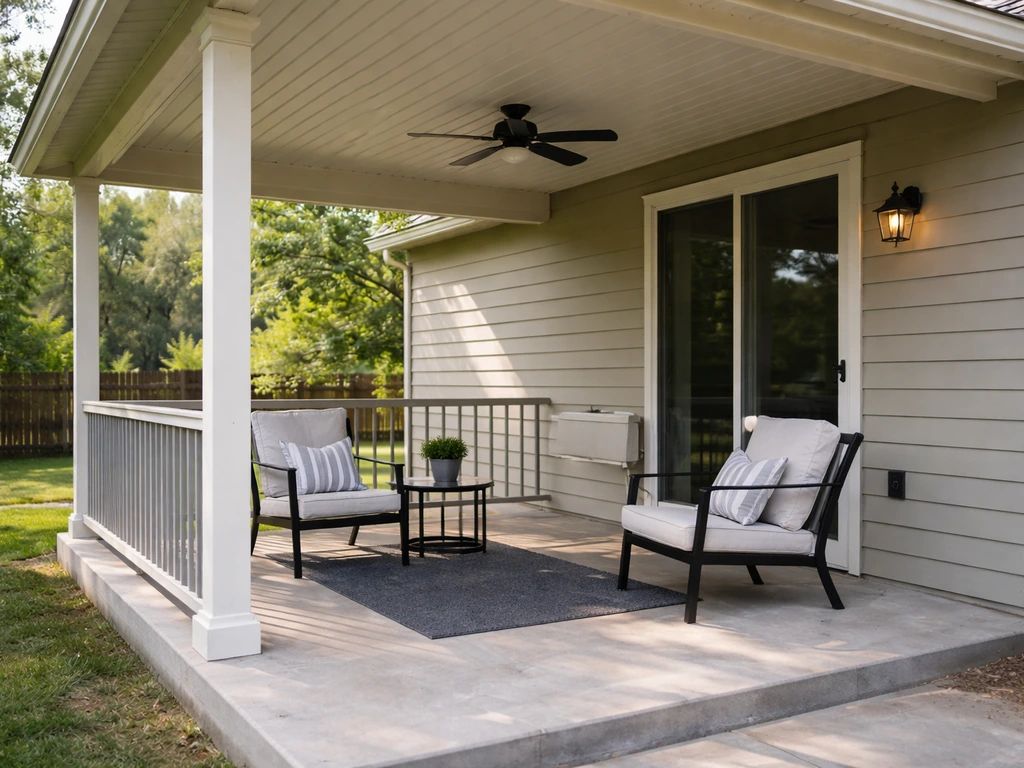
For most households, a covered patio between 144 and 300 square feet (roughly 12x12 to 12x25 feet) handles everyday use well. A 12x12 is the practical minimum for a small dining set or a couple of lounge chairs. A 16x20 (320 sq ft) gives you real breathing room for dining plus a seating area. And anything 20x20 or larger starts opening the door to an outdoor kitchen, a bar area, or a hot tub without everything feeling cramped. The right size for you comes down to what you plan to do out there, how many people you're planning for, and how much walking clearance you leave around furniture.
How Big Should a Covered Patio Be? Size Guide

Miles Hart
17 Jun 2026
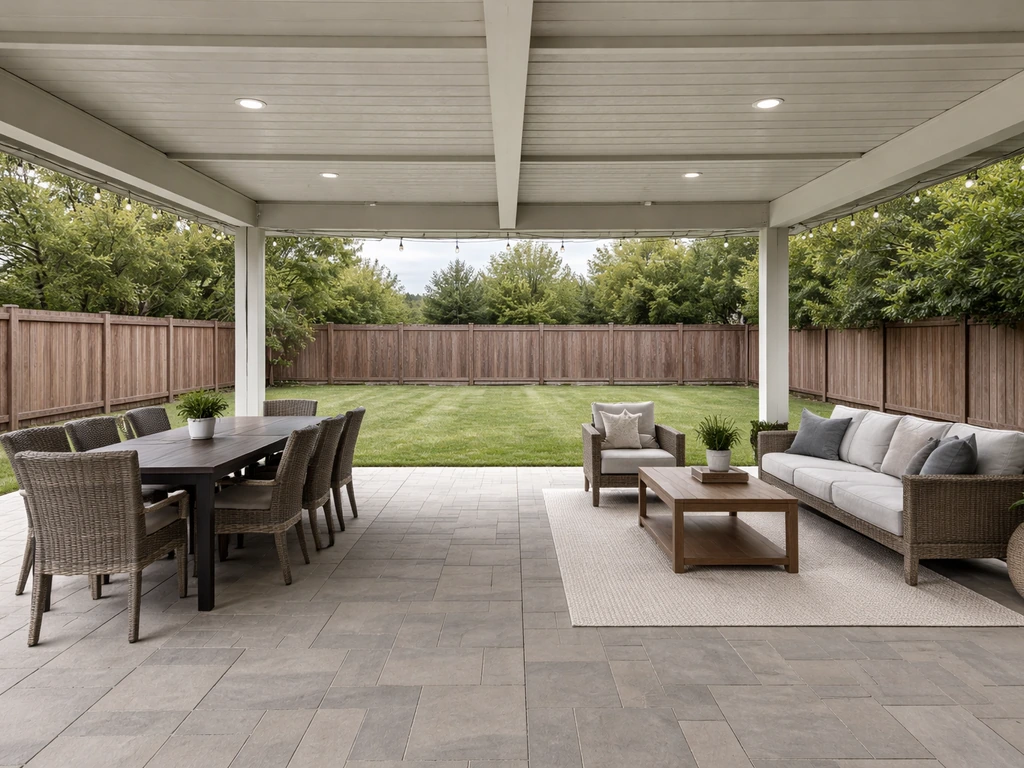
Start with your goal and biggest use
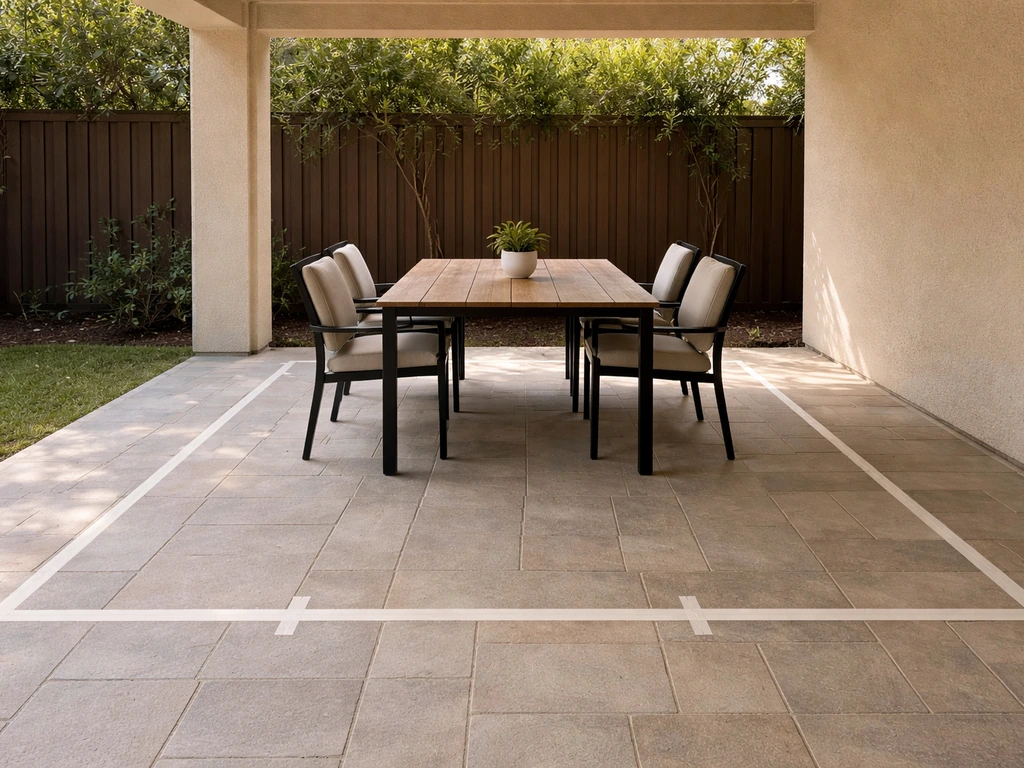
Before you measure anything, nail down the single biggest thing you'll do on this patio. That one use case drives the minimum footprint. Everything else layers on top of it.
| Primary Use | Minimum Size | Comfortable Size | Notes |
|---|---|---|---|
| Dining only (4 people) | 10x12 (120 sq ft) | 12x14 (168 sq ft) | Allows chair pull-out and a traffic path on one side |
| Dining only (6–8 people) | 12x16 (192 sq ft) | 14x20 (280 sq ft) | Larger table needs clearance on all sides |
| Lounge seating (sofa + chairs) | 12x14 (168 sq ft) | 14x18 (252 sq ft) | Sectional sofas need more depth than dining |
| Dining + lounge combo | 16x20 (320 sq ft) | 20x24 (480 sq ft) | Two functional zones need a clear division |
| Outdoor kitchen + dining | 20x20 (400 sq ft) | 20x26 (520 sq ft) | Cooking clearances add meaningful square footage |
| Hot tub + seating | 14x18 (252 sq ft) | 16x22 (352 sq ft) | Hot tub alone runs 7x7 to 8x8 feet typically |
| Full entertainment (kitchen, dining, lounge) | 24x24 (576 sq ft) | 24x30 or larger | Essentially an outdoor room; L-shape often helps |
If you're planning multiple zones, think about whether you want a rectangular footprint or an L-shape. An L-shaped covered patio is more expensive to roof but does a great job of separating cooking from dining or dining from lounging without making the whole structure feel like a cavern. A simple rectangle is easier to permit and build, and often smarter for tighter lots.
Sizing rules of thumb by furniture layout
The furniture you plan to use is the real sizing engine here. Start with the footprint of the furniture itself, then add clearance on each side. Here's how the math works for the most common setups.
Dining tables
A standard 4-person outdoor dining table is typically 36x60 inches. A 6-person rectangular table runs around 36x72 to 38x84 inches. An 8-person table jumps to roughly 40x96 inches or larger. To those dimensions, add at least 36 inches on each side where chairs will be pulled out and where people will walk. That 36-inch minimum comes from accessibility guidance measuring from the back of a tucked-in chair, and it's the right benchmark for everyday use too. If you're near a wall, a railing, or a planter, 24 inches is the absolute minimum for chair pull-out, but 36 inches is where things stop feeling tight. So for a 6-person table (38x84 inches), you need roughly 9.5 feet wide and 13 feet long at minimum, which rounds to a 10x14 space just for the dining zone.
Lounge seating
A typical outdoor sofa runs 85–95 inches wide and 35–38 inches deep. Add a coffee table (roughly 20x48 inches) and two lounge chairs across from it, and the furniture footprint alone is about 10 feet wide and 10 feet deep. You still need at least 30–36 inches of walking clearance around the perimeter, so a proper lounge zone is rarely less than 12x14 feet. A sectional sofa needs even more room, often 14x16 feet minimum for the furniture plus clearance.
Outdoor kitchens and grills
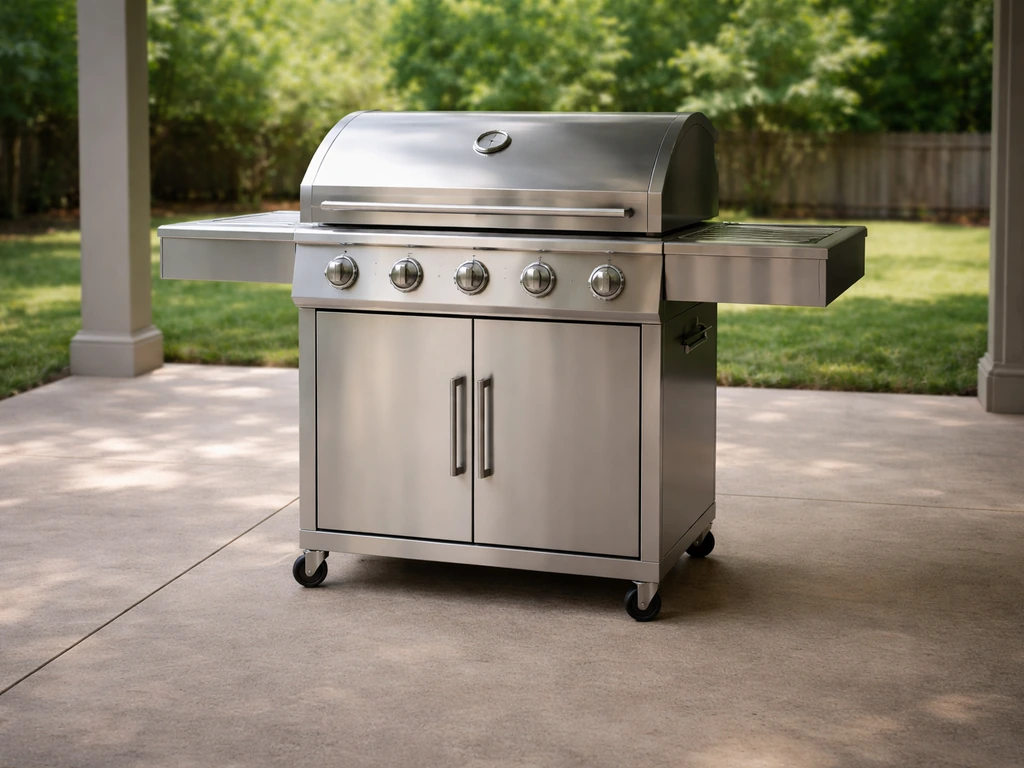
A freestanding grill needs at least 5 feet of clearance between it and any combustible structure, per standard fire-safety guidance. Chubb safety guidance likewise recommends maintaining at least 5 feet horizontal clearance and 10 feet vertical clearance around grills to reduce fire risk from combustible materials maintain at least 5 feet horizontal clearance and 10 feet vertical clearance. That one rule pushes patio designs around more than people expect, especially when there's a covered roof overhead. A built-in outdoor kitchen island typically runs 8–12 feet long and 30 inches deep. Behind the cook, plan for at least 42 inches of open space for the cook to work, and 48–60 inches for a walkway where guests might pass through while you're grilling. A cooking zone alone usually needs a 10x12 or 10x14 footprint, not including any seating. Add dining and you're looking at 20x20 as the practical starting point.
Clearances, circulation, and door-to-patio flow
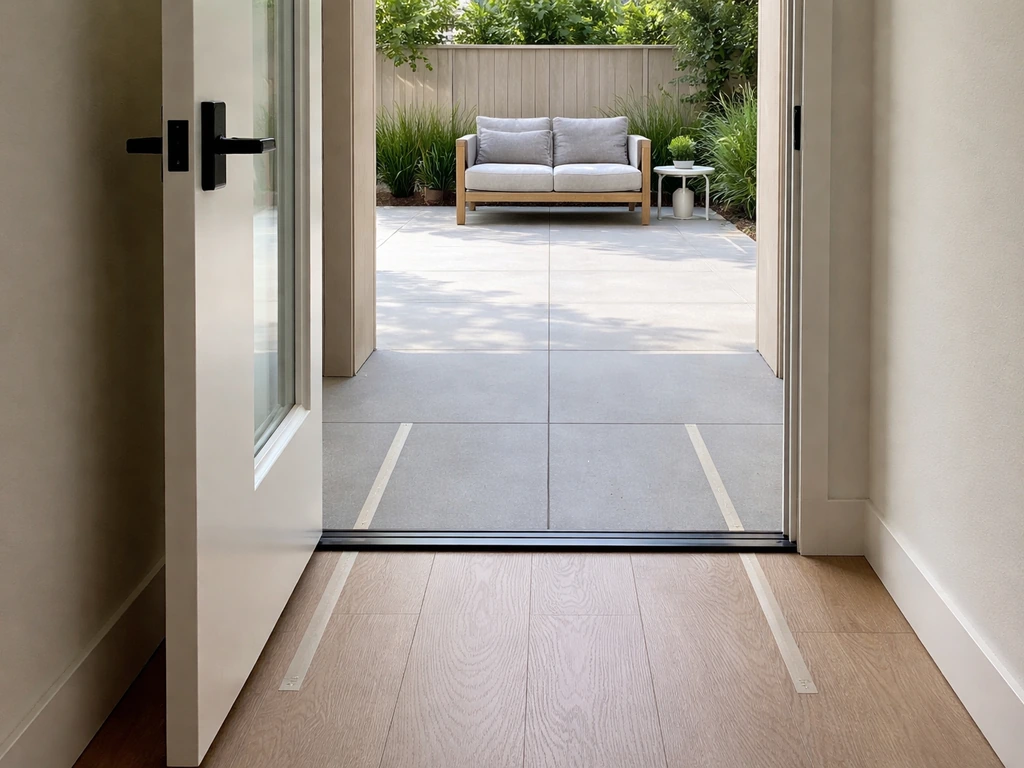
The biggest mistake people make when sizing a covered patio is measuring the furniture and forgetting the paths. You need to think about three distinct flow situations: the door from the house onto the patio, movement around the furniture, and paths to and from the yard.
- Door clearance: Leave at least 36 inches of open space directly in front of any door that opens onto the patio. If a sliding door swings or a screen door swings outward, you need that clear zone before any furniture starts.
- Traffic lanes: Any path that people regularly walk (from the door to a dining table, from the seating to the grill, from the patio to the yard steps) needs 36 inches minimum. If that path will see heavy use during parties, aim for 48 inches.
- Chair pull-out clearance: 36 inches from the back edge of a tucked-in chair to the nearest wall, railing, or planter. This is the most commonly underestimated measurement in patio layouts.
- Grill-to-structure clearance: 5 feet horizontal clearance between the grill surface and any combustible wall, post, or overhead structure. This is a safety and insurance requirement, not just a preference.
- Around a hot tub: Leave 24 inches minimum on all accessible sides for entry/exit, and 36 inches on the side you'll step in from. Hot tubs also need access for equipment and maintenance on at least one side.
One thing worth planning early: where your patio meets the yard. If you have steps down to the lawn, those steps eat into usable patio space and create a circulation pinch point if they're placed poorly. The same goes for where a gate or fence line falls. Sketch the door location, the step location, and the primary traffic direction before you finalize dimensions, because those fixed points often determine whether 14 feet of depth feels generous or tight.
Example patio sizes for common household scenarios
Here's how real sizing plays out for typical households. These aren't minimums: they're the dimensions where most people feel like the patio actually works. If you're unsure where to start, a recommended patio size is the best baseline before you fine-tune for your furniture and circulation.
| Scenario | Recommended Dimensions | Square Footage | What Fits |
|---|---|---|---|
| Apartment-style (couple, small lot) | 10x12 or 12x12 | 120–144 sq ft | Small bistro table for 2–4, two chairs, potted plants |
| Family of 4, dining only | 12x16 | 192 sq ft | 6-person dining set, clear traffic lane on one side |
| Family of 4–6, dining + lounge | 16x20 | 320 sq ft | Dining table for 6 plus a small sofa/chairs grouping |
| Family of 6+, entertaining focus | 20x20 to 20x24 | 400–480 sq ft | Dining for 8, lounge area, grill station with clearance |
| Outdoor kitchen + dining | 20x24 to 20x28 | 480–560 sq ft | Built-in kitchen, dining for 6–8, working clearances met |
| Full outdoor room (kitchen, dining, lounge, bar) | 24x28 or larger / L-shape | 650+ sq ft | All zones with proper separation; may need permit review |
A 16x20 comes up repeatedly as the sweet spot for families of four to six who want to dine and relax outside without the patio feeling like a dedicated events space. If your household is smaller or the lot is tight, a well-designed 12x16 with smart furniture placement can punch above its weight. The question of whether a patio can be too large is real: an oversized covered structure can look out of proportion to the house, eat up yard space you'd otherwise use, and cost significantly more to maintain and heat with patio heaters in cooler months.
How patio size affects cost, maintenance, and value
Covered patio costs scale directly with square footage, but not in a perfectly linear way. Covered patios are often counted toward overall square footage for cost and permitting, but the exact rule can vary by local building codes and appraisal practices. The roofing structure (the posts, beams, and cover material) is the most expensive part, and a larger footprint means more of all of it. Current estimates for covered patio construction run roughly $50 to $150 per square foot depending on materials, cover type, and your region. Aluminum roofing panels and louvered systems at the high end can run $16 to $68 per square foot for the cover material alone. A 12x16 covered patio at $80/sq ft comes to around $15,360. Scale that to 20x24 and you're looking at roughly $38,400 at the same rate, before any kitchen or electrical work.
For maintenance, the covered structure itself is relatively low-effort compared to an open wood deck, but a larger footprint means more surface area to clean, more roof to inspect after storms, and more posts and hardware to maintain over time. A concrete or paver floor under a covered patio doesn't rot, but it does settle, stain, and sometimes crack, and larger areas are more likely to have drainage issues if the grading wasn't done carefully.
On home value, covered patios add appeal and are consistently cited as high-ROI outdoor projects. That said, a covered patio does not count toward gross living area (GLA) in standard appraisals because it isn't finished, heated, or above-grade living space. It adds contributory value as an outdoor amenity, but it won't directly increase your home's listed square footage. If you're comparing a covered patio to a screened porch or a sunroom addition, those distinctions matter: a fully enclosed, conditioned sunroom can sometimes count toward GLA, while an open or screened covered patio typically does not. For anyone considering a very large covered patio (500+ sq ft), it's worth understanding those appraisal nuances before assuming a dollar-for-dollar return on investment.
One more consideration on size and budget: larger patios often cross permit and contractor thresholds. A modest 10x12 covered patio might be DIY-friendly in many jurisdictions, but once you add an outdoor kitchen with gas lines, electrical for lighting and fans, or a structure over a certain square footage, you're typically in permit territory and hiring a contractor makes sense both for code compliance and liability. Always check your local building department before finalizing dimensions. UK permitted development technical guidance also specifies limits for single-storey rear extensions, including maximum projection beyond the rear of the original house and height limits, which can affect covered patio sizing decisions technical guidance sets limits for single-storey rear extensions including maximum projection and height. In the UK, these same sizing factors help you decide how big your patio should be before you commit to materials and permits check your local building department.
Quick measurement worksheet and next steps
Here's a simple process you can run through today with a tape measure and a notepad.
- Measure your available space: Measure the width of your house wall where the patio will attach, then measure the depth available into the yard. Write both numbers down. Note where doors, windows, and utility access points fall along that wall.
- Identify your primary furniture footprint: Look up the dimensions of the dining table, sectional, or kitchen island you plan to use. Write down length x width for each major piece.
- Add clearances to each piece: Add 36 inches to each side of a dining table where chairs will sit and where people will walk. Add 36 inches in front of any door. Add at least 42 inches behind any cooking station.
- Sketch it on paper: Draw the patio outline on graph paper (1 square = 1 foot works well). Place your furniture outlines with clearances included. See if everything fits with room for at least one 36-inch traffic lane connecting the door to the main seating area and to any yard exit.
- Calculate your target square footage: Multiply your sketched width by depth. Compare to the scenario table above to sanity-check the number.
- Check local constraints: Contact your local building department or check their website for maximum covered structure size, setback requirements from property lines, and whether a permit is required. In many areas a covered patio over a certain size (thresholds vary widely by jurisdiction) requires a permit and possibly structural drawings.
- Get at least two contractor quotes if you're going over 200 square feet or adding any utilities: Quotes will also catch site-specific issues like grading, drainage, and attachment-to-house details that affect final dimensions.
The most common outcome of this process is realizing you need about 20 percent more space than your first instinct, usually because the clearances around furniture eat into the usable area more than expected. If you are wondering how big patio for table, start with your table size first, then add clearance where chairs pull out and people walk through dining table. If your available yard depth limits you, prioritize width instead: a wider, shallower patio (say, 20x12) can still fit a dining table and a side seating area side-by-side, even if a deep lounge setup isn't possible. The goal is a covered patio that feels comfortable for your actual household, not one that looks impressive on paper but leaves you squeezing past chairs every time you step outside.
FAQ
Is there a minimum covered patio size if I only want a small grill and a couple of chairs?
Yes. If the main needs are a grill plus two chairs, start with a 10x12 footprint (120 sq ft) as a realistic low end. Then confirm you still have a clear path from the house door and enough room for the grill lid clearance and safe stand-off distance from any combustibles, since those reduce usable space even if the furniture footprint seems small.
How do I size a covered patio for a wheelchair or for guests with mobility needs?
Use wider clearances than the everyday 36-inch benchmark. A practical starting point is to target at least 48 inches of unobstructed width along the main travel path from the door, and keep seating so chair pull-out does not require turning within a tight corner. Also avoid placing fixed posts or planters directly in the circulation route.
Do I include the overhang of the roof in the patio’s measured dimensions?
Most people measure the footprint of the patio surface (the area you can stand on and place furniture), not the roof overhang. That said, verify with your builder, because some permits and material estimates may base the structure dimensions on the covered envelope, which can be slightly larger than the paver or slab footprint.
What if my backyard is narrow, should I build wider or deeper?
If yard depth is constrained, prioritize width. A wider, shallower layout (for example 20x12) often works better for dining and a small lounge because guests can circulate along the longer side without tight back-and-forth paths. Deeper patios can trap movement near the door or fence line if steps, gates, or setbacks steal space.
How can I tell if an L-shaped patio will actually save space on my lot?
An L-shape can feel more efficient because it separates activities, but it can also cost more due to roof complexity. To decide, sketch your door location, the step or gate placement, and where the cooking zone must sit, then compare how many walking routes get blocked. If the L creates an extra corner that interrupts the main flow from door to seating, a simple rectangle may be a better use of square footage.
What clearance do I need around an outdoor dining table if the chairs are not fully tucked in?
Plan on pull-out clearance even when chairs are in use, not just when they are pushed in. A safe approach is to assume the chairs will extend into the walkway when diners stand, then ensure the 36-inch minimum is met from the back of the chair to the next obstruction. If you have walls or railings close by, aim for more than the absolute minimum because real chair movement is rarely perfectly straight.
How much extra space should I budget if I want an outdoor sofa plus a fire pit?
Treat the fire pit as its own zone that needs a breathing radius. A common rule of thumb is to add several feet of open circulation between the seating perimeter and the fire pit area, then keep coffee tables aligned so people can pass without squeezing. If the fire pit sits near a post line or walkway, increase patio depth because you will lose the shortest cutting paths through the furniture.
If my budget is tight, what size should I choose: 12x12, 12x16, or 16x20?
If you want the patio to do more than one thing, 12x16 is usually the best value step up, it supports dining plus a small lounge layout without forcing cramped circulation. Choose 12x12 only for the simplest setup (like a small bistro table or two chairs), and pick 16x20 when you expect regular family-sized dining and guests moving through the space.
Can a covered patio be too large for cost and comfort reasons?
Yes. Beyond proportions and yard take-up, very large patios can create hard-to-heat, drafty covered areas that are used less often, and they increase maintenance surface area (roof inspection, cleaning, and drainage monitoring). If you regularly entertain, that may be fine, but if your goal is casual daily use, consider zoning so only part of the area is “the hangout” with the rest serving occasional needs.
Do covered patios count toward living area, and does that affect resale?
Covered patios generally do not count as gross living area because they are not finished, heated, above-grade living space. For resale, they tend to add amenity value rather than listed square footage, so buyers may appreciate them more when the size and layout match lifestyle patterns (for example dining and family gatherings) rather than just maximizing total square feet.
Next Article
Does a Covered Patio Count as Square Footage?
Find out if a covered or enclosed patio counts toward square footage for listings, taxes, appraisals, and permits.