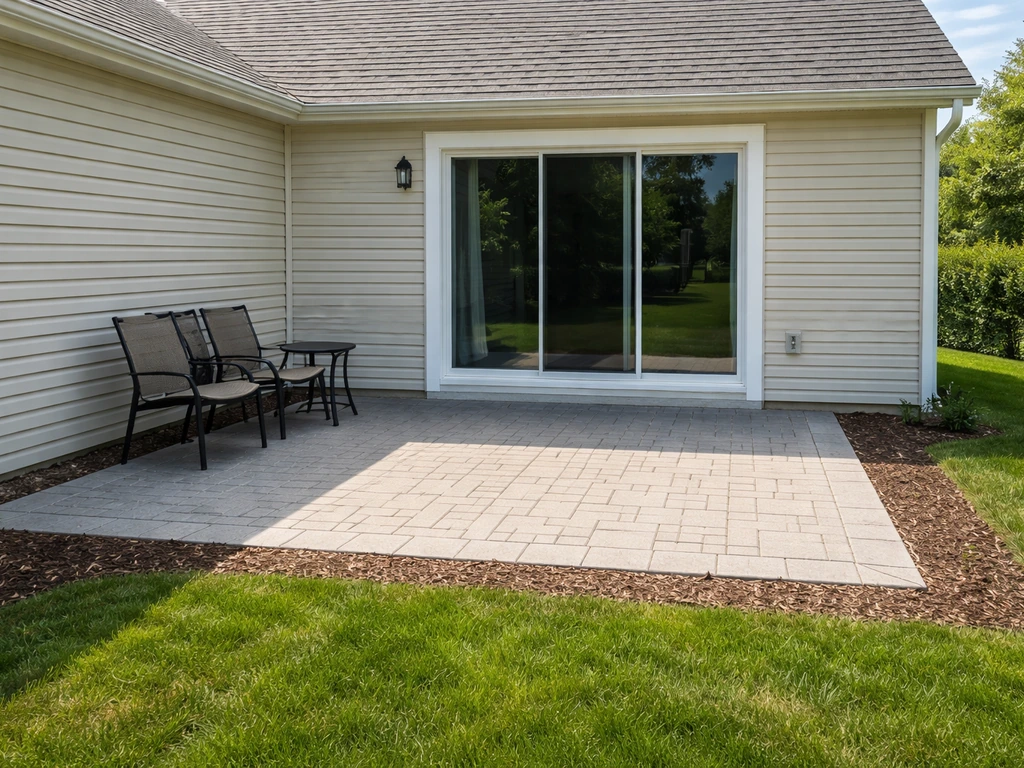
A covered patio does not count as square footage in the way most people mean it. It will not appear in your home's Gross Living Area (GLA) on an appraisal, it won't be listed as livable square footage in an MLS listing, and it typically won't be taxed the same way your conditioned interior space is. But that's not the whole story. A fully enclosed, climate-controlled patio addition can absolutely count as living area if it meets the right standards. And even a basic covered patio gets recorded somewhere, whether that's on your permit, your tax assessment, or your property card. Where it gets counted, and how, depends entirely on what type of structure it is and what context you're asking about.
Does a Covered Patio Count as Square Footage?

Miles Hart
6 Jun 2026
The quick answer by patio type
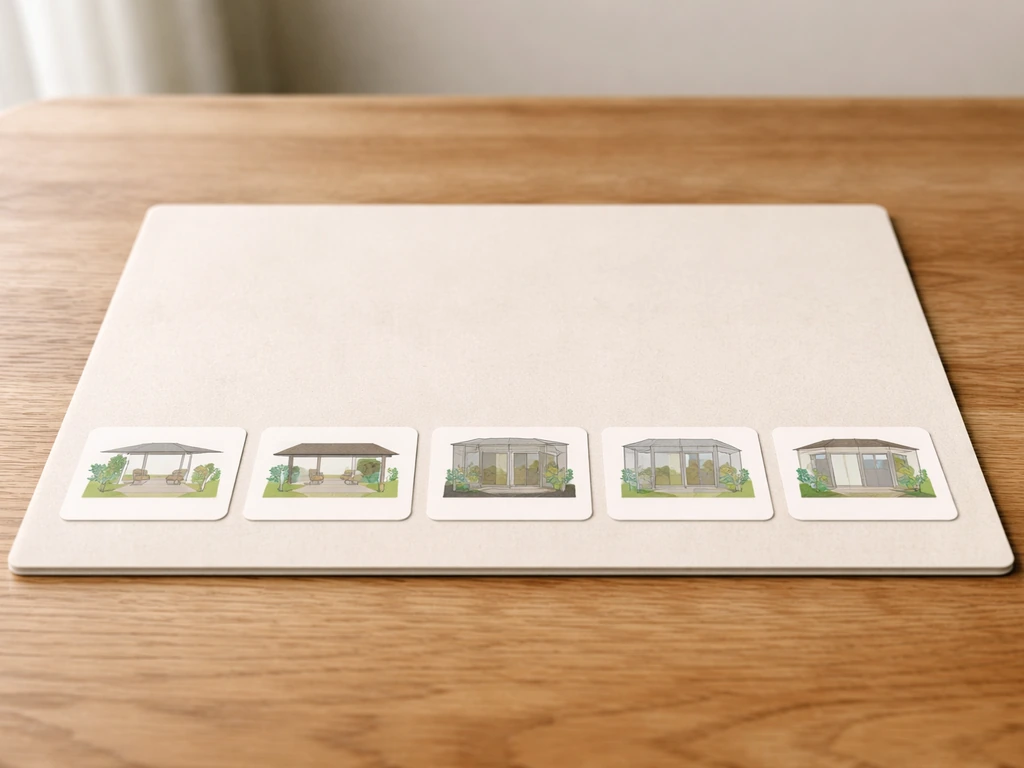
Before diving into the details, here's a plain-language rundown of how each patio type is typically treated across appraisals, listings, and assessments.
| Patio Type | Counts as GLA/Living Area? | Appears on Appraisal? | Taxed Separately? | Needs a Permit? |
|---|---|---|---|---|
| Open (uncovered) patio | No | Sometimes noted, not counted | Usually no or minimal | Often yes for concrete/pavers |
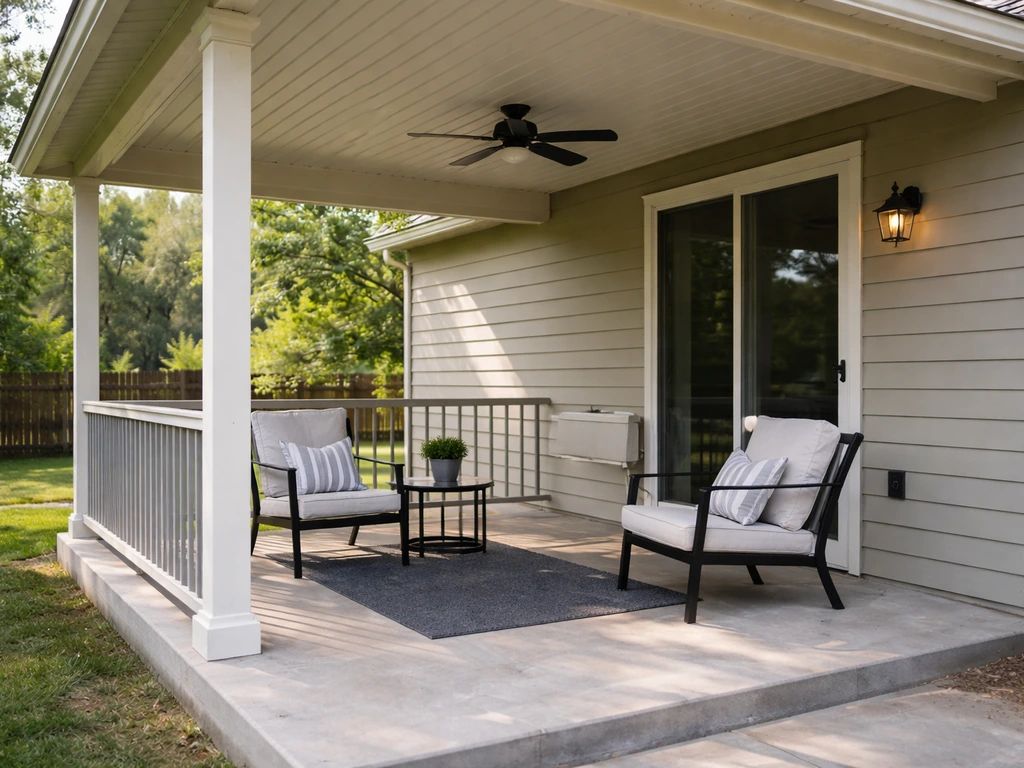
| Covered patio (roof only, open sides) | No | Noted as 'porch/patio', not counted | Sometimes, as accessory structure | Yes in most jurisdictions |
| Screened patio/enclosure | No | Noted separately, not counted as GLA | Sometimes, as improvement | Yes |
| Glazed/sunroom (unheated) | No (usually) | Noted, may add value as 'other area' | Often yes | Yes |
| Enclosed, climate-controlled addition | Yes, if it meets ANSI standards | Counted as GLA/finished area | Yes, like interior space | Yes, plus inspections |
The key dividing line in every context is whether the space is finished, above-grade, and heated and cooled by the home's main HVAC system (or an equivalent permanent system). If it checks all three boxes, it can qualify as living area. If it misses even one, it doesn't.
Square footage, living area, and gross area are not the same thing
This is where a lot of homeowners get confused, because the word 'square footage' gets used loosely in everyday conversation but very precisely in real estate and appraisal contexts. There are actually three different measurements at play, and understanding the difference saves you from making mistakes when you sell or refinance.
Gross Living Area (GLA) is the number you see on listings and appraisals as the home's square footage. HUD’s FHA glossary uses “Gross Living Area (GLA)” to mean the gross finished above-grade living area, a definition referenced in FHA housing documentation. It covers only finished, above-grade, habitable space. For years, GLA was the dominant term used by lenders including FHA and VA. Fannie Mae updated its Selling Guide in 2025 to align with ANSI Z765-2021 terminology, retiring 'GLA' in favor of more specific 'above-grade finished area' fields, but the concept is the same: conditioned, finished, above-grade space only.
Total area or gross area includes everything else attached to the structure: garages, basements, screened porches, covered patios, and unfinished utility rooms. Appraisers measure and report these too, but they're listed separately and valued differently. On a standard appraisal form, you'll see a breakdown that calls out porch area, deck area, and garage area as distinct line items, separate from the finished living area.
Site area is the total lot size and has nothing to do with the structure's square footage. It matters for zoning and setbacks but not for what your home is 'worth per square foot' in a comp analysis.
When someone asks whether a covered patio adds to square footage, they're almost always asking about GLA or above-grade finished area. The answer is almost always no, unless the patio has been converted to a fully enclosed, climate-controlled space that meets the ANSI Z765-2021 definition of finished living area.
How enclosing your patio changes the rules
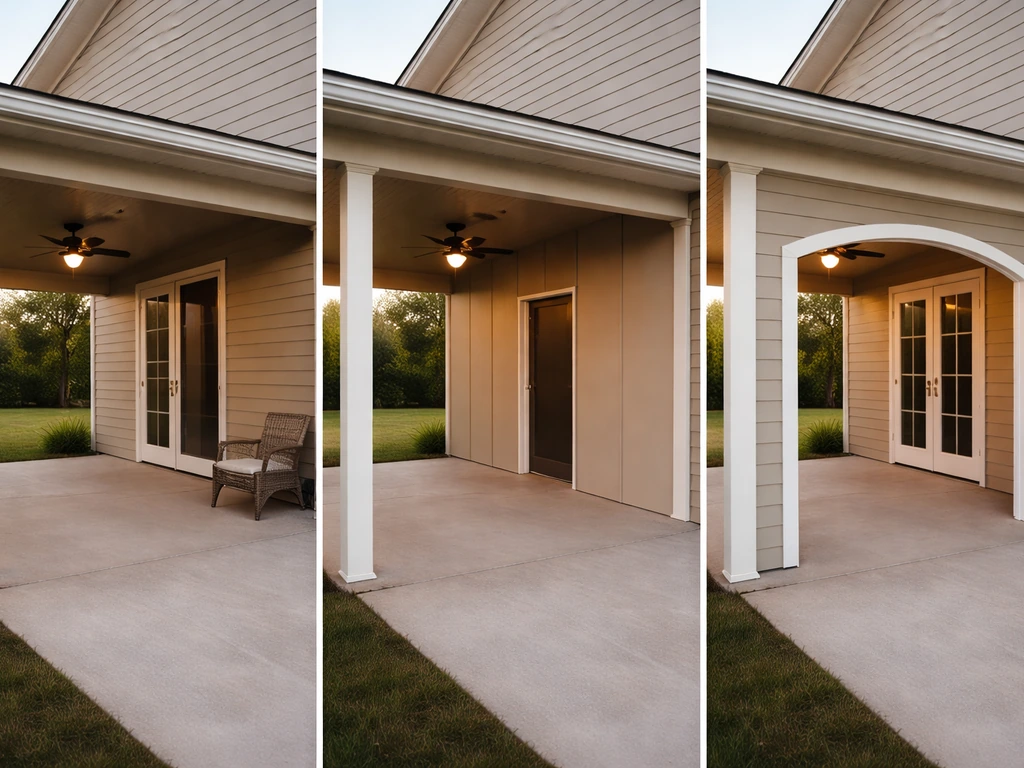
The more you enclose a covered patio, the closer it gets to qualifying as living space. But there are clear thresholds, and jumping from one category to the next isn't just a matter of adding walls.
Roofed but open-sided
A covered patio with a solid roof but open or partially open sides is the most common setup. It's protected from rain and sun, but it's not enclosed. This space does not count as living area under any standard appraisal methodology. Appraisers will note it and may factor it into value as a feature, but it won't appear in the finished area calculation. For a practical sense of how big to make this kind of space, the question of how big a covered patio should be is worth thinking through before you build. For example, if you are planning a rectangular patio that is 9ft by 6ft, you can calculate the total covered area before deciding how to enclose it. Figuring out the right size up front helps you stay within permit and appraisal expectations while still getting the outdoor room you want how big a covered patio should be. A quick way to plan is to consider a patio size that fits your lifestyle and still meets any local permitting and measurement rules what is a good patio size.
Screened enclosures
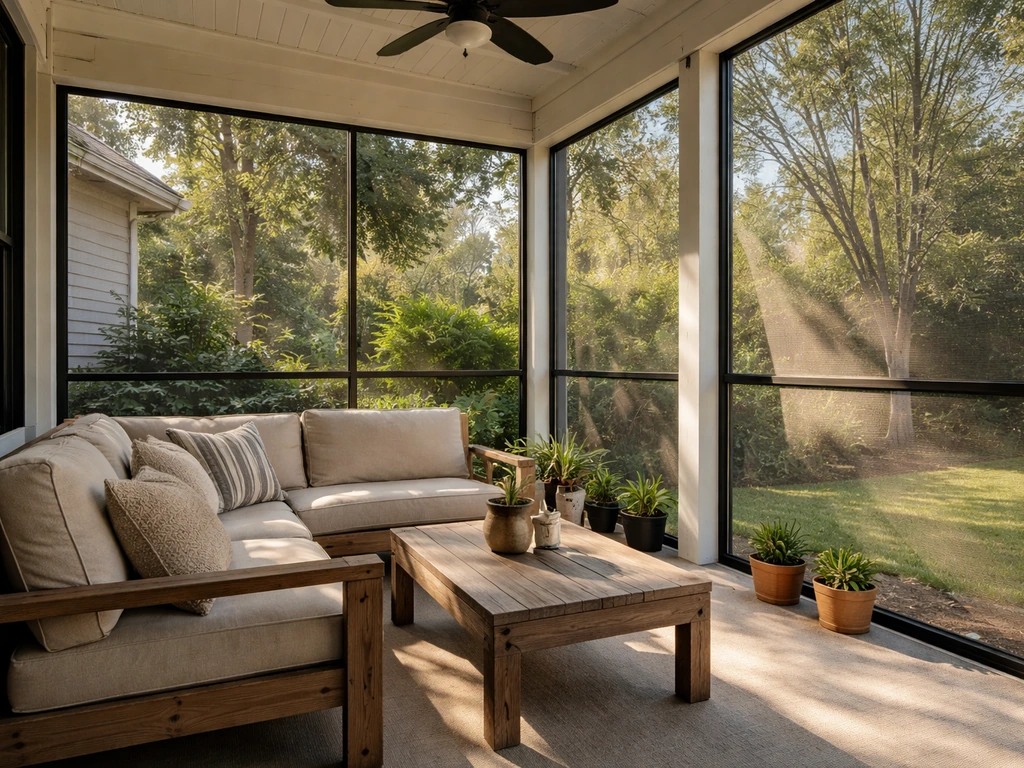
Adding screens to a covered patio creates a bug-free outdoor room, but screens are not walls. A screened patio or screen room does not qualify as living area. It's still considered an outdoor structure. It may appear on your property card and could affect your assessed value, but it won't be counted in the home's square footage on a listing or appraisal.
Glazed or glass-enclosed (unheated)
A sunroom or four-season room enclosed with glass or solid panels is a big step up, but if it's not heated and cooled by the home's primary HVAC system, it still won't be included in the above-grade finished area. Some appraisers treat unheated sunrooms as a bonus feature that adds contributory value, but they'll call it out separately, not fold it into the main square footage number.
Fully enclosed and climate-controlled
This is where it changes. If a patio enclosure has solid walls, a finished ceiling and floor, and is heated and cooled to the same standard as the rest of the house, it can qualify as above-grade finished living area under ANSI Z765-2021. This typically requires a permit, inspections, and meeting local building codes for insulation, egress, and electrical. Get those right, and the space genuinely adds to your home's square footage in the way buyers and appraisers will recognize.
Where your covered patio actually gets counted
Appraisals
Appraisers are required to follow ANSI Z765-2021 when measuring properties for Fannie Mae-backed loans, and similar standards apply for FHA and VA loans. Under these rules, a covered patio is measured and noted but listed as 'porch' or 'patio' area, not finished living area. It may contribute value in the comparable adjustment process, meaning an appraiser might add a small positive adjustment for a nice covered outdoor space, but it won't inflate your stated square footage.
MLS listings
Real estate agents pull square footage from the appraisal, the tax record, or sometimes their own measurement. A covered patio should not be included in the listed square footage figure. If an agent includes it, that's technically misleading and can cause problems during the appraisal contingency phase of a sale. Reputable listings will either exclude the patio from the main number or call it out explicitly as 'plus covered patio: 240 sq ft.'
Permits and inspections
Most jurisdictions require a permit for a covered patio structure, especially if it involves a new roof, concrete footings, or any electrical work. The permit records the structure, its size, and its type. This matters because unpermitted structures can show up as discrepancies when you sell or refinance, and buyers or lenders may require them to be legalized or removed. Even if your covered patio doesn't affect your home's livable square footage, it needs to be documented through proper channels.
Property taxes and assessments
This is where it gets jurisdiction-specific. Some counties assess covered patios as improvements that add value to the property, which means a slightly higher tax bill. Others only assess fully enclosed structures. In many areas, an open or screened patio might not change your assessed value at all, while a fully enclosed addition will be assessed the same as interior living space. The only way to know is to check with your local assessor's office, which you should do before you build.
How to measure and document your covered patio today
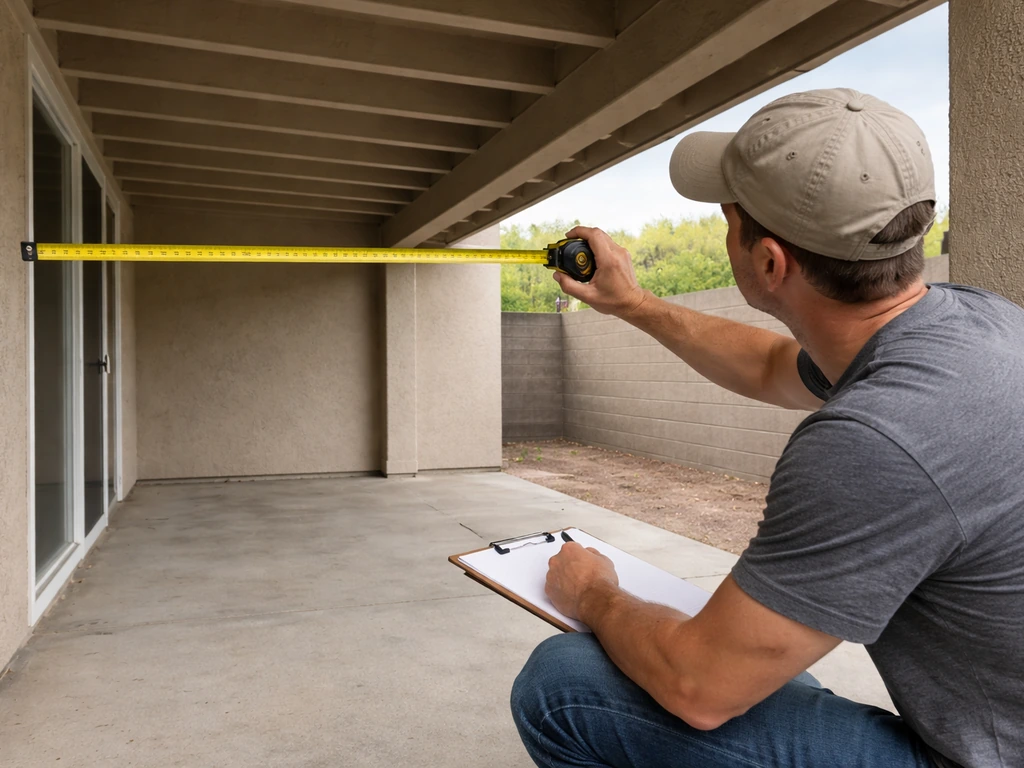
Whether you're selling, refinancing, or just keeping clean records, it's worth measuring and documenting your covered patio properly. Here's how to do it accurately.
- Measure the roofed area, not just the slab. If your patio cover extends 2 feet beyond the concrete, measure the covered footprint. Length times width gives you the total covered area in square feet.
- Use exterior dimensions for the structure itself. For any walls or posts, measure from outside face to outside face, consistent with how appraisers measure homes under ANSI Z765-2021.
- Photograph everything. Take photos from each corner, plus shots that clearly show the roof structure, any walls or screens, flooring material, and any electrical or HVAC connections.
- Pull your permit records. Contact your local building department and confirm what was permitted for the structure. Get a copy for your files.
- Note the construction type in writing. Write down the roof material, support type (posts, walls, attached to house), flooring material, and whether the space has power, heating, or cooling.
- Check your property card. Request a copy of your property record card from the assessor's office. Confirm the covered patio is recorded accurately and note any discrepancies.
Keeping this documentation in a home improvement folder means you're ready for any buyer question, appraisal request, or permit inquiry without scrambling. It takes about an hour to do once and saves real headaches later.
Questions to ask your local assessor, appraiser, or permit office
The rules vary enough by county and state that you genuinely need to make a few phone calls or check the local government website before assuming anything. Here are the specific questions worth asking each party.
For the county assessor
- Does your jurisdiction assess covered patios as improvements? If so, at what rate compared to interior living space?
- Is my current covered patio reflected on my property record card? If not, does it need to be reported?
- What's the threshold at which an outdoor structure triggers a reassessment in your county?
- If I enclose my covered patio, how will that change my assessed value and annual tax bill?
For a licensed appraiser
- Under ANSI Z765-2021, how would you categorize and measure my covered patio on an appraisal report?
- Would my covered patio or enclosed patio be included in above-grade finished area, or reported separately?
- What improvements would I need to make for this space to qualify as finished living area?
- How do you handle comp adjustments for covered outdoor living spaces in this market?
For the local permit office
- Was a permit pulled for the existing covered patio structure on my property? Can I get a copy?
- What permits would I need to enclose or upgrade the covered patio?
- Does converting a covered patio to an enclosed room require a change-of-use permit in addition to a building permit?
- What inspections are required, and what code sections govern this type of conversion?
Covered patios vs decks, porches, and full additions: what each one means for your home
These four structure types get used interchangeably in casual conversation, but they have distinct definitions that affect permits, appraisals, and value differently. Knowing what you actually have (or want to build) matters.
| Structure Type | Typical Definition | Counts as Living Area? | Typical Cost to Build | Value Impact |
|---|---|---|---|---|
| Open patio | Ground-level slab or pavers, no roof | No | $10–$25 per sq ft | Modest; improves outdoor appeal |
| Covered patio | Patio with attached or freestanding roof cover | No | $25–$75 per sq ft depending on materials | Moderate; strong buyer appeal |
| Wood or composite deck | Elevated or grade-level platform, usually no roof | No | $30–$80 per sq ft | Moderate; similar to covered patio |
| Porch (covered) | Covered structure attached to home, often with partial walls | No (unless enclosed and conditioned) | $50–$100 per sq ft | Good; especially screened porches in warm climates |
| Sunroom/glazed enclosure | Glass or panel enclosure, may or may not be conditioned | No unless fully conditioned | $150–$350 per sq ft | Good to strong depending on quality |
| Full room addition | Fully enclosed, permitted, climate-controlled addition | Yes | $200–$500+ per sq ft | Strong; adds directly to GLA and resale price |
The practical takeaway: covered patios and decks sit in the same general bucket for appraisal purposes. They add value as features but don't count toward living area. A fully finished room addition is a completely different project in terms of cost, permitting complexity, and the payoff at resale. If your goal is to increase the home's stated square footage and assessed living area, an enclosed addition is the path, but expect to spend two to five times more per square foot than a standard covered patio.
If your goal is purely livability and enjoyment (which is a completely valid reason to build), a well-designed covered patio often delivers the best return on a per-dollar basis. A good way to plan is to start with the recommended patio size for your lot and how you plan to use the space covered patio. It extends your usable outdoor space, adds clear buyer appeal, and costs significantly less than a true room addition. The fact that it won't appear in your square footage total doesn't diminish that value at all.
The bottom line before you do anything
If you're building or upgrading a covered patio and wondering how it will affect your home's value or tax bill, the honest answer is: it depends on your county and how the space is built. If you're planning one in the UK, you may also want to set the right size for how you’ll use it, including dining, seating, and circulation space how big should a patio be uk. A basic covered patio won't add to your listed square footage. A fully enclosed, climate-controlled addition will. Everything in between falls on a spectrum, and local rules determine exactly where each version lands. Spend 30 minutes measuring your existing space, pull any permit records you can find, and make one call to your county assessor before starting any project. Can a patio be too big comes down to how it is built and how local appraisers, listing rules, and tax assessors treat the measured area. Those three steps eliminate most of the uncertainty and keep you from making expensive assumptions.
FAQ
If my listing shows square footage but doesn’t mention the patio, should I still worry about a covered patio being included accidentally?
Yes, check the listing’s square footage source and look for a line item breakdown (sometimes it’s titled porch, patio, or deck). If the patio was included in the main number, it can trigger appraisal or agent verification issues during a sale, especially when the appraisal form shows separate “non-living” areas.
Does a screened-in patio count any differently than an open covered patio for appraisals?
Usually no. Screens generally do not qualify as walls for living-area standards, so the space is still treated as an outdoor structure. The safer way to confirm is to see whether the structure has permitted solid walls and a conditioned HVAC connection, not just mesh enclosures.
What if my covered patio has a space heater or portable AC units inside, does that make it count as living area?
Not typically. Living-area qualification depends on a permanent, built-in heating and cooling arrangement that matches the home’s conditioned system standard, not temporary or portable equipment. If you want it to count, you generally need a permitted conversion to a climate-controlled room.
Can a sunroom or glass enclosure count as square footage if it has windows but no HVAC?
Often it still will not be included in above-grade finished living area if it is not heated and cooled by the home’s primary system (or an equivalent permanent system). Some appraisers may note it separately as a bonus feature, but it should not be used to justify a higher “GLA” number.
If I’m refinancing, will lenders treat patio area the same way as they do when buying a home?
Typically the measurement standards and reporting approach are consistent, but the impact can vary based on the appraisal type and the lender’s underwriting. Even if the patio doesn’t increase GLA, it can still appear on the appraisal as porch or patio area and be subject to contributory value adjustments rather than square-footage expansion.
How do I tell whether my patio is above-grade and finished in the sense appraisers mean?
Look for the combination: solid, permitted walls, finished floor and ceiling, and permanent climate control that meets the same functional standard as the rest of the house. A patio that is partially walled, has unfinished flooring, or is only roofed and sheltered usually fails one of these criteria.
Will my tax assessor always increase my assessed value if I add a covered patio?
Not always. Some jurisdictions assess only enclosed or permanent additions, others assess improvements differently, and assessment changes can lag behind permit dates. The practical step is to ask what classification your county uses for patio structures (open, screened, enclosed) and whether it is reassessed immediately.
If I add footings, a concrete slab, and a roof, but keep it open, can it be considered “finished” for square footage?
Usually not. Even with a slab and roof, appraisers generally treat an open or partially enclosed patio as porch or patio area, not finished living area. The threshold is not materials alone, it is whether it functions as conditioned interior space with qualifying walls and HVAC.
What records should I gather so an appraiser or buyer doesn’t question my patio area?
Save the permit set (especially the scope and approved area), inspection sign-offs, any drawings showing enclosure type, and old and new property card or tax assessment statements. If it was converted later, document the change (walls added, electrical/HVAC tied in) so there is a clear permitted timeline.
Should I include a covered patio in the “livable square footage” number I use when buying furniture or planning renovations?
Use it as usable space, but not as livable square footage. For planning, count it as sheltered outdoor area for circulation and seating, but if you plan to claim square footage for a sale, marketing, or appraisal justification, treat it as porch/patio unless it meets the conditioned, finished, above-grade criteria.
Next Article
Does Patio Count as Square Footage? Coverage Rules
Learn when patios count in square footage: uncovered vs covered, appraisals, leases, and listing or tax impacts.