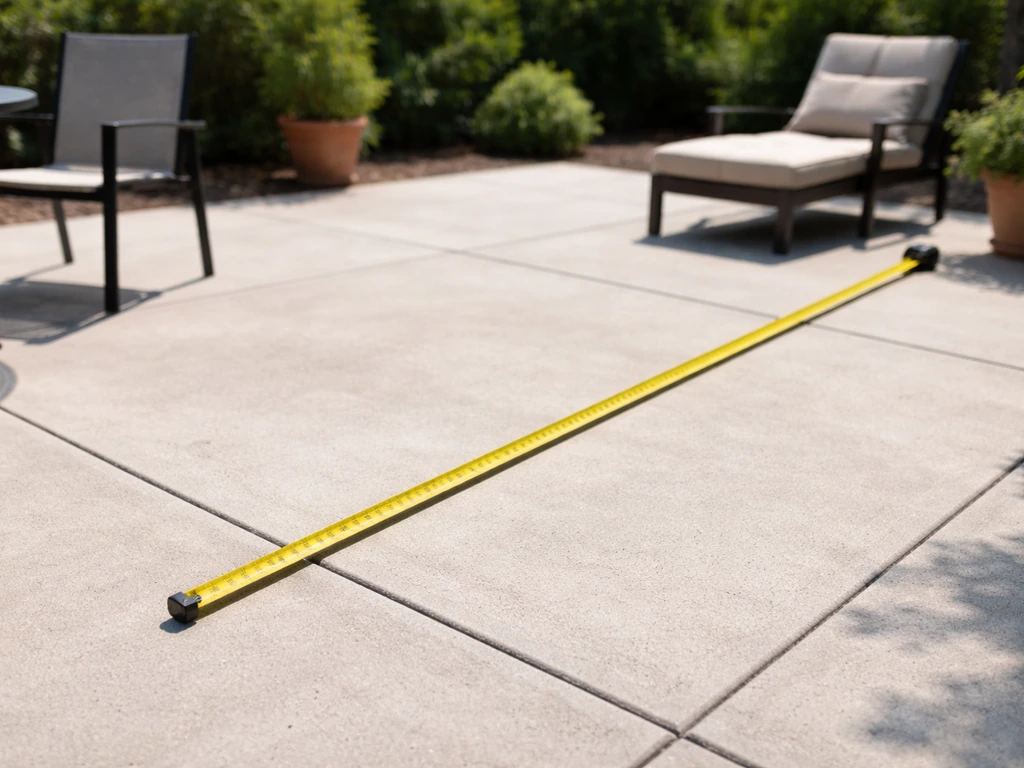
A standard open patio does not count as square footage in the way that matters most: it is excluded from gross living area (GLA), which is the number appraisers, lenders, and most real estate listings use when they say 'square footage.' GLA only includes finished, above-grade, heated and cooled interior space. Your concrete slab or pavers out back, no matter how beautiful, don't qualify. That said, the full answer depends on which definition of 'square footage' you're dealing with, because listings, appraisals, leases, tax assessors, and permits each play by slightly different rules.
Does Patio Count as Square Footage? Coverage Rules

Miles Hart
28 May 2026
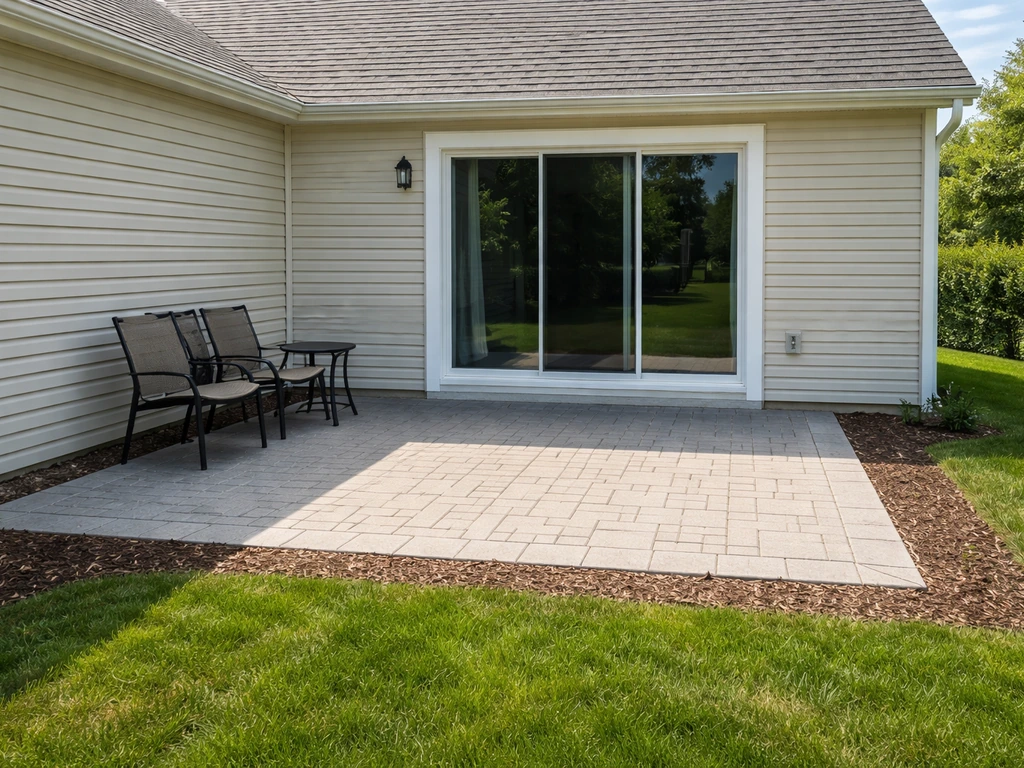
Patios vs square footage: the basics
The confusion here is real, and it comes from the fact that 'square footage' gets used loosely to mean several different things. In everyday conversation, it might mean how big a home feels. In a listing, it's usually GLA. In a tax assessment, it might be something else entirely. Here's the core breakdown:
| Measurement type | What it includes | Does a patio count? |
|---|---|---|
| Gross Living Area (GLA) | Finished, above-grade, conditioned (heated/cooled) interior space | No |
| Gross Building Area | All enclosed space including garages, unfinished areas | Rarely, and only if fully enclosed |
| Listing square footage | Usually GLA, sometimes loosely applied by agents | Typically no, but varies |
| Tax assessor square footage | Varies by county/municipality | Sometimes, especially if permitted |
| Apartment/lease square footage | Varies widely by landlord and local law | Sometimes balconies or patios included |
The most standardized definition comes from appraisers. blank" rel="noopener noreferrer">Fannie Mae requires appraisers to report GLA using an ANSI-based measuring approach (ANSI Z765), and that framework draws a clear line: if the space isn't finished, above grade, and conditioned, it's not GLA. An open patio fails all three tests. It's not conditioned, it's not enclosed, and depending on configuration, it may not even be above grade. Your appraiser will still note the patio's existence and size, but it goes into a separate 'other features' section, not the GLA line.
How appraisers and listings actually measure
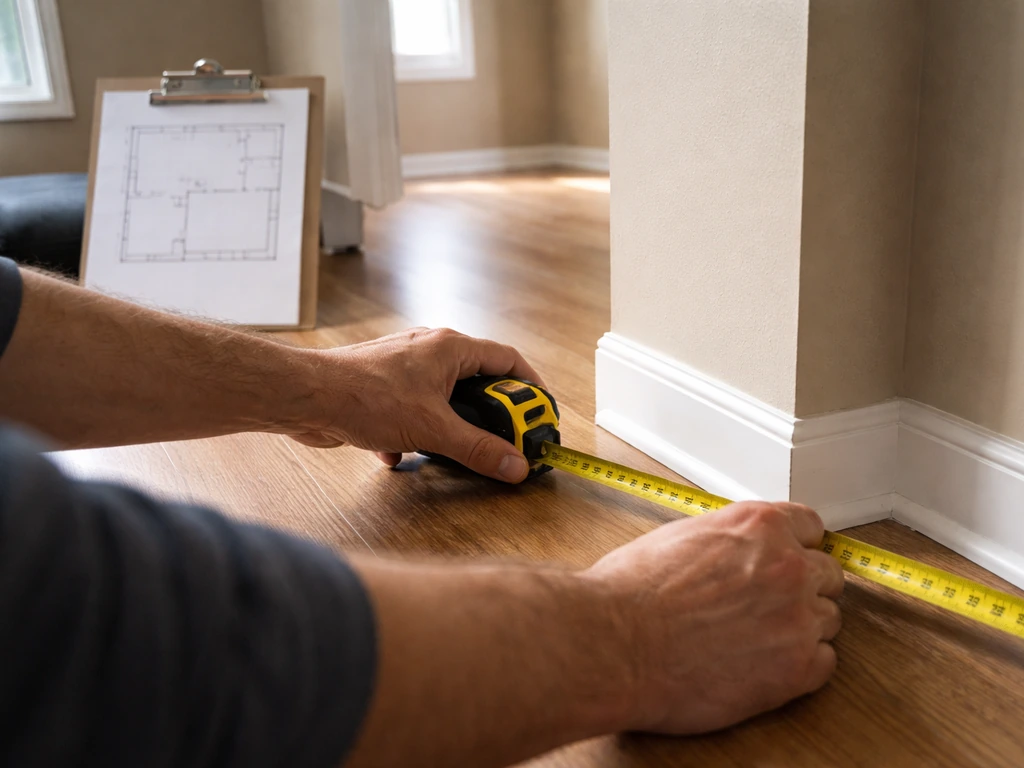
When an appraiser walks your property, they're drawing a floor plan and measuring the finished living space from the exterior walls. They're using GLA as the primary comparable metric because it's what allows apples-to-apples comparisons between homes. Fannie Mae's standardized guidelines exist precisely to prevent appraisers from inflating or deflating square footage by inconsistently including or excluding outdoor areas. Fannie Mae’s standardized approach, aligned with ANSI Z765, similarly expects the boundary for GLA to be drawn around finished, above-grade, heated and cooled interior space rather than outdoor areas blank" rel="noopener noreferrer">Standardized PropertyMeasuring Guidelines.
Listing agents work a little differently. Most agents pull square footage from the tax record or a prior appraisal, and the best ones verify it. The problem is that some agents add patio, deck, or porch area into their listing descriptions, either intentionally to pad the number or by mistake. If you're shopping for a home and the listing says 2,400 sq ft but you notice the floorplan looks small, it's worth asking whether that number includes any outdoor area. The answer should always be no for GLA, but listings aren't always accurate.
There's also an important distinction between GLA and gross building area. Gross building area is a commercial real estate concept that can include all enclosed structure, including garages, storage, and unfinished space. You'll almost never see this used for single-family residential listings, but it matters if you're buying a mixed-use property or a home with significant non-living structures. Neither term includes an open patio in any standard interpretation.
Apartment leases and the patio square footage question
This is where things get genuinely inconsistent. In apartment leases and rental listings, there's no single national standard governing what 'square footage' must include or exclude. Some landlords and property managers include private patio or balcony area in the advertised square footage, some exclude it, and a few list both numbers separately. The honest approach is to list interior and exterior square footage separately, but you won't always see that.
If you're renting and the apartment's square footage matters to you, ask the landlord or leasing agent directly: does that number include the patio or balcony? Get it in writing, or at least in email. Some states have disclosure requirements, but most don't mandate what gets counted. New York City, for example, has had ongoing disputes about how outdoor space gets measured and marketed, particularly in condos and co-ops. In most markets, though, you're relying on the landlord's honesty.
For apartment buyers (condos specifically), the same gray area applies. A private rooftop terrace or ground-floor patio may be listed separately in the offering documents, or it may be folded into a vague 'total area' number. When you're buying a condo, ask for the interior square footage and the exterior square footage as separate figures. Your lender and appraiser will need to see them separated anyway.
Patio type matters: uncovered, covered, pergola, screened, or roofed
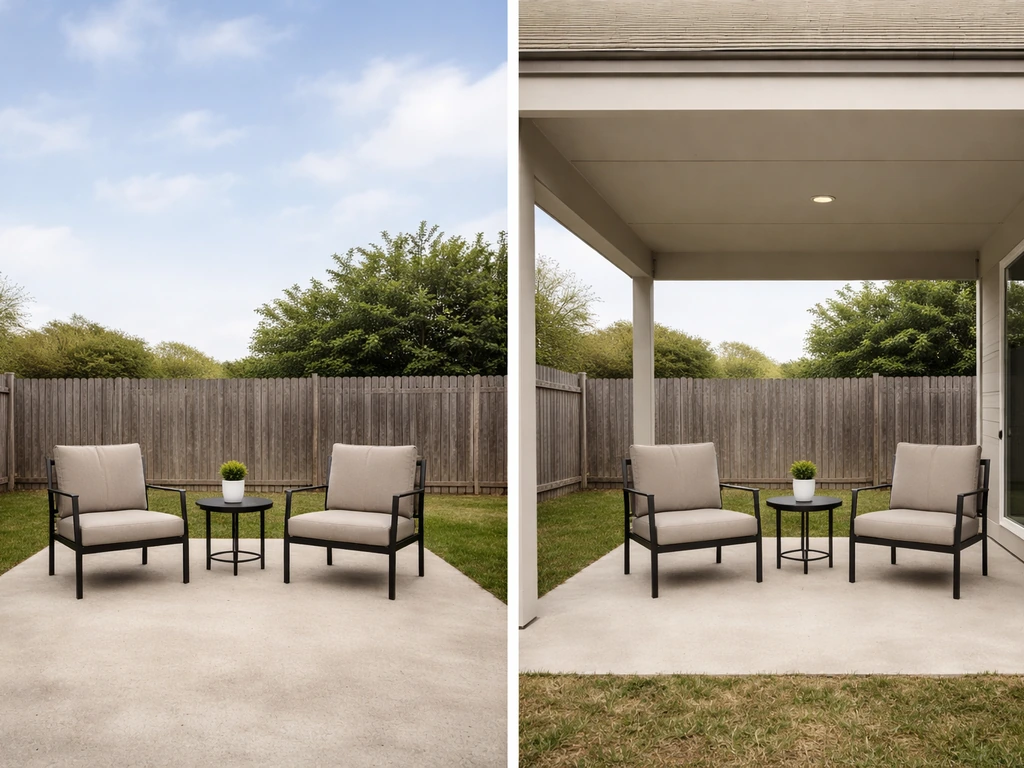
Not all outdoor structures are treated the same way, and the closer a space gets to being a real room, the more likely it is to show up in some version of square footage. Here's how different patio-adjacent structures are generally handled:
| Structure type | Counts as GLA? | Notes |
|---|---|---|
| Open/uncovered patio | No | Not conditioned, not enclosed; excluded from all standard GLA definitions |
| Covered patio (roof, no walls) | No | Roof alone doesn't qualify; space must also be enclosed and conditioned |
| Pergola | No | Open structure with no solid roof; clearly excluded |
| Screened enclosure (no HVAC) | No | Enclosed but not conditioned; excluded from GLA; may count as 'enclosed porch' |
| Four-season room / sunroom (with HVAC) | Sometimes | If permitted, conditioned, and finished to same standard as interior, may qualify |
| Converted enclosed patio (permitted, conditioned) | Possibly | Requires permits and inspections; appraiser decides based on finish and HVAC |
A covered patio, which is one of the most popular upgrades homeowners ask about, still does not count as GLA. Having a roof over your patio makes it more comfortable and arguably more valuable, but the roof alone doesn't transform outdoor space into living area. The space still needs to be fully enclosed and conditioned (heated and cooled) to even begin a conversation with an appraiser about GLA inclusion. This is worth keeping in mind if you're planning a covered patio project and wondering how it will affect your home's measured square footage.
Screened enclosures are a common middle ground, especially in Florida and the Southeast. They're enclosed but not conditioned, so they're excluded from GLA. Appraisers typically note them as 'screened porch' or 'enclosed porch' and assign contributory value separately, not as GLA. A fully converted, permitted, HVAC-connected room that was once a patio is a different story, but that's a significant construction project and requires permits, inspections, and appraiser judgment to qualify.
How to calculate your patio area and label it correctly
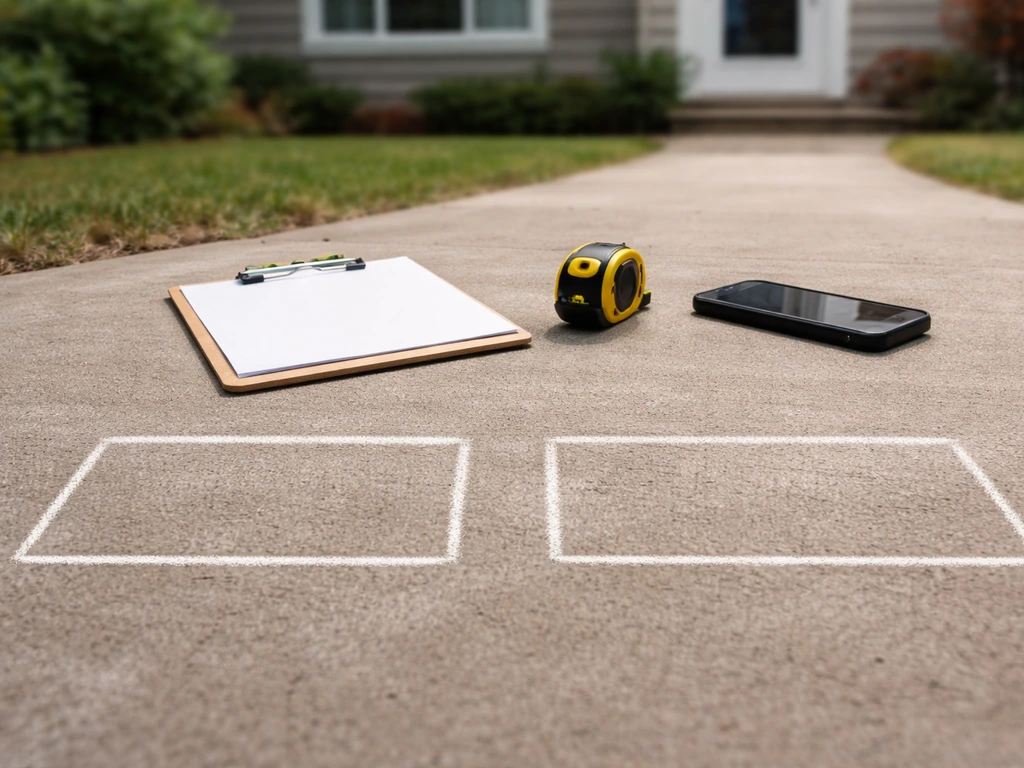
If you're selling, refinancing, or just trying to understand your home's layout, calculating your patio area is straightforward. Grab a tape measure and use these steps:
- Measure the length and width of your patio at its longest and widest points (in feet).
- Multiply length by width to get square footage for a rectangular patio. For an L-shape, break it into two rectangles, calculate each, and add them together.
- For irregular shapes, break the space into the closest simple shapes (rectangles, triangles) and calculate each section separately.
- Label the result as 'patio area' or 'outdoor living area,' not as part of your home's square footage.
- If you have multiple outdoor structures (patio, deck, pergola coverage), measure and list each separately.
For listings, your agent should record patio area in the 'other features' or 'additional rooms' section of the MLS, not in the GLA field. If you're preparing a home for sale and you've made significant outdoor improvements, make sure your agent describes the patio area in the listing narrative with its actual dimensions. Buyers and their agents appreciate knowing the usable outdoor square footage, even when it doesn't count toward the home's GLA. If you're deciding how big to build your patio for a dining table, start by allowing enough clearance for chairs around the table how big patio for table.
One practical note: if your patio is unusually large (say, 600 or 800 square feet), that's worth highlighting in marketing materials even though it doesn't move the GLA number. To answer the bigger question, a patio can also be too big to ignore for permitting and marketing, even if it still won't count toward GLA unusually large. Outdoor living area is a real differentiator, especially in markets where lot sizes are small and covered outdoor space is a premium. Knowing the difference between what counts toward 'square footage' and what counts toward 'value' is the key insight here.
When patio area affects value, taxes, permits, and insurance
Home value and appraisals
A patio doesn't add to GLA, but it absolutely can add to appraised value. Appraisers account for outdoor improvements as 'contributory value,' comparing your home to similar properties with and without patios. A well-built, large covered patio in a market where outdoor living is desirable can contribute real dollars to an appraisal, just not through the square footage line. The value shows up in the adjustment grid, where an appraiser might add $5,000 to $20,000 (or more in high-end markets) to reflect a high-quality outdoor space compared to a comp without one.
Property taxes

Tax assessors don't always follow GLA rules. Some counties assess patios, decks, and other outdoor improvements as part of the property's overall value, especially if they were permitted. A permitted patio poured with concrete and built with a structural roof might increase your assessed value even if it doesn't show up in your home's square footage. The rules vary significantly by county, so it's worth checking with your local assessor's office if you're adding a substantial outdoor structure. Don't assume that 'it's not in my square footage' means it won't affect your tax bill.
Permits
Most municipalities require permits for patios over a certain size, for covered patios with structural roofs, and for any attached outdoor structure. Permit requirements are not connected to whether the space counts as GLA. You can need a permit for something that will never count as square footage. Skipping permits creates problems when you sell: appraisers and buyers' agents will look for permits, and unpermitted structures can cause headaches during underwriting. Always pull the permit if your jurisdiction requires one.
Homeowners insurance
Your homeowners insurance policy may or may not cover your patio and any attached structures, depending on how it's written. Patios that are attached to the home and built with permanent materials (concrete, pavers, a structural roof) are often covered under the 'other structures' portion of a standard HO-3 policy, which typically provides coverage at 10% of your dwelling coverage limit. Freestanding patios or pergolas set away from the house may need to be specifically listed. Let your insurance agent know whenever you add a significant outdoor structure so your coverage stays accurate.
Your next steps checklist
Depending on why you're asking whether your patio counts as square footage, here's what to do next:
- Selling your home: Ask your agent to confirm that GLA in your listing excludes patio area, and make sure outdoor square footage is described separately in the listing narrative with actual dimensions.
- Getting an appraisal: Ask your appraiser how they'll handle your patio, covered patio, or screened enclosure. Request that they note the outdoor area separately and explain how they're assigning contributory value.
- Renting an apartment: Ask the landlord specifically whether the listed square footage includes the patio or balcony. Get the interior-only number in writing.
- Buying a condo: Request separate figures for interior square footage and exterior/outdoor square footage from the seller's disclosure documents.
- Planning a covered patio or outdoor room conversion: Check with your local building department about permit requirements before construction, regardless of whether the space will ever count as GLA.
- Concerned about property taxes: Contact your county assessor's office and ask how permitted outdoor structures are assessed in your jurisdiction.
- Updating insurance: Call your homeowners insurance agent after any significant outdoor construction and confirm your 'other structures' coverage is adequate.
- Converting a patio to living space: Consult with a licensed contractor and your local building department first. For the addition to count as GLA, it will need permits, proper insulation, and a permitted HVAC connection at minimum.
The bottom line is this: patios are valuable, but they live outside the square footage number that dominates real estate conversations. A good starting point for buyers is to think about the recommended patio size for their lot and budget, even though it typically does not count as livable square footage patios are valuable.
If you're also trying to decide what is a good patio size for your needs, focus on usable outdoor space rather than how it impacts GLA. Knowing that distinction protects you whether you're buying, selling, renting, or building. And if you're weighing whether to add a patio versus a deck, a covered structure versus an open one, or a screened room versus a full conversion, those choices all carry different implications for how the space gets measured, taxed, and valued.
FAQ
If my patio is enclosed and has a roof, does it count as square footage (GLA)?
Usually no. Even with a roof, it generally must be fully enclosed and conditioned (heated and cooled) to be counted in GLA. Roofed but unconditioned areas are typically treated as patio-related features or screened/enclosed porch equivalents, not living area.
Does a covered patio attached to my house ever increase the “square footage” number on the listing or appraisal?
It should not increase GLA, but it can still affect the appraisal outcome. Appraisers may give contributory value for quality outdoor upgrades, and some listing materials may advertise “total area” separately, so ask whether the published number is GLA-only or includes outdoor space.
When a rental listing says “1,200 sq ft,” how can I tell if it includes the patio or balcony?
Ask directly for a breakdown of interior area versus outdoor area and request it in writing (email or lease addendum). If they only provide one total figure, treat it as ambiguous and confirm what they used to calculate it.
Do HOA documents or condo offering materials use different rules for patio area?
They often do, and that is where confusion is common. Condo materials may report interior and exterior/terrace space separately, or they may use a total area that mixes categories. If the offering says “terrace” or “balcony,” use those labels to request exact separate figures.
Does an appraiser measure outdoor patio dimensions the same way as indoors?
Not exactly. Appraisers typically rely on a standardized method for GLA measurement tied to finished, above-grade, conditioned interior areas. Patio size may be recorded elsewhere in the report, so do not assume the outdoor dimensions will be added to the GLA number.
What about a detached patio, pergola, or deck, does it ever get counted as square footage?
Open and semi-open outdoor structures usually do not become GLA. A deck or freestanding patio is generally outside the standardized living-area definition, though it can still influence taxes, permitting outcomes, and appraisal adjustments depending on how it is built and documented.
My county tax record shows a higher “building area” and includes my patio. Does that mean my patio counts as square footage in my listing too?
No. Tax assessment “building area” can follow different local rules, and it can reflect value impacts rather than the GLA concept used by lenders and most listings. Treat tax records as separate from GLA, unless your specific listing and appraisal explicitly confirm the calculation basis.
How do I avoid listing or appraisal mistakes where a patio gets counted incorrectly?
Provide clear patio dimensions and photos, and ask your agent to place patio area in the appropriate section rather than the GLA field. If you are refinancing or contesting an appraisal, bring documentation showing the patio is unconditioned and explain why it should be excluded from GLA.
If I finish an enclosed patio with HVAC, does it become GLA automatically?
Not automatically. It generally needs permitted construction and must be fully finished and conditioned, and the final determination is still based on appraiser judgment and the property’s actual status. Expect that you may need permits, inspections, and updated documentation before it is reflected as living area.
Do patios affect my homeowners insurance or taxes even if they do not count as GLA?
Yes. Taxes and insurance are not strictly tied to the GLA number, especially when patios are permitted or attached with permanent materials. You should update your insurer with major patio additions and check local assessor rules for how permitted outdoor structures impact assessed value.
Next Article
What Is a Good Patio Size? Guide to Best Dimensions
Get ideal patio dimensions for dining or lounging, with measuring steps, layout examples, clearances, and cost tradeoffs