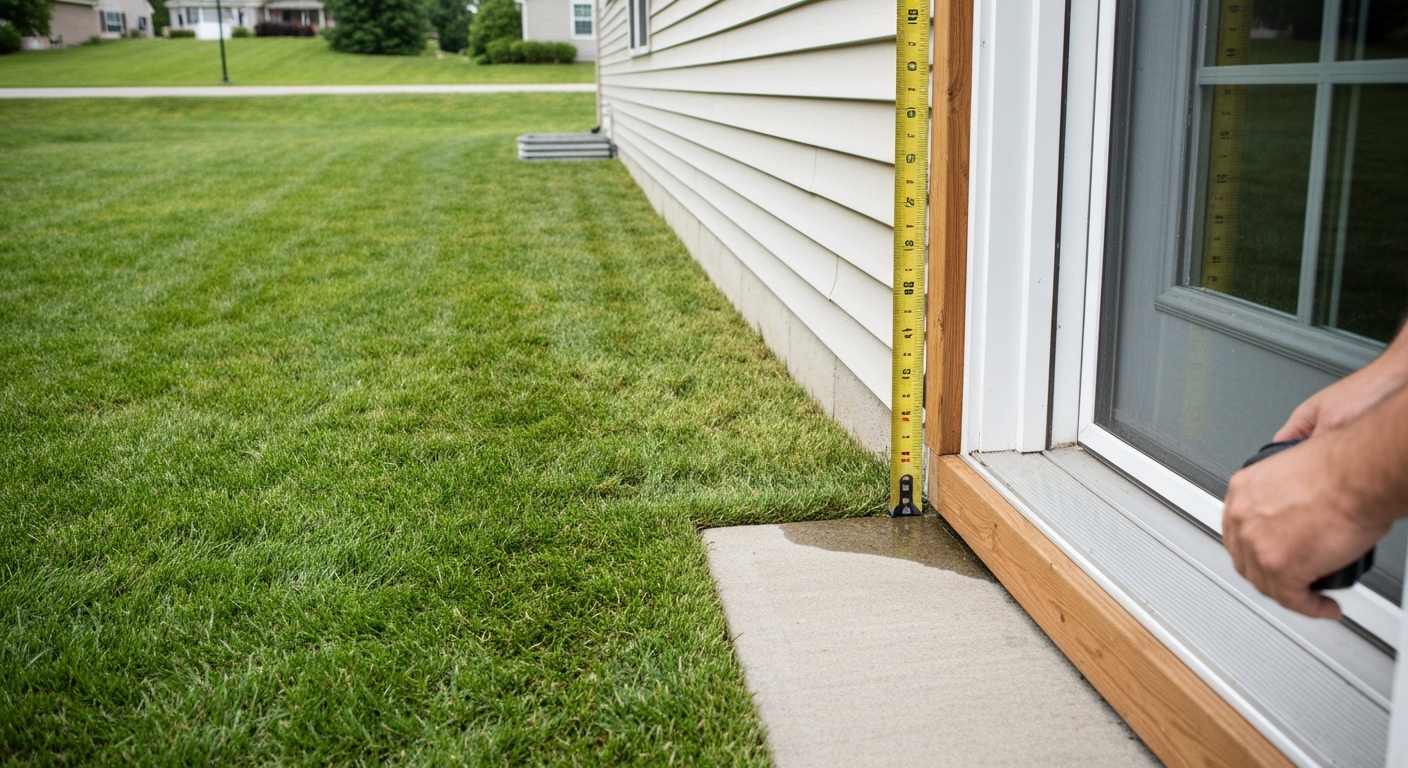
A good patio size for most homeowners falls between 12x16 feet (192 sq ft) and 16x18 feet (288 sq ft). That range handles a dining table for four to six people, a couple of lounge chairs, and enough room to move around without feeling like you're squeezing through a hallway.
What Is a Good Patio Size? Guide to Best Dimensions

Miles Hart
12 May 2026
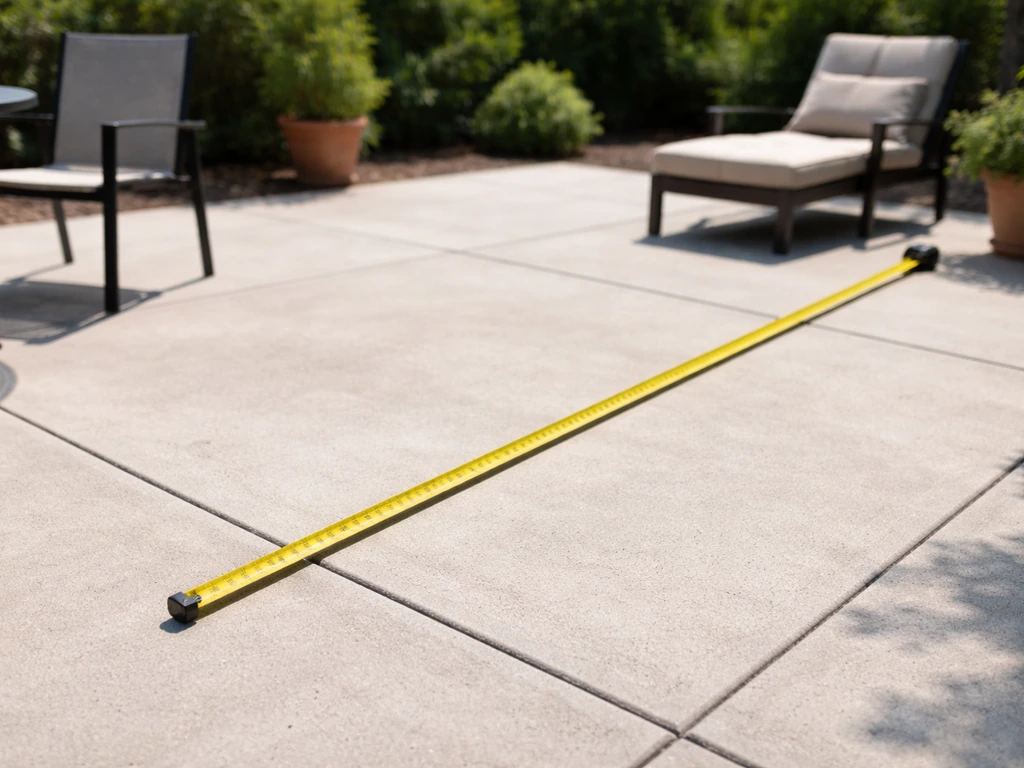
If you're working with a smaller yard or just want a spot for a bistro table and two chairs, you can get away with as little as 80–100 sq ft. If you're planning to host regularly, grill, and set up multiple zones, aim for 300–400 sq ft or more. The right answer really comes down to how you'll use the space and what your yard can absorb without the patio swallowing the whole lawn.
If you're wondering how big should a patio be in the UK, start by matching the size to your intended activities and the clearances you need around furniture how big should a patio be uk.
How to choose the right patio size for your goals
The single most useful thing you can do before picking a patio size is decide what you actually want to do out there. This Old House puts it plainly: patio size should be driven by intended use and available space. Those two factors should come before you worry about any standard dimension or price range. A patio sized for weekend morning coffee looks completely different from one designed for summer dinner parties.
Start by listing your main activities in rough order of priority. Do you want a dining setup that seats six? A lounging area with a sofa and chairs? A grill station? A fire pit? Each of those functions has a minimum footprint, and if you're combining more than one, the patio needs to accommodate each zone plus the circulation between them. A good rule of thumb from landscape planners is that the patio should take up no more than roughly 10–20% of your total backyard area, which keeps the outdoor space feeling balanced rather than paved over.
Once you know your priorities, you can size up or down from baseline dimensions instead of guessing at a number. A rectangular patio is 9ft by 6ft, which is a practical size to plug into your layout when you want a simple, usable footprint. This approach saves you from the two most common mistakes homeowners make: building a patio that's too small to be useful, or building one so large it costs twice the budget and looks out of scale with the house. If you go too far past your needs, the patio can feel oversized and throw off the whole yard’s balance can a patio be too big.
Sizing by function: dining, seating, grilling, and lounging
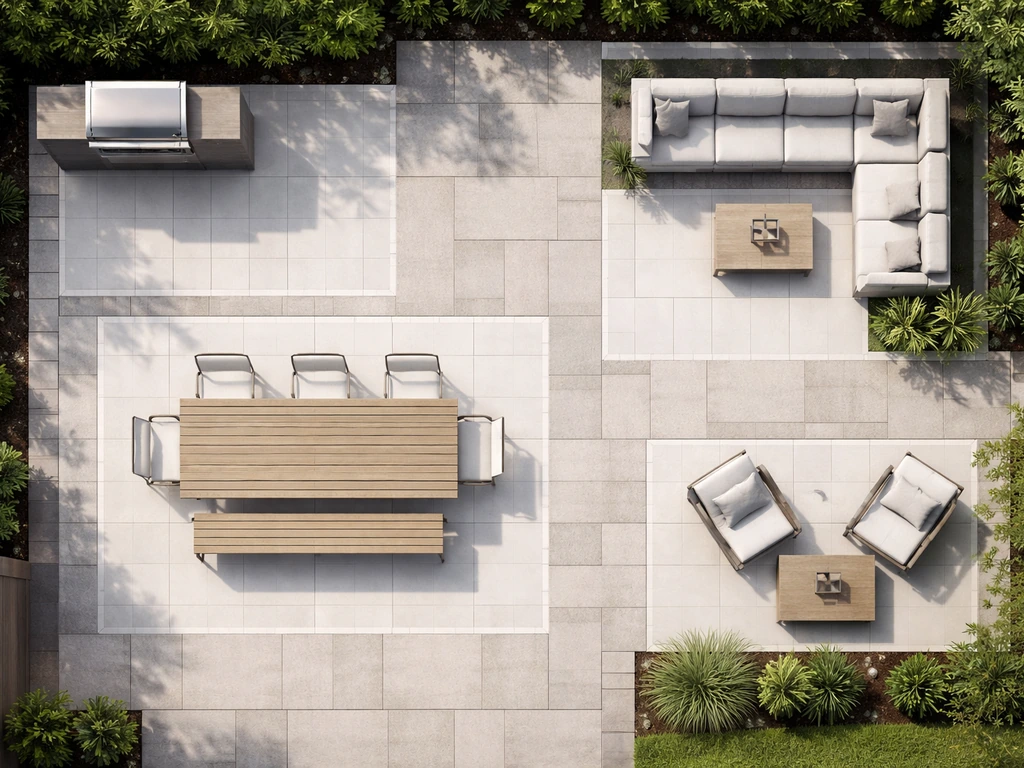
Each activity has real minimum dimensions that come from furniture sizes and how people actually move around them. Here's how to think about each one.
Dining
A 36-inch clearance from the edge of the table is the number to memorize for dining. A quick way to estimate it is to measure your table footprint and then add clearance around it for chairs and easy movement. West Elm, Keck Furniture, and Life By Leadership all land on the same standard: you need at least 36 inches behind each chair so people can pull out, sit down, and have someone walk behind them without bumping.
A 6-person outdoor dining table runs roughly 36 inches wide by 72–84 inches long. Add 36 inches on each long side and 36 inches on each end, and you're looking at a footprint of about 9 feet wide by 13 feet long just for the dining zone. That's why a 12x14 or 12x16 patio is the practical starting point for dining four to six people comfortably.
Lounging
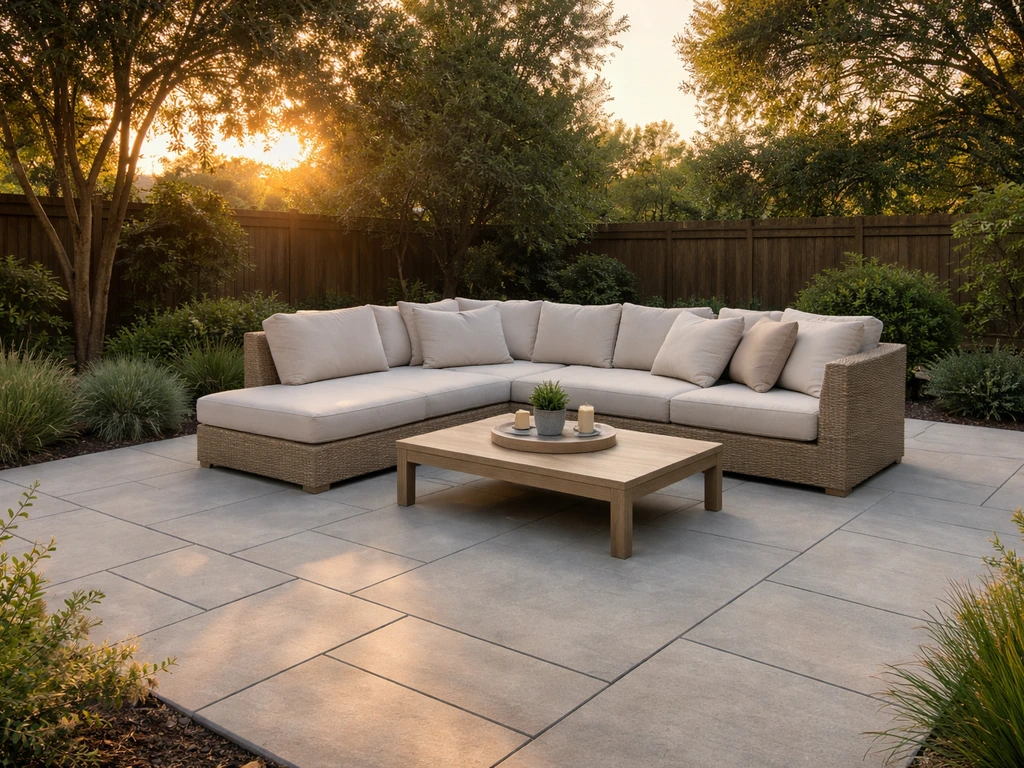
A typical outdoor sectional sofa with a coffee table occupies roughly a 10x12 foot zone on its own. Add the 24–36 inches of breathing room you want around furniture, and a dedicated lounge area needs at least 12x14 feet to feel comfortable rather than cramped. If you're doing a smaller two-chair-with-side-table setup, you can fit that into roughly 8x10 feet. The key is leaving enough floor space that chairs can be repositioned and people aren't stepping over each other to sit down.
Grilling
A freestanding grill doesn't take up much space itself, but the safety clearances around it do. Outdoor kitchen island installation guides typically specify at least 2 feet of clearance on the sides and 3 feet from the back to any combustible surface. For a built-in grill station, that means the surrounding patio or countertop material needs to be noncombustible, and the footprint expands quickly once you add prep space and counter area. A basic grill zone (grill plus room to stand and work) needs at least a 6x8 foot clear area. A full outdoor kitchen island setup needs considerably more, and placement relative to the house wall matters for safety.
Bistro or small-scale seating
If your goal is simple: morning coffee, two chairs, a small table, you can work with as little as 50–100 sq ft. A 6x8 or 8x10 slab handles a bistro setup just fine and costs a fraction of a full entertaining patio. This is a completely reasonable starting point if your yard is small or you're testing whether you'll actually use an outdoor space before committing to a larger build.
Measuring your yard and planning layout clearances
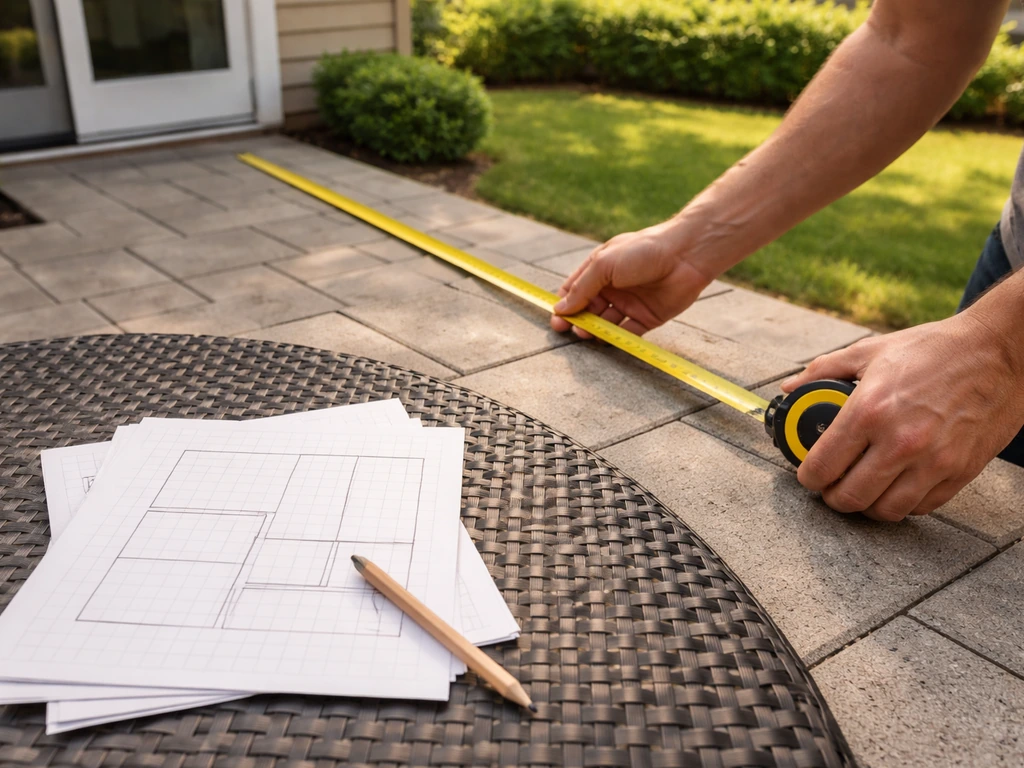
Grab a tape measure and a piece of graph paper (or a free app like Planner 5D or RoomSketcher if you prefer digital). Measure the back of your house wall, the distance from the house to the property line, and the width of the usable yard. Mark any obstructions: HVAC units, downspouts, basement windows, and especially door swings. A door that opens outward onto the patio needs to clear fully before anyone can walk past it, which typically means 36–42 inches of space from the door edge to any furniture or patio edge.
Map your zones in rough rectangles on paper. If dining is the priority, draw the dining zone first with the 36-inch clearance buffer included. Then fit lounging or grilling around it. Leave at least 36 inches for any circulation path between zones so two people can pass each other without turning sideways. This planning exercise almost always reveals that the patio needs to be bigger than initially expected, and it's much better to discover that on paper than after concrete is poured.
A few clearance numbers worth keeping handy as you plan:
- 36 inches behind each dining chair (minimum for pull-out and walk-behind)
- 24–36 inches around lounge furniture (breathing room and repositioning space)
- 36–42 inches for any main circulation path between zones
- 36 inches clear of a door swing before furniture or patio edge starts
- 2 feet on the sides and 3 feet from the back of any built-in grill to combustible surfaces
- 18–24 inches from patio edge to property line or any structure (check local setback rules)
Standard size ranges and example layouts
Rather than picking a random number, it helps to see how standard sizes map to real-world use. Here are four practical layout examples from small to large.
| Patio Size | Square Footage | Best For | Fits |
|---|---|---|---|
| 6x8 or 8x10 | 48–80 sq ft | Bistro seating, small coffee area | 2 chairs + small table, no room for extras |
| 10x10 or 10x12 | 100–120 sq ft | Starter dining patio | 4-person table with tight clearances |
| 12x16 or 14x14 | 168–196 sq ft | Comfortable dining for 4–6 | Dining zone + small grill station or 2 side chairs |
| 16x18 or 18x18 | 288–324 sq ft | Entertaining patio | Dining for 6 + lounge seating or dedicated grill zone |
| 20x20 or larger | 400+ sq ft | Multi-zone outdoor living | Dining + lounge + outdoor kitchen, separate circulation paths |
The 12x16 and 16x18 rectangles are the most common for good reason: they're large enough to be genuinely useful but small enough to stay manageable in cost and construction. Square formats like 15x15 or 18x18 work well when the yard is roughly as deep as it is wide, or when you want a more symmetrical layout.
If you're planning a covered patio, sizing considerations shift a bit since the cover structure affects how furniture can be arranged under it, which is worth thinking through separately. Covered patios often require slightly different planning since the cover and posts affect furniture placement and circulation. If you’re wondering does a covered patio count as square footage for planning or permitting, the cover can change how it’s measured.
How patio size affects your budget
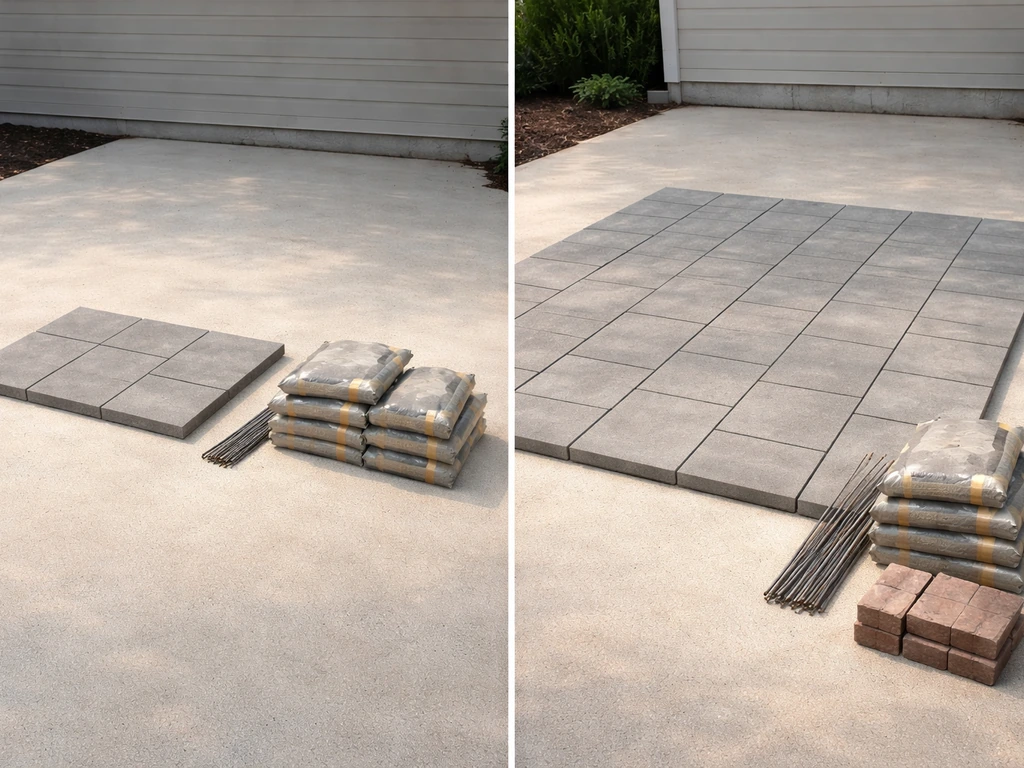
Cost scales directly with square footage, so getting the size right upfront saves real money. Concrete is the most common patio material, and a standard 3. 5–4 inch thick concrete slab runs around $10 per sq ft for material, with labor adding another $5–$15 per sq ft depending on your region and site conditions. [HomeAdvisor](https://www.
homeadvisor. com/cost/patios-and-walkways/install-concrete-patio/) estimates that the average cost of installing a concrete patio is about $10 per square foot, with a wide range based on site and project conditions. This Old House notes that [concrete patio cost estimates per square foot](https://www. thisoldhouse.
com/patios/concrete-patio-ideas) can vary based on area, materials, and labor. That means a 12x16 patio (192 sq ft) in concrete runs roughly $2,900–$4,800 all in, while an 18x18 patio (324 sq ft) stretches to $4,900–$8,100. Every additional 100 sq ft adds roughly $1,500–$2,500 to a concrete job.
Material choice multiplies that math significantly. Pavers run $5–$15 per sq ft for material, and flagstone pushes to $10–$30 per sq ft, not counting the labor premium for irregular cutting and fitting. If you're eyeing a 300 sq ft flagstone patio, you could easily spend $12,000–$18,000 installed before any extras like a pergola, lighting, or outdoor kitchen. That's not a reason to avoid those materials, but it does mean sizing the patio correctly before committing to a premium surface.
| Material | Estimated Material Cost (per sq ft) | Notes |
|---|---|---|
| Concrete (3.5–4" slab) | $10 | Most economical; durable; can be stamped or stained |
| Concrete pavers | $5–$15 | More flexible for DIY; easier to repair individual pieces |
| Flagstone | $10–$30 | Premium look; irregular cuts add labor cost |
| Labor (all materials) | $5–$15 per sq ft | Varies by region, complexity, and site prep needed |
Site prep is another cost variable that patio size amplifies. Excavation, leveling, and gravel base work scales with area, so a sloped or rocky site on a large patio footprint can add significantly to the total. This is especially true for larger patios on uneven ground, where grading alone can run into the thousands before a single paver is placed.
DIY or hire a contractor: how size and complexity tip the scales
For small patios under about 200 sq ft with level ground and no attached structures, DIY is genuinely feasible if you're comfortable with physical work and can rent the right equipment. Laying concrete pavers on a compacted gravel base is a common weekend project, and the materials cost alone for a 10x12 paver patio might run $600–$900. Doing it yourself saves the $5–$15 per sq ft labor charge, which adds up fast.
Poured concrete slabs are trickier to DIY even at small sizes. Concrete mixing, forming, pouring, and finishing have a narrow time window and require more coordination than most homeowners expect. Mistakes in a poured slab are expensive to fix, so many homeowners find the labor savings aren't worth the risk unless they have prior concrete experience.
As patio size grows, the case for hiring a contractor gets stronger for a few reasons. First, large pours or large paver installations require equipment (plate compactors, wet saws, concrete trucks) that's cumbersome to rent and operate solo. Second, larger patios attached to the house may need permits, and inspections typically require work that meets local codes. Third, any patio that includes a built-in grill or outdoor kitchen involves manufacturer clearance requirements and sometimes gas line work, which goes well beyond standard DIY scope. Attached or covered patio structures add structural load considerations that an ICC-compliant design requires a professional to verify.
A practical split: if the project is a simple ground-level paver patio under 200 sq ft with no built-ins, DIY is worth attempting. If it's poured concrete, larger than 200 sq ft, on a slope, attached to the house, or includes any kind of outdoor kitchen or cover structure, budget for a contractor. The difference in final quality and avoiding costly rework typically justifies the labor cost.
Your next steps to nail down a size
- Measure your yard and mark the usable patio area on a simple sketch, noting doors, windows, HVAC, and any slopes.
- List your priority functions in order (dining, lounging, grilling, fire pit) and assign each a zone using the clearance numbers above.
- Rough out a layout on graph paper or a free design app and check that you have 36 inches of circulation between zones and around furniture.
- Pick a footprint from the standard size ranges that fits your layout sketch and falls within your budget using the per-sq-ft estimates.
- Get at least two contractor quotes if the project is over 200 sq ft, involves concrete, or includes any attached or covered structure.
- Check local permit requirements before breaking ground, especially if the patio attaches to the house or exceeds a certain square footage threshold.
The most common regret homeowners have is building too small the first time and then wishing they'd gone a bit bigger. If you're genuinely torn between two sizes and the budget difference is manageable, the larger one usually wins out in day-to-day usability. But always run it against your actual furniture layout and clearance numbers first, because a 16x20 patio with a poorly planned layout can feel more cramped than a well-designed 12x16.
FAQ
If I have a small yard, is it better to choose a smaller patio or reduce seating?
Try to protect circulation first. If you cut the patio smaller but still keep the same table and chair clearances, it will feel tight. In a small yard, consider a bistro setup (or fewer chairs) before you reduce the space needed for pulling chairs out and walking behind people.
How much space do I need between the patio and the house door or garage door?
Plan for the door swing plus a buffer for people passing. Outward-opening doors often require roughly 36 to 42 inches from the door edge to the first patio obstruction, depending on how close the furniture sits to the walkway.
What clearance should I leave around a fire pit or outdoor stove compared with a grill?
Fire pits and outdoor stoves typically need more surrounding breathing room than a freestanding grill because people cluster around them. If you do not already have manufacturer specs, treat them as a larger “safety zone” and build that into your patio footprint before choosing the final size.
Can I make a patio smaller than the “good range” if I use it mainly for standing and casual hosting?
Yes, but design for movement, not just a table footprint. If most hosting is standing, you can reduce dining-zone area, but you still need clear pathways between the house entry, bar or grill spot, and seating so guests are not forced to single-file.
Does a covered patio require a larger footprint than an uncovered one?
Often, yes. The cover structure and posts can block circulation and limit where furniture can sit. Even if the deck or slab is the same size, you may need extra usable space to avoid “dead zones” created by columns and overhangs.
If I’m adding a pergola or umbrella, should I plan for a bigger patio than the seating layout?
Plan for the shade element’s full spread and clearance when it is deployed. An umbrella can reach well beyond the table, so leave margin so the umbrella base does not land in a walkway, and so chairs can still be pulled without catching on the frame.
How do I account for steps, slopes, or a retaining wall when sizing a patio?
Size the patio to include at least a workable flat leveling zone, not just the finished deck dimensions. On sloped sites, the usable flat area can shrink once you account for grading, drainage, and retaining edges, which can make the “effective patio size” smaller than expected.
What’s a practical way to avoid the common mistake of building a patio that feels cramped?
Do a “walk test” on paper. After you place the table, seating, and grill zone, add straight-line circulation paths between zones and around the entry path, then verify that two people can pass without turning sideways (typically by preserving about 36 inches of movement space).
If I can’t decide between two patio sizes, what decision rule should I use?
Use your furniture list and subtract only what you can confidently remove. If the larger option adds space that directly reduces pinch points, it usually improves day-to-day use. If the larger option only increases unused perimeter area, the smaller size may be the better value.
Should patio square footage include the area under steps or attached structures?
For planning and cost, measure the actual covered walking surface you intend to finish and use, not the entire footprint of any structure. For permitting, measurement rules can vary, so confirm whether covered portions count in your area before finalizing dimensions.
When is DIY more risky for a certain patio size?
DIY is most manageable for small, simple ground-level projects with level access. Poured concrete becomes more failure-prone when you need accurate forming, timing, and finishing, and larger footprints require equipment logistics. If you need a grill, gas lines, or structural attachments, budget for professional involvement regardless of patio size.
Next Article
Grass Is Higher Than Patio: Causes, Fixes & Deck vs Patio
Grass higher than patio? Causes, slope checks, repair options, lower lawn, raise patio, or build a deck, with costs & DIY