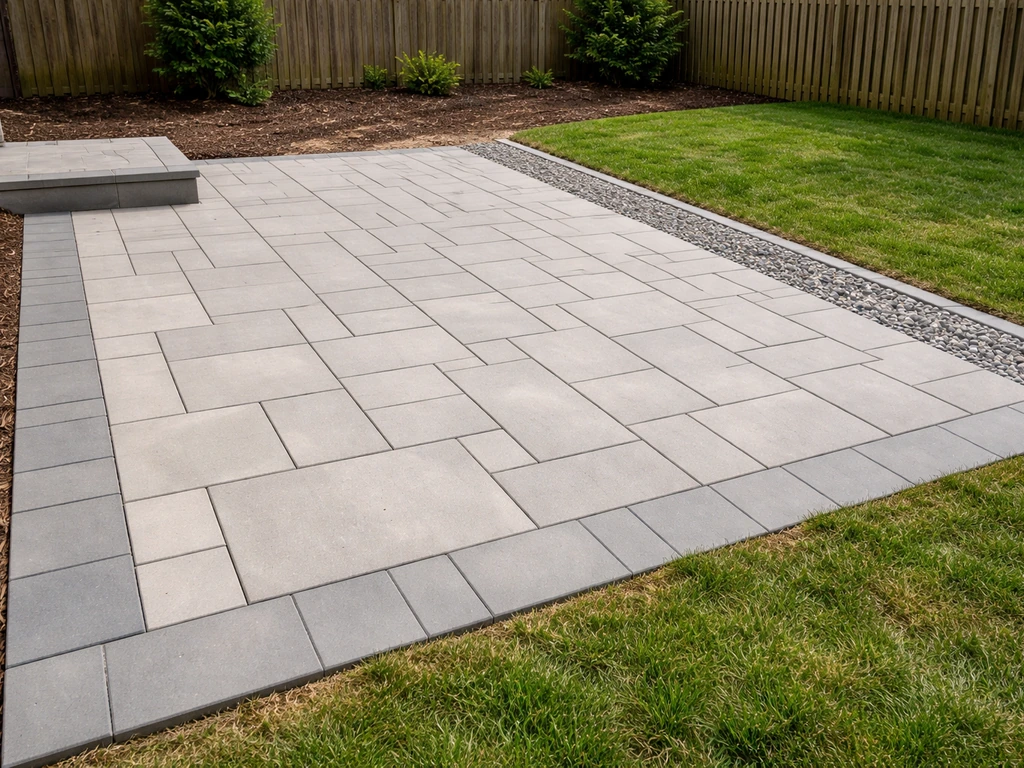
Yes, Home Depot does offer patio installation services, including concrete patio installation, and separately offers installation for patio covers and outdoor shade structures. The catch is that availability depends entirely on your ZIP code, because Home Depot routes these jobs through a network of local authorized contractors rather than sending a single nationwide crew. So the real question isn't whether Home Depot does it in theory, it's whether they have a vetted installer in your area right now. Here's how to find out fast and what to expect if they do.
Does Home Depot Do Patio Installation and Patio Covers?

Miles Hart
24 Jun 2026
What Home Depot actually offers for patio installation
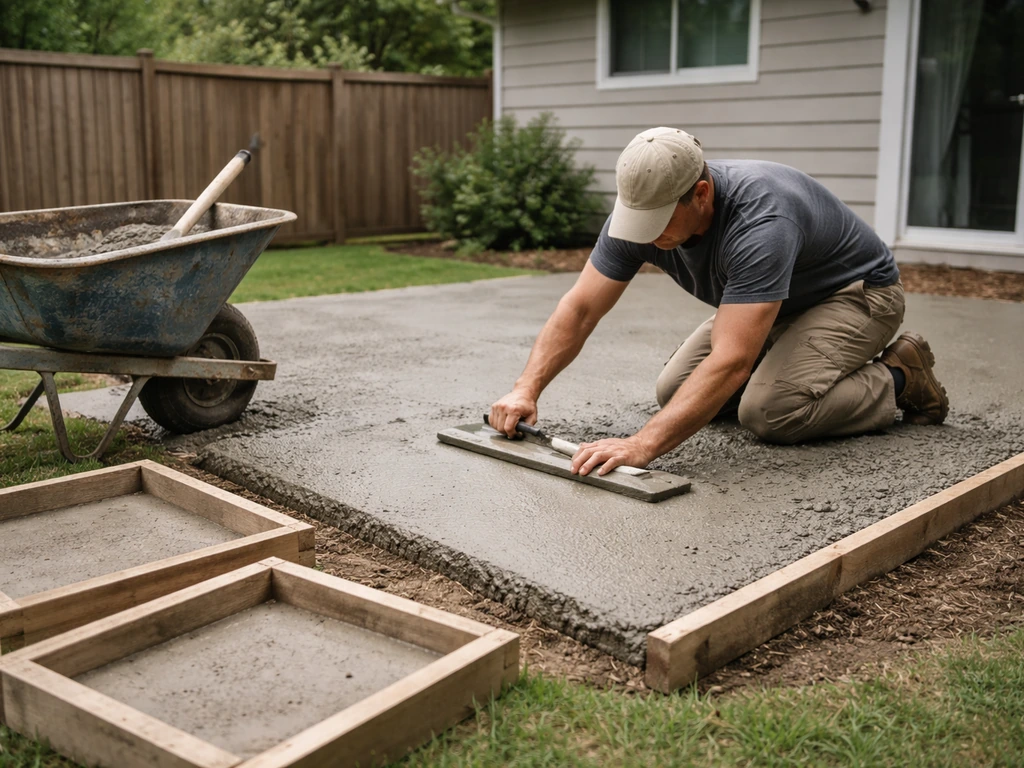
Home Depot lists 'Concrete Patio Installation' (and 'Concrete Patio Repair') explicitly in their Exterior Home Services directory, under a section that also covers Carpentry and Masonry Services through their Pro Referral network. That means if you go to their website or visit the Special Services Desk at your local store, you can request an estimate for a new concrete patio surface. This isn't a side hustle for them. It's an official service line with a structured booking process.
That said, 'patio installation' at Home Depot is primarily concrete-focused. If you're thinking paver patio with a sand-set base, complex drainage, or natural stone work, the scope may vary depending on which local contractor they match you with. It's worth asking directly about materials when you request your consultation, because the service listing doesn't promise every patio surface type.
Does Home Depot install patio covers?
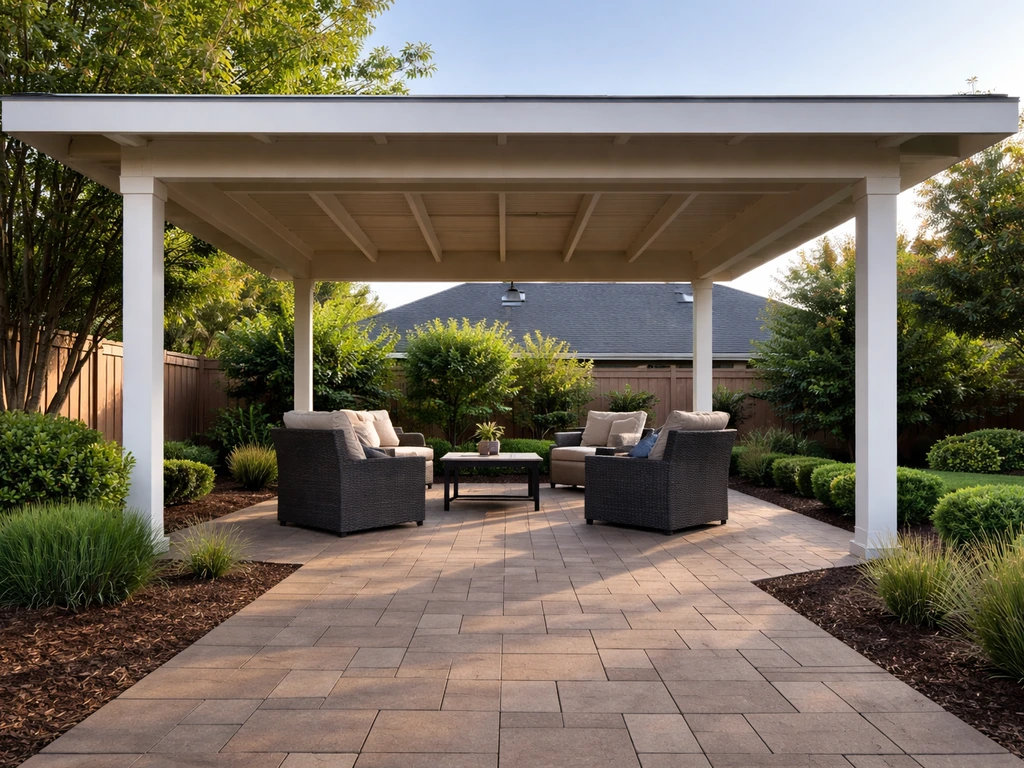
Yes, and this is actually where Home Depot's service network is particularly active. They have a dedicated Patio Covers category page with an 'Installation Services' section and an option for a free consultation. Many individual patio cover products in their catalog are tagged 'In-Home Installation Available,' which means installation is tied to specific SKUs rather than being a blanket yes for every product on the shelf. The booking pathway for outdoor shade structures specifically asks you to enter your ZIP code, then connects you with a local, licensed, and insured authorized service provider.
Before going further, it helps to know what actually counts as a patio cover, because the term gets used loosely. A patio cover is a roof-like structure that sits over your patio, attached to the house or freestanding, built from aluminum, wood, or vinyl. This is different from a pergola (open-beam structure with no solid roof), an awning (fabric or metal retractable shade), or a screen enclosure. If you are comparing options to do it yourself enclosed patio kits, make sure the design still fits your local permitting and HOA requirements before you order patio cover. Home Depot handles all of these to varying degrees, but the installation process and permits involved differ significantly between them.
| Structure Type | What It Is | Installation Available via Home Depot | Permit Usually Required |
|---|---|---|---|
| Concrete Patio | Poured concrete surface with base prep | Yes (listed in Exterior Services) | Sometimes, depends on jurisdiction |
| Paver Patio | Interlocking stone or brick surface | Possibly, via Pro Referral | Rarely for basic installs |
| Patio Cover (solid roof) | Attached or freestanding aluminum/wood roof structure | Yes, via authorized providers | Yes, in most areas |
| Pergola | Open lattice or beam overhead structure | Yes, via installation services page | Often yes if attached |
| Retractable Awning | Motorized or manual fabric shade | Yes, via outdoor shade installation page | Typically no |
| Screen Enclosure | Screened walls and roof around patio | Limited, check locally | Yes, almost always |
How to confirm availability in your area (don't skip this step)
The fastest way is to go to the Home Depot website, find the relevant installation service page (Outdoor Shade Installation, Patio Covers, or Exterior Home Services), and enter your ZIP code. The system will either connect you with a local authorized provider or let you know nothing is available nearby. For concrete patio work specifically, the Pro Referral service may match you with up to three local contractors in real time. If no contractor responds within 48 hours, the request gets resubmitted automatically. This is important to know because a 'no match today' doesn't always mean a permanent no.
You can also walk into your local Home Depot store and ask at the Special Services Desk. This is worth doing if the website process feels vague, because in-store staff can often tell you directly whether their installation partners are currently active in your market and how long the wait for a consultation typically is.
When you do make contact, don't accept a generic yes or no. Ask these specific questions to get useful information:
- Does the installer handle both the base prep and the surface, or just the surface?
- What patio materials do they work with (concrete only, pavers, flagstone)?
- For patio covers: does the quote include footings/posts, or just the cover structure itself?
- Who pulls the permit, you or them?
- Do they handle HOA approval documentation, or is that your responsibility?
- What's the current wait time from signed contract to project start?
What patio installation and patio cover installation actually cost
Patio surface costs
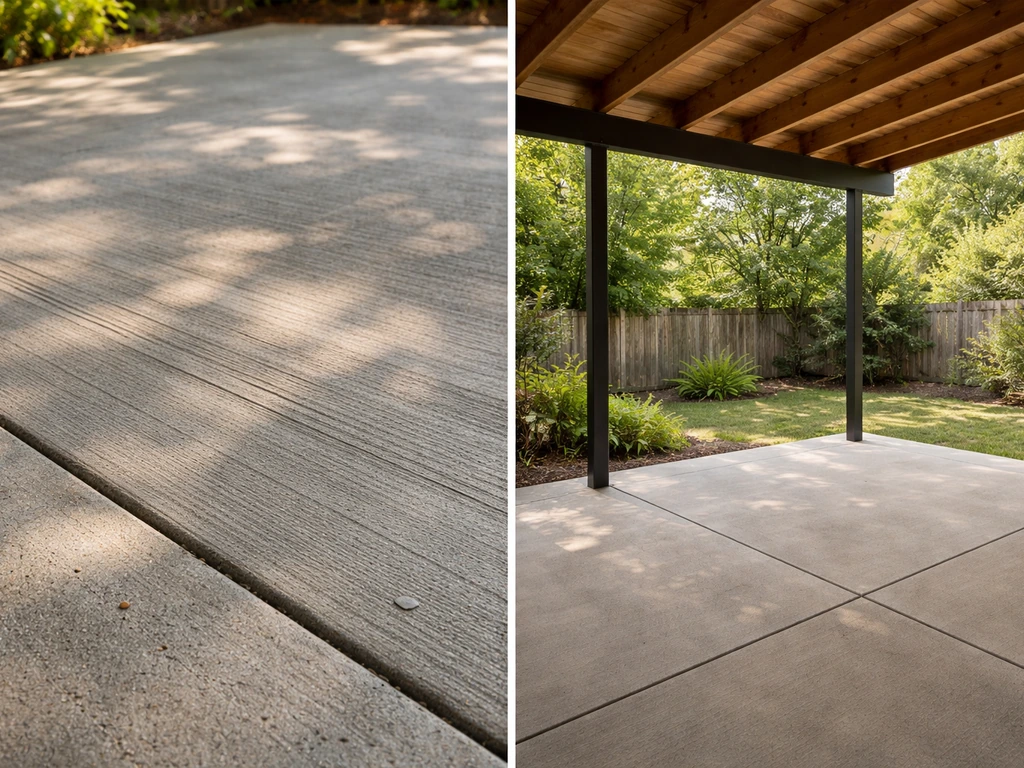
Concrete patios generally run $6 to $20 per square foot installed, depending on thickness, finish type (broom finish vs. stamped), and site conditions. For a typical 300-square-foot backyard patio, that puts the range at roughly $1,800 to $6,000. Paver patios cost more, usually $10 to $50 per square foot installed, with complex patterns adding another 10 to 20 percent to labor. A standard paver patio project often falls in the $3,000 to $7,000 range for a 200 to 300 square foot space, though larger or more elaborate projects push well past that.
Patio cover costs
Patio covers are significantly more expensive than just laying a surface. Most professionally built patio covers run $20 to $50 per square foot installed, and when you factor in a typical cover size of 200 to 400 square feet, most homeowners land somewhere between $10,000 and $22,500. Aluminum covers tend to come in at the lower end of that range because they're lighter, faster to install, and require less structural work. Wood covers can cost more upfront and require periodic maintenance. The Home Depot patio cover products that qualify for in-home installation are often aluminum or composite systems engineered to International Building Code (IBC) standards, which affects both the durability and the permitting process.
| Project Type | Low End (per sq ft) | High End (per sq ft) | Typical Total for Mid-Size Project |
|---|---|---|---|
| Concrete Patio | $6 | $20 | $1,800 – $6,000 |
| Paver Patio | $10 | $50 | $3,000 – $7,000+ |
| Aluminum Patio Cover | $20 | $35 | $8,000 – $14,000 |
| Wood Patio Cover | $30 | $50 | $12,000 – $22,500+ |
| Retractable Awning | $1,500 | $5,000 (total) | $1,500 – $5,000 |
Permits add to the budget too. A patio surface rarely requires a permit in most jurisdictions, but an attached patio cover almost always does, because it's classified as an accessory structure connected to the home. Permit fees typically range from $100 to $500+ depending on your city or county, and some areas require engineered drawings for cover structures over a certain size. Budget for this and build it into your timeline, because permit approval can add two to six weeks to a project.
What's included in the installation and what you'll likely handle yourself
This is where homeowners often get surprised. A 'patio installation' quote through Home Depot's network typically covers the core scope of work, but it doesn't automatically include everything you might assume.
Usually included
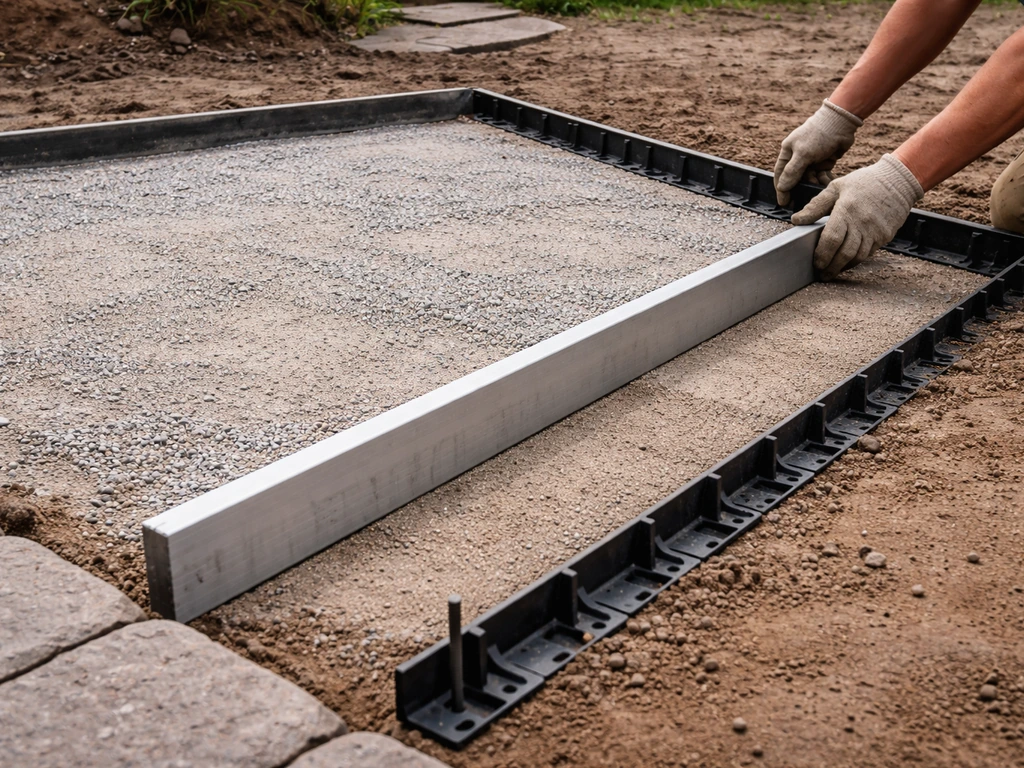
- Excavation and base preparation for the patio surface (gravel/sand base)
- Concrete forming and pour, or paver laying with basic edging
- The patio cover structure itself (frame, roofing panels or fabric)
- Standard attachment to house wall (flashing, ledger board for attached covers)
- Basic cleanup and haul-away of construction debris
Often not included (verify before signing)
- Demolition of an existing patio, deck, or concrete slab (usually quoted separately)
- Electrical work: wiring for ceiling fans, lighting, or outlets under a patio cover requires a licensed electrician and is almost never bundled
- Footings and post holes for freestanding covers (these may be separate from the cover structure quote)
- Gutter installation on patio covers (some homeowners add these for drainage)
- Screen enclosure add-ons or privacy panels
- HOA submission paperwork and approval coordination
- Permit application fees (the contractor may pull the permit, but you pay the fee)
- Drainage improvements or regrading around the patio perimeter
If you're comfortable with some of those add-ons yourself, a partial DIY approach can make sense. Homeowners regularly handle the permit application process on their own and hire out the structural work, or they do the surface prep and hire a contractor just for the cover. There's a lot of room between 'full Home Depot installation' and 'full DIY.' For reference, there are plenty of do-it-yourself patio enclosure kits and covered patio plans designed for homeowners who want to handle the cover structure themselves, which is worth considering if Home Depot's installed options don't fit your budget or aren't available in your area.
Permits and HOA: deal with these early, not late
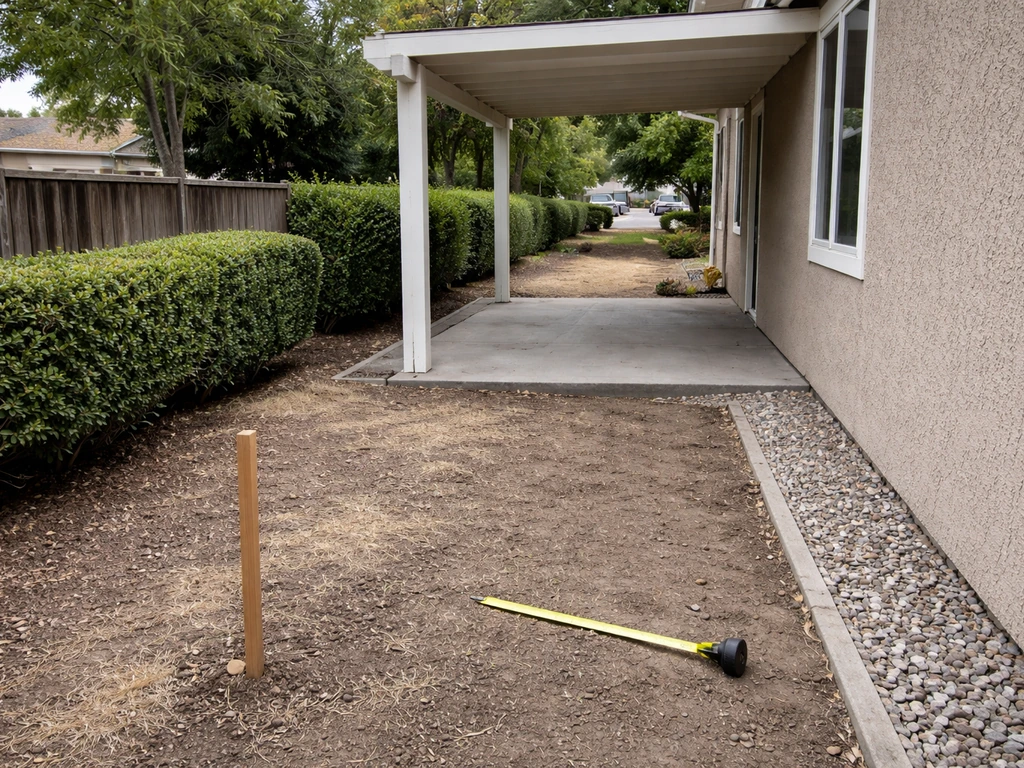
Most municipalities treat an attached patio cover as a permitted structure that must comply with residential accessory-structure rules, including setback distances from property lines, height restrictions, and in some cases engineering documentation. Phoenix, for example, has specific code classifications for awnings, shade structures, and canopies. Texas municipalities typically require a residential permit application with a detailed work description for any patio cover. Assuming you don't need a permit is one of the most common (and costly) mistakes homeowners make with these projects.
HOA rules are a separate layer entirely. Even if your city allows a particular structure, your HOA may restrict materials, colors, roof pitch, or even whether an attached cover is allowed at all. Setback disagreements between HOA rules and city code are more common than you'd think, and resolving them before you sign a contract saves a lot of headache. Ask your Home Depot installer contact whether they've worked in HOA communities in your area before and whether they can help navigate approval documentation.
What to do if Home Depot doesn't cover your area (or isn't the right fit)
If Home Depot's service network doesn't have an active installer in your ZIP code, or if your project falls outside their typical scope (complex drainage, non-standard materials, screened enclosures, large freestanding structures), you have solid alternatives.
Hiring a local patio or hardscape contractor directly
For a patio surface, look for hardscape contractors who specialize in concrete or pavers rather than general contractors. Get at least three quotes and ask each one about base preparation methods, drainage, and what happens if the slab cracks within the first year. For patio covers, an aluminum patio cover specialist or local outdoor living contractor will often give you a better price and more product options than a general contractor who does covers occasionally.
When vetting any contractor for a patio cover, ask these questions before approving anything:
- Are you licensed and insured for this type of structural work in this state?
- Do you pull the permit, and is the fee included in your quote?
- Can you provide references from patio cover jobs in this county (not just the city)?
- What's your process if the HOA rejects the first design submission?
- What does your warranty cover, and is it through you or the manufacturer?
- Who handles the electrical if we want a ceiling fan or lights?
Consider whether a patio cover is the right structure for your goals
Before committing to a patio and cover installation, it's worth stepping back and comparing your options. If you are mapping out covered patio plans do it yourself, make sure you also factor in permits, drainage, and material choices before you start.
A covered patio, a deck with an overhead structure, and a screened porch are all solving a similar problem (covered outdoor living space) but at different price points, with different maintenance profiles, and different impacts on your home's value. A wood deck with a pergola on top can actually offer more flexibility in design than a poured concrete patio with an aluminum cover, depending on your house's style and your yard's grade.
This kind of comparison is especially useful if you're early in the planning process and haven't committed to a surface material yet.
Your next steps, in order
- Go to homedepot.com, navigate to Exterior Home Services or the Patio Covers installation page, and enter your ZIP code to check availability now.
- If available, book the free in-home consultation. Bring your patio dimensions, a photo of the back of your house, and a list of the questions above.
- At the same time, check your HOA rules (if applicable) and look up your city or county's permit requirements for patio covers or concrete patios. Don't wait for the contractor to tell you.
- If Home Depot doesn't have coverage in your area, use a platform like Angi, Houzz, or direct Google searches for 'patio cover installer [your city]' to find licensed local specialists, and get at least three quotes.
- Once you have a quote, verify what's excluded and price out those line items (electrical, permit fees, demolition) before you compare total costs across contractors.
FAQ
Does Home Depot do patio installation everywhere in the US?
No. Home Depot routes patio and patio cover work through authorized local contractors, so availability depends on your ZIP code and which partners are currently active. If you get no options online, check again later or ask the Special Services Desk in-store, since contractors can start or stop taking jobs in a given area.
Is “patio installation” limited to concrete when booked through Home Depot?
Primarily, yes. Concrete patio installation is explicitly offered, but the ability to install pavers, stone, or more specialized surfaces can vary by the local contractor they match you with. When you request an estimate, confirm the exact surface type, thickness, base method (sand-set vs. mortar vs. stabilized base), and drainage approach, not just the word “patio.”
How do I know whether a patio cover installation depends on a specific product?
Home Depot can tie installation to certain patio cover SKUs, so two people in the same ZIP code may see different outcomes depending on which product qualifies for in-home installation. Ask the rep to confirm the specific model you’re buying is eligible for installation, and request the contractor’s scope of work in writing.
What should I ask about drainage before scheduling a patio slab or cover?
Ask how they handle site drainage and slope, including whether they’ll address existing grading, redirect runoff away from the foundation, and manage water flow around footings or posts. A common failure mode is settling or cracking that starts near low spots, so also ask what base prep they use and whether they warranty against early cracking.
Are permits automatically included in a Home Depot patio installation quote?
Not automatically. Concrete patio surfaces often do not need permits, but attached patio covers typically do, and some jurisdictions require engineered drawings for certain sizes. Ask who files permits, what documents are required, and the expected timeline for approval, since permitting can add weeks.
Can my HOA block a patio cover even if the city permits it?
Yes. HOA rules may restrict whether an attached cover is allowed, plus materials, color, roof pitch, and setbacks. Before signing, ask whether the installer has done HOA-related paperwork in your area, and request guidance on the approval steps your HOA requires.
Does Home Depot install freestanding patio structures and screen enclosures?
It may, but it depends on the scope your local authorized contractor typically handles. Screen enclosures and large freestanding structures are more likely to fall outside the standard patio cover workflow. If your project sounds non-standard, ask early whether it fits their usual category and what elements are included or excluded.
What happens if Home Depot cannot match me with a contractor right away?
For some requests, the system may resubmit automatically if no contractor responds within about 48 hours, so “no match today” might turn into availability later. You can also try the in-store Special Services Desk for a quicker answer about partner activity in your specific market.
Is there a warranty or recourse if my patio cracks soon after installation?
Ask what warranty covers within the first year, including settlement issues, cracking, and surface defects. Also request how the contractor will prevent or manage slab cracking (jointing approach, thickness, and base preparation), since warranty terms and expectations can differ by contractor and surface type.
What are the most common budget surprises for patio and cover projects?
Permit fees and engineered drawing requirements can add cost and time, and quotes often exclude certain assumptions homeowners expect (site grading fixes, specialty drainage, electrical or lighting runs, or removal of existing structures). Ask for a line-item scope that spells out what’s included, what’s excluded, and what would trigger an extra charge.
Next Article
Home Depot DIY Patio Guide: Plans, Base, Install, Costs
Step-by-step Home Depot DIY patio guide: plans, base, paver or concrete install, costs, drainage, checklist, tips