Patios generally add value more reliably for most homeowners because they cost less to build, require less maintenance, and appeal to a wider range of buyers. But a wood deck built on a raised lot or multilevel yard can actually outperform a patio in ROI, with the 2025 Cost vs. Value Report citing up to 95% return on a wood deck addition. The real answer depends on your yard, your climate, your home's layout, and what buyers in your market expect to see. Let's break it down so you can make the call for your specific situation.
Does a Deck or Patio Add More Value? Cost and ROI Guide

Miles Hart
2 Jun 2026
What actually separates a deck from a patio
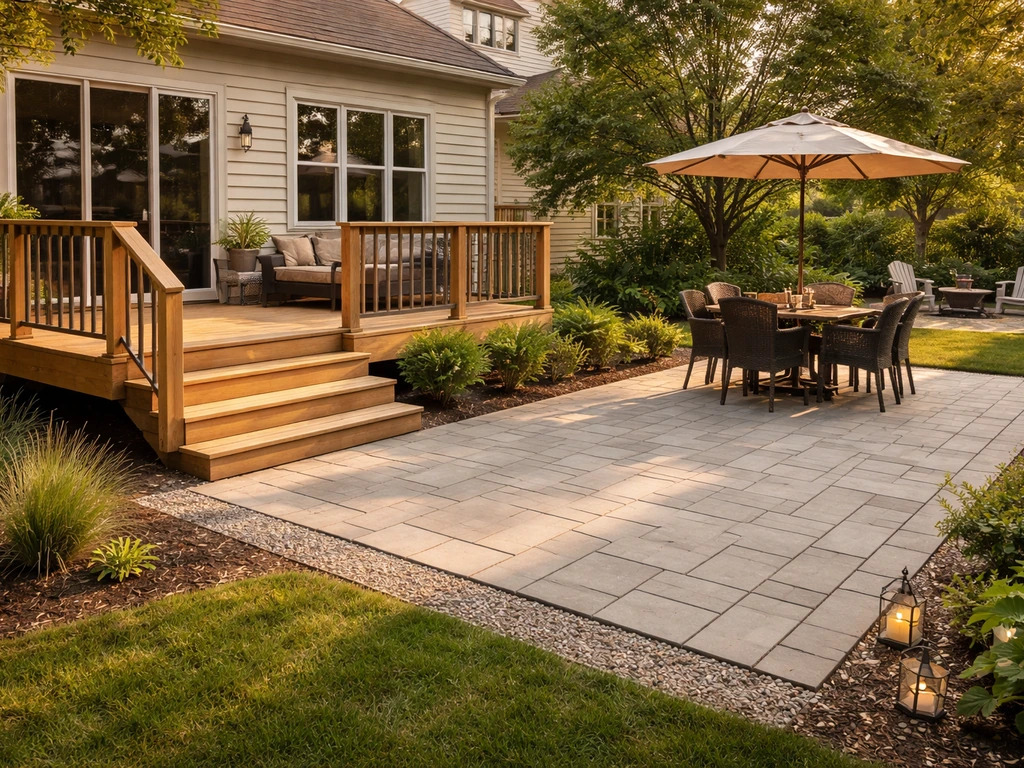
A deck is an elevated platform, almost always framed in wood or composite, attached to the house with a ledger board or built freestanding nearby. Because it's attached to the structure, it needs flashing at the ledger connection to keep water from working its way behind the siding and rotting the wall framing. That detail matters because it affects both build cost and long-term durability. A deck raises you up off the ground, which is great for sloped lots, walkout basements, or back doors that sit several feet above grade. It creates usable outdoor space where a patio physically can't go.
A patio is a ground-level hardscape surface, typically concrete, pavers, or natural stone, laid directly on a prepared gravel and sand base. There's no framing, no ledger, no structural attachment to the house. Installation is faster and generally cheaper, and patios work best on flat or gently sloped yards. They feel more permanent and solid underfoot, they blend naturally into landscaping, and they don't require the same level of permitting in most jurisdictions. For buyers, a well-built paver or stamped concrete patio often reads as a finished, low-hassle outdoor space, which is a selling point in its own right.
In practical terms, the choice often makes itself based on your yard. If your back door is five feet above grade, you need a deck. If your yard is flat and you just want an outdoor living area, a patio is almost always the simpler, faster path. The complication comes when both options are equally feasible, which is when value and cost data actually become useful.
Build cost, maintenance, and long-term expenses side by side
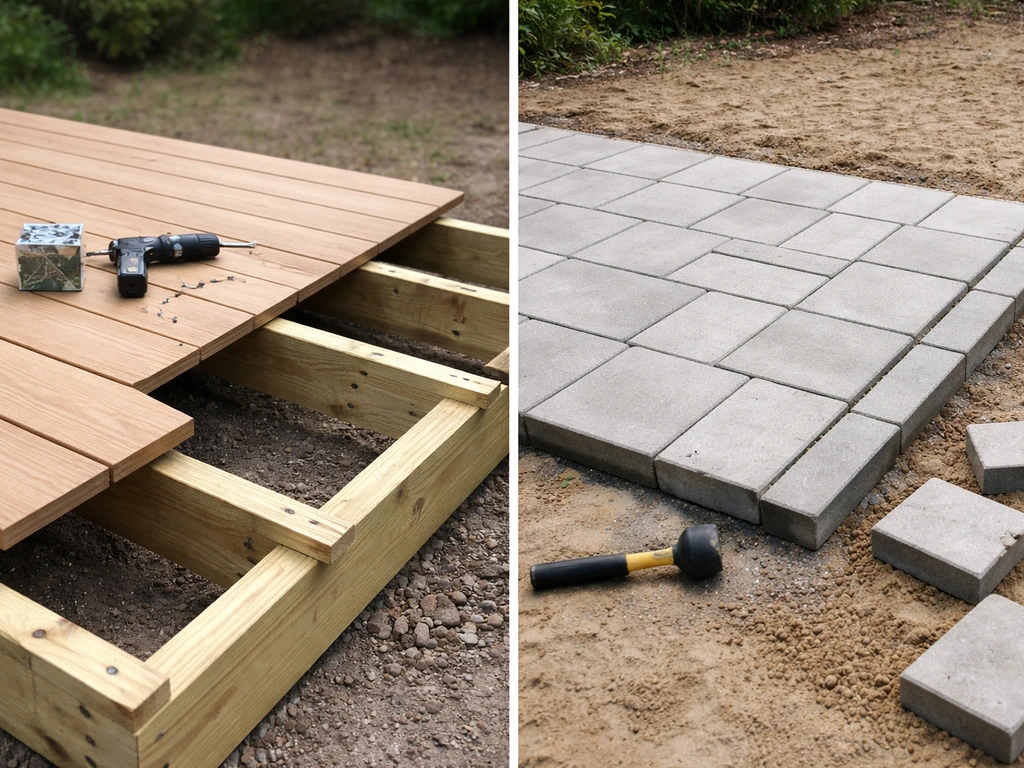
Cost is where the deck vs. patio gap shows up most clearly. Patios are almost always cheaper to build per square foot, and they cost less to maintain over time. Decks have more variables, especially material choice, which can swing the price dramatically.
| Feature | Wood Deck | Composite Deck | Concrete Patio | Paver Patio |
|---|---|---|---|---|
| Typical installed cost (per sq ft) | $15–$35 | $30–$60+ | $6–$18 | $21–$35+ |
| Maintenance frequency | Stain/seal every 1–2 years; sand every 2–5 years | Clean annually; occasional board check | Seal every 2–3 years; watch for cracks | Seal every 2–3 years; re-sand joints as needed |
| Common long-term issues | Rot, warping, splinters, ledger flashing failure | Fading, heat retention, higher upfront cost | Cracking, settling, staining | Efflorescence, weeds in joints, drainage issues |
| Permit typically required? | Yes (almost always) | Yes (almost always) | Sometimes | Rarely |
| Lifespan (well-maintained) | 15–25 years (wood) | 25–40 years | 20–30 years | 25–50 years |
On the maintenance side, a pressure-treated wood deck needs staining or coating roughly every 12 to 24 months depending on sun and weather exposure, plus sanding every two to five years to keep the surface safe and splinter-free. That adds up. Composite decking cuts most of that down to an annual cleaning, but the upfront cost is significantly higher. Paver patios need periodic re-sanding of the joints, weed control, and occasional resealing (recommended but not strictly required). Sealing does help with efflorescence, which is that white chalky residue that shows up when water pulls minerals through the pavers, and it makes the surface easier to clean. Poured concrete is low maintenance but prone to cracking over time, especially in freeze-thaw climates.
Over a 10-year window, a wood deck will typically cost more in maintenance than a paver or concrete patio of the same size. That's a real factor in the value equation because buyers and appraisers both notice deferred maintenance, and a weathered, splintered deck can actually hurt your sale rather than help it.
Home value impact and what appraisers actually care about
Here's the nuance that most articles skip: appraisers don't value outdoor features the same way buyers emotionally respond to them. Appraisers look at comparable sales in your market. If every home in your neighborhood has a deck, your deck contributes to market-expected value. If nobody has one, it may be considered an over-improvement that doesn't fully recover its cost. That said, the 2025 Cost vs. Value Report data is genuinely strong for wood decks, with Realtor.com reporting a 95% ROI figure for a wood deck addition, which is unusually high for any remodeling project. Composite decking is also ranked highly in the same report.
Patios don't show up in the Cost vs. Value Report the same way decks do, partly because they're harder to standardize. But in practice, a well-built paver patio in good condition is a consistent positive for appraisals and buyer appeal. The California BOE appraisers' handbook framework is useful here: appraisers evaluate improvements based on functional efficiency and durability. A cracked concrete slab or a patio with drainage problems reads as a liability. A clean, well-drained paver patio with a clear connection to the house reads as an asset.
The factors that consistently move value in either direction are: material quality (cheap looks cheap on inspection day), integration with the home (a deck or patio that flows naturally from the back door adds more perceived value than one that feels bolted on), structural integrity (a deck with proper ledger flashing and guardrails at least 36 inches tall per IRC code signals quality and reduces buyer concern), and condition (deferred maintenance is the single fastest way to erase the value of either feature). A covered patio or a pergola-shaded deck can add another layer of appeal, and that's worth exploring in more detail if you're debating whether to add a roof or shade structure to your project.
When a deck adds more value vs. when a patio wins
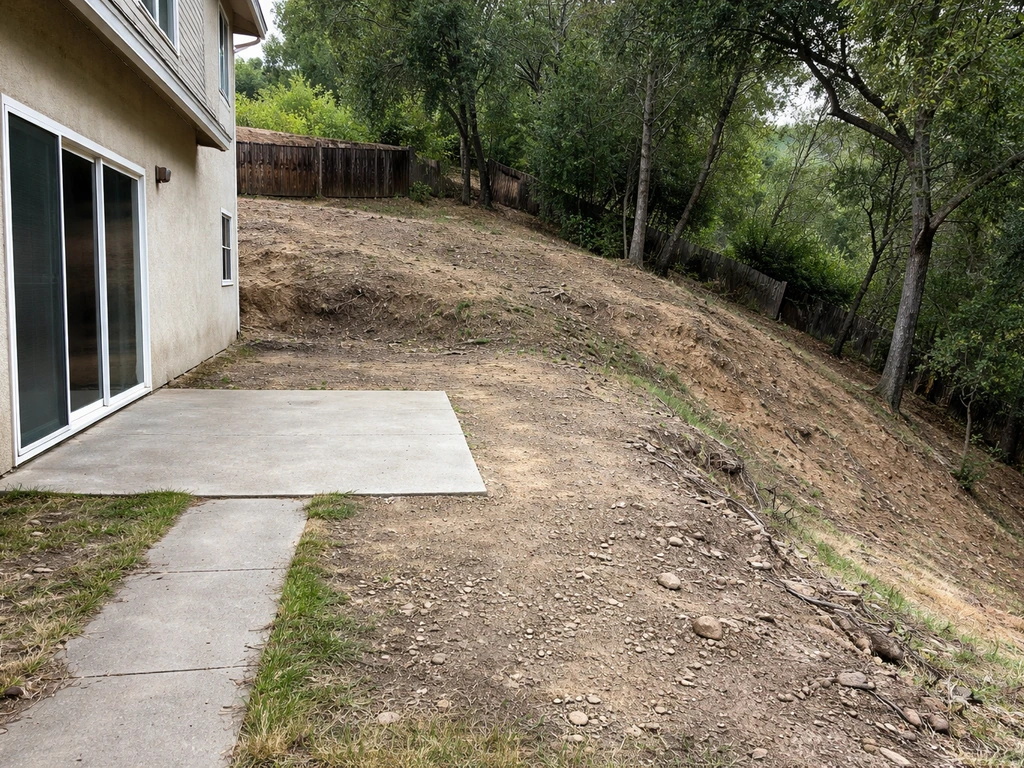
There's no universal answer, but there are clear patterns based on yard conditions, climate, and buyer expectations. Use these scenarios to orient your decision.
Go with a deck when...
- Your yard slopes steeply away from the house. A patio would require expensive grading or retaining walls; a deck solves the elevation problem naturally.
- Your back door exits several feet above grade. This is the most common deck scenario, and there's often no good patio alternative.
- You're in a market where decks are a standard buyer expectation, particularly in the Pacific Northwest, Northeast, and upper Midwest.
- You want multilevel outdoor living with defined zones for dining, lounging, or a hot tub, and the elevation changes make it possible.
- You have a walkout basement and want to connect both levels to the yard.
Go with a patio when...
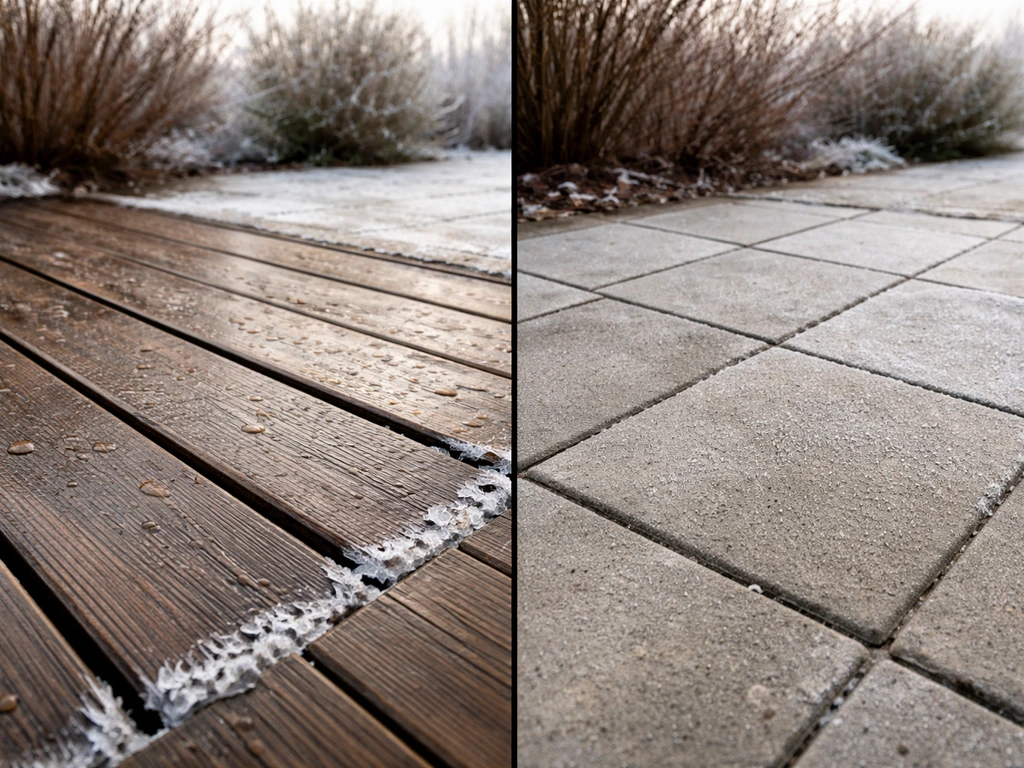
- Your yard is flat or very gently sloped. A patio is simpler, faster, cheaper, and often just as appealing.
- You're in a hot, sunny climate like the Southwest or Southeast where ground-level living is the norm and buyers aren't looking for raised decks.
- You want lower long-term maintenance and don't want to sand and restain a surface every couple of years.
- You're planning a covered patio or pergola structure. Patio covers integrate more naturally with a ground-level hardscape, and a covered patio has its own strong value case.
- Your budget is limited. A quality paver patio at $21–$35 per square foot will generally outperform a mid-grade deck at the same price point in terms of longevity and buyer perception.
- You want a seamless transition from indoor to outdoor, especially from a sliding door or French doors that open to grade level.
Climate is a bigger factor than most people realize
In freeze-thaw climates, wood decks need more vigilance because moisture cycles accelerate rot and fastener failure. Composite holds up better but costs more. For patios in freeze-thaw zones, concrete is more vulnerable to cracking than pavers because individual paver units flex slightly with ground movement while a solid slab doesn't. In hot, dry climates, wood decks can dry out and split if not properly maintained. In coastal climates, the FEMA coastal construction guidance explicitly cautions about waterproofing assemblies around deck ledgers because salt air and moisture are aggressive on flashing and framing connections. If you're on the coast, composite or hardwood decking with meticulous flashing details is worth the extra investment.
Design choices that actually move the needle on value
The material and feature decisions you make within each category matter as much as choosing deck vs. patio in the first place. Here's what tends to pay off and what tends to be over-spending.
Deck design and materials
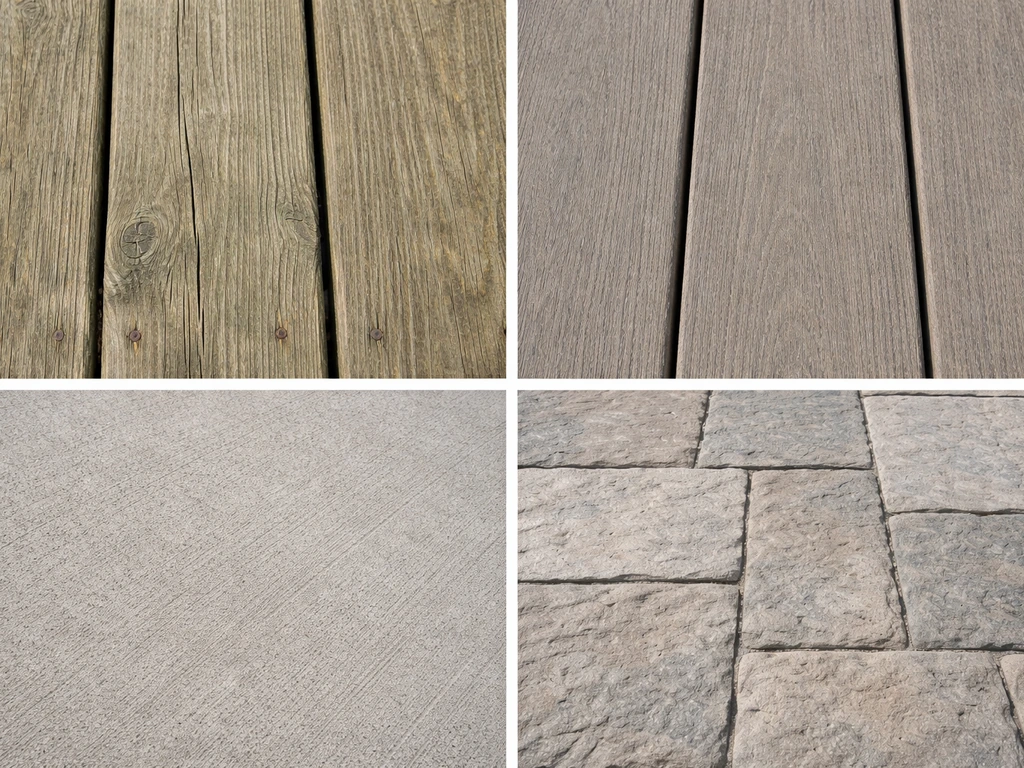
Pressure-treated wood is the budget baseline and still shows strong ROI in the Cost vs. Value data. Composite decking costs more upfront but recovers well in resale because buyers see it as low maintenance, and it's increasingly expected at the mid-to-upper price tier. Hardwood decking like ipe or tigerwood looks great but is expensive and harder to repair, making it a better choice for long-term personal enjoyment than for resale optimization. Railing style and guardrail quality are noticed immediately. Cable or glass panel railing looks premium and preserves sightlines; wood balusters read as standard. Either can work, but sloppy or deteriorated railing sends a strong negative signal during a showing. The IRC requires guardrails at least 36 inches high for residential decks, with openings that a 4-inch sphere can't pass through, so make sure any railing you spec meets code. Stairs with a clean landing, built-in lighting, and a solid handrail add meaningful perceived value and safety. Integrating a pergola or shade structure over a deck not only increases usability but also signals investment and design intent to buyers.
Patio design and materials
For patios, the biggest value lever is material selection. Basic poured concrete (around $6–$12 per square foot installed) is functional but unremarkable. For context on 2025 pricing ranges, Miller’s Residential Creations notes that typical home addition costs can be around $150, $350 per square foot costs in 2025 can be around $150–$350 per square foot. Stamped concrete ($12–$18 per square foot) adds visual interest but can look dated and is harder to repair when it cracks. Concrete pavers starting around $21–$22 per square foot installed are the most consistently well-received option because they look high quality, drain well when properly installed, and are repairable without visible patches. Natural stone is the premium tier and recovers cost best in higher-end markets. A large format porcelain paver system can look extremely clean and modern, though it's on the pricier end. Regardless of material, proper drainage is non-negotiable. A patio with standing water or drainage toward the house foundation is a red flag for buyers and appraisers alike. Adding privacy screening, a pergola, or a patio cover extends the usable season and adds meaningful square footage of functional outdoor space, which is the same reason covered patios show up in their own value conversation.
Features that add value to either
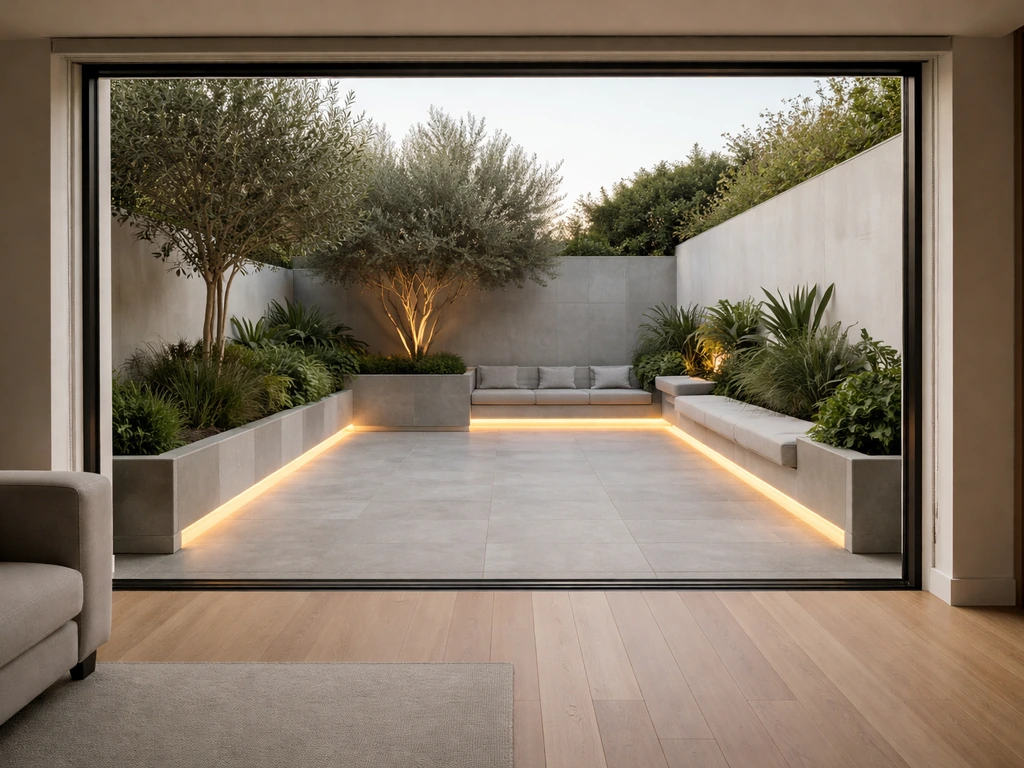
- Seamless transition from interior flooring to the outdoor surface (same level, no awkward step down)
- Built-in seating or planters that visually define the space
- Outdoor lighting, especially low-voltage path and step lighting
- Privacy screening or fencing that creates an enclosed feel
- A pergola, shade sail, or covered structure that extends usability in sun or rain
- Clean, intentional landscaping bordering the space that frames it visually
DIY vs. hiring a contractor, and why timeline matters
A patio is more DIY-friendly than a deck, full stop. Laying pavers on a properly prepared base is a physically demanding but conceptually straightforward project that competent DIYers tackle regularly. The main risks are inadequate base preparation (which leads to settling and drainage problems) and poor joint sanding (which invites weed growth and instability). Poured concrete is harder to DIY well because timing and mixing are unforgiving, and a bad pour is expensive to fix.
A deck is technically achievable as a DIY project, but the stakes are higher. The ledger connection to the house is the most failure-prone point: it requires properly flashed metal over the ledger board, correct removal and reinstallation of siding, and gaps that prevent water from accumulating behind the framing. A missed flashing detail can cause serious rot damage inside your wall, which is exactly the kind of defect that shows up on a home inspection and derails a sale. Beyond the ledger, structural spans, joist sizing, and guardrail code compliance all require either solid building knowledge or a permit inspection process that catches mistakes.
Timeline is a real factor if you're building before a sale. A patio can be installed in two to five days by a crew once materials are on site. A deck project including permitting, framing, decking, and railing can take two to six weeks depending on permit turnaround and contractor availability. If you're under listing pressure, that gap matters. Getting a permit pulled and inspected also adds to timeline but is worth it because an unpermitted deck is a standard inspection red flag that buyers and their lenders will flag, and it can reduce or eliminate the value contribution entirely.
How to decide fast: a scoring checklist for your property
Run through this checklist and tally your answers. It won't make the decision for you, but it will point you toward the option that fits your situation most naturally.
- Is your back door more than 18 inches above grade? If yes, score 2 points for deck.
- Is your yard flat or less than a 2% slope toward the back? If yes, score 2 points for patio.
- Are you in a hot, dry, or coastal climate where ground-level living is the norm? If yes, score 2 points for patio.
- Are you in the Northeast, Pacific Northwest, or upper Midwest where decks are a standard buyer expectation? If yes, score 2 points for deck.
- Is your budget under $15,000 for a 400 sq ft space? If yes, score 2 points for patio.
- Do you want minimal ongoing maintenance for the next 10 years? If yes, score 1 point for patio.
- Are you planning to add a pergola, shade structure, or cover? If yes, score 1 point for patio (covers integrate more naturally at grade).
- Is there a significant elevation change in your yard that you want to use creatively? If yes, score 2 points for deck.
- Are you planning to sell within 2 years and want the highest national ROI data on your side? If yes, score 1 point for deck.
- Do you want the project permitted and inspection-ready before listing? If deck, budget 4–6 weeks minimum; if patio, plan on 1–2 weeks.
If you're still on the fence after the checklist, the most useful next step is getting a quote for both options from the same contractor or landscaper. Ask them to quote the same footprint in paver patio vs. pressure-treated deck (or composite if that's your preference) so you're comparing apples to apples. Then call a local real estate agent, ideally one who works your specific neighborhood, and ask directly: 'In my price range and neighborhood, do buyers respond better to a deck or a patio?' That 10-minute conversation will tell you more about local market expectations than any national ROI figure.
If you're leaning toward a patio but wondering whether adding a cover or roof structure is worth the extra investment, that's a decision worth evaluating separately because a covered patio changes the value equation in meaningful ways. Similarly, if you're considering a patio primarily to add value, understanding how a patio cover affects property taxes in your county is a practical detail that can affect your total cost of ownership. If you are weighing insulated patio covers for comfort and energy savings, compare their cost against how much extra season they truly add for your climate are insulated patio covers worth it. Before you build, confirm how local rules handle patio covers and whether they trigger any assessment or permit-related tax impacts property taxes.
The bottom line: both a deck and a patio can add meaningful value when they're well-built, properly permitted, maintained, and matched to what buyers in your market actually want. The deck has the edge in raw ROI data and on sloped lots; the patio wins on cost, maintenance, and simplicity in flat-yard situations. Pick the one that fits your yard first, your budget second, and your market's expectations third, and you'll come out ahead either way.
FAQ
Does a deck or patio add more value if I plan to sell soon (under 2 years)?
For a fast sale, choose the option that will look “finished” and low-risk at listing photos and inspections. A paver patio typically shows well quickly (2 to 5 days once the base is ready) and is less likely to have hidden defects than a deck ledger connection, which is the part most likely to fail during an inspection. If you do build a deck, prioritize proper ledger flashing and a prompt permit process so it does not create lender or buyer objections.
If my yard is flat, will a patio always outperform a deck on resale value?
Not always. A flat lot favors patios, but a deck can still add strong value if it improves the home’s usability (for example, bringing the deck directly off a kitchen door, adding a level landing, and matching the exterior materials). The key is “integration,” buyers need to feel it was designed as part of the home, not installed adjacent to it. If a deck layout requires odd steps or awkward transitions, a patio usually wins.
Which is more likely to hurt value, a cracked patio or a weathered deck?
Both can hurt, but cracked concrete and standing water on a patio are especially damaging because they read as drainage failures and can imply foundation risk. A weathered deck can also trigger immediate buyer concerns, mainly from surface splintering, staining failure, and railing wear. In practice, deferred maintenance that is visible from the street or backyard seating areas erases the value contribution faster than minor surface wear.
Do appraisers treat attached decks differently than freestanding decks?
Yes. Attached decks involve a ledger board and water management at the house connection, which increases the importance of flashing, fastener condition, and evidence of proper permitting. Freestanding platforms can have fewer attachment concerns, but they still must meet structural requirements and guardrail expectations. If you are choosing deck type, the safer approach for resale is usually the one with the cleanest attachment details and the most consistent code-compliant structural elements.
Will adding a pergola or cover change the ROI comparison between a deck and a patio?
A cover typically shifts value from “surface material” toward “usable outdoor living.” It can help either option by extending comfort and making the area more functional in shoulder seasons, but it also adds cost and permitting complexity. For deck builds, a cover can be less “seen as an upgrade” if the deck already matches neighborhood expectations, whereas for patios it may be the factor that makes the space feel more like an outdoor room rather than basic hardscape.
Do I need permits for both a deck and a patio to protect value?
Permitting rules vary by jurisdiction, but decks more consistently require permits because of structural framing, guardrails, and attachment to the home. Patios sometimes fall under simpler rules, especially when ground-level and below certain sizes, but exceptions exist. Even when permits are not required, unpermitted work can still complicate sale disclosures, appraisals, and buyer lending. The safest path is to confirm requirements before construction and keep paperwork with your sale documents.
Can I DIY a patio and DIY parts of a deck to save money without hurting resale value?
DIY can work better for patios if you get base preparation and drainage right, because the most common failures are settling and joint problems that are noticeable over time. For decks, partial DIY (or inexperienced ledger work) is the higher-risk area, because a water-management mistake at the ledger can cause hidden rot inside the wall. If you want cost savings, consider hiring out the structural attachment and guardrail components while keeping simple work for yourself, and still have it inspected if your area requires it.
What deck material choice has the least maintenance risk for resale?
Composite decking generally reduces the need for frequent staining or sealing and tends to present consistently from year to year, which supports buyer confidence. Pressure-treated wood can be a strong value choice, but it needs regular coating cycles to prevent accelerated aging and splintering. If you choose wood, plan your schedule around sunlight exposure and moisture, because ignoring maintenance is one of the fastest ways to lose value at the time of sale.
Are paver patios or poured concrete patios more forgiving in freeze-thaw climates?
In freeze-thaw areas, pavers often perform better because individual units can shift slightly while still allowing repairs without replacing the entire surface. Poured concrete can be durable, but cracking is more visible and is harder to “fix without evidence,” especially if water infiltration and expansion joints are not handled correctly. Either system can last long-term if drainage and base installation are done properly, but pavers are usually the more repairable option.
How do I compare quotes fairly if one contractor includes stairs, lighting, or privacy screens?
Ask for a line-item breakdown and insist the footprint is the same, including stairs, landings, railing type, and any electrical elements. If one quote adds built-in lighting or privacy screening, request either (1) the same add-ons on the other option or (2) a version excluding add-ons so you can compare the base deck or patio cost. Also confirm whether drainage work is included, because correcting grade and water flow after construction can be expensive.
Next Article
Does a Covered Patio Increase Home Value? ROI Guide
See if a covered patio boosts home value, ROI ranges, key factors, and what to document for appraisal.