Yes, a patio can increase your home's value, but not automatically and not by a fixed amount. The honest answer is that a well-built, functional patio in a market where buyers expect outdoor living space tends to return somewhere between 40% and 80% of what you spent on it at resale, depending on materials, quality, location, and what comparable homes nearby already have. That range is wide on purpose, because a concrete slab poured over a poor sub-base in a cold northern UK town adds very different value from a premium porcelain-paved patio with drainage and lighting in a South East England family home. The factors that move the needle are within your control, and that's what this guide covers.
Does a Patio Increase Home Value UK? Real ROI Guide

Miles Hart
7 May 2026
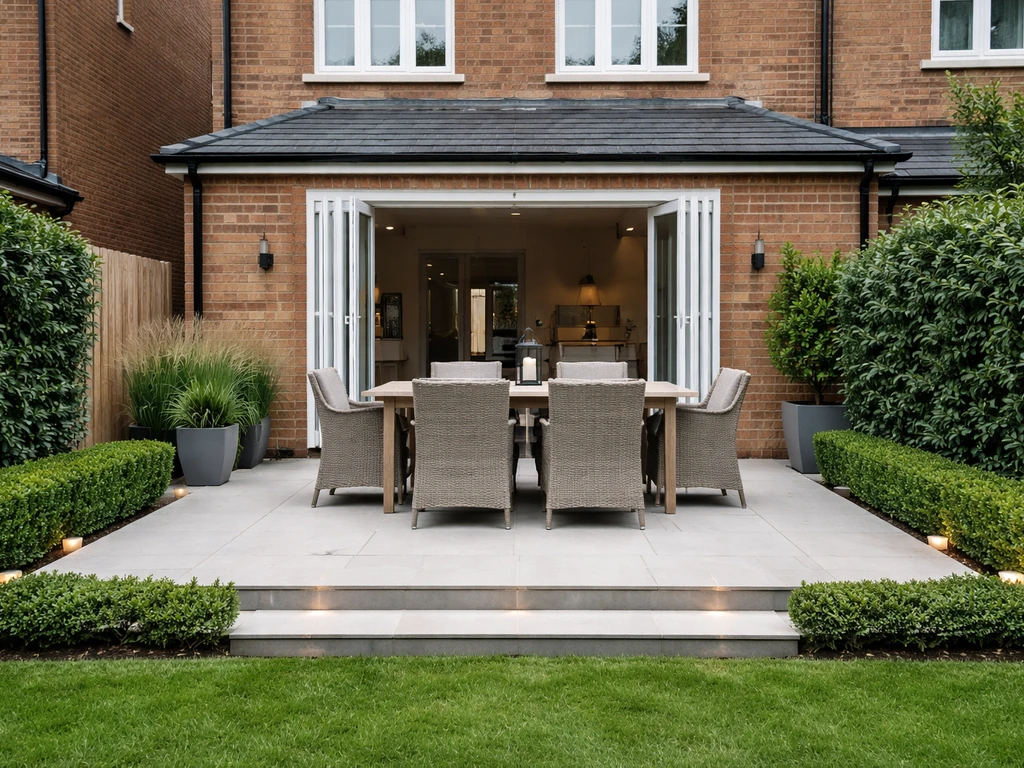
When a patio adds value (and when it doesn't)
Buyers respond to outdoor spaces that feel finished, usable, and low-maintenance. A patio checks those boxes when it's properly built, reasonably sized, and fits the character of the house. It fails to add meaningful value when it's crumbling, poorly drained, badly placed, or so expensive relative to the home's price bracket that no buyer will pay for it.
The National Association of Realtors' research on outdoor features consistently shows that buyers perceive outdoor living improvements positively, but the 'real money' in outdoor remodelling tends to come from projects that are functional and well-executed rather than grand. A modest, well-laid patio with good drainage and clean edging often reads better to buyers than an oversized, budget-built one that shows signs of movement or staining.
There are a few situations where a patio genuinely doesn't add value: if the garden is already paved over and a new patio just replaces like-for-like with no real improvement; if the patio covers a space buyers would prefer as lawn (especially relevant for family buyers); or if the installation triggers a problem like water pooling near the house foundations. Poor drainage is one of the most common value-killers, and it's entirely avoidable with the right design.
How much value a patio typically adds
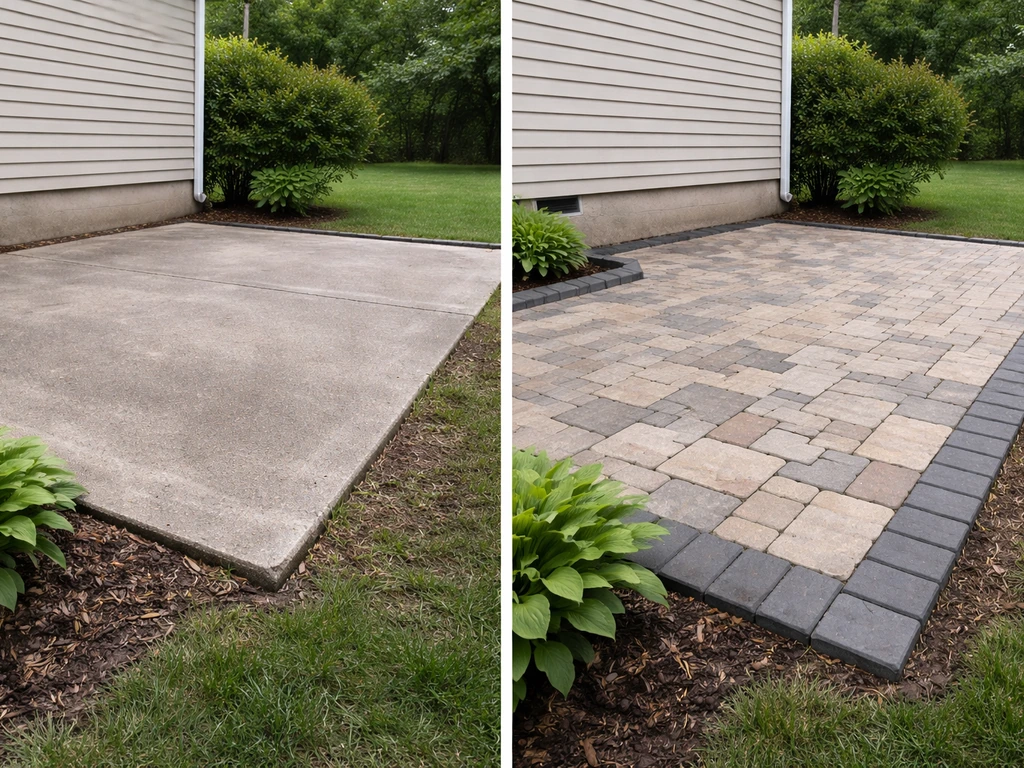
There's no single number here, and anyone quoting you a precise uplift figure without knowing your market, your home's price point, and your patio's spec is guessing. That said, the data that does exist gives us useful ballpark ranges. Deckorators' 2026 Outdoor Living Report models a 60%–80% cost recovery range for decks and patios at resale. Other US appraisal data puts patio ROI closer to 40%–50%. The NAR's data frames it as a buyer appeal factor rather than a guaranteed pound-for-pound uplift, which is probably the most honest framing.
In practical terms: if you spend £5,000 on a well-built backyard patio, you might see £2,500 to £4,000 reflected in your sale price, depending on your market. Spend £15,000 on premium porcelain paving with built-in drainage and lighting in a desirable location, and a buyer who values outdoor space may pay meaningfully more than a comparable house without it. The key variable is whether the buyer pool in your area actually wants and values that feature, which brings local comparables into play.
UK-specific expectations
In the UK, buyer appetite for outdoor space has grown noticeably in recent years. An Argos Outdoor Living Report from 2026 found that a nice patio or decking area was cited as an important feature by a notable share of UK buyers. That's meaningful. UK surveyors and valuers, following RICS principles, assess value based on market evidence rather than cost of works, meaning your patio adds whatever buyers in your local market would demonstrably pay more for. A patio in a densely packed urban terrace where outdoor space is rare will be valued differently than the same patio bolted onto a large-garden semi in the countryside.
Which patio types move the needle most
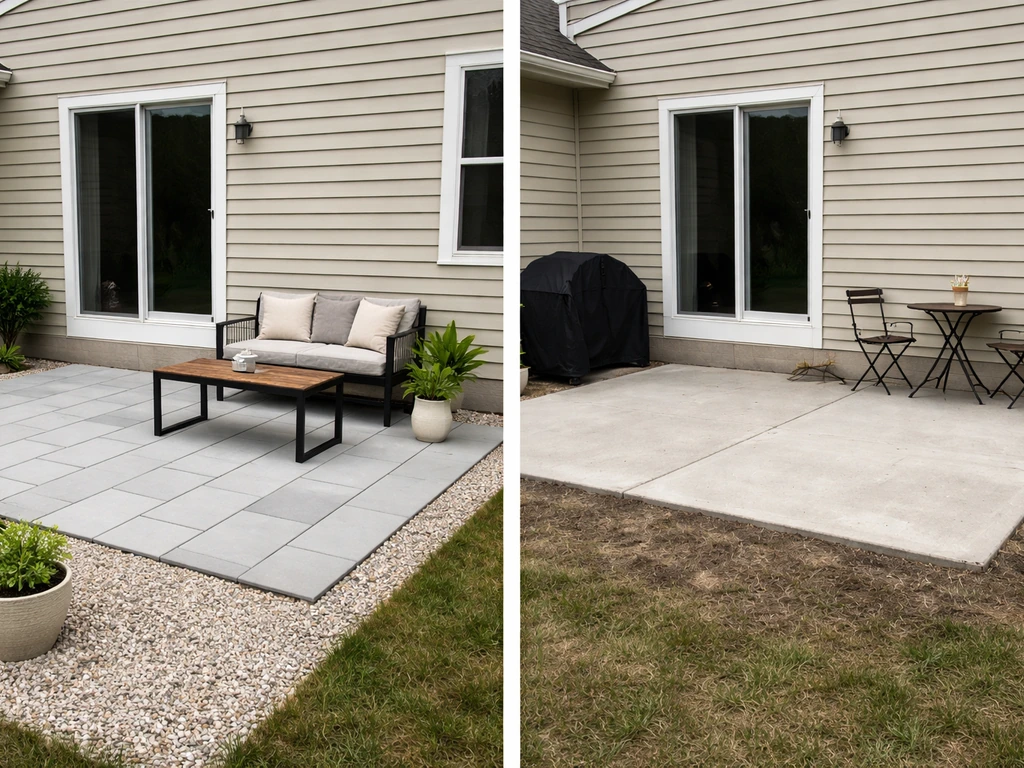
Not all patios are equal from a value standpoint. Here's how the main scenarios break down.
Backyard patios on existing homes
This is the most common scenario and the one with the most variation. A basic concrete patio typically adds some value but rarely wows buyers. Step up to block paving or natural stone and you start to get genuine buyer excitement, particularly when the space is clearly usable for entertaining or dining. Premium finishes like large-format porcelain slabs are currently very popular in the UK and tend to photograph well, which matters in a market where buyers often form opinions before a viewing.
New builds and new-to-the-property patios
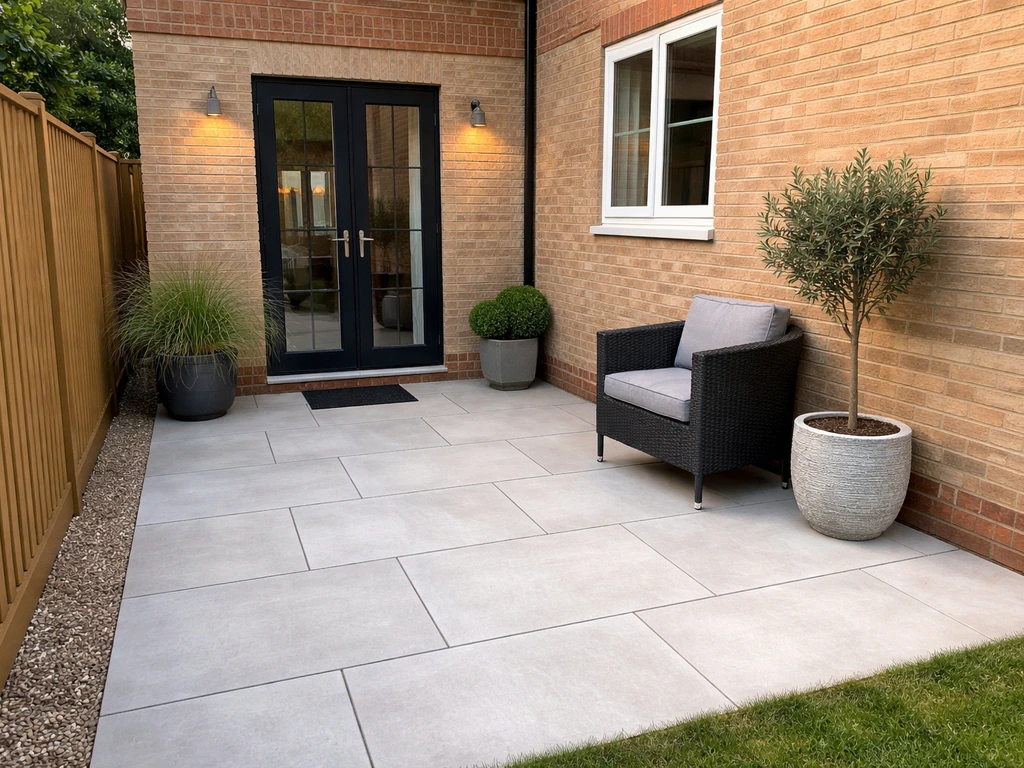
Adding a patio to a home that doesn't have one yet carries the clearest value argument. You're creating a usable space that buyers would otherwise have to budget for themselves. A property with a finished patio vs. a bare garden can genuinely influence offers, especially in price brackets where outdoor entertaining is expected.
Premium materials and finishes
Premium patio materials (porcelain, natural sandstone, granite) consistently outperform budget options in buyer perception. UK porcelain paving typically costs £30–£70 per m² for materials alone, while concrete tiles start around £20 per m². The uplift you get from premium finishes is partly aesthetic and partly practical: better materials last longer, look better in listings, and signal to buyers that the job was done properly. A cheap patio that's already showing signs of cracking or weed ingress actively damages buyer confidence.
Cost vs ROI: thinking about break-even
The right way to think about patio ROI isn't 'will I get my money back?' It's 'will the value added be worth more than the cost, and will it help the house sell faster or at a better price?' Those are slightly different questions.
UK patio installation in 2026 typically costs between £90 and £180 per m² for a fully installed job (materials, labour, sub-base, and basic drainage). Some quotes go lower at around £40–£90 per m² for simpler finishes, while complex projects with drainage channels, lighting, and premium stone can exceed £180 per m². A typical 20–30 m² backyard patio therefore costs roughly £2,000 to £5,400 at standard spec, or up to £8,000–£10,000+ with premium finishes and add-ons.
London and the South East run materially more expensive than the national average for both labour and materials. If you're in those regions, budget accordingly and know that buyers in those markets also tend to have higher expectations for finish quality, which means cutting corners is even more likely to backfire.
For a rough break-even check: if your patio costs £4,000 and you expect a 60% cost recovery, that's £2,400 added to sale value. If it speeds up the sale or prevents a price reduction, the real-world return can be higher. If you're not planning to sell for 10+ years, the enjoyment value almost certainly outweighs the calculation anyway.
| Scenario | Typical installed cost (UK) | Estimated ROI range | Value added estimate |
|---|---|---|---|
| Basic concrete/budget paving, 20 m² | £800–£1,800 | 40%–50% | £320–£900 |
| Mid-spec block paving or sandstone, 20–25 m² | £2,000–£4,000 | 55%–65% | £1,100–£2,600 |
| Premium porcelain with drainage + lighting, 25–35 m² | £5,000–£10,000+ | 60%–80% | £3,000–£8,000 |
| Poorly built or damaged patio (any material) | £1,000–£8,000 spent | Negative to 20% | May reduce value |
Location and market factors that change everything
A patio that adds £5,000 in value to a £600,000 South East England home barely registers as a percentage. The same patio added to a £150,000 terrace in the North of England might be the feature that gets it to the asking price. The relationship between patio cost, value added, and your home's overall price bracket is the most important factor most homeowners overlook.
UK RICS-trained valuers assess outdoor improvements based on market evidence, not cost. If no comparable home in your street or postcode has ever sold at a premium for having a patio, your valuer may not attribute additional value to yours. This doesn't mean it won't help you sell, but it does mean the 'uplift' may show up in days on market and buyer competition rather than a clean valuation figure.
In the UK, rear garden patios have virtually no planning permission constraints (current guidance confirms there are generally no restrictions on laying patios on land to the rear within your property boundary). Front garden hard surfacing is a different story: since October 2008, hard surfacing over 5 square metres on domestic front gardens requires permeable materials or planning permission. If you're considering a front driveway-style patio, this matters and can affect both your legal position and how a buyer or their solicitor views the property.
Buyer preferences vary by demographic too. Family buyers often want a mix of patio and lawn. Downsizers and urban buyers frequently prefer low-maintenance paved spaces. Understanding who buys homes like yours in your area is worth thinking about before you commit to a design.
How to make sure your patio actually adds value
The difference between a patio that boosts your sale price and one that raises buyer concerns is almost entirely about quality of execution. Here's what to get right.
Drainage is non-negotiable
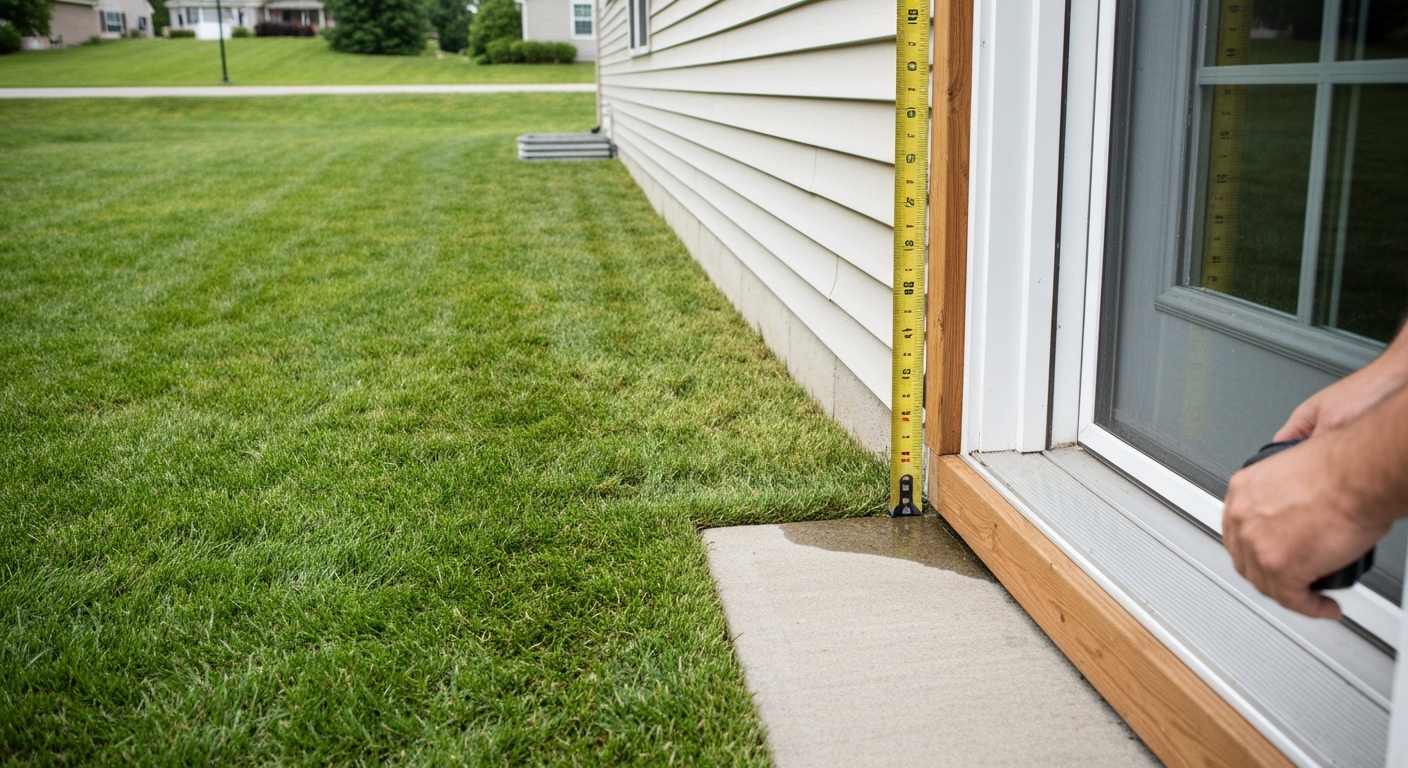
A patio needs a fall of around 1:60 to 1:80 away from the house to prevent standing water. This sounds technical but it just means the surface drops about 1.5–2 cm for every metre of length, directing water away from foundations and walls. If you skip this or get it wrong, you get pooling, which eventually leads to slab movement, joint failure, and in the worst case, damp ingress. UK buyers and their surveyors notice these things, and a drainage problem on a patio can trigger a price reduction or condition requirement at survey.
Get the sub-base right
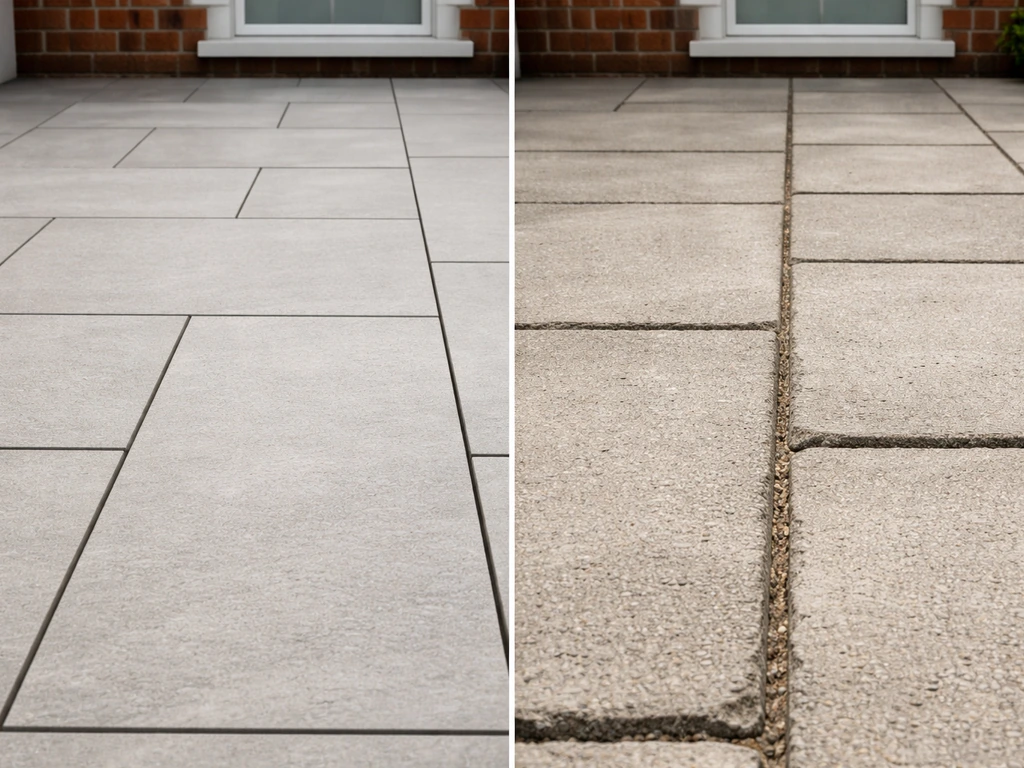
The sub-base is the compacted hardcore layer under your paving. Skimping here is the single most common cause of patio failure. Slabs laid on inadequate foundations move, crack, and become uneven within a few years. A proper sub-base with the right depth (typically 100–150 mm of compacted MOT Type 1 hardcore for most residential applications) is what separates a patio that looks good in five years from one that looks like a trip hazard.
Choose materials that match the home
A £70-per-m² porcelain patio on a modest terrace house can look incongruous and won't necessarily return its cost. Material choice should reflect the property's price bracket and character. Natural stone and quality porcelain work well on mid-to-upper market homes. Concrete block paving is durable and cost-effective for a practical family garden. The goal is for the patio to look like it belongs, not like an afterthought or an upgrade that outpaces the rest of the property.
Size and placement matter
A patio that's too small to fit a table and chairs reads as token. Most buyers are imagining themselves eating outside or entertaining. A practical minimum for a usable outdoor dining area is around 16–20 m², and ideally positioned where it gets sun during the afternoon or evening. A patio tucked in a dark, north-facing corner adds far less value than one placed where people will actually want to be.
Don't forget permissions and documentation
Rear patios rarely need planning permission in England, but if you're on a listed property, in a conservation area, or have a front-facing hard surfacing situation, check before you start. More practically: keep any invoices, guarantees, or product specs from your installation. Buyers and their solicitors increasingly ask for documentation on garden works, and having it ready removes a potential friction point during a sale.
The add-ons that pay off
Outdoor lighting (budget around £300–£1,500 depending on scope) adds perceived usability and looks great in estate agent photos. Built-in drainage channels (several hundred pounds) protect your investment and reassure surveyors. Clean, well-pointed joints signal proper installation. These relatively low-cost additions punch above their weight in buyer perception.
Common mistakes that kill value
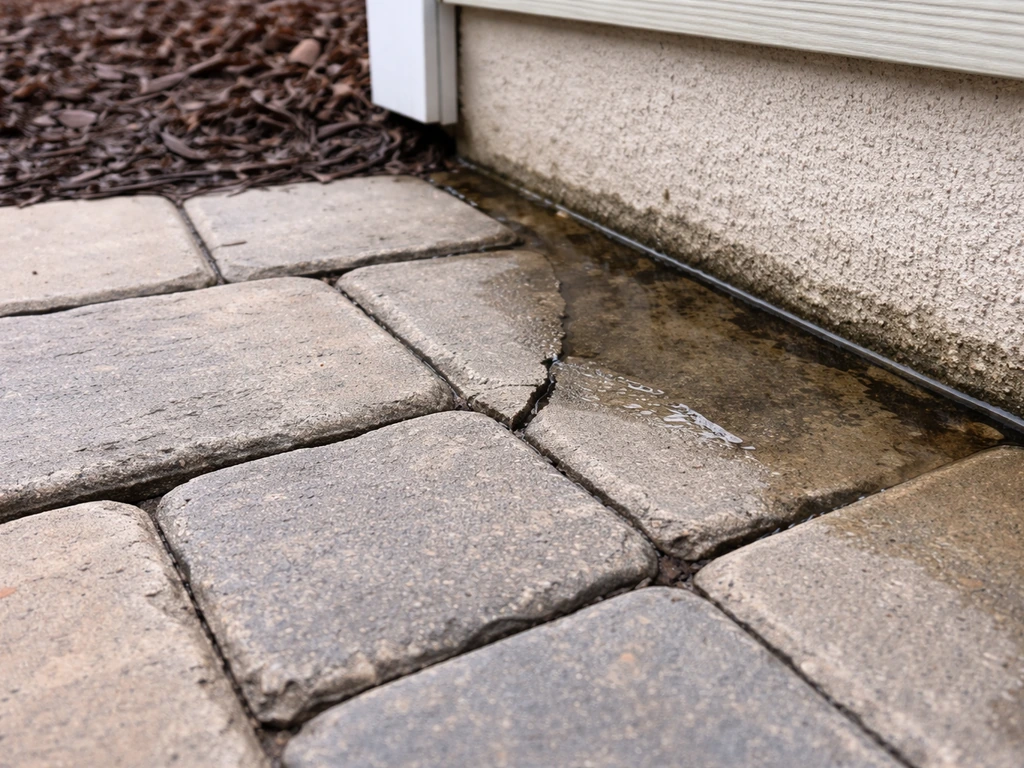
- Poor drainage or incorrect fall angle causing standing water near the house
- Inadequate sub-base leading to slab movement and cracking within a few years
- Cheap jointing compound that washes out and lets weeds and root action undermine slabs
- Paving the entire garden with no lawn or planting, which can deter family buyers
- Oversizing or over-specifying relative to the home's value bracket
- Non-permeable front garden surfacing over 5 m² without planning permission (UK-specific legal risk)
- No documentation or receipts, which creates friction during conveyancing
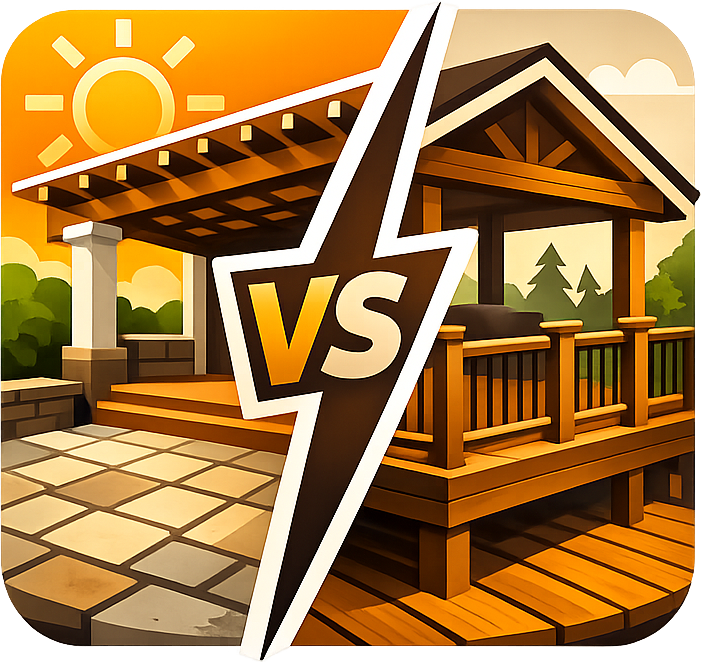
Patio vs deck vs porch: which adds more value?
This is a genuinely useful comparison because the three options compete directly in most homeowners' decision-making, and they perform differently depending on the market. If you're weighing a deck versus a patio, the deciding factor is how the style and materials fit your local buyer expectations, since that drives the value and resale return does a deck or patio add more value.
| Feature | Patio | Deck | Covered porch/patio cover |
|---|---|---|---|
| Typical installed cost (UK) | £90–£180/m² | £100–£250/m² (composite) | £150–£400/m² depending on spec |
| Durability | High (if well-built) | Moderate to high (material-dependent) | High (structure-dependent) |
| Maintenance | Low to moderate | Low (composite) to moderate (timber) | Low to moderate |
| Buyer appeal (UK) | High, especially premium finishes | High, especially composite | Growing, especially in wetter regions |
| ROI range | 40%–80% | 50%–80% | Varies widely by structure type |
| Planning considerations (UK) | Minimal for rear garden | May require permission if raised | May require permission depending on size/height |
In the UK specifically, patios have an advantage over decks in terms of longevity perception. UK buyers are accustomed to seeing patios age well, while timber decking has a reputation (sometimes deserved) for going green and slippery within a few years unless maintained. Composite decking has changed this to some extent, but it costs more.
A covered patio or patio cover adds usability in the UK's wet climate, which can be a genuine differentiator, though the value impact depends heavily on how well it's integrated with the house. If you're wondering about the tax impact, remember that adding a patio cover can raise assessed property value, which may in turn affect your property taxes A covered patio or patio cover.
The covered patio and deck value questions are worth exploring in more depth separately, particularly if you're weighing whether a roof structure or pergola is worth the extra cost. If you are considering an insulated patio cover, it's worth weighing whether the added comfort and energy efficiency will actually influence buyers in your local market covered patio and deck.
The bottom line on the comparison: a well-built patio is the most consistently reliable outdoor investment across UK markets. Decks can match or beat it in the right settings, particularly larger gardens with level changes where a deck makes more structural sense. Covered structures add the most value when the climate and buyer profile support year-round outdoor use.
Your practical next steps
Before you commit to a patio project, work through this short checklist to gauge whether the investment makes sense for your specific situation.
- Check local comparables: look at recently sold homes near you and see whether patios are standard or a standout feature. If every comparable already has one, you're playing catch-up. If few do, you have an opportunity.
- Set a budget relative to your home's value: a rough rule of thumb is to spend no more than 5%–10% of your home's market value on a patio if your primary goal is resale. For a £300,000 home that's £15,000–£30,000, but most patios cost far less than that ceiling.
- Prioritise quality over size: a smaller, well-built patio with proper drainage and premium materials adds more value than a large, cheap one. Get at least three quotes and ask each contractor specifically about sub-base depth and drainage gradient.
- Plan for drainage from the start: make sure your design specifies a fall away from the house and, where needed, a drainage channel at the perimeter. Don't leave this to chance.
- Consider the whole garden: a patio that takes up the entire garden may put off buyers with children. Leave some lawn or planting space if your buyer demographic is likely to include families.
- Keep documentation: hold onto your invoices, any guarantees on materials, and photographs of the installation process if possible. This smooths the conveyancing process and gives buyers confidence.
- If you're in the UK and considering front garden surfacing over 5 m²: check the permeable surfacing rules and plan accordingly to avoid a planning issue that could complicate a future sale.
A patio is one of the more reliable outdoor investments you can make, as long as you approach it with realistic expectations, appropriate materials, and proper construction. It won't transform your home's value on its own, but a well-executed patio in the right market genuinely does make homes more appealing, faster to sell, and worth more at the point of sale. That's a combination worth planning carefully for.
FAQ
If I’m replacing an old patio, will that increase my home value or just stop it falling?
Yes, but only when it is genuinely an upgrade, not just replacement. If the existing patio is removed and rebuilt with better drainage, a steadier base, and a more modern finish, valuers may treat it as value-preserving maintenance plus a buyer-appeal improvement. If you keep the same layout and it still has pooling, rocking slabs, or stained joints, the “new” patio is less likely to translate into a higher sale price.
How do I tell whether patios add value in my specific UK area?
Start by checking what local buyers expect to see in similar houses, usually by reviewing recent sales photos and listing descriptions within a sensible radius (often the same postcode or a few nearby streets). If comparables lack patios or use simple slabs, premium porcelain may not recover well. If most nearby sold homes include a finished patio, adding yours can move the needle faster, even if the spec is mid-range.
Will a larger patio always increase home value more than a smaller one?
You should not automatically assume “bigger is better.” A patio that is oversized can feel like dead space, reduce usable lawn, and compete with garden features families want (play area, space for a trampoline, or room to host with a mix of lawn and paving). Value is more consistent when the patio has a clear purpose (dining set, path extension, seating zone) and proportionate size for the garden.
Do premium materials like porcelain increase value more than good workmanship?
Probably not, at least not through a clean valuation uplift figure. Many buyers and valuers respond more to how usable the outside space feels after work (clean edges, correct levels, no standing water) than to the exact materials cost. Higher-spec finishes can help the listing photos and first impression, but ROI is still limited if drainage, falls, or base construction are wrong.
What happens to my patio ROI if it drains poorly or water pools near the house?
If your patio slopes toward the house or you get water pooling after rain, the value impact can be negative. Ask your installer to explain the fall (about 1:60 to 1:80) and the drainage solution (for example, channels or soakaway strategy) in writing, then check that downpipes discharge away from the paving. Buyers often focus on visible ponding, efflorescence, or damp concerns during surveys.
Does paving over more of the garden increase value, or does it hurt it?
It can, but it depends what you replace. Turning a lawn into full hard surfacing often reduces appeal for family buyers who want green space, while adding a patio next to retained lawn usually performs better. The most value-stable approach is “paving that supports lawn,” meaning enough patio for seating or dining without removing the garden’s main usable area.
Do I need planning permission for a patio in the UK, especially in front gardens?
In the UK, rear patio work usually sits outside planning permission constraints for typical garden layouts, but front hard surfacing is subject to permeable-material and planning rules (and the threshold for 5 square metres matters). Even if the works were legal at the time, keeping paperwork helps if a buyer or solicitor queries compliance. When in doubt, get confirmation before building, not after.
Will adding outdoor lighting make my patio worth more?
Yes, and it is one of the easiest value win areas. Buyers often perceive lighting as “ready to use” and “safer,” especially for evening entertaining and for visually confirming good edges and level lines. Budget constraints still matter, but even simple low-voltage options or discreet path lighting can make a patio look finished in photos and viewings.
What design choices can make a patio look too out-of-place to add value?
Don’t overbuild to a “show home” look that clashes with your house style. Value recovery is usually stronger when the patio design fits the property character (for example, natural stone or warm-toned finishes on traditional homes, practical block paving for family areas). If the patio looks like a modern slab inserted into a period exterior, some buyers may discount it as a costly mismatch.
Does keeping guarantees and invoices really help when selling a home with a patio?
Yes. If your renovation prevents a future buyer from needing immediate repairs, it can protect sale price by reducing survey objections. Keeping installers’ guarantees, product specs (especially for drainage and sub-base build-up), and receipts lets solicitors respond quickly to questions during the sale process.
Does a covered patio increase value more than an uncovered patio in the UK?
A roofed patio or pergola can add perceived usable space, but the value effect is not automatic because buyers may treat it as structural work with maintenance and integration requirements. Insulation and weatherproofing can improve comfort, yet buyers still decide based on whether it feels cohesive with the house and whether it suits how people in your local market live outdoors.
Next Article
Grass Is Higher Than Patio: Causes, Fixes & Deck vs Patio
Grass higher than patio? Causes, slope checks, repair options, lower lawn, raise patio, or build a deck, with costs & DIY